
Crash casino games in the UK — where to play, what to play, and what the regulator says
 Available in GB
A crash casino game is the simplest piece of gambling software in a British lobby, and one of the newest. A line climbs. A number on the line rises with it. You press a button before the line stops, and you walk away with your stake multiplied by whatever the line said at the moment you tapped. If you waited one tick too long, the line resets to zero and your stake is gone. The whole genre collapses to that decision: when to leave. There is no bonus round, no payline, no second-screen feature. The multiplier is the game, and the game ends the moment you stop watching it.

That mechanic, and the speed at which a round plays out, is why crash titles are now a standard feature at most UKGC-licensed casinos. Major operators including Bet365, Grosvenor and BetVictor carry them. The Bet365 crash catalogue runs the deepest of any British brand and includes its own proprietary titles. The category is not a fad; it is a permanent fixture in the licensed market, and the rest of this page is what a UK player needs to know to choose one well.
This page was last verified against the UK Gambling Commission public register on September 8, 2026.
What crash casino games are — and how they took over UK casino lobbies
Crash games are a small, fast and unusually social corner of the online casino. A round lasts seconds. The multiplier starts at 1.00× and climbs. Players in the same round see each other’s stakes and cash-out points, and a chat window runs alongside the action in most titles. The tension is mechanical: every tenth of a second the multiplier holds is a tenth of a second’s worth of possible profit turning into a probable loss.
The format dates back to 2014, when a Bitcoin-denominated game called Bustabit put a rising multiplier in front of a crypto audience. The mechanic predated online casino adoption by half a decade. Spribe adapted it for the licensed casino market with Aviator in the late 2010s, and the category took off. Aviator is now the yardstick every other crash title is measured against: a plane lifts off, the multiplier climbs, the plane flies away at a random point and the round ends. Modern crash games borrow that visual but the underlying logic is the same: a randomly determined crash point, a stake, and a cash-out button.
What makes the format different from a slot is the absence of a pause. A crash game does not let the player spin and then look away. The cash-out button is the entire game. The UK Gambling Commission addressed that directly in its January 2025 implementation guidance, carving crash titles out of the autoplay ban because a crash game that cashed out automatically would not be a crash game. The carve-out also extends to the minimum spin-speed rules that govern online slots. The Commission treats the category as a distinct product, not a slot variant.
That regulatory recognition matters for players. A crash game at a UK-licensed casino is offered under a separate game-approval regime, with its own technical standards and its own assessment of randomness. The fairness question is not “is this slot rigged?” but a different one entirely.
How the multiplier and cash-out mechanic actually work
A round runs in three phases. First, a brief betting window opens. Players set their stake for the next round — Aviator supports two simultaneous bets per player, and the second is often used for a partial cash-out. Once the window closes, no further stakes are accepted.
Second, the multiplier begins at 1.00× and rises. The visual varies by title: a plane climbing, a rocket, a character walking into space, a balloon. The number is the game, the picture is theatre. The player watches the line and decides when to press cash out. Most titles also offer an auto-cashout setting: choose a multiplier, and the game will lock in that value for you. Auto-cashout is a discipline tool, not a strategy; the math behind it is the same as a manual cash-out, and the house edge does not care which you use.
Third, the round crashes. The multiplier stops at a random point — anywhere from 1.00× (an instant bust) to the title’s maximum win. If the player cashed out before that point, the round is settled at the chosen multiplier. If not, the stake is forfeit. The screen displays the result, the chat scrolls, and the next betting window opens.
The UK carve-out for autoplay is precisely because removing the cash-out button would remove the only decision the player makes. A crash game that plays itself is not a crash game; it is a slot with extra steps.
The UK crash casino landscape in 2026
The category is now standard in the British regulated market. Bet365 leads on depth, with proprietary crash titles alongside third-party content from Spribe, SmartSoft and Pragmatic Play. Grosvenor and BetVictor carry crash titles in their online lobbies. The wider set — Sky Vegas, Ladbrokes, Betfred, Paddy Power, 888casino, Virgin Games and Coral — all hold UKGC licences and offer crash content to a greater or lesser degree.
The post-Spribe picture is the live variable. Spribe, the studio behind Aviator, had its software licence suspended by the UKGC on 30 October 2025 after the regulator found the company was hosting games on its own servers without the separate hosting authorisation UK rules require. The suspension was lifted on 30 March 2026. Aviator’s availability across UK-licensed casinos has been inconsistent since. Some operators have re-listed the game; others have not. Players searching specifically for Aviator may need to check the lobby at the brand they are using rather than assume it is there.
The category has not contracted as a result. Pragmatic Play’s Spaceman has filled the gap for many operators, and Evolution’s live-dealer titles (Cash or Crash and Red Baron) offer a different take. The Spribe situation is a compliance story, not a fairness story: the regulator’s action was about hosting authorisation, not rigged outcomes. Aviator’s underlying mathematics have not been questioned.
Real-money crash gaming: what is actually at stake
Stakes at UK-licensed crash games start low — most titles accept bets from £0.10, with Aviator and Spaceman capping single-stake bets at higher levels for players who want them. A round typically resolves in under a minute, and a player can complete dozens of rounds in a session. The minimum-bet design exists for a reason: the category is built for short sessions at small unit stakes, and the speed of play is the product.
The house edge on most UK-available crash titles sits between 1% and 4%. Aviator runs at a default 3% house edge at 97% RTP. Spaceman defaults to 96.5% RTP (3.5% house edge), with operator tiers at 95.0% and 95.5%. JetX is the variable: its RTP is operator-configurable between 96.2% and 98.9%, and the published house edge (1.1% to 3.8%) depends on which setting the casino has chosen. Cash or Crash by Evolution is the outlier, with a 99.59% RTP and an estimated burn rate of £0.41 per hour at £1 per bet.
A £1 stake at 100 rounds in an hour, on a 97% RTP title, is a statistical average of £3 lost across the session. That is the house edge doing its work, every round, no exceptions. Variance around that average is wide — a player can be £20 up or £20 down in an hour, and the long-run average is a slow leak rather than a cliff.
Crash gambling terminology: the words you will see in every lobby
Every crash game lobby uses a small shared vocabulary. The multiplier is the climbing number on screen, displayed as a decimal (1.50×, 3.00×, 12.75×). The crash point is the random value at which the round ends; it is generated before betting closes and is not visible to the player. The cash-out point is the multiplier value at which the player exited the round. An instant bust is a round that crashes at or near 1.00×, before most players can react. Auto cashout is a pre-set multiplier at which the game will lock in winnings on the player’s behalf. A game round is one complete cycle from betting window to result. The stake is the amount risked on a single round. The house edge is the casino’s built-in percentage advantage, expressed as 1 minus the RTP.
Anyone grasping these seven terms can confidently interpret the activity within any UK crash game lobby.
Getting started: how to play crash casino games online for the first time
Three things have to be in place before a first round. A UKGC-licensed casino account, an identity verification, and a deposit. The casino matters: only operators licensed by the Gambling Commission are required to meet UK standards on game fairness, player fund protection and responsible gambling tools. The licence is also the only route to GamStop self-exclusion, the UKGC complaints process, and Alternative Dispute Resolution if a payout is disputed.
Identity verification is not optional. UK rules have required age verification before any gambling activity, including free-to-play, since May 2019. A player who wants to try a crash game in demo mode at a UK-licensed casino will go through the same ID check as a real-money player. International demo sites that offer open crash-game access are blocked at the door for UK visitors because the age-verification rule forbids it.
The deposit itself is restricted. UK operators cannot accept credit cards for gambling — the ban has been in force since April 2020 and extends to credit-card-funded e-wallets such as PayPal, Skrill and Neteller. A debit card, bank transfer or a properly funded e-wallet is the only legal funding route. Once a deposit is in the account, the crash games sit in the casino’s main lobby under labels like “Crash Games”, “Instant Win” or, in some cases, alongside slots.
How a crash round actually works — and the one decision that decides every bet
A round of Aviator, Spaceman or JetX plays out the same way. A betting window opens for a few seconds. The player chooses a stake. The window closes, the multiplier starts at 1.00×, and the line climbs. The player decides, in real time, when to lock in a payout. The round ends when the player cashes out or the multiplier crashes.
The crash point is decided before the round begins, and no live data predicts it. The Aviator calculation uses a SHA-512 hash of the server seed and the client seeds of the first three players to bet on the round. The result is fixed at the moment the betting window closes; the climbing line is the casino revealing what was already determined. A long-running multiplier is not a signal of anything. The next crash point is independent of the last one, and the last one is independent of every one before it. The category’s house edge sits in the gap between the multiplier at the moment a player cashes out and the crash point, multiplied across every round the player plays.
The one decision the player makes is the only one that matters: when to press the button. Everything else is theatre.
How to play a crash game: step by step
- Open the game from the casino lobby. Most crash titles load directly in the browser or app without a separate launcher.
- Set your stake before the betting window closes. Aviator supports two simultaneous bets; other titles take a single stake. The minimum is usually £0.10 and the maximum varies by operator.
- Watch the multiplier begin at 1.00× and climb. The plane, rocket or character rises with it. Other players’ stakes and cash-out points are visible alongside your own.
- Tap cash out before the crash. The payout is your stake multiplied by the displayed value at the moment you tapped. Auto-cashout, if set, will trigger the cash-out for you at the chosen multiplier.
- Read the result screen. The crash point is displayed at the end of the round alongside your payout, if any. The next betting window opens immediately.
A round typically resolves in under a minute. A session of one hundred rounds is an hour’s play at most, and the variance around the long-run average is wide.
Crash game mechanics: the multiplier, the cash-out window and the random crash point
The three moving parts of a crash game are the multiplier, the cash-out window and the random crash point. The first is visible and rising. The second is open from the moment the multiplier starts until the moment the round crashes. The third is hidden until the round ends.
The multiplier is what creates tension. A line climbing in real time is more psychologically demanding than a slot’s spin-and-wait rhythm, because the player’s payout is increasing with every passing second — and so is the chance the round will end. Cash out at 1.50× and the round is locked in, but the multiplier might have run to 4×. Wait for 4× and the round is more likely to have crashed. The mechanic is built on regret, and it works on almost every player.
The crash point is the only random element, and the player has no influence over it. In Aviator, the crash is calculated from the SHA-512 hash of the server seed and the first three players’ client seeds. The player can verify the calculation after the round ends, which is what the term “provably fair” describes. In JetX, the calculation is performed by a certified random number generator; the result is statistically random but the player cannot verify it. In Spaceman, the same is true after the studio removed its provably fair mechanics in July 2024. In Cash or Crash, there is no algorithm at all — a live dealer draws balls from a physical machine, and the multiplier is determined by which ball comes out next.
Auto cashout changes the player’s experience, not the math. A player who sets auto cashout at 2× will lock in smaller, more frequent wins; a player who leaves it manual will see a wider distribution of outcomes. The expected value over many rounds is the same either way. Auto cashout is a discipline tool — it prevents the impulse to wait “just one more second” — not a strategy that shifts the house edge.
Strategy and bankroll tips for crash games
The house edge is fixed. A strategy cannot change it. Aviator at 97% RTP will, over a very large number of rounds, return £97 for every £100 staked. The £3 difference is the casino’s cut, and it does not respond to bet sizing, timing or cash-out discipline. What a strategy can change is how the variance around that average is distributed across a session.
Bet sizing is the real lever. A player who risks 1% of a bankroll per round will see very different session outcomes from a player who risks 10%. The 1% player can absorb a long losing streak; the 10% player will see the bankroll swing hard in either direction. Bankroll discipline is not a strategy for beating the house; it is a strategy for surviving the variance the house edge produces.
Auto cashout is best treated as a discipline tool. Setting it at 1.50× and walking away is a way of removing the impulse to chase a higher multiplier. A player who sets auto cashout at 10× will see most rounds end in losses; the few that cash out will feel enormous, but the math still produces a long-run loss.
Martingale-style chasing fails on crash games for the same reason it fails on every other casino product. Doubling the stake after a loss recovers the prior stake on the next win, but a long enough losing streak will exceed the table’s stake cap or the player’s bankroll. The house edge is unchanged. The only thing that increases is the size of the eventual loss.
Session loss limits are the most reliable tool the player controls. Setting a hard ceiling and stopping at it is the only “strategy” that demonstrably changes the player’s outcome.
Common mistakes new crash-game players make
Four errors cost new players more than the house edge ever will. The first is chasing a round that just crashed: a short crash at 1.01× does not increase the probability of a long round next, and doubling the stake to “make it back” is a martingale pattern in miniature. The second is setting auto cashout at an unrealistically high multiplier, then watching round after round crash before the line reaches it. The third is treating the multiplier graph as if it predicts anything. Past rounds are not data; they are a display of past outcomes, which is not the same thing. The fourth is playing without a session loss limit, which is the mistake that turns a small entertainment budget into a problem.
The UKGC requires licensed casinos to display total losses, wins and time played in a session. The display is mandatory for a reason. The category’s pace rewards the player who watches it.
Understanding crash game RTP, volatility and house edge
RTP, or return to player, is a long-run average. A 97% RTP means that across a very large number of rounds, the game returns £97 for every £100 wagered. It is not a per-session promise and not a guarantee. A player can run a 100-round session at a 97% RTP game and be £50 up, £50 down, or anywhere in between. The house edge, 3% in that case, is the casino’s expected margin across all play. Volatility describes how widely individual outcomes are distributed around the average. A high-volatility game produces fewer wins but larger ones when they land; a low-volatility game produces more frequent, smaller wins.
Crash games have unusually wide volatility for casino products. A 5× cash-out in a single round is a 400% return on stake; an instant bust is a 100% loss. The category produces both outcomes regularly, and the long-run average is the slow leak the house edge implies, not the bright sessions that punctuate it.
Cash-out timing is the variable the player controls, and it changes the realised return. A player who always cashes out at 1.20× will see a higher win frequency and a lower average win size; a player who waits for 5× will see fewer wins and larger payouts when they come. Neither strategy shifts the house edge. Both change how the variance feels during a session.
Cash or Crash at 99.59% RTP is the highest figure among UK-available crash titles, and Spaceman at 96.5% is on the lower end. The 3-percentage-point spread changes the long-run return meaningfully, and it is one of the few numbers on the page that a player can act on by choosing one title over another.
Where to play crash games in the UK: the casinos with the deepest catalogues in 2026
Ten UKGC-licensed operators carry crash games to a degree that makes them worth ranking. The table below sets out the catalogue depth, licence status and welcome-offer terms for each. All ten are cross-referenced against the UK Gambling Commission public register, which contained 2,663 records as of 29 July 2026.
| Operator | UKGC Licence Status | Crash Game Catalogue | Welcome Offer |
|---|---|---|---|
| Bet365 | Licensed (public register, 29 Jul 2026) | Deepest in UK, including proprietary titles | Up to 200 free spins on £20 deposit, 30-day validity |
| Sky Vegas | Licensed (Flutter Entertainment) | Moderate (Spaceman, Evolution titles) | 50 no-deposit + 200 free spins on £10 stake, 0× wagering |
| Ladbrokes | Licensed (Entain) | Moderate, Aviator confirmed | 100 free spins on £10 spend, 0× wagering |
| Betfred | Licensed | Moderate | Up to 200 free spins on £10 stake, 0× wagering |
| Paddy Power | Licensed (Flutter Entertainment) | Moderate, Aviator pre-suspension | Not confirmed this run |
| BetVictor | Licensed | Moderate, Aviator pre-suspension | Not confirmed this run |
| Grosvenor | Licensed (Rank Group) | Moderate | Not confirmed this run |
| 888casino | Licensed (evoke plc) | Moderate, Aviator pre-suspension | 100% deposit match up to £100, 10× wagering, 90 days |
| Virgin Games | Licensed (Gamesys / Bally’s) | Limited | 100 free spins on £10 deposit and wager, 0× wagering |
| Coral | Licensed (Entain) | Moderate | 100 free spins on £10 bet, 0× wagering |
The catalogue-depth column is qualitative; it reflects confirmed crash-title availability at the time of writing rather than a counted figure. Demo availability varies by title and is noted where the inputs confirm it. Bonus terms are taken from operator pages and reputable affiliate sources; the wager-free offers that dominate the list are a feature of the post-19 December 2025 UK bonus landscape, where wagering requirements on bonus funds are capped at 10× and many operators have moved to a no-wagering model on free spin winnings.
Crash games themselves are generally excluded from bonus wagering. Bet365’s terms explicitly exclude crash titles, and the broader UK trend confirms that free spin offers are typically tied to selected slot titles rather than crash content. Anyone wishing to utilize bonus funds for crash games should anticipate playing with their standard balance rather than promotional credit.
Bet365
Bet365 has the deepest crash-game catalogue among UK-licensed operators, including proprietary titles developed in-house. The third-party line-up is the widest of any British brand: Spribe’s Aviator, SmartSoft’s JetX and Pragmatic Play’s Spaceman are all confirmed available, alongside the operator’s own crash content. A JetX demo is available after identity verification, which is the cleanest path from registration to first round without committing real money.
The welcome offer is up to 200 free spins on a £20 deposit, with 30 days to use them. Crash titles are excluded from welcome-bonus wagering, which means a player who wants to play crash games with the bonus will need to use the regular balance rather than the free spin allocation. The free spins themselves are valid on selected slot titles, as is standard across the UK market.
For a player who wants catalogue depth, provider breadth and a demo path, Bet365 is the strongest single choice. The only operational caveat is Aviator’s inconsistent post-suspension availability, which applies industry-wide rather than being specific to Bet365.
Sky Vegas
Sky Vegas runs a Flutter-platform catalogue that includes Pragmatic Play’s Spaceman and Evolution’s live-dealer titles, with a moderate crash-game footprint compared to Bet365. The welcome offer is the strongest on this list: 50 free spins credited without a deposit, then 200 more on a £10 stake, all with 0× wagering. Free spin winnings are paid as withdrawable cash with no maximum cashout cap, which is unusual in the UK market. The 7-day free spin expiry is the operational constraint; the offer has to be claimed and used quickly.
A player who values the no-wagering structure and the cash-equivalent treatment of free spin winnings will find Sky Vegas’s terms hard to beat. The crash-game catalogue is narrower than Bet365’s, and the demo path is available only on selected titles. The welcome offer is the headline.
Ladbrokes
Ladbrokes, part of the Entain group, confirms Aviator availability and offers a typical Entain welcome structure: deposit and spend £10 on slots for 100 free spins at £0.10 each, plus 300 LadBucks, with 0× wagering on free spin winnings. The free spins must be accepted within 48 hours and remain valid for 7 days.
The crash-game catalogue is moderate, featuring Aviator. Demo access is provided for selected titles, subject to identity verification. Ladbrokes is an excellent option for those seeking Aviator and a wager-free bonus model, provided the 48-hour acceptance window is managed promptly.
Betfred
Betfred’s casino welcome is up to 200 wager-free spins on a £10 stake, with 7-day spin validity and an opt-in requirement. Debit card deposit is the qualifying route. The crash-game catalogue is moderate, sitting somewhere between Bet365’s depth and the average. Demo availability on crash titles specifically is not confirmed, so a player who wants to test before staking will need to check the lobby directly.
For a player who values the no-wagering free spins and a familiar British brand, Betfred is a solid mid-table pick. The catalogue is not the deepest, but the bonus terms are clean.
Paddy Power
Paddy Power, also under Flutter Entertainment, has a moderate crash-game catalogue. Aviator was listed as available pre-suspension; the post-reinstatement status across UK Flutter brands is inconsistent as of mid-2026, and a player who specifically wants Aviator should check the lobby before registering. A welcome bonus and free spin structure for casino specifically is not confirmed in the current run.
Existing sports betting customers at Paddy Power may find this the most convenient way to access crash games without registering elsewhere. However, for new customers, the lack of a confirmed casino welcome offer and the inconsistent Aviator availability suggest that Sky Vegas remains the superior Flutter-platform choice.
BetVictor
BetVictor is named by British Gambler among the operators that carry crash games, and the brand has been listed as offering Aviator pre-suspension alongside 888casino and BetMGM. A welcome offer for casino specifically is not confirmed in the current run, and the crash-game catalogue is moderate rather than deep.
For a player who values an established British brand with a confirmed crash-game presence and is happy to take the current welcome structure on the operator’s own terms, BetVictor is a reasonable mid-table choice. The lack of confirmed bonus details is the main operational gap.
Grosvenor
Grosvenor, the Rank Group’s casino-led brand, offers crash games as confirmed by British Gambler. The brand’s land-based casino heritage does not extend to a deeper online crash catalogue; the online offering is moderate. A welcome offer for casino specifically is not confirmed in the current run.
For a player who values the brand’s reputation and wants a UK-licensed crash experience, Grosvenor is a solid mid-table pick. The catalogue is not the deepest, and the bonus structure is the main unknown.
888casino
888casino is the only operator on this list with a deposit-match bonus rather than a free-spin offer. The structure is 100% up to £100 on selected slots, with 10× wagering on the bonus funds and a 90-day validity. The maximum cashout from the offer is £100, which is the standard 888 structure.
Aviator availability remains inconsistent post-reinstatement, and 888casino’s bonus terms are the most restrictive here, featuring 10× wagering, a 90-day window, and a cashout cap. Those seeking a deposit-match structure for slots will find 888casino is the only operator here offering that specific bonus type. Conversely, players who want wager-free spins are better served by the other operators.
Virgin Games
Virgin Games, operated by Gamesys under Bally’s, has a limited crash-game catalogue. The brand’s welcome offer is 100 free spins on Big Bass Splash on a £10 deposit and wager, with 0× wagering and 30-day validity — clean terms, but the spins are on a slot title, not a crash game. Demo availability on crash titles specifically is not confirmed.
For a player who values the Virgin brand recognition above all else, this is a clean, low-friction entry. The crash-game catalogue is the limiting factor; a player who specifically wants Aviator or Spaceman as a first choice will find the other operators a better fit.
Coral
Coral, the third Entain brand on the list after Ladbrokes, runs a familiar Entain casino welcome: deposit and bet £10 or more on slots for 100 free spins at £0.10 each, with 0× wagering and a 48-hour acceptance window, valid for 7 days. The crash-game catalogue is moderate, with crash titles confirmed as available.
For a player who already has a Coral account from sports betting, this is the most accessible Entain entry for crash content. For a player starting fresh, the difference between Coral, Ladbrokes and Betfred on the Entain side is largely about which brand’s sportsbook and casino interface they prefer.
The crash titles worth knowing in 2026: from Aviator to the new contenders
Five crash games define the category for UK players. They differ in provider, RTP, maximum win and, most importantly, in how each one proves its fairness. The table below compares them on the four points that matter; the prose beneath the table covers what the table cannot — what each title’s mechanics actually feel like, and where each one’s design choices have moved over the years.
| Game Title | Provider | RTP | Max Win | Fairness Mechanism |
|---|---|---|---|---|
| Aviator | Spribe | 97% | — | SHA-512 provably fair |
| JetX | SmartSoft | 96.2%–98.9% | 25,000× | Certified RNG |
| Spaceman | Pragmatic Play | 96.5% (tiers 95.0/95.5/96.5%) | 5,000× | Certified RNG |
| Cash or Crash | Evolution | 99.59% | — | Live-dealer ball draw |
| Red Baron | Evolution | ~97% | 20,000× | Live-dealer hybrid |
The “—” entries for Aviator and Cash or Crash max win reflect that research does not pin a specific ceiling to those titles; the figures for JetX, Spaceman and Red Baron are taken directly from the cited sources. RTP is the long-run return; max win is the headline ceiling; the fairness mechanism is the column that tells a player whether the round’s outcome can be independently verified.
Aviator is the only provably fair title among UK-available crash games. JetX, Spaceman and the live-dealer titles rely on certified randomness or a physical mechanism, both of which are acceptable under UKGC rules but offer the player less transparency.
Aviator by Spribe: the game that defined the category
Aviator is the title every other crash game is measured against. The mechanic is a plane climbing a multiplier line, with the player cashing out before the plane flies away. The underlying calculation uses a SHA-512 hash of the server seed and the first three players’ client seeds; the result is fixed at the moment the betting window closes, and a player can verify the round after it ends. The default RTP is 97%, with a 3% house edge. Some operators configure the RTP downward; the published default is the figure a UK player should expect from a properly licensed casino.
The UK market has been through a five-month disruption to Aviator availability. The UKGC suspended Spribe’s software licence on 30 October 2025 after the regulator found the company was hosting games on its own servers without the separate hosting authorisation UK rules require. The action was a compliance matter, not a fairness finding: the regulator’s concern was the hosting structure, not the mathematics of the game. The suspension was lifted on 30 March 2026. Aviator’s availability across UK-licensed casinos has been inconsistent since, and a player who specifically wants Aviator will need to check the lobby at their chosen brand.
The post-suspension picture is evolving, and the inconsistent availability is the operational reality for the rest of 2026. Spribe’s next move is Pilot Chicken, the studio’s first new crash game since Aviator’s 2019 update, with three risk levels and a maximum jackpot of €10,000. Whether Pilot Chicken reaches the UK market through a properly authorised hosting structure is the open question.
JetX by SmartSoft: the high-ceiling alternative
JetX is the crash game for players who want a higher maximum win. The ceiling is 25,000×, the highest among the UK-available crash titles, and the RTP is operator-configurable between 96.2% and 98.9%. A player who knows their casino’s RTP setting knows their effective house edge; one who does not is playing blind to the most important number on the page.
The fairness mechanism is certified RNG, not provably fair. JetX’s outcomes are statistically random, but a player cannot independently verify a round after the fact. The game relies on the certification of the underlying random number generator rather than the cryptographic proof Aviator offers. For a UK player, the question is whether the casino’s certification is acceptable, and under UKGC rules it is — RTS 7 requires outcomes to be “acceptably random”, and certified RNG meets that standard. The difference is transparency, not legitimacy.
JetX is available at UK-licensed casinos including Bet365, and a demo path is confirmed for the title at that operator. For a player who wants a configurable RTP and a 25,000× ceiling, JetX is the strongest option outside Aviator. The trade-off is the loss of provably fair verification.
Spaceman by Pragmatic Play: the UK’s most widely available crash game
Spaceman is the steady performer. The default RTP is 96.5%, with operator tiers at 95.0% and 95.5% — a casino running the lower tier is offering a meaningfully worse deal than one running the default. The maximum win is 5,000×, lower than JetX but high enough to matter. A 50% partial cash-out feature on a single bet is the design touch that distinguishes Spaceman from Aviator: a player can lock in half the stake at one multiplier and let the other half ride.
The fairness mechanism is the interesting history. Spaceman originally offered provably fair mechanics, but Pragmatic Play removed them in version 1.7, dated 10 July 2024. The title is now certified RNG only. A player who values the cryptographic verification Aviator offers will not find it in Spaceman; a player who is comfortable with certified randomness will find Spaceman a clean, widely available option.
The UK availability is broader than Aviator’s, partly because Pragmatic Play’s distribution is wider and partly because the Spribe suspension pushed operators toward alternatives. Spaceman is the crash game a UK player is most likely to find at any given licensed casino, and the 50% partial cash-out is a design feature the other titles do not match.
Cash or Crash by Evolution: the live-dealer crash game
Cash or Crash is the live-dealer entry in the category. There is no algorithm; a live presenter draws balls from a physical machine, and the multiplier is determined by which ball comes out next. The format is closer to a game show than a digital crash game, and the pace is correspondingly slower — a round takes longer to resolve, and the player is watching a physical process rather than a climbing line.
The headline number is the RTP: 99.59%, the highest of any UK-available crash title by a wide margin. The estimated cost at £1 per bet is £0.41 per hour, which is a function of the slower pace as much as the favourable RTP. The maximum win is not pinned to a specific figure in the available research; the relevant comparison is the per-hour burn rate, which is dramatically lower than the digital titles produce at the same stake.
For a player who wants the live-dealer experience and the best long-run return on the page, Cash or Crash is the obvious choice. The trade-off is the loss of the instant-round, instant-decision mechanic that defines the digital crash games. The category’s pace is built on speed; Cash or Crash trades some of that for a physical, slower format with a much tighter house edge.
Red Baron by Evolution: the live-dealer crash hybrid
Red Baron is Evolution’s 2025 follow-up to Cash or Crash. The format is a live-dealer hybrid, the maximum win is 20,000×, and the RTP sits at approximately 97%. The mechanical structure borrows from Cash or Crash’s ball-draw format but raises the ceiling and adjusts the risk profile.
The headline number is the maximum win. At 20,000×, Red Baron sits between Cash or Crash (no specific figure in research) and JetX (25,000×) on the ceiling ladder. The RTP is broadly in line with Aviator’s default, which positions Red Baron as a middle-of-the-pack return with a higher upside than the digital titles. For a player who wants a live-dealer format and a meaningful maximum win, Red Baron is the strongest of the two Evolution titles.
It is worth noting the “hybrid” descriptor in the research: Red Baron integrates a live-dealer element into a digital structure, rather than relying solely on the ball-draw mechanic found in Cash or Crash. Those prioritizing a pure live-dealer experience will find Red Baron bridges the gap between Spaceman and Cash or Crash, though those seeking maximum RTP will find Cash or Crash remains the premier choice.
Crash slots explained: how they differ from classic crash games
“Crash slot” is a marketing label, not a regulatory category. The phrase describes slots that borrow crash-game visual or mechanical elements — a rising multiplier in a bonus round, a “crash” symbol that ends a feature, an animated vehicle that flies away — without replicating the core crash mechanic. The player still spins reels, still waits for the outcome, and is still playing a slot product.
The regulatory distinction matters. The £5/£2 age-banded stake limits introduced in 2025 under SI 2025/215 apply to online slots, not to crash games. A crash slot is, for UKGC purposes, a slot: it falls under the stake cap, the spin-speed rules, the autoplay ban and the bonus-wagering treatment of the slot product. A classic crash game sits outside that regime under the UKGC’s January 2025 carve-out, because the cash-out button is the entire game and cannot be automated.
A player who sees a “crash slot” in a UK lobby is looking at a slot with crash branding. The mathematics are slot mathematics, the regulatory treatment is slot treatment, and the experience is closer to a bonus-feature slot than to Aviator.
Crash game providers and studios: who makes these games
Four studios are responsible for nearly every crash game a UK player will see. Spribe, the Ukrainian studio that built Aviator, is the provably fair pioneer; SHA-512 hashing and the player-contributed client seeds were an early answer to a player base that wanted to verify outcomes, not just trust a regulator’s word. Spribe’s UK availability has been disrupted by the licence suspension, and the studio’s near-term pipeline is Pilot Chicken, the first new crash game since Aviator’s 2019 update.
Pragmatic Play is the widest distributor in the UK market. Spaceman is the studio’s crash offering, and it sits in more UK casino lobbies than any other single crash title. Pragmatic Play’s product is certified RNG; the studio removed Spaceman’s provably fair mechanics in July 2024, a move that aligns Spaceman with the broader Pragmatic Play distribution model.
SmartSoft is the configurable-RTP option. JetX is the studio’s crash title, and the 96.2%–98.9% RTP range is set by the operator rather than the studio. SmartSoft relies on certified RNG, not cryptographic proof. The JetX ceiling of 25,000× is the highest among UK-available crash games.
Evolution is the live-dealer option. Cash or Crash and Red Baron are the studio’s two crash offerings, both built around physical mechanisms — ball draws, presenter interaction, a slower round cadence. The Evolution titles are not RNG products; they are game-show formats with a gambling structure. The 99.59% RTP on Cash or Crash is the highest on the page.
Why free crash games are harder to find in the UK than you would think
UK players cannot just open a crash-game demo at a random site and start clicking. The UK Gambling Commission has required age verification before any gambling activity, including free-to-play, since May 2019. A player who wants to try a crash game in demo mode at a UK-licensed casino will go through the same identity check as a real-money player. International demo sites that offer open crash-game access are blocked at the door for UK visitors because the age-verification rule makes open access non-compliant.
The practical effect is that “free crash games” in the UK means one of two things: a registered-and-verified demo mode at a UK-licensed casino, or a slot site running crash-themed slot content that does not require age verification because the product is not a gambling game. The first is a real-money operator’s demo path; the second is a marketing funnel for slots, not a route to actual crash gameplay.
UK-licensed demo modes offer the only reliable way to master the game engine before risking actual capital.
Demo-mode crash games: how they work at UK-licensed casinos
Demo mode at a UK-licensed casino replaces real money with virtual credits and runs the full game engine. The multiplier, the crash point, the cash-out button and the auto-cashout settings all behave exactly as they would in a real-money session. The only difference is that the stake is a notional figure and the payout is a notional figure; no money moves.
Bet365 confirms demo availability for JetX after identity verification. Sky Vegas and Ladbrokes confirm demo paths on selected titles. Virgin Games demo is not confirmed in the current data. Every UK-licensed demo sits behind the same age-verification gate that a real-money session sits behind, because the UKGC’s 2019 rule applies to all gambling activity, free-to-play included.
The psychological gap between a demo session and a real-money session is the thing the demo cannot teach. A player using virtual credits will see a round crash at 1.05× and shrug; a player using £20 will feel it. The mechanics are identical; the pressure is not. A demo is a learning tool for the game engine, not a risk-free version of the gambling product.
Free-play vs real-money crash gaming: what changes when you switch
The game engine does not change. The multiplier, the cash-out button, the crash point calculation and the round cadence are the same in demo and real-money modes. What changes is the player’s relationship with the outcome. A 1.01× crash in demo is a data point; a 1.01× crash on real money is a small loss, and small losses are where the category’s pace starts to matter.
Bankroll discipline is the variable that becomes relevant at the real-money transition. A demo player has nothing to lose and no reason to set a limit; a real-money player needs both. The mandatory deposit-limit prompt, mandatory since 31 October 2025 at UK-licensed casinos, is the regulator’s answer to that gap. The player who sets a deposit limit before the first round is the player who has decided in advance how much the session is worth.
The transition from demo to real money is also where the responsible-gambling tools begin to bite. A registered UK player has GamStop available; a verified player has reality checks and time-outs; a player who has set a deposit limit has a hard ceiling. None of these tools is relevant to a demo session. All of them are relevant to a real-money one.
Where to try crash games without depositing in the UK
Three UK-licensed operators confirm demo mode on crash titles specifically. Bet365 demo is confirmed for JetX. Sky Vegas and Ladbrokes confirm demo on selected crash titles. Every other operator on the page either has not confirmed demo in the available data or has confirmed it only on slot content. Virgin Games specifically does not confirm demo for UK visitors.
The registration step is unavoidable at any UK-licensed casino. The age-verification rule is the gate, and there is no legitimate path past it. A player who wants to try a crash game for free will go through the same ID check a real-money player would, and the demo session begins after that check is complete.
Crypto crash casinos and UK players: what the law says about playing offshore
A crypto crash casino is what a UK player finds outside the licensed market. The pitch is direct: higher RTPs (up to 99%), near-instant crypto withdrawals, no identity check. Curaçao is the licence most of these operators carry. The games look the same as the ones at Bet365 or Sky Vegas, the providers are sometimes the same studios, and the bonus terms are often more generous than anything the UK market will offer.
What a UK player does not get is the rest of the package. A Curaçao-licensed crypto casino does not provide GamStop coverage, does not offer a UKGC complaints route, and does not sign up to an Alternative Dispute Resolution provider. If a withdrawal is delayed, or a bonus term is applied in a way the player disputes, the player has no UK regulator to contact. The site operates under Curaçao rules, and the player’s recourse is to Curaçao — which is not a practical route for a £50 dispute from a London flat.
The GB licence is compulsory at point of consumption. The Gambling (Licensing and Advertising) Act 2014 extended the UKGC’s reach to any operator offering gambling to GB consumers, regardless of where the operator is based. A Curaçao licence does not substitute for a GB licence. Operating without a GB licence is a criminal offence under s.33 Gambling Act 2005, with penalties of up to 51 weeks’ imprisonment, an unlimited fine, or both. The penalty is on the operator. The player’s penalty is the loss of every protection a UKGC-licensed casino would have provided.
Bitcoin and crypto crash casinos: what they offer that UK casinos cannot
Three things distinguish the offshore crypto crash market. The first is the RTP. Offshore crash titles can run at 99% RTP because the operator is not paying the UK’s 40% Remote Gaming Duty, the 1.1% statutory levy, the cost of UKGC compliance, and the cost of GamStop integration. The effective house edge is closer to 1% than the 3% the UK market delivers, and that 2-percentage-point spread is the headline pitch.
The second is the deposit and withdrawal experience. Crypto deposits settle in minutes; crypto withdrawals can be near-instant, depending on the coin and the network. A UK operator running on Faster Payments cannot match a crypto payout, because the UK’s payment rails and the operator’s compliance checks add friction. The crypto experience is faster, and the player who values speed will notice.
The third is the absence of identity verification. Offshore crypto crash casinos do not require KYC for most players, and the no-KYC pitch is part of the marketing. The UK market cannot offer this; LCCP requires identity verification before first deposit, and the verification sits behind every regulated route.
Each of these supposed advantages serves as a warning sign for UK consumers. The elevated RTP is simply a byproduct of avoiding mandatory UK compliance costs—and the essential protections that come with them. Rapid payouts arrive without any UK complaints mechanism, and the lack of KYC means there is zero recourse if a withdrawal fails. Ultimately, anyone prioritizing these offshore features is essentially trading regulated safety for unregulated uncertainty.
No-KYC crash casinos: anonymous play and what it actually costs
No-KYC at a crypto crash casino means the player does not upload identity documents, does not verify an address, and does not provide a payment method traceable to a UK bank account. The deposit is in Bitcoin, Ethereum or USDT; the withdrawal is in the same. The casino does not know who the player is, and the player does not need to tell them.
What the player also does not have is a regulator to call. A withdrawal dispute at a no-KYC casino is a dispute with a Curaçao-licensed entity, and the Curaçao regulator does not have a complaints process that reaches a UK consumer in practice. The Alternative Dispute Resolution providers that UK operators must use — IBAS, for example — are not available. The UKGC’s complaints process is for GB-licensed operators only. The player’s £500 withdrawal that has not arrived is, in practical terms, gone.
The no-KYC pitch is also a marketing pitch, not a regulatory protection. A casino that does not verify identity is a casino that has decided not to verify identity, and the reason is usually commercial. The player who treats the absence of KYC as a feature is reading the marketing correctly; the player who treats it as a guarantee of fair treatment is reading it wrong.
Crypto vs fiat crash gaming: the experience gap
The two ecosystems sit at opposite ends of the player-protection spectrum. A UKGC-licensed casino delivers GamStop, mandatory deposit-limit prompts, reality checks, financial vulnerability checks at the £150 net deposit threshold, session tracking, ADR access, and the UKGC complaints route. An offshore crypto casino delivers none of these, and substitutes a higher RTP and a faster payout.
The RTP difference is real. A 99% offshore title is 2 percentage points better than a 97% UK title, and over a long session the difference compounds. A player staking £1 per round at 100 rounds in an hour will see an average hourly loss of £1 offshore and £3 in the UK market, and that gap is the entire pitch.
The protection difference is also real. A player who has registered with GamStop cannot play at any UK-licensed casino; a player who plays at an offshore crypto casino bypasses the self-exclusion entirely. The UKGC’s enforcement figures for the April 2024 to June 2025 period are 3,140 disruption notices, 447,778 URLs referred to search engines and 287,961 URLs removed, with a 32% average fall in engagement across 160 disrupted sites. The regulator is not standing still, but the regulator does not have statutory ISP or DNS blocking powers — proposed legislation has not been enacted. Enforcement is disruption, not blocking.
A UK player who chooses the offshore market is choosing the higher RTP and the faster payout over GamStop, ADR and the UKGC complaints route. The trade is real, and the player who makes it should make it with both eyes open.
Are crash casino games fair? Provably fair, RNG certification and the UKGC
Two models dominate. Provably fair uses cryptographic hashing — SHA-512 in Aviator’s case — to combine a server seed with player-contributed client seeds, producing a result the player can verify after the round. Certified RNG relies on a random number generator that has been audited by an independent test house (Gaming Laboratories International, eCOGRA, BMM Testlabs, and similar). The test house certifies the generator as acceptably random; the player trusts the certification.
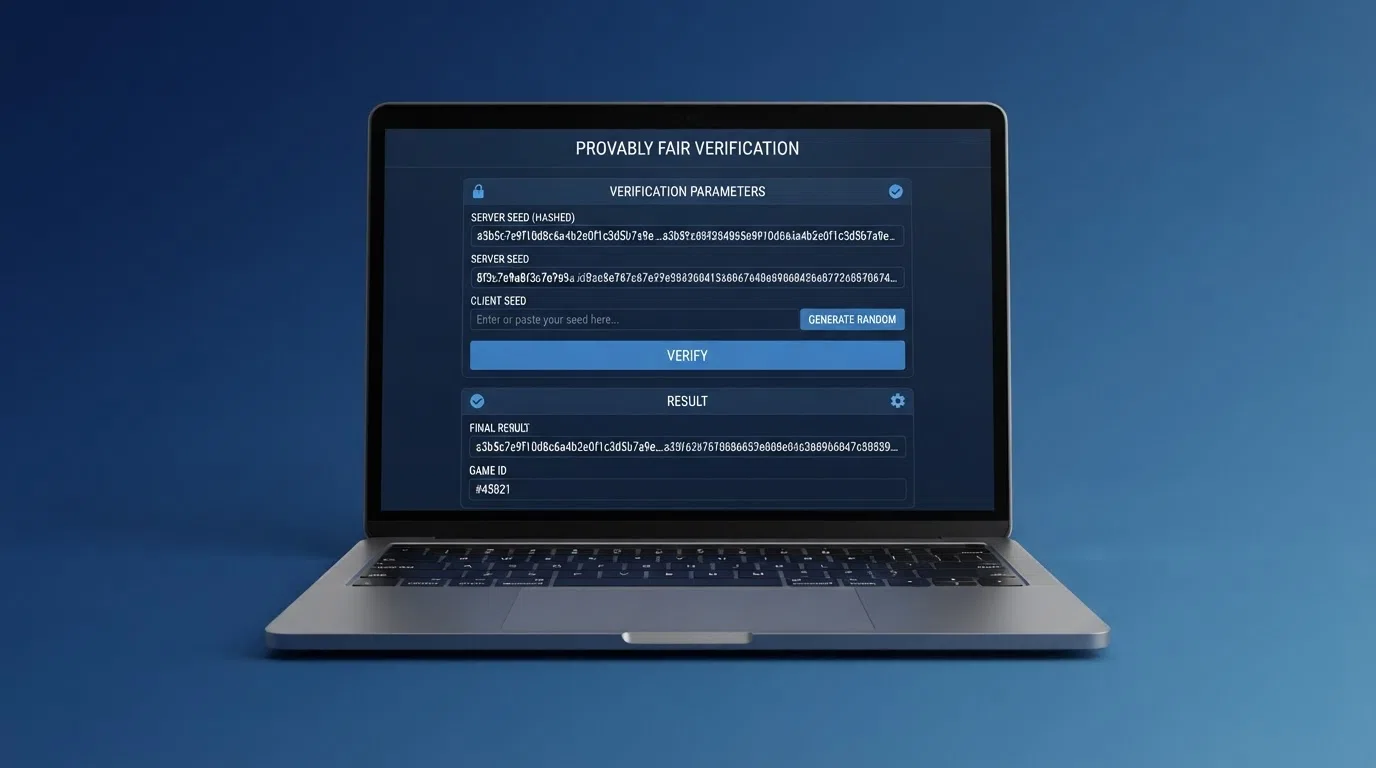
Both models are acceptable under UKGC rules. RTS 7 requires game outcomes to be “acceptably random”, and both cryptographic and certified-RNG models meet that standard. The difference is transparency, not legitimacy. A player who can verify a round’s outcome has more information than a player who cannot, and the information is what provably fair offers.
The Spribe suspension is the case study that sits behind the question. The UKGC suspended Spribe’s software licence on 30 October 2025 for hosting games on its own servers without the required separate hosting authorisation. The action was a compliance matter: the regulator’s concern was the hosting structure, not the game’s mathematics. The SHA-512 implementation was not called into question. The suspension was lifted on 30 March 2026. Aviator’s mathematics are unchanged; its UK availability has been inconsistent since.
A player evaluating fairness at a UK-licensed casino should ask two questions. Is the operator licensed? Is the individual game approved? The first question puts the casino inside the UK regulatory regime; the second confirms the specific title has passed the regulator’s game-approval process. Both answers are publicly available on the UKGC’s online register.
UK Gambling Commission licensing for crash games
The UK Gambling Commission requires every game offered at a GB-licensed casino to hold individual game approval. The process is governed by RTS 7, which sets out the technical standards for game fairness, randomness, and information disclosure. A game that meets the standard is added to the licensed operator’s game catalogue; a game that does not cannot be offered to GB consumers.
The Spribe case is the example that has shaped the UK crash landscape. The studio’s hosting structure was non-compliant with UK rules, which require a separate hosting authorisation when a software supplier hosts its own games. The regulator’s action was procedural: the licence was suspended, the games were withdrawn from UK lobbies, and Spribe addressed the hosting structure over the following five months. The licence was reinstated on 30 March 2026. The mathematics of Aviator were not the issue.
The UKGC public register of gambling businesses, last updated 29 July 2026, contains 2,663 records. The register confirms an operator’s licence status; it is the first check a player should run before depositing at any brand that claims a UKGC licence. Every operator on this page has been cross-referenced against the register.
Provably fair technology: how it works and how to verify it
Provably fair is a mechanism that lets a player independently verify that a game’s outcome was not manipulated after the bet was placed. In Aviator, the calculation combines the server seed (a value held by the operator) with the client seeds contributed by the first three players to bet on the round. The combination is hashed using SHA-512, and the resulting hash determines the crash point. The hash is committed to before the round begins; the seeds are revealed after the round ends. A player who knows the server seed, the client seeds and the hash can re-run the calculation and confirm the crash point matches what the game displayed.
The verification step is the player-side check. Aviator’s interface shows the server seed and the client seed after the round, alongside a tool that re-runs the SHA-512 calculation. A player who runs the tool and gets the same crash point has confirmed the round was fair. A player who gets a different result has found evidence of manipulation, and the evidence is the kind that would hold up in a dispute.
Among UK-available crash games, Aviator is the only one offering provably fair verification. JetX and Spaceman rely on certified RNG; the player trusts the test-house certification, not a cryptographic check. Cash or Crash and Red Baron are live-dealer physical games; the “verification” is watching the ball draw on screen. The transparency is highest in Aviator and lowest in the certified-RNG titles, but all four models meet the UKGC’s “acceptably random” standard.
Player protections and dispute resolution at UK casinos
A UK player who has a complaint about a crash game has a clear escalation path. The first step is the operator: UK-licensed casinos must acknowledge a complaint within 24 hours and respond substantively within eight weeks. The second step is an Alternative Dispute Resolution provider, an independent body that reviews the dispute at no cost to the player. The third step is the UKGC, which can investigate the operator and, where the operator has breached its licence conditions, take regulatory action.
The ADR provider is the practical backstop. A player who is not satisfied with the operator’s response can take the dispute to ADR; the operator is bound by the ADR’s decision. For an unlicensed offshore casino, none of this exists. The operator is the only route, and the operator’s interest in resolving the complaint is whatever the operator decides it is.
A player who wants the protection should choose a UK-licensed operator. A player who does not want the protection has decided to play outside the regime, and the cost of that decision is the absence of every backstop described above.
Staying in control: the responsible gambling tools each crash-game player sets up
Crash games are built for speed. A round resolves in seconds, a session can run through hundreds of rounds, and the house edge is doing its work every round without exception. The category rewards the player who has set the controls in advance and stops at them, and it punishes the player who has not. The UK regulator has built the tools that make those controls possible; the player’s job is to use them.
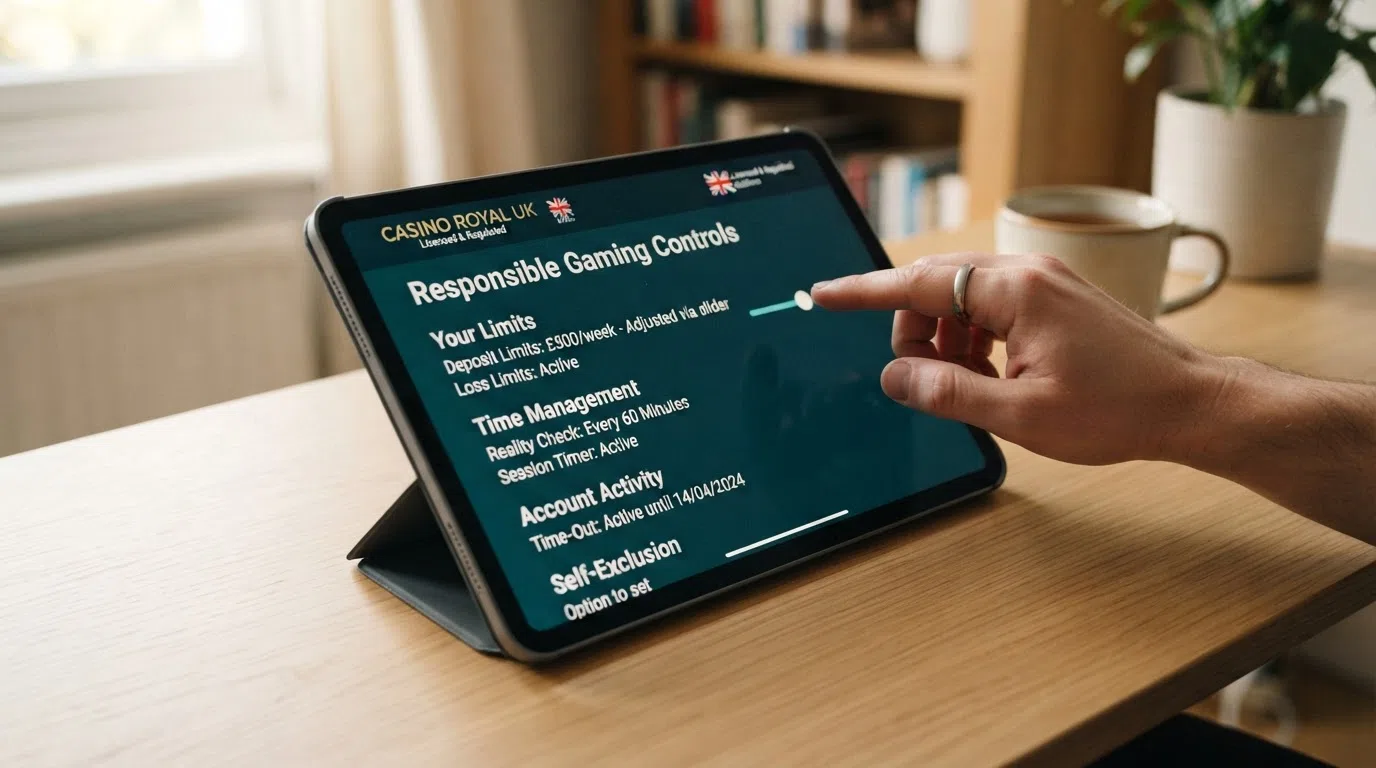
GamStop is the foundation. The national self-exclusion scheme has been mandatory for all GB-licensed online operators since 31 March 2020. A registered player is excluded from every UK-licensed casino, every UK-licensed bingo site and every UK-licensed sportsbook that runs online. The exclusion periods are six months, one year, five years, or five years with auto-renewal. The exclusion cannot be cancelled early. If the player does not contact GamStop after the minimum period, the exclusion continues for up to seven further years. The point of the scheme is the irreversibility: a player who has decided to stop cannot change their mind at 11pm on a Friday.
The deposit-limit prompt is the next layer. Since 31 October 2025, every UK-licensed casino must offer a deposit limit before the first deposit, and the “gross deposit limit” must be offered with at least equal prominence to any other limit type. The player sets the limit; the operator enforces it. Reality checks, time-outs and the session display of total losses, wins and time played are the operator-side tools that work alongside the deposit limit.
GamStop self-exclusion: what it means for crash-game players
GamStop covers every crash game at every UK-licensed casino. A player registered with the scheme cannot open a new account, cannot deposit at an existing account, and cannot play a crash game — or any other gambling product — at any UK-licensed operator. The coverage is comprehensive by design.
The exclusion periods are six months, one year, five years, or five years with auto-renewal. The minimum period is fixed; a player who registers for six months cannot lift the exclusion early, even if the decision was made in a difficult moment. The “no early cancellation” rule is the policy’s centre of gravity, and it is the part that makes the scheme work.
After the minimum period, the exclusion continues until the player contacts GamStop and asks to be removed. If the player does not contact GamStop, the exclusion runs for up to seven further years. The default is continued exclusion; the active step is to opt back in. A player who has self-excluded and is uncertain about re-entering the market should leave the exclusion in place.
GamStop does not cover offshore crypto crash casinos. A player registered with the scheme can still open an account at a Curaçao-licensed crypto site, deposit in Bitcoin, and play crash games there. The UKGC’s enforcement actions target the operators, not the players, and the player who uses an offshore site to bypass a self-exclusion has removed their own protection.
Deposit limits, reality checks and session tracking
Three operator-side tools sit between the player and a session that runs away. The deposit-limit prompt is mandatory before the first deposit, and the player sets a gross deposit limit with at least equal prominence to any other limit type. The limit is the player’s ceiling; the operator enforces it.
Reality checks are pop-up notifications at set intervals showing the player how long they have been playing and what their net position is. The interval is configurable; a player who wants a check every 15 minutes sets it to 15 minutes, and the operator prompts them at that cadence. Time-outs are short-exclusion tools: a player can lock themselves out of the account for 24 hours, 48 hours, a week or longer, and the lock cannot be lifted by the player during the period.
Session tracking is the background display. The UKGC requires licensed casinos to show total losses, wins and time played during a session, and the display is mandatory. A player who is watching the session display sees the cumulative loss climb, and the visibility is the point.
The reverse-withdrawal ban is the structural backstop. A player who has won and is offered the chance to reverse a withdrawal — to gamble the winnings back — cannot do so at a UK-licensed casino. The ban has been permanent since 2021. It is the regulator’s answer to the “I will just win it back” pattern, and it removes the option before the player has to.
The numbers: problem gambling prevalence and the crash-game risk profile
The Gambling Commission’s quarterly telephone survey (Year 3, 2025) estimated that approximately 2.4% of GB adults aged 18 and over had a PGSI score of 8 or more — the threshold for “problem gambling” on the standard index. The NHS Health Survey for England 2024, using the same index, found 5% of adults with a PGSI score of 1 or more (at risk or problem gambling combined), with men (7%) more likely than women (3%) to score at the at-risk threshold or above. The NHS Adult Psychiatric Morbidity Survey 2023–24 found 0.4% of adults at PGSI 8+ and 1.6% at PGSI 3+ (moderate risk), with men (2.2%) more likely than women (1.0%) to score 3+, and the highest prevalence among 25–34 year olds at 3.5%.
The crash-game risk profile is the specific concern. The UKGC has flagged crash games for their potential appeal to younger demographics, particularly the way the format blends gaming mechanics — rising multipliers, character animations, social chat — with gambling. The category’s pace is also faster than most slot products, and the round cadence is the variable that drives session length. A player who intends to play 30 rounds can find themselves at 200 rounds in the same hour without the session display being visible.
The AML guidance from April 2025 is the regulator’s other signal. The UKGC and UK Treasury flagged crash games as an emerging money-laundering risk, noting that the fast cash-out pattern can camouflage high-risk behaviour. The guidance is for operators, but the implication for players is that crash games are under closer regulatory scrutiny than most casino products, and the scrutiny is a signal of where the harm risk sits.
Where to get help: GamCare, GambleAware, NHS clinics and Gamblers Anonymous
- National Gambling Helpline (GamCare) — 0808 8020 133, available 24/7. GamCare made 996 referrals to treatment and peer-based support services in January 2026, a 48% increase from 674 in January 2025. The busiest months in the past five years were October 2025 (1,165 referrals), September 2025 (1,022) and August 2025 (1,077).
- GambleAware — runs the National Gambling Support Network. 11,960 clients were treated in 2024/25, an 11% increase on the prior year; 93% of clients who completed treatment saw improvement.
- NHS gambling harm clinics — available in England, Scotland and Wales. Referrals are made through the NHS or through GamCare.
- Gamblers Anonymous — peer support groups across Great Britain, with in-person and online meetings.
The help infrastructure is real, it is growing, and it is free. A player who has read this far and recognised their own session behaviour in the description above is the player who should call the helpline before the next session, not after.
How we chose and ranked the casinos on this page
The operators on this page were drawn from the UK operators shortlist and cross-referenced with confirmed crash-game availability at UK-licensed casinos. The sources used were the UK Gambling Commission public register, British Gambler’s 2026 UK crash-games coverage, SlottyHouse’s JetX and crash-games reviews, CrashEdge’s regulation and demo-mode guides, CrashGamesPlay’s UK regional page, and the operators’ own websites. The UKGC public register, last updated 29 July 2026 and containing 2,663 records, is the licence-status check for every operator named.
The ranking criteria were qualitative. The first was crash-title catalogue depth: Bet365 leads because it carries the deepest confirmed catalogue, including proprietary titles; the operators below Bet365 carry moderate or limited crash content. The second was provider breadth: the operators carrying Spribe, SmartSoft, Pragmatic Play and Evolution content score higher on this criterion. The third was demo availability: Bet365, Sky Vegas and Ladbrokes confirm demo paths on selected titles; the others do not confirm. The fourth was bonus terms: the wager-free free-spin offers that dominate the post-19 December 2025 UK market score higher on the terms criterion, with 888casino’s 10× wagering offer scoring lower.
No invented weights, scores or rankings have been used. The ordering reflects catalogue depth as the primary axis, with the other criteria as secondary considerations. Where a welcome offer was not confirmed in the available data, the table records that explicitly.
What UK crash-game players should actually do with this information
Three things matter when choosing a UK crash casino. The first is the UKGC licence, and it is non-negotiable. The licence is the only thing that delivers GamStop coverage, the deposit-limit prompt, the UKGC complaints route, ADR access, and the session-tracking display. Every other consideration sits downstream of it. An offshore crypto casino with a 99% RTP is offering a 2-percentage-point edge in exchange for the entire UK protection regime. A player who decides that trade is worth it has made a deliberate choice, and the choice is the player’s to make. A player who makes the trade without realising what is being given up has not.
The second is catalogue depth. A casino with a deep crash catalogue — proprietary titles plus the full third-party line-up from Spribe, SmartSoft, Pragmatic Play and Evolution — gives the player more options and a clearer path to demo mode. A casino with a limited crash catalogue may be perfectly licensed and perfectly fair, but the player has fewer titles to choose from. The depth ranking on this page is the clearest signal of which operators have invested in the category.
The third is the welcome offer, read carefully. The post-19 December 2025 UK bonus landscape caps wagering requirements at 10× on bonus funds and bans mixed-product promotions. Most of the offers on this page are wager-free free spins, which means the winnings are paid as cash. 888casino’s deposit match is the exception, with 10× wagering on the bonus and a hard cashout cap of £100. A player who wants the cleanest path is best served by the wager-free offers; a player who specifically wants a deposit match will find 888casino the only option on the page.
The Spribe situation does not change the mathematics of crash games. Aviator’s SHA-512 implementation was not called into question by the UKGC’s action; the hosting structure was. The licence reinstatement on 30 March 2026 restored Spribe’s ability to supply UK operators, and Aviator’s UK availability has been inconsistent since. A player who specifically wants Aviator should check the lobby at the brand they are using. A player who is happy with Spaceman, JetX, Cash or Crash or Red Baron will find a deep and varied crash catalogue at any of the operators named above.
The iron rule is the only one worth stating plainly. Only play at UKGC-licensed casinos. The offshore RTP premium is not worth the loss of GamStop, ADR, the UKGC complaints route and the financial vulnerability check. The category’s pace is fast enough without the additional risk of being outside the UK protection regime.
The responsible-gambling setup is the last step before round one. Set a deposit limit before the first deposit — the operator will prompt for one, and the prompt is mandatory. Set a reality check at a cadence that suits the session length. Register with GamStop if the self-exclusion is the right call. Save the National Gambling Helpline number (0808 8020 133) before the session starts, not after it has gone wrong. The category rewards the player who has decided in advance how the session ends, and the decision is the one that matters.
Frequently asked questions
Do crash games contribute to casino bonus wagering requirements in the UK?
Crash games are largely excluded from welcome-bonus wagering at UK-licensed casinos. Bet365’s terms specifically exclude crash titles, and the broader UK pattern is that free spin offers are valid on selected slots rather than crash content. The post-19 December 2025 wagering cap of 10× on bonus funds applies to slot and casino bonuses generally; crash-game play typically uses the regular balance rather than promotional credit, and a player who wants to use a bonus on crash content will need to check the specific terms at their chosen operator.
Are crash games subject to the same stake limits as online slots?
No. The £5/£2 age-banded stake limits introduced in 2025 under SI 2025/215 apply to online slots, not to crash games. The UKGC’s January 2025 implementation guidance explicitly carves crash titles out of the autoplay ban and the spin-speed rules because the cash-out button is the core mechanic — removing it would make the game unplayable. Each crash game must hold individual UK game approval, but the specific slot stake cap does not extend to the crash-game product.
Why did the UKGC flag crash games as a money-laundering risk?
The UKGC and UK Treasury’s April 2025 emerging ML/TF risks guidance flagged crash games for the way fast cash-outs can camouflage high-risk transactional behaviour. The format’s normal pattern — a stake followed by a quick cash-out — is structurally similar to patterns AML controls are designed to detect, and the regulator’s concern is that transactional monitoring may not distinguish legitimate play from suspicious activity. Operators introducing crash games are required to assess the ML risk and implement appropriate controls.
How fast can I withdraw crash-game winnings at UK casinos?
UK-licensed casinos typically process withdrawals through the same payment rails as other products — Faster Payments for debit-card and bank-transfer withdrawals, e-wallet processing for PayPal, Skrill and Neteller. The regulator banned reverse withdrawals permanently in 2021, so a withdrawal request is final once submitted. The actual processing time depends on the operator and the payment method; a UK player should expect same-day to a few business days at a UKGC-licensed casino, not the near-instant crypto payouts the offshore market offers.
Can I cancel my GamStop self-exclusion early if I change my mind?
No. GamStop’s exclusion periods — six months, one year, five years, or five years with auto-renewal — cannot be cancelled early. The policy is the centre of the scheme’s effectiveness. After the minimum period, the exclusion continues until the player contacts GamStop and asks to be removed; if the player does not contact GamStop, the exclusion continues for up to seven further years. The point of the scheme is the irreversibility, and a player who has self-excluded and is uncertain about re-entering the market should leave the exclusion in place.
Which crash game has the highest RTP available to UK players?
Cash or Crash by Evolution, at 99.59% RTP. It is the only UK-available crash title above 99% RTP, and the lead over the next-highest title is wide. Aviator runs at a default 97% RTP, Spaceman at 96.5%, JetX between 96.2% and 98.9% depending on the operator’s configuration, and Red Baron at approximately 97%. The 99.59% figure reflects the live-dealer ball-draw format and the slower round cadence; a player who values the long-run return above the round speed will find Cash or Crash the best mathematical fit.
What exactly is a crash casino game?
A crash casino game is a round-based gambling product built around a single rising multiplier. The player places a stake before the round opens. Once betting closes, the multiplier begins at 1.00× and rises. The player watches it climb and decides, at any moment, when to cash out. If the player cashes out before the crash point, the stake is returned multiplied by the displayed value. If the round crashes first, the stake is lost.
The crash point is a randomly determined number generated before the round starts. In Aviator, the calculation uses a SHA-512 hash of the operator’s server seed combined with the first three players’ client seeds, and each round is independent of the last. The visible multiplier is the only signal the player has, and it is not a signal at all: a long-running multiplier does not predict the next crash, and a short crash does not “owe” the next round a higher one. Past rounds are not data; they are noise.
The cash-out button is the player’s only decision. There is no strategy that changes the crash point and no skill that reads the next one. What a player can control is when to take the money, and how much to put on the line in the first place. Everything else is the house edge doing its work.
Online vs retail: can you play crash games in a UK betting shop?
No. Crash games are an online-only format. The UKGC’s implementation guidance for the autoplay ban, which is where crash games were formally carved out from the slot-style product rules, applies to remote operators — the technical standards and game-approval regime for online products. There is no retail equivalent: fixed-odds betting terminals in UK bookmakers run a different product set, and crash games are not among the categories licensable for terminal play.
Players who want a crash round will find one at an online casino, accessed through a browser or a mobile app. The retail betting shop, with its FOBT machines and over-the-counter counters, is a separate world, and it does not include this one.
Is it illegal for a UK player to use a crypto crash casino?
No criminal penalty has been traced for a GB player who gambles on an unlicensed site. The s.33 Gambling Act 2005 offence is on the operator, not the player, and the UKGC’s enforcement actions are aimed at the operators running unlicensed GB-facing services. The player is not the target.
What the player loses is the protection. No GamStop coverage means the self-exclusion does not extend to the offshore site. No UKGC complaints route means disputes go nowhere. No ADR provider means no independent review. The bonus terms the player agreed to in the offshore casino’s terms and conditions are the only terms that apply, and the offshore regulator’s interest in enforcing them is, at best, theoretical.
The UKGC’s enforcement pitch is that disruption works. The published figures for April 2024 to June 2025 are 3,140 disruption notices, 447,778 URLs referred to search engines, 287,961 URLs removed, and a 32% average fall in engagement across 160 disrupted sites. The methods are cease-and-desist notices (48-hour deadline), search-engine URL referrals, domain registrar and host pressure, and payment-provider referrals. The legislation that would give the regulator statutory ISP or DNS blocking powers has been proposed but not enacted. The current regime is disruption, and disruption is what the player is betting against.
A player who plays at a Curaçao-licensed crypto crash casino is not committing a criminal offence. They are simply outside the UK protection regime, and the consequence of being outside is that the only person who can resolve a dispute is the operator.
Slots – nominimumdeposit-casinos-uk
Content created by the «nominimumdeposit-casinos-uk» team