ClickandBuy Is Dead — Here Is What UK Casino Players Actually Use in 2026
 Available in GB
Current as of September 8, 2026 · Licence claims verified against the UK Gambling Commission public register
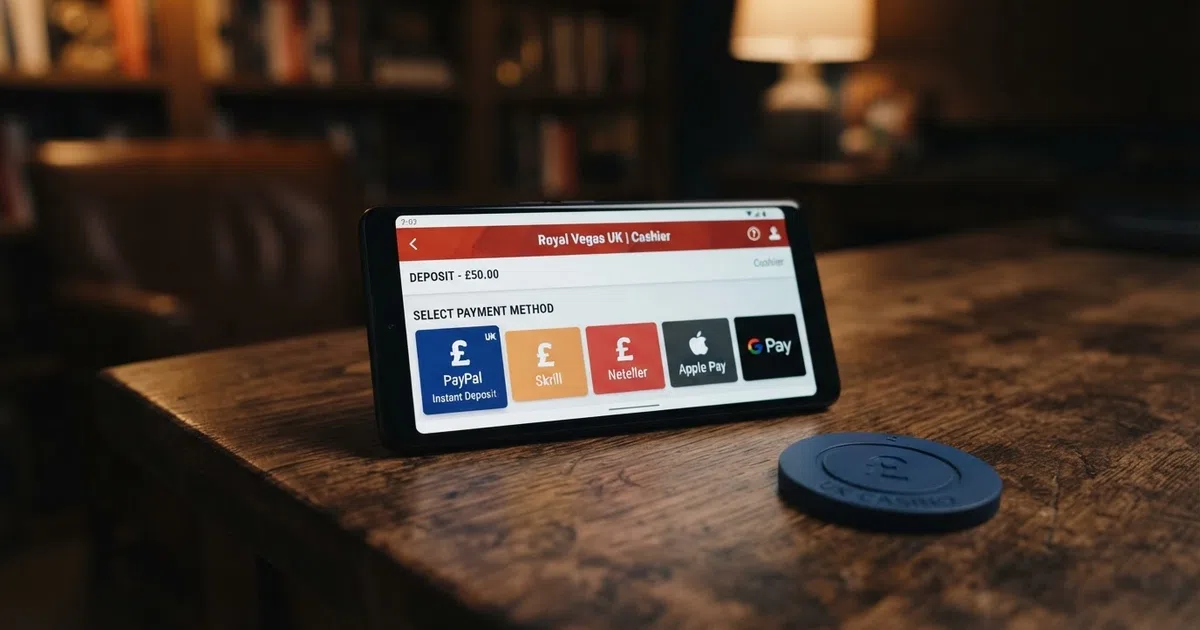
ClickandBuy is gone. Not “mostly gone” or “rarely accepted” or “phased out” — gone. The service stopped processing payments on 30 April 2016 and the UK company behind it, ClickandBuy International Limited, was formally dissolved on 24 February 2026. No UK Gambling Commission-licensed casino accepts it today, none will accept it tomorrow, and any page that still lists “clickandbuy casinos” in 2026 is either recycling a 2016 template or quietly trying to land a search query it has no intention of answering honestly.
So what is this page doing here under that title? Two things. First, it answers the question behind the search: what did ClickandBuy do, why did it die, and where does the money go now? Second, it gives the reader who actually wants to deposit at a UK casino today a ranked shortlist of the ten UKGC-licensed operators that accept the closest e-wallet alternatives — PayPal, Skrill, Neteller, Trustly and Apple Pay — with current welcome-offer terms, the 10× wagering cap, and the slots those bonuses unlock. The pivot is deliberate. The page is honest about the dead end and useful about what lies past it.
ClickandBuy Shut Down in 2016 — Here Is What UK Casino Players Need to Know
What ClickandBuy Was — A German E-Wallet That Powered Casino Deposits
ClickandBuy was an e-money service founded in the early 2000s, run from London by ClickandBuy International Limited (company number 05661160, registered in Southampton) and owned from 2010 onwards by Deutsche Telekom. The model was the same one PayPal and Skrill would later refine: load a digital wallet from a bank account or card, then push money from the wallet to a merchant — in this case an online casino cashier. It was an intermediary layer, and for several years it sat comfortably between UK players and the casino brands that took their deposits.
Why UK players used it in particular was straightforward. E-wallets added a layer of separation between a player’s bank statement and a gambling site, deposits cleared in seconds rather than days, and at a time when PayPal’s UK gambling footprint was still narrow, ClickandBuy filled a real gap. InsideCasino.com’s summary of the brand’s history is blunt: “ClickandBuy’s financial services were terminated in 2016” — a single sentence that says everything about what came next. For a UK casino player in 2010, 2012 or even early 2014, ClickandBuy was a normal option at the cashier. By 2016, that row was disappearing from every bonus T&C page that had ever mentioned it.
Why Deutsche Telekom Pulled the Plug in April 2016
The end was not a regulatory intervention or a fraud scandal. It was a commercial decision, made by a parent company that decided the unit was no longer worth running. German press reported at the time that Deutsche Telekom shut ClickandBuy because it could not compete with stronger rivals, principally PayPal; the Verivox.de summary of the closure is dated and unsentimental: “The online payment service ClickandBuy is ending its business in spring 2016, on 1 May.”
The mechanics on 30 April 2016 were clean. ClickandBuy ceased issuing e-money and providing online payment services to customers. Existing wallet balances did not vanish overnight — users had a wind-down window to withdraw funds — but the merchant side closed with it. From May 2016, any UK casino cashier that still showed a ClickandBuy logo was either out of date, displaying a defunct option that would error at deposit, or running on an offshore licence that had not been touched since before the shutdown. None of those was a place a UK player should have been depositing.
The Company Was Dissolved in February 2026 — What That Means Now
The service ended in 2016. The legal entity ended almost a decade later. ClickandBuy International Limited, the same Southampton-registered company that had been incorporated on 22 December 2005, was formally dissolved on 24 February 2026 following liquidation. The ten-year gap between the two endings matters because it is the gap that lets stale affiliate pages survive: the brand could still be searched, the domain still resolved, and the corporate shell still existed on Companies House long after the wallet had stopped working. That loophole is now closed.
The practical consequence is final. A payment method whose operating company has been struck off the register at Companies House cannot reappear at a UK cashier. There is no successor entity, no transitional brand, no parent that has bought the name. Any operator list carrying “ClickandBuy accepted” as a deposit method in 2026 is selling a fiction — one the rest of this page does not sell.
The E-Wallets That Replaced ClickandBuy — How UK Casino Deposits Work Now
How E-Wallet Deposits Work at UK-Licensed Casinos
The deposit flow at a UKGC-licensed casino in 2026 is the same one ClickandBuy used to sit in the middle of, minus the brand that used to be there. The player funds an e-wallet — PayPal, Skrill, Neteller, Trustly or Apple Pay — from a bank account or a Visa or Mastercard debit card, then selects the wallet in the casino cashier and authorises the transfer. The casino balance updates within seconds; the e-wallet app shows a debit in roughly the same window. The layer that was ClickandBuy still exists in spirit, but it is no longer a single brand — it is a category, and the brands in it compete on speed, fees, and how widely the UK casino market accepts them.
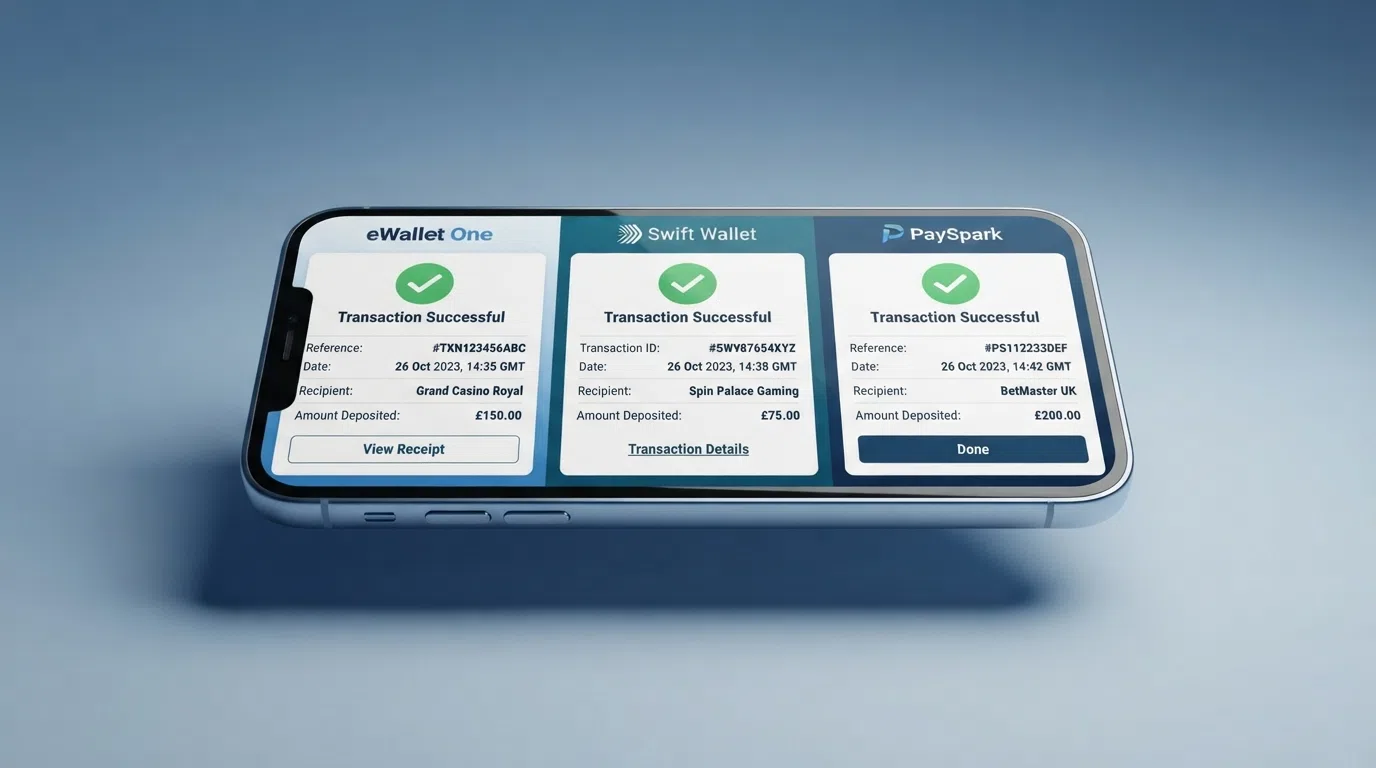
One rule cuts across every e-wallet on the list. Since 14 April 2020, credit cards have been banned for gambling at every GB-licensed remote operator under LCCP licence condition 6.1.2, and the ban extends to credit-card-funded payments through e-wallets. A player cannot fund a PayPal deposit with a credit card and route it to a UK casino — the operator’s cashier is required to refuse it. Funding from a debit card, a bank account, or an existing e-wallet balance is fine. Funding from credit is not.
From 31 October 2025, every UK operator must also prompt a customer to set a financial limit before their first deposit. This is a single mandatory step that appears at sign-up or first cashier visit, and the limit the player sets is theirs to control — the operator cannot override it downward or upward without the player’s consent.
Withdrawal Speed — Why E-Wallets Are the Fastest Payout Method
E-wallets are the fastest route from a UK casino cashier to a player’s bank. Once the operator’s internal pending period has elapsed — typically 24 to 48 hours, sometimes less at the more automated brands — withdrawals to PayPal, Skrill, Neteller and Trustly usually clear within hours and almost always within the same day. Debit card withdrawals take one to five business days from the same starting point. Bank transfers take two to seven. None of these windows is fixed by statute; the operator chooses how quickly to release funds once the pending period is over, and the e-wallet rail is the one where release times are routinely measured in minutes rather than days.
One rule has been in force across all methods since 31 October 2021: reverse withdrawals are permanently banned. A player who requests a cashout at a UKGC-licensed casino cannot later cancel that request and have the funds returned to the casino balance to wager again. The “cancel withdrawal” button that was once a fixture of online cashiers is gone, and the e-wallet is the rail that benefits most from the change — the player’s win is committed the moment they hit withdraw, and the operator’s processing clock starts then.
Fees, Minimum Deposits & Limits Compared Across Methods
Most UKGC-licensed operators do not charge a fee on deposits or withdrawals by e-wallet, debit card or bank transfer. The casino’s published cashier pages typically carry no transaction charge for any of the major rails; where fees do appear, they are nearly always on the e-wallet’s side (a Skrill currency-conversion charge, for example) rather than the operator’s. The point worth carrying forward is that fee-free is the default, and a UK player who sees a deposit fee should treat it as the exception that needs explaining, not the rule.
Minimum deposits are set by the operator, not by the payment method, and they cluster in a narrow band. Most UK e-wallet cashiers accept a minimum of £5 to £10 per deposit, with the £10 floor dominant across the featured set below. There is no statutory minimum deposit at the UK level — the £5 / £10 figure is a market convention, not a rule. What is a rule is the deposit-limit framework that wraps around it: the operator must prompt for a financial limit before the first deposit, the player sets the ceiling, and from 30 September 2026 only a gross deposit limit based on money paid in may be called a “deposit limit” under RTS 12. Limits of this type provide clarity for the player.
Debit Cards, Apple Pay & Instant Banking — Your Other Options
E-wallets are not the only route, and for many UK players they are not even the most-used one. Visa and Mastercard debit are universally accepted at UKGC-licensed casinos and remain the dominant deposit method by volume. Apple Pay sits on top of a linked debit card and turns the deposit into a one-tap confirmation authenticated by Face ID or fingerprint — useful on mobile, irrelevant on desktop. Trustly and instant bank transfer move funds directly from a bank account to the casino without an e-wallet middle layer, which makes them attractive to players who do not want a third-party balance sitting between them and the cashier.
The single rule that ties all of these together is the credit-card ban. None of them can be funded from a credit card. Debit cards, debit-funded Apple Pay, debit-funded e-wallets, and direct bank transfers are the only routes. The credit exclusion is the reason the rest of this page never says “credit card” once without “banned” beside it.
10 UKGC Casinos for E-Wallet Players — Compared Side by Side in 2026
The table below is built from the UK Gambling Commission’s public register — the same register that held 2,663 records on 29 July 2026 — and from each operator’s own published UK cashier and welcome-offer terms. Every operator on it holds an active GB operating licence that the reader can verify themselves. The e-wallet column shows what is in the cashier now; where the current e-wallet status was not confirmed in this run, the cell carries an em dash rather than a guess. Welcome offers are the headline terms the operator publishes; bonus values, wagering multiples and cashout caps are the parts that decide what the offer is actually worth — covered in the section that follows.
| Operator | UKGC Licence | E-Wallets Accepted | Welcome Offer | Wagering on Bonus | Max Cashout Cap |
|---|---|---|---|---|---|
| bet365 | Active — Hillside (UK Gaming) LP, account 39563 | PayPal, Apple Pay | Up to 500 free spins, 10 daily reveals over 20 days | 0× | None |
| Sky Vegas | Active — Bonne Terre Limited (Flutter Entertainment) | PayPal, Apple Pay | 70 no-deposit spins + 200 spins after £10 deposit and stake | 0× | None |
| PlayOJO | Active — SkillOnNet Ltd, licence 39326 | Trustly, PayPal, Apple Pay, Instant Bank | Free spins on first deposit (number varies by deposit) | 0× | None |
| 32Red | Active — 32Red Limited (Kindred Group), licence 39430 | — | 320 × £0.10 free spins on Big Bass Splash after £30 deposit and stake | 10× | None |
| William Hill Vegas | Active — WHG (International) Limited | PayPal, Apple Pay | 200 × £0.10 free spins on Big Bass Splash after £10 deposit and stake | 10× | £30 |
| Ladbrokes | Active — LC International Limited (Entain plc) | PayPal, Apple Pay | 100 free spins + 300 LadBucks after £10 deposit and spend | 0× | None |
| Coral | Active — LC International Limited (Entain plc) | PayPal, Apple Pay | 100 free spins after £10 stake | 10× | £50 in spin value |
| 888casino | Active — 888 UK Limited (evoke plc), licence 39028 | PayPal, Apple Pay | 100% deposit match up to £100 | 10× | £100 on bonus winnings |
| Betfair Casino | Active — PPB Counterparty Services Limited (Flutter Entertainment) | PayPal, Apple Pay | 50 free spins after £10 deposit and spend | — | — |
| Gala Bingo | Active — LC International Limited (Entain plc) | PayPal, Apple Pay | 100 × £0.10 free spins on selected slots after £10 deposit and spend | — | — |
The spread across this set is the part that matters. Eight of the ten are deposit-gated, two are no-deposit (Sky Vegas’s first 70 spins, and zero from PlayOJO’s bonus terms which still require a first deposit), and only one — 888casino — runs a percentage deposit match rather than free spins. Wagering sits at the statutory 10× cap on four operators, at 0× on four others, and is unspecified in the terms surfaced for two. The next ten blocks walk through what each offer actually does to a real bankroll.
bet365 — Up to 500 Free Spins With Zero Wagering
bet365’s UK welcome offer is the largest free-spin allocation in the featured set and one of the very few that attach no wagering requirement to the winnings. The headline figure is up to 500 free spins, released in batches across 20 days (5, 10, 20 or 50 per daily reveal) and credited to selected games that the operator rotates through the period. The minimum trigger is a £10 lifetime deposit on the account — not a per-deposit threshold, which makes the offer unusually accessible to a player who has been on the platform for some time. All winnings land as cash, and the only window is a 30-day claim from registration and 20 days from the first reveal.
The licence sits with Hillside (UK Gaming) LP, account 39563, verifiable on the UKGC public register. PayPal and Apple Pay are the primary e-wallet options at bet365, alongside Visa and Mastercard debit and bank transfer. The “0× wagering” sits comfortably below the 10× statutory cap that took effect on 19 December 2025 — bet365 is choosing to offer better terms than the law requires, and the choice is the point. This offer stands out against the broader 10× market.
Sky Vegas — 70 No-Deposit Free Spins Just for Registering
Sky Vegas splits the welcome offer into two parts, and the first is the only genuinely deposit-free one in the featured set. Seventy free spins drop on registration, with no deposit and no wagering — the winnings are withdrawable cash as soon as the spins have played out. The second part adds 200 further free spins once the player has deposited and staked £10 on selected games, also at 0× wagering. The total to aim for is 270 spins, with a 7-day expiry on the spins and 30 days from registration to complete the deposit trigger.
The licence is held by Bonne Terre Limited, the Flutter Entertainment subsidiary that also runs Sky Bet and Paddy Power. PayPal and Apple Pay are available for deposits, with debit cards and bank transfer options also supported. The offer is built for two reader types at once: the cautious player who wants a no-deposit trial of the platform, and the committed player who will trigger the full 270 spins for the cost of a tenner. Both end at 0× wagering, so the only ceiling on the 70 no-deposit spins is the operator’s per-spin configuration. For someone who values a cashable trial above spin count, this is the standout offer in the set.
PlayOJO — Every Winning Paid as Cash With No Wagering
PlayOJO’s model is no-wagering across every promotion on the platform, not just the welcome offer. The welcome bonus is a bundle of free spins on first deposit, with the count varying by how much the player puts in. The wagering requirement on every spin and every subsequent promotion is 0×, and there is no cashout cap on any winnings — the operator’s entire pitch is that what a player wins is theirs, immediately, no play-through required. The licence sits with SkillOnNet Ltd, number 39326, and the UK cashier shows Trustly, Instant Bank, Visa and Mastercard debit, PayPal and Apple Pay. Skrill, Neteller and Paysafecard are no longer listed in the current UK cashier.
For a player who plans to deposit and play anyway, PlayOJO’s value is structural rather than headline. The headline free-spin count is variable and the exact number tied to any given deposit was not confirmed in this run. The substance is that the 0× wagering is permanent across the platform, not a one-off welcome concession. This approach provides a consistent experience that differentiates the operator from 10× competitors.
32Red — 320 Free Spins on Big Bass Splash
32Red runs the largest single-title spin allocation in the featured set: 320 free spins at £0.10 each, all on Big Bass Splash, in exchange for depositing and staking £30. The total spin value is £32.00 — a precise number, because every spin is a fixed denomination. Wagering on the winnings is 10×, sitting exactly at the statutory cap that took effect on 19 December 2025, and the bonus has 30 days of validity from the time it is claimed. There is no cashout cap on the winnings in the terms surfaced.
The licence sits with 32Red Limited, part of the Kindred Group, under licence number 39430. Payment availability in the current UK cashier was not confirmed in this run; Visa and Mastercard debit and instant bank transfer are confirmed. For a player who does not specifically need PayPal or Skrill at the cashier, 32Red’s offer is the densest in the set: 320 fixed-denomination spins on a single named high-RTP slot, with a wagering burden the calculation later translates into an expected loss. Total offer value is significant.
William Hill Vegas — 200 Free Spins on Big Bass Splash
William Hill Vegas’s welcome is structurally similar to 32Red’s but tighter on every front. The trigger is £10 in deposit and play rather than £30; the spin count is 200 at £0.10 each (£20.00 in total spin value); the wagering is 10× on the winnings; and the free-spin winnings carry a £30 cashout cap. The bonus has a 72-hour expiry from the time it is credited, which is the shortest window in the set and the part a player needs to plan around.
The licence sits with WHG (International) Limited, verifiable on the UKGC public register. Payment methods in the UK cashier are PayPal and Apple Pay alongside debit cards and bank transfer. The £30 cashout cap is the single most important number in the offer: it caps the upside on a 200-spin bonus at roughly the value of the 32Red bonus, even though the trigger is a third of the size. This cap is a standard industry protection.
Ladbrokes — 100 Free Spins Plus 300 LadBucks
Ladbrokes offers a dual-currency welcome: 100 free spins plus 300 LadBucks — the brand’s in-house loyalty currency — when the player deposits and spends £10 on slots. The wagering requirement is 0×, so the cash value of the spins lands directly in the withdrawable balance. The LadBucks component is a separate loyalty credit that can be exchanged for bonus funds or other rewards inside the Ladbrokes ecosystem; their headline cash value is set by Ladbrokes’ own conversion table, not by the player. The offer has a 48-hour window to accept and 7 days to use the spins after credit.
The licence sits with LC International Limited, the Entain subsidiary that also runs Coral and Gala Bingo. Deposits via PayPal and Apple Pay are standard. The structural advantage of this offer over a 10× equivalent is identical to bet365 and Sky Vegas: the 0× wagering removes the play-through burden entirely, so whatever the spins produce is the player’s to keep. The 48-hour accept window is tight, but it is also the clearest signal in the set that the offer is built for a player who has already decided to deposit.
Coral — 100 Free Spins With 10× Wagering
Coral’s welcome is the compact version of the Entain template: 100 free spins after betting £10, with 10× wagering on the bonus funds and a £50 maximum in free-spin value. Validity runs 30 days from credit, and the spins are spread across multiple qualifying slots rather than concentrated on one title. The wagering is at the statutory cap.
The licence sits with the same LC International Limited entity that runs Ladbrokes and Gala Bingo. Payment methods in the UK cashier are PayPal and Apple Pay alongside Visa and Mastercard debit. The trade-off Coral offers is the standard one: a lower entry cost than 32Red’s £30 trigger, but a £50 cap on free-spin value that closes the upside on any particularly lucky outcome. This offer balances commitment against potential returns.
888casino — 100% Deposit Match Up to £100
888casino is the only featured operator running a percentage deposit match rather than free spins, and the only one where the offer is denominated in pounds rather than spins. The headline is a 100% match up to £100 on a minimum £10 deposit; the bonus must be staked on selected slots within 48 hours and wagered 10× within 90 days. Bonus winnings carry a £100 cap, which limits the upside on the matched amount to roughly the size of the match itself.
The licence sits with 888 UK Limited, the evoke plc subsidiary, under licence 39028. E-wallets in the UK cashier are PayPal and Apple Pay. The deposit match is the format a UK player used to see across the entire market before the 10× cap took effect, and 888casino is one of the last major UK brands still running it. For a player who prefers matched funds to free spins — and who has a bankroll large enough to make the 10× wagering meaningful — this is the only offer of its type in the set. The £100 cashout cap is the cost of the format.
Betfair Casino — 50 Free Spins After a £10 Deposit
Betfair Casino runs the smallest free-spin allocation in the featured set: 50 spins after depositing and spending £10, with the wagering multiple, validity period and cashout cap not specified in the terms surfaced in this run. The licence sits with PPB Counterparty Services Limited, the Flutter subsidiary that also runs Paddy Power and Sky Bet, verifiable on the UKGC public register. PayPal and Apple Pay are accepted at the cashier.
The honest read on this offer is that the headline number is the smallest in the set and the rest of the terms were not confirmed in the operator’s T&Cs surfaced this run. A player looking at Betfair should pull the current bonus T&Cs from the operator’s own site before depositing, because the 50-spin headline is only useful if the wagering, expiry and cap match the rest of the market. The 0× wagering that the Flutter sister-brand Sky Vegas offers on its spins is not automatically inherited here.
Gala Bingo — 100 Free Spins on Selected Slots
Gala Bingo’s casino offer is 100 free spins at £0.10 each on selected slots, with a £10 deposit and spend trigger and a 7-day validity from credit. The wagering multiple and cashout cap were not specified in the terms surfaced in this run. The licence sits with LC International Limited, the same Entain entity behind Ladbrokes and Coral.
For a player weighing Gala Bingo against the rest of the Entain set, the calculation is direct: the headline is identical to Coral’s 100 free spins, but the spin denomination is fixed at £0.10 (Coral’s is not specified) and the validity is 7 days rather than 30. The two operators share a parent and a licence; the difference is the bonus structure. A player who prefers a known-denomination spin and a shorter, sharper play window will find this more appealing.
Why Your UK Casino Bonus Is Smaller Than the Advertised Figure
Welcome Bonuses at E-Wallet Casinos — What You Actually Get
Free spins dominate the UK welcome-bonus market. The 10× wagering cap that took effect on 19 December 2025 under LCCP Social Responsibility Code 5.1.1 made deposit matches rarer at the higher end — a matched offer that needs 35× or 40× turnover was already a hard sell to most UK players, and at 10× the marketing advantage of offering £200 in bonus cash in exchange for a 10× play-through is much weaker than offering 200 free spins at 0×. The market response has been a tilt toward free spins and away from percentage matches. The table above carries one deposit match in ten offers; the rest are spins.
The distinction that actually matters is between offers with 0× wagering and offers with 10×. The bet365, Sky Vegas, Ladbrokes and PlayOJO offers pay winnings as cash, full stop — what the spins produce is the player’s to withdraw immediately. The 32Red, William Hill Vegas, Coral and 888casino offers carry a 10× play-through on the winnings, meaning the player must stake the winnings ten times before they become withdrawable. The expected cost of that play-through is not zero, and the calculation in the next block quantifies it.
The bonus terms that decide value, in order, are these: the wagering multiple (0× is best, 10× is the legal maximum), the cashout cap on the winnings (none is best, anything above the spin value is worse), the validity window (longer is better, with 30 days as the dominant standard), the spin denomination (fixed at £0.10 is transparent, variable is opaque), and the slot the spins are tied to (RTP and volatility are the only game-side factors that affect expected value). A smaller offer with 0× wagering can be worth more in real withdrawable cash than a larger one with 10×, and the calculation proves it.
Free Spins — With Deposit, Without Deposit, and What Changes in 2026
Three tiers of free-spin offer exist at UK e-wallet casinos. The first is the genuinely deposit-free spin: Sky Vegas’s 70 spins on registration, where no money changes hands before the spins are credited. The second is the deposit-gated spin, which is the standard model across the rest of the featured set — £10 in deposit and stake triggers 50 to 500 spins, depending on the operator. The third is the loyalty-tier spin, where the spin count is tied to the size of the deposit and a player putting in £50 or £100 gets a proportionally larger bundle. PlayOJO is the clearest example of the third.
What changed between 2018 and 2026 is not the offer structure but the rules around how the spins play. Auto-play is banned: the player must trigger each spin manually, and the spin-speed minimum of 2.5 seconds per game cycle means a 500-spin bonus now takes a minimum of roughly 21 minutes of active clicking rather than running unattended. Losses disguised as wins are banned: a spin that returns less than the stake no longer plays celebratory sounds and visuals as if it were a payout. The result is a slower, more transparent bonus experience where the player is always aware of what each spin actually returned.
The third change affects the bonus, not the spins: from 19 December 2025, mixed-product promotions are banned. An offer cannot bundle a casino bonus with a sportsbook free bet, a bingo bonus and a lottery ticket in the same welcome package. The result is that welcome bonuses in 2026 are single-product by law, which is why the table above is ten casino offers with no sports or bingo cross-sell attached.
No-Wagering Bonuses — The Only Offers Where Winnings Are Really Yours
Four operators in the featured set offer 0× wagering: bet365, Sky Vegas, Ladbrokes and PlayOJO. All four are below the 10× statutory cap, which means each is choosing to offer better terms than the law requires. The choice is a marketing one — the no-wagering pitch differentiates the brand in a regulated market where almost every competitor is at the cap — but it is also a structural one: a 0× operator is not relying on the play-through to recover the bonus cost from the player. The bonus is funded by the expected house edge on the spin play itself, not by the additional 10× turnover the player would otherwise have to grind through.
The arithmetic is the part that makes the case. Take the William Hill Vegas offer as a counter-example: 200 × £0.10 free spins on Big Bass Splash, 10× wagering on the winnings. Big Bass Splash’s RTP is 96.71%, so the house edge per spin is 3.29%. With £20 in spin value and 10× wagering, the player must turn over £200 through the slot, and the expected loss from that turnover is £200 × 3.29% = £6.58. The bet365 equivalent — 500 free spins at 0× wagering — carries no such play-through burden. Even at a fraction of the spin count, the no-wagering offer produces withdrawable cash without the £6.58 expected loss the 10× equivalent imposes. For a player with a £20 bankroll, that is the difference between a 0× offer and a 10× offer of the same headline size.
A worked example with the same slot. Assume a £20 bonus value, a wagering multiple of 10×, and Big Bass Splash at 96.71% RTP. The required turnover is £20 × 10 = £200. The expected loss from that turnover, with 3.29% as the house edge, is £200 × 0.0329 = £6.58. Now take the same £20 in bonus value, but at 0× wagering: the required turnover is £20 × 0 = £0, and the expected loss from the bonus play-through is £0. The player still has to fund the £20 in spin value, but the 0× offer recovers none of it through the play-through — the player keeps whatever the spins produce, less only the inherent house edge on the spin play itself.
The same calculation runs the other way for any slot the player wants to substitute. Starburst at 96.09% RTP (house edge 3.91%) on a £20 bonus at 10× wagering gives an expected loss of £200 × 0.0391 = £7.82. Book of Dead at 96.21% RTP (house edge 3.79%) gives £200 × 0.0379 = £7.58. The exact figure moves with the slot, but the structural gap between 0× and 10× is the same: 0× removes the entire play-through cost, and 10× imposes roughly a third of the bonus value in expected loss on top of the inherent house edge on the spin play. The £6.58 / £7.82 / £7.58 figures are statistical averages across many spins under the stated assumptions; no single session is guaranteed to land anywhere near them. What they show is what the offer costs on average, which is the number the marketing does not print.
The Slots, Tables & Live Games You Can Play With an E-Wallet Deposit
Real-Money Slots — The Titles With the Best RTP Right Now
| Slot Title | Provider | RTP | Volatility | Max Win |
|---|---|---|---|---|
| Starburst | NetEnt | 96.09%–96.10% | Low | 250× stake |
| Book of Dead | Play’n GO | 96.21% | High | 5,000× stake |
| Big Bass Splash | Pragmatic Play | 96.71% | High | 5,000× stake |
Three slot titles with confirmed RTP data are in the table above. The numbers matter because they are the only ones the player can verify against an independent source, and because they are the inputs the calculation in the section above runs on. The 2.5-second spin-speed minimum that has applied since 31 October 2021 changes how that RTP translates into play time: a player running 500 spins manually at the minimum interval needs roughly 42 minutes of active clicking, regardless of which of the three titles they are running.
The volatility column is the part the headline RTP does not show. Starburst is a low-volatility slot — small wins land often, the session is long, the bankroll moves slowly. Book of Dead and Big Bass Splash are both high-volatility — wins are rarer, the bankroll can drop quickly, and the 5,000× max win is the upside that justifies the patience. A player with a £20 bankroll who chooses Starburst will see a longer session with more spin activity; the same player on Big Bass Splash will see fewer, larger outcomes. Neither is a better choice in absolute terms — they are different games for different preferences, and the volatility column is what tells them apart.
Blackjack, Roulette & Table Games at UK E-Wallet Casinos
Table games are a smaller but consistent part of the UK casino library, and every featured operator carries them. Blackjack in multiple variants, European and American roulette, baccarat and game-show tables are standard across the set; live-dealer tables are covered in the next block. The stake-limit rules that apply to online slots do not apply to table games — the £2 / £5 per-game-cycle cap is a slots-only rule, and a blackjack hand or a roulette spin is not bound by it. Operators may set their own table-game stake limits, but they are not statutorily capped.
What is statutorily capped is welcome-bonus contribution. Most UK welcome bonuses are slot-only: a player wagering a 10× bonus on blackjack contributes a fraction of each bet toward the play-through — often 10% or less, sometimes zero. The result is that the same bonus that clears comfortably on a high-RTP slot can take ten times as long to clear on a table game. These terms are specified in the operator’s bonus T&Cs.
Live Dealer Tables — What You Can Play With E-Wallet Funds
Live-dealer tables stream real dealers, real cards and real roulette wheels to a player’s screen, and they accept e-wallet deposits exactly as slots do. The Evolution, Playtech and Pragmatic Play live suites are the dominant providers across the featured set: bet365 carries Playtech, NetEnt and Pragmatic Play; Sky Vegas carries NetEnt, IGT, Pragmatic Play and Evolution; 888casino carries NetEnt, Pragmatic Play, Playtech and Evolution; PlayOJO carries NetEnt, Pragmatic Play, Evolution, Microgaming and Play’n GO. The live-dealer experience at every one of them is funded from the same cashier balance as the slots.
What live-dealer tables do not offer is bonus contribution. Live games are routinely excluded from free-spin and welcome-bonus wagering — the operator’s T&Cs will list the slots that count, and live tables are not on the list. A player who plans to spend the welcome bonus on live blackjack or live roulette will clear the wagering very slowly, if at all. The structural reality is that live-dealer play is paid for with the player’s own cash balance, not with bonus funds, and a player who values the live experience should treat the welcome bonus as a slots credit and the live tables as a separate bankroll.
Mobile E-Wallet Casinos — Playing on iPhone and Android in 2026
Every featured operator in this page works on a mobile browser or through a dedicated app, and none of them requires a desktop to deposit or play. The cashier layout is mobile-first across the set: deposit and withdrawal buttons sit at the top of the balance widget, the e-wallet icons are large enough to tap cleanly, and Apple Pay sits behind a Face ID prompt that completes a deposit in a single confirmation. Android users get the equivalent one-tap flow through PayPal, Skrill or Neteller, depending on the operator.
The regulatory rules do not change between desktop and mobile. The £5 / £2 slot stake cap, the 2.5-second spin-speed minimum, the auto-play ban, the deposit-limit prompt before the first deposit, and the credit-card ban all apply identically on a phone. A player who has set a £50 weekly deposit limit on desktop will see the same limit on mobile, and a credit-card-funded e-wallet deposit is refused on the phone for the same reason it is refused on the desktop. The mobile experience is the same regulated experience in a smaller window.
What changes is the friction. Apple Pay and biometric authentication make mobile deposits faster than typing a card number into a desktop form. PayPal’s mobile app skips the password prompt if the device is already unlocked, and Skrill and Neteller offer one-tap confirmation for repeat deposits at operators that store the wallet. The practical effect is that mobile has become the default for the under-35 segment of the UK market, and the e-wallet rails are the part of the cashier that benefits most from the switch.
New UK Casinos Accepting E-Wallet Deposits in 2026
New UKGC-licensed casinos launch regularly, and the e-wallet checks that apply to the established set apply identically to the newest names. A player looking at a brand that opened in the last six months should ask the same three questions the rest of this page asks of the established operators: is there an active UKGC licence verifiable on the public register, are PayPal or Skrill or Neteller or Apple Pay in the published UK cashier, and do the welcome-offer terms state the wagering, validity and cashout cap clearly. Any operator that fails any of those three tests is one to walk past.
The economics of new entrants in 2026 are harder than they were. Remote Gaming Duty on online casino operators rose from 21% to 40% with effect from 1 April 2026, announced at the Autumn Budget 2025, and the statutory levy imposed by the Gambling Levy Regulations 2025 from 6 April 2025 adds another 1.1% of gross gambling yield on remote casino licences. The combined tax burden on a new operator is materially higher than on a brand that was profitable before the rate change, and the pressure on bonus generosity at the newest brands is real. A new entrant offering a 500-spin 0× welcome is paying for it from a thinner margin than the same offer at an established operator would be. The terms on the new brand’s welcome bonus are the place to read that pressure.
The featured set above is built from established operators. A player who wants to consider a newer name should verify the licence themselves on the UKGC public register and read the welcome T&Cs in full before depositing — the same approach that works for the brands on this page works for any brand not on it.
Why UK-Licensed Casinos Do Not Accept Cryptocurrency Deposits
No UKGC-licensed casino accepts Bitcoin, Ethereum or any other cryptocurrency as a deposit method, and the reason is regulatory rather than commercial. The Gambling Commission’s anti-money-laundering and identity-verification rules require traceable fiat payment channels and identity verification before any deposit or any gambling — a rule that has applied since 7 May 2019. A crypto deposit is, by design, pseudonymous at the wallet level and requires conversion to fiat before it reaches a casino balance, and the conversion step is the part the UK framework cannot reconcile with its identity and source-of-funds requirements.
The credit-card ban makes the workaround harder. A player who tries to fund a crypto purchase with a credit card and convert to fiat at a casino cashier is blocked twice: once by the credit-card ban on gambling at the cashier, and once by the credit-card ban on credit-card-funded e-wallet payments. A player who buys crypto with a debit card and tries to deposit it is blocked by the operator’s own AML controls. The UK regulatory perimeter is closed to crypto at every step a UK player would naturally take.
What crypto casinos are, in practice, is offshore operators marketing to UK players from outside the UKGC licence. They are not covered by GamStop, not subject to the UKGC dispute-resolution process, not bound by the credit-card ban, the stake caps, the wagering cap, the spin-speed minimum or the deposit-limit framework. A player who deposits at one is gambling under the rules of the operator’s home jurisdiction — which is to say, under no UK rule at all. The protections on this page do not extend to them.
Your Money Is Safer Than You Think — How UK Gambling Commission Rules Protect You
| Rule or Protection | What It Caps or Requires | In Force Since |
|---|---|---|
| Slot stake limit (25+) | Maximum £5 per game cycle on online slots | 9 April 2025 |
| Slot stake limit (18–24) | Maximum £2 per game cycle on online slots | 21 May 2025 |
| Credit card ban | No credit card deposits at GB-licensed remote operators, including credit-card-funded e-wallets | 14 April 2020 |
| Wagering cap | Maximum 10× wagering on bonuses, no mixed-product promotions | 19 December 2025 |
| Auto-play ban | No automatic spinning on online slots | 31 October 2021 |
| Spin speed minimum | Each game cycle must last at least 2.5 seconds | 31 October 2021 |
| Losses disguised as wins | Slot features that misrepresent spin results are banned | 31 October 2021 |
| Reverse withdrawals | Players cannot cancel a withdrawal once requested | 31 October 2021 |
| Identity verification | Name, address and date of birth verified before first deposit or gambling | 7 May 2019 |
| Deposit-limit prompt | Operator must prompt for a financial limit before first deposit | 31 October 2025 |
| GAMSTOP self-exclusion | Mandatory for every GB-licensed online operator | 31 March 2020 |
| Financial vulnerability check | Light-touch check using public data at £150 net deposit (rolling 30 days) | 28 February 2025 |
The table above is the framework that wraps around every deposit, every spin and every withdrawal at a UKGC-licensed casino. None of the rules on it is new in 2026 — the oldest (the credit card ban) is six years old, the newest (the 19 December 2025 wagering cap) is months old — but together they form the most restrictive online-gambling perimeter of any major market. These protections provide a consistent baseline for the player.
How to Verify a UKGC Licence in 30 Seconds
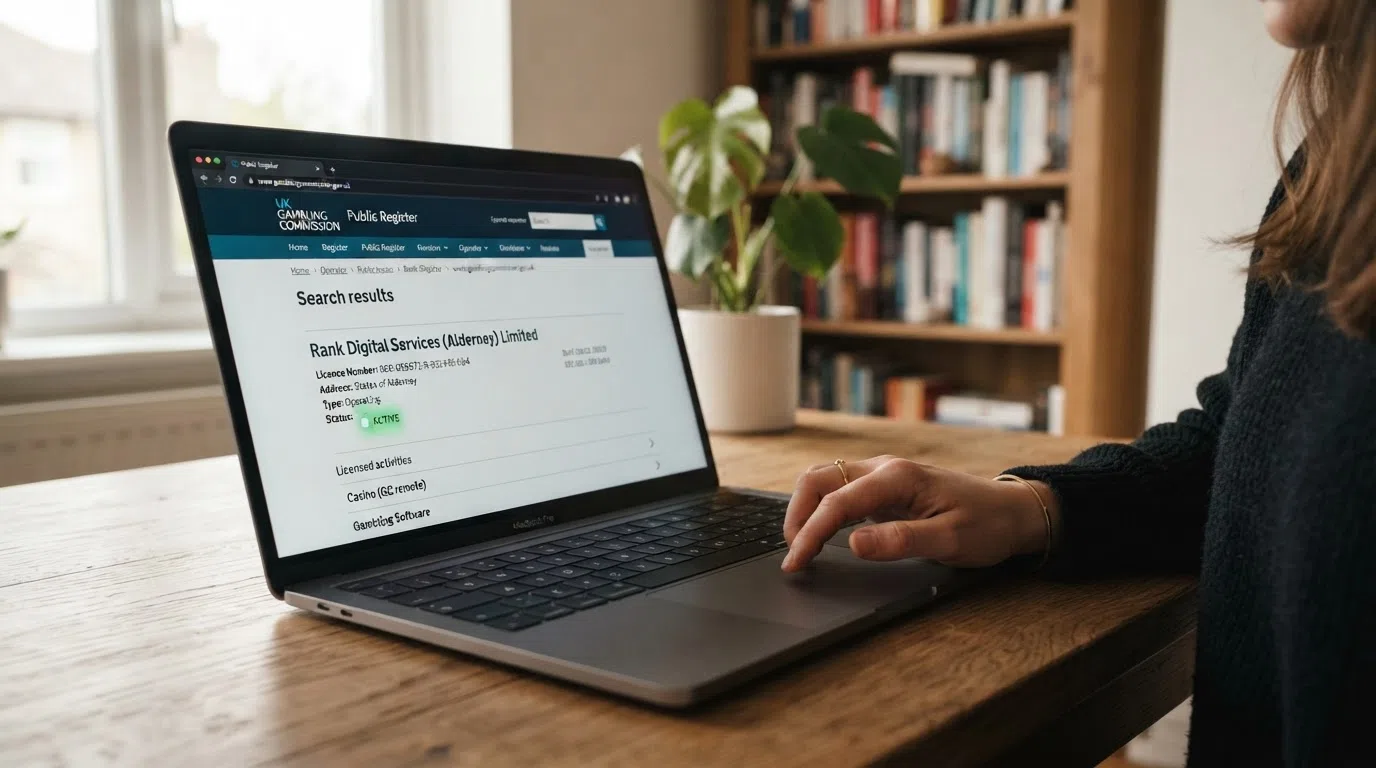
Every casino on this page is verifiable on the Gambling Commission’s public register — the same register that held 2,663 licence records on 29 July 2026. The register is searchable by business name, trading name, domain name or account number, and a valid entry shows the operator’s name, licence number, status (active, suspended or revoked), the licence types held, and the operating and trading names and domain names covered. The search is free, takes under a minute, and is the only authoritative check for whether a UK-facing casino is licensed to take UK customer deposits.
Operating without a UKGC licence while accepting UK customers is a criminal offence under section 33 of the Gambling Act 2005: up to 51 weeks’ imprisonment, an unlimited fine, or both. Between April 2024 and June 2025, the Commission issued 3,140 disruption notices against unlicensed operators, referred 447,778 URLs to search engines for removal, and saw 287,961 of those URLs removed. The enforcement mechanism is disruption rather than ISP blocking — the UK does not currently have statutory ISP-blocking power for unlicensed gambling sites — but the volume of action against offshore brands is real, and the register is the tool a player should use before any deposit.
GamStop Self-Exclusion — What It Covers and What It Cannot Reach
GamStop has been mandatory for every GB-licensed online operator since 31 March 2020, and it is the single most powerful self-exclusion tool available to a UK player. Registration at gamstop.co.uk takes minutes: the player enters their personal details, chooses an exclusion period — six months, one year, five years, or five years with auto-renewal — and the exclusion takes effect within 24 hours across every GB-licensed gambling site. The exclusion cannot be cancelled early. It continues for the full minimum period and can extend up to seven years beyond the minimum if the player does not contact GamStop to end it.
The limit on GamStop is its scope. It is licence-bound: it covers every UKGC-licensed online operator, but it cannot reach unlicensed offshore operators, crypto casinos, or land-based venues. A player who has self-excluded via GamStop can still deposit at an unlicensed crypto casino within minutes, because the operator is outside the UKGC’s perimeter. The self-exclusion works as far as UK regulation reaches, and no further. Other tools should be used for broader coverage.
No-Verification and Offshore Casinos — The Risks of Playing Outside the Licence
Casinos that market “no verification” or “no GamStop” to UK players are unlicensed by definition, and the protections this page has spent three sections describing vanish the moment a UK player deposits at one. Identity verification has been mandatory at every UKGC-licensed operator since 7 May 2019, so a “no verification” pitch is itself the proof that the operator is not within the UK perimeter. The credit-card ban does not apply offshore. The 10× wagering cap does not apply offshore. The deposit-limit framework does not apply offshore. The dispute-resolution process and the route to recover disputed funds are absent offshore.
The badge a player sees on an offshore casino homepage — “licensed in Curaçao”, “licensed in Malta” — does not authorise the operator to accept UK customers. A Malta Gaming Authority licence authorises the operator to serve Maltese customers and other jurisdictions the MGA permits; it does not give the operator a UK point-of-consumption licence, and the absence of one is what makes the offer reachable to a UK player in the first place. The honest read on any such offer is that the protections the player is being asked to give up are worth more than the bonus that is being offered in their place.
How We Chose Every Casino on This Page
The starting point was the Gambling Commission’s public register of licence holders — the only authoritative check for whether a UK-facing casino is licensed to take UK customer deposits. Every operator on this page holds an active GB operating licence, identifiable by name, licence number or both, and verifiable by the reader in under a minute. None of the ten was selected on the basis of bonus size, marketing spend or affiliate relationship; the filter was the licence, and the rest followed.
E-wallet availability was checked against each operator’s published UK cashier. Where a major e-wallet was listed, it is in the table. Where the current e-wallet status was not confirmed in this run, the cell carries an em dash rather than a guess. Welcome-offer terms — wagering multiple, validity window, cashout cap, minimum deposit, eligible slots — were taken from each operator’s publicly stated T&Cs at the time of the research run. A change to those terms after publication is the operator’s to make, and the T&Cs at the operator’s own site are the version a player should rely on at deposit.
The featured set was selected to cover a range of offer types — no-wagering spins (bet365, Sky Vegas, Ladbrokes, PlayOJO), 10× spins (32Red, William Hill Vegas, Coral), a percentage deposit match (888casino), and smaller or less-specified bundles (Betfair, Gala Bingo) — and a range of corporate groups (bet365, Flutter, Entain, evoke, Kindred, SkillOnNet). The ranking is by offer quality under the 10× cap: no-wagering first, then the cleanest 10× offers, then the percentage match, then the bundles whose terms were not fully surfaced.
Where to Get Help — Responsible Gambling Tools and Support
Around 0.5% of the adult English population experience problem gambling, with another 3.8% at elevated risk and an estimated 7% of the British population negatively affected by someone else’s gambling, according to the most recent OHID assessment. The numbers are small in percentage terms and large in absolute terms — the population denominator turns 0.5% into hundreds of thousands of people. The framework on the previous page exists to make gambling safer for the 92% who do not fall into those categories, and the resources in this section exist for the people who do.
The National Self-Exclusion Register — How to Sign Up
GamStop registration is free, takes minutes, and blocks access to every UKGC-licensed gambling site. The process is: enter personal details at gamstop.co.uk, choose an exclusion period (six months, one year, five years, or five years with auto-renewal), confirm. The exclusion takes effect within 24 hours and covers every GB-licensed online operator — casino, bingo, sportsbook, lottery. It cannot be cancelled early, and it continues for the full minimum period. If the player does not contact GamStop to end the exclusion after the minimum, it can continue for up to seven years beyond. The exclusion is online-only and licence-bound, so it does not cover land-based venues or unlicensed offshore sites — a player who needs a wider exclusion should combine GamStop with device-level blocking software and a bank-level gambling payment block.
Deposit Limits, Reality Checks & Time-Outs — Tools You Control
Beyond GamStop, every UKGC-licensed casino must offer in-account tools that let a player set their own boundaries. Deposit limits are the headline tool: from 31 October 2025, the operator must prompt the customer to set a financial limit before the first deposit, and any decrease the player makes to an existing limit takes effect immediately. Increases have a 24-hour cooling-off period by default. From 30 September 2026, only a gross deposit limit based solely on money paid in may be called a “deposit limit” under RTS 12, so a player who wants a net-of-withdrawals limit should ask the operator to set it by name.
Reality checks are timed pop-ups that show session duration, total wins and total losses. They are mandatory under the slot-design rules that have applied since 31 October 2021, and a player can usually configure the interval from 15 minutes upward. Time-outs are short cooling-off periods of 24 hours to six weeks that temporarily block access to the account. None of these tools is a substitute for self-exclusion, and none of them is a substitute for the support lines below, but all three are within the player’s control, and the operator cannot override the limits the player has set.
Helplines, NHS Clinics & Peer Support — Free Help That Works
- The National Gambling Helpline (GamCare) is available 24/7 on 0808 8020 133, free and confidential.
- NHS gambling harm clinics operate in England, Scotland and Wales, providing face-to-face treatment with no charge.
- Gamblers Anonymous UK runs peer-support groups across the country.
- The GambleAware self-assessment has been completed over 160,000 times and is available online.
If gambling has stopped feeling like a choice, the services above are free, confidential, and available right now. No appointment is needed to call the helpline, and the NHS clinics accept self-referrals. The frameworks and tools described in the previous sections are most useful when used early — the deposit-limit prompt, the reality check, the time-out, the GamStop registration — and the support lines are most useful when the early tools have not been enough.
What UK Casino Players Should Actually Do Now That ClickandBuy Is Gone
Step one. Pick a UKGC-licensed casino from the ten compared above, and verify the licence yourself on the public register before depositing. The register is free, the search takes under a minute, and an operator that fails the check is one to walk past regardless of what its homepage claims.
Step two. Choose the e-wallet you already use — PayPal, Skrill, Neteller, Trustly or Apple Pay — and fund it from a debit card or bank account. Never a credit card. The credit-card ban has applied to every UKGC-licensed operator since 14 April 2020, and credit-card-funded e-wallet deposits are refused at the cashier.
Step three. Read the welcome offer’s wagering requirement and cashout cap before depositing. A smaller offer with 0× wagering puts more real cash in a player’s pocket than a larger offer burdened with 10×, and the calculation earlier in this page makes the gap explicit: a £20 bonus at 10× wagering on Big Bass Splash has an expected loss of £6.58 from the play-through, while the same £20 at 0× has an expected loss of £0 from the play-through alone. The headline figure is not the figure that decides value.
Step four. Set a deposit limit before the first deposit. The operator is required to prompt for one, and the player can decrease the limit at any time with the change taking effect immediately. A limit is not a confession of a problem — it is the framework that keeps the activity in the territory the player intends.
ClickandBuy will not return. The UK e-wallet casino market is mature, well-regulated and competitive. The right choice for any individual player depends on what that player values most: no-wagering cash (bet365, Sky Vegas, Ladbrokes, PlayOJO), the largest single spin allocation (32Red, William Hill Vegas), a no-deposit trial (Sky Vegas’s 70 spins on registration), or a percentage deposit match (888casino). The page has laid out what each option costs and what each one pays. The rest is the player’s call.
Frequently Asked Questions
Is ClickandBuy still accepted at UK online casinos in 2026?
No. ClickandBuy ceased issuing e-money and providing online payment services on 30 April 2016, and the UK company behind it, ClickandBuy International Limited, was formally dissolved on 24 February 2026. No UKGC-licensed casino accepts ClickandBuy today, and none can accept it again.
What is the best e-wallet to replace ClickandBuy for UK casino deposits?
PayPal is the most widely accepted e-wallet at UKGC-licensed casinos and the one with the strongest consumer-protection framework behind it. Skrill, Neteller, Trustly and Apple Pay are widely accepted alternatives — the right choice depends on which wallet a player already uses and which operators accept it. None can be funded from a credit card.
How long do e-wallet withdrawals actually take at UK-licensed online casinos?
E-wallet withdrawals are consistently the fastest rail at UKGC-licensed casinos. Once the operator’s internal pending period has elapsed — typically 24 to 48 hours — withdrawals to PayPal, Skrill, Neteller and Trustly usually clear within hours and almost always within the same day. Debit card and bank transfer withdrawals are slower.
Are e-wallet deposits eligible for casino welcome bonuses in the UK?
Yes, in the majority of cases. Most UK welcome bonuses — including the ten compared on this page — accept e-wallet deposits as qualifying transactions. A small number of operators exclude specific e-wallets (commonly Skrill and Neteller) from bonus eligibility, so the operator’s bonus T&Cs are the version a player should rely on before depositing.
Is my money safe when I use an e-wallet at a UK online casino?
E-wallet deposits at UKGC-licensed casinos are protected by the same player-protection framework that covers any other payment method: identity verification before first deposit, segregated customer funds at the operator, and the Gambling Commission’s dispute-resolution process. The e-wallet adds a layer of separation between the player’s bank and the casino, but the regulatory protection sits with the operator’s licence, not the wallet.
Do UK casinos charge fees on e-wallet deposits and withdrawals?
Most UKGC-licensed operators do not charge a fee on deposits or withdrawals by e-wallet. Where fees appear, they are nearly always on the e-wallet’s side (a currency-conversion charge, for example) rather than the operator’s. A UK player who sees a deposit fee on a UKGC-licensed cashier should treat it as the exception rather than the rule.
What is the minimum deposit at UK casinos when using an e-wallet payment method?
Minimum deposits are set by the operator, rather than the payment method, and typically range from £5 to £10. Most UK e-wallet cashiers have a £10 floor, although some operators accept £5. There is no statutory minimum deposit at the UK level; the £5 or £10 figure is a market standard. Always check the cashier terms before depositing.
Payments – nominimumdeposit-casinos-uk
Content created by the «nominimumdeposit-casinos-uk» team