
Online Casino Without ID in the UK: The Two Routes, Ranked
 Available in GB
Data current as of September 8, 2026, verified against the UK Gambling Commission’s public register and each operator’s published terms.
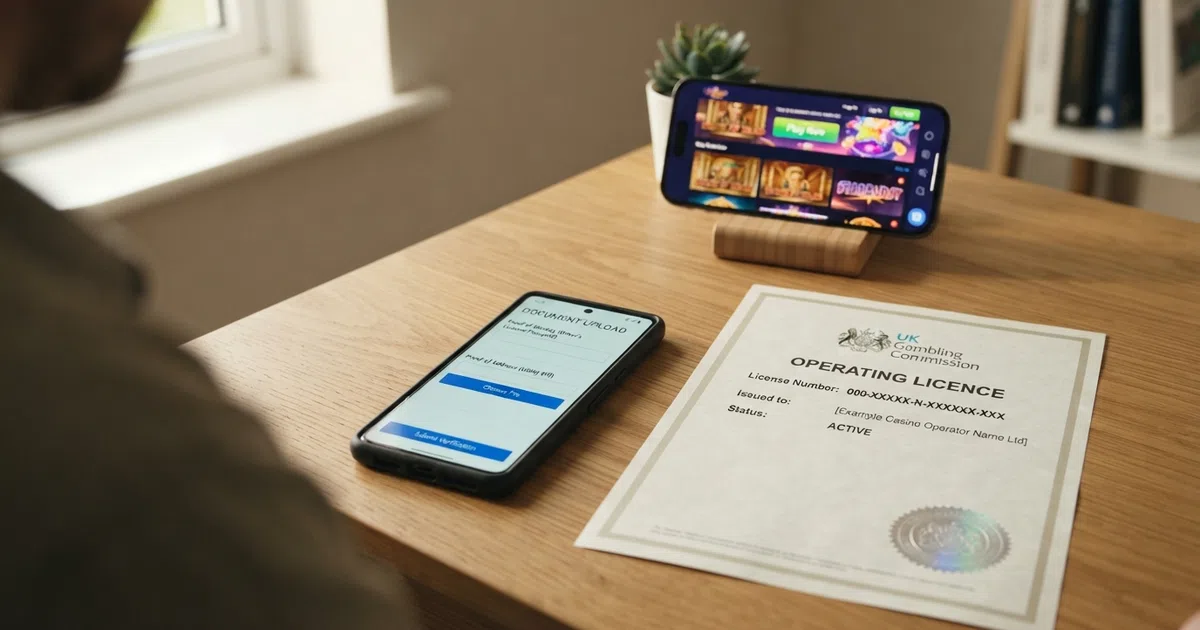
The phrase “no-ID casino UK” promises something the British market cannot legally offer. Every casino licensed by the UK Gambling Commission (UKGC) has been required to verify your name, address and date of birth before you make a single deposit or place a single bet since 7 May 2019. That rule closed the old 72-hour grace period and ended the era in which a UK player could register, deposit, play and only then be asked for a passport. So when a site markets itself as a “no-ID casino” to UK players, it is selling one of two things: a lie, or an offshore operator that is not regulated by the UKGC at all.
This guide covers both routes honestly. The first section explains what “no ID” actually means, why the law bans it, and what happens when you cross the border. The second compares ten operators, seven UKGC-licensed (where you must verify, but you get every protection the British system offers) and three offshore (where you skip the documents, but you lose the safety net). The third examines bonuses, withdrawals, crypto deposits, the responsible-gambling tools that vanish offshore, and the help services that work regardless of where you play.
No-ID Casinos in the UK: What the Term Actually Means
What “No ID Verification” Promises — and What It Actually Delivers
The pitch from an offshore no-KYC casino is clean: open an account, deposit crypto, play, withdraw, never send a document. For a player whose only goal is to skip the upload step, it works, for a while.
The friction arrives at the withdrawal threshold. At Curaçao-licensed no-KYC casinos, verification is typically not requested until cumulative crypto activity reaches roughly £4,000–£8,000. Below that line, you can move money in and out without the casino ever knowing your real name. Above it, the same offshore operator that advertised “no documents” will ask for exactly the documents the UKGC would have asked for at the start. The promise was never absolute; it was a threshold.
The UKGC-licensed version of “no ID” does not exist. Not as a marketing exception, not as a tier of service, not at any of the seven major operators reviewed in this guide. The Gambling Commission’s 7 May 2019 rule is the legal floor for every remote licence holder in Great Britain: identity verified before any deposit or gamble. A site that claims to be both UKGC-licensed and “no-ID” is either confused about its own licence or marketing itself dishonestly. The quote from the no-verification niche itself puts it plainly: “no UKGC-licensed casino can operate as a true ‘No ID’ platform.”
Why Every UK-Licensed Casino Asks for Your ID Documents
The verification step is not a marketing choice the operator makes because it wants to lose sign-ups. It is a statutory requirement flowing from three licensing objectives set out in section 1 of the Gambling Act 2005: preventing gambling from being a source of crime, ensuring gambling is fair and open, and protecting children and other vulnerable persons. Verification prevents underage play, blocks money laundering, and allows the operator to check for self-exclusion via GAMSTOP.
The May 2019 rule ended the previous system, in which a player could register, deposit, play for up to 72 hours, and only then submit documents. That grace period created a window in which underage players could deposit with a parent’s card, and in which self-excluded players could bypass GAMSTOP. The Commission’s response was to require name, address and date of birth to be verified *before* the first deposit or the first bet. The old “we’ll ask later” model is gone.
For players aged 18 to 24, the ID check also leads directly into the age-banded stake cap: £2 per game cycle, in force since 21 May 2025. For players 25 and over, the cap is £5 per game cycle, in force since 9 April 2025. Both limits were imposed by the Gambling Act 2005 (Operating Licence Conditions) (Amendment) Regulations 2025, statutory instrument 2025/215, and both apply *only* to operators licensed in Great Britain. The offshore alternative has no such cap.
How This Guide Is Organised: The Two Routes to Playing Without ID
There are two honest routes for a UK player searching “no-ID casino”, and this guide covers both.
The first route is the UKGC-licensed one. You verify your identity before you play. In exchange, you get the full British consumer-protection framework: GAMSTOP self-exclusion, the UKGC complaints process, an approved alternative dispute resolution (ADR) provider, the 10× statutory wagering cap, age-banded stake limits, a mandatory deposit-limit prompt, game-design rules that ban losses disguised as wins, and the right to escalate a complaint to the regulator. Seven operators in this guide take that route.
The second route is the offshore one. You skip the document upload at signup. At some point, often around £4,000–£8,000 in cumulative crypto activity, you will be asked for documents anyway, and you will have given up every protection listed above. Three operators in this guide take that route, and the trade-off is stated clearly in each profile.
A note before either route is explored in depth: no UKGC-licensed operator in the British market is permitted to let you gamble without verifying your identity. If a site is offering that, it is not UKGC-licensed. The remaining sections explain why the law says what it says, what enforcement looks like, and what the trade-off actually costs.
Why No UKGC-Licensed Casino Can Skip Your ID Check
The 7 May 2019 Rule: No Deposit Before Identity Verification
The single regulatory change that created the entire “no-ID casino UK” search market is the UKGC’s May 2019 rule. Before that date, remote operators could rely on a grace period: register, deposit, play for up to 72 hours, and submit documents before withdrawing. The grace period was a relic of the early-2010s remote market, before smartphone-based play, before the explosion of payment methods, and before the Gambling Commission had the enforcement muscle to police it.

The change made the verification process front-loaded. Name, address and date of birth must be confirmed before a customer can deposit funds or place a bet. The rule sits in the Licence Conditions and Codes of Practice (LCCP) and the Remote Technical Standards (RTS), and it applies to every operator holding a GB remote licence, without exception. There is no operator-size threshold, no “trial period” carve-out, and no opt-in for customers who would rather not.
For UK players, this is the reason the offshore market exists at all. A player who values anonymity, who wants to bypass GAMSTOP, or who simply resents the upload step, has nowhere to go inside the licensed market. The offshore market is the only alternative, and every subsequent section of this guide is an attempt to describe what that alternative actually delivers and what it takes away.
What the Gambling Act 2005 Actually Says About Playing Offshore
The legal position of a UK player who gambles at an unlicensed offshore site is unusual in one specific way: it is not a criminal offence. The Gambling Act 2005 creates offences in Part 3 (sections 33 to 39) for providing gambling without a licence, advertising unlicensed gambling, and facilitating it. The penalties on the operator side are severe: section 33 makes unlicensed provision a summary offence carrying up to 51 weeks’ imprisonment, an unlimited fine, or both. None of those penalties falls on the player.
The 2014 point-of-consumption reform closed the loophole that had allowed operators based outside Britain to serve British customers without a GB licence. From that point on, a casino serving GB customers needs a GB licence regardless of where it is incorporated. Curaçao, Malta, Gibraltar, none of these are substitutes. The reform means the offshore operator is breaking British law simply by accepting your registration, and it means the protection the British system offers is geographically tethered to the licence, not to the player.
The honest summary of a UK player’s legal position: a player gambling at an unlicensed offshore site loses protection, not liberty. The casino is the criminal, the player is the customer who has no consumer recourse. The distinction matters because it explains why the UKGC’s enforcement is disruption-focused (going after the supply side) rather than prosecution-focused (going after the demand side).
How the UKGC Enforces Against Unlicensed Operators
The Gambling Commission does not pursue individual players. It pursues the operators and the infrastructure that supports them, and the data from the past two financial years shows an enforcement model built on volume and referral rather than prosecution.
Between April 2024 and June 2025, the UKGC issued 3,140 cease-and-desist and disruption notices, referred 447,778 URLs to Google and Bing, and achieved 287,961 URL removals against illegal online gambling. The 2025–26 figures continued at scale: 741 cease-and-desist notices, 397,527 URL referrals, 266,667 removals (a roughly 67% takedown rate), 1,068 websites referred for delisting, and 1,134 websites disrupted through takedowns or geo-blocking.
The mechanism has a fixed shape. The UKGC issues a cease-and-desist notice with a 48-hour deadline. If the operator does not comply, the URL is referred to search engines for de-indexing, to domain registrars for suspension, to hosting providers for takedown, and to payment providers for blocking. The cumulative effect is that an unlicensed casino is forced to keep rebuilding its infrastructure, and players who arrive via search engines find the site increasingly hard to reach.
What the UKGC does not yet have is statutory ISP or DNS blocking power. The mechanism that the UK Intellectual Property Office uses to block pirate streaming sites, court-ordered ISP-level blocking, has been proposed for unlicensed gambling but not enacted. The political resistance centres on net-neutrality concerns and the broader question of state-mandated internet filtering. The result is that the UKGC’s disruption model works against discoverability and payment processing, but does not stop a player with a direct URL from reaching an offshore site.
The Protections You Leave Behind at an Unlicensed Casino
The list of what disappears the moment you play outside the UKGC system is long, and it is worth working through it explicitly, because each item is something a player at a UKGC-licensed site takes for granted.
GAMSTOP is the national self-exclusion register, mandatory at every GB-licensed online operator since 31 March 2020. Exclusion periods run six months, one year, five years, or five years with auto-renewal. Once confirmed, the exclusion cannot be cancelled early; if the player does not contact GAMSTOP after the minimum period, the exclusion continues for up to seven further years. None of this applies at an offshore casino. A player who has self-excluded can register, deposit, and play at an offshore site without the casino or anyone else stopping them.
The financial vulnerability check triggers at a net deposit of £150 in a rolling 30-day period, in force since 28 February 2025. It uses publicly available data (county court judgments, individual voluntary arrangements, bankruptcy orders) and is not a credit check or an income check. The point is to flag a player whose financial situation has visibly deteriorated before a gambling spiral starts. It exists only at UKGC-licensed operators.
The mandatory deposit-limit prompt, in force since 31 October 2025, requires the operator to ask every new customer to set a financial limit before their first deposit. Decreases are actioned immediately. A standardised gross deposit limit must be offered by 30 September 2026. None of this exists offshore.
The statutory stake caps (£5 for 25+, £2 for 18–24), the auto-play ban, the 2.5-second minimum spin speed, the ban on losses disguised as wins, the ban on reverse withdrawals, the display of session losses and time played, every one of these is a UKGC requirement. None of them bind an offshore operator.
What this means in plain terms: at an unlicensed casino, the player is the only person setting any limit, and the casino is the only party enforcing any rule. The British system’s value is not that it stops everyone from being harmed; it is that it builds friction into the experience at every step, friction that an offshore operator has no commercial reason to replicate.
No Photo ID, No ID Check, No ID Needed: What Each Variant Means
Three related search terms cluster around the same question, and each one means something slightly different.
“No photo ID” describes operators that accept non-photographic alternatives: a bank statement, a utility bill, proof of address from a credit reference agency. The identity is still verified, just not via passport or driving licence. Every UKGC-licensed operator offers this pathway.
“No ID check” has two readings. At a UKGC-licensed casino, the term is meaningless: no such operator exists. At an offshore casino, the term means verification is deferred, not eliminated. The KYC threshold is the line at which the deferral ends.
“No ID needed” or “no ID required” is the absolute claim, and it is true only at unlicensed operators, and only up to the threshold. Beyond the threshold, the documents arrive by email.
The two routes in this guide, UKGC-licensed and offshore, map onto these terms in a fixed way. The licensed route is “no photo ID” (verification with non-photographic alternatives) and “no ID check” (impossible). The offshore route is “no ID required” (deferred until the threshold). A player who searches “no ID casino UK” and arrives at an unlicensed operator is choosing the deferred-verification path, and every profile in this guide states the trade-off plainly.
The Best No-ID Casinos for UK Players: The Licensed-Benchmark vs Offshore Split in 2026
Ten operators make up this ranking: seven UKGC-licensed brands that require full KYC and offer the full British protection framework, and three offshore operators that skip ID at signup and offer no UKGC protection at all. The split is not a hedge; it is the structure of the market. A player who wants the British protections cannot get no-ID play. A player who wants no-ID play cannot keep the British protections. The table ranks both tiers, side by side, on the criteria that matter for a no-ID search.
| Operator | Licence / Regulator | Welcome Bonus | Free Spins | Wagering | No-Deposit Spins | ID Required |
|---|---|---|---|---|---|---|
| Sky Vegas | UKGC (Flutter Entertainment) | 50 no-deposit + 200 on £10 spend | 250 total | 0× | 50 | Yes, full KYC |
| Paddy Power | UKGC (Flutter Entertainment) | 60 no-deposit + 100 on £10 wager | 160 total | 0× | 60 | Yes, full KYC |
| Betfair | UKGC (Flutter Entertainment) | 50 no-deposit + 50 on £10 deposit | 100 total | 0× | 50 | Yes, full KYC |
| Betfred | UKGC (Petfre Limited) | Up to 200 spins for £10 stake | Up to 200 | 0× | None | Yes, full KYC |
| bet365 | UKGC (Hillside (UK Gaming) ENC) | Up to 500 free spins | Up to 500 | 0× | None | Yes, full KYC |
| William Hill | UKGC (WHG International Limited) | Varies by promotion | Varies | ≤10× | None | Yes, full KYC |
| 888 Casino | UKGC (evoke plc) | Deposit match | Varies | 1× | None | Yes, full KYC |
| Jackbit | None (offshore) | 100 spins on Hot Chilli Bells | 100 | 0× on spins / 1× on deposit | None | No (threshold) |
| Wild.io | Curaçao | 350% up to $5,000 + 200 spins | 200 | 40× | 20 | No (threshold) |
| Flush | Curaçao | Up to $3,450 across 3 deposits | Not stated | 30× / 35× | None | No (threshold) |
The licensed tier is the benchmark against which the offshore claims are measured. A 0× wagering free-spin offer is now the norm at major UKGC operators; Wild.io’s 40× wagering is four times the statutory cap that binds every UKGC operator from 19 December 2025. Jackbit’s offer looks generous on spin count (100 wager-free) until the $50 minimum deposit and the $100 cashout cap are noticed. The table is the comparison; the operator profiles that follow explain what each cell actually costs.
How We Compare No-ID Casinos: The Criteria That Ordered This Ranking
Four criteria ordered the list. They are stated here so the reader can disagree with the weighting.
Licence and regulatory status is the first filter. A UKGC licence means the operator is answerable to a British regulator with enforcement muscle, statutory powers, and a public register. A Curaçao licence means the operator is answerable to a regulator with a lighter framework, no UKGC enforcement reach, and limited consumer recourse. No recognised gambling licence, Jackbit’s position, means the operator is answerable to nobody in the UK.
The bonus proposition is the second filter. A 0× wagering offer with no cashout cap and 250 free spins is worth more than a 350% headline match with 40× wagering and a 30-day validity window. The ranking values the post-wagering, post-cap value of an offer, not the headline number, because the headline number is the part the marketing owns and the wagering multiplier is the part the player pays.
Verification friction is the third filter, and it is the one this guide is built around. The UKGC-licensed tier scores zero on this criterion because verification happens before the player can deposit, full stop. The offshore tier scores well at signup (no documents requested) but accumulates friction at the withdrawal threshold.
Payout reliability and speed is the fourth filter. A withdrawal that arrives in minutes is worth more than a withdrawal that arrives in days, all else equal. Crypto withdrawals at offshore casinos are typically the fastest, but the speed claim only holds below the KYC threshold. UKGC-licensed withdrawals are slower to process but face no late-stage KYC surprise because the verification is already complete.
The UKGC-Licensed Benchmark: Seven Operators, Full Protection, Mandatory ID
The seven UKGC-licensed operators in this ranking are the regulated baseline. Every one holds an active UKGC licence verified against the public register, every one offers wager-free or near-wager-free welcome spins at £0.10 per spin, and every one requires full KYC before the customer can deposit or play. The ID friction is not a feature the licensed operators can remove; it is the legal cost of offering the protections that follow from it.
The competitive shape of the UK market in 2026 is striking. Six of the seven operators offer 0× wagering on their welcome spins. The seventh, William Hill, caps at the statutory 10× maximum. The 10× cap, in force since 19 December 2025, has compressed the wagering range across the licensed market to a single-digit band, and the major operators have responded by zeroing it out on free spins. The era of 35× or 50× wagering at UKGC-licensed casinos is functionally over. What the licensed market sells now is volume (250 spins at Sky Vegas, up to 500 at bet365) and simplicity (no wagering, paid as cash, no cashout cap on most offers).
These seven are included in a no-ID guide not because they offer no-ID play, but because they are the only places a UK player can play with the full British safety net. A player who values consumer protection and is not actively trying to bypass GAMSTOP will find the licensed tier the better deal in 2026, and the gap has narrowed: the 10× wagering cap, the 0×-wagering norm, and the £5 stake cap confirm the licensed market as the clear regulatory standard for the British player.
Sky Vegas: 250 Wager-Free Spins, Full UKGC Protection
Sky Vegas holds a UKGC licence through Sky Betting & Gaming, part of Flutter Entertainment, and the welcome offer is the largest no-deposit proposition in the licensed set. Fifty free spins require no deposit at all; a further 200 free spins are unlocked by a £10 deposit or £10 of real-money spend. All 250 spins carry 0× wagering, meaning every winning is paid as withdrawable cash, and there is no stated cashout cap on the offer.
The seven-day expiry applies to both components. Eligible games include Eye of Horus and Fishin’ Frenzy, and the spin value is the UKGC norm of £0.10. The maximum number of spins an individual player can win from the deposit-gated component depends on the active promotion at the time of registration.
KYC is mandatory before the first spin, the legal floor for every UKGC-licensed operator. A player who values the largest no-deposit free-spin offer in the licensed market and is comfortable uploading a passport or driving licence at signup gets the full British protection framework in return. The KYC step takes minutes via the app.
Paddy Power: 160 Free Spins with Zero Wagering
Paddy Power’s UKGC licence is held by PPB Entertainment, also part of Flutter Entertainment. The welcome structure is a 60 no-deposit free spins package plus 100 further spins on £10 of wagering, giving a total of 160 spins at 0× wagering. There is no stated cashout cap, and the seven-day validity applies to both components.
The 12 eligible slots include Paddy’s Mansion Heist alongside major Playtech and NetEnt titles, and the £0.10 per-spin value matches the UK norm. The no-deposit component is larger than Betfair’s (60 versus 50) and smaller than Sky Vegas’s deposit-gated total (160 versus 250), placing Paddy Power in the middle of the licensed tier on volume.
Paddy Power’s appeal is the combination of brand recognition, the no-deposit component, and the Flutter group backing. The KYC step is identical to every other UKGC operator: full verification before the first spin, no exceptions, no deferred-document model.
Betfair: 100 Free Spins, Half of Them Deposit-Free
Betfair’s UKGC licence is held by Betfair Casino Limited, again under the Flutter Entertainment umbrella. The welcome offer splits 50/50: 50 no-deposit free spins plus 50 further spins on a £10 deposit, 100 in total at 0× wagering, no stated cashout cap, seven-day validity.
The eligible games are the Jackpot King catalogue, including Crabbin’ For Cash Extra Big Catch Jackpot King, and the £0.10 spin value matches the UK norm. The Flutter group operates three of the seven licensed operators in this ranking (Sky Vegas, Paddy Power, Betfair), and the consistency of the wagering and expiry terms across the three reflects the group-wide offer structure.
The 50/50 split is the operator’s distinctive choice. A player who wants the full 100 spins pays £10; a player who only wants the no-deposit 50 plays for free. Full identity verification is required before any gaming can commence.
Betfred: Up to 200 Wager-Free Spins for £10 Stake
Betfred’s UKGC licence is held by Petfre Limited, an independent major. The welcome offer is deposit-gated: up to 200 wager-free spins for a £10 stake, 0× wagering, no stated cashout cap, seven-day validity. There is no no-deposit component, which makes Betfred the first of the licensed tier in this ranking to require a deposit for any spins.
The 200 spins are distributed through the Betfred Prize Reel, a daily promotion that credits spins in tranches over the seven-day validity window. The total depends on the player’s activity and the active promotion. The £0.10 spin value matches the UK norm.
Betfred is the choice for a player who values a long-established independent brand and does not need a no-deposit entry point. The 200 spin ceiling is competitive with Paddy Power (160) and bet365 (up to 500), and the zero-wagering structure puts the offer in the same value band as the other Flutter group brands.
bet365: Up to 500 Wager-Free Spins
bet365 holds its UKGC licence through Hillside (UK Gaming) ENC, account numbers 55148 and 55149, and the welcome offer is the largest free-spin volume in the licensed set: up to 500 free spins, 0× wagering, no stated cashout cap, seven-day validity.
The 500-spin ceiling is the operator’s headline figure; the actual number a player receives depends on the active promotion at registration. The qualifying deposit is the entry gate, no no-deposit component, and the eligible games are drawn from bet365’s full slot catalogue at £0.10 per spin.
The brand is the largest privately held operator in the UK, and the 500-spin ceiling is the most generous volume offer in the licensed tier. The same 0× wagering structure applies as at Sky Vegas, Paddy Power and Betfair, but the volume is unmatched. KYC is full, before play.
William Hill: A Licensed Stalwart with Variable Offers
William Hill holds its UKGC licence through WHG International Limited, and the welcome offer is the most variable in the licensed tier. The current active promotion is typically a deposit match or a free-spins package, with wagering capped at 10× (the statutory maximum) and validity running from 7 to 30 days depending on the offer.
The variability is the point. William Hill rotates promotions more frequently than the Flutter group brands, and the ranking reflects the operator’s standing rather than a single offer snapshot. The £0.10 spin value on free-spin promotions matches the UK norm, and the eligible games are drawn from a deep Playtech/NetEnt/IGT/Blueprint catalogue that includes Evolution live-dealer titles.
A player who values brand longevity and does not need a fixed offer snapshot will find William Hill competitive. The operator enforces standard UKGC identity checks prior to play for all customers.
888 Casino: The Lowest Wagering Deposit Match in the Market
888 Casino holds its UKGC licence through 888 UK Limited, part of evoke plc. The welcome offer is a deposit match at 1× wagering, the lowest multiplier in the licensed tier, set against a 90-day validity window, the longest in the ranking.
The 1× wagering on a deposit match is a structural departure from the free-spin-dominant model at Sky Vegas, Paddy Power, Betfair, Betfred and bet365. It addresses a different player: someone whose preferred product is a matched-funds offer rather than free spins, and who values a long window to clear the wagering. The £0.10 spin value on free-spin promotions matches the UK norm, and the eligible games are drawn from a NetEnt/Playtech/Evolution/Red Tiger/Pragmatic Play catalogue.
For a player who values the lowest possible wagering multiplier on a deposit bonus and a 90-day window to clear it, 888 is the only choice in the licensed tier. KYC is full, before play.
The Offshore Tier: Three Operators That Skip ID at Signup
The three offshore operators in this ranking share four traits and differ on everything else. None holds a UKGC licence: Jackbit operates with no recognised gambling licence, Wild.io and Flush hold Curaçao licences. None requires ID at signup. All three reserve the right to request documents at withdrawal thresholds around £4,000–£8,000 in cumulative crypto activity. All three accept cryptocurrency as the primary deposit method, because no UKGC-licensed casino accepts cryptocurrency in 2026, and the offshore operators are the only route to crypto deposits at all.
The trade-off in one sentence: you skip the ID upload at signup, you lose GAMSTOP, the UKGC complaints route, the approved ADR provider, and any British consumer redress if the casino withholds your funds. The offshore tier is not a regulated alternative to the UKGC tier; it is a different product, sold to a different reader, with a different risk profile.
Jackbit: 7,000+ Games, No ID at Signup
Jackbit operates without any recognised gambling licence, a position that places it at the far end of the offshore spectrum. The game library is the largest in the ranking: 7,000+ titles from Pragmatic Play, Play’n GO, Hacksaw Gaming, Evolution and others, covering slots, live casino, table games and crash games.
The welcome offer is 100 wager-free free spins on Hot Chilli Bells, available on a minimum $50 deposit, with a $100 cashout cap on the spin winnings. The 0× wagering on the spins is the same headline structure as the UKGC-licensed offers; the 1× wagering on the deposit plus winnings, required before withdrawal, is a common threshold in matched-bonus structures, though less common in free-spin offers. The seven-day validity applies.
Verification is not required at signup and not required for routine withdrawals. The casino reserves the right to request documents for fraud or AML flags, and the cumulative-activity threshold (around £4,000–£8,000 in crypto) is where routine play ends and document requests begin. The KYC step that a UKGC-licensed operator performs at the start, Jackbit performs only at the threshold.
For a player who values the largest game library in the ranking and is comfortable with no recognised gambling licence, no GAMSTOP coverage, and no UKGC consumer recourse, Jackbit is the volume play. The $100 cashout cap and the $50 minimum deposit are the friction points the marketing does not lead with.
Wild.io: A 350% Crypto Bonus and 200 Free Spins
Wild.io holds a Curaçao licence and runs a 9,000+ game library from 57+ providers, the largest provider count in the ranking. The welcome offer is a 350% match up to $5,000 plus 200 free spins across three deposits, plus 20 no-deposit free spins with a 50 USDT cashout cap. The headline percentage is the largest in the ranking.
The wagering terms are the heaviest. Both the bonus funds and the free-spin winnings carry 40× wagering, four times the UKGC statutory cap. The 30-day validity is the longest in the offshore tier. The $1.00 per free spin value is ten times the UK norm of £0.10, reflecting a different bonus economy at the offshore end of the market.
Curaçao licensing is the regulatory framework. No GAMSTOP, no UKGC complaints route, no approved ADR, no British consumer redress. The threshold-based verification model is the same as every other no-KYC casino: documents requested only at the £4,000–£8,000 cumulative activity line.
For a player who values the largest headline bonus percentage and is comfortable with 40× wagering, a Curaçao licence, and the offshore protection gap, Wild.io is the headline-grabber. The 350% shrinks fast under 40× wagering, and the calculation later in this guide shows exactly how fast.
Flush: Tiered Match Bonus, No Routine KYC
Flush holds a Curaçao licence and runs a tiered welcome structure: up to $3,450 across the first three deposits, with the first deposit at 30× wagering and all subsequent deposits at 35×. The 30-day validity applies.
The distinctive feature is the withdrawal speed. Flush advertises crypto withdrawals under one hour for Bitcoin, faster than any other operator in the ranking. For a player whose primary concern is payout speed and who is comfortable with the offshore protection profile, this is the relevant metric.
No routine KYC is required at signup or for standard withdrawals. The threshold-based verification model is the same as every other offshore operator in this ranking. The bonus structure is deposit-heavy rather than free-spin-heavy, with the tiered match appealing to a player who values matched funds over spin volume.
The Curaçao licence, the absence of GAMSTOP, and the lack of any UKGC consumer recourse apply as at every other offshore operator. The tiered match at 30×/35× wagering is lighter than Wild.io’s 40× and heavier than the UKGC tier’s 0×/1×. The 30-day validity is the same as Wild.io’s.
Slots, Live Tables and Casino Games You Can Play Without ID
Slots Without ID: The Titles That Dominate No-Verification Casinos
The slot libraries at no-ID casinos run into the thousands. The four titles below are the ones that appear across both the UKGC-licensed and offshore tiers, with verified RTPs that the page can quote honestly.
| Slot Title | Provider | RTP | Volatility | Max Win |
|---|---|---|---|---|
| Starburst | NetEnt | 96.09% | Low/Medium | 500× stake |
| Book of Dead | Play’n GO | 96.21% | High | 5,000× stake |
| Big Bass Bonanza | Pragmatic Play | 96.71% | High | 2,100× stake |
| Gonzo’s Quest | NetEnt | 95.97% | Medium-High | 2,200× stake |
The age-banded stake caps are the structural difference. A player aged 25 or over at a UKGC-licensed casino is limited to £5 per game cycle on any of these titles; a player aged 18 to 24 is limited to £2. At an offshore casino, the only limit is the maximum stake the operator sets on the game, which is typically much higher. The £5 cap is a player protection; its absence is a player risk.
A “game cycle” is the period from game initiation to the delivery of all winnings, and the cap applies to the total staked within that cycle. The auto-play ban, in force at all UKGC licensees since October 2021, means the player must initiate each spin manually. The 2.5-second minimum spin speed means the same. Neither rule binds an offshore operator. A player at a Curaçao-licensed casino can run autoplay at full speed with no enforced pause; the game runs as fast as the provider allows.
Live Casino Without Verification: What Is Actually Available
Evolution is the dominant live-dealer provider at both UKGC-licensed and offshore casinos, and the studio stream is the same. The games are the same: roulette, blackjack, baccarat, game-show titles, all broadcast from Evolution’s studios in Latvia, Malta, Georgia, and elsewhere. The provider has no incentive to differentiate based on the operator’s licence, and a UK player at a Curaçao-licensed casino is sitting at the same Evolution table as a UK player at a UKGC-licensed casino.
The difference is the operator framework. A UKGC-licensed casino is bound by the LCCP and RTS in its live-dealer offering: stake limits on certain games, dispute resolution through an approved ADR, segregation of player funds, and the operator’s own safer-gambling obligations. An offshore casino carries none of these obligations. The live game is the same; the wrapper around it is not.
The stake limits that apply to UKGC slots (£5 for 25+, £2 for 18–24) do not extend to live-dealer games in the same way. The 18–24 stake cap is specific to online slots. Live-dealer tables at a UKGC-licensed casino have their own per-table limits, set by the operator within the operator’s licence conditions, and they are typically higher than the slot cap. The offshore equivalent has no operator licence conditions at all, and the table limits are set by the casino’s own commercial decision.
Table Games and Other Casino Games Without ID
RNG blackjack, roulette, baccarat, video poker, and scratch-card titles are available across all ten featured operators, and the no-ID offer is no different at the table-game level than at the slot level: the offshore operators skip the ID upload at signup, the UKGC operators do not.
The game-design rules that disappear offshore are more important than the game availability. The UKGC’s October 2021 package banned losses disguised as wins (animations that celebrate a spin that returns less than the stake), banned reverse withdrawals (cancelling a withdrawal request and returning the funds to the playable balance), and required operators to display session losses and time played. None of these rules apply at a Curaçao-licensed or unlicensed operator. A player at an offshore casino may see “losses disguised as wins” animations, may reverse a withdrawal, and may not see a session-loss display.
These are not aesthetic differences. They are interventions designed to interrupt a gambling spiral, and their absence is a feature of the offshore product, not an oversight. A player who values these protections plays at a UKGC-licensed casino; a player who prefers a frictionless experience without these guardrails may choose the offshore route.
No-ID Bonuses and Free Spins: What You Can Actually Claim Without Verification
No-Deposit Free Spins Without ID: Who Offers Them and What They Are Worth
The no-deposit free-spin offers across the ranking cluster at the UKGC-licensed end of the market. Sky Vegas (50 spins), Paddy Power (60 spins) and Betfair (50 spins) all offer genuinely deposit-free spins, all at 0× wagering, all with no stated cashout cap, all at the £0.10 UK norm spin value.
The offshore no-deposit picture is thinner. Wild.io offers 20 no-deposit free spins, but the winnings carry a 50 USDT cashout cap, the kind of small-print condition that turns a no-deposit offer into a £40-odd ceiling on real winnings. Jackbit’s 100 wager-free spins require a $50 minimum deposit, so they are not genuinely no-deposit at all. Flush does not advertise a no-deposit spin component.
The pattern is the opposite of what the marketing suggests. The largest no-deposit free-spin offers in the ranking sit with the UKGC-licensed operators, where the player must verify identity first. The offshore operators, which market themselves as “no-ID”, offer smaller no-deposit components, deposit gates on the headline offers, and cashout caps that turn the headline number into a fraction of the real value. The 0× wagering and the absence of a cashout cap at Sky Vegas, Paddy Power and Betfair are the structural advantages of the licensed tier; the offshore tier cannot match them on these terms.
Deposit Bonuses at No-ID Casinos: The Headline Number vs the Real Cost
The wagering multiplier is the only number that determines the real cost of a bonus. The headline percentage is the part the marketing owns, and the wagering multiplier is the part the player pays.
A £100 bonus at 10× wagering requires £1,000 of qualifying turnover before withdrawal, with an expected loss of roughly £40 at 96% RTP. A £100 bonus at 40× wagering requires £4,000 of qualifying turnover, with an expected loss of roughly £160 at the same RTP. The £100 bonus is identical in both scenarios; the wagering multiplier is what separates the offers. The 350% headline at Wild.io sounds better than the 100% match at 888 Casino, but at 40× wagering versus 1×, the Wild.io bonus is forty times more expensive to clear, and the headline number is doing the work the wagering should be doing.
The UKGC-licensed tier in this ranking sits at 0× (six operators) to 1× (888 Casino) to ≤10× (William Hill). The offshore tier sits at 1× (Jackbit, on the deposit), 30×/35× (Flush), and 40× (Wild.io). The 10× statutory cap at UKGC operators, in force since 19 December 2025, is the structural reason the licensed tier cannot compete on the 35–50× norm that offshore operators still use. The licensed tier has been compressed to a single-digit band, and the major operators have responded by zeroing it out on free spins.
Wagering Requirements and Eligibility: What Blocks You from Cashing Out
The fine print that turns a bonus into a withdrawable balance runs along four dimensions: the wagering multiplier, game contribution weightings, the validity window, and the cashout cap.
Wagering multipliers across the ranking run from 0× (Sky Vegas, Paddy Power, Betfair, Betfred, bet365, Jackbit on spins) to 40× (Wild.io). The 1× at 888 Casino is the lowest multiplier on a deposit match in the ranking; the 30×/35× at Flush is the midpoint of the offshore tier.
Game contribution weightings determine how much of each wager counts toward the requirement. Slots typically contribute 100%. Table games and live casino typically contribute 10–20%, or are excluded entirely. The 100× slot weighting is the reason a 40× bonus is cleared faster than the headline suggests only on slots; a player running the wagering on blackjack will clear it four to ten times slower.
Validity windows run from 7 days (most UKGC operators, Jackbit) to 30 days (Wild.io, Flush) to 90 days (888 Casino). A 7-day window at 0× wagering is generous because the player is clearing nothing; a 7-day window at 40× wagering is brutal because the player must run £4,000 of qualifying turnover in 168 hours.
Cashout caps vary by operator. Jackbit caps free-spin winnings at $100. Wild.io caps no-deposit spin winnings at 50 USDT. The UKGC-licensed operators have no stated cap on most offers, meaning the player can withdraw whatever the spins pay. The cap is the offshore tier’s structural feature; the absence of a cap is the licensed tier’s.
The 10× UKGC statutory cap is a consumer protection, not a marketing choice. It limits the player’s downside, and the licensed tier has responded by zeroing out the wagering entirely on the headline offers. The offshore tier has no statutory cap, and the wagering multipliers reflect that.
A Worked Example: The Cost of a £100 Bonus at Different Wagering Multipliers
Taking a representative £100 bonus, a typical slot RTP of 96% (the midpoint of the four researched titles), and the wagering multipliers that appear across this ranking: at 0× wagering, the bonus is free to clear and the player keeps every penny of winnings. At 1× wagering (888 Casino), the required turnover is £100 and the expected loss is £4. At 10× wagering (the UKGC statutory cap), the required turnover is £1,000 and the expected loss is £40. At 30× wagering (Flush first deposit), the required turnover is £3,000 and the expected loss is £120. At 35× wagering (Flush subsequent deposits), the required turnover is £3,500 and the expected loss is £140. At 40× wagering (Wild.io), the required turnover is £4,000 and the expected loss is £160.
The £100 bonus is identical at every step; the wagering multiplier is the only thing that changes, and it is the only thing that determines the cost. The £40 expected loss at 10× wagering is a marketing cost the operator builds into the bonus economics; the £160 expected loss at 40× is a cost four times larger, dressed up by a 350% headline. The arithmetic makes the choice. A player who values the £100 bonus should pick 0× or 1×; a player who values the £5,000 maximum bonus should understand that 40× wagering on the full amount is £20,000 of qualifying turnover and an expected loss of £800.
These figures are statistical estimates. They describe the average cost over thousands of spins at 96% RTP; they promise no individual outcome. The real cost to any single player is bounded below by zero (a small win, walked away) and above by the full bonus amount plus deposits spent in pursuit.
Getting Paid: Withdrawals Without ID Verification
How No-ID Withdrawals Actually Work: Thresholds and Triggers
The threshold is the part of the offshore no-ID model the marketing does not lead with. At Curaçao-licensed no-KYC casinos, verification is typically not requested until cumulative activity reaches approximately £4,000–£8,000 in crypto. Below that line, the player can deposit, play, and withdraw without the casino ever asking for a document. Above it, the same casino that advertised “no verification” sends the same document request the UKGC operator would have sent at signup.
The trigger is a function of cumulative activity, not a single transaction. A player who wins a single large sum below the threshold can withdraw without documents; a player who runs many smaller transactions that cumulatively cross the threshold will be asked for documents on the next withdrawal, regardless of the amount. The threshold is the line at which the casino’s automated KYC system flags the account for review.
The comparison with the UKGC model is sharp. A UKGC-licensed operator verifies name, address and date of birth at the start, so the withdrawal itself faces no additional KYC hurdle. The verification is front-loaded; the withdrawal is friction-free. An offshore operator defers the verification to a threshold, and the player who crosses the threshold faces the same friction they sought to avoid. The marketing that promised “no documents ever” was always “no documents up to £4,000–£8,000 of activity”.
Payout Speed at No-ID Casinos: What the Claims Mean
The advertised payout times depend on the payment method and the verification status. Crypto withdrawals are the fastest, with Flush claiming under one hour for Bitcoin. Typical crypto processing across the offshore tier runs from minutes to a few hours, and the transaction itself, once broadcast, settles in the next block (around 10 minutes for Bitcoin, 15 seconds for Ethereum).
Fiat withdrawals are slower. Bank transfers take one to three business days at most operators. E-wallets (Skrill, Neteller) take hours to a day, but the offshore tier’s e-wallet availability is variable. The credit-card-funded e-wallet ban that applies to UKGC licensees does not bind offshore operators, although the operators’ own payment policies may exclude credit-card deposits regardless.
The hidden variable is the verification wildcard. Any withdrawal can trigger a document request if the casino’s compliance team flags it, regardless of the advertised speed. A player at a no-KYC casino who hits a lucky run and requests a withdrawal above their personal pattern will sometimes find the request paused for a compliance review. The UKGC-licensed equivalent, where the verification is already complete, does not face this risk.
UKGC-licensed payout speeds vary by operator and payment method, but they are not held up by late-stage KYC. The only variable is the operator’s processing queue. Sky Vegas, Paddy Power, Betfair, Betfred, bet365, William Hill, and 888 Casino all process withdrawals through their own payment teams, and the documented timelines run from same-day (e-wallets at some operators) to 1–3 business days (bank transfers).
Pay-by-Mobile and Other Deposit Methods at No-ID Casinos
Crypto is the default deposit method at the offshore end of the market, because crypto transactions do not carry the payer’s identity in the transaction data. A Bitcoin deposit is a wallet-to-wallet transfer; the casino sees a wallet address and a transaction hash, not a name, address, or date of birth. This is the entire mechanism by which offshore no-ID casinos operate.
Debit cards and e-wallets are the standard deposit methods at UKGC-licensed casinos. The card or e-wallet is tied to a verified identity through the KYC process, and the deposit is compatible with the pre-play verification model. The 14 April 2020 credit card ban covers all GB-licensed remote gambling, and the ban extends to credit-card-funded e-wallet payments: a player cannot fund a Skrill or Neteller account with a credit card and then deposit to a UKGC casino. Debit cards, bank transfers, and pre-funded e-wallets are the standard channels.
Pay-by-mobile is available at some offshore operators, typically through services like Boku or Zimpler. The deposit limits are usually low (£10–£30 per transaction), the method may be excluded from bonus eligibility, and the carrier adds a small fee. Pay-by-mobile is not a major feature at the UKGC-licensed tier.
No UKGC-licensed casino accepts cryptocurrency in 2026, and the AML and source-of-funds framework is the structural reason. The UKGC’s compliance regime requires operators to know the source of player funds, and anonymous crypto payments are not compatible with that obligation. A UK player who wants to deposit with Bitcoin has the offshore tier as the only option.
Deposit and Withdrawal Limits at No-Verification Casinos
Minimum deposits run from $50 (Jackbit, for the welcome offer) to £10 (most UKGC operators) to variable (Wild.io, Flush, depending on the deposit method). The $50 minimum at Jackbit is set against the headline 100 free spins, and a player who wants those spins must commit $50 upfront. The £10 minimum at the UKGC tier reflects the £10 deposit-gated spin offers (Sky Vegas, Paddy Power, Betfair, Betfred, bet365).
Withdrawal limits are where the offshore tier can be opaque. A casino may impose a per-transaction cap (e.g. $5,000 per withdrawal), a per-day cap, a per-week cap, or a per-month cap, and the disclosure is not always prominent. A player who plans a large withdrawal should check the operator’s terms before depositing.
UKGC-licensed withdrawal limits are not operator-imposed in the same way. The deposit limits are customer-set and the offer is mandatory, but withdrawal limits are typically absent or set very high (the operator does not want to be the bottleneck on a player cashing out). The player sets the deposit limit; the operator does not set a withdrawal limit that the player must work around.
The practical ceiling at the offshore tier is the KYC threshold. A player who deposits enough to cross the £4,000–£8,000 line triggers document requests, and the no-ID promise ends at that point. A player at the UKGC tier faces the KYC step at signup, but the withdrawal itself is friction-free. The threshold-based offshore model trades a clean signup for a possible pause at the finish line; the front-loaded UKGC model trades a friction signup for a clean finish line.
Crypto Casinos: The Anonymity Route UK Players Actually Use
How Crypto Deposits Let You Play Without ID
A cryptocurrency deposit carries a wallet address, not a name, and that is the entire no-ID mechanism at offshore casinos. A player sends Bitcoin, Ethereum, or another supported cryptocurrency from their personal wallet to the casino’s deposit address. The casino sees a wallet address and a transaction hash on the blockchain; it does not see a name, address, or date of birth. The deposit appears in the player’s account within minutes, and the player can play without the casino ever knowing who they are.
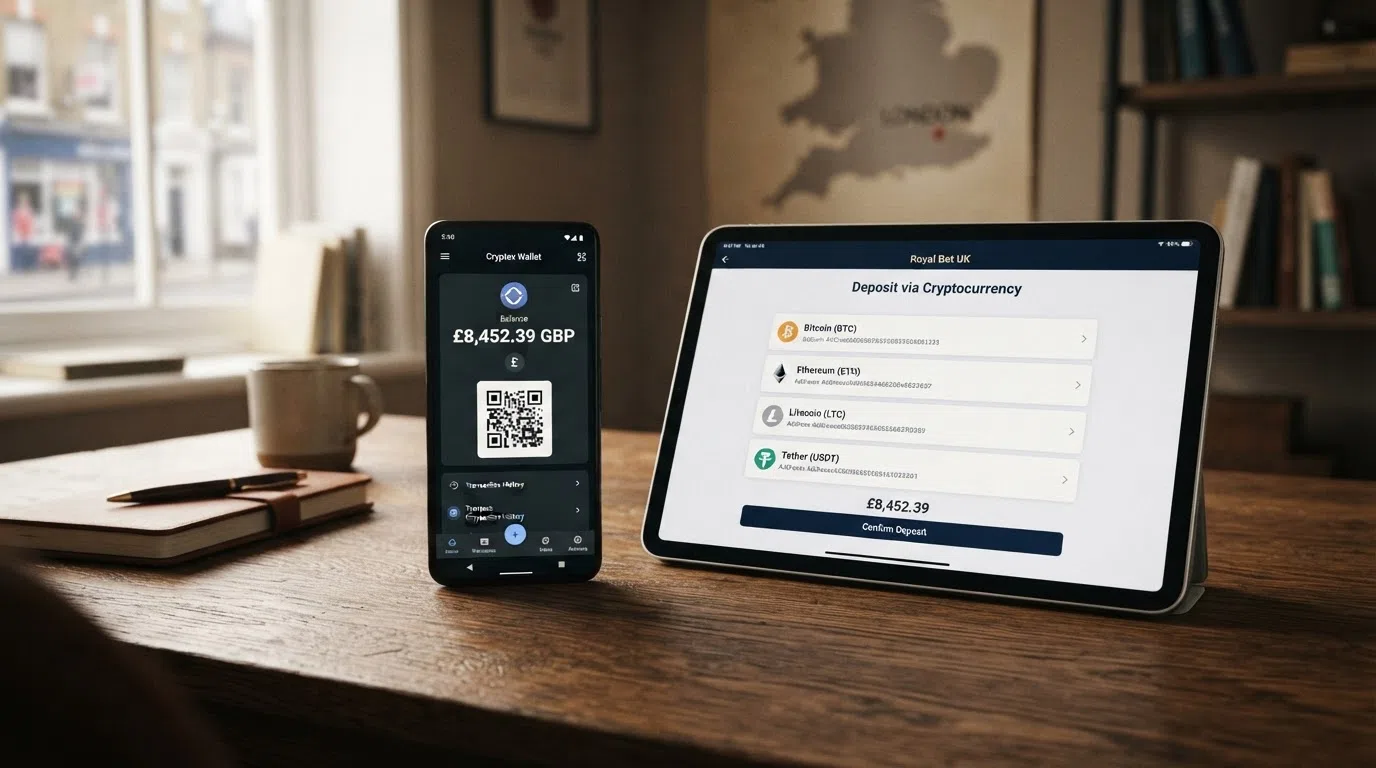
The limits of the anonymity are worth stating. Blockchain transactions are public and permanent. The casino does not identify the player, but the ledger identifies the wallet, and the wallet’s history is visible to anyone with the address. A player who deposits from a wallet linked to a KYC exchange (Coinbase, Kraken, Binance with full verification) has linked their wallet to their verified identity at the exchange level. A player who uses a non-custodial wallet with no KYC link retains stronger privacy. The casino does not see the difference, but the difference exists.
The UKGC’s AML and source-of-funds framework does not accommodate anonymous crypto payments. A UKGC-licensed operator must verify the source of player funds, and a crypto deposit from an unverified wallet does not meet the threshold. The framework is the structural reason no UKGC-licensed casino accepts cryptocurrency in 2026, and the offshore tier is the only route to crypto deposits at all.
Bitcoin Casinos Without ID: What the Options Look Like
The three offshore operators in this ranking all accept Bitcoin. Jackbit accepts Bitcoin and other cryptocurrencies, with no ID at signup and no ID for routine withdrawals. Wild.io accepts Bitcoin as part of a 57+ provider, 9,000+ game offering under a Curaçao licence, with 40× wagering on the welcome package. Flush accepts Bitcoin with crypto withdrawals under one hour, also under a Curaçao licence.
The common thread is the trade-off. All three are offshore. All three accept crypto. None of the three offers GAMSTOP, a UKGC complaints route, an approved ADR, or British consumer redress. The threshold-based verification model applies at all three, with documents requested at the £4,000–£8,000 cumulative activity line.
For a player who values the crypto deposit mechanic specifically, the three operators offer different trade-offs. Jackbit offers the largest game library (7,000+) and the lowest wagering on the welcome spins (0×), with no recognised gambling licence as the structural cost. Wild.io offers the largest headline bonus (350% up to $5,000) and the heaviest wagering (40×), under a Curaçao licence. Flush offers the fastest crypto withdrawals (under one hour for BTC) and a tiered match structure (up to $3,450 across three deposits) at 30×/35× wagering, under a Curaçao licence. The choice is between game library size, headline bonus size, and payout speed, all under the same offshore protection profile.
The Anonymity Trade-Off: What Crypto Privacy Costs You
The full ledger of what a player gains and loses at a crypto no-ID casino is the cleanest way to frame the choice.
What you gain: no document upload, no affordability check, no GAMSTOP linkage, no deposit-limit prompt, no source-of-funds verification at signup, no credit-card ban, no age-banded stake cap, no game-design rules constraining the operator’s product design.
What you lose: no UKGC complaints route if the casino withholds funds, no approved ADR, no British consumer redress, no GAMSTOP coverage even if you want it, no statutory stake caps, no game-design protections (losss disguised as wins, reverse withdrawals, autoplay, spin speed), no operator accountability to a UK regulator, no recourse if the casino disappears.
The economic pressure on the licensed market makes the offshore tier more relevant in 2026. The Remote Gaming Duty rose from 21% to 40% on 1 April 2026, the largest single tax increase on the UK online gambling industry in two decades. The 40% RGD versus Curaçao’s near-zero tax regime means the cost gap between UKGC-licensed and offshore operators is now wider than at any point in the previous decade. The licensed market is likely to keep tightening, and the offshore market is likely to keep growing.
The honest frame: crypto no-ID casinos are a trade of protection for privacy, not a free lunch. A player who values consumer protection, dispute resolution, and regulatory accountability should stay inside the licensed market. By choosing an offshore site, you accept the loss of these safeguards in exchange for a streamlined signup.
Gambling Without a Safety Net: What You Lose Outside the UKGC System
GAMSTOP and Self-Exclusion: Why Offshore Casinos Sit Outside the Net
GAMSTOP is the national multi-operator self-exclusion scheme for Great Britain, mandatory for every GB-licensed online operator since 31 March 2020. The exclusion periods are six months, one year, five years, or five years with auto-renewal. Once confirmed, the exclusion cannot be cancelled early, and if the player does not contact GAMSTOP after the minimum period, the exclusion continues for up to seven further years. The protection is real, and it is the single largest piece of the British responsible-gambling framework.
GAMSTOP does not cover offshore casinos. A player who has self-excluded at every UKGC-licensed operator can register, deposit, and play at a Curaçao-licensed or unlicensed casino without the offshore operator or anyone else stopping them. This is the primary reason some players seek offshore sites, and it is the primary reason offshore casinos are advertised as “non-GamStop” in the first place.
The honest statement: an excluded player who wins at an offshore casino cannot use GAMSTOP as a safety net, and the offshore casino has no obligation to return deposits or honour the self-exclusion. The British framework assumes the player stays inside the licensed market; ultimately, the player bears the risk of this separation.
Deposit Limits, Reality Checks and Time-Outs: The Tools Offshore Casinos Do Not Offer
The mandatory player-protection tools at UKGC casinos are part of the licensed product, and their absence at offshore casinos is structural, not accidental.
- The deposit-limit prompt, mandatory before first deposit at every GB licensee since 31 October 2025, with decreases actioned immediately, and a standardised gross deposit limit to be offered by 30 September 2026. The offshore equivalent is a limit the player can set if they choose to, with no obligation on the operator to prompt them.
- Reality checks, in-game pop-ups showing time and money spent, mandatory at UKGC casinos, optional or absent at offshore operators.
- Time-outs, operator-enforced breaks from 24 hours to several weeks, mandatory at UKGC casinos, optional or absent offshore.
- The financial vulnerability check at £150 net deposit over 30 days, using publicly available data only, mandatory at UKGC casinos since 28 February 2025, absent offshore.
These tools are designed to interrupt a gambling spiral before it starts. The offshore tier’s commercial incentive is to keep the player playing, and the regulatory obligation to interrupt is absent. A player at an offshore casino must impose their own limits, with no operator-side prompt, no in-game reality check, and no compliance team watching the deposit pattern.
How to Get Help: The Support Infrastructure That Works Regardless of Where You Play
The help infrastructure for problem gambling in Great Britain is comprehensive, and it works regardless of where the player is gambling. The licensed-or-offshore distinction matters for the protection framework, but it does not matter for the help services.
The National Gambling Helpline, run by GamCare, is 0808 8020 133. Between April 2024 and March 2025, GamCare responded to 130,589 contacts through the helpline and digital services, referred 7,100 people into further treatment, and delivered 8,100 treatment sessions with an average wait of 1.3 days. The helpline is free, confidential, and available 24 hours a day.
The National Gambling Support Network (NGSN) treated 11,960 clients in Great Britain between April 2024 and March 2025, an 11% increase on the prior year. 88% of clients entering treatment scored 8+ on the PGSI (problem gambling), and 27% scored 8+ at exit, a 61-point reduction that reflects the treatment’s effect. The NGSN is the treatment arm of the British responsible-gambling infrastructure.
NHS gambling harm clinics operate in England, Scotland, and Wales. Referral is typically through a GP, GamCare, or self-referral. The clinics offer specialist treatment for gambling harm, including cognitive behavioural therapy, family therapy, and psychiatric support where needed.
Gamblers Anonymous runs peer-support groups across Great Britain, modelled on the 12-step approach. The meetings are free, anonymous, and run by members for members.
GamCare offers a free self-assessment tool and structured counselling, typically 6–8 sessions. The self-assessment is a PGSI-based screen that gives the player an indication of where they sit on the problem-gambling spectrum.
The prevalence context: 2.7% of GB adults aged 18+ scored 8+ on the PGSI in 2024, indicating problem gambling. 48% of adults gambled in the last 4 weeks (28% excluding lottery-only). An estimated 4.3 million adults in Great Britain are affected by a family member’s or friend’s gambling. The infrastructure exists because the prevalence is real, and the offshore-or-licensed distinction does not change the prevalence or the help available.
How We Chose the Best No-ID Casinos: Our Evaluation Criteria
The methodology behind the ranking is stated here so the reader can disagree with the weighting.
The source set for verification was the UKGC public register for every licensed operator, last checked 29 July 2026. Every UKGC-licensed operator in this ranking was verified against the live public register, and the operator name, licence number, and licence status are quoted from the register. Offshore operators were checked against their stated licence registry (Curaçao Gaming Control Board, where applicable) and their own terms for ID and withdrawal policies.
The operator-specific data (welcome bonus, wagering multiplier, validity, cashout cap, spin value, eligible games) was taken from each operator’s published terms and conditions and promotional pages. The bonus data is current as of the publication date and may change; the reader should verify the current offer at the operator’s site before depositing.
The regulatory data (May 2019 rule, 10× wagering cap, age-banded stake caps, RGD increase, GAMSTOP, financial vulnerability check, deposit-limit prompt) was taken from the Gambling Commission’s published LCCP, RTS, and SR Code provisions, and from the relevant UK statutory instruments (SI 2025/215 for the stake caps, the Autumn Budget 2025 for the RGD increase).
The ranking criteria are licence status, bonus value adjusted for wagering and cashout caps, verification friction, and the presence or absence of UKGC-mandated player protections. These four criteria ordered the list, with licence status as the strongest single filter and the bonus proposition as the tie-breaker within each tier.
What this review does not cover: this page does not test withdrawal speeds through live accounts, does not independently verify provider counts beyond what the operator states, and does not assess game fairness beyond the stated RTPs and regulatory status. The comparison is based on published terms and regulatory standing, and a player who wants a real-world test of payout speed or game performance should treat the ranking as a starting point rather than a final verdict.
No-ID Casinos in the UK: The Verdict
The central finding is the one the page has been building toward: no UKGC-licensed casino can operate without ID verification, and every “no-ID casino” serving UK players is offshore and unregulated by British authorities. The marketing term “no-ID casino UK” describes a category that does not exist inside the licensed market, and the offshore alternative trades every UKGC protection for the document-free signup.
The UKGC-licensed operators offer wager-free spins, the 10× wagering cap, statutory stake limits, and the full consumer-protection framework, at the cost of a document upload before play. The seven operators in this ranking (Sky Vegas, Paddy Power, Betfair, Betfred, bet365, William Hill, 888 Casino) are the regulated baseline, and the best of them (Sky Vegas on no-deposit volume, 888 Casino on deposit-match wagering, bet365 on free-spin ceiling) compete with the offshore tier on the bonus economics without giving up the British protections.
The offshore operators offer no ID at signup, crypto deposits, and larger headline bonuses, at the cost of every UKGC protection and no British legal recourse. The three operators in this ranking (Jackbit, Wild.io, Flush) are the threshold-based alternative, and the best of them (Jackbit on game library, Flush on payout speed) match the licensed tier on specific dimensions while losing the regulatory framework entirely.
The decision framework is a one-line summary. A player who values consumer protection, dispute resolution, and regulatory accountability should stay inside the licensed market. A player who values anonymity, document-free play, and crypto deposits must understand exactly which protections they are forfeiting, and the protections are not small: no GAMSTOP, no UKGC complaints, no approved ADR, no British consumer redress, no statutory stake caps, no game-design rules, no source-of-funds verification.
The closing point is the one the page has earned. The UK licensed market in 2026 offers the strongest player protections in the world. The 10× wagering cap, in force since 19 December 2025, has compressed the wagering range to a single-digit band. The 0×-wagering free-spin norm at six of the seven licensed operators means the typical UK welcome offer is now genuinely free. The £5 age-banded stake cap (and £2 for 18–24) limits the player’s downside on slots, and the game-design rules (no losses disguised as wins, no reverse withdrawals, 2.5-second minimum spin) constrain the operator’s product design. The licensed market in 2026 is not the worse deal it was three years ago, and the gap to the offshore tier has narrowed to the point where the choice between them is a choice about what matters, not a choice about what is cheaper.
Frequently Asked Questions
Is it legal to use a no-ID casino from the UK?
Playing at a no-ID offshore casino from the UK is not a criminal offence. The Gambling Act 2005 creates offences for operators, advertisers, and intermediaries under Part 3, sections 33 to 39, but the Act does not create any offence for a person who participates in gambling provided by an unlicensed operator. The licensed operator is the criminal party; the player is the customer with no consumer recourse. The casino faces the penalty (up to 51 weeks’ imprisonment, unlimited fine), the player faces the protection gap.
Can I withdraw winnings without completing KYC at a no-ID casino?
Yes, up to a threshold. At Curaçao-licensed no-KYC casinos, verification is typically not requested until cumulative crypto activity reaches approximately £4,000–£8,000. Below that line, withdrawals process without documents. Above it, the casino will request the same documents the UKGC would have requested at signup, and the no-ID promise ends. The threshold is the line at which the deferred verification finally happens.
Do no-ID casinos accept UK players and GBP deposits?
Offshore no-ID casinos accept UK players by accepting their registration, but they do not hold a UKGC licence and they are not regulated by British authorities. GBP deposits are not always available; most offshore operators deal in USD, EUR, or crypto. The lack of GBP support means UK players typically deposit in crypto (Bitcoin, Ethereum) or in USD/EUR with a currency conversion fee applied by the operator or the payment provider.
What happens if I play at an unlicensed casino from the UK?
The casino is the party breaking the law, not the player. The UKGC’s enforcement targets operators, advertisers, and intermediaries, not players. What the player loses is the protection framework: no GAMSTOP coverage, no UKGC complaints route, no approved ADR, no British consumer redress if the casino withholds funds. The casino may also disappear overnight, and the player has no UK regulator to escalate to. The risk is commercial (withheld funds) and protective (no responsible-gambling tools), not criminal.
What is the maximum I can deposit before a no-KYC casino asks for documents?
At Curaçao-licensed no-KYC casinos, the cumulative activity threshold is approximately £4,000–£8,000 in crypto. The threshold is calculated across deposits and withdrawals, not on a single transaction. A player who deposits cumulatively £4,000 and withdraws £3,500 has £7,500 of activity, well past the threshold, and will likely be asked for documents on the next transaction. The threshold is not published precisely by every operator, and the verification trigger is a casino-by-casino decision.
Can I play at a UK online casino without providing ID?
No. Every UKGC-licensed casino has been required to verify a customer’s name, address, and date of birth before any deposit or gamble since 7 May 2019. The rule sits in the LCCP and RTS framework and applies without exception. A site that claims to be both UKGC-licensed and no-ID is either mislabelled or marketing itself dishonestly. The only route to no-ID play from the UK is the offshore tier, and the offshore tier carries no UKGC protection.
Account – nominimumdeposit-casinos-uk
Content created by the «nominimumdeposit-casinos-uk» team