
The Top Rated Online Casinos in the UK, Ranked for Real Value
 Available in GB
The phrase “top rated” gets used carelessly in this market. A casino can be “top rated” by its own marketing copy, by a single aggregator’s algorithm, or by a comparison site that has never spoken to a player. For the purposes of this page, a top rated online casino in the UK is one that passes three tests: a valid Gambling Commission licence verified against the public register, a welcome offer that survives the new 10× wagering cap, and a game library, payment setup and mobile experience that real players keep coming back to. The ten operators ranked below are the brands that meet all three, and the comparison is built to show you where each one earns its place and where it does not.
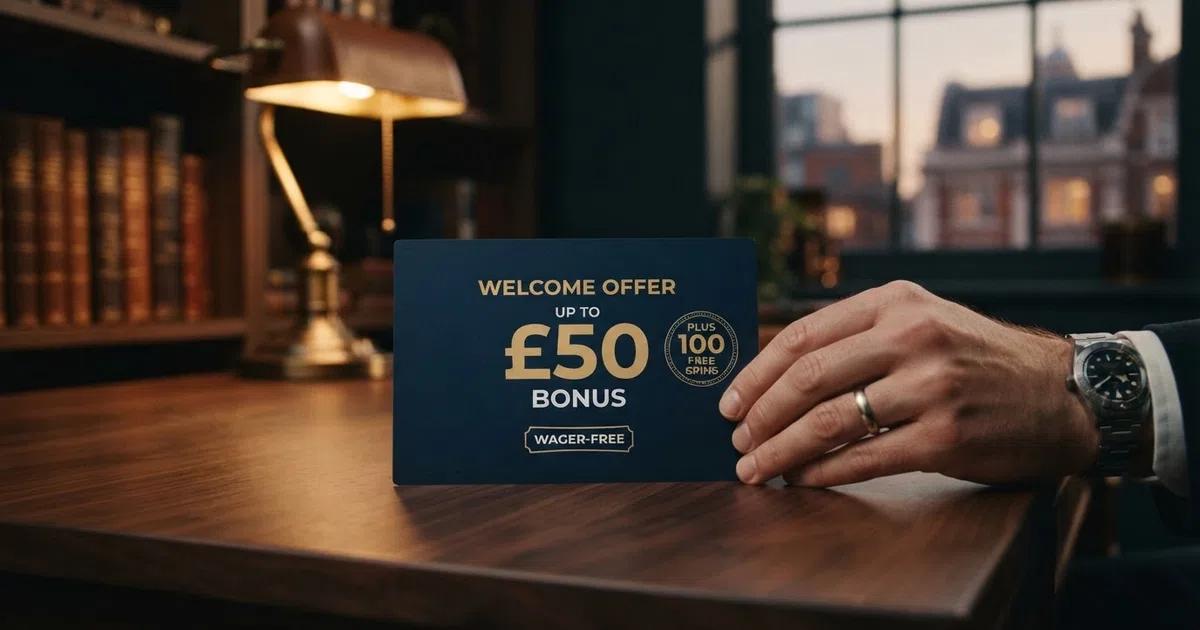
Data current as of September 8, 2026, verified against the UK Gambling Commission’s public register.
What “Top Rated” Actually Means for UK Online Casinos
A rating is only as honest as the criteria behind it, and the UK market has more published criteria than almost any other. Every major publisher runs its own methodology, and the result is that the same brand can sit at number two on one list and number nine on another. The differences are usually honest — one site weights payout speed, another weights game variety, a third leans on player-review aggregation. What they share is the starting line: any operator on any credible UK list must hold an active Gambling Commission licence. There is no version of a “top rated” UK casino that begins anywhere else.
The Gambling Commission’s public register is the only authoritative source for that check. Its current snapshot holds 2,663 records of licensed gambling businesses, and it is the same database the Commission uses to publish enforcement actions and to verify operators in court. Every brand in this page has been checked against it. The 10× wagering cap that took effect on 19 December 2025 added a second test, and it is the one that quietly redrew the welcome-offer landscape: any “top rated” offer published before that date was written under rules that no longer apply, and a rating that has not been refreshed since then is rating against a market that has been closed for twelve months.
The third test is harder to pin down. It is the player experience: how quickly a withdrawal lands, whether the mobile app crashes on a deposit, whether customer support answers in plain English at midnight. This is where expert review and aggregated player scores overlap, and where “top rated” begins to mean something more specific than “appears on a list”.
How Casino Ratings Are Built — Expert Analysis, Player Scores and Licence Checks
Most UK casino ratings are built from three inputs layered on top of the UKGC baseline. The first is expert review: a writer or analyst who has opened an account, played the games, deposited and withdrawn, and recorded what happened. The second is player-review aggregation — Trustpilot-style scores, app-store ratings, community feedback on forums — which tells a different story, because players are harsher about slow payouts than any reviewer. The third is the methodology each publisher applies to weight those inputs: a list that prizes game library will rank an Evolution-heavy live casino above a slot-heavy site, while a list that prizes fast PayPal withdrawals will land somewhere different.
The 2,663 records on the UKGC register are not a ranking, but they are the eligibility list. A casino that does not appear on the register is, by definition, not a UK-licensed operator and cannot be a “top rated UK casino” regardless of how many affiliate banners carry its name. The most common error in the current set of comparison pages is to skip that step and rely on a brand’s own self-description.
“Top Rated” vs “Best” vs “Highest Rated” — What Each Distinction Means
The three labels are used interchangeably in marketing and with real differences in editorial. A “best” casino is an editorial pick — one operator, one writer, one opinion. A “top rated” casino is one that scores well across a defined methodology, usually applied to a group of ten or more. A “highest rated” casino is the one that tops the score ceiling on that methodology, which may or may not be the editor’s own favourite. The difference matters if you are using a list to build a shortlist rather than to take a single recommendation. A numbered top-10 built on aggregate ratings is the right tool for that job; a single “best” call is a shortcut that gives you one person’s verdict and the criteria they used to reach it.
For players, the practical distinction is that a “top rated” label is closer to a shortlist than a verdict, and a shortlist is what most readers actually want. The comparison that follows treats it that way: ten operators, ranked by what their welcome offers really cost, with the rest of the rating criteria mapped underneath.
New UK Online Casinos Worth Watching in 2026
The UKGC register turns over constantly, and a small but steady stream of new operators joins it each year. A new entrant faces a structural problem: it has no player-review history, no Trustpilot score, and no withdrawal-track-record to lean on, which means a “top rated” label in the traditional sense is unavailable until it has been live long enough to earn one. What new operators can offer is a better welcome package — a larger no-deposit spin bundle, a longer claim window, a more generous game-eligibility list — to compensate for the missing track record.
The featured set in this page skews toward established operators because the rating criteria ask for evidence. New casinos that earn a place in the next twelve months will be the ones that publish clear terms from day one, hold a clean UKGC record, and survive their first big withdrawal test without a queue.
The UK’s Top Rated Online Casinos — Comparing Every 2026 Welcome Offer Side by Side
The table below ranks the ten featured operators by the real value of their welcome offer. Wager-free terms and no-deposit eligibility are weighted above raw spin count, which is why a 270-spin package with no wagering outranks a 500-spin package with a 10× playthrough and a £30 cap. Every operator holds an active UKGC licence, verified against the register on 29 July 2026.
| # | Operator | UKGC Licence | Welcome Offer | Free Spins | Wagering | Bonus Validity |
|---|---|---|---|---|---|---|
| 1 | Sky Vegas | Active | 70 no-deposit spins + 200 spins on £10 spend | 270 total | 0× | 7-day spin expiry; 30 days to meet spend |
| 2 | Paddy Power | Active (Flutter) | 60 no-deposit spins + 200 spins on £10 deposit and play | 260 total | 0× | 7 days |
| 3 | Betfair | Active (Flutter) | 50 no-deposit spins + 100 spins on £10 deposit | 150 total | 0× | 7 days |
| 4 | bet365 | Active | Up to 500 spins over 10 daily picks on £10 lifetime deposit | Up to 500 | 0× | 30 days to claim; 24 hours per pick |
| 5 | Betfred | Active | Stake £10, get 200 spins on selected titles | 200 | 0× | 7 days from credit |
| 6 | Coral | Active (Entain) | Bet £10, get 200 spins | 200 | 0× | 14 days from registration |
| 7 | Ladbrokes | Active (Entain) | Bet £10, get 100 spins + 300 Ladbucks | 100 | 0× | 14 days from registration |
| 8 | PlayOJO | Active | 80 no-wagering spins on Big Bass Bonanza | 80 | 0× | 30 days from registration |
| 9 | BetMGM UK | Active | 200 spins on Big Bass Splash when you play £10 | 200 | 1× on initial deposit | 7 days from eligible deposit |
| 10 | William Hill | Active (evoke plc) | 200 spins on Big Bass Splash on £10 deposit and stake | 200 | 10× on winnings | 72 hours to use; 72 hours to wager; £30 max winnings |
The wagering column is the one that does the real sorting. Eight of the ten offers carry 0× wagering, which means winnings land as cash, not as bonus funds that need to be cleared. BetMGM sits at 1× on the initial deposit, which is the lowest non-zero figure in the set and still well under the statutory 10× cap. William Hill is the outlier: 10× wagering with a £30 maximum-winnings cap is the only combination on the page that costs the player real money on the welcome offer, and it is the reason it sits at ten rather than higher despite the headline 200-spin figure.
Sky Vegas — 70 No-Deposit Spins and the Largest Wager-Free Total Package
Sky Vegas tops the ranking because it combines the only features that matter once the wagering column is set to zero. Seventy of the 270 total spins land on the account with no deposit required at all — they are credited on registration, with a £0.10 spin value and a 7-day expiry, and any winnings are paid as cash. The remaining 200 spins unlock when the player spends £10 on the site, giving a 30-day window to meet that threshold. Every spin in the package is wager-free, and there is no stated cashout cap on the winnings.
The 7-day expiry on the no-deposit spins is the part that catches players out. It is the same window that Paddy Power and Betfair use, and it is short enough that a player who registers, walks away for the weekend, and comes back on Monday will find their no-deposit spins already gone. The 200 deposit-gated spins are credited after the £10 spend, and the same 7-day clock applies from credit.
For a player who wants the largest possible wager-free spin package and is willing to use it inside a week, this is the strongest offer in the featured set. For someone who likes to register and play a month later, the 7-day window makes the deposit-gated half of the offer more fragile than the headline suggests.
Paddy Power — 60 No-Deposit Spins and a 260-Spin Package With Zero Wagering
Paddy Power is the second-strongest no-deposit offer in the set. Sixty spins land on registration with no deposit, and 200 more unlock when the player deposits and plays £10. Every spin is wager-free, every winning is paid as cash, and there is no stated maximum cashout. Spins expire after 7 days, which is the Flutter-group standard across no-deposit offers.
The Flutter ownership shows up in the consistency of the terms rather than the bonus size: Paddy Power, Betfair and Sky Vegas all use the same 7-day no-deposit clock and the same wager-free structure, which is part of why the Flutter group dominates the top three. For a player who is already deep in the Paddy Power sports ecosystem, the cross-product integration is the main draw; for everyone else, the quality of the wager-free terms stands on its own.
Betfair — 50 No-Deposit Spins and a 150-Spin Flutter Welcome
Betfair’s offer is the smallest of the three Flutter no-deposit packages, but the structure is the same: 50 spins on registration with no deposit required, 100 more after a £10 deposit, 0× wagering throughout, 7-day expiry. The brand association with the betting exchange gives it a different reputation than the others, and for players who came to Betfair through the sports side, the casino welcome is a familiar entry point.
The 150-spin total is the smallest in the no-deposit tier and the smallest in the table overall, so the offer sits where the spin count puts it. There is no wagering gap to complain about, no cap to flag, and the only trade-off is volume.
bet365 — Up to 500 Wager-Free Spins Across 10 Daily Picks
bet365’s offer is the largest potential package on the page by a wide margin, and it is built around a mechanic that does not appear anywhere else in the featured set. A player who has made a lifetime deposit of at least £10 can log in for 10 consecutive days and claim a daily pick — 5, 10, 20 or 50 spins are randomly awarded each day, with the maximum possible package totalling 500 spins. Every spin is wager-free at £0.10, winnings are paid as cash, and there is no stated cashout cap.
The mechanic is the point. A player who logs in every day for 10 days and lands the maximum pick each time walks away with 500 wager-free spins; a player who misses four days and lands the minimum on the others walks away with 30. The expected value of the package is well below the 500-spin ceiling, and bet365 has structured the offer so that the headline figure is genuinely the maximum, not the average. The 30-day claim window gives a player time to start the sequence, but a 24-hour expiry applies to each daily batch once credited, so the requirement to log in every day is real.
For a player who already has a bet365 account from sports and is willing to log in for 10 days running, this is the highest-ceiling offer in the set. This structure turns the welcome offer into a loyalty exercise. It works for the daily bet365 user, but it lacks the immediacy of the simpler registration-based packages.
Betfred — 200 Wager-Free Spins on Selected Titles With a £10 Stake
Betfred keeps it simple. Stake £10 on slots and 200 free spins land on the account, all wager-free, all paid as cash, with a 7-day window to use them from credit. There is no stated maximum cashout. The selected-titles restriction is the only caveat: not every slot in the Betfred library is eligible, and the eligible set is not published in the headline terms.
For a player who is happy to take whatever slot Betfred names in its terms, this is one of the cleanest 200-spin packages in the set. The clean terms make this a low-friction choice for most slot players. Those with a specific title in mind should check the eligible list first, as the game selection is not explicitly itemised in the headline offer.
Coral — 200 Wager-Free Spins With a 14-Day Registration Window
Coral is the Entain-group answer to Betfred: stake £10, get 200 free spins, all wager-free, all paid as cash, no stated cap. The 14-day window from registration is more generous than the 7-day window most of the table uses, and it is the part of the offer that pushes Coral above Betfred for a player who does not plan to play the moment they sign up.
The Entain platform means the same game library, the same payment rails and the same back-end infrastructure that powers Ladbrokes. Players comfortable with that environment will find the same robust reliability here. This welcome package essentially lets users choose between Coral’s specific branding or its sister-site alternatives, as the underlying platform experience remains a constant.
Ladbrokes — 100 Free Spins, 300 Ladbucks and a Loyalty Angle
Ladbrokes’ welcome is the only one in the featured set that pairs free spins with a loyalty-currency top-up. Stake £10 and the player receives 100 wager-free spins plus 300 Ladbucks, the brand’s in-house loyalty points. The spins are paid as cash with no stated cap; the Ladbucks are redeemable inside the Ladbrokes ecosystem for bonus spins, bonus cash and other perks. The 14-day window from registration applies to both.
The value of the Ladbucks depends on how the player uses them. They are not withdrawable cash; they are a way to convert welcome-offer value into ongoing play, and a player who only wants the cash spins will undervalue the package. A player who already plays at Ladbrokes and will use the loyalty currency regularly gets the full benefit.
PlayOJO — 80 No-Wagering Spins and the Cash-Wins Promise
PlayOJO built its brand on no-wagering wins, and the welcome is built the same way: 80 free spins on Big Bass Bonanza, credited on a £10 first deposit, 0× wagering, winnings paid in cash, 30-day registration window. There is no stated cap on winnings. The 80-spin count is the smallest in the table after Betfair, and the headline figure is correspondingly modest, but the OJOplus mechanism pays a small percentage of every spin’s value back to the player in real cash, which is the structural feature that keeps existing customers rather than just signing them up.
For a player who plans to stay at one casino and play the same slots regularly, the OJOplus cashback makes PlayOJO a stronger long-term proposition than its welcome figure suggests. It is a value-over-volume approach; users prioritizing a massive initial spin count may look elsewhere, but the loyalty mechanic provides consistent returns that accumulate over time.
BetMGM UK — 200 Spins on Big Bass Splash With Minimal Wagering
BetMGM’s offer is the closest competitor to the 200-spin wager-free packages above it in the table, with one important difference: there is a 1× wagering requirement on the initial deposit. The free spins themselves carry no wagering, so a player who wins on a spin takes the cash, but the £10 that triggered the spins must be wagered once before it is withdrawable. The 7-day window runs from the eligible deposit.
The 1× figure is the lowest non-zero wagering in the set and a long way under the statutory 10× cap. For most players it is effectively invisible: a single £10 spin on any slot clears it. It is here because the ranking is built on real value, and a 1× requirement is not zero, even if it costs almost nothing in practice.
William Hill — 200 Spins With a £30 Winnings Cap and the Only Real Wagering Burden
William Hill’s offer looks like the others at first glance: 200 free spins on Big Bass Splash, credited on a £10 deposit and stake, 7-day use window. The two differences are large. First, the wagering requirement is 10× on winnings from the bonus spins — the statutory ceiling, and the only meaningful playthrough in the featured set. Second, there is a £30 maximum-winnings cap on the free spins, which is the only hard ceiling on the page.
The arithmetic is unforgiving. Even on a high-variance slot, a 200-spin package at £0.10 with a 10× playthrough and a £30 cap returns very little of what the headline number suggests. A player who wins £30 from the spins keeps £30 only after wagering £300 of their own money through the bonus, which the £30 cap makes impossible to clear profitably. The offer is not fraudulent; the terms are published and the brand is one of the most established in the UK. It is a marketing number, and the marketing number is the part that costs the player.
For a player who specifically wants the William Hill platform — sports, casino, poker under one roof — the welcome still has value as a low-cost way to test the casino. For a player who is choosing on welcome-offer merit, there are nine better options on the same page.
Games, Slots and Live-Dealer Tables That Define the Best Casinos
A welcome offer is the front door. The game library is the building behind it, and it is the reason most players stay or leave after the first week. Every operator in the featured set runs a multi-provider platform: Playtech and Pragmatic Play are near-universal, NetEnt appears at most, and the live-dealer floor is dominated by Evolution, which holds the position the way OpenTable holds restaurant reservations. A casino’s rating collapses fast if the library is thin, because a player who runs out of games to play has no reason to stay.

The categories that carry the most weight in player reviews are slot variety, progressive jackpot access, and live-dealer quality. A casino that scores well on all three is a casino that retains accounts; one that scores well on one and ignores the other two is a casino that bleeds accounts after the welcome offer is spent.
Slot Variety and Real-Money Play — What the Best UK Casino Libraries Offer
UK online slots are the most heavily regulated product in the European market. The £5 maximum stake per game cycle for players aged 25 and over (in force since 9 April 2025) and the £2 ceiling for players aged 18–24 (in force since 21 May 2025) apply to the total staked within a single game cycle, not per spin, which means a slot session of any length is bounded by those figures. A “game cycle” in the regulation covers the full play on one round or one paid feature, not the full session. The stake caps have changed how the most volatile titles feel, because a player who previously set autoplay at £5 per spin across 100 spins is now setting them at a single stake of £5 and walking away from the machine while the round resolves.
Megaways, branded slots and exclusive titles are the differentiators at the top of the library tier. Megaways titles, with their variable reel structure and thousands of ways to win, are the category that drives most session time at the major brands. Branded slots — TV, film and music tie-ins — carry higher recognition and lower search friction. Exclusive titles, where a provider builds a slot for a single operator, are the rarest and the hardest to compare across casinos, because they do not exist anywhere else.
Progressive Jackpots — Mega Moolah, Big Bass Bonanza and the Prizes That Change Everything
Progressive jackpots are the category that turns a session from entertainment into a story, and they are the reason most players keep an account open at a casino they otherwise play infrequently. Mega Moolah is the headline: the Microgaming/Games Global pooled progressive has paid out more than a dozen eight-figure prizes, and any featured casino that does not carry it is missing a feature players notice. Big Bass Bonanza, in its various jackpot-linked versions, is the Pragmatic Play equivalent and a near-universal across the featured set.
The technical distinction matters for ratings. A standalone progressive is built into a single slot at a single casino, so the prize pool grows with play at that one site. A pooled progressive links the same slot across multiple operators, so the prize pool grows much faster and the expected value of a single spin is correspondingly higher. The featured operators with the broadest pooled-jackpot coverage are the ones that score highest in this category, and the difference shows up in player reviews even when the headline game count looks similar.
Live Dealer Casinos — Roulette, Blackjack and Game-Show Tables
The live-dealer floor is where the biggest gap in quality appears between UK-licensed operators. Evolution is the dominant supplier, and any featured casino that runs its full suite — Immersive Roulette, Lightning Roulette, the blackjack variants, the baccarat squeeze tables, and the game-show titles like Crazy Time and Monopoly Live — has a structural advantage over a casino that only carries the core roulette and blackjack tables. Pragmatic Play Live is the second-tier supplier and a useful indicator of a casino that has invested in the category, but it is not a substitute for Evolution’s game-show catalogue.
A player who values live-dealer quality is choosing a casino for its Evolution roster, its table limits and its peak-time availability, not for its slot count. The featured operators with the broadest live-dealer coverage tend to be the Entain and Flutter brands, which share their platform infrastructure across multiple casino skins and so carry the full Evolution catalogue by default.
Game Providers — Pragmatic Play, NetEnt, Evolution and the Studios Behind the Reels
The provider roster is the single most useful shortcut for assessing a casino’s game quality before signing up. Pragmatic Play and NetEnt are the near-universal tier-one suppliers across the featured set; Microgaming/Games Global and Playtech appear at most; Evolution is the live-dealer floor; Play’n GO, Blueprint and Big Time Gaming fill the gaps. A casino that carries seven or eight of these is a casino that has invested in the category; a casino that carries three is a casino that is buying the minimum viable library.
The practical difference shows up in release cadence. A Pragmatic Play slot drops every week; a NetEnt slot drops every few weeks; a Big Time Gaming Megaways title drops once a quarter. A casino with three providers gets a fraction of the new-release pipeline that an eight-provider casino gets, and the games that do land are the ones every other casino has anyway. The Mega Moolah / Big Bass Bonanza / Big Bass Splash / Crazy Time quartet of headline titles is the test: a casino that carries all four is a casino that is taking the library seriously.
Mobile Casino Apps and Browser Play — What Matters for UK Players
The UK online casino market is a phone market. The majority of sessions are on iOS or Android, and a casino that has not built a real mobile experience is a casino that loses accounts at the verification stage. App-store ratings — both the star score and the review volume — are the most visible signal, and a casino with a 4.5-star average across 50,000 reviews is in a different category from one with a 3.5-star average across 2,000.
Dedicated Casino Apps — iOS, Android and What the Stores Say
Most of the featured operators offer dedicated iOS and Android apps, and the practical benefits over a mobile browser are real: FaceID or TouchID login, push notifications for bonus drops, faster loading on cellular, and a session that survives a phone call without losing the spin. The app-store rating is the easiest comparison point, but it has to be read with the review volume attached: a 4.7-star average across 200,000 reviews is a more reliable signal than a 4.9-star average across 800.
The Flutter and Entain brands tend to share a single app across their casino brands, which means a Coral account and a Ladbrokes account can sometimes run on the same app. Sky Vegas, bet365, Betfred, William Hill and BetMGM all run their own apps. PlayOJO’s app has a distinct visual identity that matches the brand’s “no wagering” positioning.
Mobile Browser vs App — Feature Parity and What You Trade Off
The mobile-browser experience at the featured operators is close to feature-parity with the apps for the major flows: registration, deposit, slot play, live-dealer, withdrawal. The gaps are in the second-order features: push notifications, biometric login, in-app exclusive game launches, and the storage trade-off (a 200 MB casino app versus a browser tab the player can close). Some titles launch first on app, some are browser-only, and a player who plays a specific slot at a specific casino should check before assuming the app is complete.
For most players, the choice comes down to whether they want a casino icon on their home screen and a biometric login, or whether they would rather reclaim the storage and play in Safari or Chrome. The rating impact is small either way.
How Fast UK Casinos Actually Pay Out — and What Slows Your Withdrawal Down
Payout speed is the rating factor that players care about most and that operators talk about least. A welcome offer can promise wager-free spins and the spins can land in the account in seconds; what matters after that is how quickly a withdrawal request turns into money in the bank. The variation across the featured set is smaller than across the wider UK market, because every featured operator holds a UKGC licence and is bound by the same payment-conduct rules, but the differences between methods are large.
The credit card ban in force since 14 April 2020 rules out one of the historically faster rails at any UK-licensed operator, including credit-card-funded e-wallet payments. What remains is a mix of debit cards, e-wallets, bank transfer, and the Faster Payments infrastructure, each of which has a different speed profile.
Payout Speed by Method — What Each Payment Rail Delivers
PayPal is the fastest rail for most UK players, with same-day to 24-hour withdrawals the norm at the featured operators once the account is verified. Skrill and Neteller are comparable, though some operators run slower processing windows for those wallets than for PayPal. Trustly, which sits between a bank transfer and an e-wallet, typically clears in under 24 hours when supported.
Debit card withdrawals through Visa Direct can clear in a few hours; standard debit-card withdrawals without the Visa Direct rail take one to three working days. Bank transfer is the slowest method in common use, at two to five working days, and is the rail that draws the most player complaints when a casino offers no alternative.
The Faster Payments infrastructure underpins most of the e-wallet and Trustly withdrawals, and is the reason the UK payout story is faster than most European markets. A player who wants the fastest possible withdrawal should pick a casino that supports PayPal or Trustly, verify their account at deposit time rather than at first withdrawal, and avoid bank transfer unless no alternative is offered.
Low Deposits, Withdrawal Limits and Verification — The Friction That Shapes Your Cashout
The minimum deposit at every operator in the featured set is £10. The minimum withdrawal varies: most operators set it at £10, a few at £20, and a small number at £5. Withdrawal limits above the minimum work differently — most featured operators publish no per-transaction maximum, but the regulatory environment imposes a separate check at £150 net deposit in a rolling 30-day period, where a financial vulnerability check can be triggered using publicly available data such as county court judgments, IVAs and bankruptcy orders. It is not a credit check, and it is not an income verification; it is a public-records check on a defined threshold, and it is distinct from the per-transaction withdrawal limit.
The verification process that delays a first withdrawal is the larger friction. Every featured operator requires proof of ID, proof of address, and proof of payment method before the first withdrawal is processed. A player who uploads these documents at registration rather than at first withdrawal saves several days; a player who waits until they have a balance to cash out will find the first withdrawal held up by the verification queue. The process is mandatory and uniform across the set, because it is a UKGC licence condition, not a per-operator choice.
Cryptocurrency and UK Casinos — Why No Licensed Operator Accepts It in 2026
No UKGC-licensed casino accepts cryptocurrency in 2026. The reason is not that the operators have declined to; the Commission’s anti-money-laundering, source-of-funds and LCCP requirements make a direct crypto deposit impossible to onboard under the existing framework. A player who wants to deposit Bitcoin at a UK-licensed casino will not find a button to press, because the regulated operators have no button to offer.
A distinction worth holding firmly: the statement is “no UKGC-licensed casino accepts crypto”, not “no casino accepts crypto”. Crypto-accepting casinos exist, and some of them carry licences from other jurisdictions. None of them are licensed for Great Britain, and serving GB customers from an offshore licence is a different proposition from serving them under a UKGC licence.
The UKGC opened an exploratory review of a potential crypto pathway at the Betting and Gaming Council’s AGM in February 2026, with reported timelines suggesting clarity within 12–24 months, which places the earliest realistic opening around 2027. Until then, the licensed market and the crypto market are two different products serving two different player pools, and a UK player who wants to use both has to accept that the licensed product does not offer the option.
Offshore Crypto Casinos and the Risks a UK Player Takes
The offshore alternative is a different category of risk. Operating without a GB licence is a criminal offence under section 33 of the Gambling Act 2005, carrying up to 51 weeks’ imprisonment, an unlimited fine, or both, for the operator. The Commission’s enforcement is disruption-based rather than blocking-based: cease-and-desist notices, search-engine delisting, domain suspension and payment-provider referrals. The Commission does not currently hold statutory blocking powers; legislation has been proposed but not enacted. The 15 months to June 2025 produced 3,140 disruption notices and 447,778 URLs referred to search engines, of which 287,961 were removed, with an average 32% fall in engagement across 160 disrupted sites.
The player-side risk is not criminal liability. No penalty has been traced for a UK player who merely gambles on an unlicensed site. The loss is consumer protection. There is no UKGC alternative dispute resolution, no GAMSTOP self-exclusion, no deposit-protection framework, and no statutory stake or wagering caps. A player who self-excludes at a UKGC-licensed casino and then plays at an offshore crypto casino has bypassed the strongest tool the licensed market offers, and there is no equivalent at the offshore site to take its place.
Free Play and Demo Mode — Try Before You Commit
UK-licensed casinos offer demo mode on most slot titles without registration, which makes the free-play experience a genuine evaluation tool. A player who wants to test a slot’s volatility, bonus-frequency feel, or just learn the paytable can do so without an account, a deposit, or an email address. Live-dealer tables are a partial exception: some operators run demo lobbies on selected tables, but most live-dealer games require a real account and a real balance.
Demo Slots, Free Table Games and Using Free Play to Rate a Casino
The practical use of demo mode is to test a game before committing a deposit, not to test the casino. Demo mode cannot show how fast a withdrawal lands, how a customer-support agent handles a stuck payment, or how the mobile app behaves at peak hours. The rating pillars that demo mode does cover are game mechanics, RTP feel (the perceived return over a session, which is not a substitute for the published RTP), and site navigation. A player who uses demo mode for what it can do and registers with a small deposit for what it cannot is using both tools correctly.
A small caveat: the free-play experience is a different product from the real-money experience, and an operator that performs well in demo mode is not guaranteed to perform well on a real-money session. The safer-gambling tools, the verification flow, the withdrawal experience — none of these are testable in demo.
UK Gambling Law — The Framework That Protects Every Player
The Gambling Commission is the regulator that issues operating licences, publishes the public register, and enforces the rules that every featured casino on this page operates under. It is an executive non-departmental public body sponsored by the Department for Culture, Media and Sport. Its three licensing objectives, set out in section 1 of the Gambling Act 2005, are preventing crime, ensuring fair and open gambling, and protecting children and other vulnerable persons. Every licence condition, every enforcement action and every public-register entry is supposed to serve one of those three.
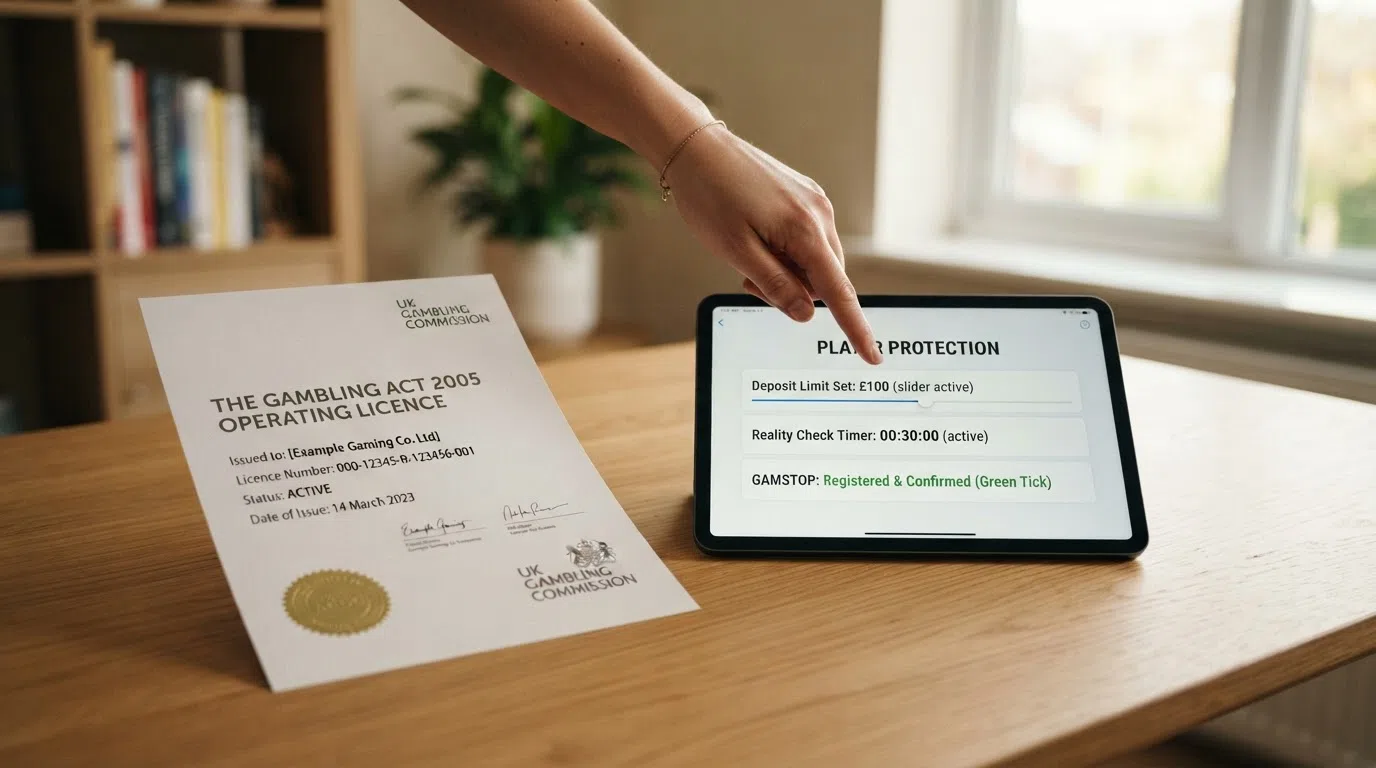
The Gambling (Licensing and Advertising) Act 2014 extended the regime to remote operators by introducing the point-of-consumption requirement: any operator serving GB customers, wherever based, must hold a GB licence. The regime covers Great Britain — England, Scotland and Wales. Northern Ireland operates under separate, older law and is outside the Commission’s remit.
The UK Gambling Commission — The Licence That Every Rated Casino Must Hold
The Commission issues operating licences, personal management licences and premises licences, and it requires operators to comply with the Licence Conditions and Codes of Practice (LCCP) and the Remote Technical Standards (RTS). The public register is the player’s verification tool: it carries 2,663 records of licensed gambling businesses on the current snapshot, and it is the same database the Commission uses internally. A player who wants to confirm that a brand holds a valid GB licence can search the register by operator name and see the entry; an entry that does not exist is a brand not licensed to serve GB customers.
The register is not a rating. It is a baseline. A licence confirms that an operator has met the entry conditions, and the absence of an enforcement action confirms a clean record so far; it does not confirm that the operator runs fast withdrawals, has a deep game library, or pays out bonus winnings without a fight. Those questions are answered by the rest of the rating criteria in this page.
Stake Limits, Bonus Caps and the Game-Design Rules That Shape Every Session
| Regulation | What It Caps or Requires | In Force Since |
|---|---|---|
| Online slots stake cap (25+) | £5 max stake per game cycle | 9 April 2025 |
| Online slots stake cap (18–24) | £2 max stake per game cycle | 21 May 2025 |
| Wagering cap on bonus funds | 10× maximum on bonus funds | 19 December 2025 |
| Mixed-product bonus ban | No combining a bet on one product with a free-spin offer on another | 19 December 2025 |
| Credit card ban for remote gambling | All credit-card payments, including via e-wallets, banned | 14 April 2020 |
| Auto-play ban | Auto-play on slots banned | 31 October 2021 |
| Spin speed minimum | 2.5 seconds per game cycle | 31 October 2021 |
| Losses disguised as wins ban | No audio-visual celebration of a spin that returns less than the stake | 31 October 2021 |
| Reverse withdrawal ban | Players cannot cancel a withdrawal to keep playing | 31 October 2021 |
| Feature-buy ban where cost exceeds age-band stake cap | Bonus-buy features capped by the age-band stake limit | Aligned with stake-cap dates |
The 10× wagering cap is the rule that has reshaped the welcome-offer landscape most visibly. Before 19 December 2025, offers of 30×, 40× or 65× were routine at UK-licensed casinos; after that date, anything above 10× is non-compliant. The featured set reflects the new ceiling: eight offers sit at 0×, one at 1×, and one at the 10× cap. The mixed-product ban is the second part of the same reform, and it is the reason no current UK welcome offer asks a player to bet on football in exchange for casino free spins.
The game-design rules have been in force since 31 October 2021 and have reshaped the slot experience more quietly than the stake caps. Auto-play is gone, the minimum spin speed of 2.5 seconds means a session of 100 spins takes at least four minutes, and the losses-disguised-as-wins ban removes the audio-visual celebration that used to accompany a sub-stake win. The reverse withdrawal ban is the one that most directly changes player behaviour: a player who requests a withdrawal can no longer cancel it and keep playing with the funds.
Advertising Rules, the ASA and What a Casino Can and Cannot Say
Casino advertising in the UK runs through the CAP Code (non-broadcast) and the BCAP Code (broadcast), both enforced by the Advertising Standards Authority. The “strong appeal” test for under-18s was tightened on 1 October 2022, and no one under 25 may appear gambling in a gambling advertisement. The effect is a noticeable shift in the visual language of UK casino ads: younger models, sports personalities in their twenties, and most forms of youth-coded imagery are no longer permitted.
The statutory levy on gambling operators, in force from 6 April 2025 under the Gambling Levy Regulations 2025, charges 1.1% of gross gambling yield for remote casino, bingo and betting licences, with the proceeds split 50% to treatment, 30% to prevention and 20% to research. The levy is separate from the Remote Gaming Duty (the operator tax on online casino profits), which rose from 21% to 40% on 1 April 2026. Players pay no tax on gambling winnings; the operator side is where the tax burden sits.
Safer Gambling — Tools, Limits and Where to Get Help
The safer-gambling infrastructure behind a UK-licensed casino is the part of the rating that matters most when something goes wrong. It is also the part that players tend to ignore until they need it, which is why the prompt to set a deposit limit before the first deposit is now mandatory.
The prevalence data behind the tools is the reason they exist. The NHS Adult Psychiatric Morbidity Survey 2023–24 found 0.4% of adults in England experience problem gambling (PGSI score 8+) and 1.6% experience at least moderate-risk gambling (PGSI 3+). The Health Survey for England 2024 found 5% of adults with PGSI scores of 1 or more, stable since 2012, which puts the at-risk population at roughly 1 in 20 adults. NHS gambling clinic referrals rose from 2,284 in 2023/24 to 4,355 in 2024/25, with 1,361 referrals in the final quarter alone. The numbers are not abstract: every featured casino on this page will have a small but real share of its active players in those statistics.
Deposit Limits, Reality Checks and Time-Outs — The Tools You Control
From 31 October 2025, every UK-licensed operator must prompt a customer to set a financial limit before their first deposit, using the standardised “gross deposit limit” terminology and actioning any decrease immediately. The full implementation runs to 30 September 2026. The prompt is the most visible change, but the underlying tools have been mandatory for longer: reality-check pop-ups, session time and loss displays, time-out periods of 24 hours to 6 weeks, and the option to set a deposit limit at any point, not just at registration.
A deposit limit is the single most useful tool a player can set on day one, because it puts a ceiling in place before a session ever starts. Reality checks are the second most useful, because they interrupt long sessions with a prompt the player can either accept or extend consciously. Time-out is the third: a 24-hour or 7-day break that stops new deposits and locks the account for the period, with the option to come back at the end of it.
GAMSTOP Self-Exclusion — How It Works and What It Covers
GAMSTOP registration has been a mandatory condition of every Gambling Commission online operating licence since 31 March 2020. It is the strongest tool a player has, because it covers every GB-licensed operator in a single registration: a player who signs up to GAMSTOP is blocked from opening new accounts, depositing or accessing existing accounts at every UK-licensed casino, betting site and bingo site for the period they select.
The exclusion periods are six months, one year, five years, or five years with auto-renewal. The exclusion cannot be cancelled early. A player who selects six months and changes their mind on day 30 cannot undo the decision until the period ends, which is the design: it removes the impulsive-cancellation route that would otherwise make self-exclusion ineffective. When the period ends, the player is removed from the register and can use GB-licensed operators again; the choice to re-exclude is theirs.
Problem Gambling in the UK — The Numbers and Where to Get Help
The National Gambling Helpline, run by GamCare, is the single point of contact for anyone affected by gambling harm in the UK. The number is 0808 8020 133 and the line is open 24 hours a day, every day. The helpline routes to NHS gambling clinics where appropriate: the Northern Gambling Service, the National Gambling Clinic in London, and the Scottish and Welsh clinics cover the four nations.
GambleAware is the independent charity that funds prevention and treatment, and it provides gambling-harm information and signposting on its website. Gamblers Anonymous UK runs peer-support meetings across the country. GamCare also offers an online self-assessment tool for players who want a structured way to evaluate their own play. A player who is worried about their own gambling, or about someone close to them, has more routes into help in the UK than in almost any other market.
How We Selected and Ranked These Casinos
The ten operators in the comparison were selected and ranked against five criteria in order of weight. The eligibility gate is the UKGC public register: every operator was verified against the current snapshot (2,663 records, last updated 29 July 2026), and any operator not on the register was excluded before the other criteria were applied. The remaining criteria, in order, are welcome-offer value (wagering terms weighted above spin count, no-deposit eligibility weighted above deposit-gated offers), game-library breadth, payment speed and method range, mobile quality, and the depth of the safer-gambling toolset.
The sources consulted are the UKGC’s own publications and register, the legislation on legislation.gov.uk, NHS England Digital for the prevalence and referral data, and the operator terms published directly on each operator’s website. Where a figure or a term could be verified against the operator’s own published terms, that verification was preferred over any third-party summary.
What this ranking does not do: it does not consider offshore operators, and it does not consider MGA, Curaçao or Gibraltar licences as substitutes for a GB licence. It does not weight brand recognition above offer mechanics, and it does not adjust the wagering terms to credit an operator for past generosity. The 10× statutory cap is the benchmark; anything above it is non-compliant, and anything at it is the ceiling the law currently allows.
What to Do Next — Choosing a UK Online Casino That Matches How You Play
The comparison above is built to support a decision, not to make it for you. The three questions worth answering before signing up are: what matters most to you on day one — bonus value, game selection, or payout speed? — and which of the ten offers above matches that priority. A player who prizes the largest possible wager-free spin package will land on Sky Vegas or bet365. A player who wants a named high-profile slot in the welcome will land on BetMGM or William Hill, and should then read the difference between 1× and 10× wagering carefully before choosing. A player who prizes long-term play over a large welcome will get more out of PlayOJO’s cashback than from any single bonus on the page.
A wager-free offer with 200 spins is worth more than a 200-spin offer with a £30 cap, and that is the comparison the table above is built to make. The 10× wagering cap is the benchmark for any welcome offer published after 19 December 2025, and any offer that asks for more is either pre-cap marketing copy or non-compliant. The William Hill offer sits at the cap for a reason that becomes visible the moment the £30 ceiling is read alongside the 10× playthrough.
The UKGC register is the player’s own verification step. A player who has shortlisted two or three operators from the table should search each name in the register before signing up, confirm the entry, and keep a note of the licence reference. The safer-gambling tools are the player’s first action after the deposit: set a deposit limit before the first deposit, decide on a reality-check interval, and know that GAMSTOP exists before the day it is needed. The National Gambling Helpline is 0808 8020 133, open 24/7, and the rest of the help infrastructure is described in the section above.
Frequently Asked Questions
What is the maximum I can stake on online slots in the UK?
The maximum stake on online slots in the UK is £5 per game cycle for players aged 25 and over, and £2 per game cycle for players aged 18–24. The £5 cap has been in force since 9 April 2025, and the £2 cap for younger players since 21 May 2025. The cap applies to the total staked within a single game cycle, not to a single spin button press, and is set by SI 2025/215. No other UK gambling product carries a statutory stake cap at the time of writing.
How do wagering requirements work on UK casino welcome bonuses?
A wagering requirement is the number of times bonus funds (or winnings from bonus spins) must be staked before they become withdrawable cash. A 10× requirement on a £10 bonus means £100 of qualifying bets before withdrawal. Since 19 December 2025, UK-licensed casinos are capped at 10× on bonus funds, and mixed-product offers are banned. The eight featured offers above at 0× mean winnings are paid as cash immediately, with no playthrough at all.
Which UK online casinos pay out the fastest?
Payout speed in the UK is driven by payment method rather than by operator. PayPal and Trustly typically clear within 24 hours once the account is verified; Visa Direct debit-card withdrawals can clear in hours; standard debit-card withdrawals take one to three working days; bank transfer is the slowest at two to five working days. A player who wants the fastest payout should pick an operator that supports PayPal or Trustly, verify the account at registration rather than at first withdrawal, and avoid bank transfer unless no alternative is offered.
Can I use cryptocurrency to deposit at a UK-licensed online casino?
No UKGC-licensed casino accepts cryptocurrency in 2026. The Commission’s anti-money-laundering, source-of-funds and LCCP requirements make direct crypto deposits impossible at any operator legally serving Great Britain. Crypto-accepting casinos exist under other jurisdictions, but none of them hold a GB licence, and a UK player who uses one bypasses the consumer-protection framework the licensed market provides, including GAMSTOP self-exclusion, ADR and the statutory stake and wagering caps. The UKGC opened an exploratory review of a potential crypto pathway in February 2026, with clarity expected around 2027 at the earliest.
Do I pay tax on gambling winnings in the UK?
No. UK players pay no tax on gambling winnings of any kind, whether from sports, casino, poker, bingo or the National Lottery. Betting duty was abolished in 2001. The tax burden sits on the operator side: Remote Gaming Duty rose from 21% to 40% on 1 April 2026, and the statutory levy of 1.1% of gross gambling yield (in force from 6 April 2025) funds treatment, prevention and research. Players keep what they win.
How do I check if a UK online casino is properly licensed?
The UK Gambling Commission’s public register is the only authoritative source. It carries 2,663 records of licensed gambling businesses on the current snapshot, and it can be searched by operator name. A valid entry shows the licence type, the trading name, and the licence status. A brand that does not appear on the register is not licensed to serve GB customers, regardless of any other licence it may hold elsewhere. Every operator featured on this page has been verified against the register, and a player can repeat the check before signing up.
Casinos – nominimumdeposit-casinos-uk
Content created by the «nominimumdeposit-casinos-uk» team