The UK Google Pay casinos that actually pay out — and the one that won't take your wallet
 Available in GB
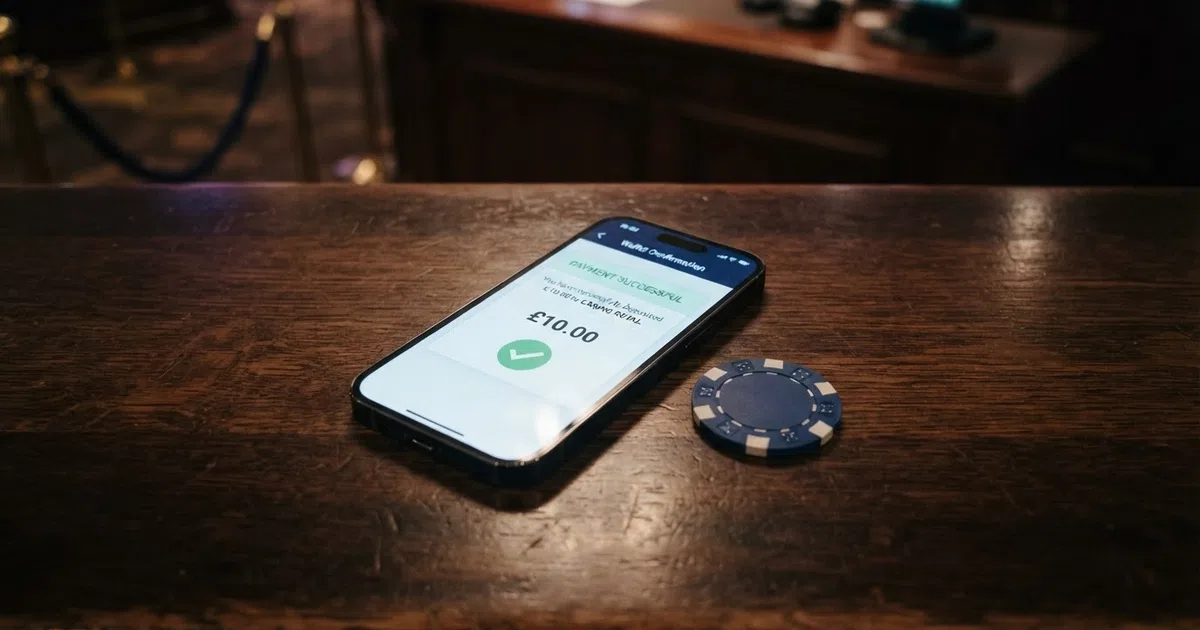
Google Pay is the wallet that sits on most Android phones, and at a UK-licensed casino it does one job very well: it moves money in. Deposits clear instantly, fees are zero on both sides of the transaction, and the typical minimum is £5 to £10 depending on the operator. What it does not do, anywhere on a UK Gambling Commission-licensed site, is pay winnings out. The wallet’s payout rails do not connect to British gambling operators, so every cashout has to travel by debit card, bank transfer or e-wallet instead.
Current as of September 8, 2026 — licence data cross-checked against the UK Gambling Commission’s public register.
Google Pay casinos in 2026: easy money in, no money out
What a Google Pay casino is, in one line
A Google Pay casino is a UK-licensed gambling site that accepts the Google Pay wallet as a deposit method. The wallet sits between the player’s bank card and the casino cashier — it tokenises the card, authorises the payment with a tap on the phone, and never exposes the card number to the merchant. Once the deposit clears, the money lands in the casino balance within seconds. From the player’s side, the experience is closer to contactless in a shop than to typing in card details into a web form.
The deposit-only nature of the integration is the part readers miss. Google Pay never holds a balance at a casino, never receives a payout, and never appears on a withdrawal screen. It is a pay-in rail, not a banking relationship. FruitySlots put it bluntly in 2026: Google Pay can only be integrated by UKGC-licensed casinos, which is why every brand on this page sits inside the same licensing regime.
Is Google Pay still available in the UK? Yes — pay-in only
Yes, and it is unchanged at UK-licensed casinos in 2026. The wallet is fully operational on the cashier pages of every operator covered below, deposits clear instantly, and there is no scheduled change to the integration from either Google or the Gambling Commission.
The misunderstanding worth correcting: Google Pay at a UK casino is a deposit rail, not a banking product. The wallet never pays out winnings, and no operator in the researched set offers a Google Pay withdrawal option. Readers who heard the app “changed” or “shut down” have misread the deposit-only design for a withdrawal feature that never existed.
The real pros and cons of paying with Google Pay
The honest trade-off, not a sales list. On the way in: instant settlement, zero fees from either Google or the casino, and a tokenised card number that means the casino never holds the player’s actual bank details. The deposit triggers without typing in a card number, expiry or CVV — useful on a small phone screen where most cashier forms still feel cramped. “Instant” is the marketing word; the structural reason is that the wallet authorises the token at the acquirer in real time, so the merchant receives confirmation before the cashier form clears.
On the way out: there is no way out via the wallet. Withdrawals have to take the underlying route — debit card, bank transfer, or e-wallet — and the time that takes is the limit on cashout speed, not the wallet itself. There is also a quieter minus: a credit card linked to a Google Pay wallet gets blocked at every UK-licensed casino, because the 14 April 2020 ban on credit cards for gambling extends to credit-funded e-wallets. A reader paying with a debit card through Google Pay is fine. A reader paying with a credit card is not, and the casino declines the transaction without sending it through.
If not Google Pay: the other payment routes casinos accept
The same cashier page that takes Google Pay also takes the three methods that actually move money out. Debit card deposits and withdrawals sit on the same Visa or Mastercard rails — typically slower for payouts than for deposits. Bank transfer is the slower and heavier option, generally used for larger sums, and accepted everywhere. E-wallets — PayPal, Skrill, Neteller, and the like — are the fastest cashout route at most operators, but are often excluded from welcome-offer eligibility, which is why Betfair’s free-spins package explicitly rules out e-wallet deposits. Three cashout methods, no overlap with the deposit wallet that brought the money in.
The ten operators we checked, ranked — and the brand that won’t take Google Pay
Ten operators sit on the featured set. Nine take Google Pay. One — Betfred — does not, and that exception is the most important disclosure on this page.
| Operator | UKGC licence | Google Pay | Welcome free spins | No-deposit spins | Wagering on winnings |
|---|---|---|---|---|---|
| Bet365 | Yes | Yes — £5 min, £5,000 max | Up to 500 FS over 10 days | No | 0× |
| Sky Vegas | Yes | Yes | 200 FS after £10 deposit & spend | 50 FS | 0× |
| Paddy Power | Yes | Yes | 260 FS total (60 + 200) | 60 FS | 0× |
| Betfair | Yes | Yes (deposits; e-wallets excluded from welcome) | 150 FS total (50 + 100) | 50 FS | 0× |
| William Hill | Yes | Yes (deposit only) | 200 FS on Big Bass Splash | No | 10× on winnings (£30 cap) |
| Ladbrokes | Yes | Yes | 100 FS for £10 slots bet | No | Under 10× cap (unstated) |
| Coral | Yes | Yes | 100 FS for £10 slots bet | No | Under 10× cap (unstated) |
| Gala Bingo | Yes | Yes | 100 FS for £10 slots spend | No | Under 10× cap (unstated) |
| Betfred | Yes | Yes (deposit only) | Up to 200 FS | No | – |
| Midnite | Yes | Yes — £5 min, £5,000 max | Unconfirmed | – | – |
The ranking is not weighted by an arbitrary score; it is ordered by what a reader actually pays for at the cashier and what a reader actually keeps from the welcome package. Operators are grouped by the structural shape of their offers — wager-free free spins, no-deposit slices, the £30-capped William Hill anomaly, and the Betfred exclusion. Where two operators carry identical terms, they sit together: Ladbrokes and Coral are 100 free spins for a £10 slots bet with a 48-hour accept window, and the table makes that visible at a glance.
The wider context: the UK Gambling Commission’s public register contained 2,665 licence records as of 29 July 2026. Every operator on this page appears on that register; none is an offshore rebrand. The featured set is the top end of a far longer list — these ten are the ones a UK reader comparing Google Pay options is most likely to be weighing.
Bet365 — up to 500 free spins, nothing to wager
Bet365’s welcome package is the largest on this page by raw spin count: up to 500 free spins, handed out across 10 days of daily reveals in batches of 5, 10, 20 or 50. The trigger is £10 in lifetime deposits, the spins are £0.10 each, and the qualifying slots are Book of Horus, Curse of the Bayou, Magic Forge and Wrath of the Deep. There is no wagering on winnings — a free-spin win at Bet365 is cash, withdrawable as soon as the casino’s standard verification clears.
Google Pay deposits start at £5. The wallet is accepted on the cashier page alongside debit cards and Apple Pay, and the funds land instantly with no fee from either side. The volume of spins and the zero play-back make Bet365 the most generous offer in the featured set; the daily reveal mechanic is the only real friction, since not every day’s reveal is the full 50.
Sky Vegas — spins before you pay, 200 more after a deposit
Sky Vegas splits its welcome in two. The first 50 free spins land before any deposit — a genuine no-deposit slice, credited on registration with no spend required. The next 200 spins unlock once the player has deposited and staked £10 on eligible games. Every spin carries no wagering, so winnings are cash from the moment they hit the balance.
The deposit side is equally clean: Google Pay is accepted, the minimum sits at £5 to £10 depending on the source, and withdrawals route through debit card or bank transfer. Sky Vegas sits in the middle of the no-deposit table — 50 free before any deposit, 200 more once the qualifying £10 is staked.
Paddy Power — 60 spins for free, and 200 later
Paddy Power offers the largest genuinely-free slice on this page. Sixty free spins land on registration, before any deposit or wager, and a further 200 spins arrive once the player has deposited and wagered £10. All 260 spins are wager-free, winnings are paid as cash, and the package expires 7 days after the deposit trigger.
Google Pay is in the eligible list for the deposit-and-wager step, alongside Apple Pay and debit cards. On the size of the no-deposit slice, Paddy Power is the first name on the table. On the wager-free question, Paddy Power and Sky Vegas sit at the top together.
Betfair — 50 spins up front, paid as cash
Betfair’s structure mirrors Sky Vegas on the no-deposit side: 50 free spins land on registration, before any deposit. A further 100 spins unlock on a £10 deposit-and-spend, taking the total to 150. There is no wagering on any of the wins, and winnings are paid as cash.
The catch is in the eligibility list: e-wallets are excluded from the offer, and Google Pay sits inside that exclusion in practice even where the wallet is accepted for deposits. A reader choosing Betfair for the welcome needs to fund the qualifying £10 from a debit card or Apple Pay — the wallet that brought money in does not count for the trigger. Once the spins are credited, no further friction: every win is cash, and the standard cashout route applies.
William Hill — Big Bass Splash spins with a £30 cap
William Hill is the one operator in the set where the welcome package carries real conditions. Two hundred free spins on Big Bass Splash, triggered by a £10 deposit and wager, at £0.10 per spin, expiring 72 hours after credit. Winnings are capped at £30, and the bonus carries a 10× wagering requirement on the win amount — the maximum allowed under the post-January 2026 cap on wagering requirements.
The trade is plain: this is the only Big Bass Splash welcome on the page, and a reader who likes that title gets it nowhere else. The headline 200 spins come with a £30 ceiling and a 10× play-back — neither is hidden, and a reader chasing the spin figure alone should know the cash ceiling sits below the spin-value total before any play-back.
Ladbrokes — 100 spins to accept within 48 hours
Ladbrokes offers 100 free spins for a £10 bet on selected slots, at £0.10 each. The accept window is the binding constraint: 48 hours from issue to opt in, with the spins themselves valid for 7 days once accepted. No stated wagering on winnings, no stated max-cashout cap; the package sits inside the new 10× cap that now governs all UKGC-licensed welcome bonuses.
Google Pay is accepted for the qualifying deposit. The deposit minimum varies by source, generally £5 to £10. Ladbrokes delivers a small, clean welcome with a real timer on it; the 48-hour accept window is the only part that demands attention.
Coral — the matching 100 spins, same terms
Coral’s welcome mirrors Ladbrokes term for term: 100 free spins for a £10 slots bet, £0.10 each, 48 hours to accept, 7 days to use, no stated wagering on winnings. Both brands sit under Entain’s UKGC licence, which is why the offer structure matches so closely.
For a reader choosing between them, the choice is not the welcome package — it is the cashier experience, the live-dealer lobby, the bingo vertical, and the on-site promotions that sit outside the welcome. Google Pay deposits work identically across the two, and the cashout route is the same.
Gala Bingo — 100 spins when you spend £10
Gala Bingo rounds out the Entain trio with 100 free spins for a £10 spend on slots. The package is slots-triggered, not bingo-triggered — a reader expecting bingo tickets on the welcome will find spins on selected slot games instead. £0.10 per spin, 7-day validity, no stated wagering requirement.
Google Pay is accepted on the cashier. The brand name is bingo, the offer is slots, and the package sits comfortably below the headline figures at Bet365 and Paddy Power. For a reader who plays slots at a bingo-branded lobby and prefers Entain’s house style, Gala is the natural fit.
Betfred — the featured name that declines Google Pay
Betfred is on this page because readers search for it alongside the other major UK brands, and the honest answer is that the welcome package does not run on Google Pay deposits. Up to 200 free spins are available on a first deposit of £10 or more, but the qualifying deposit routes are debit card and Apple Pay — Google Pay is often excluded from welcome-offer eligibility.
The trade is plain: Betfred is a major UK brand with a UKGC licence (Petfre (Gibraltar) Ltd is the licence holder), the welcome is competitive on spin count, and the cashier will accept Google Pay for deposits outside the welcome trigger. A reader who wants Betfred specifically has to fund the qualifying £10 from a debit card or Apple Pay, and the wallet that brought them in does not count.
Midnite — Google Pay from £5, offer unconfirmed
Midnite accepts Google Pay on deposits from £5 to £5,000, with instant settlement and no fees from either side. The wallet is welcome-offer-eligible at this brand, which sets Midnite apart from the rest of the Flutter-majority set. The welcome offer itself is unconfirmed.
For a reader who values the wallet’s flexibility (low minimum, high ceiling, no fee, eligible for whatever the welcome turns out to be), Midnite is the cleanest payment-method pick on the page. The unknown welcome is the cost of choosing it over a brand whose full offer is on the table.
Paying in and getting paid: where Google Pay is instant, and where it falls short
How a Google Pay deposit works — fee-free and immediate
The deposit flow is short. At the cashier, the player picks Google Pay from the deposit options. The phone — most readers will be on Android — prompts for biometric confirmation, the wallet sends the tokenised card authorisation, and the casino balance updates within seconds. No card number, no expiry, no CVV is ever typed into the casino’s form; the wallet handles the card detail internally and passes the merchant a token.
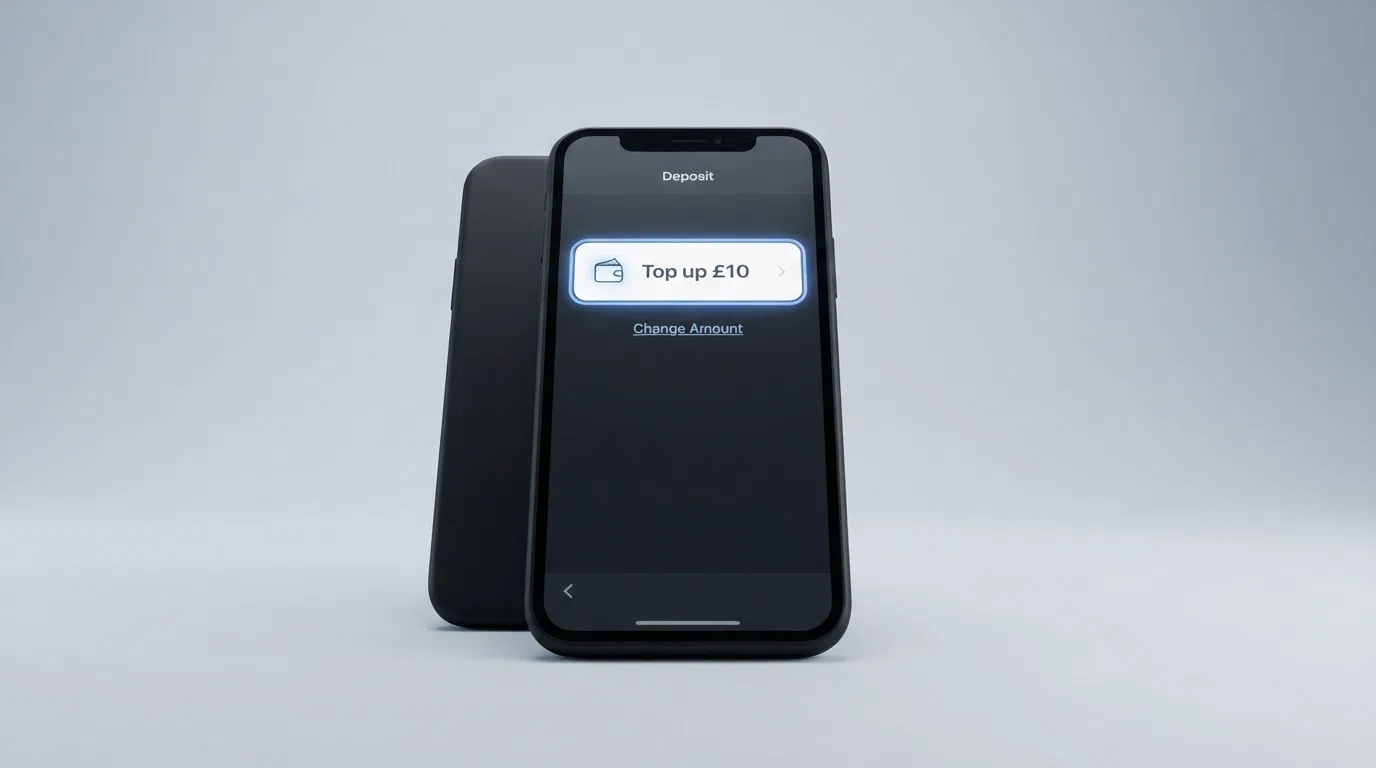
Minimums run from £5 to £10 depending on the operator. Bet365, Midnite and BetVictor sit at the £5 end; LeoVegas is at £10. Maximums stretch from £1,000 (BetVictor) to £5,000 (Midnite) to £20,000 (LeoVegas). Fees: zero from Google, zero from the casino on the deposit side. The only cost the player ever sees is the house edge of whatever game the deposit funds.
Why Google Pay can’t pay out your winnings
The wallet does not have a payout rail connecting it to UK gambling operators. There is no operator in the researched set that offers a Google Pay withdrawal, and the Gambling Commission’s published rules do not single Google Pay out because the wallet simply does not appear on the cashout side of any cashier. Every operator routes withdrawals to the underlying funding source where possible — debit card, bank transfer, or e-wallet — and the Google Pay deposit is settled into the casino’s account as if it had come from a card.
The upshot: a deposit at Bet365 arrives in seconds. The winnings from that deposit, when the player wants them back out, take the speed of the underlying method instead of the wallet’s. The wallet’s instant deposit is a one-way advantage.
How fast the money actually moves
The honest answer splits in two. Deposits are instant — every operator surveyed clears Google Pay in seconds, and the figure is consistent across every source. Withdrawals are whatever the underlying method is, and the figure varies by operator, by day of the week, and by how clean the player’s verification file is.
Surveyed sources put cashouts at typically 1 to 3 working days across the methods that follow a Google Pay deposit: debit card withdrawals land within 1 to 3 working days at most UK-licensed casinos once internal processing clears; bank transfers sit at the slower end, often 2 to 5 working days; e-wallets (where the player funds the deposit from a wallet rather than Google Pay) can land same-day. The “instant withdrawal” promise at offshore casinos is, structurally, a different product.
What a deposit costs, and the £5 minimum
Nothing. Zero fees from Google and zero fees from the casino on the deposit side — that is the universal figure across the researched operators, and the absence of a fee is the second thing every source agrees on (after the instant settlement).
Minimums vary by operator. Bet365, BetVictor and Midnite all accept a £5 deposit via Google Pay; LeoVegas and several of the Entain brands sit at £10. Maximums scale up to £5,000 at Midnite and £20,000 at LeoVegas. There is no premium for using the wallet — the same minimums and maximums apply whether the player funds the casino from Google Pay, a debit card, or Apple Pay.
Which cards Google Pay lets through to a casino
Debit cards go through. Credit cards do not, and the wallet does not hide the difference. Since 14 April 2020, UKGC licence condition 6.1.2 has prohibited all licensed operators from accepting credit card payments for gambling, and the ban explicitly extends to credit-card-funded e-wallet transactions. A credit card linked to a Google Pay wallet will be declined at the cashier; the transaction never reaches the operator’s payment processor.
For a reader who holds a credit card on file in Google Pay for non-gambling spending, the practical consequence is that the casino rejects the deposit without a clear error message. Switching the default card in Google Pay to a debit card solves the problem in two taps. The casino is not asking about the card type — it is asking whether the underlying funding source is a credit instrument, and the wallet itself answers that question correctly.
Deposit alternatives when Google Pay isn’t right
The same cashier that takes Google Pay also takes the three routes that actually move money out. Debit card is the most universal option — Visa Debit, Mastercard Debit, and the major UK issuers all clear at every researched operator. Bank transfer is the slower, heavier alternative, generally used for larger sums, and is accepted everywhere. E-wallets — PayPal, Skrill, Neteller — are the fastest cashout route at most operators, and the route a reader should pick if the priority is getting winnings back quickly rather than getting them in quickly.
The trade-off between routes is consistent: Google Pay is the fastest in, slowest out (because it does not exist) out; debit card is fast in, moderate out; bank transfer is moderate in, slow out; e-wallet is moderate in, fastest out. The wallet’s role is the pay-in rail; everything else is a bidirectional route.
Verification before your first deposit
“No verification” is not a thing at any UK-licensed casino, and Google Pay does not change that. Since 7 May 2019, a UK remote licensee must verify a customer’s name, address and date of birth before they can deposit or gamble — the pre-2019 grace period that allowed 72 hours of play before sending documents is gone. Every operator on this page checks those three fields against public data (and sometimes a document upload) before the first deposit goes through, and a Google Pay deposit does not shortcut that step.
For the player, the practical effect is a short form on first registration — name, address, date of birth — that completes in under a minute and clears the deposit route. Any site marketing itself as “no-KYC” is outside the UKGC licence; the section on offshore and non-GamStop sites below spells out what that costs.
What the welcome offers actually give you — and what they cost
Welcome offers here are free spins, not deposit matches
Every welcome package on this page is a free-spins bundle. No operator in the featured set runs a percentage deposit match on the first deposit — that shape of offer, once common at UK-licensed casinos, has fallen out of the welcome repertoire as the wagering cap tightened. The default welcome across the researched brands is a free-spins package triggered by a £10 deposit-and-spend, with the spin count, slot, expiry and wagering varying by brand.
The structural reason is the 10× wagering cap that took effect on 19 January 2026. A deposit match at 100% with a 10× play-back means £100 bonus requires £1,000 of wagering, which is a hard ceiling on how attractive any matched offer can be. Free spins, with their built-in stake ceiling (£0.10 each, mostly), keep the play-back tractable under the cap. The shape of UK casino welcomes has converged on free spins for that reason, and “wager-free” is the marketing word the cap has compressed every UK bonus toward.
No-deposit spins: three operators hand them out
Three operators in the featured set give away spins before the player has deposited a penny. Sky Vegas credits 50 free spins on registration. Paddy Power credits 60. Betfair credits 50. Every other operator in the set — Bet365, William Hill, Ladbrokes, Coral, Gala Bingo, Betfred, Midnite — requires a £10 deposit-and-spend before the welcome spins unlock.
For a reader comparing brands on the size of the genuinely-free slice, the ranking is: Paddy Power (60), Sky Vegas (50) and Betfair (50), with the rest requiring a £10 trigger. Paddy Power wins the size contest; Sky Vegas and Betfair tie for second; everyone else sits behind a £10 paywall.
Wager-free versus the 10× cap: who makes you play it back
The split that decides the real value of these offers. Bet365, Sky Vegas, Paddy Power and Betfair are all 0× — every free-spin win lands as cash, withdrawable as soon as the casino’s verification allows. William Hill is 10× on winnings, the maximum now allowed under the post-January 2026 cap. Ladbrokes, Coral, Gala Bingo and Midnite do not state a wagering requirement on their free-spin wins in the surveyed sources, which puts them inside the 10× ceiling by default.
For a player, the difference is stark. A 100-spin win at Bet365 on a £0.10 spin value, multiplied by an average slot win rate, lands as a real balance. The same 100 spins at William Hill, with a £30 cap on winnings and a 10× play-back on the win amount, requires the player to wager £300 before any of the £30 can be withdrawn. Both offers are inside the law; one is structurally more valuable than the other.
Bonus codes: none of these offers needs one
No checked offer on this page requires a bonus code to activate. The triggers are a £10 deposit-and-spend (for most packages), an opt-in (for Ladbrokes and Coral’s 48-hour accept window), or registration alone (for the no-deposit slices at Sky Vegas, Paddy Power and Betfair). There is no token to type into the cashier form, and no promo field to remember at sign-up.
A reader landing on a comparison page that lists codes should treat those codes with the scepticism the comparison earned. The welcome offers on this page either activate on their own or do not exist; none is hidden behind a code.
The slots whose RTP we can verify — four titles compared
Slots with published RTPs: four titles compared
Four titles have published, verifiable RTPs across the featured set, and the table below is the part most comparison pages skip:
| Slot | RTP | Provider | Volatility | Max win |
|---|---|---|---|---|
| Book of Dead | 96.21% | Play’n GO | High | ~5,000× stake |
| Big Bass Bonanza | 96.71% | Pragmatic Play / Reel Kingdom | High | 2,100× stake |
| Starburst | 96.09% | NetEnt | Low | ~500× stake |
| Sweet Bonanza | 96.48% | Pragmatic Play | High | 21,100× stake |
The variance among them is wider than most comparison pages admit — 0.62 percentage points separate the highest (Big Bass Bonanza, 96.71%) from the lowest (Starburst, 96.09%) — and that gap compounds across a session. The volatility column matters more than the average reader knows: Starburst pays small, often; Sweet Bonanza pays rarely, sometimes enormous. The two shapes of slot game produce two shapes of session, and the choice between them is a choice about what kind of session the player wants.
Most of the slots at the featured operators do not have their RTPs stated in any source the research surfaced. Pragmatic Play, Play’n GO, NetEnt, Blueprint, Red Tiger, Big Time Gaming and Evolution Gaming are all confirmed as providers across the Google Pay casinos; the per-title RTPs that would let a reader compare them are not in the surveyed material. Where the table above leaves a cell blank, it is because the figure was not verified, not because the figure does not exist.
What the math actually looks like — a worked example
The fixed formula is straightforward: expected loss over a session is the spin count multiplied by the stake per spin, multiplied by one minus the slot’s RTP. Plug in 100 spins at £5 per spin — a representative session length and the maximum stake for a player aged 25 or over under the slot stake cap — and the four titles above give four different expected losses:
- Book of Dead (96.21% RTP): £18.95 expected loss on a 100-spin, £5-stake session.
- Big Bass Bonanza (96.71% RTP): £16.45 expected loss under the same conditions.
- Starburst (96.09% RTP): £19.55 expected loss — the highest of the four, because the RTP sits furthest below 100%.
- Sweet Bonanza (96.48% RTP): £17.60 expected loss under the same conditions.
The relationship is linear — doubling the spin count doubles the expected loss, halving the stake halves it. A reader under 25 years old, for whom the slot stake cap is £2 per game cycle rather than £5, runs the same 100 spins at £7.58 expected loss on Book of Dead, £6.58 on Big Bass Bonanza, £7.82 on Starburst and £7.04 on Sweet Bonanza. The expected loss is an average across many spins under the stated assumptions; no individual session lands on that number, and the variance around it is exactly what makes the games worth playing.
Blackjack and roulette with a Google Pay deposit
Deposits work identically across game types. A £10 Google Pay deposit at any operator on this page funds a blackjack hand, a roulette spin, or a slots reel without differentiation — the wallet does not know or care what the money is spent on once it lands in the casino balance. Per-title blackjack and roulette specifics (RTP by variant, table limits, side-rule payouts) were not verified in the surveyed material, and this page does not invent them.
The shape of the choice is the standard one: blackjack is the lowest-house game in any UK-licensed lobby (typically 0.5% or better with basic strategy), roulette is the next-lowest (2.7% on a single-zero wheel), and slots sit in the mid-90s on RTP. A reader who came to a casino for the table games rather than the slots will find the cashier works the same way and the game rules are the ones that always apply.
Live dealer tables: what’s actually verified
Evolution Gaming is confirmed as a live-dealer provider across Google Pay casinos in the researched set, and Pragmatic Play Live is also in the mix at several operators. The deposit mechanic is unchanged — a Google Pay deposit funds a live-dealer hand the same way it funds a slot spin. The RTP figures for specific live-dealer tables (Lightning Roulette, Infinite Blackjack, the various game-show formats) were not in the surveyed material and are not asserted here.
For a reader evaluating a casino by the live-dealer lobby, the practical test is the on-site game list: which providers, which variants, which table limits. The wallet is not the deciding factor; the lobby is.
Bingo: the one featured bingo brand
Gala Bingo is the bingo-branded name in the featured set, and the welcome package is slots-triggered — 100 free spins for £10 spent on slots, £0.10 each, valid 7 days. The brand name is bingo; the welcome is slots. Google Pay is accepted on the cashier, the bingo lobby is Entain’s standard offering, and the welcome package sits inside the same 10× wagering cap that governs every UKGC-licensed offer.
The wider bingo market across UKGC licensees is much larger than this single brand; Entain, Playtech and Pragmatic Play’s bingo networks all carry licence-holder coverage. The featured set covers one name, and the page makes no claim about the rest.
Why Google Pay is built for Android, not the desktop
Google Pay is at home on a phone, in browser and in-app
Google Pay is an Android-native wallet, and the deposit experience is built around that fact. The biometric confirmation — fingerprint or face — happens on the phone, and the integration with mobile browsers and dedicated casino apps is where the wallet works most cleanly. On a desktop browser, the wallet still works, but the flow drops the player out to a phone or a QR code to confirm; on a phone, the entire authorisation sits inside one screen.
For a reader whose gambling is mobile-first, Google Pay is the deposit rail that fits the device. For a reader whose gambling is desktop-first, the wallet still functions but does not shine in the same way. There is no “Google Pay casino app” category per se — every operator with an Android app accepts the wallet where the cashier supports it, and the integration is operator-level rather than app-level.
Casino apps that take Google Pay: what’s actually verified
Every featured operator offers an Android app, and the apps generally support the same deposit methods as the mobile browser. Per-app Google Pay specifics — which apps route the wallet to which acquirer, whether the deposit flow differs between the app and the mobile browser — were not verified in the surveyed material. This page states that the apps exist and that the wallet is broadly accepted on Android devices, and stops there.
For a reader choosing between mobile browser and app, the practical question is whether the app offers a smoother experience than the browser, not whether it offers a different Google Pay integration. The wallet works the same way in both, and the deposit limit and minimum at the cashier are the same regardless of how the player reaches it.
New Google Pay casinos: none worth naming yet — here’s how to check the next one
Why we didn’t list fresh launches this time
No new UK-licensed casino accepting Google Pay surfaced in the sources surveyed this round, and none is named on this page for that reason. Freshness is checked against the UK Gambling Commission’s public register — a brand is added when it appears on the register, holds an active remote operating licence, and the operator’s payment page confirms Google Pay as a deposit method. None of those three conditions were met for a brand new enough to warrant a separate ranking this run.
The omission is an honesty beat, not a gap. A reader looking for a fresh brand has a one-step verification habit instead — the next subsection walks through it.
Check any new brand against the licence register first
The UKGC’s public register is searchable by business name, trading name, domain name or account number, and contained 2,665 licence records as of 29 July 2026. Every operator on this page appears there; any new brand a reader is considering should appear there too, before a deposit is made. The register confirms the licence is active, the licence holder is who the operator says it is, and the licence covers remote (online) gambling for GB customers.
The verification takes a minute. Search the register by the brand name or domain; confirm the licence status reads “Active”; confirm the licence type covers remote operating. A brand that does not appear, or that appears with a different trading name, is not the brand it claims to be in its marketing.
Crypto deposits and Google Pay don’t coexist under a British licence
Why a UK-licensed casino won’t also take bitcoin
A UK Gambling Commission licence and bitcoin deposits do not coexist at any operator in the researched set. The Gambling Act 2005, extended by the 2014 point-of-consumption regime, makes a GB licence compulsory for any operator serving GB customers — and the licence conditions cover payment methods, customer funds, and source-of-funds checks in ways that rule out unregulated crypto rails by design. Bitcoin casinos sit outside that regime: Curaçao and Malta licences do not authorise GB play, and accepting GB customers without a GB licence is a criminal offence under section 33 of the Gambling Act.
For a reader weighing a crypto deposit against a Google Pay deposit, the answer is that the choice is not a choice. A UK-licensed casino will accept Google Pay and not bitcoin; an offshore casino will accept bitcoin and not be UK-licensed. The two methods do not meet on a single cashier page, and a reader who wants both has left the licensed market.
The licence behind every casino on this page — and what offshore costs you
UK licensing: every operator here is UKGC-licensed
All ten operators on this page hold active UK Gambling Commission remote operating licences. The licences were confirmed against the public register, which held 2,665 records as of 29 July 2026; the register is searchable by business name, trading name, domain or account number, and a reader can repeat the check for any brand before depositing.

The trust fact that underwrites this page is the licence regime itself. A GB licence is compulsory at the point of consumption for any operator serving GB customers, wherever the operator is based. The Gambling Act 2005 sets the licensing objectives — preventing crime, ensuring fairness, protecting the vulnerable — and the LCCP and Remote Technical Standards spell out the operational rules that follow from those objectives. Every welcome package, every deposit limit, every responsible-gambling tool on this page sits inside that regulatory perimeter.
Offshore and non-GamStop sites: what you actually lose
The cost of leaving the licence is the player protections that come with it. A Curaçao or Malta licence does not authorise GB play — the licence is jurisdiction-specific, and operating for GB customers without a GB licence is a criminal offence under section 33 of the Gambling Act. Players on unlicensed sites lose GamStop self-exclusion (no UK-wide block applies), the UKGC complaints route (no British regulator to escalate to), ADR access (no alternative dispute resolution body bound by UK standards), and British consumer redress if funds are withheld.
The enforcement figures underline the gap. Between April 2024 and June 2025, the Gambling Commission issued 3,140 disruption notices, referred 447,778 URLs to search engines, and saw 287,961 URLs removed. The enforcement targets operators, advertisers and intermediaries, not the players themselves — there is no penalty traced for a player who merely gambled on an unlicensed site. The cost is the absence of protection when something goes wrong, not a prosecution risk on the player side.
“No-verification” is not a thing at UK-licensed casinos
The pre-deposit KYC requirement has been mandatory at every UK remote licensee since 7 May 2019. Name, address, date of birth — three fields, checked against public data (and sometimes a document upload) before the first deposit can be made. The pre-2019 grace period that gave players 72 hours of play before sending documents is gone, and no UK-licensed casino offers the option back. Any site marketing itself as “no-KYC” or “no verification” is outside the licence regime.
For a player, the form takes under a minute. For a regulator, the form is the floor of the safer-gambling regime: every limit, every intervention, every GamStop block depends on the operator knowing who the customer is, and that knowledge starts at registration. A reader who values anonymity should know the trade is the licence itself, not a single form field.
The caps now in force across UK casino play
| Limit or rule | What it caps | In force since |
|---|---|---|
| Slot stake cap (25+) | £5 per game cycle | 9 April 2025 |
| Slot stake cap (18–24) | £2 per game cycle | 21 May 2025 |
| Wagering requirement ceiling | 10× the bonus amount | 19 January 2026 |
| Credit card gambling ban | All credit-funded gambling including credit-linked e-wallets | 14 April 2020 |
| Financial vulnerability check | Light-touch check at £150 net deposit in rolling 30 days | 28 February 2025 |
| Deposit-limit prompt | Mandatory prompt before first deposit | 31 October 2025 |
| Gross deposit limit (RTS 12) | Must be offered with at least equal prominence | 30 September 2026 |
| Auto-play ban | Auto-play feature on online slots | 31 October 2021 |
| Spin speed minimum | 2.5 seconds per game cycle | 31 October 2021 |
| Remote Gaming Duty | 40% of GGY for online casino operators | 1 April 2026 |
| Statutory gambling levy | 1.1% of GGY for remote casino operators | 6 April 2025 |
The statutory limits table sits in the licence section because the licence is what enforces them. Every cap in that table is a condition of holding a UKGC remote operating licence, not a voluntary choice by the operator. A reader comparing UK-licensed Google Pay casinos to offshore alternatives is comparing two different rulebooks, and the rules on this page are the ones that govern the sites named above.
The most consequential of the caps for a Google Pay reader is the wagering requirement ceiling. Before 19 January 2026, UK welcome bonuses could carry 30×, 40×, even 60× wagering requirements on the bonus amount; now no UKGC-licensed casino can offer a bonus with more than 10× play-back. That cap shapes every welcome package on this page and is the single biggest structural change to UK casino bonuses in years.
Staying in control: the limits you can set and where to get help
Self-exclusion with GamStop: how it blocks every licensed casino
GamStop is the national multi-operator self-exclusion scheme for Great Britain, and it has been mandatory for every UKGC online operating licence since 31 March 2020. A player who registers with GamStop is blocked from every UK-licensed online casino for the chosen exclusion period — six months, one year, five years, or five years with auto-renewal — and the exclusion cannot be cancelled early.
For a reader using Google Pay at one of the operators on this page, the implication is direct: a GamStop registration blocks the wallet at every licensed site, not just one. The same wallet that took deposits last week will be declined next week, and the player will not be able to bypass the block by switching operators or payment methods within the licensed market. Offshore casinos are outside the scheme; that is one of the costs of leaving the licence.
Deposit limits, reality checks and the tools you can set yourself
The controls a player sets, with statutory backstops. Since 31 October 2025, every UKGC-licensed operator must prompt a customer to set a financial limit before their first deposit; from 30 September 2026 (RTS 12), the gross deposit limit must be offered with at least equal prominence to any other financial limit on the cashier page. Decreases to a deposit limit apply immediately; increases may have a delay before they take effect.
The wider game-design rules reinforce those controls. Auto-play is banned, the minimum spin speed is 2.5 seconds per game cycle, features that speed up play are banned, “losss disguised as wins” are banned, reverse withdrawals are banned, and session displays (time played, net position) are mandatory on every licensed site. The slot stake caps (£5 for 25+, £2 for 18–24) sit alongside those design rules; together they define the shape of a UK slots session.
Getting help — and how many UK players need it
The National Gambling Helpline, run by GamCare, is free and available 24/7 on 0808 8020 133 — by call, live chat or WhatsApp. The figures behind it are the prevalence numbers every UK reader should know: around 0.5% of the English adult population experience problem gambling, 3.8% are at elevated risk, and an estimated 7% of the British population are negatively affected by someone else’s gambling. The Helpline’s January 2026 referral count was 996 — a 48% increase on the same month a year earlier.
The wider treatment infrastructure treats that volume. The National Gambling Support Network saw 11,960 clients in 2024/25, up 11% year-on-year, with 93% of clients completing treatment seeing improvement. NHS gambling treatment clinics operate in England, Scotland and Wales; Gamblers Anonymous runs peer support; GambleAware hosts the self-assessment and treatment-service directory at gambleaware.org. The infrastructure is there because the prevalence is there, and the helpline number is the front door.
How we verified and ranked these casinos
The ranking on this page is built from three sources and one whitelist. The whitelist is the UK Gambling Commission’s public register: every operator featured on this page appears on that register, with an active remote operating licence for GB customers. The register held 2,665 records as of 29 July 2026; the featured set is the top end of that list by brand recognition and by welcome-package visibility, not by an arbitrary ranking score.
The three sources are: each operator’s own on-site welcome terms and payment-method page; aggregator pages (Bojoko, gg.co.uk, Bookies.com, Fruityslots.com, OLBG, bestcasino.co.uk, The Independent) that survey UK casino brands for editorial review; and the UKGC’s published rules on bonuses, stake caps, KYC, GamStop and the operator-side levy. The ranked order is informed by the size and shape of the welcome package (wager-free first, then under the 10× cap, then with explicit caps and wagering), by the deposit route clarity, and by the historical presence of the brand in UK search results — three inputs rather than a weighted score.
The ranking is not a recommendation. The page describes what each operator offers and how it sits inside the UK regulatory regime; the reader chooses.
Your move: fund with Google Pay, withdraw by bank transfer, stay licensed
The page has been building toward one decision tree. On the way in: Google Pay. Deposits clear instantly, fees are zero, and the wallet tokenises the card so the casino never holds the player’s actual bank details. The minimum is £5 at most operators, and the wallet sits at the top of every cashier list for the ten brands above — except Betfred, where the wallet is excluded from welcome-offer eligibility but still deposits funds outside the welcome trigger.
On the way out: a debit card or bank transfer. The wallet does not pay out, and no operator offers a Google Pay withdrawal; the cashout speed is whatever the underlying method is, typically 1 to 3 working days for debit cards, 2 to 5 for bank transfers, same-day for e-wallets where the player funded the deposit from one. For most readers, the practical answer is a debit card withdrawal into the same account that holds the debit card linked to Google Pay — same bank, same name, same verification file.
Inside the licence: stay there. Every operator on this page is UKGC-licensed; GamStop applies to every one of them; the 10× wagering cap, the £5/£2 stake caps, the credit-card ban and the auto-play ban all sit on the same statutory floor. Set a deposit limit before the first deposit, register with GamStop if the play stops being fun, and call 0808 8020 133 if it becomes a problem.
Frequently asked questions
Which UK-licensed casinos accept Google Pay in 2026?
Nine of the ten operators featured on this page accept Google Pay: Bet365, Sky Vegas, Paddy Power, Betfair, William Hill, Ladbrokes, Coral, Gala Bingo and Midnite. The tenth, Betfred, accepts debit cards and Apple Pay but excludes Google Pay from welcome-offer eligibility. Every operator on the page holds an active UK Gambling Commission remote operating licence, verified against the public register as of 29 July 2026.
Are Google Pay casino bonuses the same as debit card bonuses?
Yes, with two named exceptions. The welcome packages at Bet365, Sky Vegas, Paddy Power, William Hill, Ladbrokes, Coral, Gala Bingo and Midnite do not differentiate by deposit method — the qualifying trigger is a £10 deposit-and-spend from any eligible method. Betfred excludes Google Pay from welcome eligibility. Betfair excludes e-wallets from the qualifying £10, which leaves debit card and Apple Pay as the cleanest paths to that welcome.
Is Google Pay safe to use at online casinos?
Google Pay adds a tokenisation layer between the card and the casino: the wallet stores the card details and passes the merchant a one-time token, so the casino never holds the player’s actual card number. The wallet is integrated only at UKGC-licensed casinos — a structural safety that no other deposit method at this scale carries. Two practical checks: confirm the casino is on the UKGC register (2,665 records as of 29 July 2026), and confirm the linked card is a debit card, since credit cards are banned for gambling.
Can I play slots with Google Pay deposits on my Android phone?
Yes. Google Pay is Android-native, and the deposit flow is built around biometric confirmation on the phone itself. The wallet works in mobile browsers and in casino apps, deposits clear instantly, and the slot stake caps (£5 for 25+, £2 for 18–24) apply to the spin amount rather than the deposit route — so a £5 Google Pay deposit at Bet365 funds 50 spins at the £0.10 spin value, with no difference from a debit-card deposit of the same amount.
Can I use a credit card linked to Google Pay at a UK casino?
No. The UK Gambling Commission’s credit-card ban, in force since 14 April 2020, extends to credit-card-funded e-wallet transactions, which means a credit card linked to a Google Pay wallet will be declined at every UK-licensed casino. Switching the default card in Google Pay to a debit card solves the problem — the wallet itself answers the underlying-fund question correctly, and the casino rejects the credit-funded transaction without sending it through to the acquirer.
What happens if I self-exclude through GamStop — does it block Google Pay casinos?
Yes. GamStop has been mandatory for every UKGC online operating licence since 31 March 2020, and a registration blocks every UK-licensed online casino — not just one. The same Google Pay wallet that took deposits last week will be declined at every operator on this page once the exclusion is active. Offshore casinos sit outside the scheme; that is one of the costs of leaving the UKGC licence, and the trade is the protections themselves.
Payments – nominimumdeposit-casinos-uk
Content created by the «nominimumdeposit-casinos-uk» team