The best progressive jackpot slots available to UK players in 2026
 Available in GB
A progressive jackpot is one prize pool, fed by every qualifying spin across a network of players, and reset only when someone wins it. The advertised top prize is the figure every slot review leans on; the advertised return-to-player percentage is the figure the casino leans on. These two numbers tell different stories, and understanding both is what separates chasing a jackpot from playing one.
Data current as of September 8, 2026, verified against the Gambling Commission’s public register of licence holders.
One prize pool, many players: what a progressive jackpot is
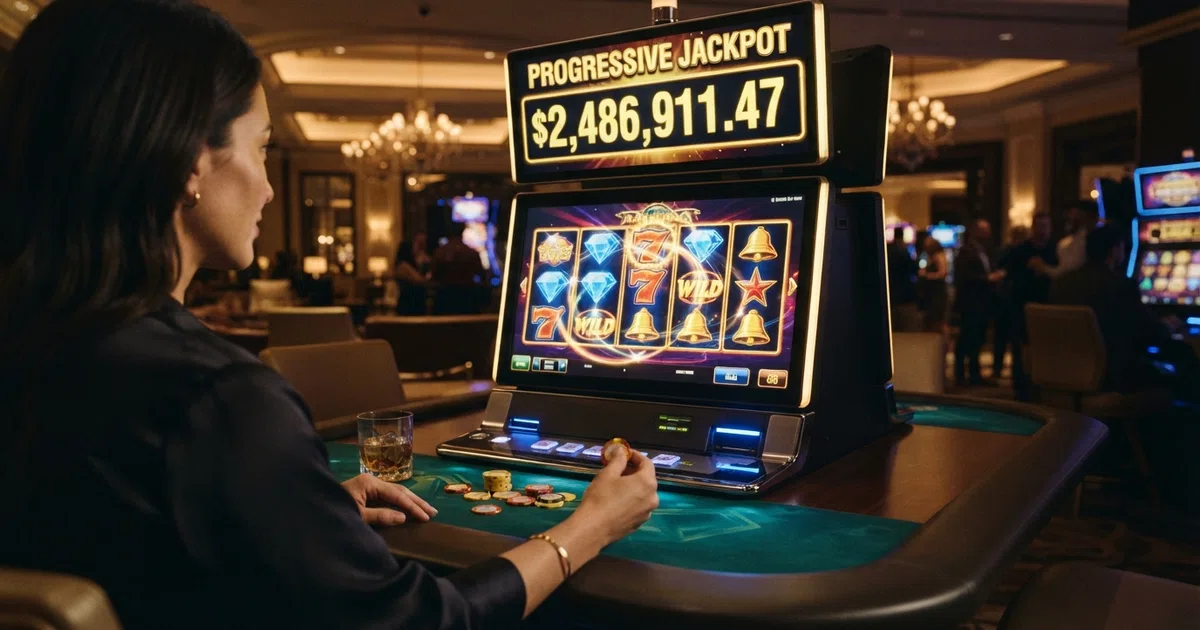
A progressive jackpot slot works on a simple arithmetic trick. Instead of paying out a fixed top prize — say, a £5,000 ceiling on a five-reel game — the operator diverts a slice of every wager into a shared pool, and that pool keeps growing until a spin triggers the win. The pool is the headline figure on the slot’s marketing screen, and the figure on the marketing screen is what players chase.
What counts as a progressive jackpot
The word “jackpot” describes two very different products. A fixed jackpot has a top prize that never changes — £500 on a three-reel classic, say, or 1,000× your stake on a modern video slot. A progressive jackpot, by contrast, starts from a seed amount set by the operator and climbs with every spin that doesn’t win it. Online and land-based versions of the product behave identically in this respect, though the networks that connect them differ — a brick-and-mortar Megabucks-style pool spans physical venues, while an online Mega Moolah pool spans licensed sites running the same software.
How the pool grows: seed amounts and contributions
The seed amount is the figure the jackpot resets to after a win — it is never zero, because a progressive pool that briefly hit zero would be embarrassing. The contribution slice is what feeds it. Each wager typically diverts 1–3% to the pool, with some titles running as high as 5%, and the rest of the wager pays for the base-game return. Two networks run the bulk of UK-facing progressives: a wide-area network shares one pool across many casinos, while a single-site or “standalone” network keeps its pool inside one operator. The wider the network, the larger the prize — and the longer it takes to drop.
A player progressive jackpot slot advertises 96% RTP might deliver roughly 94% through the base game and reserve about 2% as the jackpot contribution. The split is what makes the headline RTP a poor guide to the experience of playing a single session.
How you actually play one
The mechanics at the slot level are unchanged from any other five-reel video game:
- Place a bet within the £5 (25+) or £2 (18–24) per game cycle cap, then press spin.
- The reels spin at no faster than the 2.5-second minimum the Gambling Commission imposes.
- Auto-play is banned; every spin is a deliberate press.
- The jackpot trigger is random — there is no strategy, no bonus-buy shortcut, and no combination that improves the odds.
Some progressive titles require a minimum stake (often £1 or more) to qualify for the top tier. The £5 cap remains above most of those minimums, so qualification is rarely a problem — the cap is the ceiling, not the floor.
Progressive versus fixed-jackpot games — and the three network sizes
Standalone, local, and wide-area are the three network shapes a UK player will encounter. Standalone progressives run on a single site with a smaller pool and faster turnover. Local progressives link games within one casino group — a handful of brands sharing one pot. Wide-area progressives link games across many unrelated casinos and produce the eight-figure prizes that make the news. Wider networks mean bigger but rarer drops; the wider the pool, the longer the wait between triggers.
A fixed-jackpot slot has none of this. The top prize is what the paytable says, period, and the rest of the return is paid through the base game. The trade is straightforward: progressives offer headline prizes that fixed games cannot match, but they pay them out far less often, and the base game underneath carries a lower return to compensate.
The titles that actually paid the biggest prizes
Ranking jackpot slots by the headline prize is ranking them by exception. Two UK wins stand clear of the rest of the field, and the rest of the field ranks itself by the RTP the base game pays out while the pool climbs.
The ranked picks for 2026
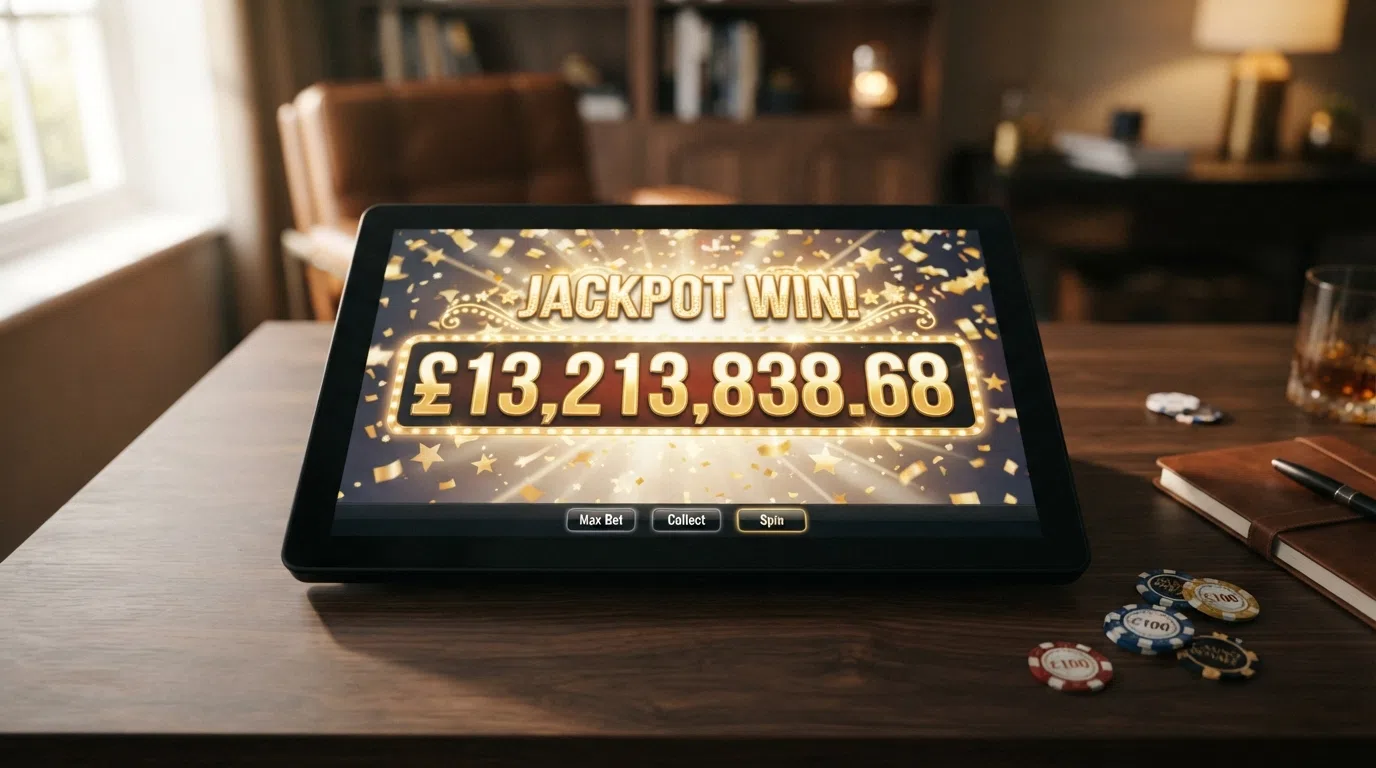
Mega Moolah sits at the top of any UK progressive list. Its record payout is £13,213,838.68 — the Guinness-certified win by British soldier Jon Heywood in October 2015 — and the network has continued paying eight-figure sums since. Its published RTP including jackpot contribution is around 88.12%, the lowest of any title on this list and a number that explains why the prize climbs so high. Mega Fortune from NetEnt runs at the other end: a published RTP of around 96.6% with roughly 6.5% diverted to the pool, a smaller prize ceiling, and a more honest base game underneath. Divine Fortune from NetEnt sits between them at a base-game RTP of 96.59%, though most UK casinos in 2026 deploy the lower 94.05% tier.
Outside the top three, Hall of Gods, Age of the Gods, the Dream Drop network, and the WowPot network fill out the wider field. They share the Mega Moolah trick: a lower base-game return that funds a larger prize pool. Games Global’s wider network paid out more than £11 million across 77,000+ jackpot wins in May 2026, with three William Hill players each winning over £1 million on the King Millions network in the same month.
The record prizes and the players who won them
Jon Heywood’s £13,213,838.68 win on Mega Moolah at Betway in October 2015 remains the largest recorded online slot jackpot paid to a UK player — a Guinness World Record at the time. Ten years on, the title has not been overtaken. In June 2025, a Betfred customer from Lowestoft turned a £1.50 stake into £11,498,211.89 on the same network, the second-largest UK win and the biggest payout in Betfred’s 58-year history.
This is the biggest jackpot Betfred have ever paid out in their 58-year history and the Betfred boss phoned the customer personally to congratulate the new multi-millionaire.
The two wins together illustrate what jackpot slots actually pay out: large but rare, with the bulk of the prize pool funded by the base-game return of millions of losing spins.
Trackers, and which networks are paying right now
Jackpot trackers show live pool sizes and recent activity across networks, though they cannot predict future triggers. The Games Global network metrics cited in ‘The titles that actually paid the biggest prizes’ illustrate the frequency of these network wins.
Where to play them: the UK casino sites we checked
All ten of the operators below hold a current Gambling Commission licence. The ranking reflects welcome-offer terms, not payout speed or game catalogue.
| Operator | GB licence status | Welcome bonus | Free spins | Wagering requirement | Deposit-free? |
|---|---|---|---|---|---|
| Sky Vegas | Licensed (Flutter Entertainment) | 50 no-deposit spins + 200 spins on £10 stake | 250 | 0× | Yes (50) |
| Betfair | Licensed (Flutter Entertainment) | 50 no-deposit spins on Jackpot King | 50 | 0× | Yes |
| Betfred | Licensed (Petfre / Done Brothers) | 200 spins on £10 deposit + £10 stake | 200 | 0× | No |
| Paddy Power | Licensed (Flutter Entertainment) | 60 no-deposit spins + 100 on £10 stake | 160 | 0× | Yes (60) |
| 888 Casino | Licensed (evoke plc) | 100% up to £100 on first deposit | None | 10× within 90 days | No |
| William Hill | Licensed (William Hill Organization) | 200 spins on £10 deposit + wager | 200 | 10× on Big Bass Splash within 72 hours | No |
| Ladbrokes | Licensed (Entain plc) | 100 spins on £10 deposit + stake | 100 | 10× | No |
| Coral | Licensed (Entain plc) | 100 spins on £10 deposit + wager | 100 | 0× | No |
| BetVictor | Licensed (BV Gaming) | £30 bonus funds + 50 Fishin’ Frenzy spins on £10 deposit + wager | 50 | 10× on funds; 0× on spins | No |
| Virgin Games | Licensed (Nozee / Gamesys-Bally’s) | 100 spins on Game of Thrones on £10 deposit + wager | 100 | Wager-free | No |
Sky Vegas
Sky Vegas runs the largest spin bundle on this list: 50 no-deposit spins plus 200 deposit-triggered spins, all wager-free with winnings paid as cash, valid for 30 days. The bonus slot list includes Jackpot King titles, with The Goonies at around 93.06% RTP and £0.10 per spin. The headline is the count — 250 spins against any of Sky Vegas’s jackpot catalogue — and the wager-free treatment means every penny won is withdrawable cash. This is the package for a player who wants to sample the Jackpot King network without converting bonus money into more bonus money.
Betfair
Betfair offers the cleanest no-deposit route onto Jackpot King. Fifty spins on six Jackpot King titles, including Crabbin’ For Cash Extra Big Catch (94.5%), 7s Deluxe Fire Wheel (95.4%) and The Goonies (93.06%) — all wager-free, valid for seven days. There is no deposit requirement and no spin-cost to the player. Betfair is the operator for someone testing the network before committing a penny.
Betfred
Betfred hosted the UK’s second-largest progressive jackpot win — the £11,498,211.89 June 2025 payout from a £1.50 stake — and the welcome offer matches that reach. Two hundred spins after depositing and staking £10, all wager-free, valid for seven days, with Mega Moolah and King Millions both on the games list. The seven-day window is short relative to Sky Vegas’s thirty, but the network access is the same.
Paddy Power
Paddy Power offers the largest no-deposit count among the ten: sixty spins before any deposit, plus a further 100 after a £10 stake — 160 in total, all wager-free, valid for seven days, with Jackpot King titles available. The trade is the same as Sky Vegas’s, but compressed into a shorter window. Paddy Power suits a player who wants to start on a no-deposit bundle and add deposit-triggered spins within the same week.
888 Casino
888 Casino is the deposit-match outlier. The welcome package is a 100% match up to £100 on the first deposit, with 10× wagering within 90 days and a £100 maximum cashout. The package runs counter to the spin-bundle pattern elsewhere on the list — bonus funds rather than spins — and the £100 cap means a win above £100 on bonus funds is forfeit. Daily jackpot games and Jackpot King progressives are both on the catalogue. 888 suits a player who prefers a cash-bonus shape and is willing to take the cap on the chin.
William Hill
William Hill offers the strictest terms of the ten. Two hundred spins after a £10 deposit and wager, with 10× wagering on Big Bass Splash within 72 hours and a £30 maximum cashout. The 72-hour window is the shortest on this list and the £30 cap is the lowest, but the network carries three £1m+ King Millions wins in May 2026 alone, so the prize depth is real. William Hill is the trade-off: a tight bonus envelope around a network that has been paying out heavily this year.
Ladbrokes
Ladbrokes offers 100 spins after a £10 deposit and stake, with 10× wagering over 30 days. The headline is the wagering shape, and the qualifier is the bonus contribution: progressive jackpot slots are typically excluded from welcome wagering here, though daily-drop titles may contribute. The package suits a player happy to take a fixed-jackpot slot route to clearing the bonus.
Coral
Coral offers 100 spins after a £10 deposit and wager, wager-free, with 28 jackpot slots on the games list including the Mega Moolah network and 75+ Megaways titles. The wager-free treatment is the headline and the jackpot catalogue is unusually broad for an Entain-brand site. Coral is the operator for a player who wants spin volume without a playthrough hurdle and a deep progressive catalogue to use it on.
BetVictor
BetVictor’s welcome is the only one on this list that mixes bonus funds and spins: £30 bonus funds plus 50 Fishin’ Frenzy spins after a £10 deposit and wager, with 10× wagering on the funds and 0× on spin winnings, valid for 30 days, and a £300 maximum cashout on the funds. Fishin’ Frenzy sits at 96.12% RTP, well above the 88.12% Mega Moolah figure. The package suits a player who wants cash bonus funds with a defined ceiling rather than an unlimited spin count.
Virgin Games
Virgin Games offers 100 spins on Game of Thrones after a £10 deposit and wager, with the bonus slot running at around 95.07% RTP and 30-day validity. The site paid out £636,200.29 to one player on Fishin’ Frenzy The Big Christmas Catch Jackpot King in 2025 — proof the network reaches eight-figure payouts at this brand. Virgin Games is a quiet entry: a single-game welcome bundle around a network that has paid out heavily.
The names behind the jackpots: Mega Moolah, Jackpot King and the studios that build them
The titles above do not exist as freestanding games — each is built and maintained by a studio that runs the network underneath. The studios matter because the network is the prize pool, and the pool is the headline figure.
Mega Moolah, Mega Fortune, Divine Fortune and the other titles
| Slot title | Provider | Published RTP | Jackpot contribution |
|---|---|---|---|
| Mega Moolah | Games Global (Microgaming) | 88.12% | ~8% |
| Mega Fortune | NetEnt | 96.6% | ~6.5% |
| Divine Fortune | NetEnt | 96.59% (base) / 94.05% (UK tier) | — |
| Crabbin’ For Cash Extra Big Catch | Blueprint Gaming | 94.5% | — |
| 7s Deluxe Fire Wheel | Blueprint Gaming | 95.4% | — |
| The Goonies (Jackpot King) | Blueprint Gaming | 93.06% | — |
Hall of Gods, Age of the Gods, Dream Drop and WowPot sit outside the table as their published RTP figures are not consistently disclosed across the network. They remain real titles with real prizes; the gap is the figure, not the game.
The studios: Games Global, Blueprint, NetEnt and the rest
Games Global runs the Mega Moolah, WowPot and King Millions networks and is the dominant progressive operator in the UK market. Blueprint Gaming runs the Jackpot King pot system, which attaches a shared progressive to multiple base games — The Goonies, Eye of Horus, Fishin’ Frenzy — rather than a single dedicated slot. Playtech runs the Age of the Gods series and Jackpot Giant. NetEnt runs Mega Fortune, Hall of Gods and Divine Fortune. Relax Gaming runs the Dream Drop jackpot network. Red Tiger runs the daily jackpot / must-drop jackpot system, where the prize is guaranteed to trigger before a set clock time each day.
The studio matters less to the player than the network. Two studios operating on the same software platform feed the same pool; a Mega Moolah spin at Sky Vegas and a Mega Moolah spin at Betfred feed one shared prize.
Why most welcome bonuses skip progressive jackpots
A welcome bonus is a marketing instrument designed to keep a player inside a casino’s catalogue. Progressive jackpot slots are designed to do the opposite — pay out eight-figure sums that take the player permanently off the platform. The two incentives collide, and the welcome bonus loses: almost every UKGC-licensed operator now blanket-excludes progressive jackpot slots from welcome wagering.
No-deposit offers: free spins before you pay anything
Three operators offer no-deposit spins on jackpot titles. Sky Vegas runs 50 spins on Jackpot King games including The Goonies, Betfair runs 50 on six Jackpot King titles, and Paddy Power runs 60. All three are wager-free and the spin value sits at £0.10, so the offer converts into a £5 to £6 chance of a real-money payout before any deposit is taken. The seven-to-thirty day windows are short, but the cost to the player is zero.
Deposit-triggered welcome bonuses under the 10× cap
From 19 December 2025, UK bonus wagering requirements are capped at 10× — down from the previous 35–60× range that defined welcome offers a year earlier. The cap has flattened the welcome-bonus landscape: 100–200 spins after a £10 deposit and stake, with a single playthrough ceiling rather than the multi-tier structures that used to define them. 888 Casino’s 100% up to £100 sits at the cap; William Hill’s 200 spins on Big Bass Splash at 10× within 72 hours sits at the cap; Ladbrokes and BetVictor’s bonus funds offers sit at the cap. Mixed-product promotional offers — bonuses that condition play on a different product type — are banned under the same rule.
Wager-free offers and what you actually keep
A wager-free offer pays winnings as cash. Sky Vegas’s 250 spins, Betfair’s 50, Betfred’s 200, Coral’s 100 and Paddy Power’s 160 spins are all wager-free, with winnings withdrawable immediately. By contrast, William Hill’s 200 spins require 10× wagering on Big Bass Splash within 72 hours — a tight window with a £30 maximum cashout. The difference is the cash the player takes home: wager-free means every penny won is the player’s, while a 10× offer keeps a slice on the table in playthrough requirements.
Play for free — and what the demo cannot show
Demo mode is a free-play version of a slot, run on real reels but with no money on the line. Every UK-licensed casino carries one. The reels, features and bonus triggers behave identically to a paid spin — what changes is everything around the spin.
Where to try the games without risking money
Every casino on the operator list above carries a demo version of its jackpot catalogue. Sky Vegas and Betfair both run demo Jackpot King titles, Coral and Ladbrokes both run Mega Moolah demos, and the rest sit somewhere in between. A demo differs from a no-deposit bonus in one critical respect: a demo pays nothing, while a no-deposit spin pays real winnings in cash. Betfair’s 50 no-deposit Jackpot King spins are the closest a player gets to the demo experience without giving up the payout — same reels, same features, real money at the end.
Demo mode versus real-money play
A demo runs the same reels as a paid spin, but it does not feed the jackpot pool and does not pay out a real prize. The 88.12% RTP figure for Mega Moolah is the average return over millions of paid spins, not the average return over millions of demo spins — the demo replicates the reels but not the contribution slice. Real-money play feeds the pool, and the session loss the player carries is real money, not virtual credit.
The honest version: a demo is a tool to learn a game’s features and volatility. It is not a tool to learn how the progressive pool behaves, because the pool only exists when money is on the line.
Why the advertised RTP overstates your real return
The headline RTP on a progressive slot is a blended figure: base-game return plus jackpot contribution, averaged over millions of spins. The two components behave differently. The base-game return comes back to most players on most sessions; the jackpot contribution comes back to one player, on one spin, in one session. The advertised RTP is the average across both — and the average is the figure no individual session will match.
How often the top prize actually drops
A jackpot trigger is random. It can land on the first spin of a session or on the ten-thousandth; the slot does not know, and neither does the player. Games Global’s wider network paid out more than £11 million across 77,000+ jackpot wins in May 2026, with three William Hill players each winning over £1 million on the King Millions network in the same month. The numbers are evidence that the pools are paying, but they are not evidence of when any one pool will pay next. Every spin is a fresh draw.
The RTP split: base game and the jackpot slice
A player’s progressive jackpot slot advertises 96% RTP might deliver roughly 94% through the base game and reserve about 2% as the jackpot contribution. Mega Moolah sits at the opposite extreme: 88.12% blended RTP with around 8% diverted to the pool. Mega Fortune runs at 96.6% with around 6.5% diverted. The headline figure overstates the base-game return — sometimes substantially — because it averages in a jackpot prize most sessions will never see.
The practical calculation: assume a 25+ player, betting at the £5 statutory maximum stake, on a slot with a 2.5-second minimum spin speed. That player runs 1,440 spins per hour, risking £7,200 per hour, with an expected loss of around £860 per hour on an 88.12% RTP game. On a 96.6% RTP game, the same player runs the same spin count and stakes, with an expected loss closer to £245 per hour. The session cost is not the prize; the session cost is the gap between stakes paid and base-game return received.
Can you win? What the numbers say
Yes, someone wins — and the record payouts prove it. Jon Heywood’s £13,213,838.68 win on Mega Moolah in October 2015 and the £11,498,211.89 Betfred win in June 2025 are both real, both verified, both on the same network UK players can still play. The expected loss per session is the real cost. No strategy raises the odds, and the random trigger does not respond to bet size or session length.
The same jackpots, on a smaller screen
A progressive jackpot slot is software. The reels spin identically on a desktop browser, on a casino’s iOS app, and on an Android tablet — the network underneath is the same network, and the prize pool is the same prize pool.
Where the games live on mobile
Every UK-licensed casino on the operator list above runs HTML5 mobile browsers and dedicated iOS and Android apps. The named titles — Mega Moolah, Jackpot King, Age of the Gods, Dream Drop — are available on all three routes, and the spin rules are identical: 2.5-second minimum, no autoplay, £5 (25+) or £2 (18–24) stake cap.
Mobile versus desktop: what changes
The screen size changes. Nothing else does. The prize pool, the RTP, the contribution slice, the stake cap and the spin rules are the same on a phone as on a laptop. A mobile session is the same session, with a smaller reel layout.
Crypto jackpot slots sit outside the UK licence
No GB-licensed operator standardly accepts cryptocurrency deposits. The crypto jackpot cluster exists, but it lives offshore.
Bitcoin deposits and crypto play
Bitcoin and crypto jackpot slots are the same Mega Moolah and Jackpot King titles run on offshore Curaçao or Anjouan-licensed platforms. The networks are identical because the software is licensed to multiple operators across multiple jurisdictions. What is not identical is the regulatory framework: no UKGC site offers crypto deposits, and the offshore alternatives sit outside the GB regime.
Why British operators take no crypto deposits
A GB licence carries payment-method conditions, including the credit-card ban that took effect on 14 April 2020 and the bonus and stake rules that took effect from late 2025. Crypto deposits fall outside the e-wallet and card rails the GB framework was built around, and no GB-licensed operator standardly accepts them. An offshore crypto casino offers the same Mega Moolah network but loses the GB protections: no GAMSTOP coverage, no UKGC complaints route, no alternative dispute resolution, no stake cap, no deposit-limit prompts. Auto-play and bonus-buy features may be available. The trade is access to crypto deposits in exchange for every consumer protection the GB regime provides.
The UK rules that reshape how you play
The Gambling Commission is the single statutory regulator for online gambling in Great Britain. Progressive jackpot slots are a legal licensed product under a GB remote casino operating licence — and the rules that govern them reshape how a player interacts with the product.
UKGC licensing and the Gambling Act 2005
The Gambling Act 2005 created the GB regulatory framework, extended to remote operators by the Gambling (Licensing and Advertising) Act 2014 in what is now called the point-of-consumption reform. A GB licence is compulsory for any operator taking GB customers, wherever based; operating without one is a criminal offence under section 33 of the 2005 Act. Progressive jackpot slots are a legal licensed product under that regime. Every operator on the list above holds a current GB licence, and that licence is the single most important reason to play at one operator rather than another.
The age-banded stake caps and other game rules
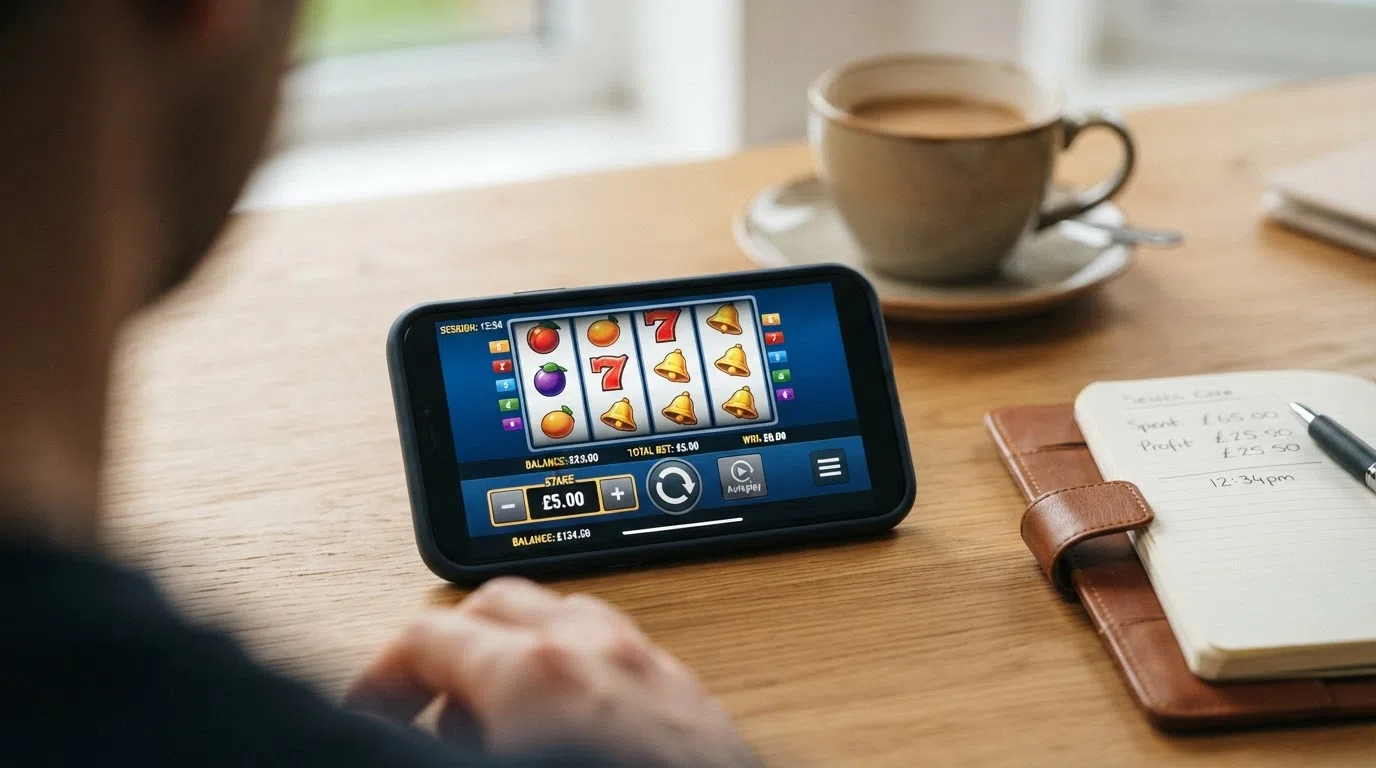
UK online slots carry a statutory maximum stake per game cycle: £5 for players aged 25 and over (in force from 9 April 2025) and £2 for players aged 18–24 (in force from 21 May 2025), imposed by SI 2025/215. The cap applies to online slots only — not to roulette, blackjack or live casino — and the term “game cycle” means the period from when a spin is initiated to when the stake is lost or winnings delivered. Some progressive titles require a minimum bet of £1 or more to qualify for the top tier; the £5 cap sits above most of those minimums, so qualification is rarely the problem.
Game-design rules that took effect on 31 October 2021 sit alongside the stake cap. Auto-play is banned. Spin speed may not be faster than 2.5 seconds per game cycle. Features that speed up play are banned. Losses disguised as wins — sound and imagery celebrating a return equal to or below the stake — are banned. Reverse withdrawals are permanently banned. Operators must display total losses, total wins and time played during a slots session. The rules reshape what a slot session looks like: every spin is a deliberate press, every spin takes 2.5 seconds or longer, and no slot celebrates a near-miss as a win.
Non-GamStop and offshore casinos: what you give up
Unlicensed sites operating under Curaçao or Anjouan licences offer the same jackpot networks without the GB regime. They do not carry GAMSTOP coverage, no UKGC complaints route, no ADR, no stake cap, no deposit-limit prompts, no autoplay or bonus-buy ban, and credit cards may be accepted. The UKGC does not hold statutory ISP or DNS blocking powers; enforcement against unlicensed sites is via disruption notices, search-engine URL referrals and payment-provider referrals. There is no penalty established for a player who gambles on an unlicensed site, but every GB regulatory protection is lost. The trade is access to features the GB regime bans in exchange for every protection the GB regime provides.
Playing safely: the guardrails behind UK jackpot play
The GB framework’s safer-gambling infrastructure sits behind every spin. The infrastructure is mandatory, the help is real, and the data behind it shows where the pressure points are.
GAMSTOP self-exclusion and how it works
GAMSTOP is the mandatory self-exclusion register for GB-licensed online operators, in force since 31 March 2020. Players can exclude for 6 months, 1 year, 5 years, or 5 years with auto-renewal. The exclusion cannot be cancelled early and applies to online play only — it does not cover land-based venues or unlicensed sites. Every operator on the list above participates.
GamCare, the National Gambling Helpline and NHS clinics
GamCare runs the National Gambling Helpline on 0808 80 20 133, available 24 hours a day, 7 days a week, free of charge. GambleAware, funded by the statutory levy, runs prevention and treatment programmes. NHS gambling harm clinics operate in England, Scotland and Wales. Gamblers Anonymous runs peer support. 81.5% of National Gambling Helpline contacts in 2026 cited struggles with online gambling — the highest proportion in five years. GamCare made 996 referrals to treatment and peer-based support in January 2026, up 48% from 674 in the same month the year before.
Deposit limits, reality checks and the scale of problem play
Operators must prompt customers to set a financial limit before their first deposit. A decrease in a limit must be actioned immediately; an increase may carry a delay. From 30 September 2026, a gross deposit limit must be offered with at least equal prominence to other financial limits. Reality checks and time-outs are standard operator tools. Problem gambling prevalence in Great Britain — the share of adults aged 18+ scoring 8+ on the PGSI scale — was 2.7% in 2024, statistically stable against 2023. The number is low, but it sits behind a much larger number of players who experience some level of harm, and the helpline data above shows where those players reach out.
How we chose and checked these titles
The ranking above rests on five sources: the UKGC Public Register for licence verification, GamCare and the Gambling Survey for Great Britain for the safer-gambling data, RTPTrack for the published RTP figures, and each operator’s own published welcome-offer terms for the bonus data. Every operator was checked against the UKGC Public Register, and the licence status shown in the table is the register’s current position as of September 8, 2026.
Three criteria ordered the ranking: licence status (all ten are licensed, so this is a floor rather than a tiebreaker), welcome-offer terms (the wagering multiplier, the validity window, the deposit-free count), and the published RTP of the bonus slot where research carries one. Offshore and crypto-only sites were excluded on the licence check; unlicensed sites were excluded for the same reason; sites operating under Curaçao or Anjouan licences are mentioned in the crypto section above as background, not as alternatives.
The result is a shortlist of ten GB-licensed operators, each with a real-money welcome offer, each carrying at least one of the named progressive networks. The list is not a ranking of which casino will pay out the biggest jackpot — that decision is made by the network, not by the operator — but a ranking of which welcome offer converts most cleanly into real play.
Your 2026 decision: chase the prize or play for value
Progressive jackpot slots are the lowest-paying games on a UK casino floor. Mega Moolah’s 88.12% blended RTP is below the 94–97% range that defines most video slots; the contribution slice that funds the prize pool is the slice the base game does not pay back. The £5 (25+) or £2 (18–24) per game cycle cap bounds how fast the chase can run; the 2.5-second minimum spin speed bounds how many spins an hour can cover. The math is mechanical: 1,440 spins an hour, £7,200 an hour risked at the £5 cap, around £860 an hour expected loss on Mega Moolah.
The prize is real. Two UK players have collected £13.2 million and £11.5 million from the same network, and 77,000+ smaller wins cleared the Games Global networks in May 2026 alone. The probability of any one spin landing the top prize is vanishingly small; the probability of the session ending in a net loss is overwhelming.
The verdict is mechanical: play only at a GB-licensed operator, set deposit and time limits before the first spin, and treat the progressive as entertainment that may pay out — never as a plan. The 88.12% RTP is the cost of admission; the £5 cap is the speed limit; the 2.7% prevalence figure and the 81.5% helpline proportion are the data points behind the safer-gambling tools every licensed site provides. The jackpot is a long shot, and the long shot is the game.
Frequently asked questions about UK progressive jackpot slots
Does a minimum bet still qualify for the progressive jackpot?
Most progressive slots set a minimum stake — often £1 or more — to qualify for the top prize tier, and the £5 (25+) or £2 (18–24) per game cycle statutory cap sits above most of those minimums. A minimum bet still qualifies, provided it sits at or above the slot’s stated minimum.
Do you pay tax on progressive jackpot winnings in the UK?
No. UK gambling winnings are tax-free for the player. The operator pays Remote Gaming Duty (40% from 1 April 2026) plus the statutory levy (1.1% of gross gambling yield); neither falls on the player.
How frequently do progressive jackpots actually get won?
The trigger is random and can land on any spin. Games Global’s wider network paid out more than £11 million across 77,000+ jackpot wins in May 2026 alone. The numbers show the pools are paying, not that any individual pool is paying on a predictable schedule.
What is Mega Moolah’s RTP compared with other jackpot slots?
Mega Moolah runs at around 88.12% published RTP including jackpot, with roughly 8% diverted to the pool. Mega Fortune runs at around 96.6% with around 6.5% diverted. Divine Fortune runs at a base-game 96.59%, though most UK casinos in 2026 deploy the lower 94.05% tier. Mega Moolah pays the lowest base-game return of the three and offers the highest prize ceiling.
Are progressive jackpot slots fair and regulated in the UK?
Yes. Every progressive slot at a GB-licensed casino operates under Gambling Commission licence conditions and the LCCP/RTS game-design rules. The games are independently tested, the random-number generators are certified, and the stake caps, spin rules and bonus conditions are enforced by the regulator.
How much can you stake per spin on a progressive jackpot slot?
The UK statutory cap is £5 per game cycle for players aged 25 and over and £2 for players aged 18–24, in force since 9 April 2025 and 21 May 2025 respectively. Both caps are above the minimum qualifying stake on most progressive titles.
Slots – nominimumdeposit-casinos-uk
Content created by the «nominimumdeposit-casinos-uk» team