Where to Play Dream Catcher Live in the UK — and What It Actually Costs
 Available in GB
Dream Catcher is Evolution’s 2017 money-wheel game show, the first format to make a presenter and a vertical wheel into a casino product, and it has outlasted every imitator by doing less than they do. There is no bonus round beyond a multiplier respin, no side bet, no second screen. The wheel has fifty-four segments, the presenter spins it, and the segment it lands on decides the payout. That is the whole game. For a UK player walking into live dealer entertainment for the first time, it is also the easiest place to start.
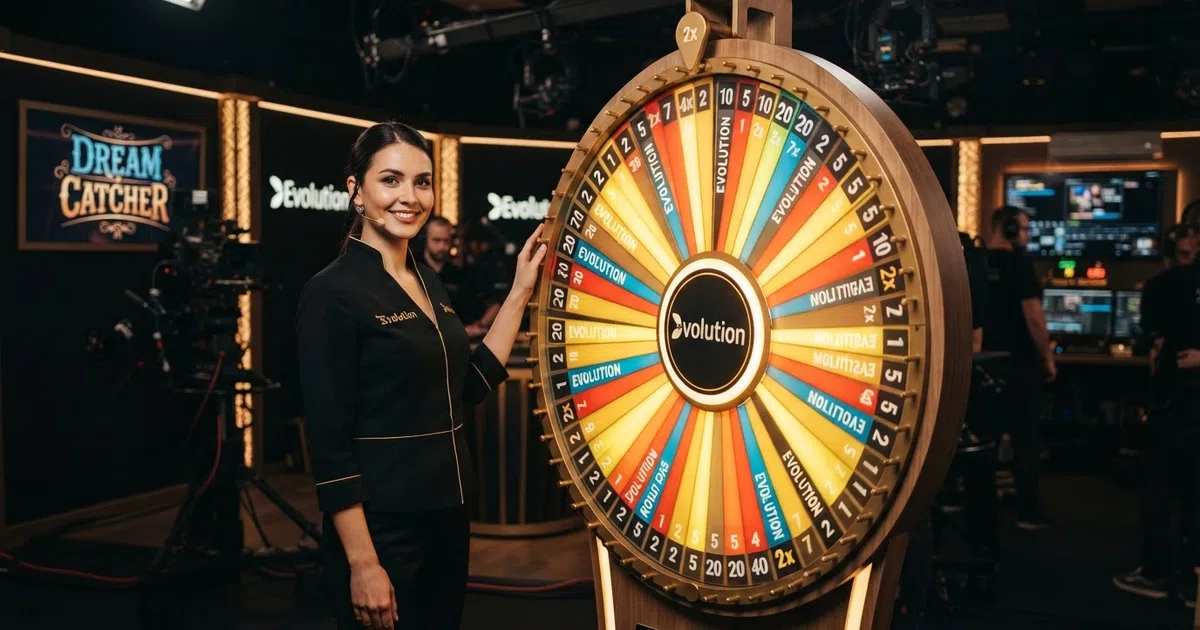
This guide covers what Dream Catcher is, how the wheel and multipliers work, which UK-licensed casinos carry it with bonuses that actually apply to live game show play, what the 2026 UK Gambling Commission reforms changed, and what a session realistically costs. Every operator named is checked against the UK Gambling Commission’s public register, and every figure comes from a named source.
*Data current as of September 8, 2026 and verified against the UK Gambling Commission’s public register of licensed operators.*
Dream Catcher Is Evolution’s Simplest Live Game Show — and What Makes It Endure
Dream Catcher launched in 2017 from Evolution Gaming, the studio that turned live dealer gaming into a category. Before Dream Catcher, live casino tables meant blackjack, roulette, and baccarat streamed from a back room. After it, “live game show” became its own product line, and every subsequent Evolution release — Monopoly Live in 2019, Crazy Time in 2020, Funky Time in 2023 — sits downstream of this format. The wheel’s mechanics are simple enough to explain in a sentence: a presenter spins a vertical wheel, players bet on which numbered segment it will stop on, and the segment’s number determines the payout. That simplicity is the product. Players who would never sit through a baccarat rules explanation can place a chip, watch the spin, and understand the outcome in three seconds.
The game is a vertically mounted wheel with fifty-four equal segments — fifty-two numbered (1, 2, 5, 10, 20, and 40) plus two multiplier segments (2× and 7×) — and a live presenter who spins it. The six numbered bet options each have their own probability based on how many segments they occupy, their own payout multiple, and their own return-to-player (RTP) percentage. The multiplier segments are the wrinkle: when the wheel lands on 2× or 7×, bets stay in place and the wheel respins, and consecutive multipliers stack.
What follows walks through the wheel segment by segment, the payouts and RTP for each bet number, the multiplier mechanic, the comparison to other Evolution game shows, the pacing of a real session, the honest answer to the “is there a strategy” question, and the stake limits a UK player actually faces. After that, the guide turns to where to play it.
How the Dream Catcher Wheel Works — 54 Segments, Numbers, and Multipliers
The Dream Catcher wheel stands vertically inside an Evolution studio, mounted on a frame that fills the presenter’s view. Around its face sit fifty-four equal segments, each one a coloured slice. The segments are distributed across the bet numbers and multiplier slices — that unevenness is where the game gets its risk gradient.
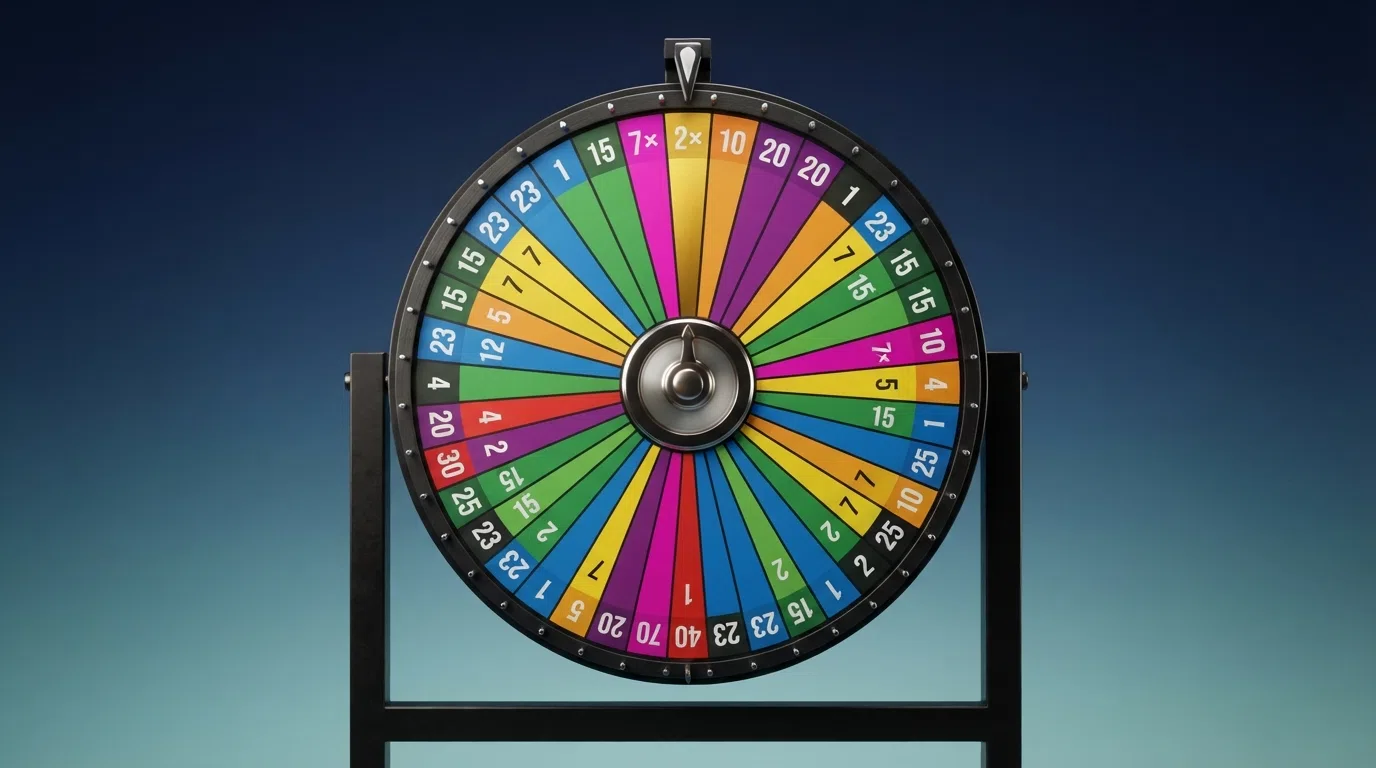
A round plays in three phases. First, the betting window opens, typically for around fifteen seconds; the screen at the player’s end shows six chip denominations and six bet targets, one per number. Second, the presenter calls “no more bets,” spins the wheel in the opposite direction to a small metal flipper at the top, and waits. The wheel loses speed, the flipper clicks against the segments, and the wheel comes to rest. Third, the winning number is announced, losing bets are collected, winning bets are paid at the displayed multiple, and the next betting window opens.
The minimum bet at UK tables is £0.10, accessible enough for a player testing the format with a small bankroll. The maximum win on a single spin is 20,000 times the stake, capped at £500,000 — whichever ceiling the spin hits first. Maximum bet limits are set by the operator, not the game, and at UK-licensed casinos they typically range from around £500 to £2,500 per selection, so a player with a large bankroll can still place meaningful wagers on the long-shot numbers.
The studio is brightly lit, the presenter carries the round in real time, and the format is built for low cognitive load. That is part of why the game endures: it is easy to watch, easy to understand, and easy to play for an hour without noticing.
Dream Catcher Payouts — What Each Number on the Wheel Pays
The six bet numbers each pay a fixed multiple of the stake when the wheel stops on one of their segments. The payout table is the inverse of the segment count: the more segments a number occupies, the smaller its payout.
A bet on number 1 pays 1:1, even money. A bet on number 2 pays 2:1. Number 5 pays 5:1. Number 10 pays 10:1. Number 20 pays 20:1. Number 40 pays 40:1.
The pattern is clean: as the payout grows, the probability of hitting it shrinks. Betting on 40 means a 40:1 payout but a much lower probability on any given spin. Betting on 1 means a 1:1 payout but a significantly higher chance of hitting. A player who bets only on 1 will see winning spins more often than not, just at a small return. A player betting on 40 will see long losing stretches punctuated by the occasional 40:1 hit.
If the wheel lands on a number the player did not bet on, the bet is lost. There is no partial payout, no consolation prize, and no carry-over. Dream Catcher is a clean win-or-lose proposition on every spin, with the multiplier segments as the one exception.
How the 2× and 7× Multiplier Segments Stack
The two multiplier segments are the game’s suspense mechanism. If the wheel stops on 2× or 7×, every active bet on the table stays in place — wins, losses, and pushes alike — and the wheel is spun again without a new betting window. The segment the wheel lands on this second spin is multiplied by the multiplier, and that product decides the payout.
The stacking rule is what makes the mechanic worth understanding. If the second spin also lands on a multiplier, the two multipliers combine multiplicatively. A 2× followed by a 7× does not become 9×; it becomes 14× — 2 times 7. A 7× followed by another 7× becomes 49×. The theoretical ceiling from consecutive multipliers is 7× stacked on 7× stacked on 7×, a 343× top multiplier, though in practice the respin chain rarely extends past two.
The 20,000× or £500,000 cap still applies to the final payout, so a max-stake player who catches a multiplier chain on a 40-segment landing has the cap as a real constraint. For most players at most stakes, the multiplier segments are simply a way to add a few extra seconds of tension to the round and an occasional outsized payout.
Dream Catcher RTP and Odds — Every Bet Number Compared
Return to player (RTP) is the percentage of all wagered money that a game is designed to return to players over a very large number of spins. A 96% RTP means that, on average across millions of spins, the game keeps 4% of what is wagered. Dream Catcher’s RTP varies by bet number, and the spread is wide enough to make bet selection a real decision.
| Bet Number | Payout | RTP |
|---|---|---|
| 1 | 1:1 | 96.58% |
| 2 | 2:1 | 96.30% |
| 5 | 5:1 | 95.78% |
| 10 | 10:1 | 95.73% |
| 20 | 20:1 | 93.40% |
| 40 | 40:1 | 90.57% |
The number-1 bet offers the highest RTP at 96.58% and the lowest house edge at 3.42%. The number-40 bet sits at the bottom, with a 9.43% house edge — nearly three times the edge on number 1. A player who switches their bet from 1 to 40 does not increase their chance of a big payout enough to offset the worse odds; the maths simply costs more per spin.
For a player who wants the lowest-cost session, the number-1 bet is the mathematically optimal choice. That does not make it the most exciting choice — small, frequent wins on a 1:1 payout do not produce the adrenaline spikes of a 40:1 hit — but the RTP table is unambiguous about where the smallest house edge lives.
Dream Catcher vs Crazy Time, Monopoly Live, and Funky Time — Which Live Game Show Offers the Best RTP
Dream Catcher is one of four major Evolution live game shows, and a UK player choosing between them is choosing between different design philosophies. Crazy Time and Monopoly Live are spectacle-first, with bonus rounds, side games, and a second screen of activity. Funky Time sits in the middle. Dream Catcher is the original stripped-back format.
On the number-1 bet, Dream Catcher returns 96.58% to players — the highest base RTP in the Evolution game-show catalogue. Monopoly Live returns 96.23% on its main wheel bets, with bonus rounds offering variable returns. Crazy Time’s cash bets return 96.08%, and its bonus games vary widely. Funky Time’s base RTP is 95.99%, the lowest of the four.
The trade-off is structure versus return. Crazy Time’s bonus rounds — Cash Hunt, Pachinko, Coin Flip, Crazy Time — can produce multipliers above 10,000× and create the big-win moments that Dream Catcher’s flat wheel cannot match. Monopoly Live’s board bonus is a similar spectacle. But those bonus rounds sit behind lower-frequency triggers, and the base RTP of those games is lower than Dream Catcher’s. A player who values RTP per hour of play will generally come out ahead on Dream Catcher. A player who values the chance of a single transformative payout will not.
The format also affects session length. Dream Catcher’s spin-to-spin rhythm is faster and less interrupted than Crazy Time’s, which can run for several minutes inside a bonus round. That pacing matters for bankroll management: a slow game burns fewer bets per hour and is easier to walk away from; a fast game accelerates the session cost.
The Pace of Play — What a Dream Catcher Session Feels Like
A Dream Catcher round takes roughly thirty to forty-five seconds from one betting window to the next. The presenter keeps up a running commentary, the studio music cues the spin, and the wheel’s deceleration builds a small amount of suspense. The session feels faster than a roulette round and slower than an online slot spin.
The game’s low volatility — frequent small wins, occasional larger ones — produces a steady drip of payouts. A player betting on number 1 at a 1:1 payout will see a winning spin roughly 42% of the time. That frequency is enough to feel like activity, but each individual win is small, and the session bankroll drains slowly rather than in dramatic drops. The format is easy to play as a background activity — something running in a second tab while doing other things — and that ease is part of the appeal and part of the risk.
The cross-reference to keep in mind is the section on session cost and the responsible gambling tools below. A game that is easy to play for a long time without noticing is exactly the kind of game where deposit limits and reality checks earn their place.
Dream Catcher Strategy — Does Your Bet Choice Change the Odds?
Dream Catcher is a game of pure chance. There is no decision point after the bet is placed, no skill element, no way to read the wheel or predict the flipper. No betting system — Martingale, Fibonacci, flat staking — can overcome a fixed-odds wheel, because each spin is independent and the house edge is baked into the payout table.
What bet choice does change is the expected loss per unit wagered. The RTP spread from 90.57% (number 40) to 96.58% (number 1) is a 6-percentage-point gap in house edge, which over a session of several hundred spins is a meaningful difference in cost. Betting only on number 1 is the mathematically optimal strategy for a player who wants the lowest expected loss.
Players who choose 20 or 40 despite the worse odds are paying extra for the chance of a 20:1 or 40:1 hit. That is a legitimate choice — the entertainment value of a 40:1 payout is real — but the trade-off is a higher cost per spin, and the bettor should know they are paying for the format rather than playing at the best price.
Dream Catcher Stake Limits — How Much Can You Wager Per Spin?
The game’s built-in minimum is £0.10 per selection, and that floor applies across UK operators. Maximum bet limits are set by the casino, not by Evolution, and at UK-licensed sites they typically run from around £500 to £2,500 per selection. A player looking to place larger wagers on a single number needs to check the specific table’s limits at their chosen casino.
The 20,000× or £500,000 maximum-win cap is the second constraint. A player wagering the maximum on number 40 could theoretically hit 40,000× their stake on a single spin if multipliers stacked to the limit, but the 20,000× cap pulls that back. At the £500 maximum bet per selection, the 20,000× cap activates at a 25× segment multiplier, well within the game’s range. For a player on number 1 with a £500 bet, the cap is a 1,000× segment result, unreachable on a single spin but reachable on a 2× respin to a 1 (a 2× multiplier on a 1:1 payout, paid 2:1 on the second spin), or a 2× respin chain that escalates the multiplier.
The cap matters most for the highest-stake players on the longest-odds numbers. For a player at the £0.10 minimum on number 1, the cap is unreachable in any realistic session.
Where to Find Dream Catcher in the UK — Why Bonus Terms Beat the Bonus Amount
Most UK casino welcome offers are designed for slots players. They come with free spins, a deposit match, and a wagering requirement that assumes the player will grind through the bonus on slot games with full contribution rates. Live game shows — Dream Catcher included — often sit on the wrong side of that assumption: they may be excluded from bonus play entirely, or they may contribute at a reduced rate toward wagering requirements. A £200 deposit match with 30× wagering is not a £200 bonus for a Dream Catcher player; it is a £200 bonus that can be cleared only by playing games the offer was not designed for.
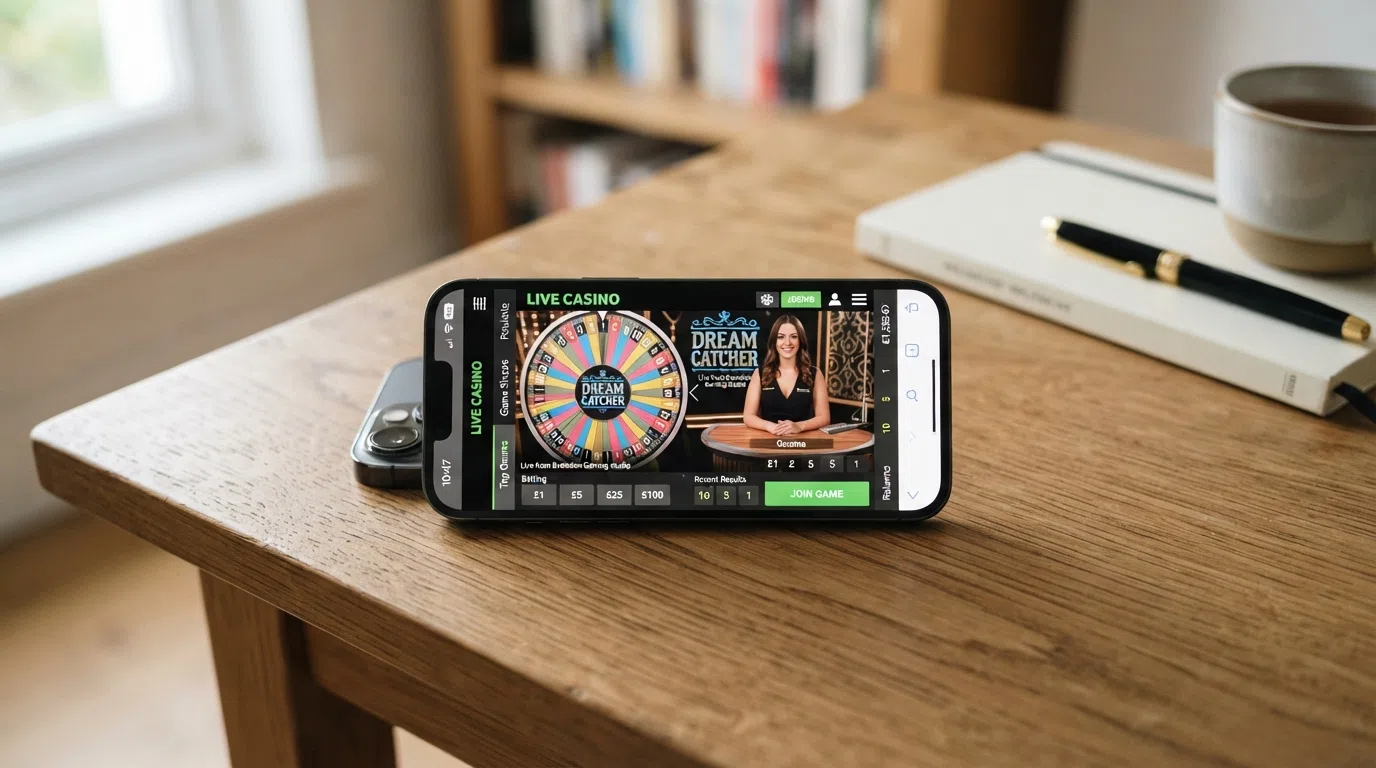
The 2026 UK regulatory changes have shifted this landscape. From 19 January 2026, UK-licensed operators are subject to a 10× wagering requirement cap, replacing the 30× to 50× multiples that were common before. That change improves the arithmetic for any bonus player, but it does not fix the contribution-rate problem: a 10× wagering requirement on a bonus that excludes live game show play is still a requirement the live game show player cannot meet. The 10× cap makes good offers better; it does not make bad offers work for Dream Catcher.
What matters for a UK Dream Catcher player is not the headline bonus figure but three things underneath it: whether live game shows are eligible for bonus play, what the wagering requirement is, and whether the offer is wager-free. The featured set below is ranked on those criteria, not on the size of the headline bonus.
Why Most Welcome Bonuses Do Not Work Well on Live Dream Catcher — and Which Ones Do
A standard UK welcome bonus looks like this: deposit £10, get a 100% match up to £200, with a 30× wagering requirement on the bonus amount. The free spins are slot-gated. The wagering requirement is cleared on slot play at 100% contribution. Live casino games — Dream Catcher, blackjack, roulette, baccarat — typically contribute at 10% to 20% of their stake, or are excluded entirely.
For a Dream Catcher player, that structure is a bad fit. The free spins cannot be used on Dream Catcher. The deposit match is locked behind a wagering requirement that the player’s preferred game will not clear efficiently. A £200 bonus that can only be wagered on slots is, for a live game show player, roughly equivalent to a £0 bonus — the headline figure is real, but the value to this player is near zero.
The bonus structures that actually deliver value for Dream Catcher play are: wager-free free spins (where winnings are paid as cash, no playthrough), low-wagering offers (5× to 10×, where the playthrough is small enough to clear without grinding on slots), and bonuses whose terms do not exclude live casino from wagering contribution. Of the ten operators below, four offer wager-free structures, three offer low-to-moderate wagering aligned with the 2026 cap, and the remainder carry offers that are best read as slot bonuses with Dream Catcher access on the side.
Operator Comparison Table — UK Dream Catcher Casinos at a Glance
| Operator | UKGC Licence | Dream Catcher Available | Welcome Bonus | Free Spins | Wagering Requirement | No-Wagering? |
|---|---|---|---|---|---|---|
| bet365 | Yes | Yes | n/a | Up to 500 | 1× on deposit | No |
| LeoVegas | Yes | Yes | n/a | 50 | 0× | Yes |
| William Hill | Yes | Yes | n/a | 200 | 10× on winnings | No |
| PlayOJO | Yes | Yes | n/a | 80 | 0× | Yes |
| 888 Casino | Yes | Yes | 100% up to £200 | n/a | 30× on bonus | No |
| Betfair | Yes | Yes | n/a | n/a | n/a | n/a |
| Sky Vegas | Yes | Likely | n/a | 50 no-deposit + 200 on deposit | 0× | Yes |
| Paddy Power | Yes | Yes | n/a | 160 | 0× | Yes |
| MrQ | Yes | Unconfirmed | n/a | n/a | n/a | n/a |
| Casumo | Yes | Yes | 50% up to £100 | n/a | 10× on bonus | No |
The split is clear: four operators (LeoVegas, PlayOJO, Sky Vegas, Paddy Power) offer wager-free free spins, where every penny won is paid as cash with no playthrough. Three operators (William Hill, Casumo, bet365) sit at the 2026 10× cap or below. Two (888 Casino’s 30× match, Betfair’s unconfirmed terms) are weaker fits for a Dream Catcher player. One (MrQ) is licensed but unconfirmed on live game show availability. The wager-free cluster is the strongest fit for live game show play, because no playthrough means no contribution-rate problem.
bet365 — Up to 500 Free Spins and the Full Evolution Library
bet365’s welcome offer is the largest in the featured set on volume: up to 500 free spins, allocated at 5 to 50 spins per day over a ten-day window, on a minimum £10 deposit. The deposit carries a 1× playthrough — wager it once through any casino game and it converts — and the free spin winnings are credited as cash per the operator’s published terms. There is a 30-day claim window from registration.
bet365 carries Evolution’s full live game show catalogue, including Dream Catcher, Crazy Time, Monopoly Live, and Funky Time. For a player who wants Dream Catcher as one of several live game show options under a single account, bet365 is the broadest single destination in the featured set. The 1× deposit playthrough is unusually low and applies across the casino section, not just slots.
The trade-off is that the bonus is built around the free spin volume and the deposit playthrough, not around a headline match figure. A player who reads “500 free spins” and expects a £200-equivalent cash bonus will be disappointed; the value is in the volume, the cash crediting, and the 1× requirement. For a Dream Catcher player who plans to use the deposit match for live play and keep the free spins as a side activity, bet365’s structure works cleanly.
LeoVegas — Wager-Free Spins and a Dedicated Dream Catcher Page
LeoVegas offers 50 free spins on Big Bass Splash with zero wagering, on a minimum £10 deposit. Each spin is worth 10p, so the total face value of the spins is £5 — small in headline terms, but the wager-free structure means every penny won is paid as cash with no playthrough. There is a 3-day expiry on the free spins from the moment they credit, which is the shortest window in the featured set and the main practical constraint on the offer.
LeoVegas hosts a dedicated Dream Catcher page at its UK site, which is the clearest single signal that the operator treats the game as a featured product rather than an afterthought. The casino’s live section includes the standard Evolution game show lineup. The catch is that the welcome bonus is slot-gated by design: the free spins run on a specific slot, and the deposit must be wagered 1× to convert. Live casino play is excluded from the bonus wagering requirement, which means the offer delivers value through the wager-free spins, not through live game show play.
For a player who wants a wager-free slot bonus and plans to play Dream Catcher with their own deposited funds rather than bonus money, LeoVegas is a clean fit. For a player who wants a bonus that funds Dream Catcher play directly, the structure does not match.
William Hill — 200 Free Spins from a High-Street Name
William Hill’s Vegas welcome offer delivers 200 free spins on Big Bass Splash for a £10 deposit, with each spin valued at 10p. There is a 10× wagering requirement on the free spin winnings, and a £30 winnings cap that limits the upside of the offer. The deposit and stake must be completed within 7 days of registration, and the spins expire 72 hours after they credit.
William Hill lists Dream Catcher under its Live Game Shows section, so the game is available on the platform. The welcome offer, however, is slot-focused: the free spins run on a named slot game, the wagering clears on slot play, and the £30 cap puts a hard ceiling on what the spins can return. Live casino play does not contribute to the wagering requirement.
For a Dream Catcher player, William Hill’s value sits in the brand trust and the live game show library, not in the welcome offer. A player who deposits £10 to access the live casino and treats the free spins as a side benefit, accepting the £30 cap and 10× wagering, gets a clean entry point. A player who wants the welcome bonus to fund Dream Catcher play will find the structure does not fit.
PlayOJO — Zero Wagering on Every Offer, Full Live Casino Freedom
PlayOJO’s defining feature is that there is no wagering requirement on any offer, ever. Free spin winnings are paid as cash; deposit match bonuses, when offered, carry no playthrough. The welcome offer is up to 80 free spins on a £10 deposit — 50 spins on the first deposit plus 30 extra — and every win is credited directly to the withdrawable balance.
The casino’s live section explicitly lists Dream Catcher alongside 60 or more other live casino games, and the full Evolution catalogue is in place. Because the no-wagering policy applies universally, there is no contribution-rate problem to navigate: the welcome spins are slot-gated by design, but any deposit funds a player chooses to commit to Dream Catcher play are their own money, with no bonus terms restricting how the money is used.
For a UK Dream Catcher player, PlayOJO is the structurally cleanest fit in the featured set. The 80 free spins are a smaller volume than some competitors, but the no-wagering structure and the explicit Dream Catcher listing make the offer transparent. A player who values knowing exactly what they are getting and not navigating bonus terms will find PlayOJO the most legible option.
888 Casino — The 100% Match Bonus for Bigger Bankrolls
888 Casino is the only operator in the featured set offering a straight deposit-match welcome: 100% up to £200, with a minimum deposit and a 30× wagering requirement on the bonus amount. There is no free spin component attached to this offer. The bonus validity runs 90 days, the longest window in the featured set, which gives a player genuine time to clear the wagering.
Dream Catcher is confirmed in 888 Casino’s live game show section. The practical problem is the wagering requirement: 30× on a £200 bonus is £6,000 of qualifying play, and live casino games at 888 typically contribute at reduced rates toward wagering — a 10% contribution means £60,000 of live play to clear the bonus, which is a substantial commitment. The 2026 10× cap does not necessarily apply to 888’s terms if the offer pre-dates the cap or sits in a structure the cap does not cover, and 888’s 30× figure is above the new regulatory ceiling.
For a player with a large bankroll who plans to grind through the wagering on slots and then move to live game shows with their own funds, 888’s match is a genuine £200 in bonus value. For a player who wants the bonus to fund Dream Catcher play directly, the contribution rates and the 30× requirement make it a poor fit. The 90-day validity is the generous counterweight.
Betfair — Exchange Heritage, Evolution Live Game Shows
Betfair holds a UKGC remote casino operating licence and carries Evolution’s live game show catalogue, including Dream Catcher, in its casino section. The exchange heritage — Betfair’s primary brand identity sits with the betting exchange — means the casino product is a secondary offering rather than the headline product.
The current casino welcome offer, including free spin count, wagering requirement, and validity window, was not confirmed this run and should be checked on the operator’s site before depositing. The brand is trusted, the licence is in place, and the Evolution library is available, but the specific bonus terms that would govern a Dream Catcher player’s first session are not in evidence.
For a player who already has a Betfair exchange account and wants the casino section as an add-on, the platform is convenient and the licence is verified. For a player choosing an operator specifically for the welcome offer’s fit with live game show play, the absence of confirmed bonus terms makes Betfair a wait-and-see option rather than a confident pick.
Sky Vegas — No-Deposit Spins and Zero-Wagering Free Spin Offers
Sky Vegas offers 50 free spins with no deposit required, plus 200 more free spins on a £10 deposit and spend. All free spin winnings are paid as cash with zero wagering. The no-deposit leg is unique in the featured set: it lets a player try the casino’s slot product without funding an account first. The free spins expire 7 days after they credit, and the deposit/spend requirement for the second leg must be completed within 30 days.
Sky Vegas is primarily a slots-focused brand, with live casino offered through a related Sky Casino section. Dream Catcher is likely available via that section, though the live game show offering was not explicitly confirmed on the Sky Vegas main page this run. The welcome offer is slot-gated: the free spins run on slot games, and the deposit match — implicit in the “spend £10” structure — does not function as a cash match that can be deployed on live game shows.
For a player who wants to test a UK-licensed casino risk-free before committing funds, the 50 no-deposit spins are a genuine entry point. A player who plans to play Dream Catcher should treat the no-deposit leg as a way to learn the platform and the deposit leg as a path to the live casino with their own money, not bonus funds.
Paddy Power — 160 No-Wager Free Spins and the Full Live Casino Suite
Paddy Power offers 60 free spins on registration plus 100 more free spins on a £10 deposit, for up to 160 free spins in total. All winnings are paid as cash with no wagering. The operator’s UK site carries the full Evolution live game show catalogue, including Dream Catcher and Crazy Time, and the Paddy Power brand carries the trust signal of a long-established UK high-street bookmaker.
The free spins are slot-gated, so the welcome offer’s direct value runs through slot play rather than live game shows. For a Dream Catcher player, the value sits in the wager-free structure (every penny won is cash) and the breadth of the live casino library, not in funding Dream Catcher play from bonus money.
For a player who wants a known UK brand with a no-wagering welcome and a confirmed Evolution library, Paddy Power is a strong fit. The 160 free spins are a generous total, and the absence of playthrough means the offer is exactly as legible as it looks.
MrQ — A Slots-First Brand with Limited Live Casino Data
MrQ holds a UKGC remote casino operating licence, confirmed against the public register. The brand positions itself primarily around slots and bingo, and its live casino offering — including whether Dream Catcher is specifically available — was not explicitly confirmed this run. MrQ carries some Evolution live games in its library, but the operator’s live game show section is not the brand’s focus.
A player considering MrQ for Dream Catcher play should verify on the operator’s site, before depositing, that the game is available in the live casino section. The UKGC licence is in place, the slot and bingo offering is established, and the wagering terms on those products are competitive. The live game show side of the catalogue is the gap to confirm.
For a player whose primary interest is slots and bingo with a UKGC licence, MrQ is a reasonable choice. For a player specifically looking for Dream Catcher, the unconfirmed live game show availability makes MrQ a verify-before-depositing option rather than a confident pick.
Casumo — 50% Deposit Match with the New 10× Wagering Cap
Casumo offers a 50% deposit bonus up to £100, with a minimum deposit of £20 and a 10× wagering requirement on the bonus amount. The 10× requirement aligns with the 2026 UK cap, and live casino play is eligible for bonus wagering at Casumo — a meaningful distinction from operators whose live games contribute at reduced rates. The bonus validity is 7 days from activation, the tightest window in the featured set.
Casumo’s live casino library includes Dream Catcher and the rest of the Evolution catalogue. The combination of the 10× cap (the new regulatory ceiling, no longer than necessary) and live casino eligibility for wagering means a Casumo player can clear the bonus partly through live game show play — closer to a real fit for a Dream Catcher player than most competitors.
The 7-day validity is the practical constraint. A £100 bonus at 10× wagering is £1,000 of qualifying play, and clearing that across slots and live games in a week is a meaningful time commitment. For a player who can concentrate their play into a short window and wants the bonus to apply (at least partially) to Dream Catcher, Casumo is the closest the featured set comes to a true live-casino-friendly match bonus.
You Cannot Play Dream Catcher for Free — Here Is What to Do Instead
- Play at minimum stake (£0.10 per spin) with a small real-money bankroll.
- Use a no-deposit free spin offer to learn a UK-licensed casino before funding a session.
- Watch live game show streams to learn the format without wagering.
The hard truth: no UK-licensed operator currently offers a demo mode for Dream Catcher or any other live dealer game. Live dealer products are streamed from real studios with real presenters and real costs, and there is no RNG version of the game to license as a free-play demo. The “Dream Catcher demo” is simply not available in the market as it exists today.
The three practical alternatives for a UK player who wants to try the game without committing a large bankroll are minimum-stake real-money play, no-deposit operator offers, and live streams. None of them is a true demo, but each one reduces the cost of getting to know the format.
Why Live Dealer Games Have No Demo Mode
Live dealer games sit on a different cost structure from RNG slots and table games. An RNG slot runs entirely on the operator’s servers; a demo mode is a few lines of code that swaps real-money play for play-money. A live dealer game runs in a physical studio with a presenter on camera, a wheel or a table, a camera crew, a production control room, and a streaming infrastructure that pushes the feed to every player. There is no “demo” version of a live studio — the feed either runs or it does not, and the costs do not scale down with player volume.
Evolution’s business model reflects this. The company sells the live feed to licensed operators, who in turn offer it to their players. There is no free-to-play tier in the chain; the studio’s costs are paid by the operators, who recover them from player wagers. A free-play mode would require Evolution to underwrite the studio cost with no offsetting revenue, and no operator in the market has structured such an arrangement for Dream Catcher.
The practical consequence is that “try Dream Catcher for free” is an unserved query. The closest substitutes are minimum-stake real-money play, no-deposit operator offers, and streams.
Low-Stakes Dream Catcher — Playing from £0.10 Per Spin
The minimum bet on Dream Catcher at UK tables is £0.10 per selection, and a player can wager on multiple numbers in a single round. A £10 deposit buys 100 spins at the lowest stake on a single number, and that is the practical entry point for a UK player who wants to try the game with a small bankroll.
The £0.10 minimum applies across the featured operators. A player looking for the lowest-stake tables does not need to comparison-shop; the floor is set by Evolution, not by the casino. The relevant differences between operators are the deposit methods, the speed of withdrawals, and the bonus terms attached to the first deposit — and those are covered in the operator section above.
Low-stakes Dream Catcher is the honest answer to the “free play” question. A £10 bankroll buys a real session with the same wheel, the same RTP, the same multiplier mechanic, and the same live presenter as a high-roller table. The only difference is the size of the bets.
Operator No-Deposit Offers — a Risk-Free Route to Live Casino Play
One UK operator in the featured set — Sky Vegas — offers 50 free spins with no deposit required. The spins are slot-gated: they run on slot games, not on Dream Catcher or any other live game show. The no-deposit structure is the closest a UK player gets to trying a casino risk-free before funding an account, but it does not translate directly into live game show play.
Other operators in the featured set offer no-wagering free spins on a £10 deposit — PlayOJO, Paddy Power, LeoVegas, and the deposit leg of Sky Vegas’s offer. These deposit-gated offers are also slot-focused, and they require the player to fund an account before claiming. The genuine no-deposit offer in the featured set is Sky Vegas’s 50 spins.
For a UK player who wants to try a UKGC-licensed casino before committing a deposit, Sky Vegas’s no-deposit spins are the available route. For a player who wants to play Dream Catcher without depositing, there is no current UK-licensed product that delivers that experience — the minimum-stake real-money option is the practical path.
Dream Catcher Is Fully Legal in the UK — but Your Casino Choice Determines Your Protections
Dream Catcher is a lawful UK Gambling Commission-regulated live game show. The game itself, the studio behind it, and the operators licensed to offer it are all authorised under the Gambling Act 2005 framework. A UK player playing Dream Catcher at a UKGC-licensed casino is playing a legal product in a regulated market.
The choice that matters is not whether the game is legal but where it is played. A UKGC-licensed casino is bound by a set of player-protection obligations: identity verification before play, segregated player funds, fair-game certification, access to an approved alternative dispute resolution provider, and participation in GAMSTOP. An offshore casino offering Dream Catcher to UK players is operating illegally, and the protections that come with a UKGC licence do not apply. The game is the same, but the framework around the player is not.
The UKGC public register is the definitive source for verifying a casino’s licence. It contains 2,663 records of licensed operators, last updated 29 July 2026, and is searchable by business name, trading name, domain name, or account number. Every operator in the featured set above is checked against that register.
The UKGC Remote Casino Licence — What It Requires and Why It Matters
A UKGC remote casino operating licence authorises an operator to offer casino games — including live dealer game shows such as Dream Catcher — to customers in Great Britain. The licence carries a set of operator obligations under the Gambling Act 2005 and the Licence Conditions and Codes of Practice (LCCP).
The core obligations relevant to a Dream Catcher player are: identity and age verification before play is permitted; segregation of player funds from operator funds in a protected account; certification of game fairness by an approved testing house; participation in GAMSTOP, the national online self-exclusion scheme; membership of an approved alternative dispute resolution (ADR) provider for player complaints; and responsible gambling tools including deposit limits, loss limits, session time limits, reality checks, and timeouts. An operator that fails to meet these obligations is subject to UKGC enforcement action, including financial penalties, licence suspension, and revocation.
A player at a UKGC-licensed casino can complain to the operator, escalate to the ADR provider if unsatisfied, and ultimately raise the matter with the UKGC. A player at an offshore casino has none of these routes. The licence is the difference between a regulated product and an unregulated one, and the protections are not theoretical — they are the mechanism a player uses when something goes wrong.
The 2026 UK Gambling Reforms — Wagering Caps, Deposit Limits, and What Changed
The 2025–2026 period brought a cluster of regulatory changes to UK online gambling. Four of them are directly relevant to a Dream Catcher player: the 10× wagering requirement cap, the deposit-limit redefinition, the single-product incentive rule, and the Remote Gaming Duty rise.
The wagering requirement cap took effect on 19 January 2026, limiting the playthrough multiplier on any UK-licensed casino bonus to 10× the bonus amount. The change replaced the 30× to 50× requirements that were common in the previous era and is the most visible shift in the UK bonus landscape. A bonus player at a UKGC-licensed casino now faces a much lower playthrough hurdle, though the contribution-rate problem for live game shows remains.
The deposit-limit framework was rewritten in two stages. From 31 October 2025, operators must prompt customers to set a financial limit before their first deposit. From 30 June 2026, only gross deposit limits — caps on the total amount deposited within a set period — may be called “deposit limits.” The terminology change matters for players who want to compare offers across operators: the word “deposit limit” now means a specific, defined thing.
The single-product incentive rule, under LCCP Social Responsibility Code 5.1.1(3b), prohibits operators from including more than one type of gambling product (betting, casino, bingo, lottery) within a single promotional offer. A welcome bonus that combines a free bet with free spins, for example, is no longer permitted. The rule simplifies the bonus landscape but also narrows the kinds of cross-product offers operators can construct.
The Remote Gaming Duty rose to 40% from 1 April 2026, levied on the operator’s gross gaming revenue. The tax is paid by the operator, not the player, but a higher duty rate does affect how much operators can afford to give away in bonuses and free spins, and the player may see more conservative promotional offers as a result. Player winnings remain tax-free in the UK.
Dream Catcher Is NOT a Slot — Why the £2 and £5 Stake Limits Do Not Apply
The Gambling Act 2005 (Operating Licence Conditions) (Amendment) Regulations 2025 (SI 2025/215) introduced maximum stake limits for online slots: £5 per game cycle for customers aged 25 and over, and £2 per game cycle for customers aged 18 to 24. The limits took effect in 2025 and apply to online slots specifically.
Dream Catcher is not an online slot. It is a live game show, classified under the UKGC’s remote casino operating licence but distinct from the slot product category. The £2 and £5 stake limits do not apply to Dream Catcher, and the per-spin maximum on a Dream Catcher table is set by the operator, not by statute. A UK player can wager more than £5 on a single Dream Catcher spin at a UKGC-licensed casino, subject to the operator’s table limits.
The distinction matters because the £2 and £5 limits are designed to address the rapid-spend characteristics of online slots — their spin speed, their autoplay features, their session length. Live game shows have a different pace and a different risk profile, and the UKGC’s framework reflects that. A Dream Catcher player who sees the £2 and £5 headlines and assumes they apply to all online casino products is mistaken; the limits are slot-specific.
The practical outcome is that Dream Catcher stake limits at UK casinos run from £0.10 at the floor to the operator’s table maximum, typically £500 to £2,500 per selection, with no statutory cap below that ceiling. The max-win cap of 20,000× or £500,000 is the only hard ceiling on a single spin’s payout.
GAMSTOP, ID Verification, and Dispute Resolution — Your Rights as a UK Player
Three structural protections sit underneath every UKGC-licensed casino. They apply to every operator in the featured set, and they do not apply to offshore casinos.
GAMSTOP is the national online self-exclusion scheme. Registration through GAMSTOP blocks the user from every UKGC-licensed online gambling operator for a chosen period — 6 months, 1 year, or 5 years. The block applies at login: a self-excluded player cannot log in, deposit, or play at any UKGC-licensed site for the duration. GAMSTOP membership is mandatory for all UKGC-licensed remote operators, so a single registration covers the entire UK-licensed market. Offshore casinos are not part of GAMSTOP, which is one of the key protections a UK player loses by playing outside the licensed market.
Identity verification must be completed before any play is permitted, not just before withdrawal. A UKGC-licensed casino is required to verify the customer’s age and identity before granting access to real-money play, and the verification typically includes document checks (passport, driving licence, utility bill) and sometimes electronic verification through a credit-reference agency. The pre-play verification is a player-protection mechanism: it prevents underage gambling and supports anti-money-laundering controls. A casino that allows play before verification is in breach of its licence conditions.
Alternative dispute resolution (ADR) is the formal complaint route. Every UKGC-licensed casino must be a member of an approved ADR provider, which handles disputes that the operator’s own complaints process cannot resolve. The ADR provider’s decision is binding on the operator, and the player has a defined route to escalate if unsatisfied. There are eight ADR providers approved by the UKGC, and the specific provider is named in the casino’s terms. An offshore casino has no equivalent obligation.
Checking a UK Operator’s Credentials — the Public Register and What to Look For
The UK Gambling Commission maintains a public register of licensed gambling businesses at gamblingcommission.gov.uk. The register was last updated 29 July 2026 and contains 2,663 records. It is searchable by business name, trading name, domain name, or account number.
A valid licence entry shows: the operator’s legal name; the trading name(s) under which the operator does business; the licence status (active, suspended, or revoked); the licensed activities (remote casino, remote betting, remote bingo, and so on); the licence number; and any conditions or sanctions attached to the licence. A Dream Catcher player should confirm two things: that the operator holds a remote casino operating licence, and that the licence status is active.
The red flags are: no listing in the register at all (the operator is unlicensed); a suspended or revoked status (the operator is not authorised to trade); and a missing “remote casino” entry in the licensed activities (the operator is licensed for a different product, not for live game shows). A search by the operator’s domain name is often the fastest way to confirm the licence, because domain names are typically unique to a single business entity.
Every operator in the featured set above is checked against the public register. The check confirms that each holds an active UKGC remote casino operating licence. Per-operator licence dates were not individually confirmed from the register this run; the licence status is the verified element.
The Real Cost of a Dream Catcher Session — Limits, Tools, and Where to Get Help
The cost of a Dream Catcher session is determined by three numbers: the stake per spin, the number of spins, and the RTP of the bet. A player who bets £0.10 on number 1 (96.58% RTP) for 500 spins has an expected loss of 500 × £0.10 × (1 − 0.9658) = 500 × £0.10 × 0.0342 = £1.71. The same player betting £1 on number 40 (90.57% RTP) for 500 spins has an expected loss of 500 × £1 × (1 − 0.9057) = 500 × £1 × 0.0943 = £47.15.
The calculation is a statistical estimate, an average over a large number of spins under the stated assumptions, not a guaranteed outcome for any individual session. A short session can return more or less than the expected loss; over hundreds or thousands of spins, the actual results converge on the estimate. The expected loss is what the game costs on average, and it is the number a player uses to set a budget.
The other half of the cost question is the tools available to control it. UKGC-licensed casinos are required to provide deposit limits, loss limits, session time limits, reality checks, timeouts, and self-exclusion through GAMSTOP. The prevalence data makes this section necessary: GamCare’s National Gambling Helpline received 996 referrals in January 2026, up 48% year-on-year; 81.5% of helpline contacts in 2026 cited online gambling, the highest share in five years; 2.5% of adults in Great Britain experience problem gambling (PGSI 8+) and 14.5% experience any level of gambling-related problems. The tools exist, and the data says they are needed.
How Much Does a Dream Catcher Session Really Cost?
A worked example at the minimum stake and the best-RTP bet: a player wagers £0.10 on number 1 for 500 spins. The expected loss is 500 × £0.10 × (1 − 0.9658) = 500 × £0.10 × 0.0342 = £1.71. The session’s expected cost is £1.71 for 500 spins, or roughly 0.34p per spin.
The same player at a higher stake: 500 spins at £1 on number 1, expected loss 500 × £1 × 0.0342 = £17.10. The cost scales linearly with stake, because RTP is a ratio. Doubling the stake doubles the expected loss; the percentage return to the player stays the same.
The worst case on the bet menu: 500 spins at £1 on number 40, expected loss 500 × £1 × (1 − 0.9057) = 500 × £1 × 0.0943 = £47.15. The number-40 bet’s house edge is nearly three times the edge on number 1, and that ratio applies to every spin. A player who treats 40 as their standard bet pays roughly 9.4p per pound wagered in expected loss, versus 3.4p per pound on number 1.
The takeaway is simple: bet choice matters more than stake size for a player who wants to minimise session cost. Betting £1 on number 1 costs less per spin than betting £0.10 on number 40, because the RTP gap is larger than the stake gap. The 3.42% house edge on number 1 is the best price Dream Catcher offers, and the 9.43% edge on number 40 is the worst.
These figures are statistical estimates — averages across a large number of spins. A single session of 500 spins can deviate substantially from the expected loss, in either direction. The estimate tells a player what to budget for, not what they will actually pay.
Deposit Limits, Reality Checks, and Session Timers — the Tools Every UK Casino Must Offer
Every UKGC-licensed casino must provide a set of responsible gambling tools, and the regulatory framework around those tools tightened in 2025–2026.
Deposit limits cap the total amount a player can deposit within a set period. From 30 June 2026, only gross deposit limits — limits on the total amount deposited, not net of withdrawals — may be called “deposit limits.” A player who wants to set a weekly deposit cap of £100 can do so at any UKGC-licensed casino through the responsible gambling or account settings section. From 31 October 2025, operators must prompt the customer to set a financial limit before their first deposit, ensuring the limit conversation happens at registration rather than after a problem has developed.
Loss limits cap the net amount a player can lose within a set period. Loss limits are complementary to deposit limits — a player can lose more than they deposit in a session if they win early and then lose, so loss limits catch a different spending pattern.
Session time limits cap the duration of a single playing session, and reality checks are pop-up notifications that interrupt play at a set interval (typically every 30, 60, or 90 minutes) to display time spent and net position. Reality checks are the lightest-touch tool and the easiest to set; they do not stop play, but they force a moment of awareness.
Timeouts are short-term self-exclusion periods, ranging from 24 hours to 6 weeks. A timeout is a step up from a reality check and a step below full GAMSTOP self-exclusion. The player requests the timeout at the casino, the casino enforces it, and the player’s account is locked for the chosen period.
The net-spend trigger is an operator-side obligation rather than a player-set tool. When a customer’s net spend exceeds £150 in a rolling 30-day period, the operator is required to conduct enhanced customer interaction checks — typically a check-in call or message to confirm the player is in control of their gambling. The £150 figure is the threshold, and the interaction is mandatory.
GAMSTOP Self-Exclusion — How It Blocks Access Across Every UK-Licensed Casino
GAMSTOP is the UK national online self-exclusion scheme, and registration through it blocks the user from every UKGC-licensed online gambling operator at once. It is not a per-casino tool; a single GAMSTOP registration covers the entire UK-licensed market.
The registration process takes a few minutes and requires personal details (name, address, date of birth, email). Once registered, the player chooses an exclusion period: 6 months, 1 year, or 5 years. The exclusion starts immediately, and the player cannot log in, deposit, or play at any UKGC-licensed site for the duration. There is no way to shorten the period once it has started; the player must wait for it to expire.
When the exclusion period ends, the block does not automatically lift. The player must actively request removal of the self-exclusion, and the operator may apply a 24-hour cooling-off period before reactivating the account. The active removal requirement is a safeguard against impulse decisions to return to gambling during a moment of weakness.
GAMSTOP awareness among UK gamblers is in the 26.6% to 31.8% range (2022–2025), and usage is in the 2.6% to 4.5% range. The gap between awareness and usage is large, which is why the 31 October 2025 prompt-to-set-a-limit rule and the broader push to surface the tool at registration matter. A player who knows GAMSTOP exists and is willing to register has taken the most decisive step available short of giving up online gambling entirely.
The limit of GAMSTOP is that it does not cover offshore casinos. A self-excluded UK player who seeks out a non-UKGC operator can still find places to play, which is one of the reasons the UKGC’s enforcement against unlicensed operators matters. GAMSTOP is a complete block within the licensed market and a partial safeguard against the broader offshore market.
GamCare and the National Gambling Support Network — Free Help, 24/7
GamCare operates the National Gambling Helpline on 0808 8020 133, freephone, 24 hours a day, with online chat and email support available through gamcare.org.uk. The service is free and confidential, and the helpline is the first point of contact for anyone in Great Britain concerned about their own gambling or someone else’s.
The January 2026 referral figures from GamCare put the demand in context: 996 referrals to treatment and peer-based support services in a single month, up 48% from 674 in January 2025. The 2026 share of helpline contacts citing online gambling reached 81.5%, the highest proportion in five years, up from 72.9% in 2021. Online gambling is now the dominant channel for people seeking help, and the trend line is upward.
The National Gambling Support Network (NGSN) is the treatment infrastructure behind the helpline. It provides free, confidential treatment and peer-based support across Great Britain, delivered through regional providers. The NGSN’s 2024–25 statistics show that 81% of gambling clients reported using self-exclusion tools, though 25% reported being able to circumvent them — a reminder that self-exclusion is a powerful tool but not an infallible one.
The prevalence baseline behind the help services: 2.5% of adults in Great Britain experience problem gambling (PGSI 8+), and 14.5% experience any level of problems with gambling (PGSI 1+). An estimated 2.2 million children are growing up in households where an adult has a gambling problem. The Gambling Survey for Great Britain (2025 data) found that 47% of adults had gambled in the past four weeks and 38% had gambled online.
For a player who feels their Dream Catcher sessions are running longer than intended, who is chasing losses, or who is hiding the extent of their play from others, the helpline is the place to start. The call is free, the conversation is confidential, and the referral routes into treatment are immediate.
How We Selected and Ranked These Dream Catcher Casinos
The ten operators in the featured set were drawn from research that identified UKGC-licensed casinos carrying Evolution’s live game show catalogue, including Dream Catcher. Every operator was checked against the UK Gambling Commission’s public register — last updated 29 July 2026, with 2,663 records — to confirm an active remote casino operating licence.
The ranking criteria were chosen for relevance to a Dream Catcher player specifically, not for a generic UK casino comparison. They are: whether the welcome offer applies to live game show play or excludes it; the wagering requirement (lower is better, with 0× as the ideal); whether the offer is wager-free; whether Dream Catcher is confirmed in the operator’s live casino section; and whether the operator carries the broader Evolution library as a secondary signal of live game show depth.
What the ranking does not consider: minimum deposit amounts (the data is incomplete across the set); payout speed (not measured this run); user reviews or trustpilot scores (outside the scope of the licence-and-bonus framework). A player who weights those factors differently will draw different conclusions from the table.
Two operators in the set — Betfair and MrQ — have incomplete data on welcome bonus terms or live game show availability. They are included in the set because the licence is confirmed and the Evolution library is available, but the specific terms that would govern a Dream Catcher player’s first session are not in evidence. A player considering either should check the operator’s site before depositing.
Before You Spin — What Every UK Dream Catcher Player Should Know
Three findings carry through the whole guide. First, bet choice is a real decision: number 1 at 96.58% RTP is the best price Dream Catcher offers, and the gap to number 40 at 90.57% RTP is large enough to change the cost of a session by a factor of nearly three. Second, bonus terms matter more than bonus amounts for a live game show player: a wager-free offer from a UKGC-licensed casino is worth more to a Dream Catcher player than a 30× match bonus that excludes live games, because the latter cannot be cleared on the game the player actually wants to play. Third, the UK-licensed market exists for a reason: GAMSTOP, ADR, ID verification, and the 2026 regulatory reforms are the structural protections a player gives up by playing offshore, and the protections are not theoretical.
The actionable takeaway is straightforward. Choose a UKGC-licensed casino whose welcome offer fits live game show play — wager-free or low-wagering, with live casino eligible for wagering where possible. Bet on number 1, where the house edge is lowest. Set a deposit limit before the first spin, not after. Keep the session timer and reality check on, and know that the GamCare helpline is one free call away if the session stops being fun.
Dream Catcher’s simplicity is both its strength and its risk. The game is easy to learn, easy to play, and easy to play for a long time without noticing. The format is fair — the RTP figures are audited, the wheel is physical, the outcomes are not manipulated. The market is regulated — the UKGC’s framework is one of the most robust in the world, and the 2026 reforms have tightened it further. The tools to stay in control are free, and the help available when control slips is one phone call away. The game is what it is, and the player who knows that and uses the tools available comes out ahead.
Frequently Asked Questions
What is the maximum you can win playing Dream Catcher?
The maximum win on a single Dream Catcher spin is 20,000 times the stake, capped at £500,000 — whichever ceiling the spin reaches first. The cap is set by Evolution and applies across UK-licensed operators. A player wagering at the table minimum of £0.10 cannot reach the 20,000× multiplier within the £500,000 cap, because 20,000 × £0.10 = £2,000. A player at a higher stake hits the cap when their stake exceeds £25 (20,000 × £25 = £500,000). The cap matters most for maximum-stake players on the longer-odds numbers, where a multiplier chain could theoretically produce a payout above the cap.
Do UK casino registration offers cover live Dream Catcher play?
Most UK casino welcome offers are slot-focused, with free spins tied to specific slot games and wagering requirements that assume slot play. Live game shows like Dream Catcher are often excluded from bonus wagering, or contribute at a reduced rate. The welcome offers that do work for live game show play are wager-free structures (where winnings are paid as cash with no playthrough) and low-wagering offers with live casino eligible for wagering. The featured set includes both types, and the operator comparison table above shows which offer is which.
What responsible gambling tools should I use when playing live game shows?
The essential tools are deposit limits, reality checks, and GAMSTOP self-exclusion. Deposit limits cap the amount you can fund your account with; setting one before your first session is the single most effective budget control. Reality checks are pop-up notifications that interrupt play at a set interval to display time spent and net position, and they counter the “background play” effect of live game shows. GAMSTOP is the decisive step for anyone who feels their play is getting out of control: a single registration blocks access to every UKGC-licensed casino for 6 months, 1 year, or 5 years. Loss limits, session time limits, and timeouts are additional tools available at every UK-licensed casino.
Do I pay tax on Dream Catcher winnings in the UK?
No. Gambling winnings are tax-free for UK players. The tax on gambling is levied on the operator, not the player, through Remote Gaming Duty (RGD), which rose to 40% from 1 April 2026. A UK player who wins at Dream Catcher keeps the full amount, with no income tax or capital gains tax liability on the winnings. The RGD rise affects operator economics and may influence how generous bonuses and promotions are, but it does not create a player-side tax obligation.
What is the minimum age to play Dream Catcher at UK casinos?
The minimum age is 18. UKGC-licensed casinos are required to verify age and identity before play is permitted, and the verification typically includes document checks. An underage player cannot deposit, wager, or withdraw at a UKGC-licensed casino; the operator’s verification controls and the UKGC’s enforcement make it effectively impossible to play underage at a licensed site. The 18+ age requirement applies to all UK-licensed gambling products, including slots, live casino, sports betting, bingo, and lottery.
How can I check a casino is legitimate before playing Dream Catcher?
The UK Gambling Commission’s public register at gamblingcommission.gov.uk is the definitive source. The register was last updated 29 July 2026 and contains 2,663 records, searchable by business name, trading name, domain name, or account number. A legitimate UK-licensed casino appears in the register with an active licence status and a “remote casino” entry in its licensed activities. No listing, a suspended status, or a missing “remote casino” entry are red flags. Every operator in the featured set above is checked against the register and confirmed.
Live – nominimumdeposit-casinos-uk
Content created by the «nominimumdeposit-casinos-uk» team