Best offshore casino sites for UK players
 Available in GB
Offshore casino sites are online casinos licensed outside Great Britain — Curaçao, Anjouan, Costa Rica, Malta. They are the sites UK players actually access when a UKGC licence, a GAMSTOP block, or the £2 and £5 slot-stake cap gets in the way. The page below ranks the ten a UK player is most likely to meet, lays out what each welcome package actually demands, and lays out, plainly, what you stop being able to claim the moment you leave the British framework.

Data current as of September 8, 2026. Licence claims verified against the UK Gambling Commission’s Public Register and the Curaçao Gaming Authority certificate portal.
What an offshore casino is — and isn’t
“Offshore” in this market is shorthand for one thing: the operator does not hold a Gambling Commission licence. It may hold a Curaçao, Anjouan, Costa Rican or Maltese licence. None of those is a substitute for a GB licence when the customers are British. The distinction is not branding or quality of website. It is the regulator on the other end of the complaint.
The ten sites ranked further down are not endorsements. They are the operators a UK player is most likely to be looking at when searching for an offshore casino in 2026. Every one runs on a foreign licence; every one accepts GBP or EUR; every one is built to take the customers a UK site cannot lawfully take under the current rules. The shape on the screen is the same as any online casino: a lobby, slots, a live-dealer window, a cashier. The licence behind the screen is the difference.
What the word “offshore” means here
In plain terms, an offshore casino is any online casino without a UKGC licence. A Curaçao, Anjouan, Costa Rican or Maltese licence does not become a British one by existing. The Gambling Commission has been explicit on this point: a licence issued in another country does not permit an operator to provide gambling to consumers in Great Britain, and a foreign operator that does so is committing an offence under section 33 of the Gambling Act 2005. The site may style itself as “international”, “globally licensed” or “regulated by overseas authority”. None of those phrases carries British regulatory weight.
The offshore term covers a wide spectrum of regimes. At the strong end of it sits Malta, with segregated player funds, mandatory dispute resolution and a regulator that can actually act. In the middle sits Curaçao, whose 2024 LOK framework added certified RNG and basic KYC requirements but still sits well below UKGC enforcement weight. Anjouan sits further down: a sub-national licence with limited enforcement and no fund-protection mandate. Costa Rica is the floor — it issues no gambling licence at all, and operators there register as data-processing companies. The full table is in the licence landscape section further down.
How these operators actually run
The day-to-day operation is straightforward. The company is registered in one jurisdiction, often Curaçao or the Union of the Comoros, and it runs the website, the games, the cashier and the customer support from wherever suits the cost base. UK players find the site through search, affiliate pages, crypto-friendly payment routes or word of mouth, register an account, and play. The Gambling Commission’s reach stops at the operator, not the player; the player is not committing a criminal offence by gambling on the site. The operator is the one running a section 33 offence for every GB customer it takes without a UKGC licence.
The point-of-consumption regime, brought in by the Gambling (Licensing and Advertising) Act 2014, was the change that made the operator-side offence bite regardless of where the company was based. Before 2014 a UK-facing operator could sit in a white-listed overseas jurisdiction and serve British customers lawfully. After 2014 the licence has to be British, full stop. That is the legal reason offshore casinos now run as a separate, deliberately non-UK category rather than as a parallel licensed market.
Who these sites are built for: the UK player
These sites are built for the player a UK site does not serve — or cannot serve. That includes the player who has self-excluded via GAMSTOP and wants to keep playing, the player who objects to the age-banded £2 and £5 slot-stake caps, the player who wants a no-KYC crypto deposit, the player chasing a 300% match where a UK site can offer no more than 10× wagering by law. The category exists because the UK regulatory frame has tightened, and a slice of the demand has moved with the frame.
What the player trades for that access is the British layer of protection. No GAMSTOP coverage. No approved ADR provider. No UKGC complaints route. No British consumer redress if a payout stalls or a balance is voided. A Curaçao or Anjouan badge is a real licence, in the sense that the operator is registered somewhere and has a paper trail; it is a much lighter regime than the UKGC, and it does not come with the tools a UK player is used to.
Sites, apps, and instant-play formats
The format is the same one any online casino uses. Browser-based instant play, no download, account created in under two minutes, deposit routed through cards, e-wallets or crypto depending on the operator. Some operators ship dedicated apps; most do not, and the experience runs through the mobile browser. The lobby, the cashier, the live-dealer window, the free-spins counter — none of this is a distinguishing feature. The shape of the product is identical to a UKGC site. The licence behind it is not.
Games, slots, and real-money play on offer
Game counts on these sites run from the low hundreds to several thousand. The featured set below spans that range: MyStake lists 80+ titles, Cosmobet around 86, Goldenbet over 4,000, Freshbet over 5,000, Rolletto over 6,000, Flush around 3,000. The studios are largely the same names you would see on a UK site. Pragmatic Play, Evolution, NetEnt and Play’n GO appear on most of the ten. Hacksaw Gaming, BGaming and Spribe turn up on the crypto-tilted operators.
Research did not surface per-title RTPs across the featured set, and per-slot volatility is not consistently published. Where the plan calls for an RTP or volatility figure, the table carries the no-data marker. What is consistent across the ten is the sheer breadth: thousands of slots, full live-dealer suites, and the same jackpot and table-game shape a UK player would expect. The volume is part of the marketing. The risk profile of any single spin is not something the licence frame changes — the house edge on a given slot is what the studio published, regardless of where the casino is licensed.
The 10 offshore casinos UK players actually use, ranked
The table below compares the ten operators in the order the plan routes them. None holds a UKGC licence. Every licence claim below was verified against the UK Gambling Commission’s Public Register and the Curaçao Gaming Authority certificate portal where applicable. Costa Rica and Anjouan claims were verified against operator imprints.

| Operator | Licence jurisdiction | Welcome bonus | Wagering multiplier | Free spins | Game library count |
|---|---|---|---|---|---|
| MyStake | Curaçao Gaming Control Board | 150% up to £750 (1st), 100% up to £500 (2nd), 50% up to £250 (3rd) — £1,500 total | 30× (deposit + bonus) | 30 no-deposit spins | 80+ |
| Goldenbet | Curaçao (Santeda International B.V., CGA cert 14 August 2024) | 300% up to £1,500 across three deposits | 35× (bonus funds) | 100 bonus spins | 4,000+ |
| Freshbet | Curaçao Gaming Control Board | 300% up to £3,000 across three deposits (150% + 100% + 50%) | 40× (deposit + bonus) | 200 free spins | 5,000+ |
| Donbet | Curaçao Gaming Control Board | 150% up to €750 + 50 free spins | 30× (deposit + bonus + free-spin winnings) | 15 no-deposit spins | — |
| Rolletto | Curaçao (Santeda International B.V.) | Up to £5,500 + 200 free spins across three deposits | 30× (bonus amount) | 200 free spins | 6,000+ |
| Gxmble | Costa Rica (no gambling licence; data-processing registration) | 400% up to £2,500 across three deposits (200% + 500 + 100% + 750 + 100% + 1,250) | 5× (bonus funds) | 100 no-deposit free spins (reported) | — |
| VeloBet | Curaçao Gaming Control Board | 150% up to £500 + 70 FS (under £500); 100% up to £1,000 + 70 FS (£500+); 160% up to €1,000 (crypto track) | 30× (bonus amount); 35× (crypto track) | 70 free spins in welcome | 80+ providers |
| Cosmobet | Anjouan Gaming Authority (ALSI-202411081-FI2, Magico Games N.V.) | 150% up to €500 (1st) + €1,000 across deposits 2–3 + 250 free spins | 30× (deposit + bonus) | 250 free spins | 86+ providers |
| Jackbit | Curaçao Gaming Authority | 100 wager-free spins on Hot Chilli Bells (winnings as real cash) | 1× (effectively wager-free on spins) | 100 wager-free spins | — |
| Flush | Curaçao (crypto-native) | No headline match — daily free spins model | — | Daily free spins reported | 3,000+ |
The wagering multiples are the headline. A 30×–40× turnover on deposit plus bonus is the industry norm offshore, against the 10× ceiling the UKGC imposed from 19 December 2025. Two operators break that pattern. Gxmble runs 5× on bonus funds only and Jackbit’s spins carry no playthrough at all. The rest of the field asks the player to grind the bonus and deposit through a multiplier that, at 30×, implies significant qualifying play before a withdrawal is possible.
MyStake
MyStake is the first operator a UK player tends to meet on the offshore side. The licence is Curaçao Gaming Control Board; the welcome is structured as three deposits totalling £1,500 — 150% up to £750 first, 100% up to £500 second, 50% up to £250 third — and carries 30× wagering on the deposit plus bonus combined. Thirty no-deposit spins are available. The game library sits at the slim end of the field at 80+ providers, and the studios on the floor are the names any UK player recognises: Pragmatic Play, Evolution, NetEnt, Play’n GO, Hacksaw Gaming.
The package trades size for grind. A player who has come offshore specifically to escape the GB 10× cap should be aware of what they have signed up to clear. For someone comfortable with the wagering and not chasing the largest headline number, MyStake is the entry point: a known Curaçao brand, a moderate welcome, a smaller library.
Goldenbet
Goldenbet runs under the same Santeda International B.V. Curaçao entity as Rolletto, with a CGA certificate dated 14 August 2024 — a date that matters because it puts the licence inside the post-LOK framework. The welcome is 300% up to £1,500 across three deposits and 100 bonus spins, with 35× wagering on bonus funds. The game library runs over 4,000 titles, anchored on Pragmatic Play, Evolution, NetEnt and Play’n GO.
The licence date is a useful tell. A 14 August 2024 CGA certificate means the operator was on Curaçao’s register before the LOK framework came fully into force but inside the window when existing operators were being re-issued under the new rules. The package itself is mid-market: 300% is generous against UK equivalents and modest against the 400% at Gxmble or the 5× wagering at Jackbit. Investors and players looking for a confirmed paper trail at the licence level can verify Goldenbet’s CGA status directly on the portal.
Freshbet
Freshbet’s headline is the 300% up to £3,000 welcome, structured as 150% + 100% + 50% across three deposits. Two hundred free spins sit inside the package. The wagering is 40× on deposit plus bonus combined, the top end of the field. The game library runs over 5,000 titles from the usual studios.
The arithmetic of the 40× turn is the load-bearing detail. A first-deposit match of £500 drawing a £750 bonus creates a £1,250 base at 40× — £50,000 of qualifying turnover before a withdrawal. The 5,000+ library gives the player somewhere to put that volume through, but the multiplier is what makes the welcome what it is. A player who is bonus-shopping purely on the headline percentage will land here; a player who is bonus-shopping on cost-of-clearance will not.
Donbet
Donbet is a Curaçao Gaming Control Board operator with a 150% up to €750 welcome plus 50 free spins, 15 no-deposit spins on a code variant, and 30× wagering on deposit plus bonus plus free-spin winnings. The cashout ceiling is the spec to read: 5× the bonus amount, with a €7,500 weekly and €15,000 monthly withdrawal cap on top. The max-cashout rule is the one that gets under-reported in affiliate copy.
The 5× bonus ceiling is the binding constraint. A player who clears the wagering and wins a balance above five times the bonus amount will see the withdrawal trimmed to the cap. The weekly and monthly limits then pace what is actually paid out. While casual players may find the ceiling generous, high-stakes players should weigh this cap as a critical factor in their potential total return.
Rolletto
Rolletto runs under the same Santeda International B.V. Curaçao entity as Goldenbet — OGL/2024/1798/1048 — and posts the largest headline package on the list: up to £5,500 plus 200 free spins across three deposits. The wagering is 30× on the bonus amount only, lighter than the deposit-plus-bonus base MyStake and Freshbet use, and the max cashout is 10× the bonus for standard players, with VIP tiers able to clear that ceiling.
The library runs over 6,000 titles from 70+ providers. The bonus-on-bonus wagering base is the feature that distinguishes Rolletto from the field — 30× on the bonus rather than 30× on the deposit plus bonus is, on a £1,000 bonus, a £30,000 turnover rather than the £60,000 a deposit-plus-bonus base would have demanded. This bonus structure offers a measurable efficiency advantage for players aiming to clear the wagering requirements with a smaller deposit base.
Gxmble
Gxmble is the regulator-light outlier. Costa Rica issues no gambling licence, and the operator is registered as a data-processing entity. The 400% up to £2,500 welcome — 200% up to £500 first, 100% up to £750 second, 100% up to £1,250 third — carries a 5× wagering on bonus funds, by a wide margin the lowest in the field. The cashout ceiling is €100 on bonus funds.
The 5× multiplier is the draw, and the €100 cashout cap is the cost. A player who clears the wagering and withdraws anything above €100 from bonus-derived winnings will see the balance trimmed. For a player who treats the bonus as a low-cost way to test the lobby rather than a route to a large withdrawal, the terms are unusually friendly. For a player expecting a bonus-funded run at a meaningful payout, the cap makes the offer less than the headline suggests. The Costa Rica registration is the wider caveat: there is no gambling regulator to complain to.
VeloBet
VeloBet is a Curaçao Gaming Control Board operator with a tiered welcome that changes at the £500 deposit line. Below £500 the offer is 150% up to £500 plus 70 free spins; at £500 and above the offer drops to 100% up to £1,000 plus 70 spins. A separate crypto track pays 160% up to €1,000 at 35× wagering. Both casino tracks carry 30× on the bonus amount. The library is reported at 80+ providers.
The tiered welcome is a player-trap in marketing form. The headline 150% only applies at smaller deposits; crossing the £500 line lowers the percentage but raises the cap. Most players who read the headline as a fixed offer will find themselves inside the lower-percentage tier without realising it. The crypto track is the cleaner read for a player who has already decided on the payment method: 160% up to €1,000 at 35× is unambiguous.
Cosmobet
Cosmobet is one of the few Anjouan-licensed operators in the featured set. The licence number is ALSI-202411081-FI2, held by Magico Games N.V., and the welcome is 150% up to €500 on the first deposit, with a further €1,000 spread across deposits two and three, plus 250 free spins. Wagering is 30× on deposit plus bonus. The library is reported at 86+ providers. A 10× deposit max cashout is reported.
The Anjouan licence is the load-bearing fact. Anjouan carries limited enforcement capacity and no player fund protection mandate; a player with a complaint has fewer routes than under a Curaçao or Malta regime. The 250 free spins are the largest in the featured set, but they sit inside the 30× package. For a player who specifically wants an Anjouan-licensed brand — sometimes a payment-processor preference — Cosmobet is the option in this ranking.
Jackbit
Jackbit is the wager-free exception. The welcome is 100 free spins on Hot Chilli Bells, with the winnings paid as real cash and no playthrough attached. The 1× “wagering” on deposit plus winnings to withdraw is, in practice, the no-bonus model the headline describes. There is no cashout cap reported on the spin winnings.
The model is different from the rest of the field. Jackbit is not paying a match bonus and asking for a multiplier; it is paying real cash on free-spin winnings from the first spin. A player who values predictable bonus value over a headline percentage is looking at the only operator in the top ten that pays cash. The trade-off is the absence of a deposit match: there is nothing to multiply the first deposit by. For a player with a fixed bankroll who would rather have wager-free spins than a 300% match, Jackbit is the answer.
Flush
Flush is a crypto-native Curaçao operator and the only one in the top ten without a headline match bonus. The model is daily free spins and privacy-first crypto play, with a library of 3,000+ games across BGaming, Pragmatic Play, Hacksaw Gaming, Evolution and Spribe. The minimum deposit is reported as crypto-based, with no fixed GBP floor confirmed.
Flush is the entry on this list for a player who has already decided to play in crypto and who treats the welcome as a spin-promotion rather than a deposit match. The lack of a percentage match means there is no bonus turnover to clear and no bonus-fund-versus-real-fund split to track. The casino-side model is closer to a UK no-bonus casino than to the rest of the offshore field. For a privacy-first crypto player, Flush is the cleanest fit; for a player looking for a headline match, the other nine in the table are the comparison.
Legal to play, illegal to supply: what UK law says
The legal position is two-sided and a UK player should hold both halves in mind at the same time. Playing on an offshore site is not a criminal offence. Supplying gambling facilities to GB customers without a UKGC licence is. The first half protects the player; the second half explains why the operator’s paperwork is the way it is, and why the player has fewer ways to escalate a complaint than they would on a UK-licensed site.
The point-of-consumption reform under the Gambling (Licensing and Advertising) Act 2014 is the hinge. Before 2014, a UK-facing operator could be licensed in a white-listed overseas jurisdiction and lawfully serve British customers. After 2014 the licence has to be British, and an operator based anywhere in the world that takes a GB customer without one is committing an offence under section 33 of the Gambling Act 2005 — up to 51 weeks’ imprisonment, an unlimited fine, or both. The player is not named in that section. The player is named nowhere in it.
The offshore licence landscape: Curaçao, Anjouan, Costa Rica, Malta
The licences named on the ten operators above are not interchangeable. The table below reads each regime against the two things that matter to a player: the regulator’s actual power and what the player is guaranteed if the operator fails.
| Jurisdiction | Oversight and enforcement weight | Player fund protection |
|---|---|---|
| Curaçao | LOK framework in force 2024 — certified RNG and basic KYC required, but enforcement weight sits well below UKGC, MGA or Gibraltar | No fund-segregation mandate comparable to GB requirements |
| Anjouan | Sub-national licence, limited enforcement capacity | No player fund protection mandate |
| Costa Rica | No gambling licence issued; operators register as data-processing entities; zero gambling regulatory oversight | None |
| Malta | Strongest non-UK licence — segregated funds, mandatory dispute resolution, real oversight | Segregated player funds and a working complaints route |
The Curaçao LOK framework is the meaningful improvement of recent years, but it remains a lighter regime than the MGA or UKGC. Anjouan is one step further down. Costa Rica is the floor. A Malta-licensed operator sits in a different category to the other three and is the closest non-UK equivalent to a UK site, while still not being a substitute for one.
Regulated, legitimate, safe — what those words actually mean offshore
“Regulated” and “licensed” are not the same words. Every offshore operator in this ranking is licensed somewhere. None of them is regulated in the sense a UK player is used to. A Curaçao or Anjouan licence means the operator is registered with a body that issues a certificate and, in Curaçao’s case, takes a step towards certified RNG and basic KYC under the 2024 LOK framework. It does not mean a UKGC-equivalent complaints route, an approved ADR provider, GAMSTOP coverage, fund segregation, or any British consumer redress.
A UKGC-licensed operator is the only kind of operator that carries the British regulatory frame: GAMSTOP, the £2 and £5 slot-stake caps, the credit-card ban, the 10× wagering cap, financial vulnerability checks at the £150 net deposit threshold, mandatory deposit-limit prompts, and a Commission complaints route that ends in ADR. An offshore licence delivers none of that. “Safe” in the offshore context is a property of the operator, not of the licence; a Curaçao licence does not make an operator safe, it places a duty on the operator that is much lighter than the UKGC’s, and leaves the player with fewer recovery options when the operator falls short.
The risks of playing offshore
The protections that disappear at the offshore border are concrete, not abstract. There is no fund-segregation guarantee, so a player balance is a general unsecured claim against the operator rather than a protected pool. There is no UKGC complaints route and no approved ADR provider, so a dispute has to be raised with the operator and then with the licence issuer in the operator’s jurisdiction — a process that is slower, more expensive, and not guaranteed to end in the player’s favour. GAMSTOP does not reach offshore sites, and offshore operators are explicitly marketed as non-GamStop alternatives; a player who has self-excluded from UK gambling can open an account on an offshore site and play. Underage access is the related concern: GB operators must verify name, address and date of birth before the first deposit, and offshore sites may allow play before identity verification, opening a pathway that does not exist on a regulated site.
The point of listing these is not to argue that every offshore operator runs badly. The point is that the British regulatory frame is the part that catches the operator when it does. Without it, the player is the one catching the issue, with the tools listed in the money-in-money-out section further down.
UKGC-licensed vs offshore: the protections that separate them
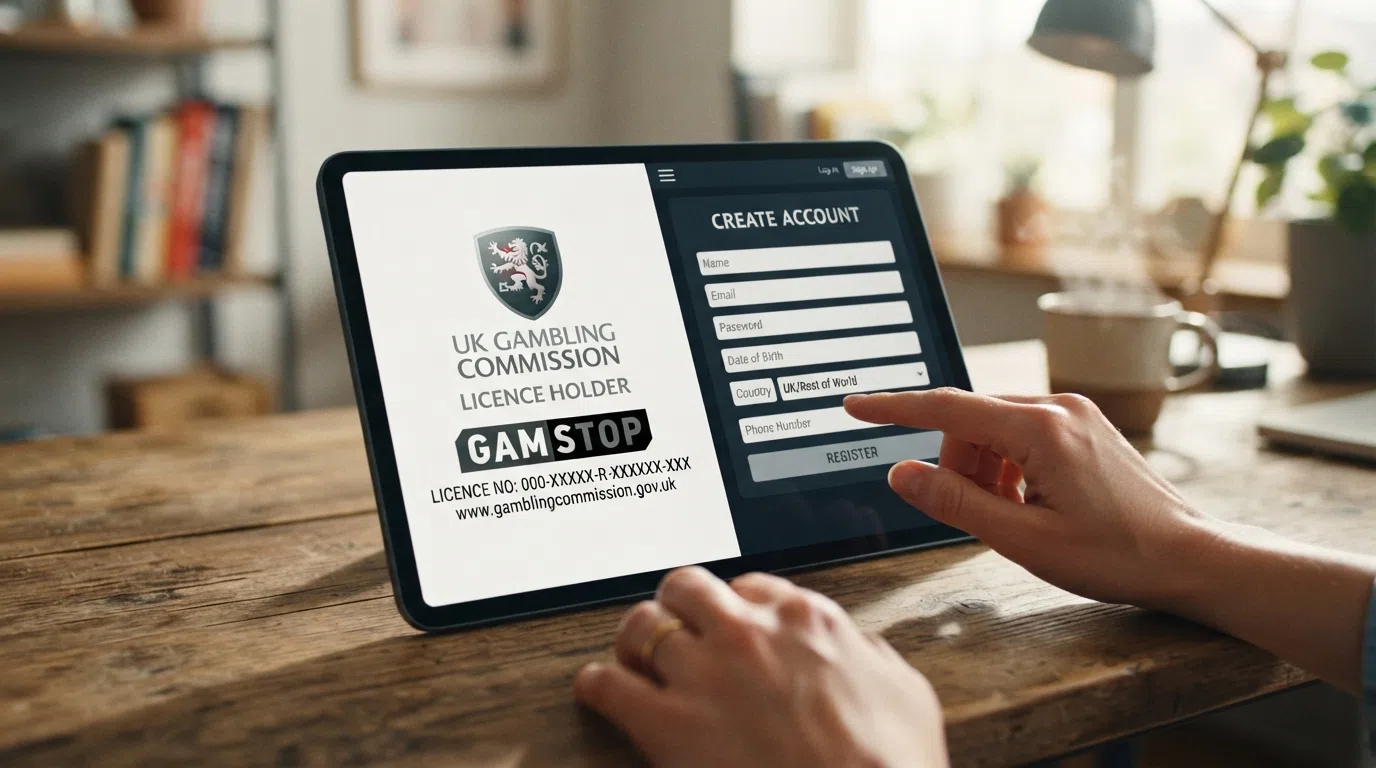
The table below lists each GB protection in turn and what the offshore equivalent is.
| Protection | What a GB-licensed site must do | What an offshore site offers instead |
|---|---|---|
| Age-banded slot stake cap | £5 max stake per game cycle for 25+ (from 9 April 2025); £2 for 18–24 (from 21 May 2025) | No statutory stake cap — operators set their own maximums |
| Credit-card ban | Credit cards banned for all remote gambling since 14 April 2020, including credit-card-funded e-wallets | Credit cards commonly accepted |
| Wagering cap | 10× maximum since 19 December 2025; mixed-product bonuses banned | 30×–40× on deposit plus bonus is industry norm; mixed-product offers unrestricted |
| GAMSTOP | Mandatory for every online licence since 31 March 2020; 6 months to 5 years, cannot be cancelled early | Not connected; offshore sites marketed as non-GamStop alternatives |
| Financial vulnerability checks | £150 net deposit in a rolling 30 days triggers a public-data check (CCJ, bankruptcy, IVA, DRO) | No equivalent |
| Game-design rules | Auto-play banned, spin speed ≥2.5 seconds, play-speed features banned, losses disguised as wins banned, reverse withdrawals banned | No equivalent; the operator sets the rules |
| Complaints and ADR | UKGC complaints route plus an approved ADR provider; British consumer redress applies | No UKGC route, no approved ADR; dispute is with the operator and, at best, the licence issuer abroad |
The contrast is not a marketing contrast. Each row is a specific rule a UK site must follow and an offshore site does not. The combined effect is the practical difference between playing inside a frame and playing outside one.
Why offshore bonuses look bigger than they pay
The welcome numbers on these sites are bigger than anything a UK site can offer under the 19 December 2025 10× wagering cap, and they look bigger still next to a UK free-spin offer. The reason is the multiplier, not the percentage. A 300% match at 30× is, on a £100 deposit, £400 of bonus, £500 of qualifying base and £15,000 of required turnover. A UK site cannot offer that multiplier; an offshore site can, and the wagering is what makes the welcome what it is.
The arithmetic of “how long to clear the bonus” matters here. Take the MyStake welcome as the worked example. The full package is £1,500 across three deposits and the wagering is 30× on deposit plus bonus combined. The required turnover is therefore £1,500 × 30 = £45,000. At a £5 stake per spin — the maximum a 25+ player can wager at a UK site and a reasonable working figure for the offshore slots the welcome is wagered on — that is £45,000 ÷ £5 = 9,000 spins. At a 5-second interval per spin, that is 9,000 × 5 = 45,000 seconds, or 12.5 hours of continuous play. A player who has come offshore to escape the £5 cap is, in this scenario, playing at exactly the stake ceiling they left a UK site to avoid, and they need to do it for the better part of a working day. The “bigger bonus” reads differently once the time is on the page.
Welcome bonuses: the headline numbers behind the match
The match percentages across the ten run from 150% to 400%. MyStake 150% up to £750, Goldenbet 300% up to £1,500, Freshbet 300% up to £3,000, Rolletto up to £5,500, Gxmble 400% up to £2,500, VeloBet 150%–100% with a 160% crypto track, Cosmobet 150% up to €500 plus €1,000 across deposits. Most of the field carries 30×–40× wagering on deposit plus bonus. The two exceptions are Gxmble at 5× on bonus funds and Jackbit at 1× effectively wager-free on its spins. The headline is the percentage; the multiplier is what the percentage costs.
A useful read is the percentage against the wagering. Gxmble’s 400% at 5× on bonus funds is, on a £100 deposit and a £400 bonus, £2,000 of qualifying turnover — the lowest in the field by a clear margin. Jackbit’s wager-free spins pay cash and skip the calculation entirely. Rolletto at 30× on the bonus alone is the next best of the mainstream packages. MyStake and Donbet at 30× on deposit plus bonus and Freshbet at 40× are the costlier end. The 10× GB cap is, in this frame, a floor below which none of the offshore mainstream packages can sit.
No-deposit bonuses: what the free cash is really worth
No featured brand carries a no-deposit cash bonus. The no-deposit offers on the table are free spins, not cash: 30 spins at MyStake, 15 spins at Donbet, 100 spins at Gxmble. The cashout ceiling on no-deposit winnings is typically £20–£100, occasionally up to £200, and that ceiling is the real number to read. A 30-spin no-deposit offer at £20 max cashout is, in effect, a £20 free trial. A 100-spin offer at £100 max cashout is the same free trial at a higher ceiling. Neither is cash in the bank.
The wins on no-deposit spins are paid as bonus funds at most of the operators, and the wagering on the bonus funds is the same 30×–40× as the welcome. The combination of a small spin count, a low cashout cap, and a high wagering multiplier is the standard shape. A player who reads “100 free spins, no deposit” as a route to a cash withdrawal has misread the page; a player who reads it as a low-cost way to test a lobby has read it correctly.
Free spins: the spin count and the fine print
Welcome spin counts in the featured set run 70 at VeloBet, 100 at Goldenbet, 200 at Freshbet and Rolletto, 250 at Cosmobet. Jackbit’s 100 are wager-free with winnings paid as real cash and no cap. The rest sit inside a 30×–40× package with a cashout ceiling. The spin count is the headline; the wagering and the cap are the cost.
Cosmobet’s 250 spins look like the largest welcome by spin count and they are, but they sit inside a 30× package with a 10× deposit max cashout. Freshbet’s 200 spins sit inside a 40× package. Rolletto’s 200 sit inside a 30× package with a 10× bonus cap. Jackbit’s 100 stand alone, paid as cash with no cap and no wagering. For a player whose decision turns on spin value rather than spin count, Jackbit’s 100 is the right comparison against any of the larger counts inside a clearing cycle.
Money in, money out: deposits, payouts, chargebacks
Funding an offshore account is, in the practical sense, the easy part. Cards, e-wallets and crypto are all common, and most operators do not enforce the British credit-card ban because they are not British operators. Getting money out, and getting it back if the operator refuses, is where the practical and the legal part of the page meet.
A useful distinction up front. None of the research surfaced per-operator payout durations across the featured set, and the “fast payouts” claim that appears on affiliate pages is a marketing line. Where the plan asks for payout speed the prose stays qualitative: e-wallet withdrawals are typically faster than bank transfers, crypto is typically faster than cards, and any specific time figure on an operator’s marketing page is a claim rather than a measured figure. The section below covers the fund-recovery routes, which is the part the marketing pages tend to leave out.
Deposit methods: cards, e-wallets, and crypto
UK players funding an offshore account have three broad options:
- Debit and credit cards, including cards that would not be accepted at a UK site because of the 14 April 2020 credit-card ban
- E-wallets, which sit in the middle on speed and on chargeback rights, and which vary by provider on whether a chargeback is even possible
- Crypto, which is the default on the crypto-native operators in the set and which is the route where the no-KYC claim is real
The credit-card point is worth holding. A UKGC site cannot accept a credit card for remote gambling. An offshore site can and commonly does. A player using a credit card to fund an offshore account is, in addition to whatever the bonus terms say, operating under their credit-card agreement with the issuer and not under any British consumer-credit rule. The Section 75 protection further down still applies to credit cards over £100, but only because of the Consumer Credit Act, not because of any gambling rule.
Withdrawals and payout speed
The honest version of “fast payouts” is that no research-backed figure exists across the featured set. Operators publish ranges on their own pages; affiliate pages repeat them; the pages do not cross-check against a measured audit. The pattern across the industry, not the pattern across this table, is that e-wallet withdrawals are processed in hours to a day, debit-card withdrawals in one to three working days, bank transfers in three to five, and crypto inside an hour once the operator has approved the withdrawal. None of those figures is sourced to a per-operator measurement in the research on which this page is based. A player who needs a withdrawal in a known window should plan around the conservative end of the range, not the marketing end.
The bigger payout-side concern is not speed but refusal. A withdrawal can be held up for verification, for bonus-term disputes, for source-of-funds checks, or for the operator’s own internal review. Research did not surface a per-operator complaint count, so this section cannot tell a player which of the ten is least likely to hold a withdrawal. What it can do is lay out the fund-recovery options that exist when a payout stalls, which is the next section.
Chargebacks and getting funds back when a payout stalls
The fund-recovery options depend on the payment method, and they are not equal.
- Credit card payments over £100 are covered by Section 75 of the Consumer Credit Act, which makes the credit card issuer jointly liable with the merchant. The claim has to be raised with the issuer, not with the casino. There is no statutory deadline, but the claim has to be brought in a reasonable time.
- Visa and Mastercard debit card payments can be charged back under the card scheme’s own dispute rules, typically within 120 days of the transaction. The dispute is between the cardholder and the issuer; the casino is not the address.
- Crypto deposits have no chargeback mechanism. The transaction is on-chain and irreversible. A player who deposits in crypto and the operator refuses to pay out has, in practical terms, no route back through the payment network.
E-wallet chargebacks vary by provider, and the rules sit in the provider’s own terms. Neteller and Skrill have historically been less generous on gambling chargebacks than the card networks. A player who expects to need a chargeback route should fund the account in a way that keeps that route open.
Crypto casinos trade ID checks for zero recourse
Crypto and no-KYC casinos are the most distinct offshore type in the featured set. The deal they offer is straightforward: deposit in Bitcoin, Ethereum, USDT or one of the other coins the cashier accepts, play without verifying name, address or date of birth, and withdraw back to a wallet. The deal they take away is the recovery route, because a crypto transaction is irreversible and there is no payment-network intermediary to dispute through.
The contrast with a UK-licensed site is sharp. A GB operator must verify name, address and date of birth before the first deposit; the verification step is the gate that closes the underage-access pathway. An offshore site that allows play before verification is, by design, opening that pathway. The crypto track on VeloBet, the no-KYC stance of Flush, the broader crypto-casino market the two of them sit in — all of it is built around the absence of that gate.
Crypto and bitcoin casinos
The two operators in the featured set that lean hardest into the crypto model are Flush and VeloBet. Flush is crypto-native, privacy-first, and replaces the headline match with a daily free-spins model; the library runs 3,000+ games across BGaming, Pragmatic Play, Hacksaw Gaming, Evolution and Spribe. VeloBet’s crypto track is a parallel welcome to its fiat one: 160% up to €1,000 at 35× wagering, distinct from the 30× the fiat track runs on.
The crypto path has two specific consequences. The first is verification. A player who funds in crypto at an offshore site may not be asked for name, address, or date of birth, and may be able to play through the welcome without ever uploading a document. The second is the recovery gap. A deposit in crypto that the operator refuses to return is gone; there is no chargeback mechanism on a blockchain transaction, no Section 75 claim because there is no credit card, and no card-scheme dispute because there is no card.
Anonymous play without verification
The no-KYC offer is the part of the offshore pitch that pulls a specific reader: the player who values privacy, or the player who has been turned away from a UK site by a financial vulnerability check, or the player who has self-excluded via GAMSTOP and wants to keep playing. The price is the same one the rest of this page describes, and it is worth being specific about it. A site that does not verify identity cannot tell an adult from a child. A site that does not verify funds cannot tell disposable income from money needed for rent. A site that does not connect to GAMSTOP cannot enforce a self-exclusion. None of these are arguable points; they are the mechanical consequences of the no-KYC model.
For a player who is an adult, has funds they can afford to lose, and has chosen not to self-exclude, the no-KYC offer is what it is. For a player who is a parent, the model opens a door that a UK site has closed. The page does not pick a side; the page names the trade.
Responsible gaming: the tools that don’t reach you offshore
The safer-gambling infrastructure the UK has built up over the last decade is anchored on the licence. GAMSTOP, the deposit-limit prompt, the £150 financial vulnerability check, the affordability-check regime, the approved ADR providers, the Commission complaints route — each of them depends on the operator being inside the British regulatory frame. Take the operator outside that frame, and the entire chain is cut. None of those tools reaches an offshore site.
The help that does exist is on the player side, not the operator side, and it is the same help a UK player would use from a UK site: the National Gambling Helpline, the NHS gambling clinics, GamCare’s self-assessment, Gamblers Anonymous peer support, and the broader treatment network. GamCare’s January 2026 figures — 996 referrals to treatment, up 48% on January 2025 — are the current read on the demand side. The 11,960 clients treated between April 2024 and March 2025 are the read on the supply side. Both numbers are higher than the year before.
Self-exclusion: why GAMSTOP doesn’t reach these sites
GAMSTOP self-exclusion is mandatory for every GB-licensed online operating licence, has been since 31 March 2020, and runs for six months, one year, five years, or five years with auto-renewal. The exclusion cannot be cancelled early. It covers the licensed site, the licensed site covers it, and the licensed site is the place a player with a GAMSTOP block lands when they search for “online casino UK”.
Offshore sites are not on the GAMSTOP database, and they are explicitly marketed as non-GamStop alternatives. A player who has self-excluded and then searches for a way to keep playing will find these sites through that exact search. The page does not editorialize on what a player should do with a self-exclusion; the page notes the mechanical fact, which is that the self-exclusion stops at the British border.
Deposit and time limits: what these sites leave up to you
GB operators must, from 31 October 2025, prompt customers to set a financial limit before the first deposit; from 28 February 2025 they must run a financial vulnerability check at £150 net deposit in a rolling 30 days; from 30 September 2026 the RTS 12 gross deposit limit regime comes into force. The combination is a multi-layered limit architecture, none of which the player has to opt into — it is on by default.
None of this applies offshore. There is no mandated pre-deposit prompt, no vulnerability check, no statutory deposit ceiling. The limit is what the player sets for themselves, and what the player sets for themselves is what the limit is. The absence of the British layer is not a gap in the page; it is the load-bearing fact about offshore play.
Where to get help: GamCare, the helpline, and NHS clinics
Help exists and is free, 24/7, and confidential:
The help network includes the National Gambling Helpline (GamCare, 0808 8020 133), which offers free 24/7 phone and live chat support, and the GamCare online self-assessment tool. NHS gambling clinics are available through the National Problem Gambling Clinic in London and regional sites, while Gamblers Anonymous provides peer-support meetings throughout the UK. As for the demand, GamCare reported 996 referrals to treatment in January 2026—a 48% increase from January 2025—and the National Gambling Support Network treated 11,960 clients between April 2024 and March 2025, up 11% year-on-year.
The helpline number is the one to keep. The rest is the network that sits behind it.
How we ranked these operators
The ten operators above were checked against the UK Gambling Commission’s Public Register — last updated 29 July 2026 with 2,663 records — and none of them appears on it. The Curaçao Gaming Authority certificate portal at cert.cga.cw was used to verify the Goldenbet and Rolletto licences, which sit under Santeda International B.V. with a CGA certificate dated 14 August 2024. The Anjouan claim for Cosmobet and the Costa Rica registration for Gxmble were verified against the operator’s own published imprint.
The ranking itself is not a score. It is a presentation order: licence strength at the top, then wagering terms, then the bonus structure, then the cashout ceiling, then the game-library size. Operators with a confirmed paper trail at the licence level rank above those with only a regulator name on the page. Operators with a low wagering multiplier rank above those with a 30×–40× turnover. Cashout caps are read against the multiplier, because a low multiplier with a tight cap can be the more player-friendly combination.
Bigger bonuses, zero protections — what every UK player weighs before signing up
The pitch at the offshore side is real. A 300% match, 200 free spins, 30× wagering is a number a UK site cannot offer under the 10× cap. A crypto deposit with no identity check is a route a UK site cannot offer under the verification rule. A 400% match with 5× wagering is a number no UK site could offer under any rule, because the maths would not work. The marketing is not lying; it is quoting a real number on a real offer.
The price of that offer is everything the British frame puts between the player and the operator. No GAMSTOP coverage. No Commission complaints route. No approved ADR. No British consumer redress. A wagering multiple that, on a £1,500 welcome at 30×, demands £45,000 of qualifying turnover — 9,000 spins at a £5 stake, or 12.5 hours of play at five seconds a spin. A cashout cap on the bonus funds that the affiliate copy tends to leave out. A recovery path that runs through Section 75 for credit cards over £100, a 120-day debit-card chargeback for cards, and nothing for crypto.
The decision rests on the numbers this page has already carried. The wagering multiples, the cashout caps, the recovery options and the help line. A player who has read them, and is still on the offshore side, has made a decision with the information in front of them. A player who has read them and decided the British frame is the better fit has made the other decision, and the GAMSTOP self-exclusion and the deposit-limit prompt are the routes to it. Both are real choices. The page’s job was to make the cost of each visible, not to make either one for the reader.
Frequently asked questions
Do offshore wagering requirements really cost more than the UK’s 10× cap?
Yes. The 10× cap applies only to GB-licensed operators and took effect on 19 December 2025. Offshore operators commonly run 30× to 40× on deposit plus bonus combined. MyStake and Donbet use 30×, Goldenbet 35×, Freshbet 40×. Gxmble at 5× and Jackbit’s wager-free spins are the two exceptions in the featured set.
Can I get my money back if an offshore casino refuses to pay out?
The route depends on how you paid. Credit-card transactions over £100 are covered by Section 75 of the Consumer Credit Act, which makes the card issuer jointly liable. Visa and Mastercard debit card payments can be charged back under the card scheme, typically within 120 days. Crypto deposits have no chargeback mechanism and no equivalent route. E-wallet chargebacks vary by provider.
Which UK protections disappear the moment you play offshore?
The full British frame: GAMSTOP coverage, the UKGC complaints route, an approved ADR provider, fund segregation, the £2 and £5 slot-stake cap, the credit-card ban, the 10× wagering cap, the £150 financial vulnerability check, and the deposit-limit prompt. None of these apply offshore; the player has none of the British escalation routes if a payout is refused or a balance is voided.
Are crypto and no-KYC casinos safe for UK players?
Crypto and no-KYC casinos are offshore by construction. A site that does not verify identity cannot enforce an age check; a crypto transaction is irreversible, so there is no payment-network chargeback route. The player trades the British verification and recovery layer for the privacy and speed of the crypto path, and the absence of the layer is the safety cost, not an incidental one.
Do all ten operators ranked here still accept UK players?
Yes, as of the verification date. None of the ten appears on the UK Gambling Commission’s Public Register, which means none holds a GB licence, and each accepts customers from the UK through its own onboarding flow. UK-facing accessibility can change at any time; the licence status does not, and the absence of a GB licence is the load-bearing fact about each of them.
Where can UK players get help with problem gambling?
The National Gambling Helpline on 0808 8020 133 is free, 24/7, and runs phone and live chat. GamCare’s online self-assessment is free and anonymous. NHS gambling clinics operate in London and across the regions. Gamblers Anonymous runs peer-support meetings. GamCare made 996 referrals to treatment in January 2026, up 48% year-on-year.
Are these sites legal for UK players?
The player commits no offence by gambling on an unlicensed site. The criminal liability under section 33 of the Gambling Act 2005 falls on the operator and on the supply chain that routes GB customers to the operator. The Gambling Commission has stated the position plainly: it is illegal to provide gambling facilities to consumers in Great Britain without an operating licence, regardless of where in the world the gambling is provided from. There is no established case in which a UK resident has been prosecuted simply for gambling on an unlicensed site, and the Commission’s published enforcement activity — 3,140 disruption notices, 447,778 URLs referred to search engines, 287,961 URLs removed between April 2024 and June 2025 — is targeted at operators, registrars, hosts and payment providers, not at players.
The implication for the player is that the legal risk is on the operator side, while the practical risk is on the player side. The player will not be arrested for opening an account. The player will, however, have none of the British escalation routes if the operator refuses to pay out, voids a balance, or closes the account with funds inside it. That is the trade, and it is the one the rest of this page is structured around.
Licence – nominimumdeposit-casinos-uk
Content created by the «nominimumdeposit-casinos-uk» team