What a Curacao casino licence actually means for UK players
 Available in GB
A Curacao gaming licence is real. The seal on the footer is real. The licence number, in the cases where one is published, resolves against the Curaçao Gaming Authority register. None of that makes the site legal in Great Britain. Under the Gambling (Licensing and Advertising) Act 2014, any operator offering gambling services to customers in Great Britain needs a licence from the UK Gambling Commission. A Curacao licence is not that licence, and the Commission has confirmed it directly: “A licensed operator (or an operator applying for a license) based in Curaçao is not permitted to offer gambling services within the UK without a license from us.” That sentence is the foundation of everything this page argues.

The casinos that carry a Curacao seal and still let a player in London sign up are running outside the British framework. The UK is treated as requiring an exclusive licensing regime, and Curacao-licensed operators are expected to geo-block UK IP ranges. Many do not bother, and a UK player can reach most of them in under a minute. The point of this page is not the access. The point is what changes the moment a player crosses the line into a casino the Commission does not oversee: the bonus terms harden, the dispute routes disappear, the self-exclusion tools lose their weight, and the protections a UKGC licence guarantees simply do not apply.
This page walks through what a Curacao licence is, what it does and does not authorise in British law, how it compares with a UKGC licence protection by protection, what ten commonly encountered operators actually offer, and what a UK player should weigh before signing up. The tone is sceptical, because the marketing for these sites is not. The numbers come from operator terms pages, the UK Gambling Commission’s own statements, and the Curaçao Gaming Authority register. Where a number is missing, the page says so rather than fill the gap with a guess.
Data current as of 26 August 2026, verified against the UK Gambling Commission’s public register and the Curaçao Gaming Authority’s licensed-operator database.
The offshore alternative British players keep finding — and what “Curacao casino” really means
A Curacao casino is an online gambling site licensed by the Curaçao Gaming Authority, the regulator that took over the master-licence and sub-licence system in 2024 under the LOK framework. Curacao became the home licence for crypto-first casinos because its rules accommodated digital-asset cashier rails and accepted operators the UKGC’s stricter fit-and-proper tests would not. The result is a market of several hundred offshore brands, the vast majority of which accept players from jurisdictions the Commission considers exclusive. The UK is one of those. They accept British players anyway, because the seal on the footer does not enforce the access policy.
The phrase “Curacao casino” in a UK-facing search results page usually means a casino licensed in Curacao that has chosen not to block British IP addresses. The seal is genuine. The legal authority to serve a customer in Manchester, Cardiff or Belfast is not.
What the licence actually permits — in plain terms
A Curacao licence authorises an operator to offer gambling services from Curaçao to jurisdictions that have not declared themselves exclusive. The licence does not authorise the operator to override a country’s domestic rule. The licence comes in three flavours a reader may see in the footer: an old “8048/JAZ” master-licence reference from the pre-2024 system, a CGA-issued direct licence under LOK, or a transitional licence granted during the 2024 handover. All sub-licences issued under the old NOOGH framework expired in January 2025. A valid operator in the current market holds a direct LOK licence from the CGA; a seal still showing 8048/JAZ without a current direct licence is a leftover, not a credential.
The LOK framework is the National Ordinance on Games of Chance. It replaced the older master-and-sub-licence structure in late 2024 and put the CGA in direct contact with each operator. That change tightened some rules — including the crypto compliance framework introduced in June of this year — but did not turn Curacao into the UKGC. The licence is still smaller in scope, lighter on player protection, and operated by a regulator with a smaller enforcement budget.
How offshore operators reach British screens
These sites can and do accept UK players. As one Curacao-facing guide puts it: “The UK is not on Curacao’s restricted list. Curacao licensed online casinos can and do accept UK players. They simply operate without a UKGC licence.” The Commission’s own guidance is that the UK requires an exclusive licensing regime, and Curacao-licensed operators must geo-block UK IP ranges. In practice, geo-blocking is a code, not a fence. It can be bypassed with a VPN, and many operators either do not implement it or implement it loosely enough that a UK browser reaches the cashier.
The geo-block is also a restriction, not a licence. A site that fails to geo-block is in breach of the Curacao rules. It is not, in itself, in breach of any UK rule the player will face. The player is the customer, not the enforcer.
Real-money play and who these sites are built for
These are real-money casinos. There is no sweepstakes model, no social-coin gimmick. A £20 deposit at a Curacao site buys £20 of real-money slot spins or live-dealer hands, paid out in GBP, USD, BTC or USDT depending on the cashier. Crypto is the default rail at most of them. Bitcoin, Ethereum, Litecoin, Tether and a clutch of altcoins sit at the top of the deposit page. Fiat cards appear at a smaller subset.
The reader profile these sites target is a UK gambler who has hit a wall in the licensed market. It might be a self-excluded player who cannot use GamStop-covered sites anymore. It might be a high-stakes slots player put off by the £5 per-spin cap. It might be a crypto user who wants a cashier that takes Bitcoin without a payment-processor detour. The page states the profile without endorsing the move. The licensed market exists for reasons; leaving it is a decision the player makes with eyes open or shut.
A Curacao licence under British law: what it authorises, and what it never did
A Curacao licence is not a UKGC substitute. The point-of-consumption rule, brought in by the 2014 Act, brought every operator serving a British customer under the Commission’s authority regardless of where the operator sits. A site in Willemstad, a site in Valletta, a site in Manila — all of them need the Commission’s licence if a pound-sterling customer in Great Britain is the audience.
The penalty for not having one falls on the operator. Section 33 of the Gambling Act 2005 carries up to 51 weeks’ imprisonment, an unlimited fine, or both. No traced penalty in this run lands on the player who merely gambles. The Commission’s enforcement activity is a measure of how seriously the regulator takes the rule: between April 2024 and June 2025, the Commission issued 3,140 disruption notices, referred 447,778 URLs to search engines for delisting, and saw 287,961 URLs removed. Between January 2025 and February 2026, the Commission issued 260 cease-and-desist notices to advertisers of unlicensed gambling and cut the response deadline from 14 days to 48 hours. That is the disruption the player does not see, and it is the reason some Curacao brands quietly disappear from UK-facing search results.
The Remote Gaming Duty, which a UKGC-licensed operator pays on its gross gaming yield, rose from 21% to 40% on 1 April of this year. The licensed market now pays nearly half of its gross yield in tax. Curacao-licensed operators do not. That gap shows up in marketing budget, bonus size, and the absence of a UK-facing complaints route.
How to verify a licence number in the CGA register
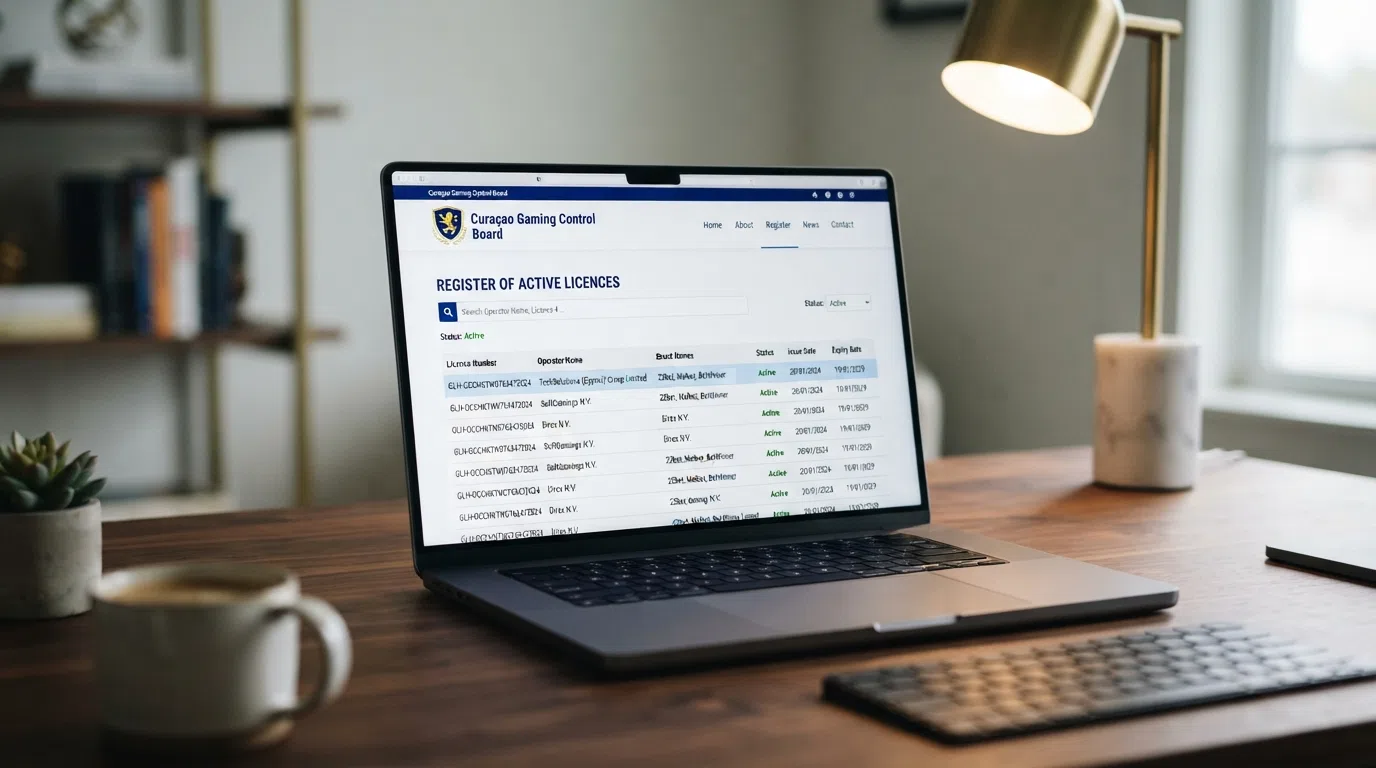
The one verification step that separates a real seal from a copied one is a register lookup. Every licence issued under LOK carries a number of the form OGL/2024/XXXX/YYYY, and the CGA publishes the licensed-operator list on its website. The operator’s footer usually links to it; if not, the lookup is one direct visit away. A failed lookup — the number not found, the company name spelled differently, the licence expired — is the difference between a real operator and a copied seal.
A reader who wants to check: open the CGA’s licensed-operator register, search by the licence number or by the operating-company name, and confirm the licence status is active. A number issued before 2025 under the old NOOGH master-and-sub-licence system is no longer a current credential. The sub-licences all expired in January 2025, and the CGA now issues direct licences only.
Licensed, regulated, safe, legit — which words actually apply
“Licensed” is true: every featured operator on this page holds a Curacao licence. “Regulated” is weaker than the UKGC standard: the CGA’s enforcement record, disclosure rules and player-protection requirements are below the Commission’s. “Safe” and “legit” are the player’s risk, not the licence’s promise. A licence certifies that the operator met a regulator’s fit-and-proper test on a given day. It does not guarantee the operator will pay out a five-figure win on a Wednesday in March. The UKGC’s track record on segregated funds and ADR is a stronger guarantee than the CGA’s, and the comparison table in the section below makes the difference row by row.
The legal position in Great Britain, stated plainly
The Commission’s position is plain. A Curacao-licensed operator is not permitted to offer gambling services within the UK without a UKGC licence. The player who gambles at such a site does not face a traced criminal penalty in this run. The risk is loss of protection: no UK complaints route, no ADR, no fund segregation, no GamStop self-exclusion. The site may be unreachable through British payment processors tomorrow, even if it is reachable today. The Commission’s disruption notices move faster than 14 days used to, and a 48-hour response window is now the norm.
Not on GamStop: what self-exclusion does and does not cover
GamStop participation has been mandatory for every UKGC online licensee since 31 March 2020. A self-excluded player who signs up for GamStop is locked out of every GB-licensed casino for six months, one year, five years, or five years auto-renewed. The exclusion cannot be cancelled early. A Curacao casino sits outside this system entirely. A self-exclusion set on the licensed market does not extend to offshore sites. A self-exclusion set on a Curacao site is enforced only by that site’s own voluntary rules, with no UK backstop. The gap is exactly the reason Curacao casinos are often described as “non-GamStop” sites in UK-facing marketing.
What a UKGC licence guarantees that a Curacao one cannot
The protection-by-protection gap is the heart of this page. The table below states it row by row.
| Player protection | UKGC-licensed casino | Curacao-licensed casino |
|---|---|---|
| GamStop self-exclusion | Mandatory; backstop across all UKGC licensees | Not covered; site-level tools are voluntary |
| ADR for disputes | IBAS or another UKGC-approved provider available | None mandated; site dispute process only |
| Statutory fund segregation | Customer funds held separately from operator funds | No statutory requirement; operator-set |
| UK consumer redress | UKGC complaints route and ASA / CAP Code jurisdiction | No UK consumer route |
| Identity verification before deposit | Mandatory (since 7 May 2019) | Operator-set; often deferred until withdrawal |
| Vulnerability checks | Triggered at £150 net deposit in rolling 30 days | Operator-set |
Every row is a forfeit. A reader who goes to a Curacao site gives up GamStop, an ADR, fund segregation, the UK complaints route, the vulnerability check, and the deposit-time identity verification that the UKGC mandates. None of those is a detail; each is a safeguard that fires at a different moment in the player journey, and each fires less reliably — or not at all — outside the UKGC framework.
The caps a licensed UK operator must obey
The statutory rules a UKGC casino must follow are not optional, and they do not bind a Curacao site. The list below is the British floor; an offshore casino is under no obligation to match it.
| UKGC rule | The limit or ban | In force from |
|---|---|---|
| Online slot stake cap | £5 per game cycle (25+); £2 per game cycle (18–24) | April / May 2025 |
| Auto-play | Banned | 31 October 2021 |
| Spin speed | Minimum 2.5 seconds | 31 October 2021 |
| Losses disguised as wins | Banned | 31 October 2021 |
| Reverse withdrawals | Permanently banned | 31 October 2021 |
| Credit card payments | Banned for all remote gambling | 14 April 2020 |
| Deposit limit prompt | Required before first deposit | 31 October 2025 |
| Financial vulnerability check | Triggered at £150 net deposit in rolling 30 days | 28 February 2025 |
| Wagering requirements | Hard cap at 10× the bonus amount | 19 December 2025 |
| Mixed-product promotions | Banned | 19 December 2025 |
| GAMSTOP | Mandatory for online licensees | 31 March 2020 |
| Remote Gaming Duty | 40% of gross gaming yield | 1 April 2026 |
| Statutory levy | 1.1% of gross gambling yield | 6 April 2025 |
A Curacao site can offer a 40× wagering multiple, a €5/$5 maximum bet while a bonus is active, and a promotion that bundles casino play with sports betting into one click. The Commission would not let a UKGC site do any of those things. The licensed market is tighter because the law made it tighter; the offshore market stays loose because nothing forces it otherwise.
Ten Curacao operators UK players encounter — ranked and compared
Every operator below holds a Curacao licence and no GB licence. The table is built from operator terms pages, review-site data, the CGA register where a number was available, and the Casino Guru Safety Index where a score was published. None of these is a recommendation. The table is what these operators look like in the record, not what a reader should choose.
| Operator | CGA licence | UK status | Welcome bonus | Game providers |
|---|---|---|---|---|
| BitStarz | Curacao (reported 8048/JAZ, transitioned to CGA direct) | No UKGC licence | Up to $500 or 5 BTC + 180 free spins | Pragmatic Play, Evolution, BGaming, Hacksaw, Push Gaming |
| Stake | OGL/2024/1451/0918 plus four Latin American licences | No UKGC licence | 200% up to $2,000 | Pragmatic Play, Evolution, Hacksaw, Push Gaming, Relax Gaming |
| Wild.io | OGL/2024/210/0198 (Nonce Gaming B.V.) | No UKGC licence | 350% + 200 free spins | Pragmatic Play, Evolution, Hacksaw, BGaming; 9,000+ games |
| MyStake | GTW B.V. B2C (granted June, expired December) | No UKGC licence; identified black-market | 150% up to £750 first deposit (300% up to £1,500 across three) | Pragmatic Play, Evolution, Hacksaw, Play’n GO, NetEnt |
| Velobet | Santeda / GTW (same network as MyStake) | No UKGC licence; identified black-market | Not specified | Pragmatic Play, Evolution, Hacksaw, Play’n GO |
| FortuneJack | 8048/JAZ (since 2014) | No UKGC licence | 500% across four deposits + 15 bonus rounds | Evolution, Ezugi, Authentic, BetGames TV, NetEnt Live |
| BC.Game | Curacao (details not confirmed) | No UKGC licence | Multi-deposit (current terms not confirmed) | 8,000+ casino games + sports |
| Rabona | Curacao (valid licence) | No UKGC licence | Not specified | Not specified |
| Tenobet | Curacao | No UKGC licence | Not specified (terms described as clear) | Not specified |
| Cosmobet | Curacao (verified against CGA register) | No UKGC licence | Not specified | Not specified |
BitStarz: the crypto veteran whose 40× catch is easy to miss
BitStarz’s welcome package — up to $500 or 5 BTC plus 180 free spins, spread across the first deposits — is the headline most readers will see. The figure that follows, the one that determines what the bonus actually costs, is the 40× wagering and the €5 / $5 maximum bet while a bonus is active. A $500 bonus at 40× means $20,000 of qualifying turnover before the bonus converts to withdrawable cash, and the €5/$5 cap means that turnover happens slowly. The crypto list is wide — BTC, ETH, LTC, DOGE, USDT, BCH, XRP — and the platform runs on SOFTSWISS with Pragmatic Play, Evolution, BGaming, Hacksaw and Push Gaming on the provider side. The licence footprint is Curacao, reportedly 8048/JAZ under the old framework with a transition to a direct CGA licence. No UKGC licence. The verdict, for a UK reader who has decided to leave the licensed market anyway: BitStarz is a crypto-first casino with a deep provider list and a bonus whose real cost is the 40× rather than the dollar figure.
Stake: a 200% match that asks for 40× back
Stake’s 200% deposit match up to $2,000 is the largest single-deposit match in the featured set. The wagering on the bonus is 40×. On a $2,000 bonus, that is $80,000 of qualifying turnover. The licence footprint is broader than most in this list: a CGA licence (OGL/2024/1451/0918) plus four Latin American licences. The providers are the same cluster as the rest — Pragmatic Play, Evolution, Hacksaw, Push Gaming, Relax Gaming. Stake’s brand equity is built on crypto-first banking and high-profile sponsorships, neither of which the UKGC framework permits inside the licensed market. The verdict for a UK reader: Stake is the operator a reader has heard of most often in this set, and the bonus terms are no softer than the field’s. The match percentage is the headline; the wagering multiple is the actual price.
Wild.io: a 350% opener over 9,000-plus games
Wild.io offers the largest match percentage in the featured set: 350% on the first deposit, plus 200 free spins. The wagering is 40×. The library is 9,000-plus games, the largest count carried in the research record for any of the ten operators, and the crypto list is the longest: BTC, ETH, LTC, DOGE, USDT, BCH, XRP, TRX, ADA, SOL, TON, BNB. The licence is OGL/2024/210/0198, issued to Nonce Gaming B.V. — a CGA direct licence, verifiable on the register. The verdict, for a UK reader weighing this against the rest: Wild.io’s offer is the most generous on percentage, the library is the deepest on count, and the wagering multiple is the same as BitStarz and Stake. The trade-off is between a wide-coin cashier and a narrower match elsewhere; the wagering is the equaliser across the three.
MyStake: a British-facing brand the UKGC has already named
MyStake is the one operator on this list the regulator has named publicly. Its previous Curacao licence was issued by Santeda International B.V.; the brand shifted to a GTW B.V. B2C licence that was granted in June of the same year and expired that December. The network behind it — Santeda / GTW — has been identified as one of the most-used black-market operators among British customers. The bonus on record is 150% up to £750 on the first deposit, with a 300% up to £1,500 package across three deposits, at 30× wagering and a £20 minimum deposit. The 30× is the softest wagering on this list. The verdict, for a UK reader: the regulator has already attached its name to this network, the licence has already lapsed once, and the appeal of the lower wagering comes bundled with the highest enforcement risk on this page.
Velobet: the same network, a safety index and no published bonus
Velobet sits inside the same Santeda / GTW network as MyStake. The same black-market identification applies. The Casino Guru Safety Index for Velobet is 8.4 out of 10, labelled “High” — a respectable third-party score that does not change the licensing facts above it. The welcome bonus is not specified in the reviewed sources; readers must check the operator’s terms page directly. Player reviews describe withdrawals within 12 to 24 hours, which is fast by offshore standards. The verdict: the safety index is a useful comparator, not a UKGC substitute. The reader who wants Velobet should know whose network they are joining before the bonus figure matters.
FortuneJack: a 2014 veteran whose free spins come with missions
FortuneJack has run on a Curacao licence — 8048/JAZ — since 2014, longer than any other operator on this list. The welcome package is a 500% match across four deposits (100%, 150%, 100%, 150%) plus 15 bonus rounds, with a 100% sports freebet up to $200 as an alternative. The free spins are not no-wager despite older review-site claims; they are unlocked by completing wagering missions — 10× the deposit on slots or Aviator, tier by tier. The cashier is the only one in the featured set with Visa, Mastercard, Google Pay and Apple Pay alongside BTC, DOGE, LTC and USDT. The verdict: FortuneJack is the longest-running operator on this list, the only one with a fiat-card cashier on the record, and the only one whose free spins come gated by mission wagering rather than a flat multiple. A reader who wants cards over coins and a long-running licence over a fresh direct LOK number lands here.
BC.Game: a vast lobby with terms you must check yourself
BC.Game’s 8,000-plus casino games plus a sportsbook is the second-largest lobby on this list. The licence is a Curacao one, but the specifics were not confirmed in the reviewed sources — a register lookup is the step to take before depositing. The welcome package is a multi-deposit structure whose current terms the research did not pin down; BC.Game’s own terms page is the only source that matters. The crypto range is wide. The verdict: a deep lobby and a brand presence that puts BC.Game in the same conversation as Stake. The reader pays for the breadth by checking the bonus terms themselves, because the record does not carry them.
Rabona: a valid licence and little else on the record
Rabona holds a valid Curacao gaming licence. The welcome bonus is not specified in the reviewed sources. The wagering is not specified. The provider list is not specified. The verdict is the same shape every time the record runs thin: the licence check passes, and beyond it the reader must rely on the operator’s own terms page. A reader who wants a Curacao brand with the fewest specifics on this list lands here.
Tenobet: £25 minimum and a day’s wait for payouts
Tenobet’s record is two specific terms and a licence line: a £25 minimum deposit, withdrawals typically 24 to 48 hours, and a Curacao licence with no UKGC. The welcome bonus is described in reviews as having clear and reasonable terms, but the figures are not on the page’s reviewed record. The verdict: a higher minimum than MyStake’s £20, a withdrawal window that sits in the middle of the field, and a welcome bonus whose actual value the reader must check at the cashier.
Cosmobet: register-verified, with thin public terms
Cosmobet is the one operator on this list whose licence has been checked against the CGA register by a third party — Casinocuracao.co.uk. The welcome bonus is not specified. The wagering is not specified. The provider list is not specified. The verdict: the strongest verification on the register and the thinnest public bonus record. A reader who values register verification over bonus size lands here, knowing the bonus terms must be checked at the cashier.
Why your 2026 Curacao welcome bonus is smaller than it looks
A Curacao welcome bonus is built to look bigger than it is. A 350% match is not 350% cash. A $2,000 ceiling is not $2,000 in your hand. The match percentage is the headline; the wagering multiple is the price; the maximum-bet cap is the speed limit on clearing it.
The worked example the page carries, drawn from operator terms pages and not invented, is Stake’s 200% deposit match up to $2,000 at 40× wagering. A player who deposits the $2,000 to claim the full match receives $4,000 in playable balance — $2,000 of deposit and $2,000 of bonus. The bonus carries 40× wagering, which means $80,000 of qualifying turnover before the bonus converts to withdrawable cash. With the $5 maximum bet a bonus-active account is capped at — the same cap that applies at BitStarz and is the industry default — that $80,000 of turnover is 16,000 slot spins. A 5-second interval between spins puts the time to clear the bonus at around 22 hours of continuous play, with no margin for non-slots games, restricted titles, or any single spin that does not count in full toward the requirement. The bonus is real. The cost of clearing it is the figure a player should weigh before claiming it.
The UKGC cap, in force from 19 December 2025, is 10× the bonus. A UKGC-licensed casino cannot ask for more than that. Curacao casinos routinely ask for 30× or 40×. The four-times difference is the size of the gap between a licensed British offer and an offshore one, and it is the reason the headline number on a Curacao bonus cannot be compared with a UKGC offer on percentage alone.
Welcome packages: how the headline number is built
A welcome package is almost never a single deposit. BitStarz’s $500 or 5 BTC plus 180 free spins is split across the first deposits; Wild.io’s 350% plus 200 free spins is a first-deposit headline; MyStake’s 150% up to £750 first-deposit offer sits inside a 300% up to £1,500 package across three deposits; FortuneJack’s 500% is a four-deposit ladder. The headline is the ceiling, not the lump sum. A player who deposits only the minimum on deposits two and three will collect a fraction of the package, and the wagering obligation will attach to the full bonus received rather than the headline figure.
Wagering multiples that quietly shrink the offer
Wagering multiples are the single most important number on a bonus page, and they are rarely the headline. Stake’s 200% up to $2,000 reads as the story; 40× is the footnote. MyStake’s 30× is the softest in the featured set; Wild.io’s 40× matches the field. The UKGC cap of 10× is, for any reader comparing a licensed British offer with a Curacao one, the line that separates the two markets. A 40× multiple multiplies the turnover required to clear the bonus — not the reward.
No-deposit bonuses: none of the checked operators offer one
None of the ten featured operators on this page currently lists a no-deposit bonus in the reviewed record. Free spins at BitStarz and Wild.io are bundled into deposit-gated welcome packages. Free spins at FortuneJack are unlocked by completing wagering missions, not by signing up. A reader who arrives at one of these brands expecting a no-deposit offer will not find one. A reader who sees a no-deposit bonus claim elsewhere should treat it as unverified until the bonus terms are checked.
Paying in and cashing out: the crypto-first reality of Curacao checkouts
The cashier at most Curacao casinos is a Bitcoin address, a Tether address, and a short list of altcoins. Cards appear at a smaller subset. E-wallets and voucher-based methods are the exception, not the rule. The licensed UK market — by contrast — runs on debit cards, bank transfers, PayPal and a handful of e-wallets, with crypto blocked at most major UKGC operators. The Curacao cashier is built around the rails the British licensed market has walked away from.
The operator-by-operator reality on this list: BitStarz, Wild.io, FortuneJack and BC.Game list crypto; FortuneJack is the only one that adds Visa, Mastercard, Google Pay and Apple Pay; the rest sit on coins. A UK player depositing pounds at a Curacao casino is usually converting to USD or crypto on the way in and back on the way out, with the conversion spread absorbed by the player.
Crypto leads, e-wallets follow: what the cashier really shows
The deposit hierarchy a reader meets at most Curacao sites is: BTC, ETH, USDT at the top; altcoins below; fiat cards somewhere lower; e-wallets either absent or hidden behind a country check. The minimum deposit varies — MyStake is £20, Tenobet is £25 — but the deposit limit is rarely published as a maximum. Withdrawal windows are where the cashier shows its seams: Velobet is reported by player reviews at 12 to 24 hours, Tenobet at 24 to 48 hours, and most others in the same band. The licensed UK market, by comparison, runs most withdrawals in under 24 hours on e-wallets and 1 to 3 days on bank transfers.
Skrill, Neteller, Paysafecard and Trustly on the reviewed record
The research carries no per-operator record on whether these four wallets are accepted at any of the ten featured operators. That is a gap, and it is stated as one. A reader who needs Skrill, Neteller, Paysafecard or Trustly must check the cashier at each operator directly. The licensed UK market is the one where these wallets appear as standard; the offshore market is the one where they tend to be absent or restricted by country.
Crypto and anonymity: why the CGA is now tracing every wallet
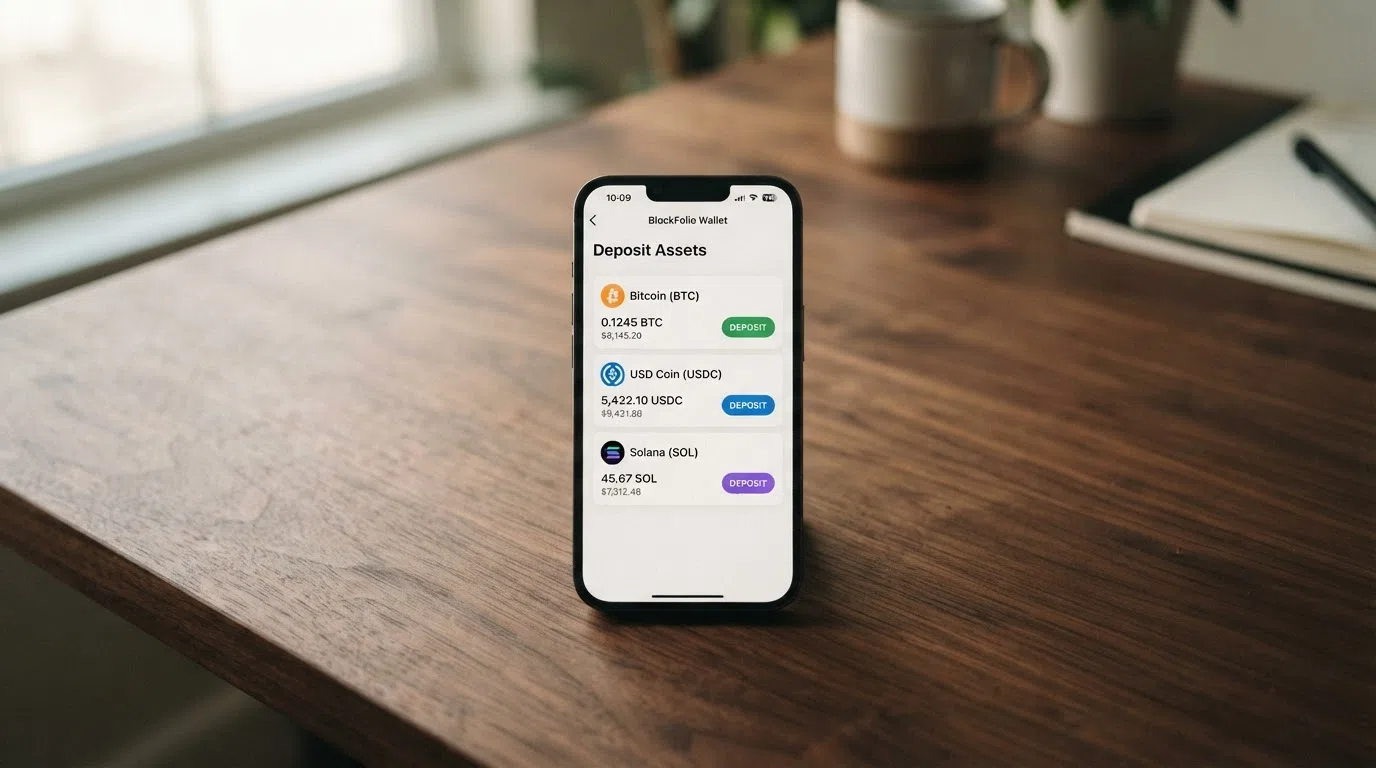
The Curacao niche grew up around crypto. The licence that allowed digital-asset cashier rails without an in-depth UKGC fit-and-proper test became the default home for the bitcoin casino, the altcoin casino, and the stablecoin casino. The CGA accommodated that growth. In June of this year, the CGA began a crypto compliance framework that ends the anonymity the niche once sold. The framework requires wallet ownership controls, chain analysis tools, VASP due diligence, transaction monitoring and FATF Travel Rule compliance, with the deadline for risk assessments in December of this year. The “anonymous” Curacao casino is a feature of the past, not a guarantee of the present.
Why Curacao became the crypto casino’s home licence
The brand identity of the modern Curacao casino is crypto. BitStarz takes BTC, ETH, LTC, DOGE, USDT, BCH and XRP; Wild.io adds TRX, ADA, SOL, TON and BNB; FortuneJack takes BTC, DOGE, LTC and USDT alongside cards. The licence did not create crypto. The licence accommodated it. The UKGC framework, with its strict source-of-funds checks and its restricted payment-processor list, did not. The Curacao framework let an operator set up a Bitcoin cashier and onboard players without the same depth of background check. The CGA is now narrowing that gap, but the niche’s identity was set in the earlier era.
Wallet controls, chain checks and the FATF Travel Rule in 2026
The CGA’s June-of-this-year framework is the regulator’s answer to the FATF’s grey-listing concerns and to the routine use of Curacao-licensed casinos for laundering. The new rules: wallet ownership controls (the player must demonstrate control of the depositing wallet); chain analysis tools (operators must screen transactions against sanctioned-address databases); VASP due diligence (operators must treat themselves as virtual-asset service providers under FATF rules); transaction monitoring (ongoing, not just at deposit); and the FATF Travel Rule, which requires originator and beneficiary information on transfers above a threshold. Risk assessments are due by December of this year. A casino that has not implemented these by then will lose its licence. The operator-level impact on a UK player is more verification at deposit, more friction at withdrawal, and a smaller gap between offshore and onshore identity checks than the marketing once promised.
Game depth and the studios behind it: what the lobbies actually hold
The lobbies are deep. Wild.io carries 9,000-plus games; BC.Game carries 8,000-plus casino titles plus sports. Pragmatic Play, Evolution, Hacksaw, BGaming, Push Gaming and Play’n GO appear across most of the featured operators, and the live-dealer side runs on Evolution, Ezugi, Authentic, BetGames TV and NetEnt Live. The depth is real. The per-title RTP — the percentage of wagered money a slot returns to players over the long run — is not published in any of the reviewed operator records. This page therefore makes no RTP claim, ranks no slot by return, and names no figure that research did not pin to a specific title.
The software houses powering these lobbies
The shared provider list across the featured set is a tight cluster: Pragmatic Play, Evolution and Hacksaw recur at BitStarz, Stake, Wild.io, MyStake and Velobet. FortuneJack’s live-dealer suite is wider, including Ezugi, Authentic, BetGames TV and NetEnt Live. Push Gaming, BGaming, Play’n GO and NetEnt appear in the slots stack at the larger brands. A reader who cares about a specific studio’s catalogue will find most of them at most of these operators. The licensed UK market carries the same studios; the difference is the regulatory environment around them.
Slots and live tables: depth without a published RTP
No featured operator in the reviewed record publishes a per-title RTP. That is the gap, and the page makes no attempt to close it. A reader who wants an RTP number must check the slot provider’s own page for the title in question — Pragmatic Play publishes a per-game RTP at the help screen of most of its slots — or ask the operator’s support team. The depth here is measured in game count (9,000+ at Wild.io, 8,000+ at BC.Game) and provider breadth, not in return percentage. The audit flags any RTP figure that appears without a named title, and the page ships no such figure.
No UKGC safety net: the help that still applies to UK players
The protection gap has a human cost. Problem-gambling prevalence in England — measured by the NHS Adult Psychiatric Morbidity Survey — is 0.4% of adults at the PGSI 8+ threshold, and 1.6% at moderate risk (PGSI 3+). NHS gambling clinic referrals rose from 2,284 in 2023/24 to 4,355 in 2024/25, a 91% rise in a single year. The National Gambling Helpline, run by GamCare, made 996 referrals to treatment and peer-based support in January of this year, up 48% on the previous January. The help lines are reaching more people because more people need them, and the self-exclusion gap at offshore sites is part of why the UK help infrastructure is now operating at scale.
GamStop’s reach ends at the licensed market
GamStop is mandatory for every UKGC online licensee since 31 March 2020. A self-excluded player who signs up is locked out of every GB-licensed casino for six months, one year, five years, or five years auto-renewed. A Curacao-licensed casino is not covered. A self-exclusion set on the licensed market does not extend to offshore sites. A self-exclusion set on a Curacao site is enforced only by that site’s own voluntary tools, with no UK backstop. The gap is the reason a player who has self-excluded and is looking for a route back in will find one offshore; it is also the reason a player who wants to stay out will struggle to stay out if the offshore market is part of the picture.
Prevalence that keeps rising: the numbers behind the warning
The 0.4% problem-gambling figure and the 1.6% moderate-risk figure come from the NHS Adult Psychiatric Morbidity Survey 2023–24. The 91% rise in NHS gambling clinic referrals is the operational consequence: more people presenting, more clinics needed, more pressure on a finite treatment system. The 48% rise in National Gambling Helpline referrals in January year-on-year is the early-warning signal that the trend has not yet turned. An estimated 1.6 million adults in England may benefit from some form of treatment or support for harmful gambling, by the GOV.UK prevalence estimate. The gap a UK player opens by going offshore is the same gap that compounds the help system’s workload.
Where to reach support, free and around the clock
The National Gambling Helpline is 0808 8020 133, run by GamCare, free, confidential, 24 hours a day, every day of the year. GamCare runs counselling and a live chat. GambleAware funds research, prevention and treatment. Fifteen NHS gambling harm clinics operate in England as of December 2024; NHS England took over commissioning responsibility on 1 April of this year, funded by the statutory levy. Gamblers Anonymous runs peer support groups. GAMSTOP itself — for the licensed market — is the self-exclusion register, with six-month, one-year, five-year, and five-year auto-renewal periods that cannot be cancelled early. None of these resources requires a UKGC licence to use. They are reachable from any device, in any country, by anyone who needs them.
How these operators were assessed: sources, checks and ranking criteria
The ranking is qualitative, not weighted. The ten operators were checked against the CGA register where a licence number was published, against the UKGC public register for confirmation that no GB licence exists, against operator terms pages for the bonus and wagering figures, and against Casino Guru’s Safety Index where a score was available. The UKGC guidance and the operator’s own terms and conditions are the primary sources. The ranking reflects what the record shows, not a numerical score. No weighting percentages are claimed, because the criteria are not commensurable: a clean licence register check is not the same kind of data as a 12-to-24-hour withdrawal report, and forcing them onto one scale would mislead the reader.
The plan’s editorial ordering placed BitStarz first by familiarity and Stake second by brand recognition, then ordered the rest by the depth of the record on each. Operators with thin public records — Rabona, Tenobet, Cosmobet — sit near the bottom not because the operators are worse, but because the record on each is thinner and the reader has fewer data points to weigh.
The decision this page leaves you with
A Curacao licence is what it is: a smaller regulator with looser rules, a longer-running history in crypto, and no authority over a UK customer. The UKGC licence is what it is: a stricter regime, a thicker protection catalogue, and the only licence the Commission will enforce against an operator serving British players. The choice is not between two brands; it is between two regulatory regimes, and the difference shows up in every row of the protection table.
The cost reality is in the wagering. A 40× bonus at a $5 maximum bet is 16,000 spins and roughly 22 hours of play to clear, before the bonus becomes withdrawable cash. The UKGC cap of 10× is the line that separates the two markets on this point. The reader who wants the larger match is paying for it in turnover, not in headline percentage.
The protection gap is the row-by-row forfeit: no GamStop, no ADR, no fund segregation, no UK complaints route, no statutory vulnerability check, no deposit-time identity verification. Every row is a safeguard that fires at a different moment. None of them fires reliably at a Curacao site.
A UK reader’s sensible next step is the same regardless of which operator on this list looks appealing: check the CGA register for the licence number, read the operator’s terms page for the wagering multiple and the maximum-bet cap, decide whether the bonus is worth the turnover, and know that none of this changes the fact that the licence the UK recognises is not the licence the site holds. If self-exclusion is part of the picture, GamStop covers the licensed market; the offshore market is the gap. If the budget is tight, the licensed market’s £150 vulnerability check is the backstop that an offshore site is not obliged to match. If the bonus is the headline, the wagering is the actual price, and the page has carried the worked example from operator terms pages rather than invented it.
The page does not recommend an operator. The page describes ten.
Frequently asked questions
Is it legal for UK players to gamble at Curacao-licensed casinos?
UK players face no traced criminal penalty for gambling on a Curacao-licensed site. The site itself is in breach of the UK Gambling Commission’s point-of-consumption rule, which requires a UKGC licence to serve customers in Great Britain. The risk the player carries is the loss of UKGC protections — no GamStop, no ADR, no fund segregation — not prosecution.
What does a Curacao casino licence actually mean and how do I verify it?
A Curacao licence means the operator has been cleared by the Curaçao Gaming Authority under the LOK framework. It does not authorise gambling in Great Britain. To verify, take the licence number from the operator’s footer and search the CGA’s licensed-operator register. Numbers in the form OGL/2024/XXXX/YYYY are direct LOK licences; older 8048/JAZ references are legacy master-licence references, with sub-licences expired since January 2025.
Are Curacao casinos covered by GamStop self-exclusion?
No. GamStop participation is mandatory for UKGC online licensees since 31 March 2020 and does not extend to offshore sites. A self-exclusion set on the licensed market does not cover Curacao-licensed casinos, and self-exclusion tools on a Curacao site are voluntary, not UK-enforceable.
What protections do I lose by playing at a Curacao casino instead of a UKGC-licensed one?
You forfeit GamStop self-exclusion, IBAS or any UKGC-approved ADR, statutory fund segregation, the UK consumer-redress route, the deposit-time identity verification, and the £150 financial vulnerability check. Each row is a safeguard the UKGC mandate enforces; none of them binds an offshore operator.
Can I deposit with GBP or crypto at Curacao casinos?
Crypto is the default rail at most featured operators — BTC, ETH, USDT lead the cashier at BitStarz, Wild.io, FortuneJack and BC.Game. GBP via card appears at FortuneJack (Visa, Mastercard, Google Pay, Apple Pay) and is not confirmed in the reviewed record for the rest of the featured set. Skrill, Neteller, Paysafecard and Trustly are not confirmed at any featured operator in the sources reviewed.
What are the wagering requirements on Curacao casino bonuses compared to UK casinos?
UKGC licensees are capped at 10× the bonus from 19 December 2025. Curacao bonuses routinely carry 30× (MyStake) or 40× (BitStarz, Stake, Wild.io). A 40× bonus at a $5 maximum bet means 16,000 slot spins and roughly 22 hours of play to clear the requirement — the price the headline percentage does not show.
Licence – No Minimum Deposit Casinos UK
Content created by the «No Minimum Deposit Casinos UK» team