
Casinos That Accept Ukash UK: Where to Play with Paysafecard and Neosurf in 2026
 Available in GB
Ukash stopped being a payment method at UK online casinos in October 2015. The brand was acquired, merged into paysafecard, and the 19-digit vouchers that once let players walk into a shop, hand over cash and deposit without a bank account were retired at retail outlets across the country. Any site still advertising “Ukash accepted” in 2026 is, at best, recycling a decade-old page — and at worst, an unlicensed operation that has nothing to do with the Ukash brand that existed.
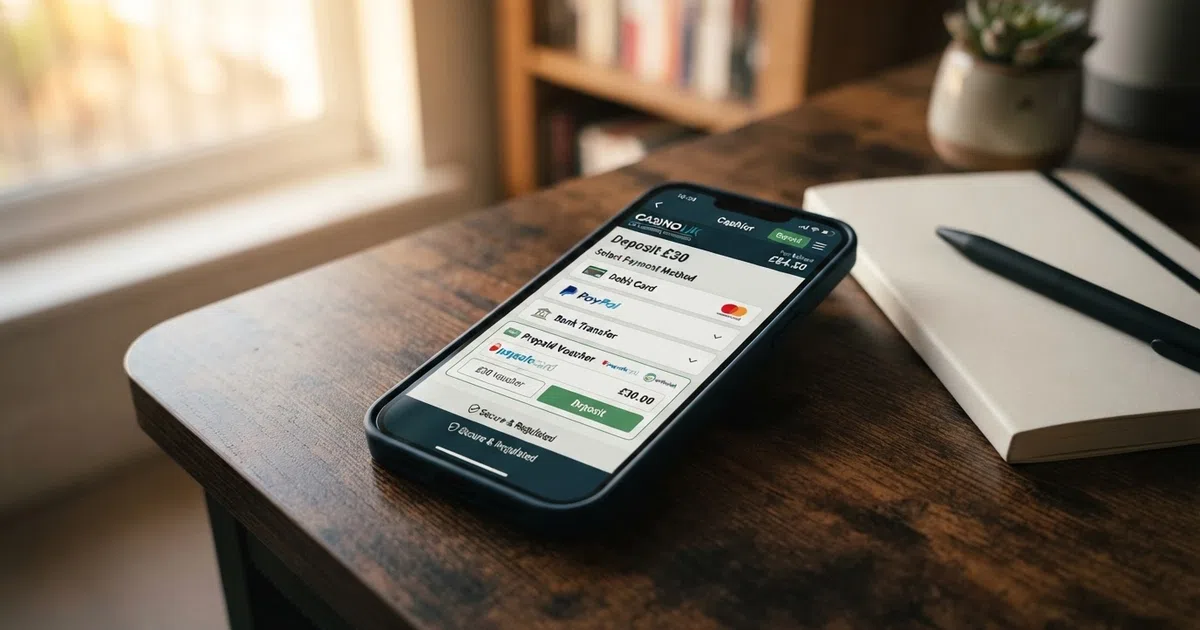
This page is the redirect the dead keyword deserves. The honest answer to “casinos that accept Ukash UK” is “none, and not for eleven years.” The useful answer is which UKGC-licensed casinos now accept the prepaid voucher methods that filled the gap — Paysafecard and Neosurf — and what the trade-offs look like against debit card play. There are two operators in the featured set that treat prepaid depositors as full bonus-eligible customers; the other eight do not. Knowing the difference is what separates a useful comparison from a marketing page.
Data current as of 25 August 2026 and verified against the UK Gambling Commission’s public register of licensed businesses.
What Ukash Was — and Why It Disappeared from UK Online Casinos
What Ukash Was as a Payment Method
Ukash was a UK-based electronic money system built around a single, deceptively simple idea: turn cash into a deposit code without ever touching a bank account. A player walked into a PayPoint retailer, paid cash over the counter, and received a 19-digit unique code in exchange. That code, entered at an online casino cashier, credited the player’s account instantly. No card, no bank login, no e-wallet registration in the basic flow.
For a window of roughly a decade, this was the cleanest cash-to-screen pipeline in British online gambling. The voucher carried a fixed cash value, the credit was instant, and the only identity footprint was the casino account itself. That made Ukash especially attractive to players who did not want a debit card transaction appearing on a bank statement, did not trust e-wallets with their card details, or simply did not have a card. The system was underpinned by an FCA-style electronic money licence issued to its operating company, and the deposit-only nature of the flow meant Ukash never held or moved player funds in the way a bank or e-wallet would.
It is also worth saying what Ukash was not. It was never an e-wallet in the Skrill or PayPal sense. It was never a credit product. It was a prepaid voucher, sold at retail, redeemable online — closer in spirit to a mobile phone top-up than to any of the payment categories that came after it.
How the Ukash-to-Casino Deposit Flow Worked
The mechanics were straightforward enough that Betfair’s announcement in May 2012 that it would accept Ukash barely needed a tutorial. A player bought a Ukash voucher for a chosen cash amount at any participating retailer — newsagents, convenience stores, petrol stations on the PayPoint network. The till receipt printed a 19-digit code. The player opened the casino cashier, selected Ukash, typed the code in, and the balance appeared. The whole thing, from the shop queue to a funded casino account, took longer in the queue than at the screen.
There was one structural limitation baked into the model: Ukash was deposit-only. The voucher carried value in one direction. A withdrawal had to be paid through a different channel — typically a bank transfer or, at the time, an e-wallet — because the voucher code had no facility to receive funds. This is the single feature of the original Ukash design that has carried forward, unchanged, into every prepaid voucher that has replaced it.
The Ukash-to-Paysafecard Transition: What Happened and When
The end of Ukash came in three steps, each of them publicly dated, and most competitor pages collapse them into a single line. The acquisition came first: the Skrill Group, which already owned paysafecard, acquired Ukash in April 2014. The integration was sequenced, not instant. From 31 August 2015, paysafecard vouchers replaced Ukash vouchers at retailers — the same tills, the same PayPoint network, but a different product on the shelf. Existing Ukash vouchers remained redeemable at online shops until 31 October 2015, after which the redemption system was terminated globally by Smart Voucher Limited, the trading entity that had run the Ukash brand. Udo Müller, CEO of paysafecard, framed the migration as a “seamless switch” for existing Ukash customers — same retail footprint, same cash-to-code mechanic, different name on the receipt.
That framing was largely accurate at the point of sale. The friction sat elsewhere. The online casino cashier lists changed — operators updated payment method names. A handful of brands listed Ukash for months after the redemption window closed, which is the source of the residual “Ukash casinos” content that still ranks. And for any player holding unredeemed Ukash vouchers past 31 October 2015, the value simply expired.
Why Ukash Became the Go-To Payment Method for UK Casino Players
Three features did the work. First, cash funding: no bank account, no debit card, no credit check. A player with £20 in their pocket could be playing slots ten minutes later. Second, perceived anonymity: before the UKGC’s May 2019 rule change brought identity verification forward to the moment of first deposit, the voucher code carried no name on it. The casino account had a name, but the funding instrument did not. Third, the friction of reloading: buying another voucher meant another trip to a shop, which imposed a natural cooling-off period that a debit card deposit does not.
These three features — cash, anonymity, friction — explain why Ukash was disproportionately popular in the UK compared to markets where bank cards are more universal. They also explain why the prepaid voucher category survived Ukash’s exit. The product idea was not killed by the acquisition; the brand was retired, and a successor with the same mechanics took its place on the same retail shelves.
Can You Still Use Ukash at UK Online Casinos in 2026? No — Here Is What Replaced It
The headline is the whole answer: Ukash is gone, has been gone for eleven years, and will not return. The 19-digit code flow, the cash-to-screen pipeline, the PayPoint retail network — all of it now serves paysafecard, with Neosurf as a second prepaid option that a fraction of UK guides mention. The question for a player in 2026 is not “where do I use Ukash” but “which of these two voucher systems fits how I want to deposit, and at which UKGC-licensed casinos.”
The trade-off is sharper than the marketing language suggests. A prepaid voucher buys you a hard spending cap, a real boundary between your bank account and the casino, and a deposit that does not require handing over card details. It costs you the welcome bonus at the majority of UK-licensed casinos, the ability to withdraw winnings back onto the same instrument, and the speed of a debit card reload. The rest of this section is what those trade-offs look like in numbers, and where each one is non-negotiable.
Paysafecard: The Direct Ukash Replacement at UK Online Casinos
Paysafecard is the Skrill Group product that absorbed the Ukash retail footprint in 2015, and it remains the dominant prepaid voucher in UK online gambling a decade later. The mechanic is the same one Ukash popularised: a 16-digit PIN code, sold at PayPoint and other retail networks across the country, redeemable at an online cashier. The denominations run from £10 to £100, and the key flexibility Ukash never offered is PIN combining — a player can stack up to 10 PINs into a single casino deposit, which lifts the effective ceiling on a single transaction well above the largest voucher.
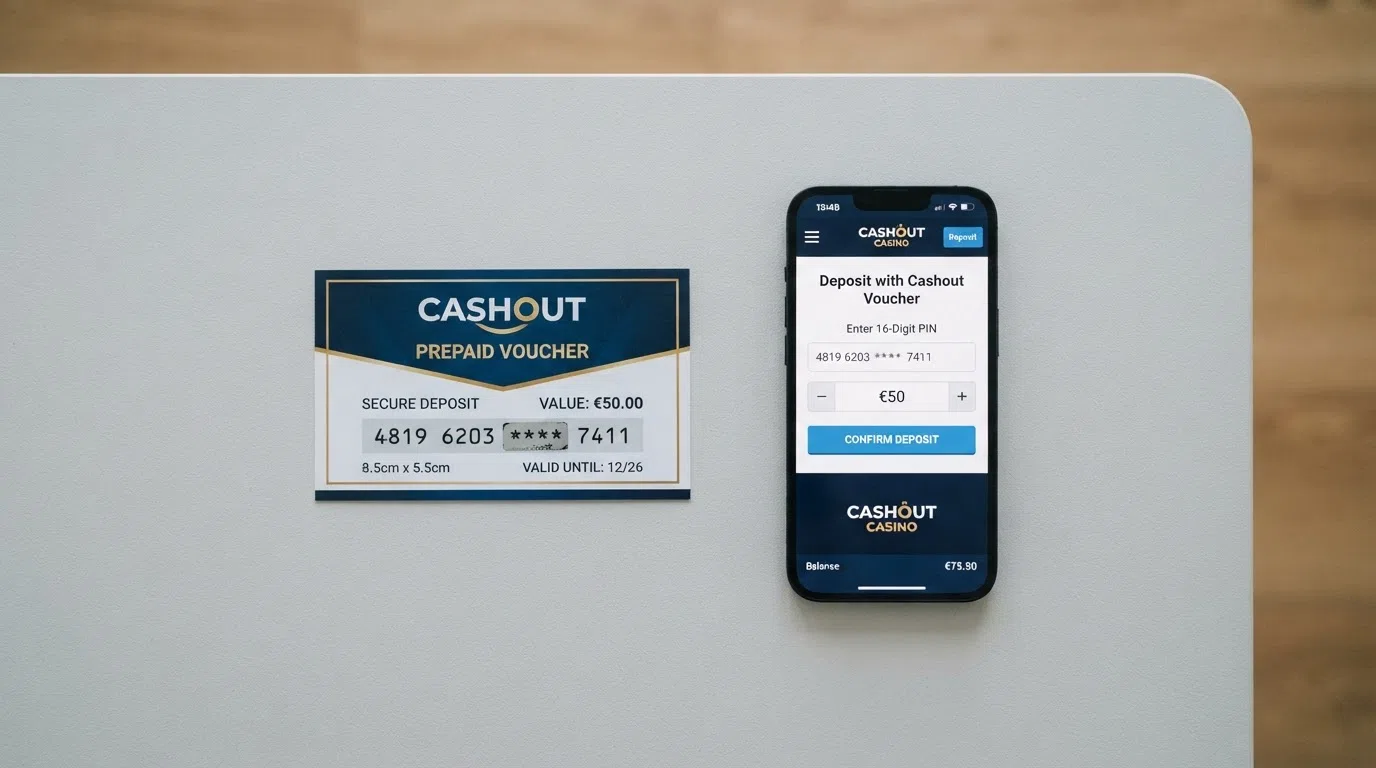
For a player who walked away from Ukash in 2015, paysafecard in 2026 is the same product with a different name. The retail network is denser, the denominations wider, and the combining rule is the one Ukash lacked. What has not changed is the deposit-only nature of the instrument: a paysafecard can fund a casino account, but it cannot receive a withdrawal. That limitation is structural, and no UKGC-licensed operator gets around it.
Neosurf: The Prepaid Alternative Most UK Casino Guides Miss
Neosurf is the second prepaid voucher system with any meaningful UK retail presence, and it is the one most “best prepaid casino” pages skip. It works on the same principle as paysafecard: cash at a retailer, PIN code at the cashier, instant credit. The denominations run from £10 to £100, but the single most important difference for a player is the combining rule. Where paysafecard allows up to 10 PINs in one transaction, Neosurf takes one PIN per transaction. That single fact resets the calculus for anyone planning a larger deposit.
Coverage at UK-licensed online casinos is narrower than paysafecard’s. The operators that list Neosurf in their cashier tend to be brands that have built broader payments portfolios, and the list is short enough that it is worth checking the cashier before assuming a site accepts it. For players who already hold a Neosurf voucher — perhaps from a different use case — the limitation is one of availability rather than mechanics.
The Deposit-Only Limitation: What Happens When You Want to Cash Out
Both paysafecard and Neosurf are deposit-only instruments. This is not a quirk of any one operator; it is how the underlying product works. A prepaid voucher carries value in one direction, and neither provider has built a withdrawal rail that returns funds to a voucher PIN. The consequence at the casino cashier is simple: a deposit via paysafecard or Neosurf must be withdrawn through a different method, typically a bank transfer or a Visa/Mastercard debit card.
For a UK-licensed casino this is also a regulatory matter, not just a product one. The UKGC’s identity verification rules, in force since May 2019, require that the player be verified before the first deposit — and the verification applies to the player, not to the funding instrument. The withdrawal side of the flow is where the verified identity meets the receiving payment method, and the operator needs a destination that can be tied back to that verified name. A prepaid voucher PIN cannot, by design, be a withdrawal destination.
The practical impact is one extra step. A player depositing with a voucher and withdrawing to a bank account is using two different payment instruments across one session, which is normal at UK-licensed sites and not a problem in itself. The friction is the small delay of entering bank details at the point of first withdrawal, not the operational difficulty of moving money.
Prepaid Voucher Casinos vs. Debit Card Casinos: What You Gain and Lose
The trade-off is real on both sides. A prepaid voucher gives a player a hard spending cap — the voucher denomination is the ceiling on a single deposit session — and a clean separation between the bank account and the casino. A debit card gives a player the welcome bonus at the majority of UK-licensed casinos, a single instrument for both deposit and withdrawal, and the speed of a reload that takes seconds.
The bonus exclusion is the most concrete cost. At William Hill, Paysafecard deposits are explicitly excluded from the welcome offer — a debit card is required. At Coral, the same exclusion applies, with Visa/Mastercard debit, Apple Pay or Google Pay named as qualifying methods. At Ladbrokes, Betfair, and bet365 (without full ID verification), the pattern repeats. The two operators in the featured set that treat prepaid depositors as full bonus-eligible are 888casino and Mr Vegas — and the fact that there are only two is itself the headline.
The spending-cap benefit is the most concrete gain. A player who buys a £25 paysafecard and loses it at the casino cannot reload without a second trip to a shop. The friction is small, but it is real, and it is the reason the UKGC’s safer-gambling framework has no objection to the method. The credit card ban, in force since April 2020, explicitly exempted prepaid vouchers on the grounds that they are cash-funded at point of sale with no credit facility — the same logic that keeps them on the right side of the safer-gambling rules.
The anonymity that Ukash once offered is gone. KYC before first deposit has been mandatory since May 2019, and the voucher code carries no name, but the casino account that redeems it does. A paysafecard deposit at a UK-licensed casino is not anonymous in any meaningful sense; it is private in the narrow sense that the bank statement does not show it.
Paysafecard and Neosurf Deposit Limits, Speed, and Fees Compared
| Feature | Paysafecard | Neosurf |
|---|---|---|
| Standard voucher max per transaction | £200 | £100 |
| Verified account ceiling | £1,800 (myPaysafecard) | — |
| Voucher denominations | £10, £25, £50, £75, £100 | £10, £15, £20, £50, £100 |
| PIN combining per transaction | Up to 10 PINs | 1 PIN only |
| Minimum deposit at featured casinos | £5–£10 | — |
| Processing speed | Instant | Instant |
| Operator fees | Generally none | Generally none |
| Withdrawal support | No | No |
The numbers that matter are the ceiling and the combining rule. A player who wants to deposit £500 in a single session needs either a myPaysafecard account (raising the ceiling to £1,800) or five paysafecard PINs stacked into one transaction — both achievable. A player with a Neosurf voucher of any denomination cannot exceed £100 in a single deposit, because the system will not accept a second PIN in the same transaction. That single fact is the reason paysafecard dominates the UK prepaid casino market and Neosurf plays a secondary role.
Ukash Casino Bonus Alternatives: What Prepaid Depositors Can Actually Claim in 2026
The headline number is the wagering cap. From 19 January 2026, wagering requirements at UK-licensed casinos are capped at 10× — a hard ceiling, not a guideline. This is a meaningful improvement on the 30× to 60× multiples that defined UK bonuses before the rule change, and it brings the headline bonus terms at every UK-licensed casino into a tighter band. The catch is that the wagering cap applies uniformly, which means the operators that previously offered low wagering have less room to differentiate, and the operators that previously offered punitive terms can no longer use them.
For a prepaid voucher depositor, the relevant question is not the wagering multiple but the bonus eligibility. At 888casino, Paysafecard deposits qualify for the 100% up to £100 welcome offer in full — 10× wagering on selected slots, 90-day validity, winnings capped at £100, £10 minimum deposit. At Mr Vegas, the same holds: 100% up to £50 with 11 wager-free spins on Pink Elephants 2, 10× wagering on the deposit amount, 60-day validity, £10 minimum, and Paysafecard accepted and bonus-eligible. These are the only two operators in the featured set that give a Paysafecard depositor the full welcome package.
At William Hill, the welcome offer is 200 no-wager free spins on Big Bass Splash at 10p per spin with a £30 maximum redeemable — but Paysafecard deposits are excluded, and a debit card is required. At Coral, the 100 free spins offer requires Visa/Mastercard debit, Apple Pay or Google Pay. At Ladbrokes, the 100 no-wagering free spins are the same story. At bet365, the up to 500 free spins across 10 days are accessible via Paysafecard only after full ID verification — a conditional pass, not an open door.
The Sky Vegas and Virgin Games offers sit outside the Paysafecard flow entirely. Sky Vegas gives 50 genuinely no-deposit free spins on sign-up and 200 more after a £10 wager, but Paysafecard is not an accepted deposit method. Virgin Games offers 30 free spins or £50 in bingo tickets with 0× wagering, and again, Paysafecard does not qualify. Foxy Games rounds out the exclusion list with a welcome offer that does not accept any prepaid card, PayPal, Skrill, Neteller or Envoy. Of the ten featured operators, Paysafecard deposits unlock the welcome offer at two — and the other eight require a debit card, Apple Pay, Google Pay, or in bet365’s case, a completed identity check before the deposit method is even considered.
Using Prepaid Vouchers on Mobile, for Slots, and for Live Casino Games
A prepaid voucher deposit is a deposit. Once the funds land in a casino account, the game-type restrictions that apply to bonuses do not apply to the deposit method itself. A Paysafecard-funded balance plays slots, live dealer games, table games, and any other product the operator offers, under the same terms as a debit card deposit. The mobile experience is identical: the cashier on a UK-licensed casino app accepts the same payment methods as the desktop version, and the 16-digit PIN entry takes the same time on a phone as on a laptop.
What does change between game types is the stake cap, not the deposit method. Online slots carry a statutory maximum stake per game cycle — £5 for players aged 25 and over, £2 for players aged 18 to 24 — imposed by SI 2025/215. Live dealer games and table games are not subject to the same per-spin ceiling, because the stake cap is a slots-specific measure. A Paysafecard-funded balance can be deployed across any product the operator offers, and the regulatory cap applies at the game level, not the payment-method level.
The practical implication is that a voucher player who wants to play live blackjack or roulette is not constrained by the slot stake cap, and a voucher player who wants to play slots cannot exceed the age-banded ceiling regardless of how much the voucher holds. The deposit method is neutral; the rules attach to the game.
Paysafecard myPaysafe Account: Higher Limits from the Same Voucher System
The free myPaysafecard account is the upgrade path for players who hit the standard voucher ceiling. A standard Paysafecard deposit at a UK online casino is capped at £200 per single transaction — a limit set by the issuer, not by the casino. Registering a free myPaysafecard account raises the per-transaction ceiling to £250, and completing the account verification lifts the ceiling to £1,800. The vouchers themselves are unchanged: a player still buys a 16-digit PIN at a PayPoint retailer and enters it at the cashier, and the difference is that the registered account can aggregate and apply higher limits.
The trade-off is the loss of the spending-cap benefit. A £200 standard voucher is a hard ceiling on a single deposit session; a £1,800 verified-account ceiling is not. The myPaysafecard account is a better tool for a higher-volume player who wants the convenience of higher limits, and a worse tool for a player who chose a prepaid voucher specifically for the friction of reloading. The two use cases are not the same person, and the choice between a standard voucher flow and a myPaysafecard account is a choice between two different relationships with the deposit limit.
The account registration is not a credit check. myPaysafecard is an electronic money account under the same regulatory umbrella as the underlying voucher, and verification is identity verification in the same sense as a casino KYC check — name, address, date of birth. There is no credit assessment, no income proof, and no link to a bank current account required.
Where to Buy Paysafecard and Neosurf Vouchers in the UK
Paysafecard vouchers are sold at PayPoint retailers across the UK — newsagents, convenience stores, petrol stations, and the larger supermarket chains that host PayPoint tills. The fixed denominations (£10, £25, £50, £75, £100) are on the shelf or behind the counter, and the purchase is a cash transaction like any other retail buy. The PIN prints on the receipt. Neosurf vouchers are sold through a smaller retail footprint in the UK and are more commonly purchased online through the Neosurf website, though physical retail availability does exist.
The fixed-denomination constraint shapes how a player plans a deposit. A £25 voucher is a £25 deposit — there is no partial redemption, no change given, no way to spend £18 of a £25 voucher and keep £7 in reserve. The decision is binary: deposit the full voucher, or do not deposit at all. For a player who wants to deposit £40, the only paysafecard option is a £25 plus a £10 plus a £5 minimum — except that £5 is not a paysafecard denomination, so the realistic options narrow to £25 plus £10, or £50 minus £10 of unused value. The denomination ladder is the friction that gives the method its spending-cap property, and it is the same friction a player encounters when they try to deposit an awkward amount.
Before buying a voucher for casino use, the practical checks are the denomination ladder against the casino’s minimum deposit (typically £5 or £10) and the casino cashier’s accepted voucher list. Most UKGC-licensed casinos that accept paysafecard list the method at the cashier, and the absence of a paysafecard option is the quickest way to know a site does not take it.
Where to Play with Paysafecard and Neosurf: UK Casino Ranking 2026
| Casino | Paysafecard Accepted | Min Deposit (Paysafecard) | Welcome Offer | Prepaid Bonus Eligible |
|---|---|---|---|---|
| 888casino | Yes | £10 | 100% up to £100 | Yes |
| Mr Vegas | Yes | £10 | 100% up to £50 + 11 wager-free spins | Yes |
| William Hill | Yes | £10 | 200 no-wager free spins | No |
| Betfred | Not confirmed | — | Up to 200 free spins | N/A |
| Coral | Yes | £5 | 100 free spins | No |
| Ladbrokes | Yes | £5 | 100 no-wagering free spins | No |
| bet365 | Yes | £5 | Up to 500 free spins over 10 days | Conditional |
| Betfair | Yes | — | 100 free spins | No |
| Sky Vegas | No | — | 50 no-deposit + 200 deposit spins | N/A |
| Virgin Games | No | — | 30 spins or £50 bingo | N/A |
The ranking above is not a leaderboard. It is the full set of ten UKGC-licensed casinos considered for this page, with the four columns that determine the choice for a Paysafecard depositor. The top of the list is the operators that treat a Paysafecard deposit as a first-class citizen — bonus-eligible, with the same welcome package a debit card player would receive. The middle is the operators that accept Paysafecard but exclude it from the welcome offer. The bottom is the operators that do not accept Paysafecard at all. A player who only wants to deposit with a prepaid voucher has a real choice at the top of this table, a constrained choice in the middle, and no choice at the bottom.
888casino
888casino is the strongest prepaid-friendly welcome bonus among UK-licensed casinos. The 100% deposit match up to £100 carries 10× wagering on selected slots within 90 days, winnings are capped at £100, and the minimum deposit is £10. The Paysafecard flow is fully bonus-eligible — a Paysafecard deposit unlocks the same welcome package a debit card deposit would, with no conditional verification step, no debit card requirement, and no fee on the deposit itself.
The wagering cap that the UKGC imposed in January 2026 sits comfortably above the 10× already on offer, and the 90-day validity window is among the more generous in the market. The £100 winnings cap is the constraint — a player who deposits the full £100 matched amount and clears the wagering requirements at 10× (£1,000 in qualifying slots) cannot withdraw more than £100 from the bonus, regardless of the size of the balance. For a low-to-mid-volume slot player, this is workable; for a high-volume player looking to extract more from a matched deposit, the cap is the limiting factor.
The verdict: 888casino is the right starting point for a UK player who wants to deposit with Paysafecard and have the welcome bonus attached to that deposit. The £100 ceiling on bonus winnings keeps the offer honest about what it pays out, and the 10× wagering is the new market baseline.
Mr Vegas
Mr Vegas is the second of the two featured operators that welcome Paysafecard depositors with a full bonus package. The 100% deposit match up to £50 is smaller than 888casino’s headline number, but the package is more interesting on closer reading. Eleven wager-free spins on Pink Elephants 2 (Thunderkick, 96.13% RTP) sit alongside the matched deposit, and the 10× wagering requirement applies to the deposit amount, not the bonus. The 60-day validity is tighter than 888casino’s 90 days, and the minimum deposit is £10.
The wager-free spins are the differentiator. The 11 Pink Elephants 2 spins pay out in cash, not in bonus funds, which means any winnings from those spins are withdrawable without further wagering. The deposit match carries 10× wagering in the standard way, but the spin component has no wagering at all. For a player who values the spin mechanic, the effective value of the package is higher than the headline 100% up to £50 figure suggests.
The verdict: Mr Vegas is the right pick for a Paysafecard depositor who wants the spin component to be genuinely free of wagering. The matched deposit is smaller than 888casino’s, but the wager-free spins on a 96.13% RTP slot compensate. Both operators occupy the bonus-eligible end of the featured set; the choice between them is a matter of whether the player values a higher matched ceiling or a wager-free spin package.
William Hill Casino
William Hill is a top-tier UK brand with a strong free-spin welcome offer, but the offer is not accessible to a Paysafecard depositor without a debit card. The headline is Bet £10 Get 200 No Wager Free Spins on Big Bass Splash at 96.71% RTP, with each spin at 10p and a £30 maximum redeemable. The free spins expire 72 hours from issue, which is the tightest expiry in the featured set. Paysafecard is accepted for deposits — £10 minimum, £200 maximum — but the welcome bonus is explicitly excluded for Paysafecard depositors, and a debit card is required to qualify.
The mismatch between payment method and bonus eligibility is the page’s recurring pattern, and William Hill is the clearest example. The brand is a household name with a high-quality welcome offer, and the casino accepts Paysafecard without issue for the deposit itself. The friction is at the bonus-claim step, where a debit card deposit unlocks the 200 free spins and a Paysafecard deposit does not.
The verdict: William Hill is the right pick for a player who already plans to deposit with a debit card. The 200 no-wager free spins on a 96.71% RTP slot are a strong offer, and the £30 redeemable cap is honest about what the spins pay out. For a player who only wants to use Paysafecard, the bonus is not the reason to choose William Hill.
Betfred Casino
Betfred is a long-established UK bookmaker with a casino product, and the welcome offer — Stake £10 Get Up to 200 Free Spins — is in the same ballpark as the other featured operators. The uncertainty on this page is the payment method. Betfred’s deposit guides list debit card, Apple Pay, and Open Banking as confirmed methods for casino deposits. Paysafecard is not confirmed as an accepted method for the casino product, which means a player who specifically wants to deposit with a voucher cannot rely on Betfred’s cashier accepting it.
The honest read is that Betfred’s casino product is well-suited to a debit card or Apple Pay depositor, and the brand carries a UKGC licence with the safer-gambling protections that come with it. For a Paysafecard-specific reader, the absence of confirmed voucher acceptance is itself the answer: this is not the operator to choose for prepaid deposits.
The verdict: Betfred is the right pick for a player who is happy to deposit with a debit card or Apple Pay and values the bookmaker’s high-street heritage. If you specifically need a prepaid voucher deposit, it is worth checking the cashier first, but you will likely find more options elsewhere in the featured set.
Coral Casino
Coral sits at the low end of the Paysafecard minimum deposit range — £5 minimum, £2,000 maximum, instant processing, no fees — which makes it the most accessible Paysafecard entry point in the featured set. The welcome offer of 100 free spins is competitive, but the bonus is excluded for Paysafecard depositors, with Visa/Mastercard debit, Apple Pay, or Google Pay named as the qualifying methods. The casino is part of the Entain group alongside Ladbrokes, with full UKGC licensing.
The £5 minimum is a small but real advantage for a low-budget player. Most Paysafecard minimums in the featured set sit at £10, and Coral’s £5 floor is the lowest. The £2,000 maximum is the highest Paysafecard ceiling in the featured set, which matters for a higher-volume player who has registered a myPaysafecard account and wants to deploy a larger balance in a single deposit.
The verdict: Coral is the right pick for a Paysafecard depositor who values a low minimum deposit over bonus eligibility. The 100 free spins welcome offer is a debit-card-only deal; the Paysafecard flow is for the deposit, not the bonus. For a player who can split the deposit method from the bonus method, the £5 minimum is a meaningful entry point.
Ladbrokes Casino
Ladbrokes shares its operator (LC International Limited, part of the Entain group) with Coral, and the payment profile is similar — £5 Paysafecard minimum, instant processing, no fees. The welcome offer is Play £10 Get 100 No Wagering Free Spins, which is a strong headline. The catch, again, is that Paysafecard deposits are excluded from the welcome bonus, and a debit card, Apple Pay, or Google Pay is required to qualify.
The no-wagering element on the free spins is what makes the offer competitive in the post-January 2026 market. With the UKGC’s 10× wagering cap in force, a no-wager offer stands out, and Ladbrokes’ 100 free spins pay out as withdrawable cash. The bonus is a debit-card deal; the Paysafecard flow funds the account but does not unlock the welcome.
The verdict: Ladbrokes is a strong pick for a debit card depositor who values no-wager free spins at a household-name brand. For a Paysafecard-only reader, the casino accepts the deposit but the welcome offer sits behind a different payment method. The £5 Paysafecard minimum is a useful entry point regardless of bonus eligibility.
bet365 Casino
bet365 is the largest UK-facing brand in the featured set by customer base, and the welcome offer — 10 Days of Free Spins, up to 500 spins across 10 days with 5, 10, 20, or 50 per selection — is the most generous in terms of headline spin count. The Paysafecard minimum deposit is £5, in line with Coral and Ladbrokes. The conditional pass is the part that matters: Paysafecard deposits are excluded from the welcome offer unless full ID verification is completed, which is a step beyond what other operators require for the same Paysafecard bonus exclusion.
The 30-day claim window and the 24-hour gap between daily selections are the structural features of the offer. A player who claims on day one has until day 30 to start, and once started, cannot return for the next day’s selection until 24 hours have passed. The pace is built into the design, and a player who wants all 500 spins needs to commit to a 10-day rhythm of returning to the site.
The verdict: bet365 is the right pick for a player who has completed full ID verification and wants the up to 500 free spins welcome offer. For a player who has not completed verification, the Paysafecard flow funds the account but the welcome offer stays locked behind a step that takes minutes to complete. The conditional exclusion is the difference between a closed door and a delayed one.
Betfair Casino
Betfair is the operator with the deepest Ukash history in the featured set — it was one of the first major UK brands to accept Ukash vouchers, from 2 May 2012. The 19-digit Ukash code flow that Betfair built its prepaid deposit infrastructure around is the same flow that paysafecard replaced in 2015, and Betfair’s current Paysafecard acceptance is a direct continuation of that history. The welcome offer is Deposit and Wager £10 Get 100 Free Spins, and the pattern repeats: Paysafecard is accepted, but the welcome bonus requires a debit card or Apple Pay. Transaction fees may apply on Paysafecard deposits, which is a small but real difference from the other featured operators where fees are generally not charged.
The Ukash history is context, not a current feature. The voucher system Betfair once accepted was retired in 2015, and the brand’s current prepaid flow runs on paysafecard. The fees caveat is the one operational difference from the other Paysafecard-accepting operators, and it is worth checking the cashier for the current fee structure before depositing.
The verdict: Betfair is the right pick for a player who values the brand’s Ukash heritage and is happy to deposit with a debit card or Apple Pay. For a Paysafecard-only reader, the deposit is accepted but the fees caveat and the bonus exclusion make it a less clean choice than 888casino or Mr Vegas. The Ukash history is interesting context, not a current product.
Sky Vegas
Sky Vegas is the only operator in the featured set that offers a genuinely deposit-free welcome component — 50 free spins on sign-up with no deposit required, plus 200 more free spins after depositing and wagering £10. The free spins expire 7 days from issue, which is a more relaxed expiry than William Hill’s 72 hours but tighter than 888casino’s 90-day bonus validity. The problem for a Paysafecard reader is structural: Paysafecard is not listed as an accepted payment method at Sky Vegas, and the accepted methods are debit card and Apple Pay only.
The 50 no-deposit spins are the headline, and they are genuinely free — no deposit, no wagering beyond the standard terms, and the spins land on selected qualifying games. The 200 deposit-triggered spins require a £10 wager on selected slots, which means a player who wants the full 250-spin package must fund the account through a method Sky Vegas accepts, and Paysafecard is not one of them.
The verdict: Sky Vegas is the right pick for a player who values the no-deposit free spins above all else and is happy to deposit with a debit card or Apple Pay. For a Paysafecard-only reader, the operator does not accept the deposit method, and the no-deposit spins are the only accessible part of the offer.
Virgin Games
Virgin Games closes the featured set with a player’s-choice welcome offer — 30 free spins or £50 in bingo tickets, with £10 deposit and £10 wager required. The 0× wagering on free spin winnings is the strongest feature: any winnings from the 30 spins are credited as withdrawable cash, with no further wagering required. The 30-day validity is reasonable, and there is no cap on free spin winnings per the source. The accepted deposit methods are Visa Debit, Mastercard Debit, and Apple Pay — Paysafecard is not listed.
The zero-wagering structure is the offer’s whole appeal. In a market where most welcome bonuses carry wagering requirements (and where the post-January 2026 UKGC cap is 10×, not 0×), a wager-free offer stands out, and Virgin Games’ 30 free spins with 0× wagering is one of the cleanest welcome packages on a UK-licensed site. The catch is the payment method: a player who wants the 30 free spins must deposit with a card or Apple Pay.
The verdict: Virgin Games is the right pick for a player who values zero-wagering free spin winnings and is happy to deposit with Visa Debit, Mastercard Debit, or Apple Pay. For a Paysafecard-only reader, the operator does not accept the deposit method, and the wager-free spins are not accessible through a voucher flow.
The UKGC Rules That Govern Prepaid Voucher Casino Payments
How the UKGC Governs Prepaid Voucher Casino Payments
The Gambling Commission is the single statutory regulator for online gambling in Great Britain, and every casino on this page operates under an active UKGC operating licence. The framework is built on three layers: the Gambling Act 2005 as the primary statute, the LCCP (Licence Conditions and Codes of Practice) as the day-to-day obligations, and the RTS (Remote Technical Standards) as the technical requirements for remote operators. The point-of-consumption reform brought in by the Gambling (Licensing and Advertising) Act 2014 means a GB licence is compulsory for any operator serving GB customers — a Malta, Curaçao, or Gibraltar licence is not a substitute.

For prepaid voucher deposits specifically, three rules do the work. The credit card ban, in force since 14 April 2020 under LCCP licence condition 6.1.2, explicitly exempts prepaid vouchers as they are cash-funded retail products with no credit facility. The mandatory KYC verification rule, in force since 7 May 2019, requires identity verification before the first deposit, which means a prepaid voucher deposit at a UK-licensed casino is verified to a named player, not to an anonymous code. The deposit-limit framework, with the financial limit prompt mandatory from 31 October 2025 and the gross-deposit-limit-only rule in force from 30 September 2026 under RTS 12, applies to the player account, not the payment instrument, but the prepaid voucher’s fixed-denomination structure complements the framework at the payment-method level.
The Credit Card Ban and Why Prepaid Vouchers Survived It
The LCCP 6.1.2 credit card ban, in force since 14 April 2020, is the single most consequential payment rule in the UK online gambling market. It prohibits all credit card payments for remote gambling — and the prohibition extends to credit-card-funded e-wallet deposits, which closed the loophole of loading a Skrill or PayPal account with a credit card and then depositing from the e-wallet to a casino. The ban was designed to prevent gambling on credit, on the principle that borrowing to fund gambling is a specific kind of harm that a cash-funded player cannot experience.
Prepaid vouchers survived the ban by design. The exemption in LCCP 6.1.2 explicitly covers prepaid vouchers on the grounds that they are cash-funded at the point of sale — a player who buys a £50 paysafecard with a credit card at a PayPoint till is buying a retail product with a credit card, not gambling on credit, and the voucher itself has no credit facility attached to it. The exemption is a deliberate carve-out, and it is the reason paysafecard and Neosurf remain on UK casino cashiers while credit cards and credit-funded e-wallets do not.
For a player who previously used a credit-funded e-wallet for casino deposits, the ban removed that route. A player who used to fund a Skrill account with a credit card and then deposit from Skrill to a casino now finds the Skrill route closed at the casino cashier, because the casino must verify that the underlying funding was not credit. A prepaid voucher is the cleanest non-debit-card alternative, and the LCCP 6.1.2 exemption is the rule that keeps it on the table.
KYC, AML, and Player Verification When Depositing with Vouchers
A prepaid voucher at a UK-licensed casino is not anonymous. The KYC (Know Your Customer) rule that took effect on 7 May 2019 requires operators to verify a player’s name, address, and date of birth before the first deposit or any gambling — the pre-2019 grace period of 72 hours to submit documents after the first deposit is gone. The verification happens at the casino account level, and the funding instrument is secondary: a paysafecard deposit to a verified casino account is tied to a named player in the same way a debit card deposit is.
The AML (Anti-Money Laundering) framework layered on top of KYC requires source-of-funds checks at higher deposit volumes. The financial vulnerability check, mandatory under LCCP SR Code 3.4.4, kicks in at £150 net deposit in a rolling 30-day period (from 28 February 2025) and uses publicly available data — County Court Judgments, bankruptcy orders, Individual Voluntary Arrangements, Debt Relief Orders — not a credit check. The financial risk assessment thresholds, which are announced but not yet commenced, will add a second layer at £5,000 net deposits in 24 hours for players 25 and over (£2,500 for under-25s) and at £1,000 in 30 days for 25+ (£750 for under-25s).
For a Paysafecard depositor, the KYC rule means the casino has the player’s verified identity on file before the first voucher is redeemed. The financial vulnerability check at £150 net deposit in 30 days applies in the same way as for a debit card depositor, and the higher-volume financial risk assessment thresholds will apply when they commence. The voucher code is private; the player behind it is not.
What Happens If You Play at an Unlicensed Site That Claims to Accept Ukash
Any site still advertising Ukash as an accepted payment method in 2026 is misrepresenting either the payment method or the licence. Ukash has not existed since 31 October 2015, and a UKGC-licensed operator cannot advertise a payment method it does not currently process. The most likely explanation for a site listing Ukash is that the page is stale — an affiliate review written in 2014 or 2015, never updated, still ranking for the keyword. The less likely but more dangerous explanation is that the site is unlicensed and the Ukash claim is one of several false signals used to attract players.
Operating a remote gambling site targeting GB customers without a UKGC licence is a criminal offence under section 33 of the Gambling Act 2005 — up to 51 weeks’ imprisonment, an unlimited fine, or both. The Commission’s enforcement toolkit runs through disruption rather than blocking: cease-and-desist notices to operators, search-engine delisting referrals, domain registrar pressure, payment-provider referrals to cut off the money flow. Statutory ISP or DNS blocking powers have been proposed but not enacted.
For a player, the cost of an unlicensed site is the loss of every protection a UKGC licence provides. No GAMSTOP self-exclusion coverage. No Commission complaints route. No alternative dispute resolution (ADR) through an approved provider. No guarantee that games are tested and RTP figures are accurate. No obligation on the operator to verify identity, protect funds, or intervene on signs of harmful play. The site may still take a player’s deposit and pay out winnings — many do — but the player is gambling on the operator’s goodwill, not on a regulated framework.
How Prepaid Vouchers Help You Stay in Control at UK Online Casinos
The Built-In Spending Cap: Why a £25 Voucher Is a £25 Session
A prepaid voucher is a safer-gambling tool by design. The £10, £25, £50, £75, and £100 denominations are the ceiling on a single deposit — a player who buys a £25 paysafecard and loses it at the casino cannot reload without a second trip to a shop, a second PIN, and a second act of friction. The voucher carries value in one direction, and when the value is gone, it is gone. The spending cap is physical, not virtual, and it is the property of the payment instrument rather than the casino account.
The UKGC’s mandatory deposit-limit framework, with the financial limit prompt required from 31 October 2025 and the gross-deposit-limit-only rule in force from 30 September 2026, sets player-level deposit limits at the account level. A Paysafecard player who sets a £100 weekly deposit limit at the casino and then buys a £100 voucher has aligned two independent caps: the account-level limit set by the player, and the voucher-level limit set by the payment instrument. A debit card player who sets the same £100 weekly limit has only the account-level cap, and the debit card itself has no ceiling on the reload.
The friction argument is the one the marketing language usually skips. A £50 voucher, once spent, requires a shop visit to replenish. A £50 debit card deposit, once spent, requires a 10-second reload. The time gap is the difference between a cooling-off period and a continuous session, and it is the structural reason a prepaid voucher is a safer-gambling tool rather than just a payment method.
UKGC Safer-Gambling Requirements and Where Prepaid Methods Fit
The UKGC’s player-protection framework is built from multiple layers, and prepaid voucher methods sit inside every one of them. GAMSTOP, the national multi-operator online self-exclusion scheme mandatory since 31 March 2020, covers all GB-licensed online gambling operators regardless of deposit method. A player who has self-excluded through GAMSTOP cannot deposit with a paysafecard at a participating operator, and the exclusion periods — six months, one year, five years, or five years with auto-renewal — cannot be cancelled early.
The online slots statutory stake caps — £5 per game cycle for players aged 25 and over (in force 9 April 2025) and £2 for players aged 18 to 24 (in force 21 May 2025) — apply at the game level, not the payment-method level. A paysafecard-funded slot balance cannot exceed the age-banded ceiling any more than a debit-card-funded balance can, and the cap is enforced by the operator’s game software. The game-design rules — auto-play banned, spin speed of at least 2.5 seconds, losses disguised as wins banned, reverse withdrawals permanently banned from 31 October 2021 — apply uniformly across payment methods.
The statutory levy on operators, in force from 6 April 2025 under the Gambling Levy Regulations 2025, charges 1.1% of gross gambling yield for remote casino licences. The proceeds are split 50% to treatment, 30% to prevention, and 20% to research. The levy is a separate cost from Remote Gaming Duty, which rose from 21% to 40% from 1 April 2026, and from the player side, neither is visible — players pay no tax on gambling winnings in the UK, and the operator-side levies are absorbed into the cost of running the business.
The wagering cap that took effect on 19 January 2026 under LCCP SR Code 5.1.1 sets a 10× hard ceiling on wagering requirements at UK-licensed casinos and bans mixed-product promotional offers. A welcome offer that pairs a sports bet with casino free spins is no longer permitted, and a bonus with 30× or 60× wagering is no longer legal. The 10× ceiling brings the UK bonus market into a tighter band, and it is the reason every welcome offer in the featured set now sits at 10× or below — the old 30× to 60× multiples are gone.
Where to Get Help: UK Gambling Support Services at a Glance
The National Gambling Helpline, run by GamCare, is available 24 hours a day, 7 days a week, by phone and online chat. The helpline made 996 referrals to treatment and peer-based support services in January 2026, a 48% year-on-year increase from 674 in January 2025. The rise is a single-month data point, but it sits inside a five-year trend: 81.5% of helpline contacts in 2026 cited online forms of gambling as their primary concern, the highest share in five years of records.
The problem gambling rate in the UK, measured by the PGSI 8+ threshold in the Gambling Survey for Great Britain (GSGB), was 2.4% in the Year 3 report (2025) — stable across three years, against 2.5% in Year 1 (2023) and 2.7% in Year 2 (2024). The stability is itself the finding: the rate is not rising sharply, but it is not falling either, and the helpline referral numbers suggest the players who are struggling are reaching out in higher volumes.
GAMSTOP self-exclusion is the operator-level lever — a player who registers with GAMSTOP is blocked from depositing and gambling at every participating GB-licensed online operator for the chosen exclusion period. The NHS runs gambling harm clinics in England, Scotland, and Wales, and GamCare provides self-assessment tools and counselling through gamcare.org.uk. Gamblers Anonymous runs peer support groups across the UK. The Gambling Survey for Great Britain, run by the National Centre for Social Research for the Gambling Commission, is the official prevalence study and the source of the 2.4% problem gambling rate.
A prepaid voucher is not a substitute for any of these services. It is a spending-cap tool, and it works at the payment-method level — a different layer from self-exclusion, reality checks, and the helpline. For a player who finds the friction of buying a voucher is not enough to keep gambling under control, the next step is the National Gambling Helpline on 0808 8020 133, or the GamCare website at gamcare.org.uk.
How We Selected and Ranked These Prepaid-Voucher Casinos
The ten operators on this page were selected against four criteria, applied in order. The first is UKGC licensing: every operator on the list holds an active operating licence with the Gambling Commission, verified against the Commission’s public register of licensed gambling businesses, which contained 2,663 records as of the register’s last update on 29 July 2026. Operators without an active GB licence are excluded by definition, because a UK player gambling on an unlicensed site loses the protections the rest of this page is built on.
The second criterion is Paysafecard or Neosurf acceptance. Operators that do not accept either prepaid method are excluded from the bonus-eligible and bonus-excluded tiers, because a player who specifically wants to deposit with a voucher has no use for a site that does not accept one. The third is welcome offer terms, including the bonus amount, wagering multiplier, free spin count, validity period, and maximum cashout — with a preference for offers that fall inside the 10× wagering cap the UKGC imposed from 19 January 2026. The fourth is the bonus eligibility of Paysafecard deposits specifically, which splits the featured set into the two operators that welcome voucher depositors (888casino, Mr Vegas), the five that accept vouchers but exclude them from the welcome bonus (William Hill, Coral, Ladbrokes, bet365 conditional, Betfair), the one that does not confirm voucher acceptance for the casino product (Betfred), and the two that do not accept vouchers at all (Sky Vegas, Virgin Games).
The ranking order inside the bonus-eligible and bonus-excluded tiers is not scored. The decision to lead with 888casino and Mr Vegas is qualitative — the two operators that give a Paysafecard depositor the full welcome package — and the decision to follow with the bonus-excluded operators is again qualitative, ordered by the strength of the welcome offer that a debit card depositor would receive. No weightings, no scores, no composite ranking. The four columns in the ranking table carry the comparison; the prose carries the trade-off.
The limitation of the review is honesty about what is verified and what is not. The UKGC public register confirms active licence status for every operator named; the welcome offer terms come from operator terms and conditions and from affiliate data sources noted in the research; the Paysafecard acceptance and bonus eligibility claims are drawn from the same sources and cross-checked where possible. Where a specific claim could not be confirmed — Betfred’s Paysafecard acceptance for the casino product, bet365’s ID-verification condition — the page states that uncertainty rather than guessing.
What the End of Ukash Means for Your Prepaid Casino Play in 2026
The eleven years since Ukash’s retirement have not killed the prepaid voucher model — they have refined it. Paysafecard inherited the retail footprint, the cash-to-code mechanic, and most of the customer base, and it has added the features Ukash never had: PIN combining, a registered account tier with higher limits, and a wider denomination ladder. Neosurf plays a secondary role with a narrower combining rule and a smaller UK retail presence. The product idea — cash in, code out, no bank account required — has survived a decade of regulatory tightening, the credit card ban, and the end of anonymous play at UK-licensed sites.
The trade-off for a Paysafecard depositor is sharper than the marketing language usually admits. The spending-cap benefit is real, and the friction of reloading is a structural safer-gambling property that a debit card cannot replicate. The bonus exclusion at eight of the ten featured operators is the cost, and the two operators that treat voucher depositors as full bonus-eligible customers — 888casino and Mr Vegas — are the clear starting point for a player who wants both the spending cap and the welcome offer. The other eight require a debit card to unlock the welcome, which is the page’s recurring pattern and the most concrete reason a voucher-only player has fewer options than a debit card player.
The regulatory frame around prepaid vouchers is a player-protection frame, not a payment-method frame. The UKGC’s credit card ban, KYC rules, mandatory deposit-limit prompts, and the 10× wagering cap all apply to voucher deposits in the same way they apply to debit card deposits. A voucher player at a UKGC-licensed casino is a verified, named, protected player with the same safer-gambling tools available as any other player — plus the spending cap the voucher itself imposes. The two players who registered for GAMSTOP and self-excluded cannot deposit with a voucher any more than they can deposit with a debit card, and the exclusion covers every operator on this page.
The honest summary is the one the page opened with. Ukash is gone, and any site still advertising it is either stale or unlicensed. Paysafecard and Neosurf are the prepaid options that exist today, and they work at UKGC-licensed casinos under a regulatory framework that does not let the player be anonymous but does let the payment method carry a built-in spending cap. For a player who wants that combination — privacy from the bank statement, a cap on the session, and a bonus from an operator that does not exclude voucher depositors — 888casino and Mr Vegas are the two places to start. For a player who values the cap but is happy to use a debit card for the welcome offer, the rest of the featured set opens up. The choice is the player’s, and the trade-offs are on the page.
Frequently Asked Questions
Can I withdraw casino winnings to Paysafecard or Neosurf?
No. Paysafecard and Neosurf are deposit-only instruments — the voucher PIN carries value in one direction, and neither provider has built a withdrawal rail that returns funds to a voucher. UK-licensed casino winnings from a voucher deposit must be withdrawn to a bank account or a Visa/Mastercard debit card, which means the withdrawal uses a different payment method from the deposit. The limitation is structural to the voucher product, not a per-operator policy, and it applies at every UKGC-licensed casino.
Is it legal to use prepaid vouchers for online gambling in the UK?
Yes. Prepaid vouchers are fully legal for UK online casino deposits, and they were explicitly exempted from the UKGC’s credit card ban (in force 14 April 2020 under LCCP licence condition 6.1.2) on the grounds that they are cash-funded at point of sale with no credit facility. The legal requirement is that the casino itself holds a UKGC operating licence — a GB licence is compulsory for any operator serving GB customers, regardless of payment method. Playing at an unlicensed site is not a legal offence for the player, but the player loses GAMSTOP coverage, the Commission’s complaints route, and ADR.
What is the minimum deposit with Paysafecard at UK online casinos?
The minimum Paysafecard deposit at featured UK online casinos ranges from £5 to £10, with Coral and Ladbrokes at the £5 end and 888casino, Mr Vegas, and William Hill at the £10 end. The minimum applies per transaction, and paysafecard’s PIN-combining rule (up to 10 PINs in a single transaction) means a player can fund a deposit above the minimum by stacking vouchers. The £200 standard voucher ceiling rises to £1,800 with a verified myPaysafecard account for higher-volume play.
Are prepaid voucher deposits eligible for casino welcome bonuses in the UK?
At the majority of featured UKGC-licensed casinos, no — Paysafecard deposits are excluded from the welcome bonus, and a debit card, Apple Pay, or Google Pay is required to qualify. The two exceptions in the featured set are 888casino and Mr Vegas, where Paysafecard deposits are fully bonus-eligible. At bet365, Paysafecard deposits are eligible only after full ID verification is completed — a conditional pass rather than an open door. The exclusion is a per-operator policy, not a UKGC rule, and it is the most concrete trade-off of depositing with a voucher at a UK-licensed casino.
Do all UK online casinos accept Paysafecard?
No. Of the ten featured operators, seven accept Paysafecard (888casino, Mr Vegas, William Hill, Coral, Ladbrokes, bet365, Betfair), one does not confirm Paysafecard acceptance for the casino product (Betfred), and two do not accept Paysafecard at all (Sky Vegas, Virgin Games). The Paysafecard-accepting operators vary on bonus eligibility, with only 888casino and Mr Vegas treating voucher deposits as fully bonus-eligible. The pattern is that the method is widely accepted at the cashier level but widely excluded at the bonus level.
Can I use a prepaid voucher to claim a no-deposit casino bonus?
Not at the featured operators, because none of the no-deposit bonuses in the set (Sky Vegas’ 50 free spins on sign-up, for example) require a deposit method at all — the spins are credited on registration, and the deposit method becomes relevant only for the deposit-triggered portion of the offer (Sky Vegas’ 200 additional spins after a £10 wager). At Sky Vegas, Paysafecard is not listed as an accepted deposit method regardless, so the question is moot. The general answer is that no-deposit bonuses do not require a deposit method, and the deposit method matters only when a deposit-triggered bonus is also part of the welcome package.
Payments – No Minimum Deposit Casinos UK
Content created by the «No Minimum Deposit Casinos UK» team