PayPal Casinos in the UK: Which Sites Still Take It, and Which Are Worth the Deposit
 Available in GB
PayPal is no longer the universal casino cashier it once was. Of more than 800 UK-licensed online gambling sites, only about 40 still take it — and that figure has been stable for the better part of a year rather than climbing back toward its pre-2020 footprint. Pull a list of “best PayPal casinos UK” and you’ll find the same handful of brand names recycled: the major high-street names, a few mobile-first operators, and a long tail of smaller sites the comparison sites haven’t bothered to test.
That’s the gap this page fills. The ten operators below are the ones where I could verify a UK Gambling Commission licence, confirm PayPal in the cashier, and check the actual bonus terms — including whether PayPal deposits actually qualify, because at two of the ten, they don’t. The ranking weighs licence status, withdrawal speed, and how clean the bonus is (a free-spin offer you can’t withdraw from is no offer at all). Where the market has changed — and the December 2025 wagering cap, the £5 slot stake limit, the mandatory deposit-limit prompt — those changes are part of the comparison, not tacked on at the end.
Last verified: 25 August 2026 against the UK Gambling Commission’s public register and each operator’s published terms.
PayPal Still Works at UK Casinos — But Getting In Is Getting Harder
PayPal is treated by most UK players as the default safe deposit method: it’s the wallet they already have, the brand they already trust, and a layer of separation between their bank and the gambling site. For online casinos, that same trust made PayPal a useful signal — when the PayPal logo appeared in a cashier, it was a quiet reassurance that the operator had passed PayPal’s own merchant-vetting process. That signal still exists, but it’s louder now because PayPal appears at fewer sites.
The roughly 40 UK-licensed casinos that take PayPal sit inside a regulated market of 800-plus UKGC-licensed sites. That ratio — about one in twenty — is the result of PayPal tightening its own gambling-vertical compliance over several years and the operators themselves deciding the merchant fee structure no longer worked for them. PayPal didn’t announce a withdrawal; it just stopped renewing relationships with operators that didn’t meet its own standards, and the UK Gambling Commission tightened the rules around credit-card funding in April 2020 — a rule that extends to e-wallets including PayPal.
What a PayPal Casino Actually Is — and How the Deposit Flow Works
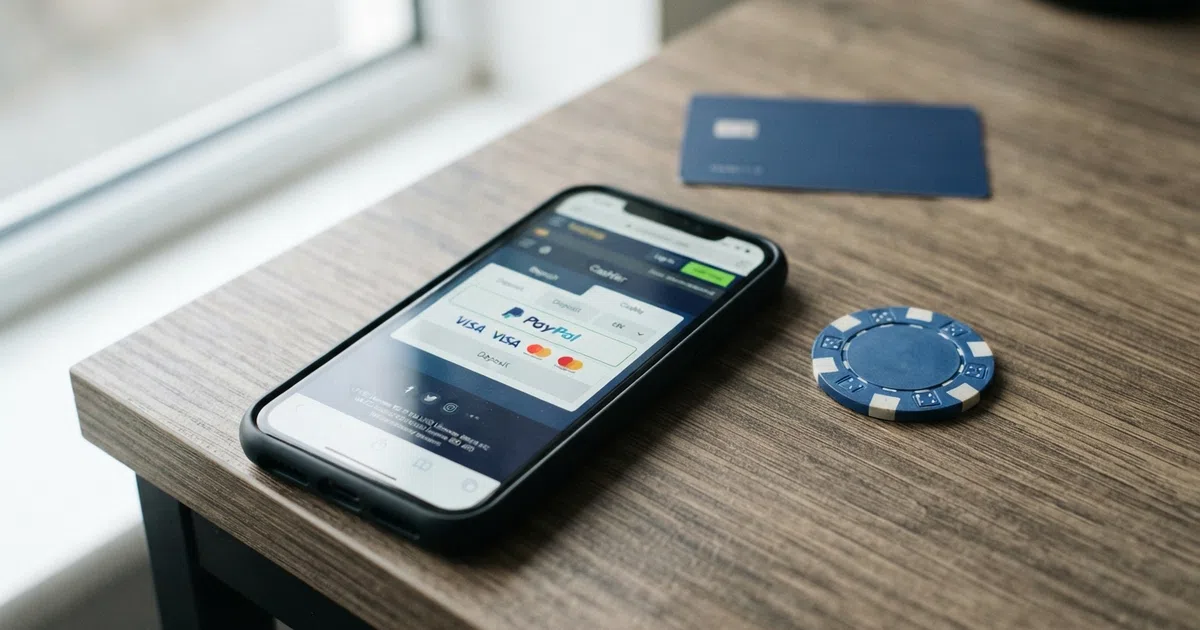
A “PayPal casino” is an online gambling site where PayPal appears as a deposit and withdrawal method in the cashier. The mechanics are straightforward: you log into the casino, go to deposit, select PayPal, log into your PayPal account, and confirm the amount. The funds move from your PayPal balance (or from a linked bank account or debit card) to the casino. The whole chain typically takes under a minute on the deposit side.
Two things to know about the flow that aren’t always obvious. First, the credit-card ban that took effect on 14 April 2020 covers credit-card-funded payments through e-wallets, not just credit-card-direct deposits. If your PayPal balance is funded by a credit card, the casino will not accept the deposit — PayPal’s own systems will block it. A debit card or bank transfer is the only way to fund a PayPal gambling deposit. Second, PayPal performs its own identity verification (full name, address, linked bank account or card) before it will process a gambling transaction. That means anonymous play is structurally impossible at any PayPal casino: even if the operator’s own KYC is slow or delayed, the payment layer has already verified who you are.
“Are These Sites Actually Safe?” — Trust, Licensing and What to Look For
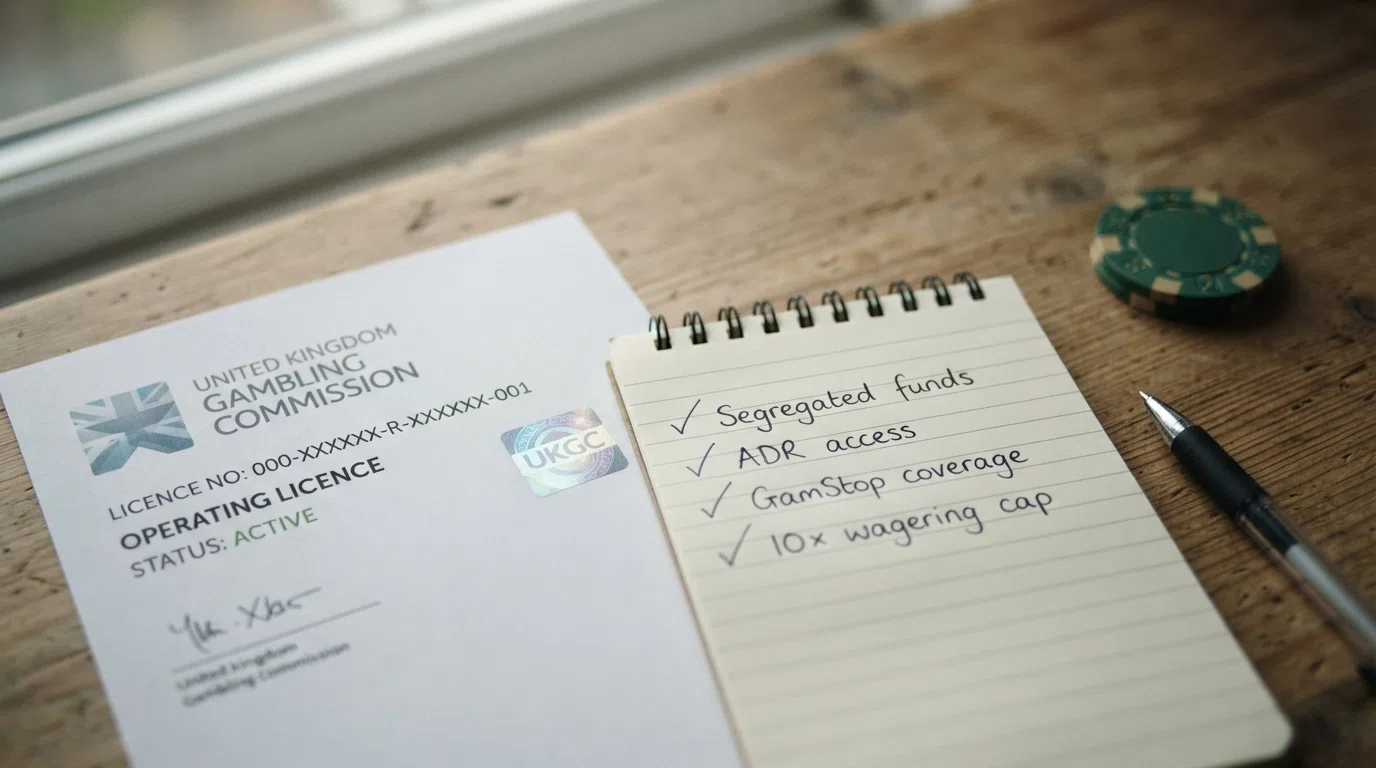
A UKGC licence is the baseline, and it is non-negotiable. Every operator reviewed here is listed on the UK Gambling Commission’s public register with an active operating licence. The Commission’s three licensing objectives — preventing crime, ensuring fair and open gambling, and protecting children and vulnerable people — are the standards a licence-holder is held to. A licence is what gives you recourse: a complaints route through an alternative dispute resolution (ADR) provider, segregated player funds so your money is held separately from the operator’s accounts, and a Commission that can investigate and sanction the operator.
Independent review signals sit on top of that. Withdrawal speed tests (the 35-minute Casumo result and the 4-minute MrQ result both come from independent testing, not the operators’ own claims), published RTPs on the games, and a bonus offer that doesn’t bury a 50× wagering requirement in the small print are the practical signals that the site runs the way a UKGC licence says it should. The full regulatory picture — what the licence gives you, what GamStop adds, and what you lose if you go offshore — is covered in the section on UK licences, GamStop and offshore operators further down.
How PayPal Casino Payments Work — and Why the Speed Claims Need a Second Look
The deposit-to-withdrawal lifecycle at a PayPal casino runs through two systems that don’t move at the same speed. On the way in, PayPal is fast — the deposit usually clears the casino’s cashier in seconds, and the funds are available to play with immediately. On the way out, the casino’s own internal processing window sits in front of PayPal’s transfer speed, and that window is where the wait actually happens. “Instant withdrawals” on a marketing page means PayPal will deliver the funds quickly once the casino has approved them. It does not mean the casino will approve them quickly.
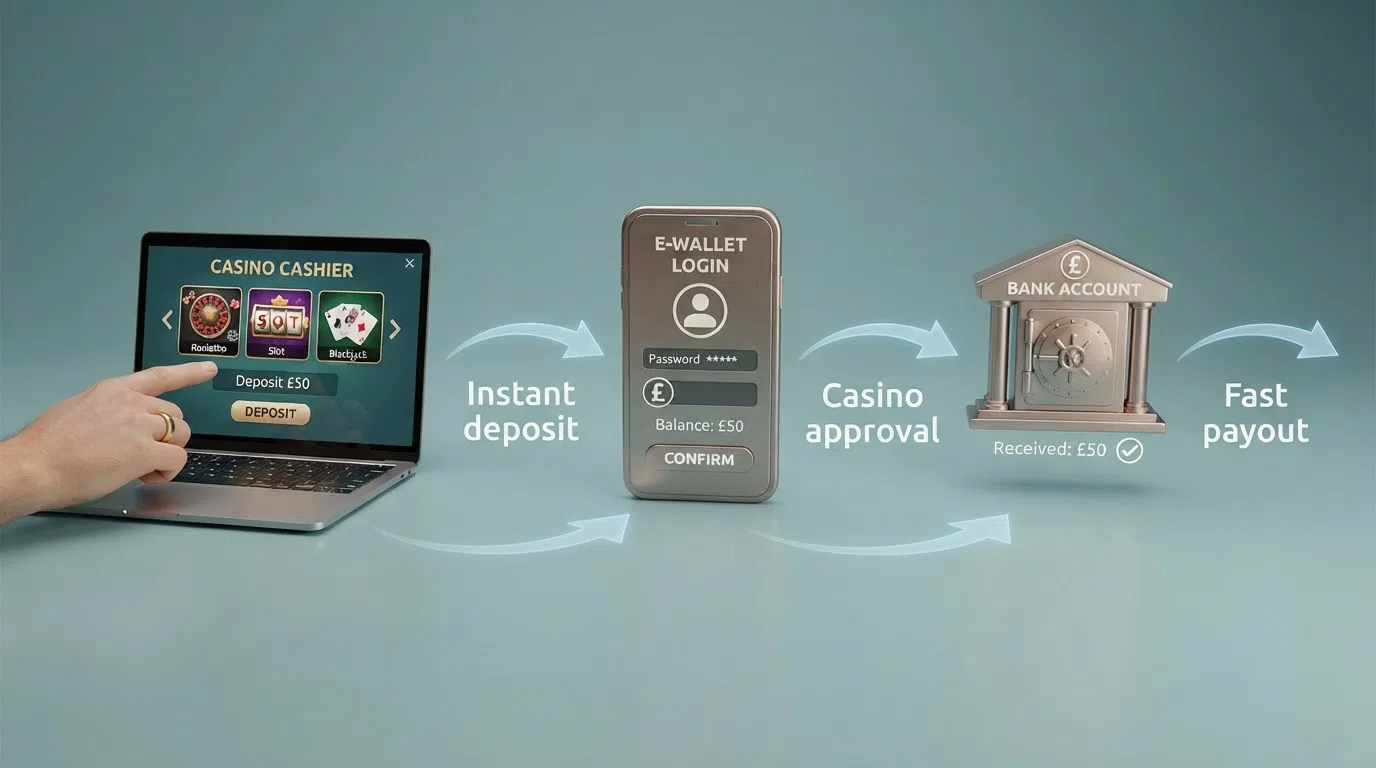
That distinction is what makes withdrawal-speed comparisons more useful than the marketing implies. The 35-minute result at Casumo is a real test, but it’s a Casumo-specific number — the casino approved and released the withdrawal in 35 minutes, and PayPal delivered it within the same window. At other operators, the casino’s internal approval can take 12 to 24 hours, after which PayPal itself adds only a few minutes. The reader-facing result is the total time, not the PayPal half of it.
How to Deposit at a UK Casino with PayPal: Step by Step
The deposit flow is the same at every UKGC-licensed PayPal casino. From the casino’s cashier, you select PayPal, enter the amount, and log into your PayPal account. Confirm the payment, and the funds land in your casino balance — typically within seconds, occasionally within a minute if PayPal’s authentication step takes a moment longer than usual. There is no separate PayPal app to download for the deposit itself; the flow runs through your browser or the casino’s app via a PayPal-hosted login overlay.
The credit-card funding rule applies at the PayPal side, not the casino side. If your PayPal account has a credit card linked as a funding source, PayPal will decline the gambling transaction even if the casino’s cashier is happy to receive it. Switch the PayPal funding source to a debit card or a bank transfer, and the deposit will go through. Players who funded PayPal by credit card before April 2020 — when the ban took effect — sometimes don’t realise their deposit is being declined at the PayPal layer rather than the casino layer, and contact the casino’s support about a problem the casino can’t fix.
Withdrawing to PayPal: How the Process Works and How Long It Really Takes
Withdrawals run in reverse: you request a withdrawal from the casino cashier to PayPal, the casino’s payments team reviews and approves it, the funds leave the casino’s account, and PayPal credits your PayPal balance. The casino approval step is the variable — it can take minutes at one operator and a full day at another. PayPal’s own transfer step, once the casino has released the funds, is fast: usually under 15 minutes, occasionally under 5.
The published “within 24 hours” range that most operators quote is the realistic upper bound across the industry. The lower bound is what independent testing actually shows. The fastest recorded PayPal withdrawal in May 2026 testing was 35 minutes at Casumo. MrQ has been independently tested at 4 minutes. Bet365 publishes a 1–4 hour window; Paddy Power within 2 hours; LeoVegas around 2 hours; Sky Vegas within 6 hours; MrQ up to 24 hours as a published figure (the 4-minute test is a specific case, not a guarantee). What that spread tells you is that the casino’s internal processing is the bottleneck, and the casino’s payment team is what you’re really comparing.
Deposit Limits and Minimums: What You Can Put In with PayPal
PayPal minimum deposits at the ten featured operators range from £5 to £25. William Hill and Betfred sit at the low end (£5 and £5.50 respectively), Sky Vegas, MrQ, Paddy Power, LeoVegas, BetMGM and PlayOJO all publish a £10 PayPal minimum, and Bet365 is the outlier at £25. Maximums vary more widely: Bet365 publishes a £5,500 PayPal deposit ceiling, others leave the ceiling to PayPal’s own per-account limits.
Two layers of limit to be aware of. The casino sets a minimum and a published maximum at its cashier. PayPal itself sets per-transaction and daily limits on your PayPal account, which can be lower than the casino’s published maximum. If a deposit fails at the PayPal side, the failure is usually PayPal’s account-level cap rather than a casino-side block. Players who hit the PayPal ceiling typically need to either wait for PayPal’s daily limit to reset, verify their PayPal account further to raise the limit, or split the deposit across days.
Fees at PayPal Casinos: What the Casino Charges and What PayPal Takes
The ten featured UKGC-licensed operators do not charge a deposit or withdrawal fee for PayPal. Bet365’s published terms explicitly confirm no fees, and the other nine follow the same pattern — a fee on deposits would be a competitive disadvantage at this point in the market, and the operators know it. PayPal’s own fee schedule is a separate question: PayPal charges for currency conversion when a deposit or withdrawal is in a currency other than your PayPal account’s base currency, and there are merchant-side fees on certain transaction types that don’t reach the player.
The practical fee risk for a UK player using PayPal at a UK casino is currency conversion. If your PayPal account is denominated in a currency other than GBP and the casino account is in GBP, PayPal will apply its conversion rate to each transaction. That rate includes a margin over the mid-market rate — typically around 3 to 4 per cent — and the cost shows up in the PayPal-side receipt rather than at the casino cashier. For a UK player with a GBP PayPal account funding a GBP casino, the conversion fee is a non-issue.
PayPal Alternatives for Casino Payments: E-Wallets, Debit Cards and Bank Transfers
PayPal’s main alternative at a UK casino is the debit card. Every one of the 800-plus UKGC-licensed sites accepts Visa or Mastercard debit, the credit-card ban doesn’t touch debit cards, and there’s no payment-method-specific bonus exclusion. The trade-off is that a debit card deposit puts the casino in direct contact with your bank statement, which some players prefer to avoid. Bank transfer is universal but slow — deposits can take a day to clear, and withdrawals run 2 to 5 working days. Trustly sits in the middle: an open-banking e-wallet that’s broadly accepted at UK casinos and processes withdrawals to your bank in under an hour, though it’s not as widely available as PayPal.
Skrill and Neteller are the e-wallet alternatives to PayPal, with broader casino acceptance in some segments and similar speed. Both are also subject to e-wallet bonus exclusions at certain operators — the same PayPal-style “deposit by debit card to claim” workaround applies. The headline number: PayPal works at about 40 of 800-plus UK-licensed sites, debit cards work at all of them, and bank transfers work at all of them. The convenience of PayPal is real; the universality of debit is larger.
PayPal Minimum Deposits & Fee Policy
The table below summarises the minimum deposit thresholds for PayPal transactions at each of the ten featured operators, along with their published fee policies for PayPal deposits and withdrawals.
| Casino | PayPal Min Deposit | PayPal Deposit Fee | PayPal Withdrawal Fee |
|---|---|---|---|
| MrQ | £10 | None | None |
| BetMGM UK | £10 | None | None |
| Paddy Power | £10 | None | None |
| Sky Vegas | £10 | None | None |
| LeoVegas | £10 | None | None |
| Bet365 Games | £25 | None | None |
| PlayOJO | £10 | None | None |
| Casumo | £10 | None | None |
| Betfred Casino | £5.50 | None | None |
| William Hill Vegas | £5 | None | None |
The table below ranks the ten operators by overall fit for a UK PayPal player — licence status first, then the welcome-offer terms, then the PayPal-specific mechanics. The full write-ups beneath it cover each operator in detail; the table is the at-a-glance view.
| Casino | UKGC Licence | Welcome Offer | Wagering | PayPal Min Deposit | PayPal Withdrawal Speed |
|---|---|---|---|---|---|
| MrQ | Active (Lindar Media Ltd) | 100 free spins on Big Bass Splash | 0× | £10 | Up to 24h (tested 4 min) |
| BetMGM UK | Active (LeoVegas Gaming plc) | 200 free spins on £10 bet | 0× | £10 | Under 24h |
| Paddy Power | Active (PPB Counterparty Services Ltd) | 50 no-deposit spins + 200 after deposit | 0× | £10 | Within 2h |
| Sky Vegas | Active (Bonne Terre Ltd) | Up to 200 free spins for £5 stake | 0× | £10 | Within 6h |
| LeoVegas | Active (LeoVegas Gaming plc) | 50 free spins on Big Bass Splash | 0× | £10 | ~2h |
| Bet365 Games | Active (Hillside UK Gaming ENC) | Up to 500 free spins over 10 days | 0× | £25 | 1–4h |
| PlayOJO | Active (SkillOnNet Ltd) | 80 free spins on Big Bass Bonanza | 0× | £10 | 0–24h |
| Casumo | Active (Casumo Services Ltd) | 50% deposit bonus up to £100 | 10× | £10 | 35 min (fastest) |
| Betfred Casino | Active (Petfre Gibraltar Ltd) | Up to 200 free spins for £10 stake | 0× | £5.50 | Up to 6h |
| William Hill Vegas | Active (WHG International Ltd) | 200 free spins on Big Bass Splash | 10× | £5 | Not specified |
Eight of the ten sit at 0× wagering — the cleanest bonus structure a UK player can get under the December 2025 cap. Casumo is the only cash-match offer (50% up to £100, 10× on the bonus), and William Hill is the outlier that still attaches 10× wagering to free-spin winnings plus a £30 cashout cap. Two of the ten (Betfred and William Hill) explicitly exclude PayPal from welcome-offer eligibility; a third (Casumo) flags it as “may not qualify.” That detail is the one most comparison pages miss, and it’s the one that costs a player their bonus if they don’t see it.
MrQ — Wager-Free Across the Board, and a 4-Minute PayPal Cashout
MrQ runs every promotion wager-free, and that includes the welcome offer. Stake £10 minimum and you get 100 free spins on Big Bass Splash (RTP 96.71%) at £0.10 per spin. Any winnings land in your real-money balance, withdrawable, with no playthrough and no maximum cashout. The spin value and the headline number are both modest compared to the 200- and 500-spin offers elsewhere, but the absence of a wagering multiplier is the whole point — at most other casinos, “200 free spins” means 200 spins attached to a 10× or 20× playthrough on the winnings, which is a different product.
Independent testing in May 2026 recorded a PayPal withdrawal at MrQ in 4 minutes. That is a specific case rather than a guaranteed figure — the casino’s published withdrawal window is up to 24 hours — but the test result sits on a public record, and the mechanism is straightforward: MrQ’s payments team approved and released the withdrawal within the same window that PayPal delivered it. The 48-hour spin validity is the shortest in the comparison set; use the spins the day they land or lose them.
Verdict. MrQ is the cleanest wager-free welcome offer in the set, and the published 4-minute PayPal withdrawal is a category-leading result when it happens. The trade-off is a smaller free-spin package than the headline-grabbing 500-spin offers, but for a player who values clean terms over a big number, that trade-off goes the right way.
BetMGM UK — 200 Free Spins with Zero Wagering, Backed by a Vegas Giant
BetMGM UK runs a triggered welcome: place a £10 bet on any eligible slot, and 200 free spins land in your account the next day. Wagering is 0×, the spin value is published at £0.10, and there is no stated maximum cashout from the offer. The MGM Resorts name is the brand signal — a US casino operator with a long history now running a UK-licensed product through LeoVegas Gaming plc. The 7-day spin validity is tighter than the 30-day claim window at Bet365, so the spins need to be used within a week of credit.
PayPal deposits and withdrawals work in the standard way: a £10 minimum on deposits, withdrawals processed within 24 hours, no fees. The game-provider list is the strongest in the set — NetEnt, Pragmatic Play, Play’n GO, Evolution, Microgaming, and others — which translates into a deeper slot and live-casino library than the smaller-brand operators can offer.
Verdict. 200 free spins with no wagering is a competitive offer, and the MGM brand carries weight for a player who values the operator’s track record. The 7-day validity is the one thing to watch — set a reminder or use the spins the day they land.
Paddy Power — 50 Free Spins Before You Deposit a Penny
Paddy Power is the only featured operator with a genuinely deposit-free welcome: 50 free spins credited at registration, no deposit required, on selected titles including Paddy’s Mansion Heist. A second tranche of 200 free spins unlocks after a £10 deposit and opt-in, taking the total to 250 free spins (or 260 by one count that includes additional Paddy’s Mansion Heist spins). Wagering is 0× on both tranches. The no-deposit first tranche is what makes Paddy Power the only entry on this list where a player can play through the welcome offer without committing any of their own money first.
PayPal withdrawals at Paddy Power run within 2 hours, which sits at the fast end of the comparison set without being a category-leading claim. The Flutter Entertainment ownership (shared with Sky Vegas and Betfair) brings operational scale, and the UKGC licence through PPB Counterparty Services Ltd is active on the public register.
Verdict. The only deposit-free welcome in the set, and the second tranche of 200 spins is competitive on its own. The 2-hour PayPal withdrawal window is reliable rather than record-breaking. For a player who wants to test a casino without a deposit first, Paddy Power is the clear answer.
Sky Vegas — Up to 200 Free Spins for a £5 Stake
Sky Vegas offers the lowest entry stake in the comparison: put £5 on a slot and you get up to 200 free spins with 0× wagering. The £5 trigger is half the £10 floor that most other operators set, which is the operator’s distinctive pitch to a low-stake player. The bonus slot titles and the per-spin value are not confirmed in the published terms this round, so the offer is sized on the headline number alone. PayPal deposits start at £10 — the £5 stake trigger doesn’t pull the PayPal minimum down with it — and PayPal withdrawals are processed within 6 hours.
The Flutter Entertainment link is the same as Paddy Power’s, but Sky Vegas runs as a separate brand with its own game selection and its own bonus structure. The provider list — NetEnt, Playtech, Pragmatic Play, Blueprint Gaming — gives Sky Vegas a strong slot catalogue and a decent live-casino floor, although Evolution (the dedicated live-casino specialist) is not named in the published provider list this round.
Verdict. The £5 trigger is the headline, and for a player with a small bankroll it’s the most accessible welcome offer in the set. The 6-hour withdrawal window is acceptable without being a standout. The omission of confirmed spin value and bonus slot titles is a transparency gap I’d want to see closed before the first deposit.
LeoVegas — 50 Spins on Big Bass Splash, Built for Mobile
LeoVegas positions itself as a mobile-first operator, and the welcome offer sits at 50 free spins on Big Bass Splash (RTP 96.71%) at £0.10 per spin. The trigger is a £10 deposit and a 1× wager on the deposit amount — so unlike a pure-deposit offer, the player needs to play through the deposit once to unlock the spins. Wagering on the spin winnings is 0×, and the validity is 3 days from credit, with the deposit wager itself needing to be completed within 7 days.
PayPal withdrawals at LeoVegas run around 2 hours in independent testing, which puts it in the faster half of the comparison. The provider list (NetEnt, Pragmatic Play, Play’n GO, Evolution) covers the main slot studios and adds Evolution for live casino, which is the strongest live-casino floor in the set alongside BetMGM and Casumo.
Verdict. The mobile-first positioning is real and the 2-hour PayPal withdrawal is reliable. The 1× deposit-wager trigger and the 3-day spin validity are tighter than the rest of the set — the offer is competitive but it asks more of the player in the time-management sense.
Bet365 Games — Up to 500 Free Spins, the Biggest Package in the Set
Bet365 Games runs the largest free-spin package in the comparison: up to 500 spins over 10 days, with daily selections of 5, 10, 20 or 50 spins. The bonus slot titles — Book of Horus, Curse of the Bayou, Magic Forge, Wrath of the Deep — are confirmed in the published terms, and the spin value is £0.10. Wagering on the winnings is 0×, in line with the rest of the clean-bonus set. The claim window is 30 days from registration; the spins themselves expire 7 days after they’re credited.
The PayPal minimum deposit is the highest in the set: £25. That’s a meaningful friction point for a low-stake player, although the £5,500 maximum deposit is the only published ceiling in the comparison. PayPal withdrawals at Bet365 run 1–4 hours, and the operator publishes an explicit no-fees policy. The bet365 brand carries the strongest name recognition in UK online gambling, and the UKGC licence through Hillside (UK Gaming) ENC is on the public register.
Verdict. The 500-spin headline is the biggest in the set, and the no-wagering, no-fees terms are clean. The £25 PayPal minimum is the one friction point. For a player depositing more than £25 and valuing a major-brand operator, Bet365 is the strongest fit.
PlayOJO — Wager-Free Since Day One, No Maximum Cashout
PlayOJO runs 80 free spins on Big Bass Bonanza (RTP 96.71%) at £0.10 per spin on a £10 minimum deposit. Wagering is 0×, and there is no maximum cashout from bonus winnings — the headline “no wagering, no win cap” promise that PlayOJO has built the brand around. Some sources cite 50 free spins rather than 80; the higher number is the more recent published figure. PayPal deposits start at £10 and withdrawals run 0–24 hours, which is a wider published range than most of the comparison set.
The SkillOnNet ownership gives PlayOJO a platform shared with a number of other UK-licensed casinos, and the provider list — NetEnt, Pragmatic Play, Microgaming, Play’n GO — is broad enough to cover the main slot studios. The brand identity is the wager-free pitch: every promotion on the site runs the same way, and there is no small-print rollover on the welcome offer or any subsequent offer.
Verdict. The wager-free, no-cashout-cap structure is the cleanest player-facing offer in the comparison. The 0–24h published withdrawal window is a wider range than operators like Paddy Power (2h) or Casumo (35 min), and the published withdrawal speed is the one place PlayOJO is outclassed.
Casumo — The Only Cash Bonus, and the Fastest PayPal Withdrawal on Record
Casumo is the only cash-match welcome offer in the comparison: 50% deposit bonus up to £100, with 10× wagering on the bonus amount and a 7-day validity. The 10× multiplier is the statutory ceiling under LCCP SR Code 5.1.1 — the offer is at the maximum allowed. The £20 minimum deposit for the bonus is higher than the £10 PayPal minimum, and Casumo’s published terms note that PayPal deposits may not qualify for the bonus.
What Casumo does better than anyone in this set is PayPal withdrawal speed. The 35-minute result is the fastest independently recorded PayPal withdrawal from a UK casino in May 2026 testing, and it isn’t a one-off: the operator’s payment team is structured to approve withdrawals quickly, and the PayPal-side delivery is fast. For a player who values the speed of getting their money, Casumo is the answer in the comparison set — but the bonus terms are the trade-off, and the PayPal-qualification caveat is the one to read in the small print.
Verdict. Unmatched on PayPal withdrawal speed. The bonus is the only cash-match in the set, but PayPal may not qualify for it, and the 10× wagering plus 7-day window is the tightest in the comparison. For a player who values speed over bonus size, Casumo is the right pick. For a player who wants the full bonus, deposit by debit card to claim it.
Betfred Casino — 200 No-Wagering Spins, but PayPal Won’t Unlock Them
Betfred’s welcome offer is up to 200 free spins on a £10 stake, with 0× wagering and a 7-day spin expiry. The catch is the one the operator publishes in the terms: PayPal deposits are excluded from welcome-offer eligibility. A player who deposits by PayPal will see the 200 spins in the promotion page but won’t be credited — the bonus is triggered only by a debit-card deposit. The workaround is documented in Betfred’s terms: deposit by debit card to claim the offer, then switch to PayPal for subsequent deposits and withdrawals.
The PayPal minimum deposit is £5.50, the lowest in the set alongside William Hill. PayPal withdrawals run up to 6 hours (24 hours in some published sources). The Petfre (Gibraltar) Ltd licence is active on the UKGC public register, and the high-street brand name is what most players associate Betfred with — the operator is a fixture of UK betting shops and the online product is the digital arm of the same business.
Verdict. 200 no-wagering spins is a strong offer, but the PayPal exclusion is the decisive fact for a PayPal-first player. Use a debit card for the welcome deposit, then move to PayPal. The £5.50 PayPal minimum is the lowest in the set.
William Hill Vegas — 200 Spins, but Wagering Applies and PayPal Is Excluded
William Hill Vegas runs 200 free spins on Big Bass Splash (RTP 96.71%) at £0.10 per spin, but the offer comes with two conditions that put it out of step with the rest of the clean-bonus set. First, 10× wagering applies to the spin winnings, with a 72-hour expiry. Second, there’s a £30 maximum cashout from the offer — anything you win above £30 from the spins is forfeited. Third, the welcome offer requires a £10 deposit and a £10 stake, and PayPal deposits are excluded; a debit card is required to trigger the bonus.
The PayPal mechanics are strong in isolation: a £5 minimum deposit is tied for the lowest in the set, and the operator’s published terms cover all the standard PayPal functions. But the bonus terms are the tightest in the comparison: 10× wagering, a 72-hour window, and a £30 cap on winnings. Compare that to MrQ’s 0× wagering and no cashout cap, or BetMGM’s 0× wagering with no stated cap, and the William Hill offer looks like the bonus structure of 2024, before the December 2025 cap forced the rest of the market to clean up.
Verdict. The PayPal deposit mechanics are competitive (£5 minimum, full cashier), but the bonus is the weakest in the set — 10× wagering, 72-hour expiry, and a £30 cap. A player who wants William Hill specifically can use PayPal for ongoing play, but the welcome offer needs a debit card to claim and the bonus terms are the worst of the ten operators.
Why Your 2026 PayPal Casino Bonus Is Smaller Than It Looks
The UK bonus market in 2026 is not the UK bonus market of 2024. The headline numbers look similar — 100 spins here, 200 spins there, a 50% deposit match at one operator — but the shape of the offer has changed because the rules have changed. The 10× wagering cap that took effect on 19 December 2025, and the simultaneous ban on mixed-product promotional offers, have rewritten what a welcome bonus is allowed to look like. Most comparison pages still describe the bonus market in the pre-cap language — “wagering requirements typically range from 30× to 50×” — without flagging that the ceiling is now 10× for any UKGC-licensed operator.
The practical effect is that the free-spins model has eaten the cash-match model. Eight of the ten featured operators now lead with a free-spin welcome offer rather than a deposit match, and the only cash-match in the set (Casumo) sits at the maximum allowed 10× wagering. A 100% deposit match up to £100 with 35× wagering — the kind of offer that was the bread and butter of the UK market three years ago — is no longer legal. The ceiling is 10×, and at 10× a 100% match is a worse commercial proposition for the operator than a free-spin package, so the free-spin model has won.
How UK Casino Welcome Bonuses Changed After December 2025
The 10× wagering cap is in the LCCP (Licence Conditions and Codes of Practice) at social responsibility code 5.1.1, and it came into force on 19 December 2025. The same regulatory change banned mixed-product promotional offers — a single promotion that combines, say, a deposit bonus with free spins, or a sports free bet with a casino bonus. The intent was to simplify the bonus landscape and reduce the cumulative wagering load a player takes on when they accept a typical welcome package. The effect has been to push the industry toward the free-spin model, where the wagering load is concentrated on the spin winnings rather than on a deposit match.
What this means for a player: any UKGC-licensed casino offering a welcome bonus with a wagering requirement above 10× is offering something that is no longer legal. The 10× ceiling is a hard line, not a target. If a comparison page is still quoting 30×, 40×, or 50× wagering as a “standard” for the UK market, it is out of date.
No-Deposit Bonuses at PayPal Casinos: Rare, Small, and Worth Claiming
Genuinely deposit-free bonuses are scarce at UKGC-licensed casinos, and at PayPal casinos they are scarcer still. Paddy Power is the only operator in the comparison set that runs a no-deposit welcome (50 free spins credited at registration, no deposit needed), and the second tranche of 200 spins unlocks only after a £10 deposit and an opt-in. The total offer — 250 free spins across the no-deposit and deposit-triggered components — is the largest by headline number in the set, and the only one a player can sample without committing any of their own money.
The terms to check on any no-deposit bonus are the same as on any other free-spin offer: wagering multiplier (Paddy Power is 0×), spin value (not specified in Paddy Power’s published terms this round), validity window, maximum cashout from the offer, and which slots the spins are valid on. A no-deposit offer is not a free lunch — it’s a sample, and the sample is only worth taking if the terms on the winnings are clean.
“No Wagering” Free Spins: What Wager-Free Actually Means for Your Withdrawable Balance
Eight of the ten featured operators advertise 0× wagering on their free-spin welcome offers, and the wording matters. “No wagering” in the UK bonus context means the winnings from the spins are credited directly to your real-money balance, withdrawable, with no playthrough required. bet365’s published wording is the clearest: “There is no wagering requirement attached to the winnings, which are added straight to your withdrawable balance.” That is the standard the eight wager-free offers in this set hit, and it is the standard a player should expect from any UKGC-licensed casino in 2026.
The contrast is with the two operators that don’t sit at 0×. Casumo runs a 10× wagering multiplier on its 50% deposit match (the statutory ceiling), and William Hill runs 10× on its free-spin winnings with a £30 cashout cap. Both are legal under the December 2025 rules. Neither is what a player looking for a clean welcome offer would choose over the wager-free alternatives. The “no wagering” label is the one a player should look for; the absence of it is the one that needs explaining.
When PayPal Deposits Don’t Qualify for the Welcome Offer — and What to Do Instead
Three of the ten featured operators have a PayPal-and-bonus friction point. Betfred and William Hill explicitly exclude PayPal deposits from welcome-offer eligibility — a player who deposits by PayPal won’t trigger the bonus, regardless of stake size. Casumo’s terms note that PayPal “may not qualify” for the deposit-match offer. The exclusion is published in the operators’ T&Cs, and it sits alongside the wider pattern of e-wallet exclusions that some UK operators run.
The workaround is the same at all three: deposit by debit card to trigger the welcome offer, then switch to PayPal for subsequent deposits and withdrawals. A player who starts with a £10 debit-card deposit, claims the free spins, and uses them within the validity window can move to PayPal for the second deposit onwards without losing the bonus. The bonus is triggered by the first eligible deposit, not by the deposit method used for ongoing play. The cost is one debit-card deposit at the start, which is a small friction relative to the bonus value.
The Games You Can Play with PayPal — and the Slot Stake Cap That Changed Everything
The game library at a PayPal casino is the same as the game library at the same casino without PayPal — the payment method doesn’t change which games are available. What the payment method does change is who can use it, because the credit-card ban extends to credit-card-funded PayPal deposits, and the statutory slot stake cap applies regardless of how the deposit was funded. The cap is the more important of the two: it changed the shape of the slot product at every UKGC-licensed casino, including the PayPal ones.
The £5/£2 age-banded stake cap took effect in two stages in 2025: £5 for players aged 25 and over from 9 April 2025, and £2 for players aged 18 to 24 from 21 May 2025. The cap applies per game cycle, which is the period from game initiation to final delivery of winnings, and it applies to the total staked within that cycle rather than to a per-spin bet. Two adults at the same casino playing the same slot can face different maximum stakes depending on their age. No statutory stake cap applies to products other than online slots — table games and live casino are unaffected.
Online Slots with PayPal: Real-Money Play, RTP and the £5 Cap
PayPal slot play at a UK casino works the same as debit-card slot play in every respect except the funding source. The deposit lands in the casino balance, the player opens a slot, sets a stake within the cap, and plays. The RTP — the percentage of stakes the slot returns to players over the long run — is a property of the slot, not the payment method. Big Bass Splash (named at MrQ, LeoVegas and William Hill) runs at 96.71% RTP, and Big Bass Bonanza (named at PlayOJO) also runs at 96.71% RTP. Both are Pragmatic Play releases, and both sit comfortably within the typical 94% to 97% RTP range for online slots.
The £5/£2 cap is the structural limit. A player aged 25 or over can stake up to £5 per game cycle on any online slot; a player aged 18 to 24 can stake up to £2 per game cycle. The cap applies to the total staked within the cycle, not the per-spin bet, which means features like bonus-buy (where available) and autoplay-style sequences are also bounded by the cap. Autoplay is banned in any case, but the per-cycle framing matters for slots where the spin value is below £5 but the player runs a sequence of high-cost features within a single cycle.
Table Games and Live Dealer: Blackjack, Roulette and Live Casino with PayPal
Table games and live casino are outside the slot stake cap. RNG blackjack, roulette, baccarat, and live-dealer tables from studios like Evolution all run on their own stake structures, and a PayPal deposit funds them on the same basis as a debit-card deposit. BetMGM, LeoVegas and Casumo all name Evolution in their provider list, which means the live-dealer floor is the Evolution catalogue — the largest live-casino studio in the market, covering blackjack, roulette, baccarat, game-show titles and the more recent live-slot formats.
The stake ceiling at a live-dealer table is set by the operator and the table’s own minimum/maximum, not by statute. A £5,000-per-hand blackjack table is a real product at a UKGC-licensed casino, and the only thing that limits a high-roller live-casino session is the table’s own published maximum. PayPal is fine here: the deposit method is unrelated to the table limit, and withdrawals run through the same PayPal flow as a slot cashout.
Bingo and Specialty Games at PayPal Casinos
Bingo, scratch cards, Slingo-style games and other specialty products are available at most of the ten featured operators, although the depth of the bingo catalogue varies. Paddy Power has the strongest bingo heritage as a brand, and Sky Vegas carries scratch and Slingo formats in its instant-win section. The other operators carry some specialty content but are not primarily positioned as bingo or scratch destinations. No statutory cap applies to non-slot products, and PayPal funds them in the same way as a slot session.
The research for this review doesn’t carry a per-operator bingo catalogue, so the coverage here is qualitative rather than a list of named titles. The practical question for a PayPal player who wants bingo is whether the operator’s bingo section is a fully developed product or a thin add-on — and that question is best answered by opening the bingo lobby and looking at the schedule of upcoming rooms.
The Game Providers Behind PayPal Casino Lobbies
The provider mix at the ten featured operators is dominated by the same handful of studios. NetEnt, Pragmatic Play, Play’n GO, Evolution, Microgaming, Playtech and Blueprint Gaming are the names that appear across the set. NetEnt brings the Starburst-Gonzo’s Book of Dead-adjacent slot catalogue; Pragmatic Play brings the Big Bass series, Gates of Olympus, and a strong live-casino product; Play’n GO brings the Book of Dead franchise and a deep slot library; Evolution is the live-casino specialist; Microgaming (and its Games Global successors) brings the Mega Moolah progressive jackpot network; Playtech brings the Age of the Gods series and a broad slot catalogue; Blueprint Gaming brings the licensed-brand slots (including the Deal or No Deal adaptations) and a strong UKGC-licensed presence.
For a player, the provider mix matters for two reasons. First, it determines which slots are available — operators that don’t carry NetEnt don’t have Starburst, operators that don’t carry Pragmatic Play don’t have Big Bass Splash. Second, it determines the live-casino depth — Evolution is the dominant live-casino studio, and operators that don’t carry Evolution are relying on alternative live providers for their live-dealer floor. The strongest provider mixes in the set are at BetMGM (NetEnt, Pragmatic Play, Play’n GO, Evolution, Microgaming), LeoVegas (NetEnt, Pragmatic Play, Play’n GO, Evolution), and Casumo (NetEnt, Play’n GO, Pragmatic Play, Evolution).
PayPal Casinos on Mobile: Apps, Browser Play and What You Actually Get
The mobile experience at a UKGC-licensed PayPal casino runs through one of two paths: a dedicated app downloaded from the App Store or Google Play, or the mobile browser at the operator’s URL. Both paths support the same PayPal deposit flow, the same game library, and the same bonus terms — the differences are in the supporting features (push notifications, biometric login, offline access) rather than the core product. LeoVegas is the standout in the set for a mobile-first design, and the other nine operators carry functional mobile experiences that range from solid to adequate.
A point of friction that the comparison pages often miss: Google Play’s gambling policy restricts real-money casino apps in some markets, and the UK is one of the markets where the policy applies selectively. Some UKGC-licensed operators publish Android apps on Google Play, others route Android users to a direct APK download from the operator’s site. iOS apps are more uniformly available through the App Store. The practical consequence is that a player who wants a dedicated Android app may need to install it from the operator’s site rather than from the Play Store.
Dedicated Casino Apps with PayPal: Who Has One and How They Perform
The dedicated app question is a brand-by-brand check. Bet365, Sky Vegas, Paddy Power, William Hill, Betfred, LeoVegas, BetMGM and Casumo all publish native apps for iOS and (with varying distribution paths) Android. The apps offer the same PayPal deposit flow as the desktop site, with biometric login (Face ID, Touch ID, fingerprint on Android) and push notifications for bonus credits and withdrawal confirmations. MrQ and PlayOJO lean more heavily on the mobile-browser experience and have lighter native app offerings, although both still support PayPal through the browser path.
The app experience adds two things beyond the mobile browser: faster access (the app is on the home screen, no URL to type), and offline access to the account section when the connection is patchy. The core product — the slots, the live casino, the cashier, the PayPal flow — is the same. For a player who plays frequently, the app is the better experience. For a player who plays occasionally, the mobile browser is fine.
Mobile Browser Play: No Download, Same PayPal Deposit Flow
The mobile browser path is universal. Every one of the ten featured operators supports mobile-browser play at a responsive URL, the PayPal deposit flow runs through the browser’s PayPal-hosted overlay in the same way as on desktop, and the game library is near-identical (a small number of older flash-based games are desktop-only at some operators, but no slot from a major provider is mobile-restricted). The trade-off versus a native app is the absence of push notifications and the slower access path, but for a player who plays on a session-by-session basis, the mobile browser is enough.
The cross-reference back to the deposit process is worth making: the PayPal deposit flow on mobile is the same flow as on desktop, with the same credit-card-funding restriction, the same minimum-deposit range (£5 to £25 across the set), and the same instant-clearance timeline. A player who learns the flow once on desktop doesn’t need to learn it again on mobile.
Bitcoin and PayPal Under One Roof: The Hybrid Casino Model
A small number of online casinos that focus on cryptocurrency also accept PayPal as a fiat alternative — the “hybrid” model, where the player can deposit in Bitcoin or Ethereum from a self-custody wallet and also deposit in GBP through PayPal. None of the ten featured operators in this review is a crypto-PayPal hybrid; the comparison set is fully fiat, UKGC-licensed, and PayPal-funded. The hybrid model is worth a section because it appears in UK search results for PayPal casinos, and the mechanics deserve a clear explanation for a player who lands on one of those sites.
The structural point is that PayPal’s own KYC requirements apply regardless of whether the casino also accepts crypto. A player who deposits in Bitcoin through a self-custody wallet and then deposits in GBP through PayPal is verified by PayPal on the GBP side — name, address, linked bank account — even if the casino’s own account verification is delayed. The “no verification” pitch that some hybrid sites run is undermined by the PayPal layer’s own verification. A player who wants anonymity in their casino play is not going to find it through a PayPal deposit.
Crypto Casinos That Also Accept PayPal: How the Dual-Cashier Setup Works
The dual-cashier model gives the player two funding paths into the same casino balance. The crypto path goes from a self-custody wallet to the casino’s crypto address, with the casino crediting the GBP equivalent to the player account at the current exchange rate. The PayPal path is the standard PayPal flow described earlier in this review. Withdrawals can run in either direction — the player chooses the payout method at the cashier.
The appeal of the model is flexibility: a player who holds crypto and wants to use it for casino play has a frictionless path, and a player who wants to fund in fiat has the PayPal option. The risk is the licensing question. UK search results for “PayPal casinos not on GamStop” surface hybrid sites that are licensed outside the UKGC’s jurisdiction — Curaçao, Anjouan, or no licence at all. The payment-method diversity doesn’t offset the loss of UKGC protections, which is the topic of the legality section further down.
No-Verification PayPal Casinos: Why “Anonymous” and “PayPal” Contradict Each Other
The “no verification” pitch at a PayPal-accepting casino is structurally incoherent. PayPal’s own account verification — full name, address, date of birth, linked bank account or card — happens before PayPal will process a gambling transaction. The casino’s own KYC is a separate layer, and a slow casino KYC doesn’t make the PayPal layer any less verified. A player who funds a casino account through PayPal has been identified to PayPal, and the casino’s payment processor can trace the deposit back to a verified PayPal account.
For a UK player, the no-verification PayPal pitch is a red flag rather than a feature. Sites that run the pitch are typically operators outside the UKGC’s jurisdiction, where the absence of a UKGC licence means no GamStop, no ADR complaints route, no segregated player funds, and no Commission enforcement. The payment method is the last thing a player should rely on for safety at a site that doesn’t have a UKGC licence — the licence is what matters, and PayPal’s presence on the cashier page doesn’t substitute for it.
New PayPal Casinos in 2026: Fresh Sites, Bigger Risk
The new-launch pipeline for UKGC-licensed PayPal casinos has slowed. The roughly 40 PayPal-accepting sites is a stable figure rather than a growing one, and the established names in the comparison set are the same names that have been accepting PayPal for several years. New entrants face a higher bar to get PayPal into the cashier — PayPal’s own merchant-vetting process, the UKGC’s KYC and AML requirements, and the integration work of plugging PayPal into a casino platform all take time and money. The result is that the PayPal-accepting set is a relatively closed group.
For a player evaluating a brand-new PayPal casino, the trade-off is the same one that has always applied to new operators. A new site offers a fresh welcome bonus, a modern platform, and the appeal of trying something the market hasn’t seen before. It lacks the track record — the withdrawal-speed history, the support responsiveness, the published player-complaints pattern — that an established operator can show. Independent testing in May 2026 put the fastest PayPal withdrawal (35 minutes) at Casumo, an established operator, and the 4-minute MrQ result is also at an established name. New casinos can compete on bonus size and platform quality, but they can’t compete on a payment-speed track record they don’t yet have.
The Newest PayPal Casino Launches in 2026
The research for this review doesn’t carry specific new-launch data beyond the ten featured operators, and the qualitative pattern in the UK market is that new PayPal launches are infrequent rather than a steady stream. The more common new-entrant pattern is an established operator launching a new brand or a new product (a casino launching a sportsbook, or a sportsbook launching a casino), rather than a new market entrant appearing on the PayPal-accepting list for the first time.
A player who sees a new PayPal casino in their search results should run the same checks as for any UKGC-licensed operator: confirm the licence on the public register, verify the PayPal listing in the cashier before signing up, read the bonus T&Cs for e-wallet exclusions, and search for player complaints about withdrawal delays. The newness of the brand is a feature on the marketing side and a risk on the operational side, and the licence check is what determines whether the rest of the evaluation is worth doing.
New vs Established: The Trade-Off Every New Casino Asks You to Make
The new-versus-established trade-off has three components. The first is bonus value: new casinos typically run larger welcome offers to attract initial sign-ups, and the offer may be more generous than what an established operator is willing to put on the table. The second is platform quality: a new site is usually built on a modern platform, with cleaner navigation, faster load times, and a more current game-lobby design than an operator running on a legacy platform. The third is track record: the established operator can show a multi-year history of paying out on time, responding to support queries, and resolving player complaints. The new operator can only promise to do the same.
The cost of choosing new over established is the cost of being an early customer. Withdrawal-speed tests at a new casino are thin, the support team is finding its rhythm, and the operations are working through the inevitable teething problems. The cost of choosing established over new is the cost of missing a better welcome offer and a more modern platform. A player with a small bankroll and a low appetite for operational risk should lean established; a player with a larger bankroll and an appetite for a fresh experience can sample new with a constrained first deposit.
What to Check Before You Join a Brand-New PayPal Casino
The checklist for a new PayPal casino is a short one, and each item on it is a check the player can do in under five minutes.
- Confirm the UKGC licence. Search the operator’s name on the UK Gambling Commission’s public register. An active operating licence is the baseline; a pending application, a suspended status, or no record at all is a hard stop.
- Verify PayPal in the cashier before signing up. Open the cashier section on the operator’s site (most show the payment methods before requiring registration). If PayPal isn’t listed, the site is not a PayPal casino and the rest of the evaluation is moot.
- Read the bonus T&Cs for e-wallet exclusions. Look for the phrase “PayPal deposits do not qualify” or “e-wallet deposits excluded from this offer.” Betfred and William Hill run this exclusion; a new operator may run the same exclusion without flagging it in the headline.
- Search for player complaints about withdrawal delays. A new casino won’t have years of complaint data, but even a few months of forum posts and Trustpilot reviews will show whether the early players have been paid on time. A pattern of slow-pay complaints in the first three months is the most reliable leading indicator of operational problems.
- Check the game provider list and the bonus slot titles. A new casino running a familiar provider list (NetEnt, Pragmatic Play, Play’n GO, Evolution) is using standard platform integrations; a provider list dominated by unknown studios is a smaller and less-tested game catalogue.
The Law Behind PayPal Casinos: UK Licences, GamStop and Offshore Operators
The UK regulatory framework for online gambling is built on the Gambling Act 2005, extended to remote operators by the Gambling (Licensing and Advertising) Act 2014, and run day-to-day through the UK Gambling Commission’s LCCP (Licence Conditions and Codes of Practice) and RTS (Remote Technical Standards). A UKGC operating licence is compulsory for any operator serving GB customers at the point of consumption, and an MGA, Curaçao or Gibraltar licence is not a substitute. Operating without a GB licence is a criminal offence under section 33 of the Gambling Act 2005 — up to 51 weeks’ imprisonment and/or an unlimited fine for the operator. The player faces no criminal penalty for using an unlicensed site, but loses all regulatory protections: no GamStop coverage, no ADR complaints route, no segregated player funds, no Commission enforcement.
The three UKGC licensing objectives frame everything else. The first is preventing crime — money laundering, match-fixing, and the gambling-related proceeds-of-crime risk. The second is ensuring fair and open gambling — game RTPs published, terms and conditions clear, complaints routes accessible. The third is protecting children and vulnerable people — age verification, self-exclusion, the safer-gambling tools covered in the section below. A UKGC licence is the operator’s binding commitment to those three objectives, and the Commission’s enforcement power (fines, licence suspension, licence revocation) is what gives the commitment teeth.
How the UK Gambling Commission Licence Protects PayPal Casino Players
The UKGC licence gives a player four practical protections that an unlicensed operator doesn’t. The first is segregated player funds: the operator holds player balances in a separate account from its operating funds, so the money is protected if the operator becomes insolvent. The second is an alternative dispute resolution (ADR) route: if a player can’t resolve a complaint with the operator directly, an ADR provider (IBAS, for example) adjudicates and the operator is bound by the decision. The third is the Commission’s complaints investigation: the player can escalate an unresolved complaint to the UKGC, and the Commission can investigate and sanction the operator. The fourth is the statutory safer-gambling infrastructure — GamStop coverage, the deposit-limit prompt, the slot stake cap, the bonus-wagering cap — that the operator is required to implement.
The player’s tax position is the one upside that applies to all UK gambling winnings regardless of operator: there is no player-side tax on winnings (duty was abolished in 2001), and the operator pays Remote Gaming Duty at 40% from 1 April 2026. The duty is on the operator’s gross gaming yield, not on the player’s winnings, and the change from 21% to 40% is funded out of operator margin rather than player returns. For a PayPal player, the practical tax position is the same at every UKGC-licensed casino: no tax on winnings, no matter the size.
GamStop and Self-Exclusion: What It Means for Your PayPal Casino Account
GAMSTOP is the UK’s national multi-operator self-exclusion scheme for online gambling, mandatory for all UKGC-licensed online operators since 31 March 2020. A player can register at gamstop.co.uk and exclude themselves from all GB-licensed online gambling sites for six months, one year, five years, or five years with auto-renewal. The exclusion cannot be cancelled early, and continues for up to seven years after expiry if the player does not contact GAMSTOP to lift it.
The prevalence numbers give the scheme’s scale. By the end of 2024, GAMSTOP had 532,484 total registrations since launch, with 466,726 people actively excluded at year-end and 8,685 new sign-ups in a single month — a record. For a PayPal player, the GAMSTOP coverage is total at any UKGC-licensed casino: a self-excluded player cannot deposit, cannot access the account, and cannot reverse the exclusion. The coverage is also strictly online: GAMSTOP does not reach land-based gambling premises, and it does not reach unlicensed sites.
Non-GamStop PayPal Casinos: What They Are, Why They Exist, and Why They’re Risky
Non-GamStop PayPal casinos are operators that accept PayPal and serve UK players but are not licensed by the UKGC. They are not grey-market: under the 2014 Act, a GB licence is compulsory for any operator serving GB customers, and operating without one is a criminal offence. The Commission’s enforcement is disruption-based rather than ISP-blocking — the Commission issues cease-and-desist notices, refers URLs to search engines for delisting, and works with payment providers to disrupt the unlicensed operator’s payment rails. Between April 2024 and June 2025 the Commission issued 3,140 disruption notices and referred 447,778 URLs to search engines. The Commission does not currently hold statutory ISP or DNS blocking powers — legislation has been proposed but not enacted — and the player who uses an unlicensed site faces no criminal penalty but loses all UKGC protections.
The mechanics of a non-GamStop PayPal casino are familiar: register an account, deposit via PayPal, play. The absence of UKGC coverage is the structural problem. There is no ADR complaints route because the operator is outside the UKGC’s jurisdiction. There are no segregated player funds because the UKGC’s rules don’t apply. There is no GamStop because the operator isn’t bound by the LCCP. And if the operator declines to pay out a legitimate withdrawal, the player’s only recourse is the operator’s own complaints process — which, at an unlicensed site, is the operator’s own complaints process.
Offshore and Unlicensed Operators: No GB Licence, No Protection
An MGA, Curaçao or Gibraltar licence is not a substitute for a UKGC licence at the point of consumption. The 2014 Act was specifically designed to close the previous “white-list” loophole where an operator licensed in another EEA jurisdiction could serve UK customers without a UK-specific licence. Post-2014, the requirement is a GB operating licence, full stop. A Curaçao licence gives the operator a different regulatory home and a different set of player protections (or absence of protections), but it does not give the operator a legal basis to serve UK customers.
The PayPal presence on the cashier page of an offshore site is not a safety signal. PayPal’s own KYC applies — the payment layer is verified — but PayPal’s own compliance team processes payments, and the operator’s compliance with player-protection rules is the operator’s own. At an unlicensed site, the compliance framework is whatever the operator chooses to implement, and the player has no Commission to escalate to if the operator’s framework is thin.
PayPal’s Own UK Compliance: Why PayPal Closed Some Casino Relationships
PayPal is FCA-regulated as a payment institution, and its gambling-vertical compliance has tightened over several years. The result is a smaller set of UK casino relationships than PayPal supported in the late 2010s, and a more selective merchant-vetting process for new gambling operators. The operators that lost PayPal as a payment option are not publicly named by PayPal — the relationship terminations are commercial decisions, not regulatory actions — but the practical effect is visible in the roughly 40 of 800-plus ratio. PayPal chose to work with about 40 UKGC-licensed operators, and the rest of the market runs on debit cards, bank transfers, and other e-wallets.
For a player, the implication is that a PayPal-accepting UK casino is an operator that has passed PayPal’s own merchant-vetting process. That’s a useful signal on top of the UKGC licence — two independent compliance reviews rather than one. It’s not a substitute for the UKGC licence (PayPal doesn’t check game fairness or player-fund segregation), but it adds a layer that a non-PayPal casino doesn’t have.
Staying in Control: The Responsible Gambling Tools Every PayPal Casino Player Should Use
The UKGC’s safer-gambling framework is built on the principle that the tools should be offered to every player, the offer should happen at the right moment, and the player should be able to act on it. The specific tools — deposit limits, reality checks, time-outs, self-exclusion — are the same at every UKGC-licensed PayPal casino, because the LCCP requires them. What varies is how each operator presents them, when the prompt appears, and how easy it is to set a limit or step away.
The harm numbers put the framework in context. The NHS Adult Psychiatric Morbidity Survey 2023–24 puts problem gambling prevalence (PGSI 8+) at 0.4% of adults, and moderate-risk gambling (PGSI 3+) at 1.6%. That sounds small until you do the multiplication — 0.4% of the UK adult population is roughly 200,000 people, and 1.6% is roughly 800,000. The Gambling Survey for Great Britain Wave 4 (September 2025 to January 2026) puts past-4-week gambling participation at 47% of adults, stable compared to the previous wave. The tools below are what the licensed market offers to the 47% who gamble, with the 0.4% and 1.6% as the target the framework is built to protect.
Deposit Limits, Session Limits and Loss Limits: What UKGC Casinos Must Offer
From 31 October 2025, every UKGC-licensed casino must prompt the player to set a financial limit before the first deposit. The prompt is mandatory; declining to set a limit is an option, but the prompt itself must appear. From 30 September 2026, the term “deposit limit” can be used only for a gross deposit limit based on money paid in — operators that offer a net deposit limit (deposits minus withdrawals) must re-label it. The rules are in the Commission’s RTS 12 (Remote Technical Standards) and LCCP social responsibility codes.
The limit the player sets is theirs to choose. There is no nationwide deposit ceiling set by the state — the UK’s approach is to mandate the offer of a limit and let the player pick the level, in contrast to some other jurisdictions that impose a hard cap. Decreases to a deposit limit take effect immediately; increases take effect after a 24-hour cooling-off period (or longer, at the operator’s discretion) to prevent impulsive changes during a losing session. PayPal’s own transaction history is a useful supplement to the casino’s deposit-limit tracking — a player who wants to cross-check their actual spend can pull the PayPal transaction list and reconcile it against the casino’s deposit record.
Reality Checks, Time-Outs and Self-Exclusion: Beyond Deposit Limits
Reality checks are mandatory pop-ups that show the player how long they have been playing and how much they have won or lost. They appear at intervals set by the operator (typically every 30 to 60 minutes) and require an acknowledgement before play continues. The LCCP requires the pop-up, and the game-design rules require the casino to display total losses, total wins, and time played during slots sessions — the reality check is a separate prompt that summarises the session.
Time-outs are short self-exclusions at the casino level: 24 hours, 48 hours, one week, or up to six weeks. A time-out blocks the player from accessing the casino account for the chosen period, and the player can lift the time-out only by contacting the operator after it expires. Casino-level self-exclusion runs for six months or longer, and GAMSTOP is the multi-operator extension: a single registration blocks the player from every UKGC-licensed online casino for the chosen exclusion period. The two layers are complementary — a casino-level exclusion covers the one operator, a GAMSTOP exclusion covers all of them.
The game-design rules that sit alongside the player-tools framework are worth noting because they shape the slot product itself. Auto-play is banned, spin speed has a 2.5-second minimum, features that speed up play are banned, losses disguised as wins are banned, reverse withdrawals are permanently banned, and the operator must display total losses and time played during slots sessions. A player who sits down at a UKGC-licensed PayPal casino is playing a slot product that is structurally different from the pre-2021 product.
Where to Get Help: Helplines, Clinics and Support Services
- National Gambling Helpline (GamCare): 0808 8020 133 — free, 24/7, confidential.
- GAMSTOP: gamstop.co.uk — free self-exclusion from all UK-licensed online gambling sites.
- GambleAware: gambleaware.org — information, self-assessment tools, and treatment referral.
- NHS gambling harm clinics: the NHS Northern Gambling Service and the National Problem Gambling Clinic (London) provide specialist treatment, with NHS Scotland and Wales equivalents.
- Gamblers Anonymous UK: ga-uk.org — peer support meetings across the country.
The helpline and the self-exclusion register are the two most-used entry points. The helpline routes a caller to the right support — counselling, treatment referral, financial advice — and the self-exclusion register blocks access while the support is put in place. The clinics and the peer-support meetings are the longer-term treatment options for a player whose gambling has moved past a one-off concern into a pattern that needs intervention.
How Big Is the Problem? Gambling Harm in the UK by the Numbers
The 0.4% problem-gambling prevalence (PGSI 8+) and the 1.6% moderate-risk prevalence (PGSI 3+) come from the NHS Adult Psychiatric Morbidity Survey 2023–24, which is the gold-standard UK prevalence study. The 47% past-4-week participation rate is from the Gambling Survey for Great Britain Wave 4, the Commission’s own participation tracker. The two surveys measure different things — the APMS measures clinical harm, the GSGB measures participation — and the gap between the two numbers is the population the safer-gambling tools are designed to reach.
Concentration is the structural fact that the headline numbers hide. The 0.4% problem-gambling group is not evenly distributed across the 47% who gamble — it is concentrated in a smaller subset of higher-intensity players, and it is that subset that the deposit-limit prompt, the GAMSTOP scheme, and the financial-vulnerability check are designed to reach. The 8,685 new GAMSTOP sign-ups in a single record month (the end-of-2024 figure) is a reminder that the self-exclusion pathway is a real and used option, not a theoretical one.
How We Picked and Ranked These PayPal Casinos
The evaluation framework behind the ten featured operators rests on four sources, in order of authority. The first is the UK Gambling Commission’s public register, last updated 29 July 2026 with 2,663 records — every licence status cited in this review was checked against the register. The second is each operator’s published terms and conditions, including the welcome-offer page, the bonus T&Cs, the cashier’s payment-method list, and the withdrawal policy. The third is independent testing data, primarily the May 2026 PayPal withdrawal-speed tests and the published welcome-offer terms at each operator. The fourth is the operators’ own game-lobby data — provider lists, slot titles, and live-casino studios — as published on each site.
The ranking criteria, in order of weight, are: licence status (a non-negotiable, every featured operator is UKGC-active), withdrawal speed (the published window and the independent test result), bonus cleanliness (0× wagering ranks above 10× wagering, no cashout cap ranks above a stated cap, no e-wallet exclusion ranks above an e-wallet exclusion), and PayPal-specific terms (minimum deposit, fees, the presence or absence of a PayPal bonus exclusion). The ranking is not a quality score in the abstract — a player who values game library depth over withdrawal speed will legitimately re-order the ten.
The limits of the comparison are real and worth stating. This review covers ten operators out of roughly 40 UKGC-licensed PayPal-accepting casinos, and the ten are the ones where the testing data, the published terms, and the licence check lined up. The other 30-or-so PayPal casinos are not covered, and the ranking doesn’t speak to them. A player who finds a PayPal casino not on this list should run the same checks — licence, terms, PayPal listing — rather than assume the missing operator is worse than the ten featured.
What You Should Actually Do About Choosing a PayPal Casino
The verdict from the data is that PayPal is a fast, safe deposit method at UKGC-licensed casinos, but it limits the choice to roughly 40 sites, and several of the best bonus offers exclude it from eligibility. The slot stake cap — £5 for adults 25 and over, £2 for adults 18 to 24 — has changed the shape of the slot product regardless of how the deposit is funded, and the days of high-stakes slot sessions at a UK casino are over. The right PayPal casino depends on what the player values most: withdrawal speed (Casumo at 35 minutes), bonus generosity (Bet365 at 500 spins), bonus cleanliness (MrQ at 0× wagering and no cashout cap), or the no-deposit option (Paddy Power’s 50 free spins at registration).
The non-negotiable first step is the UKGC licence check. Open the public register, search the operator’s name, and confirm an active operating licence before depositing anything. The register is the difference between a regulated site with segregated player funds, ADR access, and Commission enforcement, and an offshore site with none of those. PayPal on the cashier page is a useful second signal — it means the operator has passed PayPal’s own merchant vetting — but it is the second signal, not the first.
The practical next step depends on the player’s priority. A player who wants the fastest withdrawal should deposit at Casumo, accept that the 10× wagering is the statutory ceiling, and use a debit card for the welcome offer if PayPal doesn’t qualify. A player who wants the biggest clean-bonus package should deposit at Bet365 Games by PayPal, claim the 500 free spins, and accept the £25 PayPal minimum. A player who wants a no-deposit sample first should register at Paddy Power, claim the 50 free spins, and only deposit once they’ve seen the product. A player who wants the cleanest wager-free terms should deposit at MrQ, take the 100 free spins, and benefit from the 0× wagering and the no-cashout-cap structure. The 800-plus site market offers 760-plus other choices, but if PayPal is the payment method, the list starts and ends with the roughly 40 that take it — and the ten above are where the data lines up.
Frequently Asked Questions
Which UK online casinos accept PayPal for deposits and withdrawals?
Around 40 UKGC-licensed online casinos accept PayPal as of May 2026, out of more than 800 UK-licensed sites. The ten operators reviewed in detail here are MrQ, BetMGM UK, Paddy Power, Sky Vegas, LeoVegas, Bet365 Games, PlayOJO, Casumo, Betfred Casino, and William Hill Vegas. The full PayPal-accepting set is broader than these ten, and a player who finds another PayPal casino in search results should confirm the UKGC licence on the public register before depositing.
How do I deposit at a UK casino using PayPal?
From the casino’s cashier, select PayPal, enter the amount (the minimum is £5 to £25 depending on the operator), and log into your PayPal account. Confirm the payment, and the funds typically land in your casino balance within seconds. The credit-card-funding rule applies: if your PayPal balance is funded by a credit card, the deposit will be declined at the PayPal layer. Use a debit card or a linked bank account as the PayPal funding source.
How fast are PayPal withdrawals from UK casinos?
The fastest independently recorded PayPal withdrawal was 35 minutes at Casumo in May 2026 testing, with MrQ tested at 4 minutes in a specific case. Paddy Power publishes within 2 hours, LeoVegas around 2 hours, Bet365 1–4 hours, Sky Vegas within 6 hours, and Betfred up to 6 hours. The casino’s internal processing window is the bottleneck; PayPal’s own transfer time is fast once the casino has released the funds.
Are there any fees for using PayPal at UK online casinos?
The ten featured UKGC-licensed operators do not charge a deposit or withdrawal fee for PayPal. PayPal’s own fees apply for currency conversion when a deposit or withdrawal is in a non-GBP currency — typically a 3 to 4 per cent margin over the mid-market rate. A UK player with a GBP PayPal account funding a GBP casino will not incur a PayPal conversion fee.
Do PayPal deposits qualify for free spins offers at UK casinos?
At eight of the ten featured operators, PayPal deposits qualify for the welcome free-spins offer. Betfred and William Hill exclude PayPal deposits from welcome-offer eligibility — a debit card is required to claim the bonus. Casumo’s terms note that PayPal “may not qualify” for the deposit-match offer. The workaround is the same at all three: deposit by debit card to claim the welcome offer, then switch to PayPal for subsequent deposits and withdrawals.
Are there PayPal casinos not on GamStop, and is it safe to play there?
Yes — non-GamStop PayPal casinos exist and accept UK players, but they are not licensed by the UKGC and are illegal under the Gambling (Licensing and Advertising) Act 2014. The player faces no criminal penalty for using them but loses all UKGC protections: no GamStop coverage, no ADR complaints route, no segregated player funds, and no Commission enforcement. A UKGC-licensed PayPal casino is the safe choice; an offshore PayPal site is a payment-method convenience stacked on top of an unlicensed operator.
Is PayPal Still Accepted at UK Online Casinos in 2026?
Yes, but the list is shorter than most comparison pages imply. Independent testing in May 2026 found around 40 UK-licensed online casinos accepting PayPal. That figure is from one testing round, but it lines up with the pattern: PayPal is selective about which gambling operators it works with, and the UKGC’s public register lists more than 800 active remote operators. The roughly one-in-twenty ratio has held for long enough that the market has settled into a steady state — the established PayPal casinos are the same ones, and the pipeline of new entrants has slowed.
For a player, the practical consequence is that a brand preference may not survive the PayPal filter. If you specifically want to deposit and withdraw through PayPal, you choose from about 40 sites. If you want the largest welcome bonus or the broadest game library, you have 800-plus to pick from, and most of those will only accept debit cards, bank transfers, and other e-wallets.
Mobile-Specific Bonuses: Do You Get a Better Deal on Your Phone?
The research for this review doesn’t carry mobile-exclusive bonus data for the ten featured operators, and the general principle at UKGC-licensed casinos is that the welcome offer is the same regardless of whether the player signs up on desktop or mobile. Some operators run mobile-channel-specific free-spin drops or push-notification bonus credits to existing players, but these are typically tied to a specific promotion window rather than a permanent mobile advantage.
The practical answer for a player evaluating the welcome offer: assume the terms are the same on mobile as on desktop, and don’t choose an operator on the basis of a mobile-exclusive deal that may not exist. The mobile experience is a usability question, not a bonus question, and the better mobile product is the one with the smoother PayPal flow and the cleaner lobby — not the one with a phantom mobile bonus.
Payments – No Minimum Deposit Casinos UK
Content created by the «No Minimum Deposit Casinos UK» team