
UK Casinos That Accept eCheck: The 2026 Bank Transfer Guide
 Available in GB
Current as of 23 August 2026 — verified against the UK Gambling Commission’s public licence register.

eCheck is a US term for an electronic cheque processed through the ACH network. No UK bank issues one, no UK casino lists one, and no UK Gambling Commission licence conditions mention one. A UK player searching “eCheck casino” is really searching for a bank-account-linked deposit method that does not run through a card network — a BACS Direct Debit, a Faster Payments transfer, or an Open Banking / Pay by Bank flow through Trustly. Every operator on this page accepts at least one of those rails. Every one holds a valid GB licence verifiable on the Commission’s public register. And every one is judged below on what the offer actually costs the player who funds it that way.
What UK Casinos Actually Mean by “eCheck” (and Why the Name Barely Matters)
How a BACS or Direct Debit Deposit Works at a UK Casino
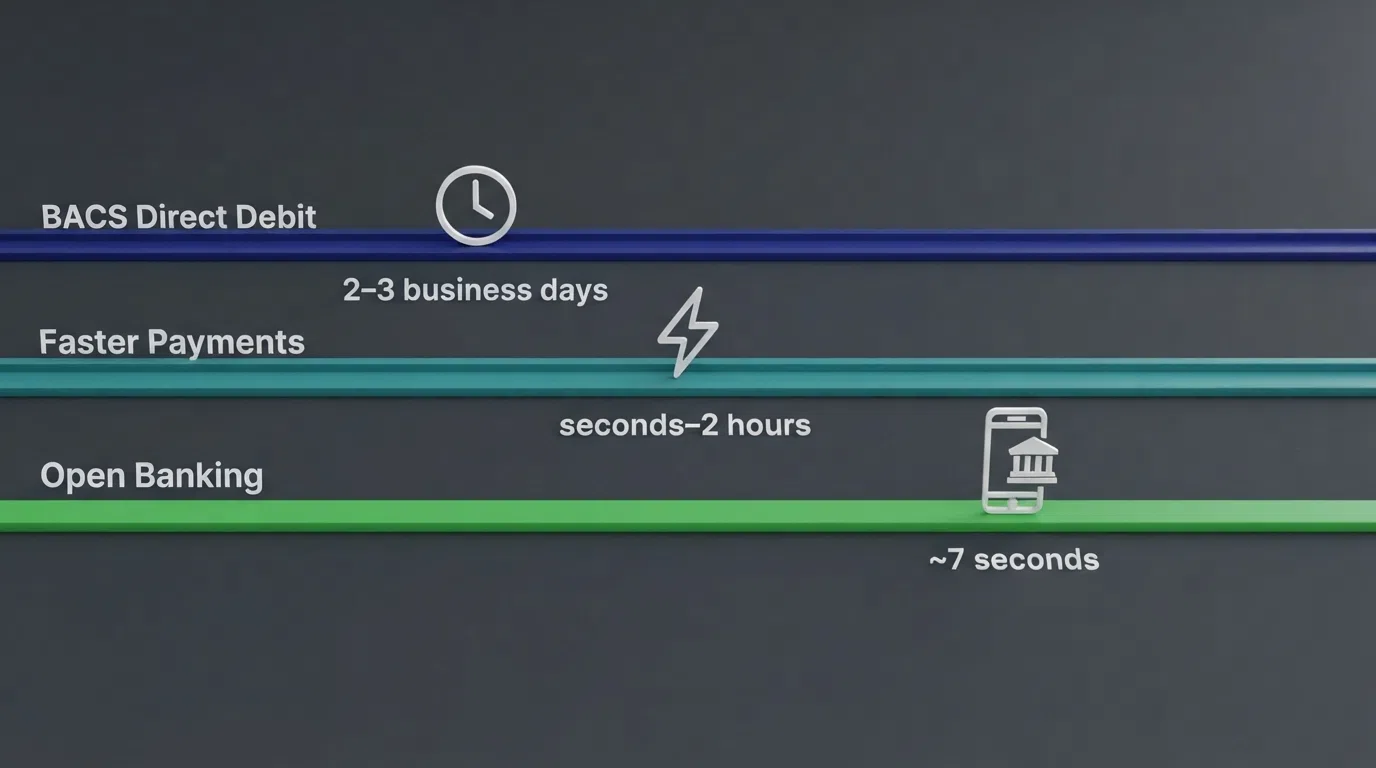
The cashier flow is straightforward, though slower than a card tap. A player opens the deposit screen, selects bank transfer, BACS, or the equivalent label, and enters the amount. The casino then either routes through Open Banking — which opens the player’s banking app for a one-tap confirmation — or hands back a sort code and account number with a reference code for a manual BACS transfer. Manual BACS deposits settle in two to three business days; Faster Payments, where the casino supports it, settles in seconds to two hours; Open Banking settles in around seven seconds on average.
A deposit is also where UK identity verification does its work. Since May 2019 every UKGC-licensed operator has had to verify the customer’s name, address and date of birth before any deposit or stake — the May 2019 rule ended the grace period that had let some players fund accounts without full ID. A new player who tries to deposit before verification sees the cashier block the request and redirect to the verification flow, which is why the first deposit at a new casino can feel like it takes longer than the second. The two- to three-day BACS window only kicks in once the account is verified and the transfer has been initiated; the ID check is the gate that decides whether the rail runs at all.
What the player sees during the pending window varies by operator. Some casinos credit the deposit as “pending” and only release it when the funds arrive; others block the cashier entirely until the transfer clears. A Faster Payments or Open Banking deposit usually posts inside the same session, which is why the difference between an instant rail and a BACS rail is felt as a real change in player behaviour, not just a clock difference.
Why UK Players Choose Bank Transfers Over Cards and E-Wallets
The choice to fund a casino account by bank transfer is rarely about speed. It is about three things the rail does that no card network or e-wallet does for them.
First, friction. A BACS deposit committed on Monday does not arrive until Wednesday or Thursday. That gap is a deliberate cooling-off — a player who wants the time between deciding to deposit and the money landing to act as a brake is buying that brake by accepting the delay. Players with a small bankroll who want the friction, players who have set themselves a deposit limit and want the rail to enforce it, and players who simply do not trust themselves to make a one-tap impulse deposit all tend toward bank transfer for that reason alone.
Second, privacy from the card networks. A bank transfer does not show up in a Visa or Mastercard statement with the casino’s name. It shows up in a bank statement as a BACS or Faster Payments transfer, with a reference code that may or may not identify the recipient. That is a meaningful distinction for players who share a bank account, who do not want a gambling merchant category code on a monthly statement, or who simply prefer not to have their gambling transactions run through a card network that aggregates them.
Third, the credit card ban. On 14 April 2020 the Gambling Commission prohibited credit card gambling under LCCP licence condition 6.1.2. The ban extends to credit-card-funded e-wallet deposits. It killed the fastest credit-based funding option and pushed everyone — casual players and high-stakes players — onto debit cards, e-wallets, and bank transfers. NHS survey data tied to the rule noted that 22% of credit-card online gamblers were problem gamblers; cutting credit out of the rail was an explicit harm-reduction move. Bank transfers absorbed a share of that displaced volume.
The demographic pattern that falls out of the rail mix is qualitative rather than measured, but consistent across the comparison pages that publish deposit data: bank transfers skew older, higher-stakes, and less impulse-driven than card and e-wallet deposits. Faster Payments and Open Banking change the demographics — those rails pull in younger players who want the bank-account experience without the wait, and they increasingly look like the default for new operators.
Your eCheck Deposit Lands in Days, Not Seconds — Here Is What Actually Happens
eCheck Deposits at UK Casinos: Minimums, Methods and What to Expect
The deposit side of the bank-transfer experience at a UK casino runs across three rails and a set of operator-by-operator minimums that range from £5 to £100. Bet365 sets a bank-transfer minimum of £100, with Trustly at £5 — the brand accepts both but steers casual players to Trustly by price. Betway runs a £5 minimum across bank transfer, Trustly, and Instant Bank Transfer, the lowest on this page. PlayOJO accepts Visa and Mastercard debit, PayPal, Apple Pay, Trustly and Instant Bank Transfer, all at £10 minimum. Sky Vegas takes bank transfer via BACS — withdrawal one to three working days — alongside debit card, PayPal, Trustly, Apple Pay and Revolut Pay. BetMGM takes bank transfer and Pay by Bank alongside the usual card and wallet methods.
Where the rail is not confirmed, the operator defaults the player to card. 888 Casino’s published banking page lists debit cards, PayPal, Skrill, Neteller and Apple Pay for deposit; direct bank transfer is available for withdrawal but not confirmed for deposit. 32Red is more explicit: 32red states “we do not accept deposits directly via Bank Transfer” and routes bank-account funding through Trustly. Ladbrokes, Paddy Power and Betfred all list debit card as the primary deposit method, with bank transfer support unconfirmed in their published terms; each of them requires a debit card to qualify for the welcome bonus.
The bonus gate is the other thing that varies. Betway qualifies the welcome bonus only on debit card deposits — bank transfer, Trustly and Instant Bank Transfer deposit funds into the account but do not unlock the £50 match. 888 Casino excludes Skrill and Neteller from the welcome offer entirely. PlayOJO is the clean exception on this page: no payment methods are excluded from its bonus, and Trustly and Instant Bank both qualify for the eighty free spins on Big Bass Bonanza. For a player who wants the bonus and the bank-transfer rail, PlayOJO is the only operator on this list where the two are not in tension.
The deposit itself is gated by verification. Until name, address and date of birth have been verified against the player’s ID, no deposit clears. The check is mandatory under the Commission’s 2019 rule and applies regardless of which rail the player has chosen.
eCheck Withdrawals: Why Your Cashout Takes Longer Than Your Deposit
The reverse direction is where the operator, not the rail, controls the clock. A BACS withdrawal takes one to five business days once the casino releases it. Sky Vegas puts bank-transfer withdrawals at one to three working days. The rail does not move the money any slower than a deposit; what slows the withdrawal is the casino’s internal pending period — typically 24 to 72 hours during which the request sits in the cashier queue, then the rail itself, then the receiving bank’s processing.
The Commission’s October 2021 ban on reverse withdrawals matters more here than the rail. From 31 October 2021 no UKGC-licensed operator may let a player cancel a withdrawal once it has been requested. That is a clean improvement for players — the “cancel and re-deposit” button is gone — and it means the clock starts when the player submits the request, not when the casino chooses to release it.
The other rule is method parity. Most UK casinos require a withdrawal to go back to the same method that funded the deposit. A player who deposits by bank transfer will normally be paid out by bank transfer; a player who deposits by debit card will be paid back to the card. Where the rail does not support two-way traffic (some Open Banking flows are deposit-only), the casino defaults the withdrawal to a different method — usually bank transfer. The asymmetry is rare but worth checking before the deposit if the player expects a fast payout.
Instant eCheck? Why Faster Payments and Open Banking Rewrite the Speed Promise
“Instant eCheck” is a US phrase that has not travelled well. UK bank transfers can be near-instant, but the casinos do not call them eCheck and never have. What they call them depends on the rail and the casino’s banking partner.
Faster Payments settles in seconds to two hours. It runs through every major UK high-street bank and most building societies. It is the rail behind most UK instant transfers between accounts. Where a casino routes its “Instant Bank Transfer” option through Faster Payments, the deposit posts inside the session.
Open Banking is the new default. Sits on top of Faster Payments and uses the player’s banking app as the authorisation step — no sort code, no account number, no card details. Industry data puts Open Banking deposits at roughly seven seconds on average, against nine hours and thirty-two minutes for traditional direct bank transfers. The abandonment gap is wider still: 3.1% for Open Banking versus 12.8% for traditional bank transfers, which is the difference between a flow that converts and a flow that loses the player at the authorisation step. Trustly is the operator most UK casinos use to deliver the Open Banking flow — Trustly sits behind the cashier label “Trustly,” “Pay by Bank,” or “Instant Bank Transfer” depending on the operator. The experience is the same bank account, the same UKGC protections, and a deposit that arrives while the player is still looking at the cashier page.
Why does the rail matter? Because the speed gap is felt, not just measured. A deposit that arrives in seven seconds and a deposit that arrives in three days are not the same product. The marketing word for both, at most casinos, is “bank transfer,” which is a category error the player pays for in waiting time.
Real-Money Play: What Changes When You Fund With a Bank Transfer
The play itself is unchanged. A bank-transfer deposit unlocks the same slots, live tables and sportsbook as a debit card deposit. The Commission’s game-design rules — auto-play banned, spin speed minimum 2.5 seconds, losses disguised as wins banned, reverse withdrawals banned, total losses and time played displayed during slots sessions — apply equally regardless of how the account was funded. So do the online slots stake caps: £5 per game cycle for players aged 25 and over, £2 for players aged 18 to 24, imposed under SI 2025/215. Two adults at the same casino can face different maximum bets; the age-banded model is unique to Britain.
What does change is the deposit prompt that has to fire before the first transfer lands. From 31 October 2025 every UKGC operator must prompt the player to set a financial limit before their first deposit, and the player has to engage with the prompt before the cashier unlocks. The deposit-limit rule is method-agnostic: a limit set on the account caps bank transfers, BACS, Trustly and card deposits alike. Under RTS 12 changes the same limit standardises across the industry from 30 September 2026, with decreases taking effect immediately and increases delayed — the asymmetry is by design, and it is what protects the impulsive self from raising a limit the night before a deposit.
How to Pay With eCheck at a UK Online Casino
- Pick a UKGC-licensed casino from the ranked list below; every entry here maintains an active GB licence.
- Register and complete identity verification. Name, address and date of birth must be verified against ID before any deposit clears. The check is mandatory and runs the same way for every operator on this page.
- Navigate to the cashier and select the bank-transfer option. The label varies — “Bank Transfer,” “BACS,” “Instant Bank Transfer,” “Trustly,” or “Pay by Bank” depending on the casino — but the function is the same.
- Enter the deposit amount and check the casino’s minimum. The bank-transfer minimum on this page runs from £5 at Betway up to £100 at Bet365, with most operators landing between £10 and £20.
- Confirm the transfer. Open Banking routes through the player’s banking app for a one-tap authorisation; Faster Payments and BACS require a sort code, account number and reference code from the cashier page.
- Wait for the processing window. Open Banking settles in roughly seven seconds, Faster Payments in seconds to two hours, BACS in two to three business days. The casino balance updates once the funds arrive.
Mobile eCheck Casino Apps: Bank-Transfer Play on Your Phone
Mobile is where the Open Banking rail shows its advantage. The deposit flow on a UK casino iOS or Android app opens the cashier, redirects to the banking app for authentication, and lands the player back in the casino inside the same minute. Where desktop Open Banking still asks for sort code and account number, mobile apps use the phone’s banking app as the authorisation step and skip the form entirely. BetMGM, Betway and PlayOJO all support Pay by Bank or Trustly on their mobile apps.
There is no functional difference between mobile and desktop bank-transfer deposits on the processing side. The minimums, the bonus eligibility, and the rail all behave the same way. What changes is the conversion: the abandonment rate for a deposit that requires the player to type sort code and account number into a mobile form is materially higher than the rate for one that opens the banking app. Open Banking was the first rail to deliver a mobile-first bank-transfer experience, and it is the rail that closes the gap on card deposits.
New eCheck Casinos: Fresh UKGC-Licensed Sites That Accept Bank Transfers
The newer wave of UKGC-licensed operators is building Open Banking into the cashier from launch rather than bolting it on. Newer sites are more likely to support Trustly and Instant Bank Transfer natively because the integration is now table stakes; older operators that pre-date PSD2 still tend to default the player to debit card. The 2026 bonus reform — a 10× wagering cap on bonus funds and a ban on mixed-product promotions, in force from 19 January 2026 under LCCP SR Code 5.1.1 — is the backdrop every new entrant operates under, and it is reshaping what a welcome offer can look like at a UK casino.
Verifying a new casino before depositing is the same thirty-second job as verifying an established one. The Commission’s public register lists every active GB licence holder. A licence number that does not appear on the register, or that does not match the operator’s trading name, is a clean reason to walk away. Newness is not a substitute for a licence.
The Best UK Casinos That Accept eCheck Deposits in 2026
How We Selected and Ranked Every Casino on This List
Three filters ran before any operator appeared in this ranking. First, a valid UKGC licence on the public register, checked for every operator against the Commission’s own search before inclusion. Second, confirmed acceptance of bank transfer, Trustly or Open Banking as a deposit method — either explicitly in the operator’s published banking page, or implicitly through a rail that is functionally equivalent to a US eCheck. Third, a welcome offer compliant with the 19 January 2026 10× wagering cap under LCCP SR Code 5.1.1, so no offer on this page exceeds the regulatory ceiling.
The ranking weights bank-transfer support first, because that is the page’s intent. Within that, deposit minimum and rail speed are weighted highest. Bonus value comes next — free-spin count, wagering multiplier or wager-free status, validity window. Where bank-transfer deposit could not be confirmed, the operator is included but flagged in the table. No operator paid for placement. No promo code appears anywhere on this page — a code would be a marketing token, and the page describes what an offer is worth, not how it is claimed.
What a 10× Wagering Cap Actually Costs a £100 Match Bonus
The arithmetic behind a 10× bonus is short and worth doing. An £100 match bonus at the 10× cap means £1,000 of qualifying wagers — bonus times the wagering factor. At the £5 maximum online slots stake for a player aged 25 or over, that works out to 200 spins. At a five-second spin interval, 200 spins is roughly seventeen minutes of continuous play. The figure is a statistical estimate over many spins under the stated assumptions, not a guaranteed outcome for any single player. It promises no win, no payout and no return. What it does show is the gap between the marketing word “bonus” and the time it actually costs to clear one.
| Operator | UKGC Licence | Bank Transfer Deposit | Welcome Offer | Wagering on Bonus | Bonus Validity |
|---|---|---|---|---|---|
| Bet365 | Hillside (UK Gaming) ENC 55148; Hillside (UK Sports) ENC 55149; Hillside (Technology) 38721 | Yes — bank transfer min £100, 2–10 business days; Trustly min £5 | Up to 500 free spins across 10 selections (min £10 lifetime deposits) | Not stated as a specific figure | 30 days to claim; 24 hours per selection |
| William Hill | William Hill Organization 2752; William Hill Online 39225 | Yes — bank transfer and Instant Bank Transfer | 200 free spins on Big Bass Splash at £0.10, deposit and stake £10+ | 10× on free-spin winnings | 72 hours from issue |
| Sky Vegas | Sky Betting & Gaming (Flutter Entertainment) | Yes — bank transfer via BACS, deposit up to 24 hours, withdrawal 1–3 working days | 50 no-deposit + 200 on £10 deposit+stake = 250 free spins at £0.10 | Zero | 7 days to use; deposit/stake within 30 days of registration |
| 888 Casino | 888 Holdings / evoke plc | Not confirmed for deposit — debit card, PayPal, Skrill, Neteller, Apple Pay | 100% match up to £100 on £10+ first deposit | 10× on bonus funds, selected slots only | 90 days from credit |
| Betway | Betway Limited (Super Group) | Yes — bank transfer, Trustly, Instant Bank Transfer all min £5 | 100% match up to £50 on £10+ first deposit | 10× on bonus | 7 days from registration |
| 32Red | Kindred Group | Via Trustly only — direct bank transfer NOT accepted | 320 free spins on Big Bass Splash when playing £30 on slots | Not specified in published terms | Not specified in published terms |
| Ladbrokes | LC International Limited (Entain plc) | Debit card required for bonus; bank transfer not detailed | Play £10, get 100 free spins at £0.10 + 300 LadBucks | Subject to 10× cap | 48 hours to accept; 7 days valid |
| Paddy Power | Flutter Entertainment | Bank transfer not explicitly detailed; debit card, PayPal, Apple Pay confirmed | 60 no-deposit + 200 on £10 deposit+wager = 260 free spins at £0.10 | Zero | 7 days from claiming |
| Betfred | Betfred (Gibraltar) / Petfre (Gibraltar) | Debit card required for bonus; bank transfer unconfirmed | 200 wager-free spins at £0.10, stake £10, winnings credited as cash | Zero | 7 days; credited within 48 hours |
| PlayOJO | Skill on Net Limited | Yes — Trustly and Instant Bank, min £10 | 80 wager-free free spins on Big Bass Bonanza, min £10 first deposit | Zero | Not specified in published terms |
Bet365 — The Biggest UK Brand, Gated by a £100 Bank Entry
Hillside (UK Gaming) ENC holds UKGC account 55148, with two further Hillside entities on the register (55149 and 38721). The casino welcome offer runs up to 500 free spins across ten selections, claimable on a minimum £10 of lifetime deposits within 30 days of registration, with 24 hours per selection once chosen. The game library runs over 1,000 titles from Playtech, Microgaming, NetEnt, Evolution and Pragmatic Play. The bank-transfer deposit minimum is £100, the highest on this page, with Trustly available at £5 for players who want the same bank-account funding without the entry price.
The trade-off is enormous game breadth and brand trust against a bank-transfer threshold that prices out a casual bankroll. A player with £100 to fund an account and a willingness to wait two to ten business days gets the full Bet365 experience; a player with £20 to deposit has to use Trustly, Apple Pay or a debit card instead. The free-spin mechanic is unusual for the page — ten selections over twenty days rather than a single drop on first deposit — but the wagering multiple is not published as a specific figure, so the bonus cannot be costed the way 888 Casino’s match can.
William Hill — A High-Street Name on a 72-Hour Spin Clock
UKGC accounts 2752 (William Hill Organization Limited) and 39225 (William Hill Online) confirm the licence. The casino welcome offer is 200 free spins on Big Bass Splash at £0.10 each, unlocked on a £10 deposit and £10 stake, with 10× wagering on the free-spin winnings and a 72-hour window from issue. Bank transfer and Instant Bank Transfer are both accepted, alongside debit card, PayPal, Apple Pay and Paysafecard.
The verdict is a familiar high-street name with a clear offer and a tight clock. Seventy-two hours is the shortest validity window on this page after Betway’s seven days — short enough that a player who deposits on a Friday evening and returns on Monday may already have lost the spins. For those using the spins inside the window, the 10× wagering limit sits right at the regulatory ceiling, providing a balanced, compliant offer.
Sky Vegas — Zero Wagering and a No-Deposit Starter on the BACS Rail
Sky Betting & Gaming, part of Flutter Entertainment, holds the UKGC licence. The welcome offer runs 50 no-deposit free spins plus 200 free spins on a £10 deposit and stake — 250 spins in total at £0.10 each, with zero wagering on any winnings. Bank transfer via BACS is accepted (deposit up to 29 minutes, withdrawal one to three working days), alongside debit card, PayPal, Trustly, Apple Pay and Revolut Pay. Game providers run NetEnt, Evolution, Pragmatic Play, Playtech, IGT and Blueprint. The 7-day expiry on the spins is the trade-off against the best wagering terms on the page.
The standout is the no-deposit starter. Fifty free spins before any money has crossed the cashier is uncommon at UKGC-licensed operators and turns Sky Vegas into the lowest-friction trial on this page. A player who likes the platform and stays to deposit £10 picks up another 200 wager-free spins, with a total potential value that sits well above what 888 Casino’s £100 match can produce once the 10× turnover has been paid. The only catch is time — seven days from issue is a tight window, and a player who does not log in for a week will lose the spins.
888 Casino — A £100 Match Bonus With 90 Days to Clear It
888 Holdings, now trading as evoke plc, holds the UKGC licence. The welcome offer is a 100% match up to £100 on a first deposit of £10 or more, with 10× wagering on bonus funds across selected slots and a 90-day clearing window. The game library runs over 2,000 titles across 888 exclusives, NetEnt, Evolution and Playtech. Bank-transfer deposit is not confirmed in the published terms; debit cards, PayPal, Skrill, Neteller and Apple Pay are the listed deposit methods, and Skrill and Neteller are excluded from the bonus.
The trade-off is the longest validity window on this page against a bonus that requires the player to use a deposit rail that may not be the one they wanted. A player who wants to fund the account by bank transfer and claim the bonus may find that the rail they picked does not unlock the £100 match, and may have to default to a debit card to get it. Given the ninety-day window, players can approach the £1,000 turnover target at a measured pace, making the 10× cap feel less restrictive than it does on shorter-term bonuses.
Betway — A £5 Minimum Across Every Method, With a Card-Locked Bonus
Betway Limited, part of Super Group, holds the UKGC licence. The welcome offer is a 100% match up to £50 on a first deposit of £10 or more, with 10× wagering on the bonus and a 7-day validity window. Bank transfer, Trustly and Instant Bank Transfer all run at a £5 minimum — the lowest uniform threshold on this page — alongside Visa, Mastercard, Apple Pay and PayPal. The game library runs 1,500+ titles on Microgaming as the primary provider, with Evolution, NetEnt and Pragmatic Play alongside. The catch is the bonus gate: debit card deposits only for bonus eligibility.
The verdict is the lowest bank-transfer minimum on the page paired with a bonus the player cannot unlock with it. A player who deposits £5 by Trustly, Instant Bank Transfer or bank transfer funds the account and can play, but the £50 match requires a debit card. For a player who wants both — the low minimum and the bonus — the workaround is to deposit £10 by debit card to claim the match and use Trustly thereafter. For players prioritising low-entry bank-transfer deposits over bonus eligibility, Betway offers the most accessible minimum threshold on this page.
32Red — The Biggest Spin Grant on This Page, Trustly as the Only Bridge
Kindred Group holds the UKGC licence. The welcome offer is 320 free spins on Big Bass Splash when the player plays £30 on slots, credited within 48 hours of qualifying. The game library runs over 2,000 titles from Microgaming, Evolution and NetEnt. The catch is the deposit rail: 32red states that direct bank transfer is not accepted, and routes bank-account funding through Trustly. Other methods are debit cards, PayPal, Skrill, Neteller, ecoPayz, Apple Pay, Google Pay and Paysafecard. The wagering and validity terms are not specified in the published snippets.
The verdict is the highest free-spin count on the page gated behind an explicit “we do not accept direct bank transfer” statement. 320 spins is meaningful — at £0.10 each, the headline value runs into the tens of pounds — but the wagering terms are not published, which makes the offer harder to cost than 888 Casino’s transparent 10× match. Users comfortable with Trustly as a payment bridge will find 32Red a compelling option; those specifically seeking manual BACS transfers, however, will need to consider the operator’s policy exclusion.
Ladbrokes — A Modest Starter From the Retail Bookmaker, With Points on Top
LC International Limited, part of Entain plc, holds the UKGC licence. The welcome offer is play £10, get 100 free spins at £0.10 each on selected games plus 300 LadBucks, with 48 hours to accept and a 7-day validity window. Game providers run Playtech, Evolution, NetEnt and IGT. The deposit rail for the bonus is debit card; other payment methods are accepted but the published terms do not detail a bank-transfer option.
The verdict is the household retail-bookmaker name against a smaller offer and an unconfirmed bank-transfer rail. LadBucks is the loyalty-currency sweetener that the other operators on this page do not carry; the 100 free spins are smaller than the wager-free grants at Sky Vegas, Paddy Power and Betfred. Ladbrokes appeals to those valuing the retail brand and loyalty rewards, though players seeking maximum spin counts or guaranteed bank-transfer clarity may prefer alternative operators.
Paddy Power — A 260-Spin Grant From the Flutter Brand, Route to Verify
Flutter Entertainment holds the UKGC licence. The welcome offer runs 60 no-deposit free spins plus 200 free spins on a £10 deposit and wager — 260 spins in total at £0.10 each, with zero wagering on any winnings and a 7-day validity window. Game providers run Playtech, Evolution and NetEnt. Debit card, PayPal and Apple Pay are confirmed for deposit; bank-transfer availability is not detailed in the published terms.
The trade-off is one of the strongest offers on the page — 260 wager-free spins, second only to 32Red’s 320 in headline count, and the only no-deposit + match structure alongside Sky Vegas — paired with a bank-transfer deposit that the player should verify before signing up. A player who assumes the cashier carries bank transfer and finds it does not will have defaulted to a debit card to fund the bonus. The spins themselves are clean: zero wagering, seven days, and a Flutter game portfolio behind them.
Betfred — Cash-Credited Winnings, But the Bonus Gate Is a Card
Betfred (Gibraltar) Limited and Petfre (Gibraltar) Limited hold the UKGC licence. The welcome offer is 200 wager-free spins on selected titles at £0.10 each, on a £10 stake, with winnings credited as cash within 48 hours and a 7-day validity window. Game providers run Playtech, IGT and Evolution. The bonus requires a debit card; bank-transfer availability is not confirmed.
The verdict is genuinely wager-free with cash credited directly, which is what a no-wagering offer actually means — no bonus-to-cash conversion, no maximum win cap, no 10× playthrough. The bonus gate is the same card lock as Betway, and a bank-transfer depositor may not be able to unlock the spins at all. Existing Betfred customers or those comfortable with debit card deposits benefit from a straightforward, wager-free bonus; bank-transfer users, meanwhile, might find better support elsewhere.
PlayOJO — No Excluded Funding Methods, Zero Wagering Anywhere
Skill on Net Limited holds the UKGC licence. The welcome offer is 80 wager-free free spins on Big Bass Bonanza on a first deposit of £10, with zero wagering on all winnings and no maximum win cap from the free spins. Deposit methods are Visa and Mastercard debit, PayPal, Apple Pay, Trustly and Instant Bank, all at a £10 minimum, with no payment methods excluded from the bonus — an unusually player-friendly policy. Game providers run NetEnt, Microgaming, Evolution and Pragmatic Play.
The trade-off is the smallest free-spin count on the page against the cleanest bonus policy. Eighty spins at £0.10 each is a smaller headline than the 250 at Sky Vegas or the 320 at 32Red, but the absence of any excluded payment method — Trustly and Instant Bank both qualify, the debit-card gate other operators run is absent — makes PlayOJO the operator on this list where a bank-transfer player does not have to choose between the rail and the bonus. The bonus exceeds the regulatory floor: PlayOJO’s zero wagering is well under the 10× cap, and the no-payment-method-exclusion rule is not a regulatory requirement at all.
What Separates the Best eCheck Casino From the Rest
Seven of the ten operators on this list accept bank transfer, Trustly or Instant Bank Transfer as a confirmed deposit method; three (888 Casino, Ladbrokes and Betfred) do not, and the table flags them. The four operators that offer zero wagering on the welcome bonus — Sky Vegas, Paddy Power, Betfred and PlayOJO — sit at the top of the bonus fairness ranking against the 2026 10× ceiling. The four operators at or near the cap (William Hill, 888 Casino, Betway, Ladbrokes) are competing on other dimensions: spin count, clearing window, deposit minimum. The bonus-cost calculation earlier in this section — £100 of bonus money at 10×, £5 stakes, 200 spins, seventeen minutes of play — is a snapshot of what the cap means at a representative number.
Processing speed splits the page into three tiers. BACS operators (Sky Vegas) are at the slow end — two to three business days for the deposit to land, one to three working days for withdrawal. Trustly / Open Banking operators (Betway, PlayOJO, 32Red via Trustly) are at the fast end — roughly seven seconds for the deposit. Mixed-rail operators (Bet365, William Hill) carry both options and let the player pick.
Game-provider breadth runs from 1,000+ titles at Bet365 to 2,000+ at 888 Casino and 32Red. Every operator on the page complies with the game-design rules in force since 31 October 2021: auto-play banned, spin speed minimum 2.5 seconds, losses disguised as wins banned, reverse withdrawals banned, total losses and time played displayed during slots sessions. And every operator holds a valid GB licence verifiable on the Commission’s public register — the only floor that does not move.
| Bank Transfer Method | Deposit Speed | Withdrawal Speed | UK “eCheck” Equivalent? |
|---|---|---|---|
| BACS Direct Debit | 2–3 business days | 1–5 business days | Closest direct equivalent — manual sort code and account number |
| Faster Payments | Seconds to 2 hours | Same day where supported | Yes — fastest standard bank-transfer option |
| Open Banking / Pay by Bank (Trustly) | ~7 seconds on average | Hours to 1 day | Yes — the fastest “eCheck”-equivalent rail, app-to-app authentication |
| Instant Bank Transfer (operator label) | Seconds to hours | Same day to 1 day | Yes — usually Open Banking or Faster Payments under a casino-specific label |
Is eCheck Safe at UK Casinos? The Protections British Law Actually Gives You
UKGC Licensing: Why Every Casino on This Page Holds a British Permit
The Gambling Commission is the single statutory regulator for gambling in Great Britain. It licenses operators, personnel and software under the Gambling Act 2005, extended to remote operators by the Gambling (Licensing and Advertising) Act 2014 — the point-of-consumption reform that made a GB licence compulsory for any operator serving GB customers, wherever the operator is based. Section 33 of the 2005 Act makes operating without a licence a criminal offence: up to 51 weeks’ imprisonment, an unlimited fine, or both. The Act names three licensing objectives — preventing gambling from being a source of crime or disorder, ensuring it is conducted in a fair and open way, and protecting children and other vulnerable persons from harm or exploitation. Every condition a UKGC-licensed casino operates under is built to deliver one of those three.

Verification is the front-line tool. Since 7 May 2019 every remote licensee must verify a customer’s name, address and date of birth before any deposit or stake — the pre-2019 grace period is gone. The verification is the same regardless of deposit method: a bank-transfer player is verified against the same sources as a debit-card player. Segregated player funds at medium protection or above, an approved Alternative Dispute Resolution provider for unresolved complaints, and source-of-funds enquiries at higher spend levels are also mandatory. The licence conditions are not decorative.
Verifying a licence takes thirty seconds. The Commission’s public register at the Commission’s own search interface lists every active GB licence, the trading name, the account number, and the licence status. A licence number that does not appear, or that does not match the operator’s trading name, is the cleanest reason to leave. The offshore reality is that a Curaçao, Maltese or Gibraltar licence is not a substitute for a GB licence; the 2014 point-of-consumption regime means serving GB customers without one is the criminal offence above. The Commission’s disruption model — not statutory ISP blocking — runs through cease-and-desist notices, search-engine referrals and payment-provider pressure: April 2024 to June 2025 saw 3,140 disruption notices issued, 447,778 URLs referred to search engines, and 287,961 URLs removed.
eCheck Under UK Gambling Law: Bank Transfers, the Credit Card Ban and What Changed
Three regulatory events reshaped the bank-transfer experience at UK casinos. The credit card ban on 14 April 2020 — LCCP licence condition 6.1.2 — prohibited all credit card gambling, remote and non-remote, and extended the prohibition to credit-card-funded e-wallet deposits. The data behind the rule tied credit to harm: 22% of online gamblers who used credit cards were problem gamblers. The ban killed the fastest credit-based funding option and pushed the displaced volume onto debit cards, e-wallets and bank transfers. The bank-transfer rail absorbed a real share of it.
The 2026 bonus reform came next. From 19 January 2026 the Commission capped wagering requirements at 10× on bonus funds and banned mixed-product promotional offers under LCCP SR Code 5.1.1 — no more “bet £10 on football, get free spins” cross-product incentives. Operators cannot alter or reduce an incentive’s value once the qualifying conditions have been met, and direct-marketing opt-ins must be product-specific and channel-specific. The Commission’s own framing — “capping the wagering requirement to ten decreases the likelihood of harm, reduces complexity, and improves transparency while maintaining consumer choice” — is the harm-reduction case for the cap.
The online slots stake caps are the sharpest consumer-facing rule and the most-missed fact. SI 2025/215 set the maximum stake per game cycle at £5 for players aged 25 and over (in force 9 April 2025) and £2 for players aged 18 to 24 (in force 21 May 2025). Two adults at the same casino can face different maximum bets — the age-banded model is unique to Britain, and no other major jurisdiction runs the same split. The cap applies to total staked within a game cycle and cannot be split across multiple cycles to evade it. No statutory stake cap applies to other online products — sports betting, live casino, bingo.
Two more pieces of the regulatory frame matter for a bank-transfer player. Remote Gaming Duty on online casino operators rose from 21% to 40% with effect from 1 April 2026, announced at the Autumn Budget 2025. A new statutory levy of 1.1% of gross gambling yield for remote casino licences took effect from 6 April 2025, split 50% treatment, 30% prevention, 20% research. The levy now funds NHS England commissioning of gambling-harm treatment from 1 April 2026.
The Protections You Get as a Bank-Transfer Player at a UK-Licensed Casino
Beyond the licence, the protections run through three named schemes. GAMSTOP is the national multi-operator online self-exclusion scheme, mandatory for every GB-licensed operator since 31 March 2020. Exclusion periods run 6 months, 1 year, 5 years, or 5 years with auto-renewal. GAMSTOP cannot be cancelled early, does not cover unlicensed sites, and is online-only — it does not reach land-based venues. A self-excluded player can still send a BACS payment, but the casino must reject it and return the funds. The block is at the operator, not at the bank.
The deposit-limit regime runs alongside. From 31 October 2025 every operator must prompt the customer to set a financial limit before the first deposit. Under RTS 12 changes the same limit standardises across the industry from 30 September 2026 — a single, gross deposit limit that operators cannot vary. Decreases take effect immediately; increases may not. The asymmetry is the design. The game-design rules in force since 31 October 2021 — auto-play banned, spin speed minimum 2.5 seconds, features that speed up play banned, losses disguised as wins banned, reverse withdrawals banned, must display total losses and time played during slots sessions — apply equally regardless of how the account was funded.
The ADR requirement sits underneath both. Every UKGC licensee must provide access to an approved Alternative Dispute Resolution provider for unresolved complaints. The provider is named in the operator’s terms and on the Commission’s public register. A complaint that the operator does not resolve can be escalated to the ADR; a complaint that the ADR does not resolve can be escalated to the Commission’s complaints process. The route is real, and it is a route a player at an unlicensed site does not have.
Bank Transfer Gambling and Your Safety Net: Tools Every eCheck Player Should Set
Setting Deposit Limits on Your eCheck Casino Account
The deposit limit is the most useful single tool a UK bank-transfer player has, and it works before the money arrives. From 31 October 2025 the operator has to prompt the player to set a financial limit before the first deposit, and the prompt is mandatory — the cashier does not unlock until the player has engaged with it. The prompt does not pick a limit for the player; it forces the player to choose one, or to set a deliberate zero. From 30 September 2026 the RTS 12 changes standardise a single gross deposit limit across the industry, with decreases taking effect immediately and increases delayed. The design protects the impulsive self from raising a limit the night before a deposit.
The limit applies across payment methods. A £200 weekly deposit limit set on the account caps bank transfers, BACS, Trustly and card deposits alike. A bank-transfer player who wants to fund an account on Monday and another on Wednesday cannot route around the limit by switching rails — the limit is at the account, not at the cashier. The bank-transfer rail is not a workaround for a deposit cap.
For a player who already has a deposit limit in place and wants to tighten it, the limit takes effect immediately. For a player who wants to raise it, the increase is delayed — by 24 hours in some operators, by longer under the RTS 12 standardisation. The asymmetry is the design.
Self-Exclusion, Time-Outs and GAMSTOP: Tools That Work With Bank Transfers
Three levels of self-barring are available, and all of them are payment-method-agnostic. Time-outs run from 24 hours to 6 weeks at the operator level — useful as a cooling-off without the commitment of full self-exclusion. Operator-level self-exclusion runs 6 to 12 months and is single-operator only; it is the right tool for a player whose issue is with one site rather than gambling as a whole. GAMSTOP is the nuclear option — free, covers every GB-licensed site, exclusion periods of 6 months, 1 year, 5 years, or 5 years with auto-renewal, cannot be cancelled early, online-only, does not cover unlicensed sites or land-based venues.
The bank-transfer caveat is worth naming. GAMSTOP blocks the account, not the bank transaction. A self-excluded player can still initiate a BACS transfer, but the casino must reject it and return the funds. The block is at the receiving end. A player who is serious about the exclusion and who shares a bank account with a partner or family member may also want to ask the bank to apply a gambling-block on the account itself — several UK banks offer this as a setting.
Prevalence is the wider context. The NHS Health Survey for England 2024 found 5% of adults scored PGSI 1 or more (at-risk or problem gambling), with less than 1% scoring PGSI 8+ (problem gambling); prevalence remained stable between 2012 and 2024. The NHS Adult Psychiatric Morbidity Survey 2023–24 put the figure at 1.6% PGSI 3+ (at least moderate risk) and 0.4% PGSI 8+ (problem gambling), with prevalence highest among 25- to 34-year-olds at 3.5%, and men (2.2%) more likely than women (1.0%). The numbers are stable but the absolute count of people in harm is real, and the statutory levy now funds the treatment.
Where to Get Help: The UK’s Gambling Support Infrastructure in 2026
- National Gambling Helpline (run by GamCare): 0808 8020 133, free, confidential, 24/7, also via live chat at gamcare.org.uk. 996 referrals to treatment and peer-based support services in January 2026, up 48% from 674 in January 2025.
- NHS gambling harm clinics: 15 specialist clinics across England, Scotland and Wales. NHS England took commissioning responsibility from 1 April 2026, funded by the statutory levy; service use up 130% year-on-year as of December 2024.
- GambleAware: the UK’s leading gambling-harm prevention charity and commissioner of the National Gambling Support Network.
- Gamblers Anonymous UK: peer-support groups, free, nationwide.
How We Chose and Tested These eCheck Casinos
Every casino on this page was verified against the Commission’s public register before inclusion. All ten hold a valid GB licence. The bank-transfer verification drew on each operator’s published banking and payments page, cross-checked against independent affiliate testers including Betsquare, which states it “signed up, deposited and withdrawn from each one in the last 60 days.” The bonus audit checked every welcome offer against the 19 January 2026 LCCP SR Code 5.1.1 — 10× wagering cap and mixed-product ban — so no offer described here exceeds the regulatory ceiling.
The ranking weights bank-transfer deposit support first, because that is the page’s intent. Within that, deposit minimum and rail speed are weighted highest. Bonus value comes next — free-spin count, wagering multiplier or wager-free status, validity window. Where bank-transfer deposit could not be confirmed, the operator is included but flagged. No operator paid for inclusion. No promo or voucher code appears anywhere on the page. The licensing data is current as of the date stamp on the page.
eCheck at UK Online Casinos: Worth the Wait, or Should You Switch Methods?
Bank transfer makes sense in three reader situations. A player who wants a deliberate friction layer between deciding to deposit and the money arriving will treat the BACS delay as a feature, not a bug. A higher-stakes player for whom the £5 to £100 bank-transfer minimum is irrelevant will pick a bank-transfer rail that hits a higher deposit ceiling than most cards allow. A player who does not want a card network intermediary seeing gambling transactions will use a rail that does not generate a Visa or Mastercard merchant code on a monthly statement.
Bank transfer is the wrong choice when speed is the point. A BACS deposit takes two to three business days. If the goal is to play tonight, Open Banking / Pay by Bank through Trustly settles in roughly seven seconds against the same bank account — the rail is the same bank, the UKGC protections are the same, and the only difference is the authorisation step. Four operators on this list — Bet365 via Trustly, Betway via Trustly or Instant Bank Transfer, 32Red via Trustly, PlayOJO via Trustly or Instant Bank — run the Open Banking rail natively. Debit cards are instant and universally accepted, with none of the bank-transfer-minimum gating that makes Bet365’s £100 threshold a barrier to a £20 deposit. For a casual bankroll, debit card is the cheapest combination of speed and bonus eligibility.
The one rule the page holds to the end. Never deposit at an unlicensed site just because it accepts the payment method you want. Every casino on this page holds a GB licence verifiable on the Commission’s public register. The moment a player steps outside the licensed market they lose GAMSTOP coverage, the ADR route, and the Commission’s consumer-protection framework. An offshore site that accepts a bank transfer does not turn the rail into a safer one; it turns the rail into a deposit at an unlicensed operator, and the protections the rail would carry at a UKGC-licensed site do not follow.
Frequently Asked Questions
Can I claim a welcome bonus when depositing with eCheck or bank transfer at a UK casino?
It depends on the operator. PlayOJO has no payment-method exclusions, so a Trustly or Instant Bank deposit claims the eighty wager-free spins. Betway and Betfred require a debit card for bonus eligibility, so a bank-transfer deposit funds the account but does not unlock the welcome offer. 888 Casino excludes Skrill and Neteller only — bank transfer is unconfirmed for deposit. The cleaner rule: check the cashier before depositing, not after.
What is the difference between eCheck, bank transfer and Open Banking at UK casinos?
eCheck is a US term for an ACH electronic funds transfer that does not exist as a named UK product. Bank transfer in the UK is a BACS Direct Debit (2–3 business days) or a Faster Payments transfer (seconds to 2 hours). Open Banking / Pay by Bank sits on Faster Payments and uses the player’s banking app as the authorisation step, settling in roughly seven seconds on average. All three move money from the player’s bank account; only Open Banking does it at card-deposit speed.
Are there any fees for using eCheck or bank transfer at UK online casinos?
UKGC-licensed operators do not charge deposit or withdrawal fees on bank-transfer rails as a matter of standard practice. The bank itself does not charge for receiving a BACS or Faster Payments transfer. The cost the player pays is time — two to three business days for BACS, seconds to two hours for Faster Payments, seven seconds for Open Banking — not fees. An unlicensed operator outside the UKGC’s rules is a different question, and outside the scope of this page.
What are the best alternatives to eCheck for UK casino deposits?
Debit cards (Visa and Mastercard) are the universal default — instant deposits, instant withdrawals up to 24 hours, no minimum-deposit gating, and bonus eligibility at every operator on this page. PayPal is the fast e-wallet with broad bonus eligibility. Apple Pay and Google Pay mirror the card experience through the phone. Open Banking / Trustly / Pay by Bank is the bank-account-funding rail that delivers card-equivalent speed with no card-network intermediary. Each is faster than BACS.
Do all UK casinos accept eCheck deposits, or is it limited to certain sites?
No UK casino lists “eCheck” as a payment method — the term is US, not British. Seven of the ten operators on this page accept bank transfer, Trustly or Instant Bank Transfer as a confirmed deposit method. Three (888 Casino, Ladbrokes and Betfred) do not confirm direct bank transfer for deposit and default the player to debit card. The rail is widely available at major UK operators but not universal, and the table flags the exceptions.
How do eCheck casino deposits compare to debit card and PayPal in terms of speed?
Bank transfer via BACS is the slowest rail on the page at two to three business days for the deposit. Bank transfer via Faster Payments closes the gap to seconds to two hours. Open Banking / Trustly matches card and PayPal speed at roughly seven seconds. Debit card and PayPal are the universal instant rails. The bank-transfer rail’s edge is friction and privacy, not speed.
What Is an eCheck — and What Is It Called in the UK?
The US eCheck is an electronic funds transfer that moves money between bank accounts through the Automated Clearing House. It was built for a market where card-not-present debit transactions were patchy, and where the cheque itself had not yet died. It arrived in UK search queries through affiliate SEO, not through any banking product. The UK has its own rails, and they have done the same job for decades.
Three mechanisms cover what an eCheck does in the US, and a UK player using any of them has done the same thing under a different name. BACS Direct Debit pulls money from a UK bank account on instruction — slow, dependable, and the rail behind almost every direct debit in the country. Faster Payments, run by the same infrastructure, settles in seconds to two hours and is the rail most UK banks use for instant transfers between accounts. Open Banking — known on casino cashier pages as Pay by Bank or Trustly — sits on top of Faster Payments and cuts the deposit down to roughly seven seconds by passing the authorisation through your banking app instead of a sort code and account number form.
The terminology gap matters because UK casino banking pages do not list “eCheck” as a payment method. They list bank transfer, Trustly, Instant Bank Transfer, or Pay by Bank. A player who walks in looking for the US term will need to read the cashier for the UK equivalent, not for the word that brought them there. One leading UK comparison site, Betsquare, makes the bridge explicit and brands its UK ranking “eCheck / BACS Direct Debit Casinos” — every operator in its list “holds a UK Gambling Commission licence and accepts eCheck / BACS Direct Debit for deposits.”
Payments – No Minimum Deposit Casinos UK
Content created by the «No Minimum Deposit Casinos UK» team