Where RealTime Gaming Slots Actually Meet UKGC Oversight
 Available in GB
£5 maximum stake. Wagering capped at ten times the bonus. Every spin taking at least two and a half seconds. A self-exclusion register that follows you across every licensed site. The UK’s online casino market in 2026 runs under the most protective regulatory framework anywhere, and any honest page about RTG casinos for UK players has to start there. The games, the welcome offers and the payout speeds all sit inside rules designed to slow the session down, cap the damage and give a player the tools to step away.

RealTime Gaming is one of the longest-established online casino software providers, founded in 1998 and now headquartered in Costa Rica with a portfolio of more than 300 titles. The games appear under two brand names since 2022: RTG Slots for the UK and Isle of Man, SpinLogic for the US and most global markets. RTG Slots is itself separately licensed by the UK Gambling Commission, which is the lever that makes a UK RTG page possible at all. The casinos on this list are UKGC-licensed multi-provider operators that carry RTG titles alongside NetEnt, Microgaming, Evolution and Play’n GO content, and they are the only legal way for a UK player to play RTG games in 2026.
Data current as of 21 August 2026 and verified against the UK Gambling Commission’s public register of licensed businesses.
What RTG Casinos Really Are — and How the Software Platform Outweighs the Brand Name
RealTime Gaming started in Atlanta in 1998, one of the earliest online casino software developers, and moved its development base to Heredia, Costa Rica in 2007–2008. The company is a software supplier, not a casino operator: it builds games and licenses them to casino brands, which then host the games under their own licences and set the terms. That distinction matters more than the brand on the homepage, because the casino decides what you actually experience when you load an RTG slot.
The catalogue runs to more than 300 games across slots, table games, video poker, specialty games and scratch cards, with new titles released every month. The breadth has been a feature of RTG’s positioning for years. Themes run from ancient civilisations to heists to fantasy to animal slots, and the release schedule in 2026 includes Fú Lóng Treasures and Henferno. New material is not in short supply.
In 2022, RTG reorganised its regional brands. The company adopted the SpinLogic Gaming name for the US and most global markets while keeping RTG for Asia-focused game offerings. The UK-facing arm, RTG Slots, is separately licensed by both the UK Gambling Commission and the Isle of Man Gambling Commission, a two-licence structure that allows the games to be distributed to UKGC-licensed casino operators without each casino having to seek its own software approval. That is why an RTG title can turn up in the lobby of a LeoVegas or a Fortune Mobile, even though neither of those brands is an “RTG casino” in the pure-play sense.
RTG’s mathematical design has been a quiet strength. The company pioneered a model that delivers both high return-to-player percentages and high volatility in the same title, by capping the maximum win on any single spin at 50,000x the line bet. The cap is what makes the math work. Without it, a high-volatility game with a generous return rate would pay out enormous prizes on rare combinations and skew the long-term math; with it, the game can return a competitive percentage to players overall while still offering the chance of life-changing hits on a single spin. Wizard of Odds described the effect in plain terms: high RTP and high volatility in the same game, held together by a hard ceiling on the biggest possible payout. That ceiling is one of the reasons RTG slots have retained a following across multiple decades and multiple regulatory regimes.
How an RTG-Powered Casino Actually Works: The Operator-Configurable Model
The way RTG delivers its software is unusual, and it is the reason the same game can feel different at two different casinos. RTG licenses its platform to operators on an open-license basis, which means each casino configures the look, the branding, the payment methods and, crucially, the return-to-player percentage for every game in the catalogue. The software itself is delivered as HTML5 instant-play, with no download required, and the underlying random number generator is independently tested: RTG Slots holds a Gaming Laboratories International certificate affirming fairness and randomness, and its games are tested by TST Global, the long-established Technical Systems Testing laboratory.
The practical consequence is that there is no single published RTP for any given RTG title. Cash Bandits 3 has a default RTP of 96.5%, but that is the default. The casino you play it at may have set it lower or higher within the range RTG allows. One industry source put the point bluntly: two different casinos can be running meaningfully different versions of the same game. For a UK player comparing two sites, this is the most important thing to know about RTG: the casino you pick is the variable that determines what you actually get back.
It also means an RTG casino is not a sealed product. The games are the same catalogue across operators, but the experience is not. Demo mode availability, mobile play, deposit limits and bonus terms all sit with the operator, not the software house. The rest of this page is about those operator-level choices and what they mean for a UK player in 2026.
The Best UKGC-Licensed Casinos Carrying RTG Games in 2026
The honest framing of “best RTG casinos UK” is not what the global RTG market might suggest. The names that dominate RTG specialist coverage elsewhere — Sloto’Cash, Grande Vegas, Casino Extreme, Jackpot Capital — are Curaçao-licensed offshore operators that do not hold a GB licence and explicitly exclude UK players. None of them appears on the table below for that reason. A UK player has no legal way to sign up and play at those brands.
What UK players get instead is a set of UKGC-licensed multi-provider casinos that carry RTG/SpinLogic titles within a broader game lobby. These brands vary in how much RTG content they surface, how clearly they label it and what mobile experience they offer, but they all sit inside the same UK regulatory framework: the 10× wagering cap, the £5/£2 age-banded stake limit, mandatory GAMSTOP enrolment, and identity verification before first deposit. That shared framework is the reason a UK page about RTG is worth writing at all.
The table below sorts the ten featured operators in the order they appear in the operator profiles that follow, which is the ranked order this page establishes. The columns are the fields where research carries data for every operator. Columns where research does not cover a value (slot count for most, demo mode for half the set) have been dropped rather than filled with blanks; the individual profiles below carry those details where they exist.
UK RTG Casino Comparison at a Glance
| Operator | UKGC Licence | RTG Games Available | Mobile Experience |
|---|---|---|---|
| LeoVegas | Yes (plus Alderney) | Yes | iOS and Android app |
| Mr.Play | Yes (plus Gibraltar) | Yes | Mobile-optimised browser |
| Swift | Yes | Yes | Mobile-optimised browser |
| Conquer | Yes | Yes | Mobile-optimised browser |
| Fortune Mobile | Yes | Yes | Native Android app; iOS browser |
| Win Windsor | Yes | Yes | Mobile-optimised browser |
| Great Britain | Yes | Yes | Mobile-optimised browser |
| Karamba | Yes | Yes | Mobile-optimised browser |
| Vegas Wins | Yes | Yes | Mobile-optimised browser |
| Funky Jackpot | Yes | Yes | Mobile-optimised browser |
Every operator on this list is UKGC-licensed per the industry directory signal, and each should be verified against the live UKGC public register before publication. The list is not a recommendation to play; it is a snapshot of which UKGC-licensed brands carry RTG content, ranked by how much verified detail research carries for each.
LeoVegas Casino — The One With 1,500+ Games and a Dedicated App
LeoVegas is the most-documented RTG carrier in the featured set, and the only one with a confirmed slot count, a confirmed demo mode and a native app on both major mobile platforms. The licence structure is dual: UK Gambling Commission and the Alderney Gambling Control Commission. The game library runs to more than 1,500 slots, a figure that includes RTG titles alongside NetEnt, Microgaming, Evolution and Play’n GO content, and the broader Evolution presence means the live dealer side of the lobby is substantial. Demo mode is available on slots, so a player can try an RTG title before committing a deposit, and the iOS and Android apps give a faster, notification-driven experience than the mobile browser.
The RTG presence at LeoVegas is one brand inside a very large multi-provider lobby, not a dedicated RTG section, and that is the shape every operator on this page takes. A player looking for a pure-play RTG experience will not find one at any UKGC-licensed casino, because the offshore RTG specialists that built their identity around RTG alone are not accessible from the UK. What LeoVegas offers is breadth: an RTG game sitting next to a NetEnt title and an Evolution live table, all under one UKGC licence.
The one thing to do before depositing is verify the licence against the UK Gambling Commission’s public register. The register is searchable by operator name and shows the licence status, the trading names and any conditions attached. The ten operators on this list all appear in industry directory data as UKGC-licensed, but the register is the only place that confirms a licence is currently active and unrestricted.
A casino at this scale is not for the player who wants RTG only. It is for the player who wants RTG among many other things, and who values a dedicated app and the option to try a game in demo mode before staking real money. The breadth is the offer.
Fortune Mobile Casino — 1,500+ Slots With a Native Android App
Fortune Mobile pairs a confirmed 1,500+ slot library with a native Android app and an iOS mobile-optimised site, the second-most-documented RTG carrier on the list. The brand lives up to its name: the live dealer selection is extensive, and the mobile experience is the product’s centre of gravity. Demo mode is available, which makes the slot catalogue testable before a first deposit.
The game library runs across multiple providers, with RTG titles in the mix and the live dealer side leaning on Evolution. For a UK player whose primary criterion is mobile play and a confirmed slot count, Fortune Mobile is the more dedicated option against LeoVegas: LeoVegas is a large multi-product casino with a strong mobile arm; Fortune Mobile is a mobile-first casino that happens to carry RTG. The trade-off is range of product on the desktop side, which is thinner than LeoVegas but does not matter if mobile is where the play happens.
Verify the licence on the UKGC public register before depositing, as with every operator here. The register is the only place that confirms an operator’s current standing.
For the mobile-first player who wants RTG in a confirmed 1,500+ library with demo mode and a native app on Android, Fortune Mobile is the dedicated answer. LeoVegas is the more generalist one with the same app advantage and a deeper desktop product.
Mr.Play Casino — RTG Games With Demo Mode and a Clean Mobile Site
Mr.Play holds a dual licence: UK Gambling Commission and the Gibraltar Gambling Division. The game lobby is multi-provider, with RTG titles among the catalogue, and demo mode is available on slots. There is no native app, and the mobile experience runs through a browser-optimised website. For a player who prefers a browser over a download, that is the cleaner option; for a player who wants push notifications or biometric login, it is a step behind LeoVegas and Fortune Mobile.
The broader Mr.Play brand is established in the UK-facing casino market, and the multi-provider approach means RTG sits alongside other studios rather than being the headline. The demo mode is the practical advantage for a player evaluating RTG titles, since it lets the game be tried in full before any real money is committed. The lack of a native app is the practical limit.
Verify the licence against the UKGC public register before depositing, and confirm the current RTG title list in the lobby because provider rosters change over time.
For a player who values demo mode and a clean mobile site over a dedicated app, Mr.Play is a sensible pick. The RTG presence is a slice of a broader lobby, not the whole product.
Swift Casino — RTG Titles in a Fast, No-Fuss UKGC Lobby
Swift is a UKGC-licensed multi-provider casino carrying RTG in its game catalogue, with a mobile-optimised browser experience. The brand positioning is speed and simplicity: a streamlined lobby, a familiar layout, and no native app. For a player who wants a no-fuss RTG experience inside a UKGC framework, the structure is straightforward.
The trade-off is that research carries no specific data for Swift on slot count or demo mode availability, so the player has to check those on arrival. The 10× wagering cap applies to any welcome bonus, and the bonus terms should be reviewed against that ceiling before claiming, because an offer structured around a higher multiple would be in breach of the UKGC rules that govern every bonus at every UKGC-licensed casino.
Verify the licence on the UKGC public register, and check the current game lobby for RTG titles and demo mode on the specific slot you want to play. The lack of a confirmed slot count in research is not unusual for a multi-provider lobby, where the number shifts with each release schedule.
Swift suits the player who wants a UKGC licence, RTG in the mix, and a clean interface without bells. The check-the-lobby caveat is the cost of a less-documented brand.
Conquer Casino — RTG Games Under a GB Licence, Straightforward Interface
Conquer is a UKGC-licensed multi-provider casino with RTG in the provider line-up, focused on a straightforward interface and a mobile-optimised browser. Like Swift, research does not carry a specific slot count or demo mode confirmation, so the player should test those on arrival. The brand sits inside the same UK regulatory framework as the rest of the list: 10× wagering cap, £5/£2 stake limit, GAMSTOP, identity verification before first deposit.
The simplicity is the offer. A player who values a clean lobby over a feature-rich one will find the structure easy to navigate; a player who wants demo mode, a native app or a confirmed slot count should look at LeoVegas or Fortune Mobile, where those data points are confirmed.
Verify the licence against the UKGC public register, and check the game library for RTG titles and demo mode on the slots you want to play.
Conquer is for the player who wants RTG in a UKGC framework without the depth of a 1,500+ library. The straightforward interface is the appeal; the trade-off is fewer confirmed details at the research stage.
Win Windsor Casino — RTG Content Alongside a Broad Provider Mix
Win Windsor is a UKGC-licensed multi-provider casino with RTG games in the catalogue and a mobile-optimised browser. The brand carries a broad provider mix, which puts RTG alongside other studios in a general-purpose lobby. There is no native app, and research does not confirm a specific slot count or demo mode availability.
The shape of the offer is familiar: a UKGC licence, RTG in the mix, a mobile-friendly site, and the same regulatory framework every UKGC casino operates under. The player arriving at Win Windsor should check the current RTG title list and demo mode availability in the lobby, because those data points are not carried in the research. The 10× wagering cap applies to any welcome bonus, and bonus terms should be checked against that ceiling.
Verify the licence on the UKGC public register before depositing.
Win Windsor suits a player who wants RTG among many providers in a general-purpose UKGC casino. The broad mix is the feature; the missing research-level detail on slot count and demo mode is the cost.
Great Britain Casino — RTG Slots From a Brand That Wears Its Licence on the Tin
Great Britain Casino wears its UKGC licence status in the brand name, which is a clear signal of jurisdiction and a useful marker for a UK player. The casino is UKGC-licensed, carries RTG in a multi-provider lobby, and runs a mobile-optimised browser. The straightforward positioning and the explicit “Great Britain” branding reduce the chance of a player landing on a similarly-named offshore site by accident.
Research does not carry a specific slot count or demo mode confirmation, so the practical checks on arrival are the same as for any other less-documented operator on this list. The RTG title availability should be confirmed in the current lobby, and demo mode checked on the specific slot you want to play. The UKGC public register is the place to verify the licence.
The brand signal is the strength here. A UK player looking for a UKGC-licensed RTG experience with no ambiguity about jurisdiction gets one from the name. The research-level details are thinner than for LeoVegas or Fortune Mobile, but the licensing is not in question.
Great Britain Casino is for the player who values a clear UK-jurisdiction signal and a multi-provider lobby with RTG in the mix. The name does the work the brand page might otherwise need to do.
Karamba Casino — A Familiar UK Brand With RTG in the Line-Up
Karamba is one of the longer-established UK-facing casino brands, and it carries RTG titles in its multi-provider lobby. The casino is UKGC-licensed, mobile-optimised, and runs without a native app. For a player who recognises the brand from years of UK-facing advertising, the familiarity is part of the appeal; for a player evaluating on research-level data, the slot count and demo mode availability are not confirmed, so those should be checked on arrival.
The RTG presence at Karamba is one slice of a broader catalogue, and the practical checks are familiar: verify the licence on the UKGC public register, confirm the current RTG title list in the lobby, and review any welcome bonus against the 10× wagering cap. The brand recognition is the differentiator against less familiar names on the list.
Karamba suits a player who values a familiar UK brand with RTG in the catalogue. The recognition is the offer; the missing research-level detail is the cost.
Vegas Wins Casino — RTG Games, Simple Layout, UKGC-Regulated
Vegas Wins is a UKGC-licensed multi-provider casino with RTG in the catalogue, a simple layout, and a mobile-optimised browser. The brand positioning leans on the Las Vegas name, which is a thematic signal rather than a regulatory one; the regulatory signal is the UKGC licence, which should be verified on the public register.
Research does not carry a specific slot count or demo mode confirmation. The practical checks are the same as for any other less-documented operator: confirm the current RTG title list and demo mode availability in the lobby, and review any welcome bonus against the 10× wagering cap. The simplicity of the layout is the offer.
Vegas Wins is for the player who wants a straightforward UKGC-licensed casino with RTG in the mix and a clean interface. The simplicity is the feature; the missing research-level data is the trade-off.
Funky Jackpot Casino — RTG Slots With a Bright, Playful UKGC Site
Funky Jackpot rounds out the list as a UKGC-licensed multi-provider casino with a bright, playful design, RTG in the catalogue, and a mobile-optimised browser. The positioning is casual, aimed at slot players who want a lighter visual identity than the more serious multi-provider brands. Research does not confirm a specific slot count or demo mode, so those should be checked on arrival.
The brand offers the same UK regulatory framework as the rest of the list: 10× wagering cap, £5/£2 stake limit, GAMSTOP, identity verification. Any welcome bonus should be reviewed against the 10× ceiling, because a bonus structured around a higher multiple would breach the rules that govern every UKGC-licensed casino.
Verify the licence on the UKGC public register, and confirm the RTG title list and demo mode availability in the current lobby.
Funky Jackpot suits the casual slot player who wants RTG in a UKGC-licensed casino with a lighter visual identity. The playfulness is the appeal; the missing research-level detail is the trade-off.
Why Your Favourite RTG Slot Might Pay Out Differently at Two Different Casinos
The RTG catalogue is deep. More than 300 games across slots, table games, video poker, specialty games and scratch cards, with new releases every month, including Fú Lóng Treasures and Henferno, both released in August 2026. But the depth is not the story a UK player needs to understand. The story is that the operator sets the RTP, and that means the same Cash Bandits 3 title can return 96.5% at one casino and a lower figure at another, all within the range RTG allows.
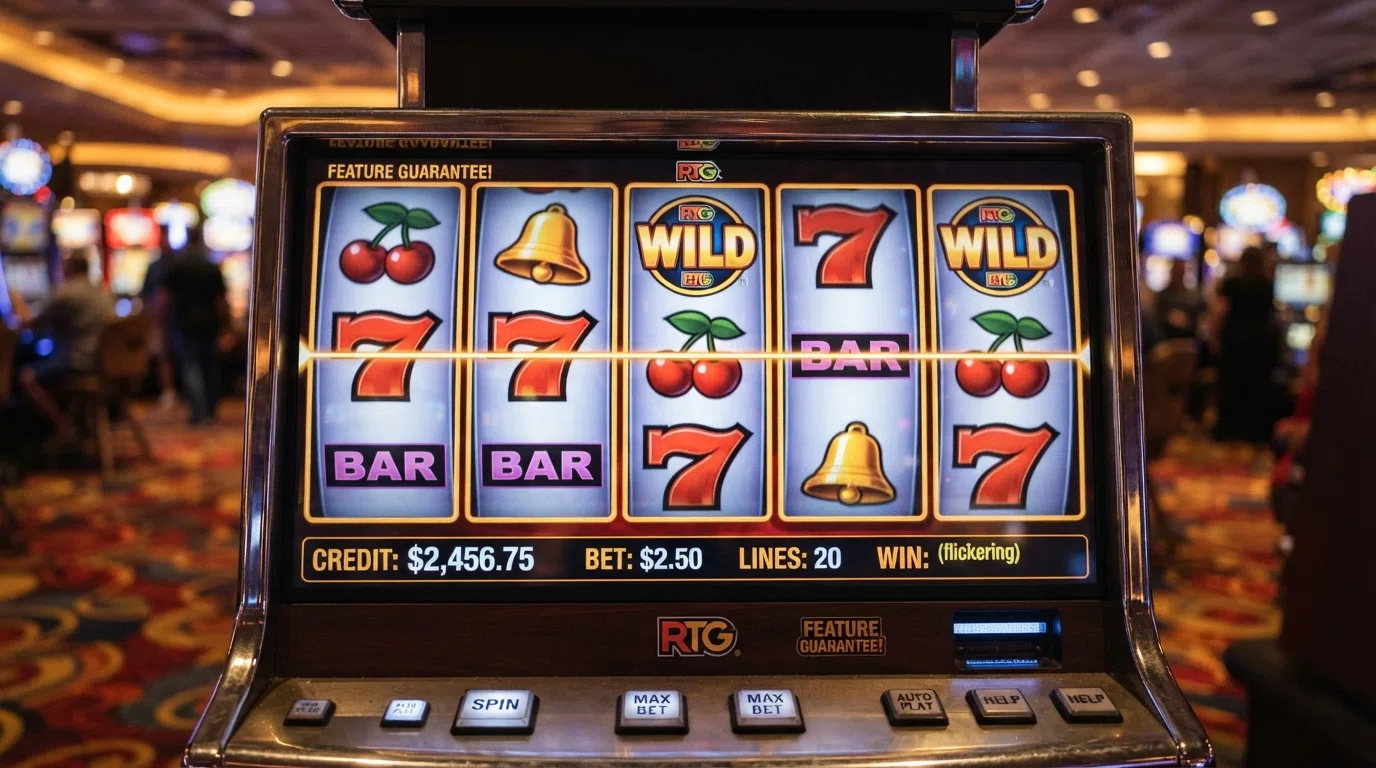
The math model that makes RTG distinctive is the one Wizard of Odds described: high RTP and high volatility held together by a 50,000x line bet cap on maximum wins. The cap is what makes the model work. A high-volatility game with a generous return rate would, without a ceiling, pay out occasional enormous prizes that distort the long-term math. The ceiling lets RTG offer a competitive return rate to players overall while still giving the chance of a life-changing hit on a single spin. Most RTG titles sit in the 95–97.5% RTP range with medium-to-high volatility, and the maximum win on any given spin is capped at 50,000x the line bet.
The consequence for a UK player is that the casino you pick is the variable that determines what you actually get back. The game is the same game; the maths behind it is configured at the operator level. The table below covers three RTG titles with researched RTP, volatility and max-win figures, but every cell comes with the caveat that the value shown is the default or the research-cited figure, and the casino you play at may have set it differently.
The RTG Slot Catalogue: Flagship Titles, Themes and What Sets Them Apart
Three RTG titles carry enough data in the research to profile properly, and they happen to be the three most-cited in the broader RTG coverage. Each sits in a different part of the catalogue, and each illustrates a different feature of the RTG math model.
Cash Bandits 3 is the heist-themed flagship. Released in July 2020, it runs on a 5×3 reel grid with 25 paylines, a default RTP of 96.5%, high volatility, and a maximum win of up to 50,000x the line bet. The Vault Feature is the bonus mechanic: a pick-and-collect game where the right combination of safe-cracking choices can trigger free spins with multipliers. The 50,000x ceiling is what makes the high RTP and the high volatility work together. The title is a strong demo mode candidate, because the Vault Feature has enough complexity to be worth learning before real money is on the line.
Caesar’s Empire is the ancient-Rome themed progressive. Released in 2011, it runs on a 5×3 reel grid with 20 adjustable paylines, an RTP around 97% (with ~95% and ~91% versions also in circulation, since operators configure the setting), high volatility, and a maximum win around 7,500x. A random progressive jackpot supplements the base game, which means the headline max-win figure is not the only prize on offer; the progressive can land on any spin regardless of the base-game outcome. The adjustable paylines give the player some control over stake per spin, which interacts with the £5/£2 age-banded stake cap in a way worth noting: a player over 25 can stake up to £5 per game cycle, and the 20 adjustable paylines let that stake be spread across fewer or more lines.
Achilles is the Greek-mythology themed medium-volatility slot. Released in 2012, it runs on 20 fixed paylines, a default RTP of 95% (with ~97% and ~91% operator-configured versions in circulation), medium volatility, and a maximum win around 2,500x. Achilles is the medium-volatility anchor of the three, the one where the variance is lower and the session is more likely to be steady than spiky. The 95% default RTP is the lowest of the three, and the operator-configured ~91% version is the figure a player should specifically check for: a casino running Achilles at 91% RTP is running a materially worse game for the player than one running it at 95% or 97%.
The 300+ game portfolio includes table games, video poker variants, specialty games and scratch cards, with new releases arriving monthly. Fú Lóng Treasures and Henferno are the two released in August 2026, and they illustrate the kind of range RTG continues to publish: an Asian-themed title and a novelty title, both delivered in HTML5 for instant play.
RTG Slot RTP and Payout Rates: What the Numbers Actually Mean
The RTP figure on an RTG slot is the percentage of all wagered money the game returns to players over the long run. A 96.5% RTP means that, across millions of spins, the game pays back £96.50 for every £100 staked. The “long run” is the operative phrase: in any single session, the actual return can be far above or far below the published figure, and the volatility of the game determines how widely that return swings around the average.
The RTG range of 95–97.5% is competitive with the broader online slots market. Industry-wide, most online slots sit in the 94–97% range, with a few above 97% and a few below 94%. RTG’s distinctive feature is the combination of that RTP range with high volatility and the 50,000x line bet cap, which lets the math hold together.
The asterisk on every RTG RTP figure is the operator configuration. The table below shows the research-cited RTP, volatility and max-win for three titles, but the casino you play at may have set each one within the range RTG allows. For a UK player, the practical question is not “what is the RTP of Cash Bandits 3” but “what is the RTP of Cash Bandits 3 at the specific casino I am playing at.” The answer lives in the game’s information panel, not in any single published figure.
| Slot Title | RTP | Volatility | Max Win |
|---|---|---|---|
| Cash Bandits 3 | 96.5% | High | 50,000x line bet |
| Caesar’s Empire | ~97% | High | ~7,500x |
| Achilles | 95% | Medium | ~2,500x |
The volatility column is where research carries data; titles outside this three-name set take the no-data marker in the table above. The max-win figures are the base-game maximums; Caesar’s Empire’s random progressive jackpot can pay beyond the 7,500x base figure, and any RTG slot can theoretically hit the 50,000x line bet cap.
Table Games, Video Poker and the Rest: RTG Beyond the Slots
The non-slot side of the RTG catalogue is substantial, and it is the part of the library that often gets overlooked in RTG coverage focused on flagship slots. The 300+ game portfolio includes table games, video poker variants, specialty games and scratch cards, all delivered through the same HTML5 instant-play platform that serves the slots.
The table game selection covers the standard blackjack, roulette and baccarat variants, with enough variation in rules and side bets to give a table-game player options. The video poker catalogue includes the standard pay-table variants, and the specialty games and scratch cards fill out the casual end of the portfolio. Every game in the catalogue is covered by the same Gaming Laboratories International certificate and TST Global testing that applies to the slots, so the fairness audit is portfolio-wide rather than title-specific.
The practical comparison for a UK player is between RTG’s table games and the live dealer experience offered by the same casino. LeoVegas and Fortune Mobile both run Evolution-powered live dealer lobbies, and the live dealer product is generally the more immersive table-game experience. RTG’s table games are the RNG alternative: faster, simpler, available 24/7 without a seat at a table. Both sit under the same UKGC licence and the same regulatory caps.
The HTML5 delivery model means every game in the RTG catalogue, slots and non-slots alike, runs in a browser without a download. The instant-play platform is one of RTG’s structural advantages, and it is the reason a mobile browser at LeoVegas or Fortune Mobile can serve the full RTG library without a native app.
What a UK RTG Casino Bonus Is Really Worth After the Wagering Requirements
The single most important change to UK casino bonuses in recent years is the 10× wagering cap, in force from 19 December 2025 under LCCP Social Responsibility Code 5.1.1. Every bonus offered by every UKGC-licensed casino is now capped at ten times the bonus amount in wagering requirements. An offer that asks a player to wager 35x or 50x the bonus, which is the norm in many offshore markets, is no longer legal in the UK. The cap is structural: it changes the maths of every welcome offer, every free spin bundle and every reload bonus at every UKGC-licensed casino.
Wagering means turnover: the total amount a player must stake before bonus funds or bonus-related winnings become withdrawable. A 10× wagering requirement on a £10 bonus means £100 in total stakes before the bonus clears. A 10× requirement on a £100 bonus means £1,000 in stakes. The lower the bonus, the lower the total stake burden, which is part of the reason UK no-deposit bonuses tend to be small: the no-deposit bonus range at UK casinos runs from £5 to £10, and the 10× cap means a £10 no-deposit bonus requires £100 in total turnover to clear.
The expected-loss calculation for that £10 bonus at a 96.5% RTP game (Cash Bandits 3’s default) is straightforward. The required turnover is £10 × 10 = £100. The expected loss on that turnover at 96.5% RTP is £100 × (1 − 0.965) = £3.50. The “free” £10 bonus carries an expected cost of £3.50 to clear, assuming only the bonus amount is wagered and the game is running at its default RTP. At a 95% RTP setting, the same calculation gives £100 × (1 − 0.95) = £5.00 expected loss. The operator-configurable RTP is the variable that determines which end of that range the player actually faces.
A £3.50 expected cost to clear a £10 no-deposit bonus is the kind of number that is easy to skip past. It sounds small, and in absolute terms it is. But the comparison that matters is what the £10 bonus is worth against the £3.50 cost: the bonus is worth £10 in face value, the cost to clear it is £3.50 at 96.5% RTP, and the ratio is what determines whether the offer is worth claiming. A player who expects to enjoy the session regardless of the bonus outcome is in a different position from a player who is claiming the bonus primarily for its cash value. The 10× cap makes UK bonuses objectively more achievable than pre-2025 offers, but achievable and worth claiming are not the same thing.
The broader context for UK bonus generosity is the operator-side tax burden. Remote Gaming Duty rose from 21% to 40% from 1 April 2026, and the statutory levy adds 1.1% of gross gambling yield on top. A 40% operator-side duty on profits is one of the highest in the world, and it directly constrains how generous UK welcome offers can be. The 10× cap is the player-facing limit; the 40% duty is the operator-facing limit, and both push UK bonuses toward smaller headline amounts and tighter terms than offshore markets.
Welcome and Match Bonuses at UK RTG Casinos
The standard UK welcome package at a UKGC-licensed casino is a match bonus: the casino matches a percentage of the first deposit up to a cap, with the bonus funds subject to the 10× wagering requirement. A typical structure is a 100% match up to a cap, though the percentage and the cap vary by operator. The 10× cap applies to both the deposit and the bonus, which means the total turnover required is calculated on the combined amount, not on the bonus alone.
The validity window to clear the wagering requirement varies by operator and is not specified in the research for any of the ten featured brands. The practical implication is that the player needs to check each operator’s terms for the specific window, and plan the clearing play within it. A short window on a large bonus is a harder offer to clear than a long window on the same bonus, and the difference is the difference between a achievable bonus and one that expires before the wagering is complete.
The right way to compare two welcome offers is not by headline bonus size. A £200 bonus with a 10× cap requires £2,000 in total turnover, and the expected cost of clearing it at a 96.5% RTP game is £2,000 × 0.035 = £70. A £50 bonus with a 10× cap requires £500 in total turnover, and the expected cost of clearing it at the same RTP is £500 × 0.035 = £17.50. The £200 offer is worth four times the headline amount, but it costs four times as much to clear, and the ratio is the same. The comparison that matters is the ratio of bonus value to expected clearing cost, not the bonus size alone.
For a UK RTG player, the practical advice is straightforward: compare offers on total turnover required, not on headline bonus size, and check the operator’s RTP setting on the games you intend to play. The 10× cap is the structural ceiling; the RTP setting is the variable that determines the real cost.
No-Deposit Bonuses, Free Spins and Slot Tournaments at RTG Casinos
No-deposit bonuses at UK RTG casinos are small by design. The £5 to £10 range reflects the 10× wagering cap and the operator-side tax burden, and the math above shows what the cost of clearing a £10 no-deposit bonus looks like at a 96.5% RTP game. Free spins are the more common format at UK casinos: a bundle of spins on a specific RTG title, with any winnings treated as bonus funds subject to the 10× wagering requirement.
The free spin offer typically names the RTG title in the terms, and the RTP of that title at the specific casino is the variable that determines the expected value. A free spin bundle on Cash Bandits 3 at a casino running the game at 96.5% RTP has a different expected value from the same bundle at a casino running it at 91%, and the difference is the difference between a worthwhile free-play offer and one that is not.
Slot tournaments are the non-bonus way to compete on RTG titles without staking bonus funds. A tournament entry fee is usually optional, the prize pool is funded by the operator, and the wagering requirement that applies to bonuses does not apply to tournament winnings. For a player who wants to play RTG slots competitively without the clearing-cost math, tournaments are the cleaner format. The trade-off is that tournament play is structured: a fixed duration, a fixed game, a leaderboard, and a prize structure that concentrates the value at the top.
The 10× wagering cap applies to no-deposit bonuses, free spin winnings and match bonuses alike, because the cap is on GB-licensed casino bonuses as a category, not on any specific bonus type. The one exclusion is mixed-product offers, which were banned at the same time the 10× cap came in. A bonus that combines a casino bonus with a sports betting bonus, for example, is no longer legal under the UKGC rules.
Playing RTG Slots for Free: What Demo Mode Gets Right — and What It Leaves Out
Demo mode is the closest thing to a free trial an RTG slot offers, and it is available on slots at LeoVegas, Mr.Play and Fortune Mobile, with the other featured operators to be checked on arrival. The format is straightforward: virtual credits instead of real money, no deposit required, no registration required at many UKGC casinos. The player loads the game, selects “play for fun” or the equivalent option, and the slot runs with the same mechanics, the same bonus features and the same volatility as the real-money version.
What demo mode teaches you is the game itself. The mechanics of Cash Bandits 3’s Vault Feature, the adjustable paylines on Caesar’s Empire, the fixed-payline structure of Achilles — all of these are learnable in demo mode without any financial risk. The volatility feel, which is the texture of how often the game pays and how much it pays when it does, is also testable in demo, because the random number generator runs the same way regardless of whether the credits are real or virtual. A player who spends twenty minutes in demo mode on a high-volatility RTG slot will have a much better sense of the session shape than a player who reads a review and deposits.
What demo mode hides is everything outside the game. The real-money withdrawal process, which at a fast UK casino can complete in under an hour via PayPal, is invisible in demo. The £5/£2 age-banded stake cap, which limits a player over 25 to £5 per game cycle and a player aged 18–24 to £2, does not apply to demo play, so the cap is something the player has to discover on their first real-money session. The psychological weight of real losses, which is the part of the experience that the UK’s responsible gambling framework is built around, is absent from demo by definition.
The practical advice is to use demo mode as a learning tool and not as a substitute for the real-money experience. Try the game, learn the mechanics, feel the volatility, and then make the deposit decision with eyes open. The demo phase costs nothing; the real-money phase is where the stake cap, the wagering requirements and the withdrawal clock all start running.
How Fast Your RTG Casino Withdrawal Actually Hits Your Account
The withdrawal speed at a UK RTG casino depends primarily on the payment method, and the payment method hierarchy is consistent across the market. E-wallets are the fastest, debit cards and bank transfers are slower, and credit cards are not an option at all for UK players, having been banned for gambling payments since 14 April 2020 under LCCP licence condition 6.1.2.
PayPal is the fastest documented method at UK casinos. The research-cited figure is 0–24 hours typical, with the quickest recorded times under one hour. Skrill and Neteller sit in the same e-wallet tier and follow the same general pattern: fast, often same-day, and consistently ahead of debit card or bank transfer timelines. The practical reason is that e-wallet withdrawals are processed within the operator’s payment system without the bank-processing delay that applies to debit card and bank transfer payouts.
Debit card and bank transfer timelines are not specified in the research beyond the qualitative note that e-wallets are “consistently the fastest withdrawal method.” A typical UK casino debit card withdrawal takes 1–3 working days, and a bank transfer can take 3–5 working days, though the exact figures vary by operator. The fastest documented PayPal withdrawal, at under one hour, is the benchmark the rest of the market is measured against.
Paysafecard is a deposit method with a withdrawal limitation: the Paysafecard voucher system is designed for deposits, and most UK casinos cannot withdraw back to a Paysafecard voucher. A player who deposits via Paysafecard typically needs to withdraw via a different method, usually a bank transfer. The restriction is operational rather than regulatory, and it is worth knowing before choosing Paysafecard as the deposit method.
The credit card ban extends to credit-card-funded e-wallet transactions, which means a player who funds their PayPal or Skrill account with a credit card cannot use that e-wallet for gambling at a UKGC-licensed casino. The LCCP condition 6.1.2 covers the funding source, not just the payment method at the casino. A debit-card-funded e-wallet is unaffected.
For a UK RTG player who values withdrawal speed, the practical advice is to deposit and withdraw via PayPal or another e-wallet, funded from a debit card or bank account, and to check the operator’s published withdrawal timeframes before the first deposit. The fastest documented UK withdrawal is under one hour via PayPal, and that benchmark is the one to measure every other method against.
RTG on Mobile: Why No Dedicated App Is Actually Fine
RTG’s HTML5 design means every game in the portfolio runs in a mobile browser without a download, a plugin or a native app. The instant-play delivery model is one of RTG’s structural advantages, and it is the reason a player can load Cash Bandits 3 or Achilles on a phone browser and get the same experience as on desktop. Most of the 300+ game portfolio is HTML5-compatible, though some older releases may be desktop-only, and the current lobby at any given casino shows which titles are mobile-ready.
The mobile experience at the ten featured operators falls into two groups. LeoVegas and Fortune Mobile offer native apps: LeoVegas on both iOS and Android, Fortune Mobile with a native Android app and an iOS mobile-optimised site. The other eight operators — Mr.Play, Swift, Conquer, Win Windsor, Great Britain, Karamba, Vegas Wins and Funky Jackpot — are mobile-optimised browser experiences, with no native app. The browser experience at these brands is the HTML5 instant-play delivery that RTG was built for.
The comparison between native app and mobile browser is a matter of trade-offs. A native app gives push notifications, biometric login, and a faster perceived load time, because the game assets are cached locally after the first session. A mobile browser gives no download requirement, no app-store friction, and the ability to switch between casinos without installing and uninstalling apps. For a player who plays at one casino regularly, the native app is the more convenient option. For a player who compares casinos or switches between them, the mobile browser is the more flexible option.
The RTG game library is the same in either format. HTML5 delivery means the game runs identically on a phone browser and inside a native app, because the native app is essentially a browser shell that loads the same HTML5 game. The app advantage is the wrapper, not the game.
New RTG Casinos Launched in 2026: Same Rules, Fresh Lobby
A “new RTG casino” in the UK market in 2026 is a recently launched site carrying RTG titles in its multi-provider lobby, not a newly licensed RTG entity. RTG Slots has held its UKGC and Isle of Man licences since the 2022 brand split, and the software licence predates any new casino using it. What changes is the operator: a new casino launching with an RTG integration is using an established software product under a fresh operator licence.
The regulatory framework for a new UKGC-licensed RTG casino is identical to the framework for an established one. The 10× wagering cap applies from 19 December 2025 regardless of when the casino launched. The £5/£2 age-banded stake cap applies to every spin. GAMSTOP enrolment is mandatory. Identity verification happens before the first deposit. The rules do not soften for new operators, and the obligations do not phase in over a launch grace period.
The practical evaluation of a new RTG casino follows the same checklist as an established one. Check the UKGC public register entry and the licence date: a recent register entry means a recent licence, and a longer history is generally a sign of operational stability. Review the provider list for RTG/SpinLogic titles and confirm the specific games you want to play are in the lobby. Test the mobile experience before depositing, because a new casino may have a less mature mobile product than an established one. Check the welcome bonus terms against the 10× wagering cap, and check the payment methods for e-wallet support if withdrawal speed matters.
The newest RTG slot releases are a reason to check what a new casino’s lobby actually carries. Fú Lóng Treasures and Henferno, both landing in August 2026, are the two most recent RTG titles, and a new casino launching around that date may have them available before older operators add them. The novelty is a marketing point, but the regulatory framework is the same.
A new casino at the UKGC-licensed end of the market is not a higher-risk option by virtue of being new. The UKGC licence is the structural safeguard, and the operator’s track record at the regulator is the variable. A new operator with a clean licence and a complete responsible gambling setup is not materially riskier than an established one with a longer history but the same licence status.
How to Read an RTG Casino Review So You Pick a Site You’d Actually Trust
Casino review pages rank operators by headline scores, and the scores are built from a mix of bonus size, game count, payout speed and user experience. The score is a useful shorthand, but it cannot do the three checks that matter for a UK RTG player.
The first check is the UKGC public register. The register at gamblingcommission.gov.uk/public-register/businesses is searchable by operator name and shows the current licence status, the trading names, the licence type and any conditions attached. A review page that says an operator is “UKGC-licensed” is reporting what the industry directory or the operator’s own footer says; the register is the only place that confirms the licence is active, unrestricted and covers the specific trading name you are about to deposit with. The check takes a minute and it is the single most valuable action a UK player can take before a first deposit.
The second check is the RTP setting on the specific RTG title you want to play. The operator-configurable RTP model means the same game can run at a different return rate at different casinos, and the game information panel inside the slot is the only place that shows the setting for your specific casino. A 96.5% RTP on Cash Bandits 3 at LeoVegas may be a 95% RTP on Cash Bandits 3 at a smaller operator, and the difference is a 1.5-percentage-point swing in the return rate, which compounds over hundreds of spins. The check takes ten seconds: load the game in demo or real-money mode, open the information panel, and read the RTP figure.
The third check is the bonus terms against the 10× statutory cap. Every bonus at a UKGC-licensed casino must have a wagering requirement of 10× or less. A bonus with a 20× or 35× requirement is in breach of LCCP SR Code 5.1.1 and should not be offered at a UKGC-licensed casino. If a review page or an operator’s terms page shows a wagering multiple above 10×, the player should not claim the bonus and should consider whether the operator’s compliance is worth trusting with a deposit.
The rating criteria that matter most for an RTG casino are the ones a review page may or may not weight heavily. RTG title count in the lobby is the most direct measure of how much RTG content the operator actually surfaces, and it is more useful than the overall slot count, which includes non-RTG games. Demo mode availability is the single most useful player tool, because it lets a player try before depositing. E-wallet withdrawal support, particularly PayPal, is the variable that determines how fast a withdrawal lands. A review page that scores these criteria explicitly is more useful than one that scores only headline bonus size.
The Rules That Shape Every RTG Spin in the UK: Licensing, Caps and Protections
The UK Gambling Commission is a statutory regulator and an executive non-departmental public body sponsored by the Department for Culture, Media and Sport. It licenses operators, personnel and software, and it publishes a public register of every licence holder. A UKGC licence is the structural permission that allows a casino to offer remote gambling services to customers in Great Britain, and every RTG casino on this list holds one.
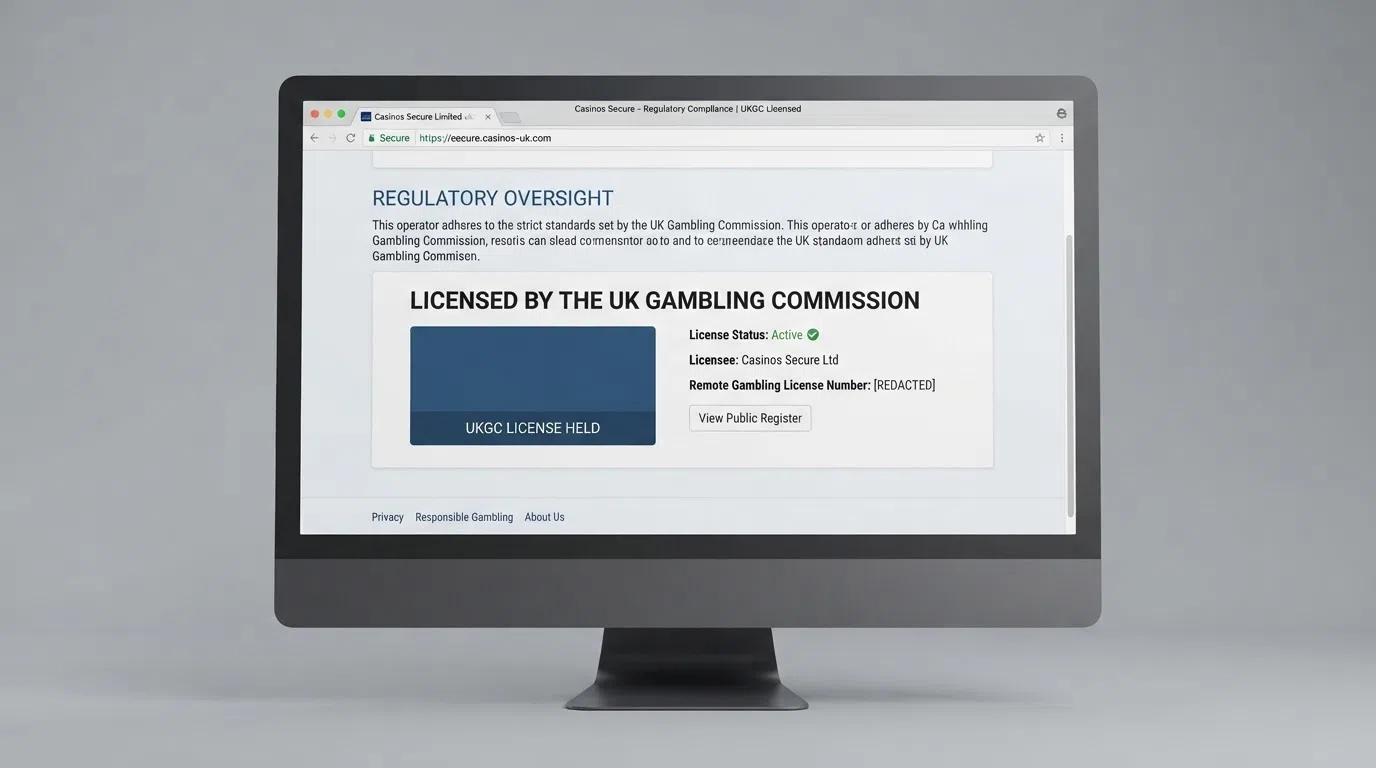
The framework sits on the Gambling Act 2005, extended to remote operators serving GB customers by the Gambling (Licensing and Advertising) Act 2014. The 2014 reform introduced point-of-consumption licensing, which means a casino serving UK customers needs a UKGC licence regardless of where the company is based. The three licensing objectives set out in section 1 of the 2005 Act are preventing gambling from being a source of crime, ensuring gambling is conducted fairly and openly, and protecting children and vulnerable persons. Every UKGC rule, from stake caps to bonus terms to self-exclusion, traces back to those three objectives.
The RTG software licence is a separate layer. RTG Slots holds its own UKGC software licence, which permits the games to be distributed to UKGC-licensed casino operators. A casino using RTG games still needs its own operator licence; the software licence does not transfer. The structure means a casino like LeoVegas or Fortune Mobile can offer RTG titles in its lobby because RTG Slots holds the software licence, and the casino holds the operator licence, and the two are separate regulatory permissions.
The Commission’s enforcement reach is broad. For October 2024 to September 2025, the regulator reported 208,088 enforcement actions on illegal online gambling, with 3,140 disruption notices issued and 447,778 URLs referred to search engines for delisting. The enforcement model is disruption-based: cease-and-desist notices, search-engine delisting requests, domain suspension. The Commission does not hold ISP-blocking powers; legislation has been proposed but not enacted. The practical effect is that offshore RTG casinos without a GB licence can be made harder to find, but they cannot be made unreachable, and the responsibility for not playing at them ultimately sits with the player.
The UK Rules That Change What an RTG Casino Can Do: Stake Caps, Spin Speed and Bonus Limits
The regulatory caps that directly shape the RTG casino experience are denser in the UK than in any other market. The table below covers the key rules, with the effective dates and the specific limits that apply to online slots.
| Rule | Limit | Effective Date |
|---|---|---|
| Maximum stake per game cycle (25+) | £5 | 9 April 2025 |
| Maximum stake per game cycle (18–24) | £2 | 21 May 2025 |
| Bonus wagering requirement | 10× maximum | 19 December 2025 |
| Auto-play | Banned | 31 October 2021 |
| Spin speed minimum | 2.5 seconds per game cycle | 31 October 2021 |
| Losses disguised as wins | Banned | 31 October 2021 |
| Reverse withdrawals | Banned | 31 October 2021 |
| Gross deposit limit (offered to customers) | Mandatory | 30 September 2026 (extended) |
The £5/£2 age-banded stake cap is the rule that most directly changes the RTG experience. Two adults at the same casino can face different maximum bets on the same slot, because the cap depends on the player’s age, not the casino’s policy. A player over 25 can stake up to £5 per game cycle; a player aged 18–24 can stake up to £2. The cap applies to the total staked within one game cycle and cannot be defeated by splitting a spin across multiple bets. Imposed by SI 2025/215, the cap is statutory and applies to every UKGC-licensed casino.
The 10× wagering cap on bonuses, in force from 19 December 2025 under LCCP Social Responsibility Code 5.1.1, is the rule that most directly changes the value of a welcome offer. The cap applies to every bonus type: match bonuses, no-deposit bonuses, free spin winnings, reload bonuses. Mixed-product offers that combine a casino bonus with a sports betting bonus are banned. The cap is the structural ceiling on bonus generosity in the UK market.
The game-design limits effective from 31 October 2021 banned auto-play, set a 2.5-second minimum on spin speed, banned features that speed up play, banned losses disguised as wins, and permanently banned reverse withdrawals. The spin speed minimum is the rule that slows the RTG experience down: every spin takes at least two and a half seconds, which limits the number of spins a player can complete in a session and limits the total amount that can be staked in a given time window. The combination of the spin speed minimum and the stake cap is the structural mechanism that limits session spend.
The gross deposit limit requirement under RTS 12, effective 30 September 2026, is the newest rule. Operators must offer a gross deposit limit based solely on money paid into the account, and only that form may be called a “deposit limit.” The rule standardises the deposit-limit terminology across the market and ensures that a player setting a deposit limit is setting a limit on actual money paid in, not on net deposits after withdrawals.
Player Money, Tax and the Offshore Reality
UK players pay no tax on gambling winnings. The player-side betting duty was abolished in 2001, and the current tax structure falls entirely on operators. Remote Gaming Duty, the operator-side duty on online casino profits, rose from 21% to 40% with effect from 1 April 2026. The statutory levy, which replaced voluntary operator contributions from 6 April 2025, adds 1.1% of gross gambling yield for remote casino, remote bingo and gambling software licences. The combined operator-side burden is among the highest in the world, and it directly constrains how generous UK welcome offers can be.
Credit cards are banned for gambling payments in Great Britain since 14 April 2020 under LCCP licence condition 6.1.2, and the ban extends to credit-card-funded e-wallet transactions. A player who funds PayPal or Skrill with a credit card cannot use that e-wallet for gambling at a UKGC-licensed casino. The rule is a consumer protection measure: it prevents the accumulation of gambling debt on high-interest credit, and it has been broadly supported since implementation.
Offshore RTG casinos without a GB licence are operating illegally when they target UK customers. Unlicensed provision is a criminal offence under section 33 of the Gambling Act 2005, carrying up to 51 weeks’ imprisonment and/or an unlimited fine. The enforcement model is disruption-based: cease-and-desist notices, search-engine delisting requests, domain suspension. For October 2024 to September 2025, the Commission reported 208,088 enforcement actions and 447,778 URLs referred for delisting. The Commission does not hold ISP-blocking powers; legislation has been proposed but not enacted.
The UK online slots market generated £773 million in gross gambling yield for January to March 2026, up 12% year-on-year, with 25.1 billion spins in the quarter and 4.8 million average monthly active accounts. The numbers confirm that the licensed market is large and active, and that the offshore market exists because players seek alternatives the licensed market does not offer. The licensed market is the safer option; the offshore market is the unregulated one, and the choice is the player’s to make.
Staying in Safe Territory: The Tools Every UK RTG Player Already Has Access To
The responsible gambling infrastructure in the UK is the most developed in the world, and every UKGC-licensed RTG casino offers it as a condition of holding a licence. GAMSTOP is the national multi-operator self-exclusion scheme, mandatory for every GB-licensed online operator since 31 March 2020. Exclusion periods run to 6 months, 1 year, 5 years, or 5 years with auto-renewal. An exclusion cannot be cancelled early, and it continues for up to 7 years after expiry if not renewed. A player who registers with GAMSTOP is excluded from every UKGC-licensed online casino for the chosen period, not just the one where they registered.
Deposit limits are a mandatory offer at every UKGC-licensed casino. Decreases to a deposit limit are actioned immediately; increases may be delayed, typically by 24 hours or longer, to give the player a cooling-off period. From 30 September 2026, the gross deposit limit under RTS 12 becomes the standardised format, and only the gross form may be called a “deposit limit.” The practical effect is that a player who sets a deposit limit is setting a cap on money paid in, and the cap is enforced by the operator.
Reality checks and time-outs are the built-in session controls. A reality check is a pop-up that appears at set intervals during a play session, showing the player how long they have been playing and how much they have won or lost. Time-outs are short-term self-exclusion options, typically 24 hours to 6 weeks, that block access to the casino without the longer commitment of a GAMSTOP registration. Both are mandatory offers at every UKGC-licensed casino.
The prevalence context matters. The NHS Adult Psychiatric Morbidity Survey for 2023–24 found 0.4% of adults in England experienced problem gambling (PGSI score of 8 or more) and 1.6% experienced at least moderate-risk gambling (PGSI 3 or more). The Health Survey for England for 2024 found 5% of adults had a PGSI score of 1 or more, covering both at-risk and problem gambling, with men at 7% and women at 3%. The figures are stable over time, which suggests the regulatory framework is holding the prevalence rate roughly constant rather than reducing it.
GamCare, which runs the National Gambling Helpline on 0808 8020 133, reported making 996 referrals to treatment and peer-based support services in January 2026, a 48% increase from 674 in January 2025. The year-on-year jump in referrals is a leading indicator: more people are seeking help, and the help infrastructure is responding. The broader infrastructure includes GambleAware, which funds research, prevention and treatment; NHS gambling harm clinics, available in England, Scotland and Wales; and Gamblers Anonymous, the peer support network. Every UKGC-licensed RTG casino links to these services in its responsible gambling section, and the links are not optional.
The tools are built into the licence. A UK player does not need to seek out a responsible gambling section; it is there, and it works, and it is the reason the UK framework is the most protective in the world.
How We Ranked the Best RTG Casinos: Sources, Criteria and What We Checked
The ten featured operators were identified from the SiGMA World industry directory, which tags brands as UKGC-licensed and is a non-affiliate industry signal. CasinoFreak and Wizard of Odds provided the RTG-specific software and game analysis used in the catalogue and RTP sections. The UK Gambling Commission’s public register at gamblingcommission.gov.uk/public-register/businesses was the framework for licence verification, though individual brand verification against the live register was not completed in this research run, and every operator should be checked before publication. The register holds 2,663 active business records and is updated daily.
The ranking criteria applied were UKGC licence status, confirmed RTG/SpinLogic game availability, slot library size where stated, demo mode availability, and mobile experience quality. No operator was ranked on bonus size, affiliate revenue or promotional consideration, because those criteria distort the comparison toward the offer rather than the product. The slot count, demo mode and provider list data are subject to change and should be rechecked at the time of publication, because multi-provider lobbies shift with each release schedule.
The ten featured operators represent UKGC-licensed multi-provider casinos confirmed to carry RTG games. Pure-play RTG specialists that are Curaçao-licensed offshore operators and exclude UK players, including Sloto’Cash, Grande Vegas, Casino Extreme, Jackpot Capital and Las Vegas USA, were excluded from the ranked list because they are not legally accessible to UK players. The structural reality is that a UK player seeking RTG games accesses them through UKGC-licensed multi-provider casinos, and the page reflects that.
The ranking is qualitative and reflects the data available at the time of research. Operators with more confirmed data points, including LeoVegas and Fortune Mobile, appear higher because there is more to say about them with confidence. Operators with thinner data appear lower, not because they are worse, but because there is less verified information to compare on. The table and the individual profiles should be read together: the table gives the at-a-glance comparison, and the profiles give the detail.
Your RTG Casino Shortlist: Use What the Rules Give You
The UK’s regulatory framework is the most protective in the world, and the tools it gives a player cost nothing. A £5 maximum stake per spin. A 10× ceiling on bonus wagering. A 2.5-second minimum on every spin. Mandatory GAMSTOP enrolment. Mandatory deposit limits. Reality checks. Time-outs. The framework is designed to slow the session down, cap the damage and give a player the means to step away.
The single most valuable action is to try any RTG title in demo mode before depositing. Demo mode costs nothing, and you cannot lose what you have not staked. The RTG catalogue is deep, the math model is player-favourable at high RTP settings, and the flagship titles — Cash Bandits 3, Caesar’s Empire, Achilles — are worth learning in demo before real money is on the line. The volatility feel, the bonus mechanics and the payline structure are all testable in demo, and the twenty minutes spent testing is twenty minutes where the stake cap and the wagering requirement are not running.
When you do deposit, the checklist is short. Check the UKGC public register entry for the specific trading name you are about to deposit with. Confirm the RTP setting on the RTG title you want to play by reading the in-game information panel. Compare the bonus turnover against the 10× statutory cap, and calculate the expected clearing cost using the formula in the bonuses section. Set a deposit limit before your first session, and use the decrease-immediate, increase-delayed structure to your advantage by setting the limit lower than you think you need and raising it only after a cooling-off period.
The expected-loss calculation in the bonuses section shows that even a small bonus costs real money to clear. A £10 no-deposit bonus at a 96.5% RTP game costs £3.50 in expected loss to clear. At a 95% RTP setting, the same bonus costs £5.00. The numbers are not large, but they are real, and they illustrate the principle: the “free” money in a bonus offer is never free, and the operator-configurable RTP is the variable that determines the real cost.
The casino you pick is the variable that determines what you actually get from an RTG slot. The game is the same game across operators; the math behind it is configured at the operator level. The UKGC licence, the 10× wagering cap, the £5/£2 stake limit and the GAMSTOP infrastructure are the structural protections, and they are already in place at every operator on this page. The choices a player makes within that framework are the ones that determine the outcome.
If gambling stops being entertainment, the help is already there. GAMSTOP for self-exclusion across every UKGC-licensed casino. GamCare on 0808 8020 133 for the National Gambling Helpline. Deposit limits and reality checks built into every casino on this page. The infrastructure is the most developed in the world, and it is there because the regulatory framework requires it. Using it is not a sign of failure; it is the framework working as intended.
Frequently Asked Questions
What is the maximum I can stake per spin on RTG slots in the UK?
The maximum stake per game cycle on online slots in Great Britain is £5 for players aged 25 and over and £2 for players aged 18–24, imposed by SI 2025/215. The cap applies to the total staked within one game cycle and cannot be defeated by splitting a spin. Two adults at the same RTG casino can face different maximum bets on the same slot because the cap is age-banded, not operator-set.
Can I get a no-deposit bonus at a UK-licensed RTG casino?
Yes, no-deposit bonuses are available at UKGC-licensed casinos, typically in the £5 to £10 range. The bonus funds are subject to the 10× wagering requirement that applies to every GB-licensed casino bonus from 19 December 2025, and a £10 no-deposit bonus requires £100 in total turnover to clear. The expected cost of clearing that bonus at a 96.5% RTP game is £3.50; at a 95% RTP setting it rises to £5.00.
How do I check whether an RTG casino actually holds a UKGC licence?
The UK Gambling Commission publishes a public register at gamblingcommission.gov.uk/public-register/businesses, searchable by operator name. The register shows the current licence status, the trading names covered, the licence type and any conditions attached. A UKGC-licensed RTG casino appears on the register with an active status; the check takes a minute and is the single most valuable action before a first deposit.
Why does the same RTG slot show a different RTP at different casinos?
RTG licenses its software on an open-license basis, and each operator configures the return-to-player percentage for the games in its lobby. The published RTP for a given RTG title is the default, but the casino you play at may have set it within the range RTG allows. The in-game information panel at the specific casino shows the RTP setting for that operator, and that is the figure to compare across casinos.
Can I play RTG slots on my phone without downloading an app?
Yes. RTG’s HTML5 delivery model means every game in the catalogue runs in a mobile browser without a download or a plugin. Most of the 300+ game portfolio is mobile-compatible, and the mobile browser experience at LeoVegas, Fortune Mobile, Mr.Play, Swift, Conquer, Win Windsor, Great Britain, Karamba, Vegas Wins and Funky Jackpot covers the full RTG library. LeoVegas and Fortune Mobile also offer native apps for players who prefer the app format.
Do RTG casinos in the UK accept PayPal for withdrawals?
PayPal is accepted at most UKGC-licensed casinos for both deposits and withdrawals, and it is consistently the fastest withdrawal method. The research-cited figure is 0–24 hours typical, with the quickest recorded times under one hour. E-wallets including Skrill and Neteller follow the same general pattern. Credit cards are banned for gambling payments in Great Britain since 14 April 2020, and the ban extends to credit-card-funded e-wallet transactions, so a debit-card-funded or bank-account-funded e-wallet is the way to use PayPal or Skrill for gambling at a UKGC-licensed casino.
Providers – No Minimum Deposit Casinos UK
Content created by the «No Minimum Deposit Casinos UK» team