The best UK keno online casinos, ranked for real-money play
 Available in GB
The short version: ten UKGC-licensed casinos carry keno and accept real-money play in 2026, and the gap between the best and worst of them comes down to wagering rules, not game selection. A wagering cap that took effect on 19 December 2025 has reset what a welcome bonus costs, and the operators that sit at zero wagering now save their players hundreds of pounds per offer compared to anything at the cap. This page ranks the ten, walks through what each one actually offers, and pulls apart the numbers a keno player needs before depositing.
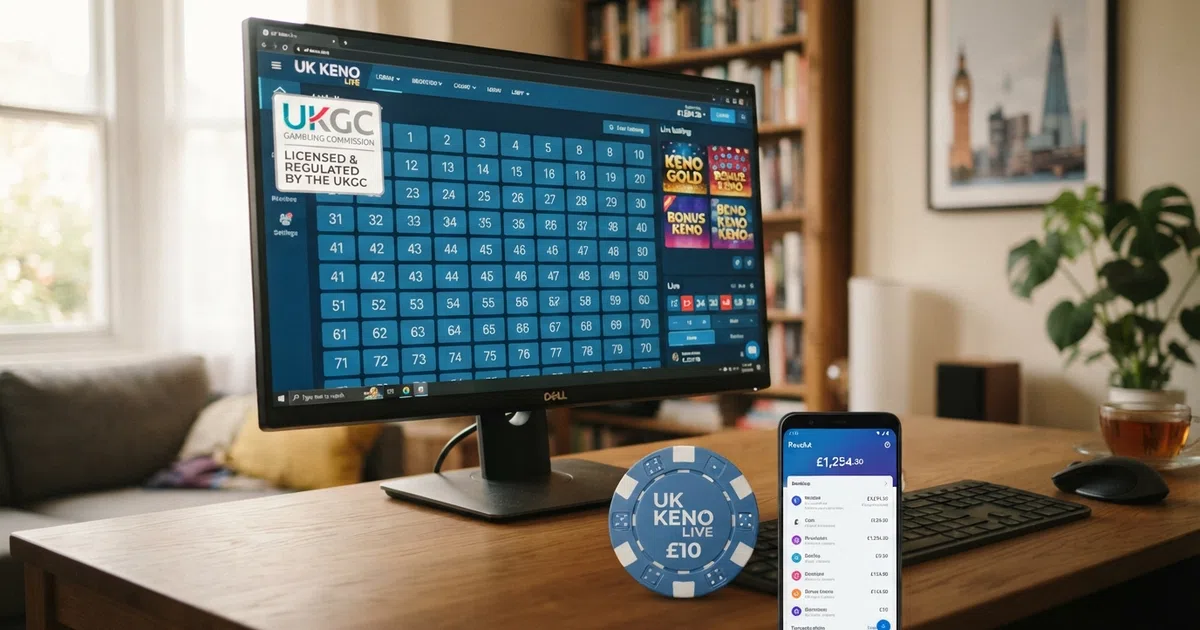
*Data current as of 19 August 2026, verified against the UK Gambling Commission’s public licence register and the operators’ published bonus terms.*
The UK keno casinos that stand out in 2026
Ten casinos made the cut. All hold an active GB operating licence from the UK Gambling Commission, which is the non-negotiable starting point: without that licence, a casino is operating illegally in Great Britain, and the player loses every protection that comes with the regime. The licence register is the verification tool — 2,663 records and counting, updated daily. The rest of the ranking weighs keno game availability, welcome bonus terms, and how the bonus interacts with the December 2025 wagering cap.
One caveat runs through the figures below. Many operators’ welcome offers were published before the 10× wagering cap came into force on 19 December 2025, and some still show older multipliers in their marketing material. The legal cap now applies regardless of what the offer page says. Where a researched bonus carries a multiplier above 10×, the legal maximum is what the player actually faces.
Also relevant before any deposit: UK-licensed operators have been banned from accepting credit cards, including credit-card-funded e-wallet payments, since 14 April 2020. That ban extends to Skrill, Neteller and PayPal when funded by credit. Debit cards and bank transfers remain the standard routes.
The operator comparison at a glance
| Operator | UKGC Licence | Welcome Bonus | Wagering | Keno Games |
|---|---|---|---|---|
| bet365 | Active (Hillside Media, no. 55149) | Up to 500 free spins | 0× | Yes, incl. Evolution Live Keno |
| Sky Vegas | Active (Bonne Terre Gaming) | 50 no-deposit spins + 200 on deposit | 10× (deposit spins) | Specialty/instant-win |
| Ladbrokes | Active (LC International) | £50 bonus spins on £10 deposit | 10× (capped) | Yes, 1,800+ slots incl. keno |
| 888 Casino | Active (888 UK Ltd, since 2014) | 88 no-deposit spins + 100% to £100 | 1× (no-deposit); 10× cap (deposit) | Yes |
| Genting Casino | Active | — | — | Yes |
| Betfair | Active (Flutter Entertainment) | 50 no-deposit spins + 100 on deposit | 0× | Specialty games |
| Betfred | Active | 200 wager-free spins on £10 stake | 0× | Casino lobby |
| Coral | Active (Entain / LC International) | 100 free spins on £10 deposit/play | 10× (capped) | Yes |
| bwin | Active (Entain) | — | — | Yes |
| Unibet | Active | £40 casino bonus on £10 deposit | 10× cap (quoted 50× pre-dates cap) | 5 versions incl. Lightning Box, Tutan |
The wagering column shows where each operator sits relative to the 10× legal maximum. Three operators — bet365, Betfair and Betfred — sit at 0×, meaning the free spins pay out as cash with no turnover requirement. That is a categorically different offer from anything at the cap, and the difference is not small: a player who wins £20 from wager-free spins keeps £20, while a player who wins £20 from spins at 10× wagering has to gamble £200 before the original winnings become withdrawable, and the expected loss across that turnover at keno’s house edge runs from £10 to £16.
The keno games column reflects where the operator’s game lobby actually stocks keno titles. Bet365 is the clearest case for a keno-focused player, because it carries Evolution Live Keno in the live lobby alongside standard RNG keno. Genting and bwin carry keno per UK review-site identification, though specific title counts are not in the public record. Unibet is the only operator in the set with a named, multi-version keno catalogue: five titles including Lightning Box Keno and Tutan Keno.
bet365
Bet365 is the largest game library in the set and the only operator with a confirmed Evolution Live Keno feed. The keno offering sits across the specialty and instant-win sections, with the live-dealer stream adding the kind of pace a real draw provides. Playtech powers much of the catalogue, and the total count runs past 2,300 games.
The welcome offer is 500 free spins with no wagering. That sits well below the 10× legal cap and below the wagering that applied to most pre-2026 bonuses. A player who clears the spins keeps the resulting balance as cash, with no turnover hurdle and no conversion step.
For a keno player, the appeal is twofold. The live keno stream provides a real-draw experience that RNG keno cannot replicate, and the zero-wager welcome offer means the bonus does not push the player into extended play at the house edge. This ranking reflects the operator’s high standing in keno-focused player reviews.
Sky Vegas
Sky Vegas is the no-deposit entry point of the set. The welcome structure is two-stage: 50 free spins on sign-up, with no deposit required, then 200 additional spins after a £10 deposit and wager. The deposit-stage spins carry 10× wagering — the legal cap.
What the no-deposit half means in practice: a player can register, verify their identity (a legal requirement before any gambling at a UKGC site), and play 50 real-money rounds without paying in. Any winnings carry the same 10× turnover hurdle, but the player has not spent a penny to find out whether the platform suits them.
The trade-off is the 72-hour expiry on the spins. Players who do not use the offer within three days of credit lose it. For a keno player, the lobby stocks specialty and instant-win games, though keno-specific titles are not individually confirmed in the research. Verdict: the right operator for a player who wants to test a UKGC casino before committing, and the only operator that gives 50 shots at a real-money game for free.
Ladbrokes
Ladbrokes is the high-street name with the broadest game catalogue behind bet365: more than 1,800 slots, 85-plus Megaways titles, 30 jackpot slots, and keno in the live and instant-win sections. The welcome is £50 in bonus spins for a £10 deposit, with 10× wagering at the cap.
The 10× wagering on £50 of bonus spins works out as follows: the player needs to wager 10× the bonus received before withdrawing any winnings from those spins. The expected cost of clearing that turnover at keno’s house edge is the calculation that matters, and the section on bonus costs later in this page works through it. For now, the headline is that the bonus is at the legal ceiling rather than below it.
Ladbrokes suits a player who wants the breadth of a major brand’s game library and is comfortable clearing wagering at the cap. Verdict: a solid all-rounder for a slots-and-keno player, though the welcome terms do not match the zero-wager offers from bet365, Betfair or Betfred.
888 Casino
888 is the oldest brand in the set, holding a UKGC licence since 2014. The welcome splits into two distinct parts: 88 no-deposit free spins on sign-up, and a 100% deposit match up to £100 (minimum deposit £20). The no-deposit spins carry 1× wagering, a low figure that reflects how rare no-deposit offers have become. The deposit-match bonus carries a researched 30× multiplier, though that figure pre-dates the 10× legal cap and the cap is what now applies.
The 90-day bonus validity is unusually long and gives a player time to clear the wagering at their own pace. The combination of 88 no-deposit spins and a deposit match is one of the more generous structures in the set, even after the cap.
The research does not detail which keno titles 888 carries, though British Gambler identifies it as a top keno site for UK players. Verdict: the operator for a player who values no-deposit value and a long validity window, and the only one that pairs 88 free spins with a matched deposit bonus. Just note that the deposit-bonus wagering is at the cap, not below it.
Genting Casino
Genting is the land-based pedigree in the set. The UK operations are UKGC-licensed, and both GamblingZone and British Gambler identify it as a leading keno casino for UK players in 2026. Keno game selection is noted; specific titles and bonus structures are not detailed in the research.
That gap matters. Where a block lacks research, the page states what is known and does not invent what is not. Genting’s appeal is the brand’s long history and its UK land-based presence, which translates to a casino-floor feel in the online product. The welcome bonus specifics are not carried in the research and are not detailed here for that reason.
Verdict: the operator for a player who trusts an established UK brand over a newer online-only name, and the one to check directly on the UKGC register and the operator’s site for current keno titles and welcome terms. The research does not support a deeper specification.
Betfair
Betfair is the Flutter-owned exchange brand with a casino product attached. The welcome is 50 no-deposit spins on sign-up plus 100 spins after a £10 deposit and wager, with zero wagering on all welcome spins. That places it alongside bet365 and Betfred at the 0× floor.
The 1,200-plus game library includes instant-win and specialty games. The keno-specific offering is not detailed in the research, though the specialty section is the natural home for keno titles.
For a keno player, the value proposition is the zero-wager welcome and the Flutter backing, which brings the same technology and game-provision infrastructure that powers Sky Bet and Paddy Power. Verdict: a strong no-wager alternative to bet365 with a comparable free-spins structure, though the game library is smaller and the keno-specific offering is less confirmed.
Betfred
Betfred is the high-street bookmaker that also runs a casino. The welcome is a flat 200 wager-free spins for a £10 stake, credited within 48 hours. Zero wagering applies.
The simplicity of the offer is its appeal: deposit £10, stake it, and receive 200 free spins with no turnover requirement on the winnings. The casino lobby carries slots and table games; keno-specific titles are not confirmed in the research.
For a keno player, Betfred suits someone who wants the wager-free structure without the larger spin counts from bet365 or Betfair. Verdict: the cleanest no-wager offer in the set, though the game library and keno-specific depth are less documented than bet365’s.
Coral
Coral is an Entain high-street brand alongside Ladbrokes, sharing the LC International licence structure. The welcome is 100 free spins for a £10 deposit and play, with wagering at the UKGC cap of 10×.
The casino section carries instant-win and table games, and Coral is part of the same Entain group as Ladbrokes and bwin, which means shared technology and game-provision infrastructure. Keno availability is not specifically confirmed in the research.
Verdict: a reasonable choice for a player already in the Entain ecosystem, though the welcome offer does not differentiate Coral from Ladbrokes or bwin on wagering terms.
bwin
Bwin is the second Entain brand in the set, identified by British Gambler as a top keno site for UK players. UKGC licensing is confirmed. Welcome bonus specifics are not carried in the research, and the page does not invent them.
The Entain group connection is the structural point: bwin shares infrastructure and game-provision with Ladbrokes, Coral and GVC Holdings brands. For a keno player, the brand recognition and the Entain backing carry weight, though the lack of detailed bonus information means the player should check the operator’s site directly for current terms.
Verdict: worth considering for a player who values the Entain group and the keno-site identification from UK review outlets, though the research does not support a detailed bonus breakdown. The UKGC cap on wagering applies to whatever offer is running.
Unibet
Unibet is the operator with the most documented keno catalogue in the set: five keno versions, with named titles including Lightning Box Keno and Tutan Keno. The Tutan Keno RTP range sits at 87–92.8%, which is at the lower end of the online keno spectrum — a reminder that named titles do not automatically mean high returns.
The welcome is a £40 casino bonus on a £10 first deposit. The researched wagering multiplier is 50×, though that figure pre-dates the 10× legal cap and the cap is what now applies.
For a keno player, Unibet is the only operator in the set where the keno game selection is itemised. The trade-off is the welcome offer sits at the cap rather than below it, and the named titles do not all carry top-tier RTPs. Verdict: the right choice for a player who wants a named-titles keno catalogue and is comfortable clearing wagering at the cap, though the lower-RTP Tutan title is a reason to check the paytable before committing.
What is keno? The casino game with a lottery heart
Keno is a number-draw game. A player picks between two and fifteen numbers from a grid of 80; the casino draws 20 numbers at random; payouts scale with how many of the player’s picks match the draw. That is the whole game. The format has been a casino staple for decades because it requires no skill, no decision-making after the initial spot selection, and no interaction with other players. The lottery comparison is exact: keno is a numbers game with a fixed house edge and a paytable that scales with hit count.
Online keno differs from the lounge version in two ways. The first is the paytable. Land-based keno typically carries a house edge of 20% to 35%, because the physical operation — staffing, paper tickets, the fixed house take per draw — costs more to run. Online keno with a better paytable can offer RTPs of 92% to 95%, which translates to a house edge of 5% to 8%. The second difference is pace. A live lounge keno draw happens every five or ten minutes. An online draw is instant, with the result generated by a random number generator rather than a physical ball machine.
The game’s place in a UK online casino is in the specialty or instant-win sections. The keno lobby is rarely a front-page category; it sits alongside scratch cards, virtual sports and other number-draw games. A player looking for keno on a UK casino site typically uses the game filter to search “keno” or browses the specialty tab.
UK online keno sits inside a regulated market that recorded £1.5 billion in total online gross gambling yield for October to December 2025, with online slots contributing £788 million of that figure — a 10% year-on-year increase. Keno’s share of that total is a fraction of the slots figure, because keno is a niche product within a niche product (online casino). Its growth tracks the broader online casino market, which is governed by the same regulatory regime.
From bingo hall to browser: how keno moved online
Keno’s origins are in lottery-style number draws, and the game predates the casino industry by centuries. The Chinese keno game is often cited as the original form, and the 20th-century American casino version standardised the 80-number grid and 20-ball draw that online keno still uses. The lounge version ran paper tickets and physical ball machines; the draw happened on a schedule and players waited.
The online transition changed the game in three ways. The first was the random number generator replacing the physical draw, which meant a round could complete in seconds rather than minutes. The second was the paytable: with lower operating costs, online operators could afford to return a higher percentage of stakes to players. The best online keno games offer RTPs of 92% to 95%, against the 20% to 35% house edge of land-based versions. The third was stake flexibility: a player could bet 10p or £1,000 on the same draw, which is not possible at a physical keno lounge.
What did not change is the mathematics. The probability of hitting a given number of spots from an 80-number grid is the same whether the draw is physical or digital. Online keno’s edge comes from the paytable, not from a different probability structure.
Real-money keno vs free-play: what changes when you bet
A real-money keno session costs the stake per draw, multiplied by the number of draws. On a title like Jackpot Keno by Concept Gaming, the stake range runs from £0.10 to £1,000 per round, which means a session can cost anywhere from a few pence to several thousand pounds depending on the player’s stake and draw count.
What changes when real money is at stake is three things. The first is the house edge: a 5–8% edge on online keno means the player loses, on average, 5p to 8p for every pound wagered across a large number of draws. The second is the withdrawal process: real-money winnings are withdrawable subject to the casino’s payment terms, and at a UKGC-licensed site that means a verified payment method, no credit card, and processing times that vary by operator. The third is the regulatory framework: a real-money session at a UKGC-licensed casino carries the full set of player protections — GAMSTOP coverage, ADR access, fund segregation — that free-play does not require.
UK players pay no tax on gambling winnings. Player-side betting duty was abolished in 2001, and the tax burden sits entirely on the operator. A £1,000 keno win at a UK casino is paid out gross, with no HMRC deduction.
Keno’s place in the UK casino market right now
The UK online casino market recorded £1.5 billion in gross gambling yield for October to December 2025, the latest published quarter. Online slots drove £788 million of that, up 10% year-on-year. Keno sits in the remainder, alongside table games, live casino, bingo and other specialty products. Its share is small — keno is a niche within a niche — but the market context matters: a regulated market with stable consumer participation, where 47% of adults gambled in the past four weeks and 37% did so online (September 2025 to January 2026).
The market is also more expensive to operate than it was. Remote Gaming Duty rose from 21% to 40% on 1 April 2026, applying to accounting periods beginning on or after that date. The higher duty does not flow through to the player in the form of lower RTPs — operators cannot reduce RTPs below a fair level without breaching their licence conditions — but it does affect operator margins and, by extension, the promotional offers that fund the welcome bonuses reviewed above. A 40% duty on operator GGY means the operator is paying 40p of every pound of player losses to HMRC before covering their own costs.
How keno is played: odds, payouts and the strategy that genuinely helps
Keno is a game of fixed probability. The 80-number grid, the 20-ball draw, and the paytable that scales with hit count are all determined before the player places a bet. What the player controls is the spot count (how many numbers they pick), the stake, and which keno title they play. Number-selection systems — picking “lucky” numbers, studying hot and cold patterns, following streaks — do not change the probability, because each draw is independent of the last.
The genuine strategic lever is the paytable. Two keno titles with the same rules but different paytables will return different amounts over the same volume of play. The RTP gap between a 92% keno game and a 98% keno game is the difference between losing 8p and losing 2p per pound wagered. Over 1,000 rounds at £1 per round, that gap is £60 — meaningful enough to check before depositing.
The online keno RTP range runs from 92% to 95% for standard titles, with outliers at both ends. Jackpot Keno by Concept Gaming sits at 94.45%. Age of the Gods Keno by Playtech runs at 96.1% with a progressive jackpot overlay. Keno War by Funky Games reaches 98%, classifying it among the highest-RTP keno titles available. The title with the lowest documented RTP in the research is Tutan Keno at 87–92.8%, which is below the standard range.
The rules of keno in 60 seconds
A keno round works as follows. The player chooses a stake, between £0.10 and £1,000 on most UK titles. The player picks between two and ten numbers (or up to fifteen on titles that allow the larger range) from the 80-number grid. The casino draws 20 numbers at random. Payouts are determined by how many of the player’s picks match the draw, with the paytable showing the multiple for each hit count at each spot level. More spots means a higher maximum payout but a lower probability of hitting the top prize. Fewer spots means a lower maximum payout but a higher hit rate.
A player who picks four numbers and hits all four on a standard paytable wins a larger multiple than a player who picks ten numbers and hits all ten, because the probability of hitting all four is much higher than the probability of hitting all ten. The paytable is structured to keep the house edge constant across spot counts, even as the probability and payout scale change.
Keno odds: why your spot count is the only dial that matters
The mathematics of keno is determined by combinations. The probability of hitting k spots from an 80-number grid with 20 drawn is a fixed combinatorial quantity, and it falls as k rises. Hitting one spot from one pick is roughly 25%. Hitting ten spots from ten picks is roughly one in 8.9 million. The paytable scales inversely: the more spots you pick, the higher the maximum payout, but the lower the probability of reaching it.
The practical guidance: two to four spots offers the best balance of hit rate and payout. A player picking two numbers will hit at least one around 55% of the time. A player picking ten will hit nothing most rounds, with a small chance of a large payout. The house edge stays roughly constant across spot counts at any given keno title, because the paytable is calibrated to offset the probability. The difference between spot counts is variance, not edge.
Keno’s house edge runs from 5% to 8% for standard online titles — far higher than blackjack (around 0.5% with basic strategy) or single-zero roulette (2.70%). The keno player is paying for the simplicity of the game and the large potential payouts, both of which come at a cost in expected return.
The paytable is your real strategy
No number-selection system beats the RNG. The draw is independent of every previous draw, and the probability of any given number being drawn is 1 in 4 on every round, regardless of how often that number has appeared before. Hot and cold number analysis is a pattern-illusion that has no mathematical basis.
The real strategy is the paytable. A keno title with a 96% RTP returns £96 for every £100 wagered over a large number of rounds. A title with a 94% RTP returns £94. The gap is the house edge, and the only way to close it is to choose a title with a better paytable.
The three highest-RTP keno titles with confirmed, sourced figures are Keno War by Funky Games at 98%, Age of the Gods Keno by Playtech at 96.1% (with progressive jackpot), and Jackpot Keno by Concept Gaming at 94.45%. The difference between 98% and 94.45% is 3.55 percentage points, or £35.50 per £1,000 wagered. On a £10 session at £1 per round across 10 draws, the gap is 35p. On a £1,000 session at £1 per round across 1,000 draws, the gap is £35.50.
The paytable comparison is what the keno title RTP table below makes explicit.
RTP and the house edge: what you actually keep
RTP is a long-run statistical average. A 95% RTP means that, across millions of rounds, the game returns 95p for every pound wagered. It does not mean a player who wagers £100 will receive £95 back on the night. The actual return on any single session is determined by variance — the player might win £500, lose £100, or anything in between. The RTP is the expected value across enough rounds for the variance to wash out.
A 5% house edge on a 100-round session at £1 per round means an expected loss of £5. The player might be up £30, down £20, or anywhere else. Over 10,000 rounds at £1, the expected loss is £500, and the actual return will be much closer to the expected value because variance averages out.
The gap between RNG keno and live keno RTPs is not formally documented in the research, though the general principle holds: live-dealer games carry higher operating costs than RNG games, and those costs flow through to the paytable. Evolution Live Keno, available at bet365, is the market-leading live keno product, though its specific RTP is not in the research.
Keno strategy: what the numbers actually say
The two levers a keno player controls are stake sizing and spot-count discipline. Everything else — number selection, timing of play, progressive betting systems — does not change the expected return.
Stake sizing matters because keno’s variance is high. A player who picks ten spots and wagers £10 per round will see long losing streaks with occasional large payouts. The bankroll needs to cover the losing streaks, which means a session bankroll of 50–100× the per-round stake is a reasonable starting point. Chasing losses by increasing the stake after a losing streak is costlier in keno than in table games, because each draw is independent and the house edge applies to every wager regardless of the player’s recent results.
The financial vulnerability check at £150 net deposit in a 30-day rolling period is the regulatory threshold that triggers a check at UKGC-licensed casinos. It is not a credit check; it uses publicly available data such as county court judgments, individual voluntary arrangements and bankruptcy orders. The check exists because the regulator has identified that level of net deposit as a marker for potential financial harm. For a player who plans to deposit more than £150 in a month, the check is part of the process.
Keno bonuses: how the 2026 rules changed what you actually keep
The bonus landscape changed on 19 December 2025. From that date, the UK Gambling Commission’s Social Responsibility Code 5.1.1 caps wagering requirements on all casino bonuses at a maximum of 10× the bonus amount, and bans mixed-product promotional offers (the “bet £10 on football, get free spins” structure that was once standard). The cap is statutory, not advisory, and applies to every UKGC-licensed operator.
Before the cap, welcome bonuses commonly carried 30× to 60× wagering multipliers. A 100% deposit match bonus of £100 at 35× wagering required £3,500 in turnover before the bonus converted to withdrawable cash. At keno’s 5–8% house edge, the expected loss across that turnover was £175 to £280. The bonus was, in expected-value terms, a transfer from the player to the operator.
Under the 10× cap, the same £100 bonus requires £1,000 in turnover, and the expected loss at keno’s house edge is £50 to £80. The cap did not eliminate the cost — the player is still paying the house edge on the turnover the bonus forces — but it cut the cost by roughly 70% for a standard keno player. The section below works through the expected-loss calculation in detail.
The credit card ban, in force since 14 April 2020, runs alongside the wagering cap. A player who funded a deposit with a credit card before 2020 could chase losses on borrowed money; after the ban, the deposit has to come from a debit card, bank transfer or properly funded e-wallet. The ban extends to credit-card-funded e-wallet deposits, so a player who tops up a Skrill account with a credit card cannot use the balance for UK gambling.
Welcome bonuses worth claiming for keno players
The welcome offers in the featured set fall into three shapes. No-deposit spins, where the player receives free spins without depositing (Sky Vegas 50, 888 88, Betfair 50). Deposit spins, where the player deposits and stakes a minimum amount to unlock free spins (bet365 up to 500, Sky Vegas 200, Ladbrokes £50 in bonus spins, Betfair 100, Betfred 200, Coral 100). Deposit-match cash, where the casino matches a percentage of the deposit up to a cap (888 100% to £100, Unibet £40 bonus on £10 deposit).
The three shapes carry different value-to-player profiles. No-deposit spins cost the operator real money (the spins pay out at the game’s RTP, which is below 100%) and cost the player nothing. They are the purest form of bonus value. Deposit spins cost the player a minimum stake, which is usually a small amount (£10), and in return provide a larger spin allocation. The wagering on the spins determines what the player keeps. Deposit-match cash gives the player a balance to play with, and the wagering on the bonus balance determines what converts to withdrawable cash.
For a keno player, the key question is whether the bonus funds apply to keno. Some operators restrict bonus wagering to slots; others allow keno, table games, or the full game library. Before claiming, players should always verify the specific game-contribution terms within the operator’s bonus policy.
No-deposit keno bonuses: free spins before you pay a penny
Three operators in the set offer no-deposit spins: Sky Vegas (50), 888 Casino (88), and Betfair (50). The structure is the same across all three: the player registers, verifies their identity (a legal requirement at every UKGC-licensed site), and receives the spins without depositing.
What “no deposit” actually means: the player does not pay in, but the winnings from the spins carry the same wagering requirements as deposit-funded bonuses. Sky Vegas’s deposit-stage spins are at 10×; 888’s no-deposit spins are at 1×; Betfair’s welcome spins are at 0×. The wagering applies to the winnings, not the spins themselves — the spins are free, the turnover required to withdraw any winnings is the cost.
The catch is the identity verification. UKGC rules require name, address and date of birth to be verified before any gambling, including free-to-play on the licensee’s site. The verification uses public data and document checks, and it happens at registration. A player who cannot pass verification cannot use the no-deposit offer.
The cashout position: winnings from no-deposit spins are subject to the casino’s standard withdrawal terms. While specific maximum-cashout caps are not always advertised, players should review the bonus terms for any limits before play.
Wagering requirements: the number that decides what you walk away with
Wagering works as follows. A player claims a bonus. The bonus amount is multiplied by the wagering factor to give the required turnover. At 10× wagering on a £100 bonus, the required turnover is £1,000. The player must place bets totalling £1,000 before the bonus balance (and any winnings from it) converts to withdrawable cash. At 0× wagering, no turnover is required; the winnings are cash from the moment they land.
The three operators at 0× in the set — bet365, Betfair, Betfred — offer wager-free welcome spins. The player keeps the winnings without a turnover hurdle. The saving compared to 10× wagering on a £20 win is the cost of turning over £200 at the house edge: £10 to £16 at keno’s 5–8% range. For larger wins, the saving scales.
Two operators sit at 10×, the legal cap: Sky Vegas’s deposit-stage spins and Ladbrokes’s bonus spins. Coral’s multiplier is not carried in the research, so the cap is what applies. 888’s no-deposit spins are at 1×, and the deposit bonus is noted at 30× in the research — a figure that pre-dates the cap. The legal maximum of 10× now applies to the deposit bonus regardless of what the offer page shows. Unibet’s researched 50× is a pre-cap figure; the 10× cap applies.
The expected loss calculation below shows what the 10× cap costs in real terms at keno’s house edge.
Is keno legal in the UK? What your licence actually protects
Keno is fully legal at UKGC-licensed casinos. The Gambling Act 2005 created the framework; the Gambling (Licensing and Advertising) Act 2014 extended it to remote operators, establishing the point-of-consumption regime that requires any operator serving GB customers to hold a GB operating licence regardless of where the operator is based. A casino licensed in Curaçao, Malta or Gibraltar is not licensed to serve GB customers without the additional GB licence.
Section 33 of the Gambling Act 2005 makes providing gambling facilities without a required GB licence a criminal offence, carrying up to 51 weeks’ imprisonment, an unlimited fine, or both. The offence applies to the provider, not the player: a player who gambles at an unlicensed site has not committed a criminal offence. What the player has done is forfeit the entire regulatory protection framework that comes with a UKGC licence.
The UKGC’s enforcement model is disruption, not blocking. Between April 2024 and June 2025, the Commission issued 3,140 disruption notices against unlicensed operators, referred 447,778 URLs to search engines for delisting, and achieved the removal of 287,961 URLs with an average 32% fall in engagement across 160 disrupted sites. ISP-level blocking has been proposed but not enacted. The Commission works through cease-and-desist notices, payment-provider referrals, domain registrar and hosting pressure, and search-engine delisting.
What a UKGC licence guarantees: fair RNG certified to the Remote Technical Standards; segregation of customer funds from operator funds; access to an approved Alternative Dispute Resolution provider; GAMSTOP coverage for self-exclusion; ADR for complaint handling; and the Commission’s enforcement power behind the operator’s obligations. What a UKGC licence does not cover: unlicensed offshore sites, crypto casinos without a GB licence, or any operator that markets to GB customers without the licence.
The UK Gambling Commission: one regulator, one register
The UKGC is the sole statutory regulator for gambling in Great Britain — an executive non-departmental public body sponsored by the Department for Culture, Media and Sport. There is no regional fragmentation: England, Scotland and Wales all sit under the same Gambling Act 2005 framework. (Northern Ireland is not covered by the Act; separate, older law applies.)
The Commission’s public register of licence holders contained 2,663 records as of 29 July 2026 and is updated daily. The register is the primary verification tool for confirming whether a brand holds a GB operating licence. Any operator offering keno to GB customers should appear on the register, and a player can search by operator name to confirm the licence status, the licence number, and the trading name associated with the licence.
The three licensing objectives set out in section 1 of the Gambling Act 2005 are: preventing gambling from being a source of crime; ensuring fair and open gambling; and protecting children and vulnerable persons. Every licence condition and code of practice the Commission issues ties back to one of these three objectives.
Licensed vs unlicensed: what you lose when you play outside the system
An offshore licence — Curaçao, Malta, Isle of Man, Gibraltar without the additional GB licence — does not provide the protections a UKGC licence does. The player is not prosecuted for playing at an unlicensed site, but the practical consequences are significant.
GAMSTOP does not cover unlicensed sites. A player who has self-excluded through GAMSTOP and then opens an account at an unlicensed crypto casino has bypassed the exclusion. The self-exclusion only applies to UKGC-licensed operators, and the player has to extend their personal discipline to every site they use.
ADR access disappears. A dispute with a UKGC-licensed casino can be escalated to an approved ADR provider, which is independent of the operator. An unlicensed casino has no obligation to participate in any ADR scheme, and the player has no independent complaint route.
Fund protection is not guaranteed. UKGC rules require customer funds to be segregated from operator funds in a way that provides some protection if the operator becomes insolvent. An unlicensed operator is not bound by these rules, and a player whose balance is held by an insolvent offshore operator has no UK statutory recourse.
The UKGC’s enforcement model catches some unlicensed operators, but the disruption approach — cease-and-desist, delisting, payment-provider referrals — is slow and incomplete. Of the 447,778 URLs referred between April 2024 and June 2025, 287,961 were removed. The remaining 159,817 are still accessible, and new sites appear as fast as old ones are removed. The 32% average engagement fall across 160 disrupted sites shows the model works at scale, but it does not eliminate the unlicensed market.
What UK gambling law means for your keno session
The headline player-facing rules at a UKGC-licensed casino run as follows. Credit cards are banned for any gambling payment, including credit-card-funded e-wallets. Auto-play is banned on slots and other casino games. Spin speeds cannot be faster than 2.5 seconds on slots or 5 seconds on other casino products. Features that create an illusion of control — turbo stops, for example — are banned. Losses disguised as wins are banned. Reverse withdrawals are permanently banned. Operators must display total losses, wins and time played. The mandatory deposit-limit prompt fires before the first deposit, from 31 October 2025.
The statutory stake cap — £5 per game cycle for players aged 25 and over, £2 for players aged 18 to 24 — applies to online slots only. Keno is not classified as an online slot, and the stake cap does not apply to a keno draw. A keno player at a UKGC-licensed casino can wager above the slot stake cap on keno titles, because the cap is game-specific.
The game-design rules that apply to keno are the cross-product rules in force from 17 January 2025: no illusion-of-control features, minimum 5-second spin speed, no operator-led simultaneous-product functionality. These apply to all online casino products, not just slots. The rules aim to slow the pace of play and remove design features that encourage faster or longer sessions.
Playing keno safely: the tools every UK player should use
The responsible-gambling infrastructure at UKGC-licensed casinos is statutory, not voluntary. Every tool described here is required by the LCCP or the RTS, and the operator must offer it.
GAMSTOP is the national self-exclusion scheme, mandatory for all UKGC online licence holders since 31 March 2020. The exclusion periods are six months, one year, five years, or five years with auto-renewal. Exclusion cannot be cancelled early. If the player does not actively end the exclusion at expiry, it continues for up to seven further years. GAMSTOP is online-only and licence-bound: it does not cover unlicensed sites.
Deposit limits are customer-set. The operator must prompt the customer to set a financial limit before the first deposit, and the prompt cannot be skipped. The player chooses the limit, the operator enforces it, and any reduction in the limit takes effect immediately. From 30 September 2026, “spend limits” terminology becomes “stake limits” to align with consumer understanding, and loss limits are redefined as total stakes minus total winnings.
Reality checks and time-outs are session-management tools. A reality check is a pop-up that appears at a set interval (the operator chooses, typically 30 to 60 minutes) showing time played and net win or loss. A time-out is a short exclusion (24 hours to six weeks) that the player can set themselves. Both are available at every UKGC-licensed casino.
The financial vulnerability check fires at £150 net deposit in a rolling 30-day period, in force from 28 February 2025. The check uses publicly available data only — county court judgments, individual voluntary arrangements, bankruptcy orders — and does not involve a credit check or document requests. If the check returns a positive marker, the operator conducts a more detailed assessment before allowing further deposits.
For help, the National Gambling Helpline (GamCare) is 0808 80 20 133, free and confidential, available 24 hours a day. GamCare offers support tools at its official site. GambleAware offers self-assessment tools at its official portal. The NHS runs gambling harm clinics across England, Scotland and Wales. Gamblers Anonymous UK holds in-person and online meetings. The statutory levy, in force from 6 April 2025, charges remote operators 1.1% of gross gambling yield, split 50% to treatment, 30% to prevention and 20% to research.
The demand on these services is rising. In January 2026, GamCare made 996 referrals to treatment and peer-based support services, up from 674 in January 2025 — a 48% year-on-year increase. The proportion of helpline contacts citing online gambling struggles hit a five-year high: 82% of those disclosing a gambling form cited online gambling.
GAMSTOP: the self-exclusion safety net
GAMSTOP is the most powerful self-exclusion tool available to a UK online gambler. Registration takes about five minutes: name, address, date of birth, email. Once registered, the player cannot open new accounts at any UKGC-licensed online operator for the duration of the exclusion period. The exclusion covers sports betting, casino, bingo, poker and any other remote gambling product offered under a GB operating licence.
The exclusion periods are designed to cover the timeframes in which gambling harm typically develops. Six months is the minimum; one year and five years are the mid- and long-term options; five years with auto-renewal is for players who want an indefinite exclusion that does not require active renewal. The auto-renewal option continues until the player actively ends it.
A player who has self-excluded and wants to gamble during the exclusion period has two options: end the exclusion (only possible after the minimum period has elapsed, and only through a cooling-off process) or play at an unlicensed site. The first option involves a 24-hour cooling-off and a confirmatory call. The second option bypasses the entire UK regulatory framework and carries the consequences described in the licensed vs unlicensed section.
GAMSTOP does not cover land-based casinos, betting shops or the National Lottery. A player who wants comprehensive self-exclusion needs to combine GAMSTOP with the multi-operator self-exclusion schemes run by land-based operators (such as SENSE for land-based casinos) and direct self-exclusion at individual betting shops.
Deposit limits, reality checks and the tools inside your account
The safer-gambling tools available inside a UK casino account include:
- A deposit limit set at registration, adjustable by the player at any time (reductions take effect immediately; increases have a 24-hour cooling-off)
- A session time limit that logs the player out after a chosen duration
- A loss limit that caps the net loss over a chosen period
- A reality check pop-up at intervals of 30 to 60 minutes, showing time played and net position
- A time-out of 24 hours to six weeks, set by the player without operator involvement
- A GAMSTOP registration link, available to any player at any time
The financial vulnerability check at £150 net deposit in a 30-day rolling period is not a credit check. It runs on publicly available data (CCJs, IVAs, bankruptcy orders) and does not require the player to provide documents. If the check returns a marker, the operator conducts a more detailed assessment, which may involve a conversation with the player about their gambling activity. The £150 threshold is the trigger for the automated check, not a cap on deposits.
The terminology change from “spend limits” to “stake limits” from 30 September 2026 is a consumer-clarity change. The old terminology conflated stake (the amount wagered) with spend (the net amount lost), and the new wording aligns with how players think about the number. The definition of loss limits changes to “total value of stakes placed minus total value of any winnings or returns,” which is a more accurate description of the actual net loss.
Where to get help: the UK’s gambling-support network
The support services available to UK players include:
- National Gambling Helpline (GamCare): 0808 80 20 133 — free, confidential, 24 hours a day, every day of the year. Phone, live chat and email options available
- GamCare online: counselling, forums, peer support and self-help tools at gamcare.org.uk
- GambleAware: information, self-assessment tools and treatment directory.
- Gamblers Anonymous UK: in-person and online meetings across the country
- NHS gambling harm clinics: specialist treatment services in England, Scotland and Wales, accessible via GP referral or self-referral
The statutory levy funds much of this infrastructure. The 1.1% charge on operator GGY, in force from 6 April 2025, splits 50% to treatment (NHS clinics, GamCare), 30% to prevention (education, public-health messaging) and 20% to research (prevalence studies, treatment outcomes). The levy replaced the previous voluntary contribution model and is collected directly from operators.
The 82% online-gambling figure from GamCare’s 2026 helpline data — and the 996 referrals in January 2026, up 48% year-on-year — show the demand on these services. Among clients of the National Gambling Support Network, 46% gambled on online casino slots, making it the most common online gambling activity among treatment-seekers. Keno is not separately tracked, but it sits within the online casino category.
Free keno: why your first game should cost nothing
Demo mode exists at most UK-licensed casinos for one reason: it lets the player test a game before committing real money. The test is risk-free, costs nothing, and requires no deposit. What the player gets from the test is a feel for the game’s pace, the paytable’s structure, and the stake controls. What the player does not get is a real-money payout — demo play uses virtual credits.
Play’n GO’s Keno is confirmed as available in demo mode on the provider’s website, with the standard 80-number format and the ability to pick 2 to 10 numbers per round. Jackpot Keno by Concept Gaming is testable in demo mode where the operator offers it. Most UK-licensed casinos carry demo versions of their keno titles, accessible through the game lobby without a deposit, though the player still has to verify their identity to access the lobby.
The age-verification requirement applies even to free play on a UKGC licensee’s site. Since 7 May 2019, operators must verify name, address and date of birth before any gambling, including free-to-play games. A player who cannot verify their identity cannot enter the lobby, even in demo mode. This is the same requirement that applies to the no-deposit bonus offers described above.
Where to play keno for free right now
Play’n GO’s demo Keno is the most accessible free keno title. The game runs in a browser, requires no account, and uses the provider’s full RNG. The player picks 2 to 10 numbers, sets a virtual stake, and watches the draw. The paytable and RTP are identical to the real-money version, because the RNG and the maths do not change between demo and real play.
For casino-lobby demo play, the player needs to register and verify their identity at a UKGC-licensed casino that stocks keno. The identity check is a regulatory requirement, not a marketing choice. Once verified, the player can access demo versions of every keno title the operator carries.
The catch is the wagering requirement on the demo version. There is no wagering requirement, because there is no real money at stake. The virtual credits have no cash value, and the player cannot withdraw them. The demo is a testing tool, not a way to win money.
Free keno slots: no-download, no-registration play
Browser-based free keno runs through HTML5 in any modern browser, with no download and no installation. Play’n GO’s demo Keno is the most accessible example: open the page, pick numbers, play. The same applies to most UK casino lobbies, where the keno titles run in the browser without a separate client.
The limitation is the absence of real prizes. Demo play pays out virtual credits only, and progressive jackpots in demo mode either display a notional value or are disabled entirely. A player who wants to experience the progressive jackpot on Age of the Gods Keno at 96.1% RTP needs to play for real money, because the demo version does not contribute to the jackpot pool.
The no-registration option is available at provider demo libraries (Play’n GO, Pragmatic Play, and others) but not at UKGC-licensed casino lobbies, which require verification before play. A player who wants to avoid registration entirely can use the provider demo, then move to a verified casino lobby for real-money play.
Demo mode vs no-deposit bonus: two very different free lunches
Demo mode and a no-deposit bonus are not the same thing, and the distinction matters.
Demo mode: unlimited virtual play, no registration of winnings, no cashout, no wagering requirements (because no real money is at stake). The purpose is testing — paytable comparison, pace assessment, stake-control familiarisation.
No-deposit bonus: real-money play, winnings registered, cashout available (subject to wagering requirements), identity verification required. The purpose is letting the player try the casino with a real stake. The catch is the wagering: 10× on the winnings means the player has to turn over ten times the bonus amount before the winnings become withdrawable.
When to use each: demo mode for learning the game, comparing paytables, and testing stake controls. No-deposit bonus for evaluating the casino — the software, the support, the withdrawal process — with a real stake and no deposit.
Why free keno is the best way to test a paytable
A keno paytable is the document that determines the long-term return on the game. Two keno titles with identical rules but different paytables return different amounts. The player who tests both in demo mode for 100 rounds at £1 (virtual) will not see the RTP difference in a single session — variance is too high — but will see the payout structure: how much a 0-hit draw returns, how the payout scales at 3 hits, 5 hits, 7 hits.
The exercise takes 10 minutes. Open two keno titles in demo mode. Note the paytable for 5-spot and 8-spot picks. Play 20 rounds on each at the same virtual stake. Compare the virtual balance change. The title that returns more virtual credits over 20 rounds is not necessarily the higher-RTP title — 20 rounds is too few for variance to wash out — but the paytable comparison tells the player which title offers better payouts at the hit counts that matter.
The three keno titles with confirmed, sourced RTPs — Jackpot Keno at 94.45%, Age of the Gods Keno at 96.1%, Keno War at 98% — are the benchmarks. A title that returns less than 94% over a large number of rounds is below the standard range and should be played with that in mind. A title at 96% or above is at or above the top of the standard range.
Keno on mobile: which casino apps actually deliver
Mobile keno is universal at UK-licensed casinos. The HTML5 build that powers browser keno runs on any modern smartphone, and the major operators offer native apps for iOS and Android that include the keno lobby. The question is not whether mobile keno is available — it is — but which apps make it fast and stable.
Browser play is the baseline. Open the casino site in Safari, Chrome or any modern mobile browser, log in, navigate to the keno lobby, play. No download, no storage cost, no compatibility issues. The paytable and RTP are identical to the desktop version because the same game backend powers both.
Native apps add two things: faster load times (the game assets are stored locally) and push notifications (draw reminders, bonus alerts, jackpot updates). The game itself is the same. The stake controls, the number grid, the draw animation all work identically on browser and app.
The operators with dedicated casino apps in the set are bet365, Sky Vegas, Ladbrokes, 888, Betfair, Betfred, Coral and the Entain group brands. Unibet, Genting and bwin have mobile-optimised sites rather than dedicated apps, though the practical difference is small.
The best keno casino apps for UK players
Bet365’s app is the strongest in the set for keno, because the Evolution Live Keno feed and the RNG keno titles both run on the app. The 2,300+ game library is fully available on mobile, and the load times for the live keno stream are competitive with the browser version.
888’s app is a confirmed keno-carrying platform, identified by British Gambler as a top keno site for UK players. The proprietary and third-party slots run on the app, and the keno titles are accessible through the game filter.
The Entain group apps (Ladbrokes, Coral, bwin) share infrastructure and game-provision. The keno availability is similar across the three, and the app experience is consistent. Betfair (Flutter) and Betfred (Betfred Group) have their own apps with the casino product included.
The practical check is the game filter. Open the app, search “keno”, and see what comes back. If the result is empty, the app does not carry keno, and the browser version should be checked instead.
What to look for in a mobile keno casino
Three checks separate a good mobile keno experience from a frustrating one.
First, the game filter. Search for “keno” in the search function. The result should list the keno titles the operator carries, with thumbnails and provider names. An empty result means the operator does not stock keno, or the titles are filed under a different category (instant-win, specialty, lottery).
Second, the portrait-mode optimisation. Most keno titles on mobile run in portrait orientation, with the number grid stacked above the draw history. The stake controls and the pick interface should be reachable with one thumb. A keno title that forces landscape mode is playable but less convenient for one-handed use.
Third, the stake adjustment. Keno’s stake range on mobile should be adjustable in sensible increments (£0.10, £0.20, £0.50, £1, £2, £5). A keno title that jumps from £0.10 to £10 per round is hard to use for bankroll management. Jackpot Keno’s £0.10 to £1,000 range is adjustable in fine increments, which is the model the other titles should match.
Crypto keno and UK players: the real story
Crypto casinos exist, some of them carry keno, and none of them hold a UKGC licence. The point-of-consumption regime under the Gambling (Licensing and Advertising) Act 2014 means a GB licence is compulsory for any operator serving GB customers, regardless of the operator’s location or the payment methods they accept. A crypto casino licensed in Curaçao or without any recognised licence is not licensed to serve GB customers.
The research does not confirm a specific UKGC rule that prohibits cryptocurrency deposits at GB-licensed operators. The silence is not approval — it reflects the fact that no major UKGC-licensed casino currently offers crypto deposits, so no rule has been tested. The practical barriers are anti-money-laundering and know-your-customer compliance, which require the operator to verify the source of funds. Crypto deposits, with their pseudonymity and the difficulty of tracing the source, create compliance friction that most UKGC-licensed operators have decided is not worth the customer segment.
The distinction that matters: a casino that takes crypto is not the same as a casino that is UK-licensed. A UK-licensed casino may (in principle) accept crypto if it can satisfy the AML and KYC requirements. A crypto casino without a UKGC licence is operating illegally in GB regardless of what other licences it holds, and the player at that casino has none of the UK regulatory protections.
Offshore crypto keno casinos: what the UK player risks
The pitch from offshore crypto casinos is familiar: fast deposits, no identity verification, high stake limits, no UKGC restrictions. The reality is the absence of every UKGC protection.
GAMSTOP does not cover the site. A player who has self-excluded through GAMSTOP can open an account at an offshore crypto casino the same day. The self-exclusion only applies to UKGC-licensed operators.
The UKGC complaint route is unavailable. A dispute with an offshore casino has to be resolved through the casino’s own complaints process or through the regulator in the casino’s licensing jurisdiction (Curaçao, Malta, etc.). There is no UK ADR provider, no UKGC enforcement, and no UK statutory recourse.
Fund protection is not guaranteed. The segregation rules that apply to UKGC-licensed operators do not apply offshore. A player whose balance is held by an insolvent offshore operator has no UK statutory protection.
The UKGC’s enforcement model catches some of these operators. Between April 2024 and June 2025, the Commission issued 3,140 disruption notices and achieved the removal of 287,961 URLs from search results, with an average 32% engagement fall across 160 disrupted sites. The model works at scale, but new sites appear as fast as old ones are removed, and the disruption approach does not eliminate the market.
The player is not prosecuted for playing at an unlicensed site. Section 33 of the Gambling Act 2005 applies to the provider, not the player. What the player loses is protection, not freedom.
Bitcoin keno: what the game itself looks like
The keno game at a crypto casino is often the same RNG title from the same provider (Playtech, Pragmatic Play, Funky Games, etc.) that a UK-licensed casino carries. The mathematics is identical: same RTP, same house edge, same paytable. Keno is keno regardless of the payment method.
The difference is not the game. The difference is the regulatory environment around it. A keno draw at a UK-licensed casino is governed by the UKGC’s Remote Technical Standards for RNG fairness, by the operator’s fund-segregation requirements, by the GAMSTOP coverage, and by the ADR access. A keno draw at an unlicensed crypto casino is governed by whatever the operator chooses to do.
A fair game at an unfair operator is not a safe game. The player’s edge from the keno RTP is the same in both cases; the player’s exposure to operator failure (withheld winnings, insolvency, account closure without explanation) is much higher at the unlicensed operator.
Not all keno is the same: RNG, live dealer and slots compared
Keno comes in three formats. RNG keno is the standard: a random number generator determines the draw, the result appears instantly, and the player moves to the next round. Live dealer keno streams a real draw from a studio, with a human presenter and a physical ball machine or RNG displayed on camera. Slot-style keno applies keno mechanics to a slot presentation, often with a progressive jackpot overlay and the visual language of slot games.

The three formats differ on pace, RTP and social feel. RNG keno is the fastest: a round takes seconds, and a player can complete 100 rounds in 1 hour 40 minutes. Live keno is the slowest: a round takes a minute or more, and the pace is set by the studio schedule. Slot-style keno sits in between, with the slot presentation adding visual complexity.
The RTP differs by title rather than format, with one general note. RNG keno titles in the research range from 94.45% (Jackpot Keno) to 98% (Keno War). Live keno RTPs are not specifically documented in the research, though the general principle is that live-dealer games carry higher operating costs, which can flow through to lower RTPs. Slot-style keno (Age of the Gods Keno) sits at 96.1% with the progressive jackpot overlay.
The keno title RTP table: three games, three returns
| Keno Title | Provider | RTP |
|---|---|---|
| Jackpot Keno | Concept Gaming | 94.45% |
| Age of the Gods Keno | Playtech | 96.1% |
| Keno War | Funky Games | 98% |
These are the three keno titles with confirmed, sourced RTPs in the research. Other keno titles exist — Unibet carries five versions including Lightning Box Keno and Tutan Keno (87–92.8%) — but the RTP figures for those titles are not confirmed in the research and are not included in the table.
The gap between 94.45% and 98% is 3.55 percentage points. Over 1,000 rounds at £1 per round, that gap is £35.50 in expected return. Keno War at 98% is the highest-RTP keno title with a confirmed figure; Jackpot Keno at 94.45% is at the lower end of the standard range. Age of the Gods Keno at 96.1% sits above the standard range and includes a progressive jackpot that adds variance and potential payout beyond the base RTP.
The volatility class is not documented per title in the research. What the RTP tells the player is the long-run return; what the volatility tells the player is the distribution of outcomes around that return. A high-volatility keno game at 96% RTP might return nothing for 50 rounds and then pay 100× the stake; a low-volatility game at the same RTP would return smaller amounts more frequently. The player who prefers steady outcomes should look for low-volatility keno; the player chasing a large payout should look for high-volatility or progressive-jackpot keno.
RNG keno: the digital standard
RNG keno uses a certified random number generator to select the 20 drawn numbers from the 80-number grid. The RNG is tested and certified to the Remote Technical Standards, which the UKGC requires for all online casino products. The certification is done by independent testing houses (eCOGRA, Gaming Laboratories International, etc.) and is a condition of the operator’s licence.
The speed of RNG keno is the main player-facing difference from live keno. A round completes in seconds, and the player can set the pace. A player who wants to complete 200 rounds in 3 hours 20 minutes can do so on RNG keno; the same volume on live keno would take over three hours.
The stake flexibility is another advantage. RNG keno titles typically accept stakes from £0.10 to several hundred pounds per round, which allows a player to manage their bankroll in fine increments. Jackpot Keno’s £0.10 to £1,000 range is the model.
The provider landscape for RNG keno in the UK includes Concept Gaming (Jackpot Keno), Playtech (Age of the Gods Keno), Funky Games (Keno War), Play’n GO (standard Keno), Lightning Box (Lightning Box Keno), and others. The major studios all produce keno titles, and the quality of the production (animation, paytable display, game interface) is consistent across the top providers.
Live keno: a human dealer, a real draw and a slower pace
Live keno streams a real draw from a studio, with a human presenter and either a physical ball machine or a visible RNG. Evolution Live Keno is the market-leading product, available at bet365 in the featured set. The live format adds a social element that RNG keno cannot replicate: the presenter interacts with the chat, the draw is visible, and the pace is set by the studio schedule.
The trade-off is speed. A live keno round takes a minute or more, and a session of 50 rounds takes close to an hour. A player who wants volume is better served by RNG keno. A player who wants the atmosphere of a real draw, with the social interaction and the visible ball machine, is better served by live keno.
The RTP for live keno is not specifically documented in the research. The general principle is that live-dealer products carry higher operating costs (studio, presenter, streaming infrastructure), which can result in lower RTPs than the RNG equivalent. The player should check the live keno paytable on the specific operator’s site before committing.
Keno slots and instant-win variants
Slot-style keno applies the keno mechanics to a slot presentation. The player still picks numbers and watches a draw, but the visual language, the sound design, and the bonus features are slot-style. Age of the Gods Keno by Playtech is the clearest example: a 96.1% RTP keno game with a progressive jackpot overlay that can pay seven-figure sums.
The slot-style presentation adds variance. A progressive jackpot introduces a long-tail payout that the base keno game does not offer. A player who hits the progressive on Age of the Gods Keno wins a life-changing amount; a player who does not is playing a 96.1% RTP keno game. The expected value calculation has to include the progressive contribution, which is small per round but adds up across millions of rounds.
Instant-win keno is a related format where the draw result is revealed immediately, often with a scratch-card or reveal-tile presentation. The keno mechanics are simplified (fewer spots, faster resolution), and the RTP is typically at or below the standard range. Instant-win keno is a casual product, not a serious RTP play.
How we ranked the best keno casinos
The ranking is built from four inputs, in this order of weight.
First, licence status. Every operator in the ranking holds an active UKGC operating licence, verified against the Commission’s public register (2,663 records as of 29 July 2026, updated daily). The register is the primary verification tool, and any operator not on it is excluded from the ranking. This is a binary filter: licensed or not. No operator without a current GB licence appears in the ranking.
Second, keno game availability. The operator must carry keno in its game lobby, either through proprietary titles, third-party providers, or live-dealer feeds. The depth of the keno offering matters: an operator with five named keno titles (Unibet) ranks above an operator with keno availability confirmed only by review-site identification (Genting, bwin). Bet365’s Evolution Live Keno offering is the strongest in this dimension.
Third, bonus terms. The welcome offer is evaluated against the 10× wagering cap that took effect on 19 December 2025. Operators at 0× wagering (bet365, Betfair, Betfred) score higher on this dimension than operators at 10×. Pre-cap figures above 10× are treated as capped at the legal maximum, regardless of what the offer page shows. No-deposit offers (Sky Vegas, 888, Betfair) add value because they let the player test the operator without depositing.
Fourth, brand and infrastructure. Established UK brands with land-based presence (Ladbrokes, Coral, Genting) carry a trust premium that newer online-only brands do not. The Entain group backing (Ladbrokes, Coral, bwin) and Flutter backing (Betfair, Sky Vegas) provide operational stability. 888’s licence since 2014 is the longest in the set.
What this ranking does not measure. No secret-shopper deposits were made to test the welcome offers. No live payout-speed testing was conducted. No customer-support response times were measured. The ranking is based on published terms, licence status, and the UK review-site identification of keno availability. A player who wants to verify the current bonus terms should check the operator’s site directly.
The sources used: the UKGC public register for licence verification; the operators’ published bonus terms; UK review sites (British Gambler, GamblingZone) for keno-availability identification; GamCare and GambleAware for the responsible-gambling data. Where the research carries a specific figure (a wagering multiplier, an RTP, a stake range), that figure is used. Where the research does not carry a figure, the point is stated qualitatively.
What to do next: your keno casino checklist
Five steps, in order.
One: check the UKGC register before depositing anywhere. The register is at the Commission’s website, searchable by operator name, and shows 2,663 records updated daily. The operator’s name on the register should match the brand name on the casino site. If it does not, the site is not the licensed entity, and the player should not deposit.
Two: use the RTP table to pick a keno title, not just a casino. The casino matters for safety and bonuses; the keno title matters for return. Keno War at 98% and Age of the Gods Keno at 96.1% are the top two confirmed figures; Jackpot Keno at 94.45% is the lower end of the standard range. The player who is choosing between two casinos with similar welcome offers should pick the one that stocks the higher-RTP keno title.
Three: calculate what the bonus actually costs. A 10× wagering bonus on £100 means £1,000 in required turnover. At keno’s 5–8% house edge, the expected loss across that turnover is £50 to £80. That is the real price of the offer. A zero-wager offer (bet365, Betfair, Betfred) costs the player nothing in expected-value terms on the wagering; the player only pays the house edge on the qualifying stake.
Four: play the free version first. The keno paytable is a document, and the player who reads it before depositing will understand the hit-count payouts and the RTP. Demo mode at the casino lobby or at the provider’s website (Play’n GO’s Keno is the most accessible) takes 10 minutes and saves real money.
Five: set a deposit limit before the first £10 goes in. The mandatory deposit-limit prompt fires at registration, and the player should set a limit they are comfortable with — not a limit they think they should be comfortable with. A limit of £50 per week for a casual player, £150 per month for a more active player, and the financial vulnerability check at £150 net deposit in a rolling 30-day period is the regulatory trigger for a closer look. The limit is a tool, not a restriction.
The one number to remember: a 10× wagering bonus on £100 costs £50 to £80 in expected losses at keno’s house edge. A 0× wagering bonus on the same £100 costs nothing in expected-value terms on the bonus itself — only the house edge on the qualifying stake applies. The difference between a capped bonus and a zero-wager bonus is, in expected terms, the cost of turning over £1,000 at the house edge. For most keno players, that difference is the single largest financial variable in the welcome offer.
Frequently asked questions
Is keno legal to play online in the UK?
Yes. Keno is fully legal at any UKGC-licensed online casino, under the Gambling Act 2005 and the point-of-consumption regime established by the Gambling (Licensing and Advertising) Act 2014. The UKGC’s public register lists 2,663 licensed operators, updated daily, and is the primary tool for verifying a casino’s status. Playing at an unlicensed site is not a criminal offence for the player, but forfeits GAMSTOP coverage, ADR access, and fund protection.
What is the RTP of online keno and which version pays best?
Online keno’s standard RTP range is 92% to 95%, yielding a house edge of 5% to 8%. Three titles with confirmed RTPs sit at or above the range: Keno War by Funky Games at 98%, Age of the Gods Keno by Playtech at 96.1% (with progressive jackpot), and Jackpot Keno by Concept Gaming at 94.45%. Keno War is the highest-RTP title with a confirmed figure. RTP is a long-run statistical average, not a per-session guarantee.
What are the odds of winning at keno?
Keno’s odds depend on the spot count. Hitting one spot from one pick is roughly 25%. Hitting all spots from a 10-spot ticket is roughly one in 8.9 million. The house edge stays roughly constant at 5% to 8% across spot counts for any given title, because the paytable is calibrated to the probability. Two to four spots offers the best balance of hit rate and payout for a player who wants regular returns. Keno’s edge is far higher than blackjack (around 0.5%) or roulette (2.70%).
How do keno bonuses and free spins work at UK casinos?
Welcome bonuses at UKGC-licensed casinos fall into three shapes: no-deposit spins (free spins without depositing), deposit spins (free spins after a minimum deposit and stake), and deposit-match cash (a percentage match on the deposit, up to a cap). From 19 December 2025, wagering requirements are capped at 10× the bonus amount. Operators at 0× wagering (bet365, Betfair, Betfred) offer wager-free spins. Wagering applies to winnings, not the spins themselves. The expected cost of clearing a 10× bonus on £100 at keno’s house edge is £50 to £80.
What is the difference between RNG keno and live keno?
RNG keno uses a certified random number generator to produce the draw, completes a round in seconds, and supports a wide stake range (typically £0.10 to £1,000). Live keno streams a real draw from a studio, with a human presenter, and takes a minute or more per round. Evolution Live Keno is the market-leading live product, available at bet365. The RTP for live keno is not specifically documented in the research, though live-dealer products generally carry higher operating costs. The mathematics, RNG certification and paytable structure are equivalent across formats at UKGC-licensed operators.
Which UK online casinos actually carry keno?
Keno sits in the specialty and instant-win sections of a UK casino lobby, not the main slots or table games area. The operators that carry keno titles in the set above are bet365 (specialty and Evolution Live Keno), Ladbrokes (live and instant-win), 888 (per British Gambler identification), Genting (per GamblingZone), bwin (per British Gambler), Coral (instant-win), Unibet (five named versions) and Betfair (specialty). Betfred and Sky Vegas carry specialty games but do not have keno titles specifically confirmed in the research.
The practical way to check is the game filter. Every UK casino lobby has a search function; typing “keno” returns whatever keno titles the operator stocks. If the result is empty, the operator does not carry keno. The UKGC public register — 2,663 licence holders, updated daily — is the verification tool for the licence itself, not the game catalogue.
Mobile browser vs native app: what changes for keno?
Browser keno works on every modern smartphone. The HTML5 build loads in seconds, the game runs at the same RTP and pace as desktop, and no storage is required. The player does not need to download anything or manage app updates.
Native apps add three things. Faster load, because the game assets are cached locally. Push notifications for draw results, bonus offers, and (for progressive jackpot keno) jackpot alerts. A more stable session, because the app maintains the connection more reliably than a browser tab in the background.
What does not change: the RTP, the paytable, the RNG, the stake range, the game rules. Jackpot Keno at 94.45% RTP on desktop is the same game at 94.45% on the app. The mathematics is identical because the same backend serves both.
The trade-off is storage. A native app takes up space on the device, requires updates, and may not be available on older operating systems. For a player who plays keno occasionally, the browser is sufficient. For a player who plays daily and wants the fastest experience, the app is worth the storage cost.
Can a UK-licensed casino accept bitcoin for keno?
No specific UKGC rule prohibits it, but no featured UKGC-licensed operator in the set currently offers cryptocurrency deposits. The gap is practical, not regulatory. Anti-money-laundering rules require operators to verify the source of deposited funds, and crypto’s pseudonymous nature makes verification difficult. Operators that have explored crypto deposits have generally found the compliance cost too high for the customer demand.
The distinction for a UK player: a UK-licensed casino that takes crypto would be a regulated entity offering a regulated product (keno) with a regulated payment method. A crypto casino without a UKGC licence is offering the same product (keno) with the same payment method, but outside the UK regulatory framework. The keno game is the same; the player protection is not.
Slots – No Minimum Deposit Casinos UK
Content created by the «No Minimum Deposit Casinos UK» team