
Progressive jackpot slots for UK players, ranked and costed
 Available in GB
A progressive slot is the rare casino product where the headline number dwarfs the bet that produced it. A £1 spin, a £2 stake, even the £5 statutory maximum, sits in plain sight beneath a jackpot counter that climbs into seven and eight figures. That contrast is the entire pitch: a fraction of every wager, fed in by every player on the network, builds a prize one punter could never fund alone. The trade buried inside it is older and quieter. A large slice of the return that would have stayed on the reels is siphoned into the pot, so the base game pays less than a non-progressive slot of the same theme would. The prize grows, the maths sags, and the marketing copy writes itself.
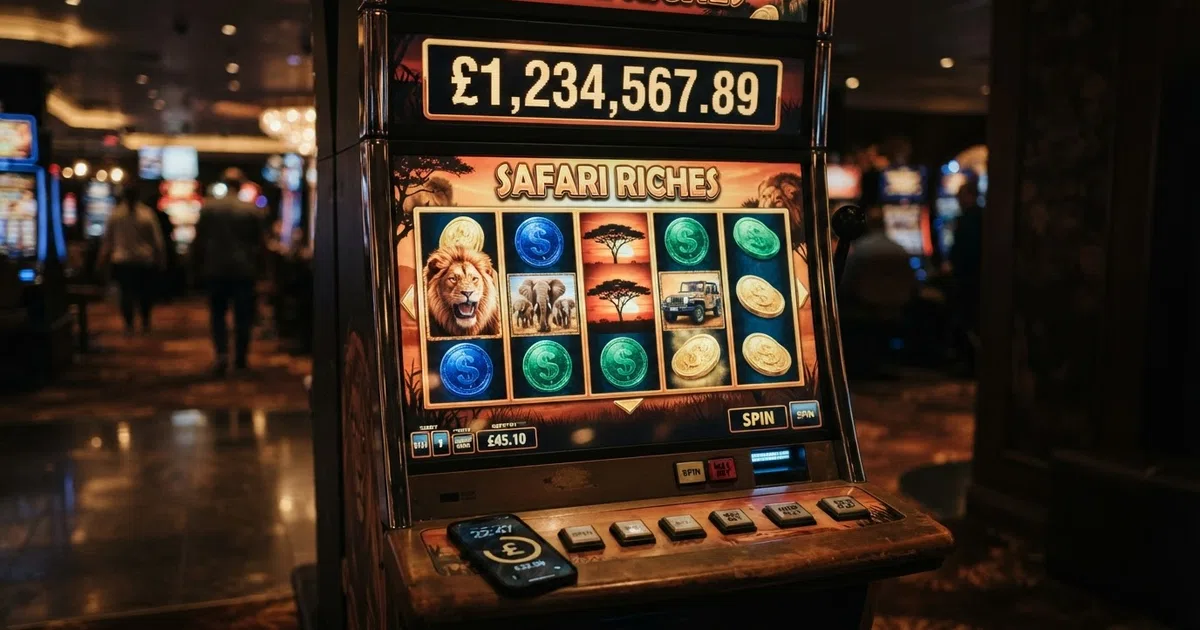
This page works through what that trade costs the player. It starts with the mechanics — seed, contribution, trigger, network pooling — and the UK Gambling Commission’s RTS 9 framework that governs every progressive on a licensed site. It then ranks ten UKGC-licensed operators against their progressive libraries and welcome offers, with the caveat that matters most: progressive jackpots are blanket-excluded from bonus wagering at almost every UK-licensed brand, so the welcome offer is, at best, a way to test the cashier before staking real money on the progressives themselves. Two calculations sit alongside the comparison — one on RTP, one on the cost of a representative session — to give the headline number somewhere to sit.
*Verified against the UK Gambling Commission’s public register on 30 August 2026.*
How a fraction of every spin builds a seven-figure prize
A progressive slot is a normal slot with a piggy bank bolted on. Every wager splits into the paytable the player can see and a contribution that flows into a separate jackpot pool. The pool is visible above the reels, climbing in real time, and resets to a fixed seed the moment it is won. From that reset point, the cycle begins again. The result is a prize that behaves less like a casino payout and more like a slowly filling accumulator, with thousands of players feeding it in parallel.
The mechanic is regulated in the UK by RTS 9, the UK Gambling Commission’s progressive jackpot system rule. RTS 9 requires operators to describe how a progressive jackpot is funded, what the start-up seed value and any ceiling are, and to display the jackpot system’s RTP as a combined figure or split between the base game and the jackpot contribution. If a player is not eligible for the jackpot — because they are using bonus funds, for instance — that fact and their separate theoretical RTP must be made clear. The same rule makes the prize legally binding: the jackpot must be fully funded and held in a way that guarantees payout to the winner regardless of the operator’s financial position. When the counter reads £10,000,000, the UKGC framework says the money is secured, not promised.
The contribution model: every spin feeds the pot
A progressive jackpot is built from three pieces. The seed is the floor — the amount the pool resets to after a win, set by the operator or the network and large enough to look enticing on first sight. The contribution is the slice of every wager that leaves the paytable and lands in the pool, typically between one and eight per cent of the stake. The network is the architecture: how many games, how many operators, how many players feed the same counter.
For a standalone progressive, the pool is fed by one game at one operator, so it grows slowly and rarely reaches the seven-figure territory that defines the genre. A local or in-house progressive pools the contribution across one operator’s entire estate, which speeds the climb. A wide-area or network progressive — Mega Moolah, WowPot, Dream Drop, Jackpot King, Age of the Gods — pools across dozens of operators and thousands of games, so the counter moves in visible jumps and the prizes reach the £10 million-plus range the marketing photographs. The wider the network, the more spins per minute, the faster the pot fills — and the smaller any single player’s share of the contribution becomes per spin.
RTS 9 requires the operator to spell out the funding model to players, not merely to display the counter. The seed, the contribution percentage, and any ceiling above which the pool stops growing must all be visible. That level of transparency ensures every player understands how the jackpot is funded, moving beyond simple marketing claims to reveal the mechanics behind the prize.
Seed, drip and trigger: inside a progressive jackpot cycle
The lifecycle of a progressive jackpot runs in three phases. The seed phase begins the moment after a payout: the counter resets to its fixed floor, often a five-figure sum set by the operator, and the contribution starts again. The accumulation phase is the slow climb, with the counter ticking up by pence per spin on standalone games and by tens of pounds per minute on the largest networks. The trigger phase is instant: a random number generator fires the winning combination, the counter stops, and the operator pays out.
The trigger is independent of the pool’s size. The RNG does not care whether the jackpot reads £500,000 or £18,000,000; the outcome of any individual spin is determined by the game’s random number generator, not by how full the pool has grown. The size of the prize is a function of the trigger’s timing within the accumulation phase: hit early, the prize is small; hit late, the prize is the largest the network has produced. That is why a jackpot that has not been won for ninety days looks, to a player, like a jackpot that is “due.” It is not. The next spin is statistically identical to any other spin, and the counter keeps climbing until the RNG happens to stop it.
When a jackpot does hit, the operational sequence is mechanical: the network validates the winning spin, the pool is paid out (sometimes as a lump sum, sometimes as an annuity), the counter resets to seed, and the accumulation phase begins again. The full cycle for the largest network progressives — Mega Moolah’s Mega tier, for example — has historically run sixty to ninety days between global hits.
Standalone, local and network: the three tiers of progressive jackpots
The architecture of the pool decides how big a progressive jackpot can grow, and therefore which games belong on a shortlist aimed at a seven-figure prize.
- Standalone progressives — one machine, one operator, one pool. The counter grows slowly, the prize rarely reaches six figures, and the marketing copy stays modest.
- Local or in-house progressives — pooled across one operator’s entire estate. Faster climb, larger prize ceiling, and the operator controls the seed and the contribution percentage. Divine Fortune, with its three jackpot tiers (Minor, Major, Mega), is a local progressive in this category.
- Wide-area or network progressives — pooled across multiple operators running the same networked game. The biggest counters in the genre sit here: Mega Moolah, Wheel of Wishes on the WowPot network, Age of the Gods on the Playtech network, Jackpot King on the Blueprint network, Dream Drop on the Relax Gaming network. A must-hit-by jackpot is a variant that pays out before a published ceiling; a mystery jackpot pays at a random threshold that is not tied to the visible counter. Both belong to the network tier and reach seven figures routinely.
- Hybrid and tiered models — most major progressive networks now run four or five jackpots per game, each with its own seed and contribution rate. A player is chasing the Mega tier; the smaller tiers pay out often enough to keep the base game feeling alive.
RTS 9 applies to every one of these architectures — the rule does not distinguish between a standalone machine in a single venue and a global network pooling wagers from thousands of players.
Why your 2026 RTP looks worse on a progressive — and why that is fine
The return-to-player figure on a progressive slot looks low compared with a standard slot, and it is lower for a precise reason. The published RTP is the sum of the base game’s payout rate and the contribution that flows into the jackpot pool. Mega Moolah, the largest progressive in the genre, advertises a combined RTP of 96.12 per cent — but the base game returns only 88.12 per cent, with around eight per cent of every stake diverted into the four-tier jackpot wheel. A standard slot of similar theme, by contrast, returns 95 to 97 per cent straight to the reels.
The trade is the headline. Eight per cent of every £100 wagered on Mega Moolah leaves the paytable and goes into a pot that paid out €19.43 million in 2021. On Divine Fortune (96.59 per cent base RTP, medium volatility, three-tier local progressive), the contribution is smaller because the prize is smaller. On Mega Fortune (96.60 per cent combined RTP), Hall of Gods (95.7 per cent base RTP) and Wheel of Wishes (93.3 per cent base RTP on the WowPot network), the contribution percentages vary, but the structure is the same: a slice of every wager leaves the reels, and a player accepting the lower base RTP is paying for a ticket on a prize the base game alone could never offer.
This is also the reason the UKGC’s rule on welcome bonuses bites hard. Progressive slots are blanket-excluded from welcome bonus wagering at almost every UKGC-licensed operator. Bonus funds cannot be used to chase the jackpot, which means the player has no choice but to fund progressive play with real-money stakes, and the contribution that lowers the base-game RTP is the contribution that builds the prize being chased. A player who wants the Mega Moolah Mega tier pays for it in reduced base-game returns, on every spin, regardless of the welcome offer.
The cost of a representative session on Mega Moolah is therefore calculated against the base-game RTP, not the combined figure. The arithmetic: 100 spins at the £5 statutory maximum for a player aged 25+ means £500 wagered. At the 88.12 per cent base RTP, the expected return to the reels is £440.60, and the expected loss to the player is £59.40. That figure ignores the jackpot tier entirely; the eight per cent contribution flows out, and the chance of seeing any of it back is one in approximately fifty million for the Mega tier. For a player aged 18 to 24, the same session at the £2 limit costs £200 staked and an expected loss of £23.76 against the same base RTP. None of that money returns in the form of a jackpot; the expected value of the jackpot contribution over a hundred spins is a fraction of a penny. The headline number on the counter, in other words, is paid for in cash the player never sees, and a one-hour session makes the trade visible without ever making the trade back.
One in fifty million: the real odds behind the headline jackpot
The odds of winning a major progressive jackpot run from roughly one in five million to one in fifty million per spin, depending on the game and the tier. The Mega Moolah Mega jackpot sits at the long end of that range, with estimates around one in fifty million. A typical slot spin at the £5 limit produces a jackpot-eligible outcome so rarely that the prize, viewed per spin, is functionally a separate lottery layered on top of a standard slot.
What the odds describe is a population statistic, not a personal one. The historical average time between global Mega Moolah Mega hits is sixty to ninety days, which is the rate at which the network’s contribution produces a winning combination across millions of spins per day. For a single player running a hundred spins in a session, the chance of being that person is a fraction of a fraction, and the figure that the marketing photographs — the £10 million counter — is paid out in contributions from thousands of players, not from any one of them.
Hit frequency and volatility are not the same thing. A high-volatility game pays out rarely but in large chunks when it does; a high hit-frequency game pays out often but in small chunks. Progressive slots are nearly always high-volatility, and the jackpot tier is the extreme end of the volatility profile. The base game, the smaller jackpot tiers, and the bonus features between them produce the standard slot experience, with the rare event of the top tier sitting at the far end of the curve.
What you can (and cannot) control when chasing a progressive
The strategy levers a player can pull are limited, and most of them operate on bankroll, not on the RNG. The first is the stake per spin, and it is constrained by the UK statutory limits: £5 per game cycle for players aged 25 and over, £2 for players aged 18 to 24. Those caps apply to every spin, on every game, on every licensed UK site, and they flatten the old strategy of sizing bets to chase a long-odds prize.
Beyond the stake, the controls are session length and the size of the bankroll committed to the game. High-volatility games run hot and cold, and a session can lose its full bankroll without any feature triggering; planning for that variance, and treating the stake as the cost of a session rather than a route to a prize, is the only version of bankroll management that holds up under the maths. The gambler’s fallacy — that a jackpot is “due” because it has not been hit recently — is a misreading of the RNG. Each spin is independent; the counter is a passive display, not a meter that builds pressure.
The maximum-bet myth deserves a sentence. In land-based progressive play, certain jackpots are gated behind a max-bet requirement. Online, that gate is largely gone: the jackpot is awarded on eligible combinations regardless of stake, and a £1 spin is just as eligible as a £5 spin. The stake does affect the prize only at the contribution level: a higher stake feeds the pool faster, but it does not improve the odds per spin of triggering the prize. The old “bet max to win” advice is folklore that no longer describes how networked online progressives work.
Progressive slots on mobile: same pools, smaller screen
Every major progressive slot runs on mobile. Mega Moolah, Divine Fortune, Mega Fortune, Hall of Gods, Wheel of Wishes and the rest of the genre are HTML5 titles that scale to phone and tablet screens with the same RTP, the same network, and the same jackpot eligibility as the desktop version. The counter sits above the reels in both formats, and the contribution percentage is identical. A spin on a phone is the same spin on a casino floor for the purposes of the network.
App versus browser play does not change the maths. Both route through the same operator and the same game server, and both contribute to the same pool. The UKGC licence covers the operator across every channel, and the statutory stake limits apply on mobile as on desktop. The only practical difference is the screen: small reels, a small counter, and the same prize underneath.
The ten operators we tested: licence, bonus and library compared
The ranking below covers ten UK-facing casino sites, all of them holding an active UKGC licence, all of them carrying a progressive jackpot section. The columns chosen reflect what research actually verified: licence status, the size and shape of the welcome offer, the wagering conditions attached, the progressive networks the operator stocks, and the cashout cap (where one applies). Two facts govern every row. First, progressive jackpots are blanket-excluded from welcome bonus wagering at almost every UKGC-licensed operator, so the welcome offer is a way to fund standard-slot play, not progressive play. Second, the UKGC public register — last updated 29 July 2026, with 2,665 casino entries searchable by business name, trading name or domain — is the source of record for any licence claim made here.
| Operator | UKGC licence | Free spins | Wagering on bonus | Key progressive networks | Bonus cashout cap |
|---|---|---|---|---|---|
| bet365 Casino | Active | Up to 500 via daily reveals | 0× on winnings | Games Global, Playtech, NetEnt, Blueprint, IGT, Pragmatic Play | £50 per reveal batch |
| Sky Vegas | Active | 200 | 0× | Games Global, Playtech, NetEnt, Blueprint, Pragmatic Play, Red Tiger | Uncapped |
| William Hill | Active | 200 on Big Bass Splash | 10× on winnings | Playtech, Games Global, NetEnt, Blueprint, IGT, Red Tiger | £30 on winnings |
| 888casino | Active | Free spins (varies) | 30× on bonus funds | 888 proprietary, Playtech, NetEnt, Games Global, Red Tiger, Pragmatic Play | £100 on bonus winnings |
| Betfred | Active | 200 (tiered across Age of the Gods and Better Wilds) | 0× on free-spin winnings | Playtech, Games Global, IGT, Blueprint, Pragmatic Play | Uncapped |
| LeoVegas | Active | 50 on Big Bass Splash | 0× | Games Global, NetEnt, Yggdrasil, Pragmatic Play, Red Tiger, Play’n GO | Uncapped |
| MrQ | Active | 100 on Big Bass Splash | 0× | Games Global, NetEnt, Pragmatic Play, Red Tiger, Thunderkick, Relax Gaming | Uncapped |
| Virgin Games | Active | 30 | 0× | Games Global, IGT, NetEnt, Playtech, Blueprint | Uncapped |
| PlayOJO | Active | 50 on Book of Dead | 0× | Games Global, NetEnt, Pragmatic Play, Yggdrasil, Play’n GO, Red Tiger | Uncapped |
| Casumo | Active | 20 on Sahara Riches Cash Collect | 30× on bonus funds | Games Global, NetEnt, Pragmatic Play, Play’n GO, Yggdrasil, Red Tiger, Relax Gaming | Varies |
Three patterns sit behind the table. The first is the wagering-cap reform: from 19 January 2026, the UKGC requires operators to cap wagering requirements on bonus funds at a maximum of 10× the bonus amount, and prohibits bonuses from bundling more than one product. The two operators above the 10× line — 888casino (30× on bonus funds) and Casumo (30× on bonus funds) — are operating with legacy terms; both offers should be rechecked against the operator’s current T&Cs, because the published 30× figure is incompatible with the January 2026 cap and a downward revision is likely. The second is the cashout cap: most zero-wagering offers ship without one, and the two exceptions — bet365’s £50 per reveal batch and William Hill’s £30 cap on winnings — convert the headline spin count into a much smaller expected return once the cap bites. The third is the library: progressive network coverage tracks the operator’s provider deals, and the larger libraries (LeoVegas at 300+, William Hill at 200+, 888casino at 150+, bet365 at 120+) are simply broader aggregator setups. None of these are measures of how often a player wins a jackpot; they are measures of how many counters a player can choose between.
The progressive section in every UK-facing brand sits behind a real-money stake. A player using a no-wagering free-spin welcome offer on a standard slot cannot carry the winnings into a progressive spin; the bonus is a separate wallet, and the contribution to the progressive pool only flows from the real-money wallet. That structural choice — bonus funds out, real money in — is what makes the welcome offer a foot-in-the-door and not a route to the Mega tier.
Mega Moolah to WowPot: the progressive titles UK players search for most
The progressive slots that dominate UK search interest are the same titles that dominate the genre globally. The table below covers the most-searched titles, with the data research verified: provider, network, published RTP, volatility where known, and the biggest recorded win. Cells without a verified figure carry an em dash.

| Slot title | Provider | Progressive network | RTP | Volatility | Biggest recorded win |
|---|---|---|---|---|---|
| Mega Moolah | Games Global | Mega Moolah network | 96.12% combined / 88.12% base | — | €19,430,723 (2021) |
| Divine Fortune | NetEnt | Local progressive (operator estate) | 96.59% base | Medium | — |
| Mega Fortune | NetEnt | NetEnt network | 96.60% combined | — | €17,861,800 (2013) |
| Hall of Gods | NetEnt | NetEnt network | 95.7% base | — | ~€7.8M average |
| Wheel of Wishes | Games Global | WowPot network | 93.3% base | — | €14.6M (2026) |
The pattern in the table is structural. Mega Moolah and Wheel of Wishes pay the largest single prizes because their networks are the largest: thousands of operators and tens of thousands of games feeding the same Mega and WowPot counters. Hall of Gods and Mega Fortune, on the older NetEnt network, have produced record payouts in the past but the network’s contribution rate has slowed as the games age. Divine Fortune, a local progressive with three jackpot tiers (Minor, Major, Mega), tops out at a much smaller ceiling, with a 96.59 per cent base RTP and medium volatility that makes it a friendlier entry to the genre than the long-odds network titles. The base-game RTP column is the figure a player should weight most: it is the return on the reels, before the contribution to the jackpot pool is stripped out, and the gap between base RTP and combined RTP is the size of the ticket price for the headline number above.
New progressive slots worth watching in 2026
The biggest single progressive payout of 2026 so far is a €14.6 million win on Wheel of Wishes, the Games Global title on the WowPot network. The WowPot network itself continues to expand across operator libraries and now sits alongside Mega Moolah, Dream Drop (Relax Gaming), Jackpot King (Blueprint) and Age of the Gods (Playtech) as one of the five major jackpot pools a UK player can access. New releases across these networks are routine: each provider tends to launch one or two new titles per year on its flagship jackpot, with a fresh theme and the same underlying counter.
Betfair’s progressive section, which sits inside the Flutter Entertainment group stack, is a useful indicator of where the network coverage is going. Its library spans Jackpot King, Age of the Gods and the Games Global networks — three of the five major pools — under a single UKGC licence. For a player comparing operators, that breadth matters more than the count of titles, because the same Mega Moolah counter is the same Mega Moolah counter whether the operator is bet365, LeoVegas or MrQ. The differentiation is the welcome offer, the cashier, the mobile experience and the provider deals that determine which games sit in which lobby.
No genuinely new jackpot mechanic has arrived in 2026 that changes the arithmetic. Tiered four- and five-jackpot structures, must-hit-by ceilings, and mystery triggers have all been around for years, and the new releases are mostly theme refreshes on existing pools.
LeoVegas
LeoVegas carries the widest progressive library of the ten operators reviewed here: more than 300 titles spanning Games Global, NetEnt, Yggdrasil, Pragmatic Play, Red Tiger and Play’n GO, with the WowPot, Mega Moolah, Dream Drop and Jackpot King networks all represented. The breadth is the point — a player with a specific game in mind is almost certain to find it on LeoVegas.
The welcome offer is 50 wager-free free spins on Big Bass Splash, a standard slot rather than a progressive. The trigger is a £10 minimum deposit plus a 1× wager on that deposit within seven days; the spins expire after three days; the cashout is uncapped. The catch is the three-day expiry, which is a real constraint for a player who funds the account on a Friday evening and expects to use the spins the following weekend.
For the progressive player, the offer is functional but not a route to the headline numbers. The real value of LeoVegas for a progressive player is the library itself: 300+ titles means the largest selection of network counters in the set, and the 0× wagering on the welcome spins means a player who wants to test the cashier before committing to a progressive can do so without locking real money into bonus conditions. The shortest validity window in the set is the trade.
bet365 Casino
bet365 is the largest sportsbook-branded casino in the UK and the operator with the most familiar welcome format among sportsbook users: up to 500 free spins distributed as daily reveals of 5, 10, 20 or 50 spins over twenty days, all with zero wagering on winnings. The spin value varies between 5p and 50p depending on the daily reveal. The trigger is a £10 minimum deposit plus a £10 cash wager on slots.
The progressive library runs to 120+ titles, with Games Global (Microgaming), Playtech, NetEnt, Blueprint, IGT and Pragmatic Play all represented — meaning Mega Moolah, Age of the Gods, Jackpot King and the Games Global WowPot network are all available from a single account. The £50 cashout cap per reveal batch is the constraint: at the lower end of the spin-value range, the cap is largely irrelevant; at the upper end, a 50p spin revealing fifty spins returns up to £25, well within the cap. A player who reveals the top tier of the offer across all twenty days is looking at up to £2,500 in gross spin value, of which the first £50 is fully payable, with the balance subject to the per-batch cap.
The verdict for the progressive player: the deepest brand familiarity in the ranking, a strong provider spread, and a welcome offer whose 0× wagering and daily-reveal structure suit a player who wants to spin over a sustained period rather than clear a bonus in a single session. The £50 per-batch cap is the only friction.
William Hill
William Hill is a heritage UK brand with a 200+ progressive library spanning Playtech, Games Global, NetEnt, Blueprint, IGT and Red Tiger, which gives it Jackpot King, Age of the Gods and Mega Moolah all under one roof. The 200 free spins on Big Bass Splash are the headline number, but the small print is the story: 10× wagering on winnings within 72 hours and a £30 cap on bonus winnings.
A £30 cap on 200 spins at 10p is the constraint that matters most. Even at the maximum theoretical return on the welcome offer, the cashout is capped at £30, which converts the headline 200-spin figure into a much smaller expected value. The 10× wagering requirement is, in practice, the secondary constraint: the wagering is on the winnings rather than the bonus amount, so a player who wins £30 from the spins must wager £300 within 72 hours to clear it. The 72-hour window is tight for a 10× playthrough on winnings, and the £30 cap is a hard ceiling regardless of how the spins land.
The verdict: a deep progressive library and a strong brand, paired with a welcome offer whose cap and wagering structure make the headline spin count largely cosmetic. A player chasing the Mega Moolah counter at William Hill should treat the welcome offer as a brief introduction to the cashier and not as a meaningful route to bonus winnings.
Sky Vegas
Sky Vegas is the second-largest no-wagering welcome offer in the ranking after PlayOJO: 200 free spins with zero wagering, all winnings cash. The trade is a 72-hour expiry, which is one of the shorter windows in the set and a real pressure on a player who does not sit down to clear the spins immediately. The progressive section is broad: Games Global, Playtech, NetEnt, Blueprint, Pragmatic Play and Red Tiger, with Jackpot King and Age of the Gods both covered.
The trigger is the standard pattern: a £10 deposit plus a £10 stake. The cashout is uncapped, which is the structural advantage of Sky Vegas over William Hill at the same headline spin count. Where William Hill’s 200 spins come with a £30 cap and 10× wagering, Sky Vegas’s 200 spins come with zero of either.
The verdict: a clean no-wagering welcome offer and a broad progressive section, weighed down only by the 72-hour expiry. A player who manages to clear the spins within three days of the deposit claims the full £20 expected gross value uncapped, while those who miss the window forfeit the offer entirely.
888casino
888casino is the only operator in the ranking with a meaningful deposit-match element to the welcome offer: 100 per cent up to £100 plus a free-spin allocation. The structure is the standard online casino welcome pattern, and the small print reflects it. Bonus funds carry 30× wagering; free spins are valid for 14 days; the deposit bonus runs 90 days with 10× wagering on selected slots per 888’s updated 2026 terms; the cashout cap is £100 on bonus winnings.
The progressive library is one of the broader ones in the set: 150+ titles including 888’s own proprietary progressives, Playtech, NetEnt, Games Global, Red Tiger and Pragmatic Play, with Jackpot King and Age of the Gods both available. 888’s own branded progressive titles — the in-house jackpots branded under the 888 name — are a differentiator that none of the other operators in the ranking match.
The single most important line in 888’s bonus terms is the one that explicitly prohibits winning progressive jackpot prizes from free spins or FreePlay. That is the rule in action: progressive play requires real-money stakes at 888, and the welcome bonus is locked to standard slots. For a progressive player, the 888 welcome offer is a way to test the proprietary progressives and the broader standard-slot library before staking real money on the Mega Moolah and Age of the Gods tiers.
The verdict: the broadest welcome offer in the ranking in terms of structure (a deposit match plus spins), a 30× wagering requirement that puts it above the January 2026 UKGC cap and makes a downward revision likely, and the only operator whose terms explicitly address the progressive-bonus interaction in writing. Readers should check the small print before depositing to fully understand the bonus exclusions.
Betfred
Betfred is the only operator in the ranking whose welcome offer is structured around a progressive title. The 200 free spins are tiered: 50 spins on Age of the Gods at 20p per spin, 100 spins on Better Wilds at 10p per spin, and 50 spins on Age of the Gods God of Storms at 20p per spin. The wagering is 0× on free-spin winnings, the trigger is a £10 deposit via debit card plus a £10 stake on casino slots within 30 days, the validity is 7 days, and the cashout is uncapped.
That Age of the Gods sits in the bonus is a structural difference from every other operator in the set. The Age of the Gods series is a Playtech progressive, and the spin credits are on the progressive title — though, as with every other welcome offer in the ranking, the free-spin winnings are bonus funds that cannot be re-wagered on a progressive jackpot. The distinction matters: a player who wins from the Age of the Gods spins receives real money, but the progressive jackpot itself remains a real-money-stake product, not a bonus-stake product.
The progressive library runs to a strong Playtech section (Age of the Gods, God of Storms, the rest of the series) plus Jackpot King, Games Global, IGT, Blueprint and Pragmatic Play. The trigger condition — £10 stake on casino slots within 30 days — is the most generous timing window in the ranking, and the debit-card restriction is the one friction: a player who prefers PayPal or Trustly will not trigger the offer.
The verdict: the only welcome offer in the ranking where the bonus title is itself a progressive, paired with a 30-day trigger window and 0× wagering. The structural catch is that the progressive jackpot prize is still funded from real-money stakes, not the bonus; what the offer does is give a player a structured way to experience the Age of the Gods reels before committing to the network’s main prize.
PlayOJO
PlayOJO is built around a single brand promise: no wagering on any offer, ever. The 50 free spins on Book of Dead at 0× wagering with no max win cap is the welcome offer, and it is the simplest structure in the ranking: 50 spins at 10p, winnings paid in cash, no maximum. The trigger is a 4 minutes process, and the spins must be used before any other bet is placed.
The progressive library is broad: Games Global, NetEnt, Pragmatic Play, Yggdrasil, Play’n GO and Red Tiger, with WowPot, Mega Moolah, Dream Drop and Jackpot King all covered. The 50 spins are on a standard slot (Book of Dead, 96.21 per cent RTP), so the welcome offer is a test of the cashier, not a route to the jackpot counter.
The verdict: the cleanest no-wagering offer in the ranking, paired with a broad progressive section. The headline spin count is the lowest in the set, but the absence of a cap and the absence of any wagering requirement make each spin worth more than its 10p face value. For a progressive player, the value is in the cashier and the library, not in the welcome offer.
MrQ
MrQ is a wagering-free brand in the ranking, and the welcome offer is 100 free spins on Big Bass Splash at 0× wagering, triggered by a £10 first deposit, valid for 48 hours, uncapped cashout. The progressive library is moderate: Games Global, NetEnt, Pragmatic Play, Red Tiger, Thunderkick and Relax Gaming, with Jackpot King and Dream Drop the headline networks. A player looking for the WowPot or Age of the Gods networks will not find them on MrQ.
The 48-hour validity is the tightest window in the ranking and a real constraint for casual players. A player who deposits on a Monday evening and does not return to the site until the weekend loses the bonus in between. The 100-spin count at 10p is a £10 face value, which is roughly the deposit itself; the welcome offer, in other words, returns the deposit in spin credits rather than in matched funds, with no wagering on the back end.
The verdict: a wagering-free welcome offer on a moderate progressive library. The 48-hour expiry and the absence of the larger networks (WowPot, Age of the Gods) make MrQ a fit for the player who wants a quick no-strings test of a smaller progressive section, not for the player who wants the broadest network coverage in a single account.
Virgin Games
Virgin Games is the smallest welcome offer in the ranking by spin count: 30 free spins, 0× wagering, 10p per spin, £3 face value, with a 30-day validity and uncapped cashout. The player can alternatively take a £50 bingo bonus, which is the same offer reframed for the bingo vertical. The progressive library is focused rather than broad: Games Global, IGT, NetEnt, Playtech and Blueprint, with Jackpot King and the Games Global networks covered.
The 30-day validity is a structural advantage of the offer, providing a long window to clear the spins. A player who cannot sit down to clear a 48- or 72-hour bonus has the runway to come back to Virgin Games over a month. The face value of the offer is small, but the absence of any cashout cap or wagering requirement means the player’s edge is uncapped.
The verdict: a small welcome offer with a long expiry, a focused progressive section, and no wagering. A fit for the casual player who values simplicity and a long runway over the largest spin count.
Casumo
Casumo is the second operator in the ranking with a deposit-match welcome offer: 100 per cent up to £25 plus 20 bonus spins on Sahara Riches Cash Collect. The bonus funds carry 30× wagering, the trigger is a £10 minimum deposit, the validity is 30 days. The progressive section is curated: Games Global, NetEnt, Pragmatic Play, Play’n GO, Yggdrasil, Red Tiger and Relax Gaming, with Mega Moolah, Dream Drop and Jackpot King covered. A player looking for Age of the Gods or the full WowPot network will not find the broadest version of either on Casumo.
The 30× wagering requirement on the bonus funds sits above the January 2026 UKGC 10× cap. Like 888casino, Casumo’s published 30× figure is the legacy term that the cap will eventually revise downward; a player comparing the offer today should check the live T&Cs before staking.
The verdict: a standard deposit-match welcome offer dressed for a progressive page, paired with a curated rather than comprehensive progressive section. The 30× wagering and the small matched amount (£25) keep the offer in the “test the cashier” category rather than the “build a bankroll” category, and the progressive play is funded from real money regardless.
Try before you stake: progressive slots in demo mode
Demo mode is the standard-slot industry’s version of a test drive, and the major progressive titles ship with a demo version. No deposit, no registration at the operator, no real-money stake — a player opens the game in a browser, the reels run on demo credits, and the bonus features trigger on the same timing and the same RTP as the real-money version. Most UKGC-licensed operators carry the demo version of every progressive title they host, accessible from the game thumbnail without an account.
What demo mode does is teach the game’s mechanics. The free-spins round, the bonus pick, the jackpot wheel — every feature triggers on the same randomised timing in demo as in real play, and a player can run a few hundred demo spins to learn the volatility, the hit frequency of the smaller bonus rounds, and the rhythm of the base game. For a player moving from a standard slot to a progressive, that is a useful learning curve: the base game of a progressive is, mechanically, the same as the base game of a non-progressive, but the pacing is different and the bonus features trigger less often.
Where to find free-play progressive slots (no download needed)
Demo play on the major progressive titles is broadly available across UKGC-licensed operators and through the providers’ own portals. A player with a UKGC-licensed account can open any progressive title in instant-play mode and run it on demo credits; the same is true of most providers’ game pages, where a no-registration demo is the default. No download is required, since the major progressive titles are HTML5 and run in any modern browser on desktop or mobile.
A player looking for a specific title’s demo version should start with the operator that already hosts the real-money game. Mega Moolah, Divine Fortune, Mega Fortune, Hall of Gods and Wheel of Wishes all carry demo versions at every major UKGC-licensed operator that hosts the real-money game. For a player who has not yet chosen an operator, the providers’ own sites (NetEnt, Games Global, Blueprint, Playtech, Relax Gaming) run demo versions of their own titles as a default.
Demo credits vs real cash: what changes when the stakes are zero
Three things change when the stake is zero, and only one of them is obvious. The first is the jackpot: no real progressive jackpot is ever won in demo mode, regardless of the symbol combination that lands. The RNG may trigger the jackpot-tier feature on a demo spin, and the screen may show the prize animation, but the prize does not exist in the demo session and no money changes hands. A player who hits the Mega Moolah Mega jackpot on a demo spin has not won anything.
The second is the RTP. The published RTP is the long-run average across millions of spins, and a demo session of a few hundred spins will not produce a return that matches the figure on the paytable — the variance is high, and the sample is small. The same is true of real-money play, but the visible impact is larger in a demo session because the player is reading the return in real time. The RTP figure is the average; the session return is a number drawn from a distribution around that average.
The third is the psychological weight of the stake. Demo credits do not produce loss aversion, do not produce the tilt response, and do not produce the same session-length behaviour as a real-money stake. A player running demo credits is not making a budgeting decision with each spin, and the game’s effect on the player’s bankroll is, by construction, zero. That is a feature for learning the mechanics, and a limitation for understanding what real-money play feels like. Demo mode is a learning tool for the game, not a rehearsal for the gambling.
Crypto and progressive slots: what UK players need to know
Cryptocurrency and UK-licensed progressive slots do not intersect. The UKGC licence conditions require operators to verify customer identity and age before play — the KYC and AML checks that sit underneath every UK-regulated gambling product. Crypto’s pseudonymity is structurally incompatible with those checks, and crypto deposits are not on the approved payment-method list for any UKGC-licensed operator. A player looking to deposit Bitcoin or Ethereum into a UK-licensed progressive slot account will not find a route to do so.
Why Bitcoin deposits are not available at UK-licensed casinos
The UKGC’s KYC and AML obligations are the reason. Every UKGC-licensed operator must verify the customer’s identity, age and source of funds before play, and the approved payment methods — debit card, PayPal, Trustly, Apple Pay, bank transfer, Paysafecard — are the methods that allow that verification to happen. Cryptocurrency is not on the list, and the credit card ban of April 2020 set the precedent: a payment method can be excluded from the UK market on consumer-protection grounds, even when the method is legal in the wider economy.
For a player, the practical implication is that the cashier at every UK-licensed operator is a closed list of traditional and e-money methods. Crypto is not a workaround for a player who wants anonymity, because no UK-licensed operator offers it. A player who wants to use crypto to fund progressive slot play is, by definition, playing at a site that is not UK-licensed.
Offshore crypto casinos and progressive jackpots: the risks
The offshore crypto casino is the route that exists when the UK-licensed route does not. It is also illegal under the Gambling Act 2005 for an operator to serve UK consumers without a UKGC licence, and the UKGC actively targets unlicensed operators through ISP blocking and payment blocking. For a player at an offshore site, the absence of a UKGC licence means the absence of every protection that the UK framework provides.
The progressive jackpot itself is the central risk. A UK-licensed operator must, under RTS 9, fully fund the progressive jackpot and guarantee payout regardless of the operator’s financial position. An offshore operator has no such obligation. The counter on an offshore site can display any number the operator chooses, and the player’s recourse when the operator declines to pay is limited to the regulator in the offshore jurisdiction — which, by definition, is not the UKGC. GamStop does not apply, alternative dispute resolution (ADR) does not apply, the statutory stake limits do not apply, and affordability checks do not apply. The offshore site offers none of the structural protections that the UK framework guarantees.
The 40 per cent Remote Gaming Duty, the January 2026 wagering cap, the £5 and £2 stake limits, the RTS 9 funding rules, and the GamStop coverage are all UK-specific. They are the cost of operating in the UK market, and the offshore market is the cost of operating without them. For a progressive slot player, the trade is between a regulated counter whose prize is legally secured and an unregulated counter whose prize is whatever the operator decides to pay. The marketing pitch at offshore sites leans heavily on the crypto angle; the underlying product is the same genre, with none of the consumer protections.
Are progressive slots legal in the UK? The licence, the limits and the safety net
Progressive slots are fully legal in the UK. The Gambling Act 2005 is the enabling legislation, the UKGC’s remote casino operating licence is the only lawful route to offer progressive slots to UK consumers, and the same licence is the route by which the prize pool is fully funded, the RTP is displayed, and the player is protected by every tool described in the previous section. There is no prohibition on online slots or on progressive jackpots; the regulatory framework is the structure within which they operate.
The framework has tightened in the last two years. The statutory online slot stake limits — £5 per game cycle for players aged 25 and over, effective 9 April 2025, and £2 for players aged 18 to 24, effective 21 May 2025 — apply to every spin on every progressive slot at every UK-licensed operator. The 19 January 2026 reforms cap bonus wagering requirements at 10× the bonus amount and prohibit mixed-product bonuses. The 1 April 2026 Remote Gaming Duty increase to 40 per cent is operator-side and does not change the player’s take-home on a win, but it does change the operator’s economics. The RTS 12B terminology update from 30 September 2026 replaces “spend limits” with “stake limits” for customer-facing financial tools, and clarifies deposit-limit definitions. Each of these changes is the regulator adjusting the framework, not the framework changing underneath the player.
The UK Gambling Commission: your statutory safety net
The UKGC’s role in progressive slots is set out in RTS 9, the progressive jackpot system rule that requires every operator to describe how the jackpot is funded, what the seed value and any ceiling are, and to display the jackpot system’s RTP — either as a combined figure or split between the base game and the jackpot contribution. If a player is not eligible for the progressive prize — because they are using bonus funds, for instance — that fact and their separate theoretical RTP must be made clear. The rule is the reason a UK-licensed operator publishes the 96.12 per cent combined RTP and the 88.12 per cent base RTP on Mega Moolah, rather than the combined figure alone.

The same rule is also the reason the prize is real. RTS 9 requires the operator to ensure the progressive jackpot is fully funded and that the funds are held in a way that guarantees payout to the winner regardless of the operator’s financial position. The £10,000,000 displayed on a counter is, under the UK framework, money that is secured — held in trust or in a similarly protected structure — not a promise that the operator may or may not keep. The structural difference between a UK-licensed progressive and an offshore one is the difference between a counter backed by a regulated trust and a counter backed only by the operator’s word.
The UKGC public register is the source of record for every licence claim. Last updated 29 July 2026, the register contains 2,665 casino entries and is searchable by business name, trading name, domain name or account number. A player who wants to verify that a brand is UK-licensed types the trading name into the register and confirms the licence status directly. That step is the single most reliable way to distinguish a UK-licensed operator from an offshore one, and it takes about thirty seconds.
GamStop self-exclusion: what it covers and how it works
GamStop is the free national online self-exclusion scheme, and every UKGC-licensed operator must participate. A single GamStop registration blocks the player from every UK-licensed online gambling site and app simultaneously, including every progressive slot site reviewed on this page. The exclusion is not a per-operator choice; it is a single switch that covers the whole UK-licensed market.
The minimum exclusion periods are six months, one year, five years, or five years with auto-renewal. Once registered, the exclusion cannot be removed during the minimum period — there is no cooling-off and no opt-out. When the minimum period ends, the exclusion persists for a further seven years unless the player actively contacts GamStop to request removal. The seven-year tail is the structural protection against a player re-registering at a new operator to circumvent the exclusion at a familiar one.
The 50.5 per cent figure from the UKGC’s 2025 data is the adoption rate among online gamblers who were aware of management tools: 50.5 per cent had set a spend, loss or deposit limit, and the rest had not. The figure is both a measure of how widely the tools are used and a measure of how many players are aware of them in the first place. The tools themselves are free, the registration is straightforward, and the exclusion is binding.
UKGC-licensed vs offshore: what each one owes the player
The list of protections a UK-licensed operator owes the player is long, and most of it is invisible until something goes wrong. A guaranteed and fully funded progressive jackpot, full RTP disclosure under RTS 9, GamStop coverage, ADR access, the statutory stake limits, affordability checks, transaction history, reality checks, the operator’s duty of care, and the option to set deposit and stake limits — every one of these is the operator’s obligation under the UKGC licence, and every one of them is absent offshore.
The verification step is the simplest. A player who types an operator’s trading name into the UKGC public register and confirms the licence has verified the entire framework. A player who cannot find the operator on the register is dealing with an unlicensed brand, and the protections above do not apply. The counter may look the same, the welcome offer may look the same, the games may even be the same — but the structure behind them is not. The decision to play at a UK-licensed site is the decision to take the protections the framework provides; the decision to play offshore is the decision to take the marketing pitch without the protections behind it.
Staying in control while chasing the big win
The responsible-gambling infrastructure in the UK is the most developed in the regulated world, and it is built on three layers: operator-side tools, free national support, and population-level prevalence data. A player who wants to manage the risk of progressive slot play has a defined set of options at every layer, and every option is free.
The reason the section exists on a progressive slot page, rather than as a footer line, is the specific risk profile of the genre. A 1 in 50 million jackpot tier with high volatility and a base RTP that sits below the standard-slot average is, on the numbers, a worse gamble per spin than almost any other product in the casino. The expected loss per session at the £5 statutory maximum is around £60 for a 100-spin session on Mega Moolah’s base game alone, with no realistic chance of the jackpot tier returning any of it. That is the trade the marketing photographs obscure, and it is the trade the responsible-gambling infrastructure is designed to give the player a way to step back from.
Deposit limits, reality checks and cooling-off: the tools every UK operator must give you
The operator-side tools are mandatory at every UKGC-licensed site, and they are the first line of defence. A player can set a deposit limit, a loss limit, or a stake limit, and the operator is required to enforce it. Reality checks are time reminders that prompt the player to review the session. Cooling-off periods are short-term self-exclusions that pause access without a full GamStop commitment. The RTS 12B terminology update from 30 September 2026 replaces the term “spend limits” with “stake limits” for customer-facing financial tools, which is a clarification rather than a substantive change — the underlying obligations are unchanged.
The 50.5 per cent adoption rate from the UKGC’s 2025 data — 50.5 per cent of online gamblers aware of management tools had set a spend, loss or deposit limit — is both the headline and the gap. The tools are available, the tools are mandated, and the tools are not universally used. A player who has not set a deposit limit on a progressive slot site has chosen, by default, to spend whatever the cashier permits. The tools are the operator’s obligation; using them is the player’s.
GamCare, BeGambleAware and the helpline: where to turn
The free, confidential support infrastructure is separate from the operator’s tools, and it is staffed by people who are not selling the product. The National Gambling Helpline is run by GamCare on 0808 8020 133, available 24 hours a day, 365 days a year, and takes approximately 55,000 calls and online chats per year. In January 2026, GamCare made 996 referrals to treatment and peer-based support services through the National Gambling Support Network (NGSN), a 48 per cent increase year-on-year from 674 in January 2025. The increase is the volume of demand, not a change in the prevalence rate; the underlying PGSI 8+ figure has been statistically stable.
GambleAware’s self-assessment quiz has been completed over 160,000 times, and over half of completers took a meaningful action as a result — a figure that points to the self-assessment working as a behavioural nudge, not merely as an information page. GamCare’s own services include counselling and self-guided digital resources across five key regions in Great Britain. None of these services requires registration at an operator, and none of them reports back to an operator. The confidentiality is real, and the cost to the player is zero.
What the prevalence data says about slot play
The UK gambling participation data is the structural backdrop. 47 per cent of GB adults gambled in the past four weeks, with 37 per cent gambling online and 15 per cent gambling online excluding lottery-only players. Those are the denominators for the harm statistics: 2.7 per cent of adults aged 18 and over scored 8+ on the Problem Gambling Severity Index (PGSI) in 2024, classified as problem gambling, statistically stable year-on-year. 13.1 per cent of adults — approximately 6.8 million — were classified as experiencing any level of gambling harm (PGSI 1+) per GambleAware’s Annual Treatment and Support Survey.
The 2.7 per cent figure is small, and the 13.1 per cent figure is large, and both are true. The first is the rate of problem gambling in the strict clinical sense; the second is the broader category of any gambling-related harm, which includes the financial strain, the relationship strain, and the mental health strain that does not meet the clinical threshold. A progressive slot player with 1 in 50 million jackpot odds is, on the maths, a long way from the prize, and a player who is anywhere on the PGSI scale is closer to the harm side of the distribution than the marketing photographs suggest.
The prevalence data is also the reason the operator-side tools exist in the form they do, and the reason the section above sits on the page. The trade the progressive slot offers — a lower base RTP for a shot at a seven-figure prize — is the trade most likely to attract the player who can least afford to lose the base. The numbers are not a judgement; they are a description of where the risk sits, and the responsible-gambling infrastructure is the route a player can take to step back from it.
How we chose and ranked these progressive slot sites
The ranking is built on three inputs: the UKGC public register, the operator’s own published progressive slot library and welcome offer terms, and the network coverage derived from the providers listed. The UKGC public register is the verification source for every licence claim on this page: each operator’s trading name was checked against the register, and the licence status is recorded as confirmed. The register was last updated 29 July 2026 and contains 2,665 casino entries, searchable by business name, trading name, domain or account number.
The evaluation criteria were library breadth, progressive network coverage, welcome-offer fairness, and licence status. Library breadth is the count of progressive titles the operator stocks; network coverage is the count of the five major progressive networks (Mega Moolah, WowPot, Dream Drop, Jackpot King, Age of the Gods) the operator hosts; welcome-offer fairness is the size of the offer, the wagering requirement, the cashout cap, and the trigger condition; licence status is the UKGC register check. No proprietary score or weighting was used; the table above is a record of what was checked, not a numerical composite.
What the ranking does not measure is jackpot hit rate, payout speed, or game-level RTP accuracy beyond the figures published by the providers themselves. Those are separate questions, and the data to answer them is held by the operators and the providers, not by an editorial review. The scope is also explicit: these ten operators are a curated set, not the entire UK market. The 2,665 entries on the UKGC register are not all reviewed on this page, and the absence of an operator from the table is not a judgement about that operator’s quality. A player choosing between the ten reviewed brands is choosing within the reviewed set; a player looking beyond the set should start at the register.
Is chasing a progressive jackpot worth your stake?
The arithmetic set out across this page produces a single, unfashionable conclusion. The Mega Moolah base game returns 88.12 per cent to the reels, and the rest of the return sits behind a 1 in 50 million odds gate. A representative session of 100 spins at the £5 statutory maximum for a player aged 25 and over costs £500 staked, returns £440.60 in expected base-game payouts, and produces an expected loss of £59.40 — with the jackpot tier contributing essentially nothing to the expected return. For a player aged 18 to 24, the same 100 spins at the £2 limit cost £200 staked and an expected loss of £23.76. The session is entertainment the player is buying at a known price, with a long-odds chance of a prize that would change the calculation entirely.
That is the honest framing. The progressive slot is a product where the headline number is large, the per-spin cost is small, and the gap between the two is funded by a base-game RTP that is materially worse than a non-progressive slot of the same theme. The 96.12 per cent combined RTP on Mega Moolah and the 96.60 per cent on Mega Fortune read as comparable to a standard slot, but the combined figure is the figure that includes the jackpot contribution — a contribution the player will almost never see back. The 88.12 per cent base figure is the return on the reels, and it is the figure the session arithmetic uses.
The question of whether that trade is “worth it” does not have a single answer. A player who values the chance of a life-changing prize at the cost of a known per-session loss is making one decision; a player who values a higher base-game return and a more predictable session is making a different one. The maths is the same for both, and the choice is a value judgement about what the player is buying. The 1 in 50 million odds, the 88.12 per cent base RTP, the £5 and £2 statutory stake limits, and the structural bonus exclusion are the inputs, and the page is the analysis. What a reader does with them is the reader’s call.
Frequently asked questions
What are progressive slots and how do they work?
A progressive slot is a slot game where a slice of every wager — typically one to eight per cent — is diverted into a separate jackpot pool. The pool is visible above the reels, climbing in real time, and resets to a fixed seed the moment it is won. Wide-area progressives like Mega Moolah and Wheel of Wishes pool contributions across thousands of operators and games, so the counter climbs fast and the prize reaches the seven-figure range. Under UKGC RTS 9, every progressive on a licensed site must be fully funded, the seed and ceiling must be disclosed, and the RTP must be displayed either as a combined figure or split between base game and jackpot contribution.
What are the odds of winning a progressive jackpot?
The odds of winning a major progressive jackpot range from roughly 1 in 5 million to 1 in 50 million per spin, depending on the game and the tier. The Mega Moolah Mega jackpot sits at the long end of that range, with estimates around 1 in 50 million spins. The historical average time between global Mega Moolah Mega jackpot hits is sixty to ninety days, which is the rate at which the network’s millions of daily spins produce a winner. For a single player, the odds per spin do not change as the counter climbs; the next spin is statistically identical to any other spin.
Do I need to place a maximum bet to win a progressive jackpot?
No. In land-based progressive play, certain jackpots are gated behind a max-bet requirement, but online the gate is largely absent. The jackpot is awarded on eligible combinations regardless of stake, and a £1 spin is just as eligible as a £5 spin. The stake does not change the odds per spin of triggering the prize. The UK statutory stake limits — £5 per spin for players aged 25 and over, £2 for players aged 18 to 24 — apply regardless and are the ceiling on stake size at any UK-licensed site.
What is the largest prize a progressive slot has ever paid out?
The largest verified single payout on a progressive slot is €19,430,723, won on Mega Moolah in 2021. The Mega Fortune record stands at €17,861,800 (2013), and the Wheel of Wishes WowPot network produced a €14.6 million win in 2026. Each of these payouts was made at a UK-licensed operator and was subject to the UKGC’s RTS 9 funding and payout rules, which require the operator to hold the funds in a way that guarantees payout regardless of the operator’s financial position.
What return-to-player percentage do popular progressive slots offer?
The published RTP on a progressive slot is the sum of the base-game return and the jackpot contribution. Mega Moolah is 96.12 per cent combined but only 88.12 per cent on the base game, with around eight per cent feeding the jackpot. Divine Fortune runs at 96.59 per cent base RTP. Mega Fortune at 96.60 per cent combined. Hall of Gods at 95.7 per cent base. Wheel of Wishes at 93.3 per cent base. The base-game figure is the return on the reels; the combined figure is the return that includes the contribution. Both must be displayed under UKGC RTS 9.
Which banking methods can UK players use to fund progressive jackpot play?
UK-licensed operators accept debit card, PayPal, Trustly, Apple Pay, bank transfer and Paysafecard as standard. Credit cards have been banned for gambling deposits since April 2020. Cryptocurrency deposits are not permitted at any UKGC-licensed operator, because the KYC and AML obligations that sit underneath the licence require verified identity before play, and crypto’s pseudonymity is incompatible with those checks. Every deposit method is bound by the same identity verification and affordability framework, and the operator must display deposit, spend and stake limit options for every customer.
Slots – No Minimum Deposit Casinos UK
Content created by the «No Minimum Deposit Casinos UK» team