Charging a casino deposit to your phone bill: what the UK market actually offers
 Available in GB
A phone-bill deposit is a payment route, not a casino type. The phrase names the way money moves at the cashier, not a licence category or a separate product line. Charging a deposit to a mobile bill — or taking it from prepaid credit — sits beside the debit card and the e-wallet as another way to fund play, and the casino receives it as ordinary cash once the charge is authorised. There is no “phone-bill casino” in the regulatory sense; there are simply licensed UK operators whose cashier accepts the charge-to-mobile method.
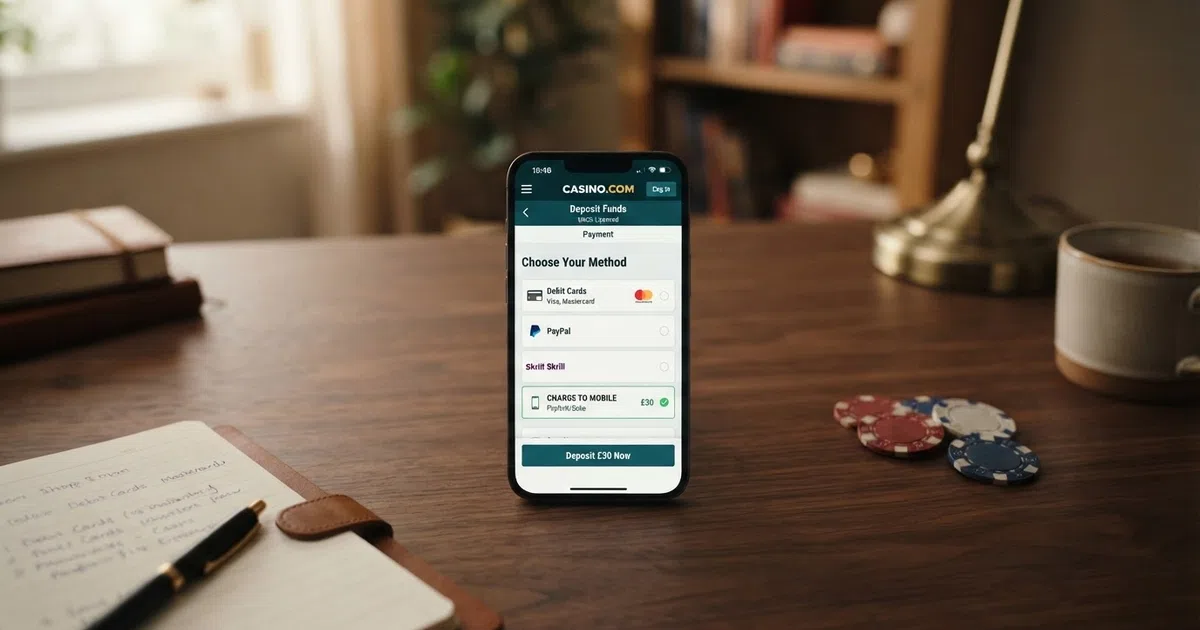
The character of the route shapes who it suits. A £40 ceiling on any single transaction and a £240 ceiling across a calendar month — both statutory, both set under the Payment Services Regulations 2017 rather than chosen by any casino — mean the method fits small, casual deposits rather than bankroll moves. And because the deposit goes in through the phone, it cannot come back out the same way: withdrawals still need a debit card, PayPal or a bank transfer, and a player who has not set one of those up before the first deposit will hit the wall after a win.
This guide covers the mechanics of the charge, the limits the law puts around it, the ten GB-licensed operators that take it, the slots the offers actually attach to, and the safer-gambling controls that come with one-tap funding.
Current as of 30 August 2026 · Verified against the Gambling Commission’s public register of gambling businesses (last updated 29 July 2026) and each operator’s own cashier page.
Phone-bill payments are a deposit route, not a casino type
A phone-bill deposit lands at a cashier that has been wired to accept it. The casino itself is not “phone-bill” — it is GB-licensed or it is not, and the route into the cashier is one decision among several. The deposit amount is added to the next monthly phone bill or deducted from prepaid credit. From the casino’s side, the deposit is recorded as cash. From the player’s side, the charge appears on the handset’s network confirmation screen and again on the next statement.
Three intermediaries carry the charge at the GB casinos that support it: Boku, Payforit and Fonix. They sit between the cashier and the mobile network, handling the authorisation step that confirms the charge to the subscriber’s account. The casino never talks to the network directly — it talks to one of these three, and the intermediary confirms the deposit once the network authorises it.
The deposit route behind the label
The label points at the payment method, not at any product the casino sells. Slots, table games and live casino are all reachable with a phone-bill deposit in the same way they are with a card deposit. The only difference is the funding leg, and that leg ends the moment the cashier credits the account. From that point on, the player is gambling with a normal cash balance that the casino pays out through its standard withdrawal route.
How the method differs from cards and e-wallets
Two features set the route apart, and both come from outside the casino. The first is the statutory cap: a £40 ceiling on any single deposit and a £240 ceiling across a calendar month, both set under the Payment Services Regulations 2017. Neither card nor e-wallet deposits carry that ceiling, though they do carry customer-set limits inside the account. The second is the one-way flow: the phone bill cannot receive a withdrawal, ever. A win has to travel through a debit card, PayPal or bank transfer, and that route has to be ready before the deposit goes in.
A third feature is worth naming, even though it concerns what the route replaces rather than what it does. Credit cards have been banned for all remote gambling in Great Britain since 14 April 2020, under LCCP licence condition 6.1.2 — the ban reaches credit-card-funded e-wallet payments as well. The phone bill is one of the card-free ways to fund play, and that has helped it find a niche among players who do not want a card on file at all.
Fast in, never out: how the charge actually works
A deposit moves through the cashier in seconds once the player confirms the amount, but the cash-out half of the cycle is a separate problem entirely. The flow below describes what happens from the moment the player picks pay-by-mobile at the cashier to the moment the account is credited, and it shows why the payout route is a separate conversation that has to happen before the first deposit.
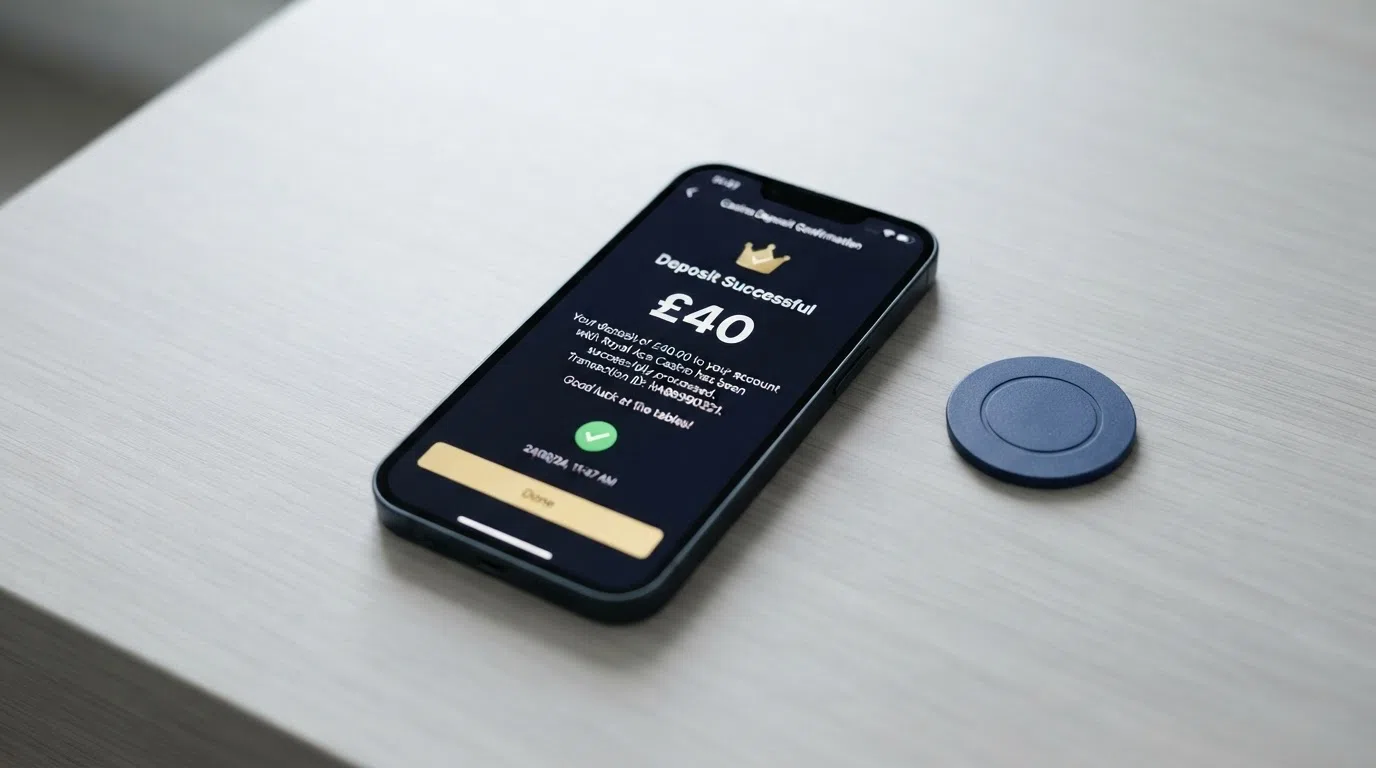
Step by step: how a charge lands on your handset
- Pick the pay-by-mobile option at the cashier and enter the deposit amount.
- The casino routes the request through Boku, Payforit or Fonix, which forwards it to the mobile network.
- The network sends an SMS authorisation request to the handset, and the player confirms with a single tap.
- The deposit amount is added to the next phone bill (or taken from prepaid credit), and the casino credits the account once the intermediary confirms the authorisation.
- The £40 per-transaction cap applies at every step — exceeding it blocks the charge, not just warns about it.
Topping up your balance from the bill
A top-up is the same charge in a different jacket. The casino does not distinguish “first deposit” from “top-up” at the billing layer: both go through the same intermediary, both hit the same statutory ceiling, both appear on the next phone statement in the same line. Operators do not publish a separate top-up fee in the research this guide was built on, so the practical cost of any top-up is whatever the network charges for paid-content services — and that is the figure to look up on the network’s own payment page rather than on the casino’s.
Which networks take the charge
Research confirms four networks as supporting phone-bill casino deposits via the Boku, Payforit and Fonix intermediaries: EE, O2, Vodafone and Three. Sky Mobile, Tesco Mobile, giffgaff and BT Mobile appear in search results alongside them, but research carries no per-network deposit terms for these brands, so the practical move is to check the operator’s cashier page before assuming a network will route the charge. The deposit is supported at the intermediary level, not at the network level — a network that works with one of the three intermediaries usually works through all of them, but a network outside the four confirmed ones needs its own check.
The £40 and £240 caps, in plain terms
A single deposit cannot exceed £40. A subscriber cannot put more than £240 into casinos across a calendar month through any phone-bill route. Both numbers are statutory and set under Schedule 1, Part 2(l) of the Payment Services Regulations 2017, enforced by the Phone-paid Services Authority rather than the Gambling Commission. The casino does not choose the cap; it cannot lift it, lower it, or split it across more than one charge.
Minimum deposits are operator-set. Research this guide was built on does not pin a single floor across the ten featured operators — the practical move is to check the cashier for the figure before depositing, because what looks like a £10 floor at one site may be a £5 floor at another, and what looks like a £20 floor at a third may be the maximum the welcome offer will accept.
Why you can never cash out to the phone
The phone bill is deposit-only. There is no flow in the system that can return winnings to a handset’s monthly bill, and no intermediary that would carry such a flow if there were one. A player who wants to withdraw has to use a debit card, PayPal or a bank transfer — and the route has to be set up before the first deposit, because the verification step on the withdrawal method is the one place the casino cannot skip. The wager-free spin winnings the welcome offers push still need somewhere to land, and the phone bill is not that somewhere.
On the go: how phone billing behaves in mobile play
Mobile is the route’s natural home. The charge lands on the same device the player is already holding, and the SMS confirmation step is the one that distinguishes the method from a card payment entered on the same screen. Every operator in the comparison table later in this guide supports pay-by-mobile deposits, so the practical question is not whether a mobile site accepts the route but which slot the welcome offer ties its free spins to.
Mobile casinos that take carrier billing
The mobile sites of the ten featured operators present pay-by-mobile inside the cashier as one option among several. The casino itself stays browser-based or app-based — the deposit route does not change the platform, it changes the funding leg. A player depositing on the mobile site and playing on the mobile site has charged a phone bill and is playing in a normal browser session; the deposit does not convert the casino into a different product.
Casino apps, and how the charge fits them
An app deposit uses the same Boku, Payforit or Fonix flow as the mobile site. Research carries no app-only deposit terms for any of the ten featured operators, so the practical move is to assume the app behaves identically to the mobile site: the caps hold, the deposit-only rule holds, the network authorisation step holds. Anything else would be an app-specific exception the operator would have to publish, and none has in this run’s research.
The slots you can fund this way — real RTPs, not guesses
A phone-bill deposit reaches the whole lobby rather than a separate slot set. The welcome offers tie their free spins to specific titles — Big Bass Splash at three of the featured operators, for instance — but the deposit itself does not restrict which games the cash balance can play. The slot stake caps apply once play starts, regardless of how the deposit arrived.
The four slots below are the only ones research carries a specific RTP for in this run. Starburst, Book of Dead, Big Bass Bonanza and Gonzo’s Quest all have researched figures attached; everything else in the lobby either lacks the data in research or sits behind a volatility class the snippets did not surface. The free-spins title the offers push — Big Bass Splash — is named in the prose below with its RTP gap stated honestly, because an empty cell is more useful than an invented number.
The games your deposit can actually reach
The deposit funds slots, table games and live casino alike, with no game-type exclusion attached to the phone-bill route in research. The slot stake cap — £5 per game cycle for players 25 and over, £2 for players aged 18 to 24, imposed by SI 2025/215 — applies once a spin is placed, regardless of how the deposit was funded. A phone-bill deposit reaches the same titles as a card deposit; the only thing the route does not reach is the payout leg, and that is a withdrawal problem, not a games problem.
Best slots by RTP, with the numbers
| Slot | Provider | RTP | Volatility | Max win |
|---|---|---|---|---|
| Starburst | NetEnt | 96.09% | Low | ~500× |
| Book of Dead | Play’n GO | 96.21% | High | 5,000× |
| Big Bass Bonanza | Pragmatic Play | 96.71% | Medium | 2,100× |
| Gonzo’s Quest | NetEnt | 95.97% | — | — |
The empty cells are not a formatting choice — research did not surface a volatility class or a max-win figure for Gonzo’s Quest in this run, and filling the cells with a guess would make the table worse, not better. The same applies to Big Bass Splash, which sits in the welcome-offer column of three featured operators: no RTP, no volatility, no max win in research, so the slot is named in prose and the cells stay empty.
The free-spins titles the offers push
Big Bass Splash is the slot the welcome offers keep attaching themselves to. William Hill ties 200 spins to it; 32Red ties 320 spins to it; multiple Jumpman Gaming brands tie their spin counts to it. MrQ also ties up to 300 wager-free spins to Big Bass Splash. Research carries no RTP, volatility or max-win figure for the title, so the cells stay empty and the slot is named here without a number attached. A featured slot with no researched RTP is a featured slot the table cannot honestly rate.
The cost of a single phone-bill session at the stake cap
A player aged 25 or over depositing the £40 statutory maximum, playing it through on Starburst at the £5 stake cap, runs 8 spins. At Starburst’s 96.09% RTP, expected loss across those 8 spins is about £1.56 — £40 in wagers, £38.44 returned on average, the house’s 3.91% edge doing its work across the session. That is the cost of the route’s largest possible single deposit, played through on the lobby’s most-asked-about low-volatility title in one unbroken stretch. It is an estimate, not a guarantee — any one of the 8 spins can pay out anything from nothing to a ~500× stake win.
Choosing a casino that earns your first deposit
A sound pick starts with the licence and ends with the withdrawal route. Everything in between — the offer shape, the slot count, the wagering multiple — is a way of sorting one licensed operator from another. The list below names the three checks worth running before a deposit goes in, and the comparison table later in this guide carries the side-by-side specifics.
What a worthwhile phone-bill casino must clear
A worthwhile operator holds an active GB licence rather than an offshore substitute. An offshore licence — Curaçao, MGA, Gibraltar — is not a GB substitute, and operating without a UKGC licence is a criminal offence under section 33 of the Gambling Act 2005, not a grey area. The welcome offer’s wagering sits at or under the 10× cap, which has been a hard ceiling since 19 January 2026. A working withdrawal method has to be set up because the phone bill cannot pay out — and “working” means verified, not just added to the account.
New casinos to watch, without the hype
Research this guide was built on does not name a single new pay-by-phone-bill casino entrant in the GB market, so the honest move is to say so rather than invent one. A new operator should be checked against the Gambling Commission’s public register before any deposit, and pay-by-mobile support should be confirmed on the operator’s own cashier page rather than inferred from a marketing line. The register is searchable by name, trading name, domain or account number, and it had 2,663 records on its last update on 29 July 2026.
The 10 operators we compared side by side
Ten active GB-licensed operators ranked by fit to pay-by-phone play. Every row carries its GB licence number, pay-by-mobile support, welcome-offer shape, wagering and slot count. The spread runs from zero wagering on spin winnings to a 30× match on bonus funds at Duelz, so the table shows the split rather than a single headline — the choice between a wager-free spin offer and a deposit match is a real one for a player budgeting a first deposit.
| Operator | GB licence | Pay-by-phone | Welcome offer | Wagering | Slots |
|---|---|---|---|---|---|
| bet365 | 55149 (Hillside Media) / 39563 (Hillside (UK Sports) LP) | Yes | Up to 500 free spins (£10 deposit and play, allocated over 10 days) | 0× | 500+ |
| Ladbrokes | 1611 (Ladbrokes Betting & Gaming Ltd) | Yes | 100 free spins + 300 LadBucks (£10 deposit and spend) | 0× | 1,000+ |
| William Hill | 39225 (WHG (International) Limited) | Yes | 200 free spins on Big Bass Splash (£10+ stake) | 10× (winnings capped £30) | 500+ |
| Sky Vegas | 065519 (Bonne Terre Gaming Limited / Flutter) | Yes | 200 free spins (£10 deposit and spend) | 0× | 400+ |
| 32Red | 45322 (Kindred Group) | Yes | 320 free spins on Big Bass Splash (£30 deposit and stake, £0.10 each) | 0× | 500+ |
| Duelz | 48695 (SuprPlay Limited) | Yes | 100% up to £1,000 + 100 free spins | 30× on bonus funds (operator-stated; verify vs current T&Cs) | 1,500+ |
| MrQ | 60629 (Lindar Media Limited) | Yes | Up to 300 free spins on Big Bass Splash | 0× | 900+ |
| Betfred | 39544 (Petfre (Gibraltar) Limited) | Yes | Stake £10, get 200 free spins (£0.10 each) | 0× | 400+ |
| Casumo | 61549 (Recro Limited) | Yes | 50% up to £100 | 10× on bonus funds | 2,000+ |
| Betfair | 39435 (PPB Counterparty Services Limited / Flutter) | Yes | 50 free spins on selected slots (£10 deposit and stake) | 0× | 400+ |
bet365: the 500-spin, zero-wagering offer
bet365 is the largest spin count in the set with the cleanest terms attached. Up to 500 free spins on a £10 deposit-and-play, allocated over 10 days through a randomised mechanic, and spin winnings carry zero wagering. The licence sits at UKGC 55149 and 39563 (Hillside Media and Hillside UK Sports), both active on the public register as of 29 July 2026, and the operator carries 500+ slots with demo mode available. Bonus validity runs 30 days from registration. Bet365 is a strong candidate for those prioritizing spin volume; the 10-day allocation requires patience, but it provides consistent value without wagering complications.
Ladbrokes: 100 spins plus £300 in rewards
Ladbrokes pairs free spins with site credit on a small entry point. The offer is 100 free spins plus 300 LadBucks on a deposit and spend of £10, with zero wagering on spin winnings and seven-day validity on the spins. UKGC 1611 is active on the register, the operator carries 1,000+ slots, and pay-by-phone is confirmed alongside Apple Pay and Google Pay — the cashier offers a wider funding menu than most of the set. Ladbrokes creates a rewarding experience for anyone testing the platform with a modest tenner, combining small-entry accessibility with the LadBucks system.
William Hill: 200 spins, with a £30 winnings cap
William Hill is the spin-heavy offer with the most conditions attached. 200 free spins on Big Bass Splash for a £10+ stake, but winnings are capped at £30 and the bonus carries 10× wagering, with 72-hour validity. UKGC 39225 (WHG International) is active, and the operator carries 500+ slots. The £30 cap is the figure worth weighing: the spin count is high, the ceiling is low, and the wagering means the cleared balance is what walks out, not the headline number. The operator’s complex structure at William Hill serves those who prefer specific tactical betting over standard wager-free spins.
Sky Vegas: 200 spins, no wagering at all
Sky Vegas delivers the wager-free spin offer on the Flutter platform. 200 free spins for a £10 deposit and spend, zero wagering on any winnings, seven-day spin expiry with 30 days to meet the deposit-and-spend condition. UKGC 065519 (Bonne Terre Gaming) is active, and pay-by-mobile is supported through the Flutter integration. The 400+ slot library is the smaller end of the set, but the wagering terms are the cleanest in the comparison. Simplicity defines the offer at Sky Vegas, providing an uncluttered path to free spins without hidden multiplier requirements.
32Red: 320 spins on a single slot
32Red is the largest spin count tied to a single title in the set. 320 free spins on Big Bass Splash (£0.10 each) for a £30 deposit and stake, with zero wagering and 30-day validity. UKGC 45322 (Kindred Group) is active, and the operator carries 500+ slots. The £30 entry is higher than the £10 floor most of the set asks for, but the spin count is the highest wager-free figure on the table. Fans of Big Bass Splash will find that 32Red’s offer serves as the premier option for high-volume, wager-free play on that specific title.
Duelz: a £1,000 match, at a 30× price
Duelz is the deposit-match outlier of the set. 100% match up to £1,000 plus 100 free spins, but the operator page states 30× wagering on bonus funds — three times the 10× statutory cap, and the figure has to be verified against current T&Cs before any deposit. UKGC 48695 (SuprPlay) is active, and the operator carries 1,500+ slots. The wagering flag is the headline of this row, not the headline number: a 30× multiplier on bonus funds is the kind of condition that turns a £1,000 match into a long grind. Steeper clearing targets at Duelz require careful consideration, making it a platform best suited for experienced users who can navigate higher wagering requirements.
MrQ: 300 wager-free spins, 48 hours to use
MrQ is the wager-free offer with the tightest clock. Up to 300 wager-free spins on Big Bass Splash, zero wagering on all bonuses across the site, 48-hour validity, and pay-by-mobile confirmed on the operator’s own cashier page. UKGC 60629 (Lindar Media) is active, and the operator carries 900+ slots. The 48-hour window is the figure that separates this offer from a Sky Vegas or a 32Red — the spins have to be used or they expire, and the player has to plan the deposit around the calendar. Efficiency is key at MrQ, where the strict 48-hour deadline rewards those who can complete their play session promptly.
Betfred: 200 spins for a £10 stake
Betfred pairs a low entry point with the wager-free spin offer. Stake £10 to get 200 free spins at £0.10 each (£20 total value), zero wagering, seven-day validity. UKGC 39544 (Petfre Gibraltar) is active, and the operator carries 400+ slots. The £10 floor is the same as bet365’s, but the spin count is lower and the total value is half. For a player who wants the wager-free offer without committing the calendar, Betfred is the straight read.
Casumo: a £100 match, no spins attached
Casumo is the deposit-match offer with no spin count. 50% up to £100 on first deposit, 10× wagering on bonus funds, 30-day validity, no free spins in the standard welcome offer, and 2,000+ slots — the largest slot library in the comparison set. UKGC 61549 (Recro) is active. For a player who plays slots rather than chasing a welcome spin count, Casumo is the library play: the wagering sits at the 10× ceiling, so it does not trip the harder-multiple flag Duelz does, and the slot depth gives the deposit somewhere to go.
Betfair: 50 spins for a £10 stake
Betfair is the modest wager-free spin offer. 50 free spins on selected slots for a £10 deposit and stake, zero wagering, seven-day validity. UKGC 39435 (PPB Counterparty Services / Flutter) is active, and the operator carries 400+ slots. The 50-spin count is the lowest in the wager-free cluster, but the £10 floor is the same as the bigger offers — for a player who wants to test a Flutter-platform casino without committing more than a tenner, Betfair is the smallest wager-free stake on the table.
GB-licensed, not UK-licensed: the caps behind your play
The Gambling Commission is the single regulator, and the correct label is GB-licensed rather than UK-licensed: the Gambling Act 2005 covers England, Scotland and Wales, and Northern Ireland runs on separate, older law. A GB licence is compulsory at the point of consumption — the Gambling (Licensing and Advertising) Act 2014 made that the rule for any operator taking GB players, wherever it is based — and an offshore licence is not a substitute. The licensed market caps the spin, the bonus, and the card, and the checks that enforce those caps kick in before and during play.
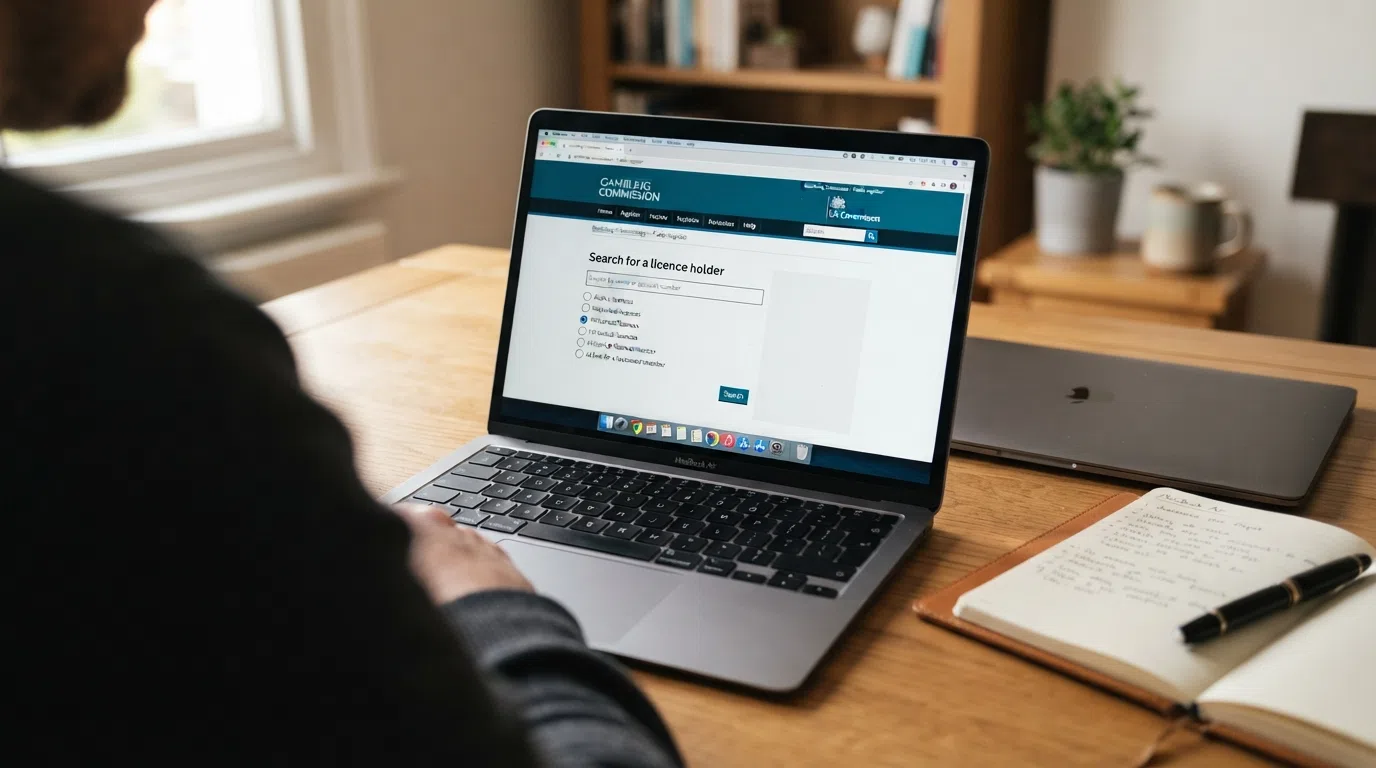
Who regulates, and how to check a licence
The Gambling Commission licenses operators, personnel and software, and publishes a public register of every licence holder. The register is searchable by business name, trading name, domain or account number, and it had 2,663 records on its last update on 29 July 2026. The Commission’s three licensing objectives, set in section 1 of the Gambling Act 2005, are preventing gambling from being a source of crime, ensuring gambling is fair and open, and protecting children and vulnerable persons. Providing gambling without a GB licence is a criminal offence under section 33 of the Act.
The phone-bill rules: £40 a time, £240 a month
The Gambling Commission does not regulate phone-bill deposits specifically — that falls under the Payment Services Regulations 2017 and the Phone-paid Services Authority. The £40 single-transaction cap and the £240 monthly cap are statutory, set under Schedule 1, Part 2(l) of the 2017 Regulations, and enforced at the network level rather than at the casino. The method is deposit-only, so the cap governs what goes in and nothing governs what comes out: winnings have to leave through a debit card, PayPal or bank transfer.
The caps on the spin, the bonus and the card
| Rule | Cap / value | What it covers | In force |
|---|---|---|---|
| Online slot stake cap (25+) | £5 per game cycle | Every spin at a GB-licensed slots site for players aged 25+ | 9 April 2025 |
| Online slot stake cap (18–24) | £2 per game cycle | Every spin at a GB-licensed slots site for players aged 18 to 24 | 21 May 2025 |
| Wagering requirement cap | 10× the bonus amount | Welcome bonuses and promotional offers at GB-licensed casinos | 19 January 2026 |
| Mixed-product promotions | Banned | Offers tying gambling products together (e.g. bet on football, get free spins) | 19 January 2026 |
| Credit card deposits | Banned | All remote gambling deposits, including credit-card-funded e-wallet payments | 14 April 2020 |
| Auto-play | Banned | Automatic reel-spinning on online slots | 31 October 2021 |
| Reverse withdrawals | Permanently banned | Cancelling a pending withdrawal to gamble the funds again | 31 October 2021 |
| Phone-bill deposit | £40 per transaction / £240 per month | Charge-to-mobile casino deposits (PSA / PSR 2017) | Standing |
The Commission’s stated ground for capping wagering at ten is that the limit “decreases the likelihood of harm, reduces complexity, and improves transparency while maintaining consumer choice” — a recognition that the multiplier is not a neutral figure, and that the difference between 10× and 30× is the difference between a manageable clearing target and a long grind. The age-banded stake cap means two adults at the same casino can face different maximum bets on the same slot, because the cap applies to the player rather than to the game.
The checks behind your first deposit
Name, address and date of birth have been verified before the first deposit at every GB-licensed remote casino since 7 May 2019 — no grace period, no deposit before verification. A light-touch financial vulnerability check using publicly available data triggers at £150 in net deposits across a rolling 30-day period, under LCCP Social Responsibility Code 3.4.4, in force since 28 February 2025. From 30 September 2026, all UK online operators must offer a gross deposit limit based solely on money paid into the account, and only that form may be called a “deposit limit” — the RTS 12 standard brings the term into line with the figure.
Staying in control when funding is one tap away
Phone-bill funding is low-friction: a confirmation tap and the deposit is in. That ease is the route’s selling point and its risk at the same time, because a deposit that takes seconds is also a deposit that does not pause for reflection. The safer-gambling controls below are the ones the GB-licensed market puts around one-tap funding, and they are worth setting up before the first deposit rather than after a session that has run longer than intended.
Self-exclusion that works across every site
GAMSTOP is the national multi-operator online self-exclusion scheme for Great Britain, and it has been mandatory for every GB-licensed online operator since 31 March 2020. Exclusion runs six months, one year, five years, or five years with auto-renewal, and it cannot be cancelled early — the period chosen is the period that holds. A player who has self-excluded through GAMSTOP cannot deposit at any GB-licensed casino, by any payment method, for the duration of the exclusion, and the phone bill does not get around the block.
Deposit and time limits you can set yourself
Operators must prompt a player to set a financial limit before the first deposit, in force since 31 October 2025, and any request to decrease a limit has to be actioned immediately — there is no cooling-off period on a request to lower the ceiling. Reality-check prompts and time-out pauses sit inside the account alongside the limit, and the gross deposit limit the operator must offer from 30 September 2026 is the only thing that can legally be called a “deposit limit”. For a player funding with a £40-cap route, the customer-set limit and the statutory cap are two different ceilings — the lower one is what binds.
Where to get help, and what the numbers say
- GamCare runs the National Gambling Helpline and made 996 referrals to treatment and peer-based support in January 2026 — a 48% increase year-on-year from 674 in January 2025. Of those who disclosed a form of gambling in 2026, 82% cited online gambling specifically — the highest rate since 2021.
- GambleAware funds the National Gambling Support Network, which treated 11,960 clients between April 2024 and March 2025, an 11% increase year-on-year.
- NHS gambling-harm clinics operate in England, Scotland and Wales, with referral routes through GamCare and through GPs.
- Gamblers Anonymous offers peer support meetings across Great Britain.
The prevalence figures behind the help lines: 0.4% of adults in England experienced problem gambling in the 2023–24 Adult Psychiatric Morbidity Survey (PGSI 8+), and 1.6% experienced at least moderate-risk gambling (PGSI 3+). GamCare’s five-year-high statement on online gambling was the trigger for the headline figures this section opens with, and the referrals number is the working evidence that the help lines are reaching people, not just being set up to be.
How we chose and checked every operator
The sources behind this guide were operator sites, the Gambling Commission’s public register, and review coverage. Every operator in the comparison table was checked against the public register for an active GB licence; the licence numbers in the table are the account numbers the register returns when the operator’s name is searched. The ranking orders by fit to pay-by-phone play — active pay-by-mobile support, active licence status, offer shape and wagering terms — without invented weights. No operator was promoted because its offer looked generous in a marketing email, and no operator was dropped because its offer looked modest: the table ranks the spread rather than a single headline figure.
Where research did not carry a figure — a per-operator top-up fee, a per-network deposit term for the smaller networks, an RTP for Big Bass Splash — the cell stays empty or the prose names the gap, because a guess in the cell would be a worse outcome than a missing one.
Is this the right way to fund your play?
The phone bill is a route for small, casual deposits rather than bankroll moves, and that is the verdict the £40 and £240 caps force. A player depositing the statutory maximum once a day is at the £240 monthly ceiling within six days; a player depositing the maximum twice a week is well under it but is also spending a £10 deposit each time rather than funding a longer session in one go. The route suits the player who values the card-free funding leg and is comfortable topping up in small chunks — it does not suit the player who wants to move £500 in one charge, because the cap blocks that before the cashier does.
The deposit-only rule means a withdrawal method has to be set up before the first deposit, not after a win. A player who skips that step will hit the wall when the first cash-out is requested, and the time to fix the gap is before the money is in the account rather than after. A GB-licensed operator with wagering at or under 10× is the only sound target, and the table in this guide carries the side-by-side specifics that make the choice visible. For the player who matches that description — small deposits, card-free funding, a real withdrawal route in place — the phone bill is a clean fit. For everyone else, the debit card or the e-wallet was probably the better route all along.
Frequently asked questions
Is it safe to gamble using my phone bill?
The charge is processed by a regulated intermediary — Boku, Payforit or Fonix — and the £40 and £240 caps are statutory under the Payment Services Regulations 2017, not casino-chosen. The casino still has to hold a GB licence, and a phone-bill deposit at an unlicensed casino is no safer than a card deposit at the same site. Verify the licence on the Gambling Commission’s public register before the first deposit, regardless of the funding method.
Why does this deposit route carry a cap at all?
The cap is set by the Phone-paid Services Authority under the Payment Services Regulations 2017 to limit exposure to charge-to-mobile services across the whole market, not gambling specifically. The £40 ceiling on any single transaction and the £240 ceiling across a calendar month apply to every charge routed through a UK mobile network, and the casino cannot lift them. The cap is what makes the route a small-deposit method rather than a bankroll one.
Does a phone-bill deposit still unlock the welcome offer?
At every featured operator in this guide, yes — the welcome offer is unlocked by the qualifying deposit, and the funding route does not change that. Read the offer terms before depositing, because some offers specify a minimum stake as well as a minimum deposit, and a phone-bill deposit that does not get staked on the qualifying game does not count toward the trigger.
Is there a minimum amount I can deposit this way?
Operator-set rather than statutory, and the figures vary across the comparison set. Some featured operators floor at £5, others at £10, others at £20 or £30 — the cashier shows the floor for the site in question, and the £40 statutory cap is the ceiling, not the floor. The practical move is to check the cashier before depositing rather than assume a £10 figure across the board.
Do these deposits come with extra fees?
Research this guide was built on does not publish a per-operator top-up fee, so the honest answer is to check the casino’s payment page and the network’s own charge-to-mobile terms before the first deposit. A £40 deposit is £40 on the phone bill at most GB-licensed casinos, but the network’s premium-rate or paid-content terms can add a small handling charge that the casino does not display.
Payments – No Minimum Deposit Casinos UK
Content created by the «No Minimum Deposit Casinos UK» team