Where Phone-Bill Deposits Actually Work in the UK
 Available in GB
A casino that takes SMS deposits does not work the way an ordinary e-commerce checkout does. The transaction never touches a bank account. It moves from the casino’s cashier, through a payment processor such as Fonix or Boku, across the mobile network, and onto the customer’s monthly phone bill or prepaid balance. The whole thing confirms by a one-time code sent back to the handset. That is the entire system in one breath — and it is also the reason no casino can send winnings back down the same route.
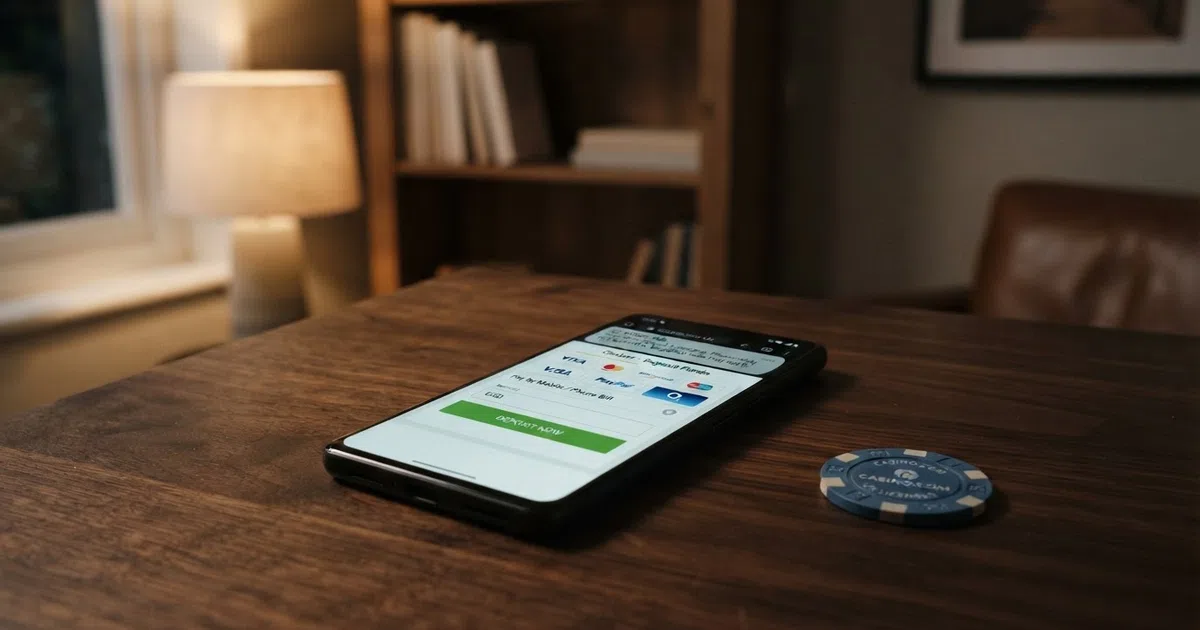
Data current as of 30 August 2026; licence claims verified against the UK Gambling Commission public register.
What an SMS Deposit Casino Actually Is
An SMS deposit casino is a UK-licensed online gambling site that accepts pay-by-phone-bill as a funding method. The customer enters a mobile number at the cashier. The casino routes the deposit through a carrier-billing processor. A confirmation text arrives, asking the customer to reply “Y” or tap a link. The funds appear in the casino balance within seconds, and the charge shows up on the next phone bill, or against prepaid credit. No debit card, no bank account, no e-wallet.
The mechanic matters because it is structurally unlike everything else at the cashier. A debit-card deposit is a card-network instruction to a bank. An e-wallet deposit is an account-to-account transfer between regulated institutions. A phone-bill deposit is a telecommunications carrier collecting on behalf of a third party, and that arrangement sits inside the Payment Services Regulations 2017 rather than the casino’s own merchant agreement. It carries different statutory caps, a different authentication route, and a different refund policy.
Most UK sites set a minimum SMS deposit of £5 to £10 and a per-transaction operational cap of £30, sitting inside a £40 single-transaction ceiling that UK and EU payment law imposes. The deposit is confirmed by an SMS code — a one-time prompt that proves the customer actually holds the SIM. The same SIM-based confirmation is what the Payment Services Regulations treat as Strong Customer Authentication, and the three processors that dominate the UK market — Boku, Fonix and PayForIt — all use it. OLBG frames the appeal plainly: “it’s as easy as entering your phone number at checkout or the cashier, and within a few taps, your payment is complete.”
Privacy is the obvious draw. The deposit never reveals a card number, a sort code, or a bank statement. It also carries a built-in spending brake — the carrier simply will not process more than the statutory ceiling will allow. For players who want a hard line between gambling money and household money, that ceiling is the feature, not the bug.
What an SMS deposit casino is not: it is not a route around identity checks. The UK Gambling Commission requires every GB-licensed operator to verify a customer’s name, address and date of birth before the first deposit. Since 7 May 2019 there is no grace period at all — verification must complete before the player can gamble. A phone number alone will not satisfy this. The phone is a payment rail, not an identity document.
The Mobile-First Casino Experience: Browser vs. App
SMS deposits are inherently mobile-first because the authentication runs through the handset. A player depositing from a desktop would still receive the confirmation text on their phone, and most operators reserve the pay-by-mobile option for mobile sessions anyway. Among the ten operators in the ranking that follows, none leans primarily on a downloadable app. The session runs in a mobile browser, the cashier sits inside that browser, and the SMS confirmation arrives as a system notification on the same device.
This produces a quieter interface than a dedicated app. There is no icon to download, no update to install, no platform-specific split between iOS and Android. The trade-off is feature parity: a mobile browser cannot match a native app’s push-notification reach or biometric login. For SMS deposits, that trade-off barely registers — the deposit flow does not need either.
Network compatibility is the practical constraint. O2, EE, Vodafone and Three all support charge-to-bill gambling transactions through the dominant processors. Selected MVNOs — Sky Mobile, giffgaff and Tesco Mobile among them — also work, though coverage at the MVNO level is less uniform. A player on a smaller virtual network may find that the processor rejects the deposit even though the casino accepts the payment type. The way to find out is to attempt a small deposit and read the failure message; the network, not the casino, is usually the reason.
Safe, Legit, or Too Good to Be True? Trust Signals for SMS Casinos
A legitimate SMS casino is one that holds a UK Gambling Commission licence and is listed on the Commission’s public register. The register carried 2,663 licensed businesses at its last update on 29 July 2026, and it is the only authoritative source for confirming that an operator is licensed to serve GB customers. Any “UK casino” that does not appear on the register is not licensed in the UK market — it may hold a Curaçao or Maltese licence, but that does not authorise it to take GB customers under the point-of-consumption regime introduced in 2014.
The second trust signal is the Phone-paid Services Authority, which regulates carrier billing in the UK independently of the Gambling Commission. The PSA caps daily carrier-billed gambling spend at £40, and it polices the processors — Fonix, Boku, PayForIt, Siru Mobile, PayviaPhone — for compliance. The PSA enforcement record is the underlying reason a deposit-only method carries fewer consumer risks than it might appear to.
A third signal is built into the method itself. SMS billing is deposit-only by design — the carrier infrastructure cannot move money from the casino back to the customer. That limitation is not a casino policy; it is a property of the payment rail. Every pound deposited via phone bill must be withdrawn by a different method, and that requirement makes the SMS deposit a soft spending brake rather than a closed loop.
The UKGC’s enforcement toolkit against unlicensed operators runs through disruption rather than blocking. Between April 2024 and June 2025 the Commission issued 3,140 disruption notices, referred 447,778 URLs to search engines for delisting, and saw 287,961 URLs removed. Average engagement across 160 disrupted sites fell by 32%. That is what “regulated” looks like in practice for an SMS casino — not a barrier at sign-up, but a steady effort to shrink the unlicensed market around the licensed one.
How Paying by Phone Bill Works at UK Casinos — And the Reason You Cannot Cash Out the Same Way
Paying by phone bill at a UK casino follows four steps. The customer selects pay-by-mobile or pay-by-phone-bill at the cashier. The cashier asks for the mobile number, then for the deposit amount. A processor — Fonix, Boku, PayForIt, Siru Mobile or PayviaPhone — routes the request to the carrier, which sends a one-time code by SMS to the handset. The customer confirms, and the deposit lands in the casino balance. The charge surfaces on the next monthly phone bill, or as a deduction from prepaid credit.
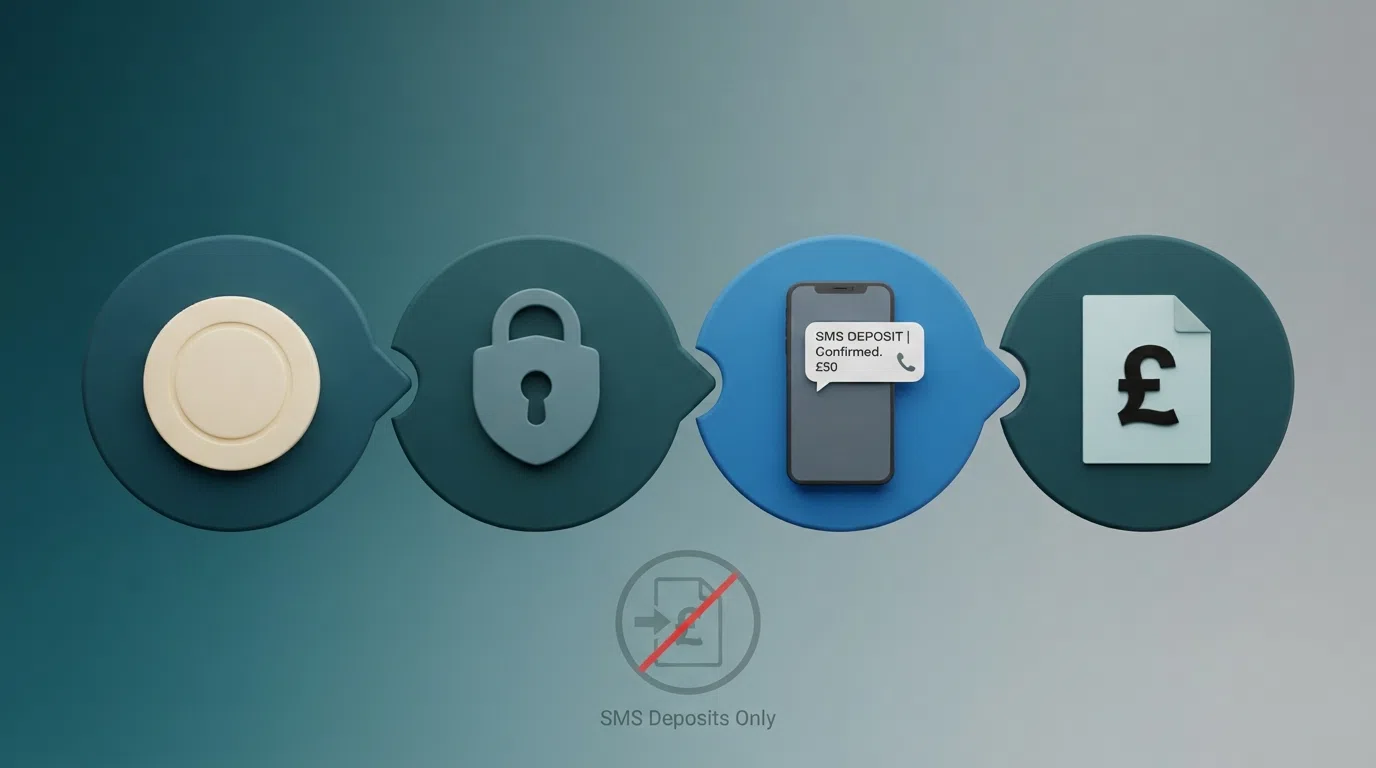
The same flow cannot run in reverse. Carrier billing is a consumer-to-merchant rail by design, and the technical and regulatory architecture around it has no consumer-to-merchant return path. Withdrawals require a different method — debit card, bank transfer, or e-wallet. That is not a casino policy: it is a property of the payment rail itself.
The regulatory framework matters here. Charge-to-mobile is governed by the Payment Services Regulations 2017, which transpose PSD2 into UK law. PSD2 sets two caps: £40 per single transaction and £240 per calendar month. Those caps are not the casino’s choice — they are statutory. Any UK operator that processes a £50 SMS deposit is in breach of payment law, not in breach of its own T&Cs.
The Payment Services Regulations are policed by the Phone-paid Services Authority. The PSA enforces its own daily cap of £40, sits alongside the Commission’s gambling remit, and audits the processors themselves. Together, the two regimes make pay-by-phone one of the more heavily capped retail payment methods in the UK — and that is exactly why gambling harm charities, including GamCare, treat it as a built-in brake rather than an unregulated loophole.
Step by Step: Making Your First SMS Casino Deposit
The first SMS deposit begins with a verified account. The UKGC requirement to verify name, address and date of birth applies before any deposit can be made, and the casino’s registration flow enforces it. Once verification clears, the cashier presents the available payment methods. Pay-by-mobile appears alongside the debit card and e-wallet options, usually labelled “Pay by Mobile”, “Pay by Phone Bill” or by a processor name such as “Fonix”.
Selecting the method opens a form asking for the mobile number in international format — +44 for a UK number, with the leading zero stripped. The cashier then asks for the deposit amount, which is constrained to the casino’s operational cap (£30 in most cases) and the statutory ceiling (£40). After the customer confirms, the processor sends an SMS to the handset — a one-time code or a prompt asking for a “Y” reply. The customer confirms, and the deposit lands instantly in the casino balance. The charge arrives on the next phone bill.
The four dominant processors in the UK market each handle that flow in their own way. Fonix and Boku both run on the PSD2 £40 per-transaction and £240 per-month caps. PayForIt works on all four major UK networks and processes deposits in the £10 to £30 range. Siru Mobile sets a minimum at £5.12 — the lowest among the major processors, and the reason two operators in the ranking below can advertise a sub-£10 entry point. PayviaPhone applies a 15% processing fee that no other UK processor charges.
Carrier Billing Explained: How the Charge Reaches Your Phone Bill
Behind the cashier, the deposit moves through three parties. The casino hands the deposit instruction to a payment processor. The processor asks the carrier to confirm the transaction. The carrier sends the SMS code, validates the customer’s reply, and either adds the charge to the next monthly bill or deducts it from prepaid credit. The processor takes a small percentage fee; the carrier takes a percentage for collecting. The casino never sees a card network or a bank.
Each processor in this chain has its own cap structure. Fonix applies the PSA daily limit of £40 and the PSD2 monthly limit of £240. Boku applies the same PSD2 caps and routes through mobile operators in over seventy countries, but in the UK it sits inside the same £40/£240 envelope. PayForIt works on all major networks and processes deposits in the £10 to £30 band — a tighter ceiling than the statutory maximum because PayForIt sets its own per-transaction limits inside the regulator’s envelope. Siru Mobile sets a £5.12 minimum, reflecting its prepaid-credit focus. PayviaPhone applies a 15% fee on every deposit — the only processor in this set that does.
The Phone-paid Services Authority supervises the chain. The PSA was set up under the Communications Act 2003 to regulate premium-rate and phone-billed services, and it polices the gambling side of carrier billing alongside the gambling-specific regulators. The PSA cap of £40 per day on gambling-related charges sits one layer under the PSD2 £40 per-transaction and £240 per-month caps. None of these caps is optional, and the layered structure is what prevents a casino from offering a higher SMS ceiling than the law allows.
It is worth distinguishing carrier billing from premium-rate SMS. A premium-rate text — a £1.50 charge for entering a competition, say — runs through a different tariff and a different regulator framework. Carrier billing for gambling sits inside the PSD2/PSA regime and is governed by the £40/£240 envelope. The two are easily confused, and a casino cashier that conflates them is showing its seams.
Deposit Limits and Minimums: What You Can Actually Send
| Processor | Transaction Limit | Monthly Cap | Networks Supported | Fee |
|---|---|---|---|---|
| Fonix | £40 | £240 | O2, EE, Vodafone, Three | None stated |
| Boku | £40 | £240 | O2, EE, Vodafone, Three | None stated |
| PayForIt | £10–£30 | £240 | All major UK networks | None stated |
| Siru Mobile | Min £5.12 | £240 | O2, EE, Vodafone, Three | None stated |
| PayviaPhone | £10 min | £240 | O2, EE, Vodafone, Three | 15% processing fee |
The table tells the operational story, but the regulatory story is what controls it. Three tiers of limits apply. The casino’s own operational cap is the lowest and is set by the operator — most featured casinos set it at £30, sitting below the £40 PSD2 ceiling. The PSD2 statutory cap is £40 per single transaction and £240 per calendar month, set by the Payment Services Regulations 2017 and policed across the payment chain. The Phone-paid Services Authority’s daily cap is £40, sitting one regulatory layer under PSD2. A casino cannot override any of them.
The minimum deposit is set by the casino and the processor. MrQ, Duelz, Hot Streak, Voodoo Dreams, NY Spins, LeoVegas and BetMGM UK all set £10. Mr Vegas and Videoslots, both on Siru Mobile, set £5.12 — the processor’s floor. Great Britain Casino, on PayviaPhone, sets £10 against a 15% fee, which means the actual amount credited to the casino balance is £8.50 on a £10 deposit. That fee is unique among UK processors, and it is the one number on this page that genuinely costs the customer money.
The £240 monthly ceiling is a fixed legal requirement rather than an operator policy. Heavy users will hit this limit quickly if they maintain a daily £30 deposit rhythm, at which point further SMS funding becomes impossible for the remainder of the billing period. Ensure you have a secondary payment source ready for any activity exceeding this statutory limit.
Withdrawals: Why SMS Billing Cannot Send Money Back
A casino cannot withdraw to a phone bill because carrier billing has no return path. The same architecture that makes SMS deposits quick and clean — a consumer-to-merchant instruction, validated by SIM possession — has no slot for a merchant-to-consumer instruction. The processors do not support it. The carriers do not bill it. The PSA does not regulate it. The deposit-only limitation is structural, not optional.
Players who deposit by phone bill must withdraw by another method. The standard alternatives are debit card, bank transfer and e-wallet. Credit cards have been banned for remote gambling in Great Britain since 14 April 2020 under LCCP condition 6.1.2, so the “credit card” option is closed off entirely. Bank transfer is the slowest method — typically one to three working days — but it has no fee. Debit cards are usually the fastest, often settling within twenty-four hours after the casino’s internal processing period. E-wallets sit between the two, typically same-day or next-day.
The UKGC’s expectation is that withdrawals go back to the same method used for the deposit where possible. The principle is anti-money-laundering and consumer-protection in one — it prevents funds being routed through unrelated accounts, and it ensures the player does not end up holding a casino balance they cannot retrieve. SMS is the explicit exception to this rule. No amount of money can sit in a casino balance and emerge on a phone bill.
The practical consequence is that an SMS depositor must register a second payment method before they need to cash out. A player who deposits only by phone bill, wins, and then attempts to withdraw to the same phone bill will be told the method is not supported for withdrawals. The remedy is to add a debit card or bank account during the registration phase, before the first deposit, even if the player intends to fund play exclusively by SMS.
Best SMS Deposit Casinos UK: Top 10 Ranked for 2026
| Operator | SMS Processor | Min SMS Deposit | Welcome Offer | Wagering Requirement | SMS Bonus Eligible |
|---|---|---|---|---|---|
| MrQ | Fonix | £10 | 200 free spins on Fishin’ Frenzy Even Bigger Fish 3 Megaways Rapid Fire | None on free spins | Yes |
| Duelz Casino | Fonix | £10 | Up to 140 free spins (20/day × 7 days) | 10× on bonus winnings | Yes |
| Mr Vegas | Siru Mobile | £5.12 | 100% match up to £50 + 11 wager-free spins | 10× on deposit, paid in 10% increments over 60 days | Yes |
| Videoslots | Siru Mobile | £5.12 | 11 wager-free spins on Starburst + 100% match up to £50 | 10× on cash bonus only | Yes |
| BetMGM UK | — | £10 | 200 free spins on Big Bass Splash | 1× wager on deposit to trigger | Not confirmed |
| Hot Streak Casino | Fonix | £10 | Free spins on Big Bass Splash | 10× | Yes |
| Great Britain Casino | PayviaPhone | £10 | 100% match up to £50 + 50 free spins | 10× | Yes |
| Voodoo Dreams | Fonix | £10 | Up to 140 free spins | 10× on bonus winnings | Yes |
| NY Spins | Fonix | £10 | Deposit and play £25, get 140 free spins | 10× on bonus winnings | Yes |
| LeoVegas | Boku | £10 | Bet £10 get £30 (sports); 50 free spins on Starburst (casino) | 10× | Not confirmed |
Eight of ten confirmed. Two did not. The bonus-eligibility column is the one that divides the table — and it is the one that costs a player the welcome offer if they get it wrong. A player who deposits by SMS at BetMGM UK or LeoVegas without first confirming in the operator’s own payment T&Cs that SMS deposits qualify for the bonus is gambling twice over.
The wagering column shows the post-19 December 2025 regulatory ceiling clearly, alongside the older 40× figures still cited by some sources. The UKGC’s LCCP Social Responsibility Code 5.1.1 caps wagering at 10× from that date. MrQ is the standout: zero wagering on free-spin winnings, which is the cleanest bonus architecture on the page.
The minimum deposit column shows the Siru Mobile advantage. Mr Vegas and Videoslots both drop the floor to £5.12 — a function of the processor, not the operator. The other eight all sit at £10. PayviaPhone’s £10 minimum looks identical to Fonix and Boku, but the 15% processing fee means a £10 deposit at Great Britain Casino credits only £8.50 to the casino balance.
The processor column has one gap. BetMGM UK accepts pay-by-phone at some comparison sites, but the operator’s own help page lists debit card, Apple Pay, bank transfer and Trustly as the accepted methods. Fonix and Boku are not confirmed. The deposit will work where the comparison sites say it will, but the player who wants certainty should confirm at the cashier before relying on it.
MrQ — £10 SMS Minimum, Fonix Processing, Wager-Free Free Spins
MrQ is the standout SMS casino in the featured set. Deposits via Fonix start at £10, the welcome offer is 200 free spins on Fishin’ Frenzy Even Bigger Fish 3 Megaways Rapid Fire, and there is no wagering requirement on free-spin winnings. The headline number — zero wagering — is the differentiator. Every other operator in the table carries either a 10× or a 40× multiple. MrQ carries none.
The wager-free architecture removes the calculation that dominates every other welcome offer on this page. A player who claims the MrQ welcome knows that whatever the free spins return is theirs to keep, with no turnover requirement to satisfy before withdrawal. That is a structural advantage, not a marketing one. The £20 deposit and spend threshold to unlock the spins is also lower than several competitors’ bonus-trigger conditions.
MrQ also offers 10 free spins on Big Bass Q the Splash with no deposit required — a separate no-deposit offer using SMS verification as the identity check, distinct from the SMS deposit route. The two should not be confused: one is a payment channel, the other is an authentication route.
The processor choice matters. Fonix routes through O2, EE, Vodafone and Three, applies the £40 daily and £240 monthly caps, and adds no fee. A player who deposits £30 a day on Fonix will hit the £240 monthly ceiling in eight days. After that, a different payment method is required for the rest of the month.
Duelz Casino — Up to 140 Free Spins, £10 SMS Minimum
Duelz delivers the welcome offer as a drip rather than a single drop — 20 free spins per day for seven days, totalling 140 at £0.10 each. The structure forces a player to log in daily for a week to claim the full offer. Wagering on bonus winnings is 10×, in line with the post-December-2025 LCCP cap, and the wagering window is also seven days.
The £100 daily max-cashout cap on free-spin winnings is the qualifier that needs to sit in any player’s calculation. A spin on a high-volatility title could theoretically return more than £100 in a single session; the cap absorbs the excess. The cap also limits the upside of a lucky run during the seven-day drip.
Duelz’s gamified layer — quests, treasure chests, a loyalty meta-game — sets it apart from most competitors. A player who values the gamification layer is in Duelz’s target audience; a player who does not should weigh it against Voodoo Dreams, which runs on the same SuprPlay platform with a similar bonus structure but a different brand experience.
SMS deposits via Fonix qualify for the welcome offer. The £10 minimum applies to the deposit, but the bonus trigger requires a £25 deposit-and-play before the spins unlock — a higher threshold than MrQ’s £20. The £15 difference is small but real, and it sits on the deposit side, not the cashier side.
Mr Vegas — 100% Match to £50, Siru Mobile from £5.12
Mr Vegas offers the lowest SMS deposit floor in the featured set at £5.12, set by the Siru Mobile processor rather than the operator. The welcome offer is a 100% deposit match up to £50 plus 11 wager-free spins — a two-part bonus where the spins carry no wagering and the cash match carries 10× on the deposit paid in 10% increments over 60 days.
The 60-day incremental release is the unusual feature. Most wagering requirements are met all at once on the bonus amount; Mr Vegas releases the bonus 10% at a time, conditional on wagering completion. A player who does not clear the first 10% does not see the second. The 60-day window is generous, but the increment-by-increment structure rewards consistent play over sporadic sessions.
Mr Vegas is a sister site of Videoslots, which means the same parent company operates both and the bonus structures are intentionally close. A player who values the lowest possible entry point should pick Mr Vegas; a player who values the wider game library should pick Videoslots — but the underlying product is the same.
The Siru Mobile minimum is the reason a player can deposit less than £10. Every other processor in this list starts at £5 (PayForIt) or £10 (Fonix, Boku, PayviaPhone); Siru’s £5.12 floor is the lowest.
Videoslots — 11 Wager-Free Spins + 100% Match, 80+ Providers
Videoslots runs the widest game library among the featured operators — more than 80 providers, including NetEnt, Microgaming, Play’n GO and Pragmatic Play. The welcome offer mirrors Mr Vegas: 11 wager-free spins on Starburst plus a 100% deposit match up to £50 with 10× wagering on the cash bonus only.
The wager-free spins on Starburst are the cleanest part of the offer. Starburst carries a 96.09% RTP, low volatility and a max win around 500× stake, which makes it an unusually transparent free-spin target. The spins will produce a steady stream of small returns, none of which carry a wagering requirement. A player who treats the spins as their welcome offer and ignores the cash match is in effect claiming a small guaranteed-keep bonus.
The cash match is the structural mirror of Mr Vegas: 100% to £50, 10× wagering, but paid as a single sum rather than in 10% increments over 60 days. A player who wants the bonus in one piece rather than drip-fed should pick Videoslots.
Beyond the sheer volume of games, the 80+ provider roster at Videoslots provides access to unique release schedules and niche mechanics that are often absent at smaller sites. For those prioritizing game variety and consistent access to new titles, this library is significantly broader than any other featured operator.
BetMGM UK — 200 Free Spins on Big Bass Splash, £10 Deposit
BetMGM UK is a heavyweight brand with a low-friction welcome trigger: deposit and wager £10 once to receive 200 free spins on Big Bass Splash at 10p per spin. The trigger is the simplest in the featured set — a single £10 wager, then the spins unlock. There is no multi-deposit structure, no time-delayed drip, no bonus code required.
Big Bass Splash is Pragmatic Play’s flagship fishing-themed slot, and the 200 free spins on it give a player 200 shots at a title with 96.71% RTP and medium-high volatility. The variance is high enough that the 200 spins may produce a long streak of small returns with an occasional larger hit; the player who values low-variance sessions should not expect a steady drip from this offer.
The bonus-eligibility gap is the central risk. BetMGM UK accepts pay-by-phone at some comparison sites, but the operator’s own published payment-method T&Cs list debit card, Apple Pay, bank transfer and Trustly. SMS is not explicitly confirmed. A player who deposits by SMS at BetMGM UK and then finds that the welcome offer did not attach has deposited successfully and missed the bonus — the worst of both outcomes. The way to avoid it is to confirm SMS bonus eligibility in the operator’s own T&Cs before depositing.
Hot Streak Casino — Big Bass Splash Free Spins, Fonix from £10
Hot Streak is a Fonix-processed SMS casino with deposit-triggered free spins on Big Bass Splash. The welcome bonus carries a 10× wagering requirement. The bonus also carries a 4× initial bonus amount maximum cashout and a 28-day validity window.
The 4× max cashout is unusual. Most free-spin offers cap winnings in absolute terms (£100 per day at Duelz) or not at all (MrQ, Videoslots). A 4× multiple on the initial bonus amount ties the cashout ceiling to whatever the trigger deposit was. A player who triggers with a small deposit sees a small ceiling; a player who triggers with the maximum sees a larger one. The structure is more transparent than a flat £/day cap, but the ceiling is real and worth calculating before depositing.
The 10× wagering figure is the regulated limit. A player who treats the 40× as gospel will over-estimate the bonus’s true cost.
The 28-day validity is standard for the sector and gives a reasonable window to clear wagering at the regulated 10× rate.
Great Britain Casino — 100% Match to £50 + 50 Free Spins, PayviaPhone
Great Britain Casino is the only featured operator using the PayviaPhone processor — and PayviaPhone is the only processor in this list that charges a 15% processing fee on deposits. A £10 SMS deposit at Great Britain Casino credits £8.50 to the casino balance. The fee is the cost that no other operator on this page imposes, and it is the reason Great Britain sits lower in the ranking than its welcome offer would otherwise suggest.
The welcome offer is a 100% deposit match up to £50 plus 50 free spins at 10× wagering. The match component is competitive; the 50 free spins at the regulated 10× multiple is competitive. The PayviaPhone fee is the catch. A player who deposits the full £50 to maximise the match loses £7.50 to the fee on day one, before any wagering begins. The net effect is that the welcome offer is worth less at Great Britain Casino than at Mr Vegas or Videoslots, where the same match is processed without fee.
For a player who cannot use Fonix or Siru Mobile — a rare situation, but it exists on some MVNOs — PayviaPhone is the fallback. The fee is the price of network compatibility where the dominant processors do not work.
Voodoo Dreams — Up to 140 Free Spins, Fonix, SuprPlay Sister Site
Voodoo Dreams shares its bonus architecture with Duelz — same parent company, same SuprPlay platform, same 140-free-spin structure across seven days, same £0.10 per spin, same 10× wagering on bonus winnings. The two brands are structural twins in everything except the gamified meta-game and the brand experience.
Voodoo Dreams leans into a “collect spells and spirits” loyalty framework that runs as a layer over the standard casino experience. Players collect points, level up a character, and unlock rewards through that progression rather than through a conventional VIP scheme. A player who values the gamification layer and prefers the Voodoo Dreams aesthetic is in the target audience; a player who finds the layer gimmicky should pick Duelz.
SMS deposits via Fonix qualify for the welcome offer. The £10 minimum applies. The processor and the bonus structure match Duelz, so a player choosing between the two is choosing a brand experience rather than a structural offer.
NY Spins — Deposit and Play £25, Get 140 Free Spins
NY Spins sets a higher bonus trigger than its peers: deposit and play £25, then receive 140 free spins at £0.10 each. The 10× wagering on bonus winnings applies, and the wagering window is seven days. The processor is Fonix, the minimum SMS deposit is £10, but the bonus-eligible deposit is £25 — a clear separation that a player needs to understand before depositing.
A player who deposits £10 at NY Spins will have a working casino balance and access to the game library, but the welcome offer will not attach. The £25 deposit-and-play threshold is the difference between a player with a welcome offer and a player without one. The Fonix minimum and the bonus minimum are different numbers.
NY Spins is otherwise a Fonix standard — NetEnt, Play’n GO, Pragmatic Play providers, a £40 daily and £240 monthly cap on deposits, no processor fee. The brand experience is New York-themed in a way that does not impose any additional friction on the deposit or withdrawal flow.
LeoVegas — Boku-Processed, Established Brand, Bet £10 Get £30
LeoVegas is a multi-award-winning established brand, and its Boku integration makes it the only Boku-processed operator in the featured set. The welcome offer is primarily sports-focused — bet £10, get £30 in free bets — with a casino free-spins alternative referenced in some bonus sources: 50 free spins on Starburst at a £10 minimum phone deposit.
The wagering figure of 10× on free-spin winnings is the regulatory cap. The £100 maximum cashout is also referenced.
The bonus-eligibility question is unresolved. LeoVegas’s published payment-method exclusions list Skrill; SMS is not explicitly confirmed. A player who deposits by SMS at LeoVegas and finds the welcome offer did not attach will have completed a successful deposit and missed the bonus — the same risk as at BetMGM UK. The remedy is the same: confirm in the operator’s own payment T&Cs before depositing.
LeoVegas’s established status is the structural advantage. The Boku integration has had longer to stabilise than the integrations at newer operators. The mobile experience has been refined over multiple product cycles. For a player who values operational maturity over the latest bonus volume, LeoVegas is the fit.
Slot RTPs That Matter on a Capped Phone-Bill Stake: Titles, Providers and What to Play
| Slot Title | RTP | Provider | Volatility | Max Win |
|---|---|---|---|---|
| Starburst | 96.09% | NetEnt | Low | ~500× stake |
| Book of Dead | 96.21% | Play’n GO | High | ~5,000× stake |
| Big Bass Bonanza | 96.71% | Pragmatic Play | Medium-high | ~2,100× stake |
| Big Bass Bonanza Megaways | 94.62%–96.7% | Pragmatic Play | High | Up to 46,696 paylines |
RTP matters more on a capped deposit because the total stake envelope is fixed. A player depositing £30 by SMS and playing it through on Starburst at 96.09% RTP faces an expected loss of around £1.18. The same £30 through Book of Dead at 96.21% RTP faces an expected loss of around £1.14 — but the variance is much higher. Most sessions on Book of Dead will produce larger losses than £1.14; a small minority will produce large wins. The 96.21% RTP is the long-run average across millions of spins, not a session-by-session guarantee.
The four titles in the table are the ones research carries verified RTP figures for. Most titles in any operator’s library do not have public RTP data carried in independent sources, and the table reflects that honestly — these four are what the page can speak to with a number attached. A player who picks a title outside this table has no RTP claim to lean on from this page.
The age-banded slots stake cap changes the calculation. From April and May 2025, online slots in the UK carry a maximum stake per game cycle of £5 for players aged 25 and over, and £2 for players aged 18 to 24, imposed by SI 2025/215. A player depositing £30 by SMS and playing £2 spins can sustain fifteen spins before the deposit is exhausted. The RTP calculation applies to every one of those spins identically — the cap changes how long the session lasts, not the per-spin house edge.
SMS Deposit Slot Sites: Where the Game Libraries Actually Deliver
Videoslots is the standout on library breadth. More than 80 providers, including NetEnt, Microgaming, Play’n GO and Pragmatic Play, gives the operator the widest selection in the featured set. The other nine operators carry narrower mixes — typically NetEnt, Pragmatic Play and Play’n GO at the core, with selected smaller providers around them. The core trio is near-universal: a player who values those three providers will find them at every casino in the ranking.
Provider mix matters because the same title can carry different RTP configurations at different operators. A slot with a 96.5% default RTP may be set to a 94% configuration by an operator that wants a higher margin. The headline RTP in a slot review is not always the RTP the player faces. A player who wants to verify the live RTP should check the in-game information panel at the casino where they intend to play.
The UKGC’s game-design rules apply regardless of provider. Auto-play is banned. The minimum spin speed is 2.5 seconds. Losses disguised as wins are banned. Reverse withdrawals are banned. Session loss and win display is mandatory. These rules apply to every slot at every GB-licensed casino, regardless of whether the deposit was by SMS, debit card or e-wallet.
Mobile Slots with SMS Pay: The Browser-Based Reality
Every featured operator’s slot library runs in the mobile browser. None requires an app download. The SMS deposit cashier integrates into the same mobile web session, so a player can move from a slot game to the cashier and back without leaving the browser. The confirmation SMS arrives as a system notification, the deposit credits instantly, and the slot session resumes.
The 2.5-second minimum spin speed applies to mobile-browser slots in the same way it applies to desktop. The auto-play ban applies equally. A player who wants to run spins in rapid succession will be slowed by the regulator, not by the operator. The slot experience on a capped SMS deposit is therefore slower and more deliberate than on a non-UK casino — and that is the regulatory intent.
The £5/£2 age-banded stake cap applies on mobile-browser slots exactly as on desktop. The cap is on stake per game cycle, not on deposit per session. A player with a £30 SMS deposit and a £2 stake cap faces the same fifteen-spin envelope on mobile as on desktop.
Why Most SMS Deposits Won’t Unlock a Casino Welcome Bonus
Eight of the ten operators in the ranking confirm SMS deposits qualify for the welcome offer. Two do not — BetMGM UK and LeoVegas — and the gap is not a clerical oversight. It reflects the operators’ own published payment-method T&Cs, which in both cases list debit card, Apple Pay, bank transfer and (for LeoVegas) other named methods without confirming SMS. A player who deposits by SMS at either operator without first checking the cashier may complete a successful deposit and miss the welcome offer.
The 19 December 2025 LCCP Social Responsibility Code 5.1.1 cap is the second part of the story. Wagering requirements on bonus funds are now capped at 10× across all GB-licensed operators — a sharp fall from the 35× to 40× range that dominated before. The cap is a regulatory win for players in one sense: a 10× multiple on a £40 SMS deposit means £400 of required turnover rather than £1,400 to £1,600. The same cap is a tightening of the offer in another sense: operators cannot subsidise generous bonus values with high wagering multiples, so the headline value of the offer is closer to its real value.
The mixed-product bonus ban is the third part. Under LCCP 5.1.1, operators cannot combine betting, casino, bingo and lottery into a single promotional offer. The “bet £10 get £30 plus 50 casino spins plus a bingo bonus” structure that some operators ran before the rule took effect is no longer compliant. SMS depositors see fewer bundled offers as a result, but the offers they do see are clearer about what they include.
The £30 casino-set operational cap is the final wrinkle. Even at an operator where SMS deposits qualify for the bonus, the maximum matchable deposit is £30 — not the £40 statutory ceiling. A player who deposits £40 by SMS at an operator that caps at £30 will have £30 counted toward the bonus match and £10 sitting in the casino balance without contributing. The £30 cap is the casino’s choice, and it is the practical limit on what an SMS deposit bonus can be worth.
No-Deposit Bonuses with SMS Verification: What’s Actually Available
SMS verification bonuses and SMS deposit bonuses are different things. A verification bonus uses the phone number as an identity check — typically as part of a marketing opt-in step — and does not require a deposit. A deposit bonus requires funds to move through the SMS payment rail. The two categories should not be confused, because the verification bonus carries no payment-method eligibility question and the deposit bonus does.
MrQ offers 10 free spins no deposit on Big Bass Q the Splash at 10p per spin with no wagering — the closest match in the featured set. The spins credit on SMS verification of the phone number, with no deposit required. The wagering-free structure is the same as MrQ’s deposit-triggered welcome offer.
No other operator in the featured set carries a no-deposit bonus of comparable weight. The gap reflects a broader pattern in the UKGC-licensed market: no-deposit bonuses are tightly restricted because they attract problem-gambling risk more efficiently than deposit-triggered offers do, and operators have moved away from them.
UKGC identity-verification rules apply regardless of whether a bonus is SMS-verified or deposit-triggered. The full KYC requirement — name, address, date of birth — must complete before the player can gamble. SMS alone does not satisfy it. A player who passes SMS verification but fails address verification will not be able to use the bonus.
Free Spins on SMS Deposit: Which Operators Deliver the Most
- MrQ — 200 free spins on Fishin’ Frenzy Even Bigger Fish 3 Megaways Rapid Fire, wager-free, £20 deposit and spend threshold, no cashout cap stated.
- BetMGM UK — 200 free spins on Big Bass Splash at £0.10 per spin, 1× wager on deposit to trigger, SMS bonus eligibility not confirmed.
- Duelz Casino — 140 free spins (20/day × 7 days) at £0.10 each, 10× wagering on bonus winnings, £100 daily max cashout, 7-day validity.
- Voodoo Dreams — 140 free spins, same structure as Duelz (SuprPlay sister), 10× wagering on bonus winnings, 7-day validity.
- NY Spins — 140 free spins at £0.10 each, 10× wagering on bonus winnings, requires £25 deposit-and-play to trigger, 7-day validity.
- LeoVegas — 50 free spins on Starburst referenced at £10 phone deposit, wagering pre-2025 quoted at 40× (likely 10× under LCCP 5.1.1), £100 max cashout, SMS bonus eligibility not confirmed.
- Great Britain Casino — 50 free spins on welcome, 10× wagering, SMS bonus eligible, PayviaPhone fee applies.
- Mr Vegas — 11 wager-free spins plus 100% match to £50, wager-free on the spins, 10× on the deposit match.
- Videoslots — 11 wager-free spins on Starburst plus 100% match to £50, wager-free on the spins, 10× on the cash bonus.
The wagering spread is the part that decides the offer’s real value. MrQ and the wager-free spins at Mr Vegas and Videoslots carry zero wagering — whatever the spins return is the player’s to keep. The 10× wagering on Duelz, Voodoo Dreams, NY Spins, Great Britain and LeoVegas imposes a turnover requirement before withdrawal. The 40× figure on Hot Streak and LeoVegas almost certainly overstates the actual regulated wagering under LCCP 5.1.1.
The per-spin value is locked at £0.10 across the featured set. A player who values larger per-spin values will not find them here. The £0.10 ceiling is a sector-wide convention at this bonus level.
SMS Verification Bonus Offers: Privacy Trade-Off
Handing over a phone number to claim a bonus is a privacy trade-off, and the trade-off has two sides. The phone number enables the casino to reach the player by SMS — which the UKGC’s direct-marketing rules require to be opt-in per product and per channel from 1 May 2025. A player who claims an SMS-verification bonus has consented, by action, to receive promotional texts from the operator. The consent is specific: per product (casino, sports, bingo) and per channel (SMS, email, phone). A player who consents to casino-by-SMS has not consented to sports-by-email.
The distinction between genuine verification and a lead-capture mechanic matters. A casino that asks for a phone number to verify the customer’s identity and then uses it for marketing has folded two different consents into one step. The UKGC’s opt-in rules require those consents to be separate, and the casino’s sign-up flow should make the distinction visible. A player who finds that the phone number is a single opt-in for both verification and marketing should treat the bonus as a marketing exchange and consider whether the free spins are worth the texts.
UKGC identity-verification rules apply regardless. SMS alone does not satisfy KYC — full name, address and date of birth must be verified before the player can deposit or gamble. A player who has provided a phone number but not completed the rest of the verification will be unable to use any bonus, deposit-triggered or verification-based.
New SMS Deposit Casinos: Are They Worth Switching For?
New entrants to the UKGC-licensed SMS deposit market compete on three things: welcome offer value, mobile UX polish, and payout processing speed. Established operators — LeoVegas, Videoslots, Mr Vegas — have mature integrations with Fonix and Boku and have ironed out the operational wrinkles. New entrants — Hot Streak, NY Spins, Voodoo Dreams — have fresher welcome offers and modern product stacks but less operational track record.
The trade-off is not always obvious. A new operator’s headline bonus may look better than an established competitor’s, but the underlying processor integration takes time to stabilise. A player who deposits by SMS at a new operator and hits a transaction failure at the cashier is paying for the operator’s youth in lost time.
The UKGC’s public register carried 2,663 licensed businesses at its last update on 29 July 2026. New SMS-deposit-enabled entrants are a small subset of that pool. The pool is large enough that a player who wants the newest welcome offer has options; the pool is small enough at the SMS-enabled end that the same three or four processors serve most of them.
A new casino that has been live for less than a year and offers SMS deposits should be approached the same way any new GB-licensed operator should be — verify on the public register, read the bonus T&Cs, check the processor, and confirm the payment-method eligibility of the welcome offer before depositing. The maturity of the brand does not change the verification steps.
New vs. Established: What Changes and What Stays the Same
The regulatory constants do not change with operator age. Every GB-licensed casino, regardless of launch date, operates under the same PSD2 caps — £40 per single SMS transaction, £240 per calendar month. Every GB-licensed casino operates under the same 10× wagering ceiling from 19 December 2025. Every GB-licensed casino operates under the same deposit-only SMS limitation and the same pre-deposit ID verification requirement.
A casino that launched in the last quarter operates under identical payment law to a casino that launched in 2015. The difference is operational maturity, not regulatory scope. A new casino’s processor integration may be less stable; its customer service may be less tested; its bonus terms may carry more aggressive volume because the operator is acquiring customers. The regulator-imposed framework is the same.
A player who values the regulatory framework as the primary trust signal — and the public register as the verification tool — should weight operational maturity as a secondary concern. The framework is the floor; the maturity is the ceiling.
Is Paying by SMS at a UK Casino Safe? Licensing, GamStop and Your Rights
Paying by SMS at a UK casino is safe in the sense that every GB-licensed casino operates under the Gambling Act 2005’s three licensing objectives: preventing gambling from being a source of crime or disorder, ensuring it is conducted in a fair and open way, and protecting children and other vulnerable persons from harm or exploitation. Every GB-licensed casino is on the UKGC’s public register. Every GB-licensed casino is subject to LCCP conditions, RTS technical standards, and ongoing enforcement.
What “safe” does not mean: it does not mean that the deposit is reversible. SMS billing is deposit-only. It does not mean that the casino cannot go out of business. It does not mean that gambling itself is risk-free. The deposit rail is regulated; the activity is not.
The full suite of player-level protections applies to SMS depositors exactly as it does to debit-card depositors. Financial-limit prompts appear before the first deposit from 31 October 2025 under RTS 12, with decreases actioned immediately. Credit cards have been banned for remote gambling since 14 April 2020 under LCCP condition 6.1.2. The age-banded online slots stake cap applies regardless of payment method.
GAMSTOP — the national self-exclusion register — has been mandatory for every GB-licensed online operator since 31 March 2020. A player who self-excludes via GAMSTOP cannot deposit at any GB-licensed casino, including by SMS. The exclusion periods are six months, one year, five years, or five years with auto-renewal. None can be cancelled early.
UKGC Licensing: What It Requires of Every SMS Casino
A GB licence is compulsory at the point of consumption. The Gambling (Licensing and Advertising) Act 2014 introduced that regime: any operator serving GB customers, regardless of where the operator is based, must hold a UKGC licence. A Curaçao, Maltese or Gibraltar licence does not authorise an operator to take GB customers. The licence must be in place before the first GB customer deposit.
Identity verification before the first deposit is non-negotiable. The UKGC requires every GB-licensed online operator to verify name, address and date of birth before a customer can deposit or gamble. The pre-2019 72-hour grace period was removed on 7 May 2019, and there is no equivalent today. A casino that offers a deposit before completing verification is in breach.
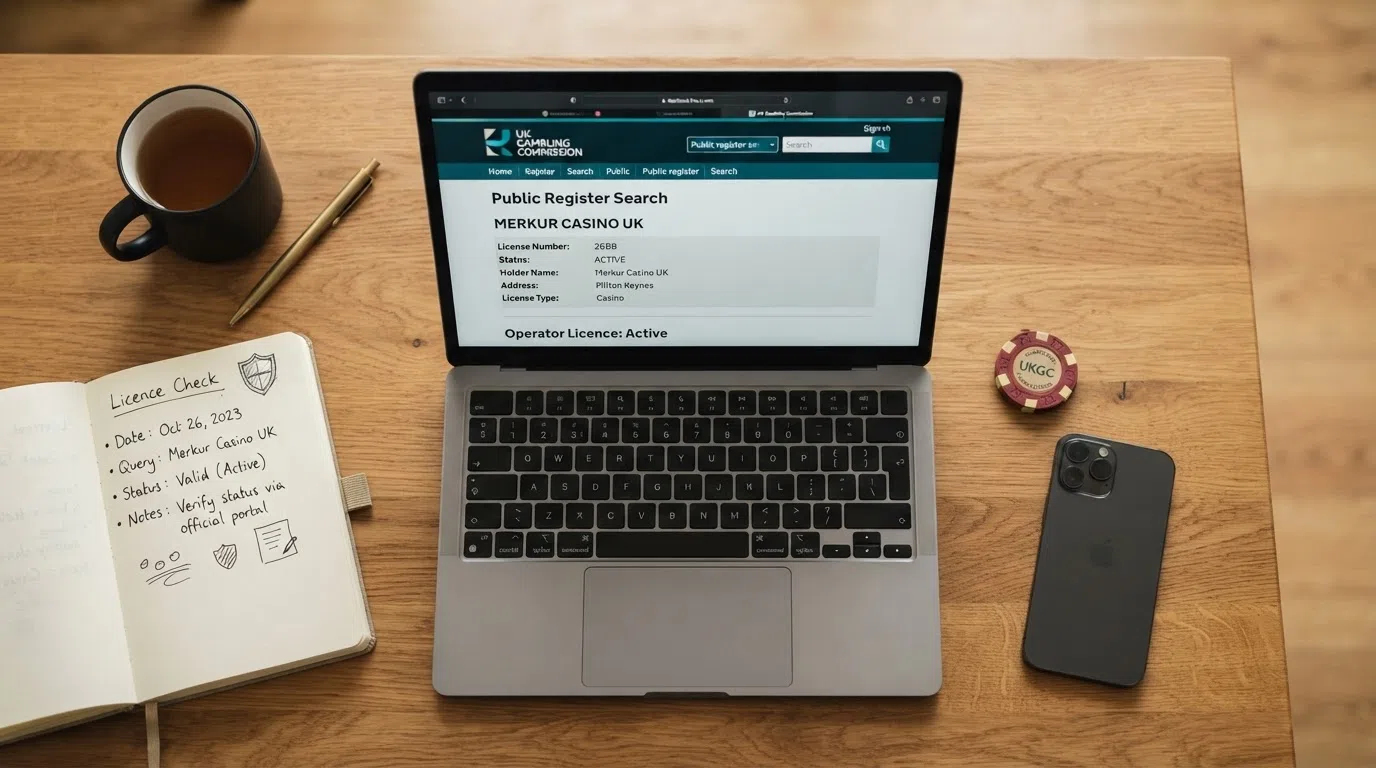
The public register is the player’s verification tool. The register’s last update on 29 July 2026 carried 2,663 licensed businesses. Every GB-licensed operator is on it, and every operator not on it is unlicensed in the GB market. The register is searchable by operator name, and a player who cannot find their casino on it should not deposit.
The penalty for unlicensed operation is criminal. Section 33 of the Gambling Act 2005 sets the maximum sentence at up to 51 weeks’ imprisonment (six months in Scotland), an unlimited fine, or both. No penalty is established for the player who gambles on an unlicensed site — the loss is consumer protection, not criminal liability.
GamStop Self-Exclusion and SMS Casinos: What It Covers
GAMSTOP has been mandatory for every GB-licensed online operator since 31 March 2020. A player who registers with GAMSTOP chooses an exclusion period — six months, one year, five years, or five years with auto-renewal — and the exclusion applies across every GB-licensed online casino. The exclusion cannot be cancelled early. The lock-in is the protection: a player in a difficult moment cannot undo their own decision.
SMS deposits at GB-licensed casinos are blocked by GAMSTOP registration. The exclusion is enforced at the casino level, and the casino’s deposit flow — including the SMS deposit cashier — refuses transactions from registered customers. The deposit will fail at the cashier, and no charge will reach the phone bill.
GAMSTOP does not cover unlicensed offshore casinos. A player who self-excludes via GAMSTOP and then deposits at a non-UKGC SMS casino has not breached their exclusion — they have left the GB-licensed system entirely. That is the central risk of offshore SMS casinos: they sit outside the GAMSTOP framework by design. The player who values the framework should stay inside it.
The way to verify that a casino is on GAMSTOP before depositing is to check the UKGC public register. A casino that holds a GB licence is on GAMSTOP by operation of law. A casino that does not hold a GB licence is not on GAMSTOP.
Non-GamStop SMS Casinos: The Real Risks
An SMS casino that is not on GAMSTOP is operating outside the GB licensing regime. It may hold a Curaçao, Maltese or other offshore licence, but no offshore licence authorises it to take GB customers under the point-of-consumption rule. The protections absent from such a casino are not subtle:
No GAMSTOP coverage. A player who self-excludes at every GB-licensed casino can still deposit by SMS at an offshore site. The exclusion does not travel.
No UKGC complaints route. The Alternative Dispute Resolution providers approved by the UKGC — IBAS and others — only handle complaints against GB-licensed operators. An offshore casino’s complaint process is whatever the operator itself sets up, and the player has no external recourse.
No enforced PSD2 caps. The £40 per-transaction and £240 per-month caps are UK payment law. An offshore processor is not bound by them. A player who deposits by SMS at an offshore casino may face higher per-transaction limits, or no enforced limit at all.
No mandatory financial-limit prompt. The RTS 12 prompt before the first deposit applies to GB-licensed operators. An offshore casino is not subject to it.
The UKGC’s enforcement against these operators runs through disruption rather than blocking. The Commission has no ISP-blocking power — proposals for court-ordered blocking have been made but not enacted. The disruption toolkit runs through cease-and-desist notices, search-engine delisting referrals, domain registrar pressure, and payment-provider referrals. Between April 2024 and June 2025 the Commission issued 3,140 disruption notices, referred 447,778 URLs to search engines, and saw 287,961 URLs removed. Average engagement across 160 disrupted sites fell by 32%. The unlicensed market has shrunk but not disappeared.
A player who values GAMSTOP, the UKGC complaints route, the PSD2 caps, and the financial-limit prompt should stay inside the GB-licensed system. A player who chooses otherwise accepts the absence of those protections as the cost of the choice.
Responsible Gambling Tools Every SMS Casino Must Provide
Every GB-licensed SMS casino must offer the same baseline of responsible-gambling tools, because the LCCP and RTS apply regardless of payment method. The financial-limit prompt before the first deposit, in force from 31 October 2025, is the most visible of these. A player making their first deposit by SMS will be asked to set a financial limit before the cashier completes the transaction. The prompt cannot be skipped. Decreases in the limit are actioned immediately; increases are subject to a cooling-off period.
The £150 net deposit threshold for financial vulnerability checks, in force from 28 February 2025, sits underneath the prompt. A player whose net deposits cross £150 in a rolling 30-day period is subject to a publicly-sourced check — CCJs, bankruptcy orders, IVAs, DROs — that the operator runs against open data. The check is automated and does not require customer action. Stage 1 financial risk assessments have been announced with thresholds at £5,000 for players aged 25 and over and £2,500 for players aged under 25, but are not yet in force.
GAMSTOP self-exclusion is the heavy tool. Registration is free, exclusion periods run from six months to five years with auto-renewal, and the exclusion cannot be cancelled early. A player who has registered with GAMSTOP cannot deposit at any GB-licensed SMS casino. The exclusion applies across the GB-licensed market.
Outside the casino, the help infrastructure is built around GamCare and the NHS. The GamCare National Gambling Helpline (0808 8020 133) is the primary point of contact; 81.5% of contacts in 2026 cited online gambling, up from 79.5% in 2025 — a five-year high. The NHS Primary Care Gambling Service offers free therapeutic intervention. Gamblers Anonymous provides peer support. The PGSI 8+ problem-gambling prevalence rate sits at 2.5% of GB adults.
How We Rank SMS Deposit Casinos
The ranking above is built on three verification steps. The first is the UKGC public register — 2,663 records at the last update on 29 July 2026. Every operator in the ranking appears on that register. Operators that did not appear were excluded.
The second is the operator’s own cashier and bonus T&Cs. The minimum SMS deposit, the payment processor, and the bonus-eligibility status of SMS deposits are taken from the operator’s own published payment methods and bonus terms wherever those terms are available. Where the operator’s terms do not explicitly confirm SMS bonus eligibility — BetMGM UK and LeoVegas — the column carries “Not confirmed” rather than a default “Yes”.
The third is the LCCP 5.1.1 wagering cap. The 10× ceiling in force from 19 December 2025 is applied across the ranking. Where a quoted wagering figure predates the cap — Hot Streak’s 40× and LeoVegas’s 40× — the figure is carried with a note that it is almost certainly overstated. Where the post-cap figure is confirmed — Duelz, Voodoo Dreams, NY Spins, Great Britain Casino, Mr Vegas, Videoslots — the 10× is shown.
The ranking criteria applied qualitatively: UKGC licensing status verified against the public register; SMS deposit acceptance confirmed via the operator cashier and processor data (Fonix, Boku, PayForIt, Siru Mobile, PayviaPhone); bonus terms checked against published T&Cs and the LCCP 5.1.1 cap; minimum deposit and processor transparency weighted as accessibility signals. Independent affiliate data — OLBG, Bojoko, BonusFinder, Casino.org UK, The Independent, The Standard, TalkSport — informed the bonus-eligibility confirmation where the operator’s own T&Cs were silent.
What UK Players Should Actually Do About SMS Casino Deposits
SMS deposits are safe, regulated, and capped in ways that protect the player. They are also not the cheapest way to claim a bonus — the £30 casino-set operational cap limits the matchable amount, and the PayviaPhone 15% fee at Great Britain Casino is the only processor-level cost in the featured set. They lock cashout to an alternative method, which means a second payment method must be registered before the first withdrawal.
The practical checklist: verify the UKGC licence on the public register before depositing a pound. Confirm the processor fee — PayviaPhone’s 15% is the only one that bites. Check bonus eligibility in the operator’s own payment T&Cs before depositing. Set up a debit card or bank transfer for withdrawals before the first deposit, even if the player intends to fund play by SMS exclusively. Set a deposit limit at the first prompt — the prompt cannot be skipped, and the limit decrease is actioned immediately.
What this page cannot tell the reader is which operator to pick. The ranking orders the field on disclosed terms, but the decision sits with the player who knows their own priorities. A player who values the lowest wagering should pick MrQ. A player who values the lowest minimum deposit should pick Mr Vegas or Videoslots. A player who values the widest game library should pick Videoslots. A player who values processor fee transparency should pick any operator except Great Britain Casino.
The one action every SMS depositor should take, regardless of operator choice: set a deposit limit at the first prompt. It is the single most effective responsible-gambling tool the UK regulatory framework provides, and it applies to every GB-licensed casino regardless of payment method. The deposit limit does not prevent the player from gambling; it prevents the player from gambling more than they decided in advance they would.
Frequently Asked Questions
How do I deposit at a UK casino using SMS or my phone bill?
At the casino cashier, select pay-by-mobile or pay-by-phone-bill. Enter your mobile number in international format and the deposit amount — usually £5 to £30. The casino routes the request through a processor such as Fonix or Boku, which sends a one-time confirmation code by SMS to your handset. Reply or tap to confirm, and the funds appear in your casino balance within seconds. The charge shows up on your next monthly phone bill, or against prepaid credit.
What is the maximum I can deposit via SMS at a UK casino?
The statutory ceiling is £40 per single transaction and £240 per calendar month, set by the Payment Services Regulations 2017 and enforced by the Phone-paid Services Authority at £40 per day. Most UK casinos set their own operational cap at £30 per SMS transaction, sitting below the £40 statutory ceiling. Minimums are typically £5 to £10, with Siru Mobile operators setting £5.12 as the lowest floor in the UK market.
Are pay by SMS deposits eligible for welcome bonuses at UK casinos?
Eight of the ten featured operators confirm SMS deposits qualify for the welcome offer. BetMGM UK and LeoVegas do not explicitly confirm it in their published payment-method T&Cs. A player who deposits by SMS at either of those two should confirm bonus eligibility at the cashier before depositing, because the deposit itself will succeed even if the welcome offer does not attach. The wagering requirement on any attached bonus is capped at 10× under LCCP SR Code 5.1.1 from 19 December 2025.
Can I use SMS deposits if I am on GamStop self-exclusion?
No. GAMSTOP registration blocks deposits at every GB-licensed online casino, including by SMS. The exclusion applies across the entire GB-licensed market and cannot be cancelled early. GAMSTOP does not cover unlicensed offshore SMS casinos, which is one of the central risks of leaving the GB-licensed system. A player who has self-excluded via GAMSTOP and is looking for an SMS casino that will accept them is looking for an unlicensed operator — and that choice means no UKGC complaints route, no ADR access, and no enforced PSD2 deposit caps.
What are the alternatives to pay by SMS for withdrawing casino winnings?
Alternatives like debit cards, bank transfers, and e-wallets are essential because carrier billing cannot facilitate withdrawals. Since credit cards are prohibited for remote gambling, debit cards offer the fastest settlement times, while bank transfers remain a reliable, fee-free option. Register an alternative method before your first SMS deposit to ensure you can retrieve winnings without delay.
How do SMS deposit limits compare to debit card limits at UK casinos?
SMS is structurally more limited. The PSD2/PSA caps hold SMS deposits to £40 per transaction and £240 per calendar month, with most casinos setting their own operational cap at £30. Debit cards have no statutory per-transaction cap from payment law, and casinos typically set their own minimum at £10 with no maximum beyond standard fraud and AML controls. A player who needs to move more than £240 a month into a casino must use a non-SMS method for the excess. The trade-off is privacy: SMS never reveals a card number or a bank account, while debit card and bank transfer do.
Which UK Mobile Networks Support Pay-by-Phone Casino Deposits?
All four major UK networks — O2, EE, Vodafone and Three — support charge-to-bill gambling deposits through the dominant processors. A player on any of them will find the SMS deposit option live at every GB-licensed casino in the ranking that follows, subject to the per-transaction and monthly caps.
MVNO support is uneven. Sky Mobile, giffgaff and Tesco Mobile are among the virtual networks that have been reported to work with Fonix and PayForIt, but the smaller the MVNO, the less certain the support. Some virtual networks block gambling-related carrier billing outright as a matter of policy. A player on a smaller MVNO should attempt a £5 SMS deposit before relying on the method — the failure message will tell them whether their network blocks it.
A practical check: the deposit will fail at the confirmation stage if the carrier blocks it. The casino balance will not move, no charge will appear on the phone bill, and the casino’s cashier will return an error message that usually names the network. That failure is not a casino problem and not a regulator failure — it is the carrier exercising its own discretion over which categories of merchant billing to allow.
Payments – No Minimum Deposit Casinos UK
Content created by the «No Minimum Deposit Casinos UK» team