
No ID Verification Withdrawal Casinos UK — The Full Picture for 2026
 Available in GB
A withdrawal without uploading a passport, a utility bill, or a bank statement sounds like a small convenience. In the UK market, it is not. Every UK Gambling Commission-licensed casino must verify identity before a customer is permitted to gamble — name, address, date of birth, all of it, before the first spin. So when a UK player searches for “no ID verification withdrawal casino,” what they are really searching for is the offshore alternative: Curaçao-licensed, non-GamStop, crypto-forward, and entirely outside the UK regulator’s reach. That is the trade, and this article unpacks it.

The bonuses on these sites look generous. The wagering requirements are brutal by UK standards. The withdrawals move faster than any UKGC casino can manage — but the protection infrastructure that makes a UKGC licence worth having does not cross the water. Whether the trade works for a given player depends on which protections they actually need and which they can afford to lose.
*Data current as of 28 August 2026. Operator claims verified against the Curaçao Gaming Authority public register (portal.cga.cw).*
What “no ID verification” actually means for UK players in 2026
The three terms every UK player searches — and why they all point to the same door
“No-ID casino,” “no-KYC casino,” “no-verification casino” — these three phrases appear interchangeably across UK-facing affiliate sites, and search behaviour backs it up. A player typing one phrase is functionally asking the same question as a player typing the other two: *where can I gamble without sending documents?*
The reason all three phrases resolve to the same answer is structural. “KYC” (Know Your Customer) is the regulatory term; “ID verification” is the plain-English version; “no verification” is the search query itself. The underlying requirement is identical: an operator must confirm who you are before letting you play. The UK Gambling Commission’s Licence Conditions and Codes of Practice put it bluntly: *“Licensees must obtain and verify information in order to establish the identity of a customer before that customer is permitted to gamble”* (LCCP Condition 17.1.1). That applies to every UKGC-licensed operator. So no UKGC casino can offer no-ID play, no matter what the marketing copy suggests.
That leaves offshore operators, and the offshore space uses all three labels as search-optimised variants of the same product. The practical outcome is identical regardless of which phrase the player typed: an account registered with an email, deposits accepted in cryptocurrency or via card, and withdrawals processed without a document queue. The label is irrelevant; the licensing jurisdiction is the entire story.
Real-money play without documents: how the no-verification model works
The flow at a no-verification casino collapses into four steps that a UKGC casino stretches over days or weeks. Registration asks for an email address and a password — sometimes a username, never a residential address or a date of birth. The deposit method does the identity work that a UKGC casino would do at the registration screen. A Bitcoin or Ethereum transfer carries no name; a card payment passes through processors that run their own KYC but do not return the result to the casino. With no document queue on the casino side, the player moves from sign-up to real-money play in under five minutes.
Withdrawal inverts the same logic. When the player clicks “cash out,” the casino does not pause to ask for a passport scan or a recent utility bill. The payout goes back through whatever method deposited — crypto to a wallet address, fiat to a card or bank account — and the casino’s internal review (which exists at every legitimate operator regardless of jurisdiction) checks for fraud and bonus abuse rather than for identity. For a player used to UKGC casinos where first withdrawal triggers a document upload and a 24–72 hour pending period, the difference is enormous.
The trade is that the casino’s “internal review” is the only safeguard between the player and a withheld payout. There is no IBAS adjudication if the casino refuses to pay. There is no UKGC enforcement team to escalate to. The operator’s own complaints process is the entire appeals system. Some operators handle this well; others do not, and the player has limited recourse either way.
Are no-verification casinos safe or just convenient? The trust question
“Safe” means different things at different casinos. A Curaçao-licensed operator that displays the green authorisation seal from the Curaçao Gaming Authority (mandatory since 15 October 2025, with the orange seal now expired and invalid) meets a baseline of legitimacy. The LOK — Curaçao’s National Ordinance on Games of Chance — came into effect on 24 December 2024, replacing the older master-licence/sub-licence structure with direct CGA oversight. A green seal means the operator has converted to the new regime. An orange seal after October 2025 means the operator is in breach.
Beyond the seal, the trust signals a UK player is used to do not exist offshore. There is no IBAS adjudication for disputes. There is no statutory fund segregation guaranteeing player balances are kept separate from operating capital. There is no GamStop integration. The casino’s own responsible-gambling tools — deposit limits, reality checks, time-outs — are voluntary rather than mandatory, and many operators offer only a basic subset. SSL encryption is standard; provably fair games are available at crypto-forward operators; player reviews on affiliate watchdog sites are the closest thing to a reputation system.
A seasoned player treats these signals as the baseline, not the ceiling. Licence check first, seal colour second, provider roster third, withdrawal terms fourth. The casino that fails any of these checks is not worth the bonus headline, regardless of how large the percentage reads.
The legal reality of no-verification casinos: offshore, not UK-licensed
Why every UKGC-licensed casino must verify your identity — and always will
The UKGC’s verification mandate is not a suggestion. LCCP Condition 17.1.1, in the current version effective from 6 April 2026, requires operators to verify name, address, and date of birth before any gambling activity. A 2019 reform front-loaded this requirement — verification now happens at registration, not at first withdrawal. The shift closed the loophole where a player could deposit and play with minimal checks and only face full KYC when requesting a payout.
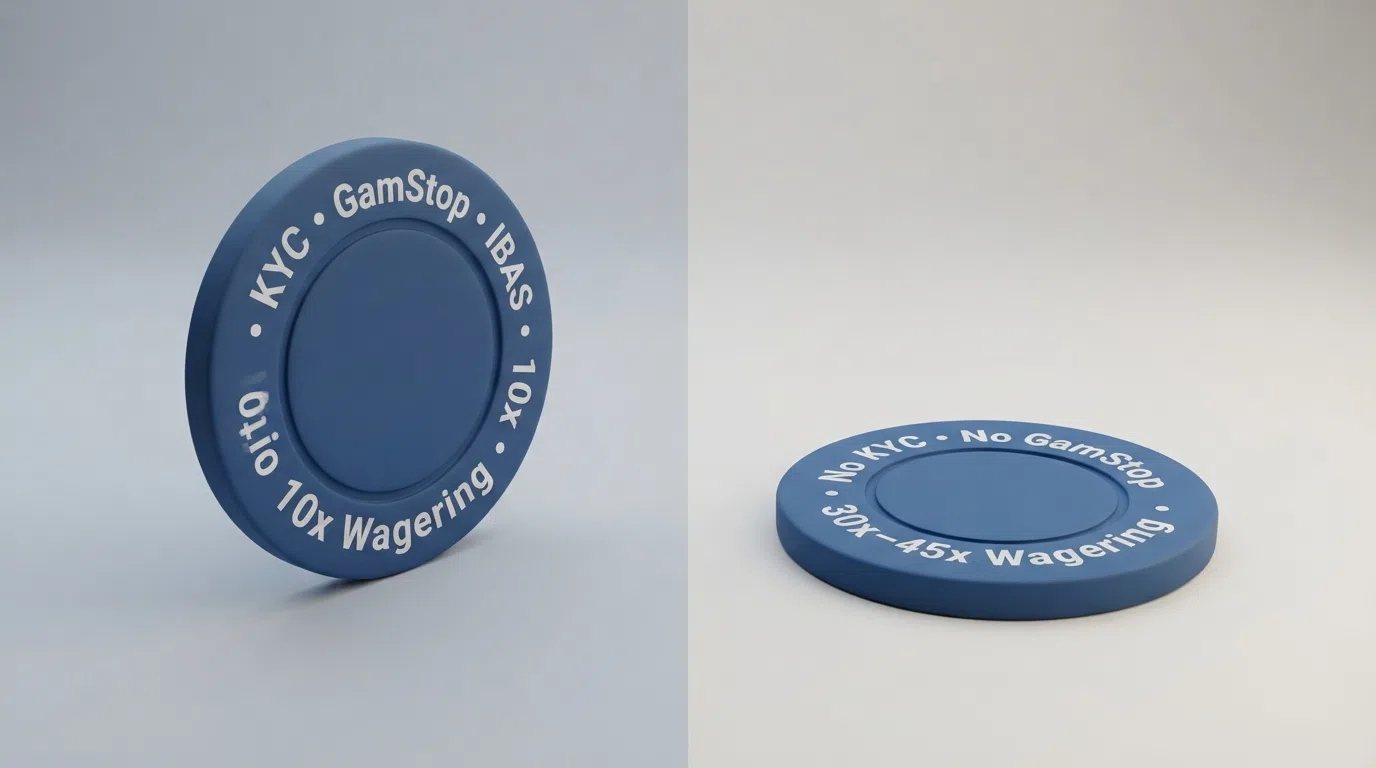
The underlying driver is anti-money-laundering compliance under the Money Laundering Regulations 2017. Source-of-funds checks for higher-value customers sit on top of the basic identity verification. The UKGC has issued enforcement warnings to remote operators accepting initials instead of full names, nicknames in place of legal names, or commercial addresses where residential addresses are required. Third-party “fuzzy matching” — where a verification provider returns a partial match the operator accepts — has drawn regulatory criticism for falling short of LCCP standards.
The practical consequence for a UK player: any casino displaying a UKGC licence number must run full KYC before the first deposit clears for play. There is no “light verification” tier at a UKGC casino. The verification gap that defines the offshore market cannot legally exist inside the UK framework.
GamStop, self-exclusion, and why non-GamStop casinos exist
GamStop is mandatory for every UKGC-licensed online operator. Players self-exclude for six months, one year, or five years — and over half of those currently enrolled have opted for the maximum five-year period. By the end of 2025, GamStop recorded 561,983 active exclusions, with 117,756 new registrations during the year (a 19% increase year-on-year, the scheme’s highest annual total). By mid-2026, that figure had risen past 614,738 — a further 16% year-on-year increase.
These numbers explain the demand for non-GamStop casinos. GamStop is effective inside the UKGC framework, but it is a UKGC-only construct. An offshore casino licensed in Curaçao does not integrate with GamStop, does not receive GamStop data, and does not honour a UK self-exclusion. This is the single most important fact about non-GamStop casinos for any player who has previously self-excluded: the barrier is not technical, it is jurisdictional. The offshore casino is not circumventing GamStop. It exists outside its reach.
The tension here is uncomfortable. Non-GamStop casinos are marketed heavily to self-excluded UK players. Self-exclusion is a tool designed to create distance between a vulnerable player and gambling, and a category of operator exists explicitly to close that distance. That is not a neutral market feature. It is the reason responsible-gambling organisations flag this category.
What you give up when you step outside the UKGC framework
The UKGC framework is not just a licence; it is a package of obligations. An offshore casino is not bound by any of them.
No IBAS or ADR dispute resolution: If a UKGC casino withholds a payout unfairly, the player can escalate to an independent adjudicator. Offshore operators have no equivalent pathway. The casino’s own complaints team is the entire system.
No statutory fund segregation: UKGC rules require player balances to be held in segregated accounts, separate from operating capital. Offshore requirements are weaker, and enforcement is inconsistent.
No mandatory responsible-gambling tools: UKGC licensees must offer deposit limits, reality checks, time-outs, and self-exclusion. From 30 June 2026, the definition of a “deposit limit” tightens further — operators must offer a limit based solely on the amount a customer pays into their account over a set duration. Offshore casinos may offer some of these, or none.
No GamStop access: Self-exclusion via GamStop does not reach offshore casinos.
No Financial Risk Assessment programme: From 2026, UKGC operators run automated credit-reference-agency checks at net deposit thresholds — £1,000 in 24 hours for over-25s, £750 for under-25s; £3,000 over 90 days for over-25s, £2,000 for under-25s. The programme is a direct driver of player migration offshore. The player is not committing a crime — the offshore operator is the one breaking section 33 of the Gambling Act 2005 by offering unlicensed gambling to UK consumers, but enforcement targets the operator, not the player. The UKGC works with ISPs and payment processors to block unlicensed operators, with mixed results.
The credit card ban, in force at UKGC casinos since April 2020, is irrelevant offshore. Cryptocurrency, generally not accepted at UKGC operators, is the default payment method at most no-ID casinos. The regulatory architecture simply does not apply.
10 no-verification casinos UK players are using in 2026 — ranked and compared
The ranking below prioritises fit for UK no-verification players: crypto support, bonus competitiveness relative to wagering cost, withdrawal speed, and brand recognition in the non-GamStop space. Every operator listed is Curaçao-licensed and outside the UKGC framework. The licence status column reflects what research confirmed against the CGA public register; entries marked “Not confirmed on CGA register” are verification gaps from the source run, not negative findings about the brands.
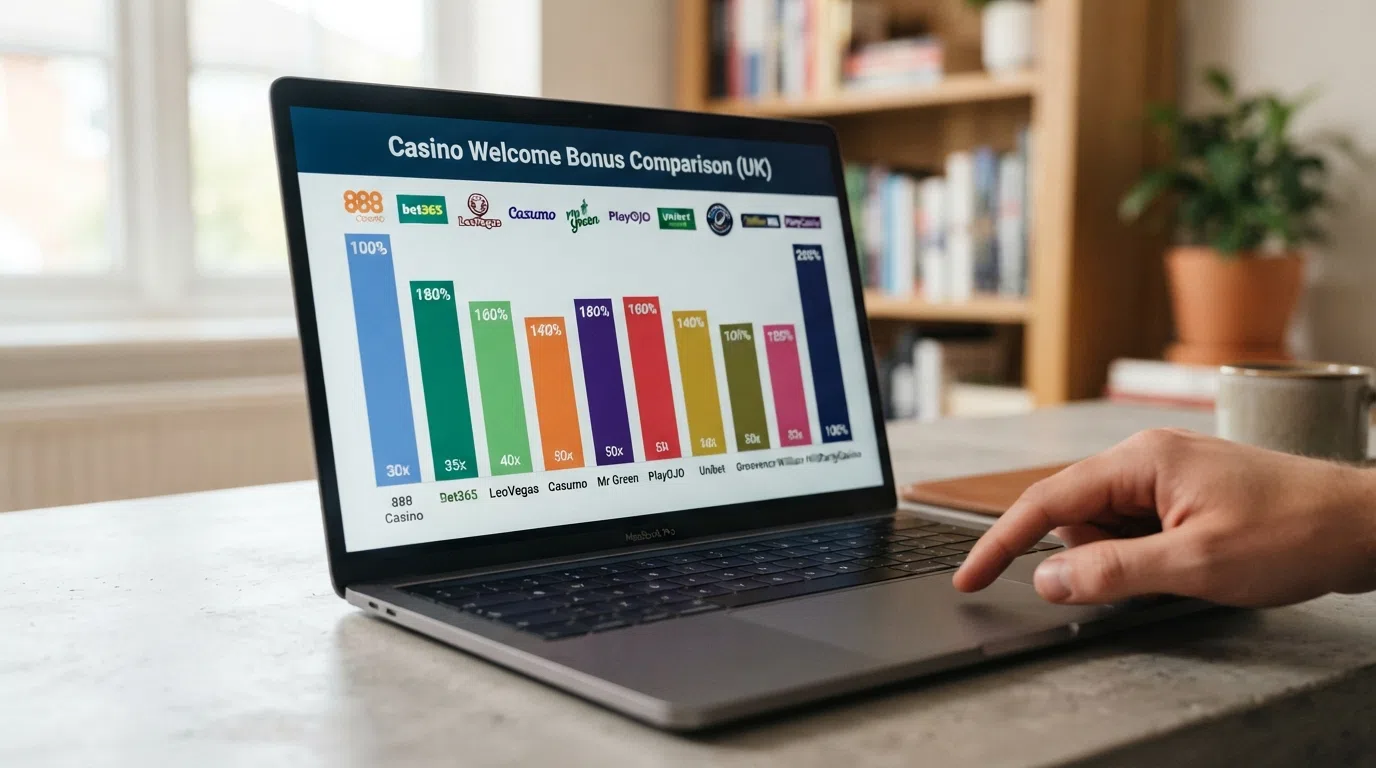
| # | Casino | UK Licence? | Welcome Bonus | Free Spins | Wagering | Game Providers |
|---|---|---|---|---|---|---|
| 1 | Jackbit (Jack.com) | No (offshore) | 100% up to $100 + 100 FS | 100 wager-free FS | 1x (wager-free spins) | Pragmatic Play, Evolution, NetEnt, Play’n GO, Hacksaw, Nolimit City, 80+ providers |
| 2 | Donbet | No (offshore) | 150% up to €750 + 50 FS (casino); 170% up to €1,000 + 100 FS (crypto) | 50–100 FS | 30x bonus | Pragmatic Play, NetEnt, Evolution |
| 3 | Freshbet | No (offshore) | 100% up to £500 first dep (up to £3,000 across 3 deposits); 250% up to £1,500 (alternative crypto code) | 25 FS no-deposit on signup | 30x bonus only | Pragmatic Play, Evolution, Hacksaw |
| 4 | Mystake | No (offshore) | 150% up to £200 | — | 30x bonus | Pragmatic Play, Evolution, Red Tiger |
| 5 | Velobet | No (offshore) | 150% up to £500 + 70 FS (dep < £500); 100% up to £1,000 + 70 FS (dep ≥ £500) | 70 FS | 30x bonus; 35x FS winnings (£100 max cashout) | Pragmatic Play, Evolution |
| 6 | Goldenbet | No (offshore) | 100% up to £500 per dep (300% up to £1,500 across 3 deposits + 100 FS VIPG code) | 100 FS (VIPG code) | 35x bonus (deposit+bonus) | Pragmatic Play, Evolution |
| 7 | Rolletto | No (offshore) | 150% up to £500 + 50–200 FS (variant offers) | up to 200 FS | 40x bonus+dep | Pragmatic Play, Evolution |
| 8 | BetSwagger | No (offshore) | 100% up to £500 + 100 FS | 100 FS | 15x deposit+bonus | NetEnt, Microgaming, Evolution, 40+ providers |
| 9 | Cosmobet | No (offshore) | 100% up to €500 + 250 FS | 250 FS | 30x bonus + 30x FS winnings | Evolution, Pragmatic Play |
| 10 | Slots Dreamer | No (offshore) | 400% up to £2,000 | — | 45x bonus | NetEnt, Pragmatic Play |
Jackbit (Jack.com): wager-free spins and 80+ providers
Jackbit’s welcome offer is 100% up to $100 plus 100 wager-free free spins on a $50 minimum deposit. The wagering multiple on the bonus is 1x — functionally zero, since the spins carry no playthrough requirement. The 1-day validity window is short, but for a player who planned to play immediately, that window is not a constraint. The provider roster runs 80+ studios, including Pragmatic Play, Evolution, NetEnt, Play’n GO, Hacksaw, and Nolimit City. The breadth here exceeds most of the featured set.
The CGA seal status is the open question. The brand entity behind Jackbit was not confirmed on the CGA public register during research; the CGA portal is operational and Curaçao licensing is the operator’s stated framework, but the specific licence number could not be matched. For a player who prioritises the green seal as a trust signal, this is the gap to close before depositing.
Jackbit suits the player who wants to move quickly: deposit crypto, play, withdraw, with the wagering friction reduced to near zero on the spin component. The bonus ceiling ($100) is modest compared to the larger percentages elsewhere, but the terms are the cleanest in the set.
Donbet: dual-track casino and crypto welcome with 30x wagering
Donbet runs two parallel welcome tracks. The casino bonus is 150% up to €750 plus 50 free spins; the crypto bonus is 170% up to €1,000 plus 100 free spins. Both carry 30x bonus wagering with a 30-day validity window and a €20 minimum deposit. Pragmatic Play, NetEnt, and Evolution anchor the provider roster.
The dual-track structure rewards the crypto deposit. The 170% match is higher than the fiat equivalent, and the free-spin count jumps from 50 to 100. For a player with a Bitcoin or Ethereum wallet ready, the crypto track is the better deal by every metric. The 30x wagering is standard for the offshore space — half of what Goldenbet charges, and a third of what Slots Dreamer requires.
Donbet suits a player with a £500–€1,000 bankroll who wants a defined bonus cycle. The 30-day window is generous; the wagering is manageable. Like several operators in this set, the CGA licence register did not return a match during research.
Freshbet: the only featured operator with a genuine no-deposit free-spins signup offer
Freshbet’s structure is unusual. Twenty-five free spins land on signup — no deposit required, no payment method attached. The deposit welcome is 100% up to £500 on the first deposit, scaling to £3,000 across three deposits. An alternative crypto welcome runs 250% up to £1,500. Wagering sits at 30x bonus only (not the more punishing bonus+deposit structure). Providers include Pragmatic Play, Evolution, and Hacksaw.
The no-deposit spins are the headline. Among the ten operators featured, only Freshbet and Rolletto offer a genuine no-deposit variant. The signup spins cost the player nothing to try — the casino absorbs the risk. For a player testing the no-ID model for the first time, this is the lowest-friction entry point in the set.
The 30x bonus-only wagering (on the deposit match, not the signup spins) is a meaningful distinction. Many offshore bonuses wager on deposit+bonus, which roughly doubles the required turnover. Freshbet wagers on the bonus alone, halving the grind.
Mystake: the established all-rounder with a clean 150% casino match
Mystake keeps the structure simple: 150% up to £200 on the casino side, with 30x bonus wagering and a 30-day validity window. A sports betting track runs alongside but is not the focus here. Minimum deposit is €20. Pragmatic Play, Evolution, and Red Tiger carry the provider roster.
There are no free spins attached to the casino welcome, which keeps the wagering calculation clean. A £200 deposit yields a £300 bonus at 150%, requiring £9,000 in bonus-only playthrough over 30 days. The number is large but achievable for a player logging meaningful slot time daily. The absence of free-spin complexity means no max-cashout surprise on spin winnings.
Mystake suits a player who wants the bonus structure to be obvious. No tiered offers, no alternative codes, no spin value calculations. Just a match percentage, a ceiling, and a wagering multiple.
Velobet: 70 free spins with a sharp cashout cap
Velobet’s welcome is tiered by deposit size. Deposits under £500 get 150% up to £500 plus 70 free spins; deposits of £500 or more get 100% up to £1,000 plus 70 free spins. The bonus carries 30x wagering; the free spins carry 35x wagering on winnings with a £100 maximum cashout.
That £100 cap on spin winnings is the number to watch. A player who lands a meaningful win on the free spins — say, £500 — cannot withdraw it. The cap shrinks the value of the spin component sharply. For a player who cares about free-spin potential, the Velobet terms are tighter than the bonus percentage suggests.
The €20 minimum deposit is standard. Pragmatic Play and Evolution supply the major providers. For a player depositing less than £500, the 150% match is the better deal; the higher tier offers a larger ceiling but a lower percentage.
Goldenbet: 300% across three deposits with a 35x deposit+bonus wagering bite
Goldenbet’s headline reads 300% up to £1,500 across three deposits (100% per deposit, up to £500 each), with 100 free spins via the VIPG code. The wagering is 35x on deposit plus bonus — not bonus alone. The validity window is 30 days. A $5 maximum bet per spin applies during bonus play.
The deposit+bonus structure changes the arithmetic. A £500 deposit with a 100% match creates a £1,000 bonus-plus-deposit base. At 35x, the required turnover is £35,000 — more than seven times the deposit. The headline 300% reads well, but the wagering bites harder than at Donbet or Mystake.
Goldenbet suits a player who plans to grind through a long bonus cycle and is comfortable with the $5 spin ceiling. The percentage is the largest in the featured set alongside Slots Dreamer; the cost in turnover is correspondingly larger.
Rolletto: the highest wagering and the widest spin spread
Rolletto’s welcome is 150% up to £500 plus 50 to 200 free spins depending on the variant offer. Wagering runs at 40x bonus+deposit — the highest among operators that clearly disclose the structure. One variant stands apart: a no-deposit offer of 100 free spins on Book of Dead at 0x wagering with a £0.10 spin value. Book of Dead runs at 96.21% RTP on that variant.
The 40x bonus+deposit wagering is steep. A £500 deposit with a 150% match creates a £1,250 base; at 40x, the turnover requirement is £50,000. The math does not work for casual play. The no-deposit variant is the better entry point — 100 spins at 0x wagering with no deposit required is genuinely risk-free, though the £0.10 spin value caps the upside.
Rolletto suits a player who specifically wants the no-deposit Book of Dead variant and is willing to ignore the deposit welcome entirely. The main welcome is the most expensive in the set to clear.
BetSwagger: the lowest deposit-match wagering in the set at 15x
BetSwagger offers 100% up to £500 plus 100 free spins at 15x deposit+bonus wagering — less than half the offshore average and the most player-friendly clearing terms in the featured ten. The provider roster includes NetEnt, Microgaming, and Evolution alongside 40+ studios, with 700 to 1,000+ titles in the lobby.
15x deposit+bonus on a £500 deposit (£500 bonus) creates a £1,000 base requiring £15,000 in turnover. That is still substantial, but it compares favourably to Goldenbet’s £35,000 or Slots Dreamer’s implied larger figure. For a player who reads bonus terms before depositing — and at this point in the market, that should be every player — BetSwagger’s wagering multiple is the single most attractive number in the table.
The trade is a modest bonus ceiling (£500) and a free-spin component whose terms are not fully disclosed in the research. The CGA register did not return a match for the brand entity during research.
Cosmobet: 250 free spins at €0.10 each with separate spin-winnings wagering
Cosmobet’s welcome is 100% up to €500 plus 250 free spins at €0.10 per spin (€25 total spin value). Wagering runs at 30x on the bonus plus a separate 30x on free-spin winnings. Evolution and Pragmatic Play are the named providers.
The 250-spin count is the largest in the featured set, but the per-spin value is low and the dual wagering structure (bonus + spin winnings) makes the total playthrough heavier than the headline suggests. A player who treats the free spins as the main event needs to track both wagering clocks separately.
Cosmobet suits a player who wants volume in the spin component and is comfortable managing two parallel wagering requirements. The €0.10 spin value is the constraint on upside regardless of how the spins land.
Slots Dreamer: the biggest headline bonus percentage — and the steepest wagering
Slots Dreamer advertises 400% up to £2,000 with 45x bonus wagering. There are no free spins attached. NetEnt and Pragmatic Play supply the major providers. The 400% match is the highest percentage in the featured set by a wide margin.
The 45x wagering is also the highest. A £2,000 deposit at 400% creates a £10,000 bonus requiring £450,000 in turnover — a figure that places Slots Dreamer in a different category from the rest of the set. The bonus is nominally enormous; the cost in time and volume is correspondingly enormous.
Slots Dreamer suits a player with a very large bankroll who plans an extended play session and is reading the percentage as the headline metric. For most UK players, the wagering makes the offer impractical regardless of the match size.
How withdrawing without ID actually works — and how fast it really is
The no-ID withdrawal process: what happens between clicking “cash out” and seeing your money
The cashout request at a no-verification casino still passes through an internal review. The difference from a UKGC casino is what the review checks for. At a UKGC operator, the review triggers a document queue — passport scan, proof of address, source-of-funds evidence for larger withdrawals. At an offshore casino, the review checks for bonus abuse (multiple accounts, bonus hunting patterns, wagering completion irregularities) and fraud signals (stolen payment methods, chargeback history). Identity verification is not part of the workflow because identity was never confirmed at registration.
The processing window varies by operator and method. Crypto withdrawals at the better-run operators clear in minutes to a few hours after the internal review passes. Bank transfers and card withdrawals take longer — one to three business days is common, sometimes longer. “Instant withdrawal” marketing language at offshore casinos usually means the casino releases the funds instantly on approval; the receiving end (a blockchain, a bank) then determines how fast the money actually arrives.
For a player withdrawing for the first time at a new operator, expect a slightly longer hold than subsequent withdrawals. Most operators run a one-time enhanced review on first cashout regardless of the no-ID model. After that, withdrawals move faster.
Crypto vs fiat withdrawals: why your payout method dictates your speed
The method is the bottleneck, not the casino. Bitcoin and Ethereum clear on the blockchain in minutes to an hour after the casino broadcasts the transaction; altcoin speed depends on the coin’s confirmation time and network congestion. Stablecoins (USDT, USDC) inherit the underlying blockchain’s speed without the volatility risk.
Bank transfers and card withdrawals cannot match crypto speed because they pass through legacy payment rails. One to three business days is typical; some operators quote longer. E-wallets sit in between, but PayPal, Skrill, and Neteller at UKGC casinos require their own KYC. At offshore casinos, e-wallet availability is inconsistent — crypto remains the more reliable fast-withdrawal option.
The absence of UKGC-mandated pending periods offshore is a real advantage. UKGC operators often impose 24 to 72 hours of pending time before processing even begins. Offshore operators typically release funds immediately on approval. For a player whose priority is speed, crypto at an offshore casino is the fastest legitimate path available to a UK resident.
Payout limits and cashout caps: the small print that limits your win
Every offshore casino caps withdrawals. The caps vary by operator and payment method; research did not provide a full per-operator table, so the specifics differ across the featured set. What is consistent is that caps exist, and they are often lower than what a UKGC casino would impose.
The Velobet free-spin winnings cap (£100) is the clearest example on the featured list. A player who wins £500 from the 70 free spins cannot withdraw the full amount. The cap shrinks the spin component’s value sharply.
UKGC casinos have no statutory maximum-win cap, but offshore casinos routinely cap bonus-derived winnings at a multiple of the bonus or at a fixed amount. The interaction between bonus terms and payout caps is where the most player-unfriendly surprises hide. Reading the full bonus terms before depositing — including the max-cashout clause — is the only defence.
No-verification bonuses: why the headline number is not the deal you get
The arithmetic that exposes the bonus cost
The UKGC capped wagering requirements on all casino bonuses at 10x the bonus amount, effective from 19 January 2026. The regulator’s rationale, in its own words: *“Capping the wagering requirement to ten decreases the likelihood of harm, reduces complexity, and improves transparency while maintaining consumer choice.”* Every UKGC-licensed casino must comply.
Offshore casinos are not bound by this cap. The wagering multiples on the featured set run from 1x (Jackbit’s wager-free spins) to 45x (Slots Dreamer). The cluster sits between 15x (BetSwagger) and 40x (Rolletto), with most operators at 30x (Donbet, Freshbet, Mystake, Velobet, Cosmobet) or 35x (Goldenbet). These numbers are three to four times the UKGC’s new ceiling.
Take a representative example. A £500 deposit bonus at 30x wagering on the bonus only requires £15,000 in turnover. The same bonus at 10x requires £5,000. The UKGC operator’s player clears the bonus in roughly a third of the volume. At a 96.50% RTP — the default for Gates of Olympus, a common offshore casino title — the expected loss on £15,000 of turnover is approximately £525 (15,000 × 3.50% house edge). At 10x, the expected loss drops to roughly £175. The offshore bonus costs the player roughly three times more to clear than the licensed-market equivalent.
These are statistical averages, not guarantees. Individual sessions deviate widely. The point is structural: offshore bonuses are mathematically more expensive than UKGC bonuses, and the gap is the wagering multiple.
No-deposit bonuses at no-verification casinos: what is actually available without a deposit
Genuine no-deposit offers are rare in the offshore space. Of the ten featured operators, only Freshbet and Rolletto carry a no-deposit variant. Freshbet offers 25 free spins on registration with no deposit required. Rolletto offers a variant with 100 free spins on Book of Dead at 0x wagering and £0.10 per spin.
The scarcity is structural. Without KYC, the casino has no identity anchor to prevent abuse — a player could claim a no-deposit bonus repeatedly across multiple accounts. Operators that offer no-deposit bonuses accept that risk and price it into the terms. Rolletto’s 0x wagering on a £0.10 spin is the best-case scenario: risk-free play with no playthrough and no deposit, though the spin value caps any potential return.
For a player new to the no-ID model, the no-deposit variants are the lowest-friction entry points. They cost nothing to try and reveal whether the casino’s interface, game selection, and withdrawal flow suit the player before any real money is committed.
Free spins at no-ID casinos: counts, values and the caps that shrink your win
Free-spin counts across the featured set range from 50 (Donbet casino track) to 250 (Cosmobet). Jackbit offers 100 wager-free spins, the cleanest terms in the set. Velobet’s 70 spins carry a £100 max cashout on winnings. Cosmobet’s 250 spins at €0.10 each carry a separate 30x wagering on winnings alongside the 30x on the bonus.
The pattern: a high spin count does not equal high value. Per-spin value and winnings caps determine what the player keeps. A 100-spin offer at €0.10 with a £500 max cashout outperforms a 250-spin offer at €0.10 with a 30x wagering requirement on winnings and no clear cap. Reading the spin terms — count, per-spin value, wagering on winnings, max cashout — is more important than the headline number.
The UKGC’s 10x wagering cap applies to bonus funds, not to free-spin wagering structures, and offshore free-spin terms vary without the same regulatory constraint. There is no offshore equivalent of the UKGC’s plain-English bonus-terms requirement (LCCP SR Code 5.1.6).
Bonus terms: wagering, validity and the UKGC cap that offshore casinos ignore
Three numbers define a bonus: the wagering multiple, the validity window, and the maximum cashout. The wagering multiple determines how much volume the player must generate to unlock winnings. The validity window determines how long the player has to do it. The maximum cashout determines how much of the resulting balance can actually be withdrawn.
The featured set’s wagering multiples range from 1x (Jackbit spins) to 45x (Slots Dreamer), with most sitting at 30x. Validity windows range from 1 day (Jackbit) to 30 days (Donbet, Mystake, Goldenbet). Max-cashout restrictions are stated explicitly only for Velobet’s free spins (£100) and otherwise left undisclosed in research.
The UKGC’s 10x cap, in force from 19 January 2026, is the benchmark. The mixed-product promotion ban (no combining betting and slots in a single bonus) and the plain-English terms requirement do not apply offshore. A UKGC player moving to an offshore casino trades regulatory certainty for bonus size — and pays for it in higher wagering multiples.
Why crypto casinos dominate the no-verification space
Bitcoin casinos without ID: how BTC became the default no-verification currency
Bitcoin’s architecture makes it the natural currency of no-KYC gambling. A wallet address is not a passport. A blockchain transaction carries no name, no address, no date of birth. The casino receives funds from a string of alphanumeric characters; the player receives funds back to a wallet they control. Neither side learns the other’s identity unless the player volunteers it.
All ten featured operators accept cryptocurrency. Bitcoin is the default; most also accept Ethereum, Litecoin, and Tether. Deposits confirm on the blockchain in minutes to an hour depending on network congestion and the operator’s confirmation threshold. Withdrawals broadcast from the casino’s hot wallet and reach the player’s wallet after a similar window.
The trade is volatility. A Bitcoin deposit worth £500 today might be worth £450 or £550 by the time the player withdraws winnings. Stablecoins (USDT, USDC) solve this by pegging to a fiat currency, but they inherit the underlying blockchain’s transparency — every transaction is publicly visible. For players prioritising privacy, Monero is the deeper anonymity layer, though its acceptance at offshore casinos is limited.
UKGC-licensed operators generally do not accept cryptocurrency due to AML compliance difficulties. The offshore space exists in part because crypto and UKGC KYC are fundamentally incompatible — the regulator wants identity confirmation, and the blockchain does not provide it.
Beyond Bitcoin: multi-coin casinos and the rise of altcoin gambling
The best no-ID casinos now accept multiple cryptocurrencies. Ethereum is near-universal; Litecoin and Tether (USDT) are common; Bitcoin Cash, Dogecoin, and Ripple appear at the more altcoin-friendly operators. Monero appears at a smaller subset — the operators that explicitly cater to privacy-focused players.
Settlement speed varies by coin. Bitcoin and Ethereum confirm in minutes to an hour under normal conditions. Litecoin is faster. Stablecoins inherit the speed of their underlying blockchain. Network fees vary: Bitcoin fees spike during congestion; Ethereum fees depend on gas prices; stablecoin transfers on Ethereum carry Ethereum gas costs.
Research did not provide a per-coin acceptance table for each operator. The qualitative picture: a player who wants altcoin choice should check the cashier section before registering. The operators that prominently feature altcoin acceptance are typically the ones that cater most directly to the crypto-native audience.
What you can actually play at a no-ID casino — and what you cannot
Slots without ID verification: the same reels, a different licence
The slot lobbies at no-ID casinos are stocked with the same providers that supply UKGC casinos. Pragmatic Play, NetEnt, Hacksaw, Nolimit City, and Evolution’s RNG titles all appear across the featured set. The games are identical; the RTP configuration can vary by operator.
Sweet Bonanza (Pragmatic Play) is a common offshore casino title. Its default RTP is 96.48%, with alternative operator configurations at 95.45% and 94.45%. The game carries high volatility and a 21,100x maximum win on a 6×5 grid with tumble mechanics. Gates of Olympus (Pragmatic Play) defaults to 96.50% RTP with alternative configs at 95.51% and 94.50%, high volatility (5/5), and a 5,000x maximum win on a 6×5 grid with cluster-pays. Starburst (NetEnt) runs at 96.09% RTP with low-to-medium volatility and a 500x maximum win on a 5×3 grid.
| Slot Title | RTP | Provider | Volatility |
|---|---|---|---|
| Sweet Bonanza | 96.48% | Pragmatic Play | High |
| Gates of Olympus | 96.50% | Pragmatic Play | High |
| Starburst | 96.09% | NetEnt | Low-to-medium |
RTP configurations matter because the house edge is the inverse. A 96.48% RTP means a 3.52% house edge; a 94.45% RTP means a 5.55% house edge. The difference is roughly 60% more expected loss on the same volume of play. A player who knows which titles they want to play should check the RTP configuration at the specific operator before depositing.
The UKGC’s online slots stake caps — £5 per spin for over-25s, £2 per spin for under-25s, in force from 2025 — do not apply offshore. A no-ID casino player can bet £10, £20, £50 per spin without regulatory constraint. For high-stakes slot play, offshore is currently the only option for UK residents.
Live casino without documents: real dealers, no passport scan
Evolution live-dealer tables are available across the featured set — Jackbit, Donbet, Freshbet, Mystake, Velobet, Goldenbet, Rolletto, BetSwagger, and Cosmobet all carry Evolution. Pragmatic Play Live appears at several. The live casino experience at an offshore casino is functionally identical to a UKGC casino: real dealers, real-time streaming, roulette, blackjack, baccarat, game shows.
The difference is the responsible-gambling overlay. UKGC-licensed live casinos must display reality-check pop-ups at intervals, enforce deposit limits, and integrate with GamStop. Offshore live casinos carry none of these obligations. The player who wants uninterrupted live-dealer play without regulatory prompts finds that environment offshore. The player who wants those prompts does not.
Pay-by-phone casinos without verification: the mobile shortcut that is not one
Pay-by-phone bill sounds like the perfect no-verification payment method. A deposit via Boku, Fonix, or PayviaPhone is added to the player’s mobile phone bill — no card details, no bank account, no document upload. The transaction caps at £10 to £30 per deposit, with carrier-set monthly limits of approximately £240 to £300.
Two limitations make pay-by-phone less useful than the marketing suggests. First, it is deposit-only: withdrawals cannot be credited to a phone bill. The player needs a separate withdrawal method — a bank account, a card, or a crypto wallet. Second, pay-by-phone at UKGC casinos still requires full KYC. The phone bill does not replace identity verification; it replaces a bank card. The player still uploads a passport and a utility bill at the UKGC casino’s registration screen.
Offshore casinos rarely integrate carrier billing at all. The technology requires regulated merchant accounts that most Curaçao-licensed operators do not hold. The featured set does not list pay-by-phone as a method. For UK players specifically searching for “pay by phone no verification,” the realistic answer is: the method exists at UKGC casinos where full KYC is still required, and it does not exist meaningfully at offshore casinos.
New no-verification casinos worth knowing about in 2026
The licensing landscape shifted decisively in 2026. Curaçao’s LOK came into effect on 24 December 2024, replacing the older master-licence/sub-licence model with direct CGA oversight. The CGA’s orange authorisation seal expired on 15 October 2025; the green seal is now mandatory for any operator claiming Curaçao legitimacy. An operator displaying an orange seal after October 2025 is in breach.
New UKGC regulations are pushing players offshore and creating demand for fresh brands. The 10x wagering cap (January 2026), the slot stake limits (2025), and the Financial Risk Assessment programme (2026) are the three biggest drivers. Each represents a constraint the licensed market now imposes; each has a corresponding appeal in the offshore alternative.
A new no-verification casino in 2026 should display the CGA green seal, carry a recognisable provider roster (Pragmatic Play, Evolution, NetEnt at minimum), publish bonus terms in readable language, and disclose wagering requirements upfront. The bar is not high, but the number of operators clearing it is smaller than the total number claiming Curaçao licensing.
How to pick a no-ID casino: the checklist that keeps your money safe
- Check the Curaçao CGA green seal: the orange seal expired in October 2025; any operator showing orange is in breach. The green seal confirms conversion to the LOK regime.
- Verify accepted payment methods and withdrawal windows: crypto for speed, fiat for familiarity. Check the cashier section before registering.
- Read bonus terms for wagering and max cashout: wagering multiples at 30x or below are manageable; 40x and above require a very large bankroll to clear efficiently.
- Confirm game providers are legitimate studios: Pragmatic Play, Evolution, NetEnt, Hacksaw, and Nolimit City are recognised names with published RTPs. An unknown provider roster is a warning sign.
- Search for player complaints about withheld withdrawals: affiliate watchdog sites and player forums surface patterns that individual reviews miss. A history of payout disputes is the single most predictive warning sign.
Responsible gambling: help that works whether you play offshore or not
Self-exclusion that works: GamStop and what to do when your casino is not on it
GamStop covers every UKGC-licensed online operator. Self-exclusion periods run six months, one year, or five years. Over half of the 614,738+ people currently enrolled have chosen the maximum five-year period. The growth rate is striking: 117,756 new registrations during 2025 alone, with a further 16% year-on-year increase through mid-2026.
The scheme does not reach offshore casinos. A self-excluded player can register at a Curaçao-licensed operator without the exclusion being flagged. This is the structural feature of the non-GamStop category and the most uncomfortable fact about it.
For a player who has self-excluded and is considering an offshore casino: the exclusion exists for a reason. The National Gambling Helpline (0808 8020 133, operated by GamCare, free, confidential, 24/7) is available regardless of where the player gambles. GamCare’s self-assessment tool, bank-level gambling blocks, and device-level blocking software provide additional guardrails outside the GamStop framework.
Deposit limits, reality checks and the tools offshore casinos will not give you
UKGC-licensed casinos must offer deposit limits, reality checks, time-outs, and self-exclusion integration. From 30 June 2026, the definition of a “deposit limit” tightens: only a limit based on the amount a customer pays into their account over a set duration may carry that label. The Financial Risk Assessment programme adds automated credit-reference-agency checks at net deposit thresholds — £1,000 in 24 hours for over-25s, £750 for under-25s; £3,000 and £2,000 respectively over 90 days.
None of these apply offshore. An offshore casino may offer a basic deposit limit as a goodwill gesture; it is not required to. Reality checks and time-outs are voluntary. The player who wants these guardrails at an offshore casino must build them externally — bank gambling blocks, device-level software, personal session timers.
The prevalence data frames the stakes. Approximately 0.5% of the English adult population experience problem gambling; 3.8% are at elevated risk; 7% are negatively affected by someone else’s gambling. GambleAware’s 2024 survey found that 30% of adults with any level of gambling problems now want treatment — nearly double the 17% figure from 2020. An estimated 4.3 million adults in Great Britain are affected by a family member’s or friend’s gambling, and around 2 million children may be living in households with adults experiencing problem gambling.
GamCare made 996 referrals to treatment and peer-based support services in January 2026, up from 674 in January 2025 — a 48% year-on-year increase. The National Gambling Treatment Service treated 11,960 clients in 2024/25 (an 11% increase); 93% of those completing treatment saw improvement; one quarter said problem gambling started by age 18. The infrastructure exists. The helpline number is 0808 8020 133.
How we evaluated these no-verification casinos
The ranking and operator assessments drew on the Curaçao Gaming Authority public register for licence verification, with the caveat that individual brand entity matches were not always confirmed in the source run. Bonus terms and wagering requirements were compared across operators using the data each operator publishes in its promotional terms. Game provider rosters were sourced from operator lobbies and provider published figures. Slot RTP data for named titles came from provider-published specifications. Withdrawal speed claims were assessed against the payment methods each operator lists and the typical processing windows for those methods at offshore operators.
The UK regulatory framework — LCCP provisions, Gambling Act 2005 references, UKGC enforcement examples, the 2026 wagering and stake-limit changes — was sourced from the UK Gambling Commission’s published LCCP and statutory instruments. GamStop statistics came from the scheme’s annual report and biannual data releases. GamCare and GambleAware figures came from their published annual statistics.
Where the source data carried verification gaps (specific CGA licence numbers not matched, bonus max-cashout terms not fully disclosed, per-operator payout limits not provided), those gaps are flagged in the relevant section rather than filled with assumed values.
What the numbers say: the no-verification casino decision for UK players
No-verification casinos offer what the UKGC framework does not: document-free registration, crypto withdrawals measured in minutes rather than days, and freedom from the GamStop self-exclusion scheme. The cost is every protection the UKGC framework provides — no IBAS adjudication, no statutory fund segregation, no mandatory responsible-gambling tools, and bonus terms three to four times more expensive than the licensed market’s new 10x wagering cap.
The wagering gap is the clearest number on the page. A £500 deposit bonus at 30x (the offshore median on the featured set) requires £15,000 in turnover, generating an expected loss of roughly £525 at 96.50% RTP. The same bonus at the UKGC’s 10x cap requires £5,000 in turnover and an expected loss of roughly £175. The offshore bonus costs the player three times more to clear. The 400% match at Slots Dreamer looks enormous until the 45x wagering is multiplied through; the 1x wager-free spins at Jackbit look modest until the playthrough is recognised as zero.
For a player who wants crypto flexibility, rapid withdrawals, and no document upload, the offshore category delivers what the licensed market cannot. For a player who values dispute resolution, fund protection, and the UKGC responsible-gambling infrastructure, the cost of leaving is substantial and the protections cannot be replicated offshore. For a player who has self-excluded via GamStop, an offshore casino is not a workaround — it is the absence of the barrier that the exclusion was designed to create, and the question of whether to use it is a personal one that this article cannot answer.
The actionable steps are concrete. Check the Curaçao green seal before depositing. Read the bonus terms — wagering multiple, validity window, max cashout — before accepting any offer. Know the helpline number: 0808 8020 133, free, 24/7. Understand exactly what the trade gives up, not just what it offers. No-verification casinos serve a specific need, and the player who understands the cost is the one who can decide whether the price is worth paying.
Frequently asked questions about no-verification casinos for UK players
What is the difference between no-KYC casinos and no-verification casinos?
No difference in practice. “KYC” (Know Your Customer) is the regulatory term for the identity verification process; “no verification” is the plain-English version. Both terms describe the same offshore product: a casino where registration does not require identity documents. Every operator in the featured set falls into both categories.
Do no-verification casinos accept UK players who are registered with GamStop?
Yes, because offshore casinos do not integrate with GamStop. GamStop is a UKGC-only construct that reaches every UKGC-licensed operator but no Curaçao-licensed operator. A self-excluded UK player can register and deposit at any of the featured casinos without the exclusion being flagged. Whether to use that access is a decision the player has to make for themselves.
Is it safe to play at a casino that does not require identity verification?
“Safe” depends on what the player means. The casino will not verify the player’s identity, which means no IBAS dispute resolution, no statutory fund segregation, and no GamStop coverage. The casino may still be a legitimate operator with SSL encryption, certified RNG, and a functional complaints process — but the player has fewer external safeguards than at a UKGC casino.
Can I get a no-deposit bonus at a no-verification casino without uploading documents?
Yes, at a minority of operators. Freshbet offers 25 free spins on signup with no deposit required. Rolletto offers a variant with 100 free spins on Book of Dead at 0x wagering and £0.10 per spin. Most offshore casinos do not offer no-deposit bonuses because the lack of identity verification makes abuse prevention difficult.
What risks do I face playing at an offshore no-ID casino as a UK resident?
The risks are structural rather than legal. Using an offshore casino is not a crime for the UK player (the operator is the one breaking section 33 of the Gambling Act 2005), but the player forgoes every UKGC protection: no independent dispute resolution, no guaranteed fund segregation, no mandatory responsible-gambling tools, no GamStop coverage. Bonus terms are typically three to four times more expensive to clear than at UKGC casinos.
What payment methods can I use to deposit and withdraw without ID at online casinos?
Cryptocurrency (Bitcoin, Ethereum, Litecoin, Tether) is the primary method at offshore casinos and the fastest for withdrawals. Card payments are accepted but pass through processors that may run their own KYC. E-wallets (PayPal, Skrill, Neteller) are inconsistent at offshore operators. Pay-by-phone bill is deposit-only and rarely available offshore; at UKGC casinos, it still requires full KYC.
Anonymous casinos and no-signup play: how far can anonymity really go?
“Anonymous casino” is a sliding scale. The minimum is email-only registration — a throwaway email address, a password, and the player is in. The next tier requires an email plus a cryptocurrency deposit, with no further identity verification. The maximum is the no-signup casino, where the player connects a crypto wallet and the casino generates a session from the wallet connection alone — no email, no account, no stored player profile.
The featured set uses email registration. No operator in the top ten runs a pure no-signup model. The no-signup model exists at other offshore casinos; it is the logical endpoint of the no-ID philosophy, and it trades account features for anonymity. No account means no bonus eligibility (bonuses attach to accounts), no loyalty programme, no dispute history if a withdrawal goes wrong. The player gains maximum anonymity and loses the player-protection features that come with having an account on file.
What “anonymous” does not mean: the games still log bets, the blockchain is a public ledger, and a sufficiently motivated investigator can trace wallet flows. True anonymity is a stronger claim than the marketing copy suggests. What no-ID casinos deliver is the absence of a casino-side identity check, which is what the keyword actually asks for.
Account – No Minimum Deposit Casinos UK
Content created by the «No Minimum Deposit Casinos UK» team