
The £2 Minimum Deposit Casino UK Guide for 2026 — What Two Pounds Actually Buys
 Available in GB
A 2 pound minimum deposit casino UK players can use is real, regulated and quite small. Two pounds lands a real-money seat at a UKGC-licensed online casino — the same RNG, the same games, the same player protections as a £200 deposit — but the room it opens is narrow. Most of the featured UK operators set their deposit floor at £5 or £10, not £2. Unibet and 888casino drop to £1, which is the closest the market gets to your stated entry point, and none of the ten reviewed here publishes an exact £2 floor at time of review. The price of entry is not, however, where the £2 depositor loses the most money. The shape of the offer changes around them. A £2 deposit triggers only the welcome bonuses written for the lowest tier, and the headline number on the banner was almost never written for them.
*This guide is current as of 17 August 2026 and relies on official data from the UK Gambling Commission public register.*
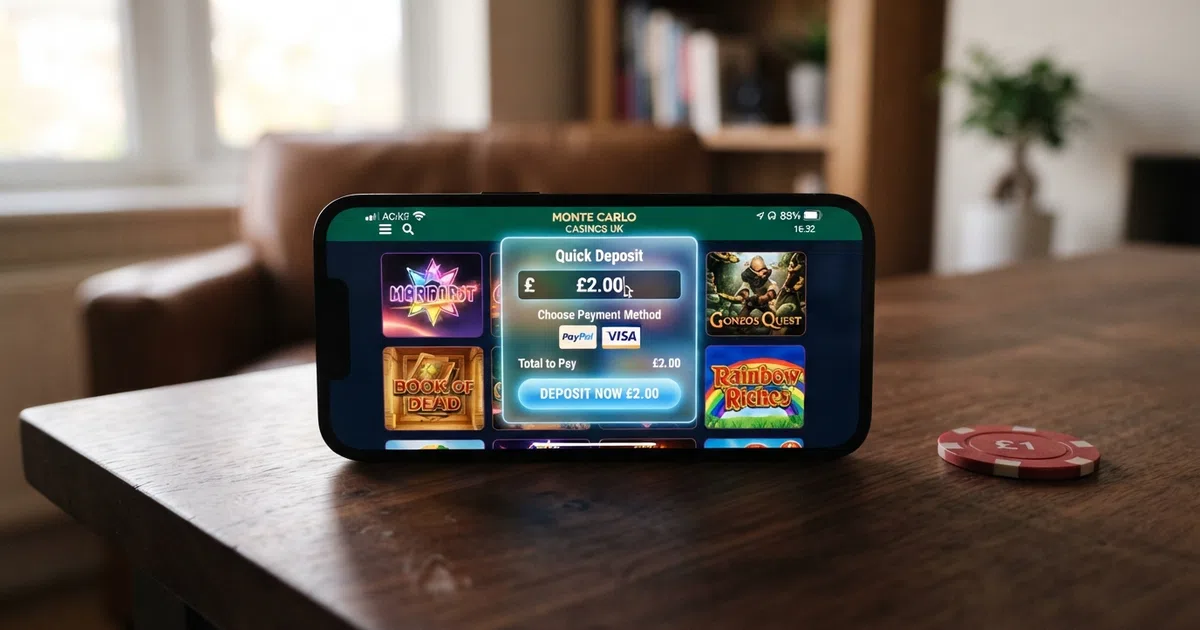
That is the new shape of low-deposit play in 2026. The UK Gambling Commission re-drew the rulebook between April 2025 and the end of that year, and three of those changes now define what a £2 deposit is worth. First, the age-banded stake cap: from 9 April 2025 the maximum stake on online slots is £5 per game cycle for players aged 25 and over, and from 21 May 2025 it is £2 per game cycle for players aged 18 to 24. A “game cycle” is the full period from wager to settlement — splitting a spin into smaller pieces does not get past it. An 18-to-24 player depositing exactly £2 at the statutory cap gets exactly one game cycle. Second, the wagering cap: since 19 December 2025 no UKGC-licensed bonus can demand more than 10× turnover on bonus funds, and mixed-product bundles (bet on football, get casino spins) are banned outright. Third, the mandatory financial vulnerability check at £150 in net deposits over a rolling 30 days, in force since 28 February 2025 — a level a frequent low-deposit player reaches faster than the threshold’s name suggests. The whole player-protection stack — identity verification before any deposit, deposit-limit prompts, Gamstop self-exclusion, ADR access — still runs identically regardless of how much you put in.
What follows is a working map of the lowest-deposit tier in the UK licensed market, ranked by the combination that matters at £2: the deposit floor, what the welcome offer actually pays, the breadth of game providers, and the regulatory standing behind the badge.
The Reality of a £2 Deposit: What Opens and What Stays Locked
A £2 deposit at a UKGC-licensed casino opens the same front door as a £200 one. Account creation works the same way. The identity check the operator runs is the same check — name, address and date of birth, completed before the first deposit or the first wager, with no 72-hour grace period and no fast-track for small accounts. The full game lobby is reachable, not a demo version. Wins, when they come, are real money withdrawable in principle. The regulated product is the regulated product.
Three doors stay closed at this price point, and the page is more useful if they are named. The headline welcome bonus is the first. Most of the featured operators built their welcome offers for a £10 or £20 first deposit, and the minimum to trigger the package sits at that level. bet365 sets the floor at £5 for its 10-day free-spin bundle; Betfair asks for £10 before the 100-spin top-up unlocks; Betway and MrQ both sit at £10. Only Unibet (200 free spins at a £1 deposit) and 888casino (the £88 Free Play no-deposit element plus a £1 deposit floor) genuinely serve a £2 depositor with their headline offer. The second locked door is the fastest withdrawal tier. Operators reserve their quickest cashout lanes for accounts that meet volume or verification thresholds, and a £2 deposit sits at the bottom of that queue. The third is payment-method access. Pay-by-phone billing and certain e-wallets carry operator-set minimums that may sit above £2 — the cashier page decides this, not the marketing banner.
A £2 deposit is a real-money seat at the table, not a trial mode. The distinction matters because the marketing language around micro-deposits is built to obscure it. Two pounds of real money, played for real prizes, under real rules, where the house has the same edge it carries on any other stake.
£2 vs £5 vs £10: How the Deposit Tier Shapes Your Session
The deposit amount is not only the entry price. It sets the session. At a £0.10 minimum bet (the lower bound on slots like Big Bass Bonanza ), a £2 deposit buys 20 spins, a £5 deposit buys 50 and a £10 deposit buys 100. At the Commission’s 2.5-second minimum spin speed, 20 spins run in roughly 50 seconds of continuous play. A £2 session is a coffee-break session, and the page is honest only if it says so.
The age-banded stake cap changes the maths for under-25s at the very point a £2 deposit would otherwise make sense. A player aged 18 to 24 at the £2 statutory cap depositing exactly £2 gets one game cycle, not twenty — the regulator has defined the maximum stake at the same number the marketing page uses for the minimum deposit. A 25-and-over player at the £5 cap can still spread £2 across 20 spins at £0.10 each, because their cap is higher than the deposit.
The deposit tier also decides the operator menu. A £1 deposit opens Unibet and 888casino. A £5 deposit opens bet365. A £10 deposit opens Betfair (the full 150-spin package), Betway and MrQ. The remaining four operators in the featured set — PlayOJO, Sky Vegas, Virgin Games and Ladbrokes — have minimums that were not confirmed at time of review; the cashier page decides. The shape of the market is a staircase, and the bottom step is shorter than the marketing suggests.
Online vs Retail: Where a £2 Deposit Actually Works
£2 minimum deposits are an online-only proposition. No UK high-street bookmaker runs a £2 betting terminal, and the reason is structural. A retail counter carries a dealer’s wage, a physical chip float, floor space and a fixed premises licence; the marginal cost of taking a £2 bet is not meaningfully lower than taking a £20 one. Online, the marginal cost of one more £2 account is close to zero — a few database rows, one payment-processor transaction, the same regulated product. The 2014 Gambling (Licensing and Advertising) Act pulled remote operators serving GB customers into the same point-of-consumption licensing regime as their retail counterparts, but the operating economics of the two channels are very different.
What this means for the page: the £2 entry point is a remote-only product, the comparison against the betting shop is the comparison against a different industry, and any operator promising “casino play from £2” is promising an online product, not a physical one.
Real-Money Play at the £2 Entry Point
A £2 deposit plays for real money from the first spin. The stake is small; the regulatory machinery is not. The same Random Number Generator drives the reels, the same Return to Player percentage applies, the same game-cycle rules govern the spin from start to settlement. The UKGC’s stake cap applies at the product level regardless of deposit size. The 2.5-second minimum spin speed, the auto-play ban, the ban on losses-disguised-as-wins, the mandatory on-screen display of total losses, wins and time played during a slots session — all of it is active at £2. So is the 10× wagering ceiling on any bonus a £2 depositor manages to claim.
The psychological gap between demo mode and a £2 real-money session is wider than the £2 itself suggests. The money is at risk, the wins are withdrawable subject to operator-set minimums, the session-tracking and reality-check tools are live. None of this is theatre: the deposit limit the operator prompts for before the first wager, the vulnerability check that fires at £150 in 30 days, the Gamstop block a self-excluded player can register from anywhere — they all behave identically at £2 and at £2,000. The UKGC framework does not stratify by deposit size, and that is the right design for a player-protection regime.
The UK’s Lowest-Deposit Casinos: Ranked for 2026
The table below ranks the featured UKGC-licensed operators on the three numbers that actually matter at a £2 deposit: the minimum deposit, the welcome bonus and the breadth of game providers behind it. Where the page could not confirm a bonus or minimum-deposit figure at time of review, the cell shows a dash — and the operator’s own cashier page is the live source.
| Casino | UKGC Licence | Minimum Deposit | Welcome Bonus | Game Providers |
|---|---|---|---|---|
| Unibet Casino | Active | £1 | 200 free spins | NetEnt, Microgaming, Play’n GO, Pragmatic Play |
| 888casino | 39028 (888 UK Limited), Casino Remote since 1 Nov 2014 | £1 | £88 Free Play (no deposit) + deposit bonus | NetEnt, Playtech, Red Tiger, Pragmatic Play |
| bet365 Casino | 39563 (Hillside (UK Gaming) ENC) | £5 | 10 days of free spins, 0× wagering | NetEnt, Playtech, Microgaming, Pragmatic Play, IGT |
| Betfair Casino | 39435 (PPB Counterparty Services, Flutter) | £10 | 50 free spins no deposit + 100 free spins on £10 spend | Playtech, NetEnt, IGT |
| Betway Casino | 39372 (Betway Limited) | £10 | 150 free spins | Microgaming, NetEnt, Pragmatic Play, Evolution |
| MrQ Casino | Active | £10 | 30 free spins, 0× wagering | — |
| PlayOJO Casino | 39326 (Skill on Net Ltd) | — | Free spins, 0× wagering (brand model) | NetEnt, Microgaming, Play’n GO, Pragmatic Play |
| Sky Vegas | 39439 (Flutter Entertainment) | — | Free spins | NetEnt, IGT, Playtech, Red Tiger |
| Virgin Games | Active (Gamesys Operations Limited) | — | — | Gamesys proprietary, NetEnt, IGT |
| Ladbrokes Casino | 1611 (Ladbrokes Betting & Gaming Limited), Casino Remote since 1 Nov 2014 | — | — | Playtech, NetEnt, IGT |
All ten operators are verified as holding an active GB licence on the UKGC public register, last updated 29 July 2026. Operating gambling facilities to GB customers without a GB licence is a criminal offence under section 33 of the Gambling Act 2005 — the licence column above is the table’s safety floor.
The spread tells its own story. The lowest deposit barrier (£1) belongs to the two operators with the largest free-spin count or the no-deposit element — Unibet and 888casino. The strongest wagering position (0×) is held by bet365, MrQ and PlayOJO. The deepest provider libraries sit with bet365 and Betway. The four operators with the longest regulatory track record — Ladbrokes, 888casino, bet365 and Betfair — also have the deepest operator-level data, which is not a coincidence; a long GB licence means more verifiable history on the Commission’s public register. Read the table as a map of where the £2 entry point lives, not as a recommendation of where to play.
Unibet Casino: The £1 Deposit That Opens 200 Free Spins
Unibet sets the lowest deposit barrier in the featured set at £1, and funds that deposit with a 200 free-spin welcome offer — the largest spin count of any operator in the table. The UKGC licence is active, the game-provider list is a working mix of NetEnt, Microgaming, Play’n GO and Pragmatic Play, and the deposit floor sits below the page’s headline £2 figure by £1, which is the closest the regulated market gets to a true £2 entry point. The wagering attached to the free-spin winnings was not confirmed at time of review, and at the new 10× ceiling any number that does surface is unlikely to be punitive — but a £2 depositor should still check the bonus terms page on the Unibet site before claiming. Verdict: the operator with the lowest barrier and the largest spin count, and the one to read the small print on first.
888casino: £88 Free Play with No Deposit Required, Then £1 to Continue
888casino is the only featured operator carrying a genuine no-deposit bonus element — £88 Free Play lands on registration, before a single pound is funded. The deposit-bonus package activates from a £1 deposit, and the UKGC licence (account 39028, held by 888 UK Limited) has been active as a Casino Remote licence since 1 November 2014, the day the 2014 Act brought remote casino into the GB point-of-consumption regime. The provider list pairs NetEnt with Playtech, Red Tiger and Pragmatic Play, and the historical bonus terms carried 30× wagering on the deposit bonus — a pre-cap figure, since superseded by the 10× ceiling in force from 19 December 2025. The current offer terms are subject to that ceiling; the cashier page is the live source. Verdict: the richest low-deposit package in the featured set, and the one whose 2014 licence date makes the regulatory history easiest to verify on the public register.
bet365 Casino: Zero-Wagering Free Spins, £5 Deposit Floor
bet365 is the largest operator in the UK gambling market, and its casino product offers ten days of free spins with 0× wagering on the winnings — the player keeps every penny the spins produce. The UKGC licence (account 39563, Hillside (UK Gaming) ENC) is active, the provider list covers NetEnt, Playtech, Microgaming, Pragmatic Play and IGT, and the deposit floor sits at £5 — above the £2 entry point on this page. The trade is a familiar one: a higher deposit unlocks a cleaner bonus, and zero wagering is the cleanest bonus there is. Verdict: a higher floor than the page’s headline figure, but the wagering position is the strongest in the table, and brand scale brings its own kind of trust.
Betfair Casino: 50 Free Spins Before You Deposit a Penny
Betfair splits its welcome offer into two halves: 50 free spins on registration (no deposit needed) and 100 more free spins triggered by a £10 spend — 150 spins in total. The UKGC licence (account 39435, PPB Counterparty Services Limited, part of Flutter Entertainment) is active, the provider list pairs Playtech, NetEnt and IGT, and the £10 deposit floor is the price of unlocking the full package. A player who only claims the no-deposit 50 spins is playing at a sub-£2 effective cost; a player who wants all 150 is paying a £10 floor. The two halves are written into the offer, and the page reads more usefully when both halves are named. Verdict: the only featured operator whose offer has a genuine no-deposit leg at the top end of the spin count.
Betway Casino: 150 Free Spins at a £10 Entry Point
Betway’s 150 free spins welcome offer sits at a £10 minimum deposit, above the £2 entry point, and the UKGC licence (account 39372, Betway Limited) is active. The provider list pairs Microgaming, NetEnt and Pragmatic Play with Evolution, the dominant live-casino studio — a useful note for any player whose interest in Betway is the live-dealer lobby rather than the slots library. The brand has a track record across sports betting and casino verticals, and that breadth shows up in the regulated product. Wagering on the free-spin winnings was not confirmed at time of review; the cashier page is the live source. Verdict: a £10 entry point for a 150-spin offer with a live-casino-strong provider list, and the operator to choose when the live-dealer lobby matters as much as the slots.
MrQ Casino: Wager-Free Spins, £10 Minimum Deposit
MrQ’s welcome offer is 30 free spins on specified slots with 0× wagering — every penny of free-spin winnings is the player’s, with no turnover requirement. The UKGC licence is active, the £10 minimum deposit is the entry point, and the wager-free model is the operator’s defining commercial decision. The cost of a wager-free offer is hidden in the spin count: 30 spins at minimum stake is a short session, and the operator’s economics rely on volume rather than margin. Game-provider details were not confirmed at time of review. Verdict: the cleanest bonus structure in the table for a player who values what they keep over what they get.
PlayOJO Casino: The Wager-Free Model, No Wagering on Any Bonus
PlayOJO built its identity on zero wagering, applied to every free spin and every bonus the brand runs — a brand-wide 0× policy, not a per-promo exception. The UKGC licence (account 39326, Skill on Net Ltd) is active, the provider list runs to NetEnt, Microgaming, Play’n GO and Pragmatic Play, and the minimum deposit was not confirmed at time of review. The wagering model is the value proposition, and the rest of the offer follows from it. Verdict: the operator to choose when the question is not “how many spins” but “what do I keep”.
Sky Vegas: A Flutter Brand with Free-Spins Offers
Sky Vegas is the casino arm of Flutter Entertainment, and the welcome offer runs as free spins, with specific spin count and wagering terms not confirmed at time of review. The UKGC licence (account 39439, Flutter Entertainment) is active, the provider list pairs NetEnt, IGT, Playtech and Red Tiger, and the minimum deposit is not confirmed in the data this page reviewed. As with all unconfirmed cells, the Sky Vegas site is the live source. Verdict: a Flutter-brand free-spins offer, a real UKGC licence, and a few specifics to confirm on the cashier page before claiming.
Virgin Games: Proprietary Platform with a Curated Slot Library
Virgin Games runs a different model from the multi-provider aggregators in the rest of the table. The Gamesys proprietary platform sits alongside NetEnt and IGT titles, and the slot library reads curated rather than comprehensive. The UKGC licence is active (Gamesys Operations Limited), the minimum deposit and welcome bonus are not confirmed at time of review, and the comparison against the volume-led operators is one of philosophy rather than headline bonus. Verdict: a different shape of slot product, a real UKGC licence, and a cashier page to check for current terms.
Ladbrokes Casino: A Heritage Brand with a 2014 Casino Remote Licence
Ladbrokes is one of Britain’s oldest gambling names, and the UKGC licence (account 1611, Ladbrokes Betting & Gaming Limited) has been active as a Casino Remote licence since 1 November 2014 — the day the point-of-consumption regime took remote casino under the GB licensing framework. The provider list pairs Playtech, NetEnt and IGT, and the operator sits inside the Entain group alongside Coral, bwin, Gala and Foxy Bingo. Welcome bonus and minimum deposit were not confirmed at time of review, and the licence date is the most verifiable number in the entry. Verdict: a heritage brand with the longest verifiable Casino Remote tenure in the table, and a current bonus to check on the Ladbrokes site.
Why Your £2 Deposit Bonus Is Smaller Than It Looks
The headline bonus figure and what a £2 deposit actually unlocks are rarely the same number. Welcome offers are built for the £10–£50+ first deposit, the bonus trigger is set to match, and the £2 depositor either lands below the trigger entirely or claims a smaller slice of the same offer. The post-December 2025 wagering ceiling has changed the maths around that, and the change is more favourable to the small depositor than to the marketing language.
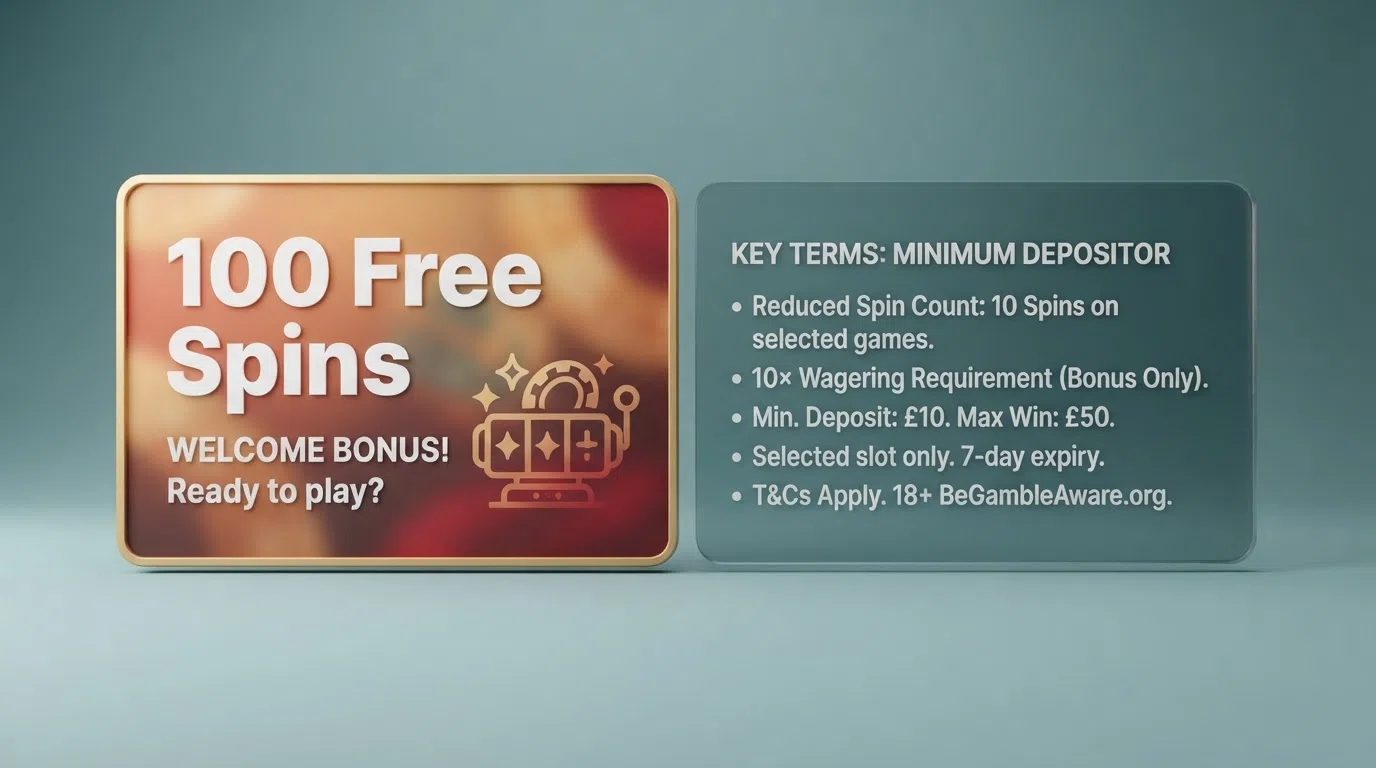
The 10× cap is a hard ceiling. Before the cap, the Gambling Commission noted, “requirements as high as 60× were being applied” (Gambling Commission, LCCP Condition 5.1.1, 2025) — a £10 bonus could demand £300 to £650 in turnover before any withdrawal was possible. Post-cap, the same £10 bonus requires at most £100 in turnover. The expected cost of a bonus — turnover multiplied by the house edge — is now a calculable figure rather than an opaque one. A £2 depositor with a small bonus and 10× wagering can clear the bonus in fewer spins and in less time, and the arithmetic of clearing is short enough to fit in a sentence. That is the new shape of the bonus landscape for low-deposit players, and the page is incomplete without it.
Mixed-product promotional offers — the cross-vertical “bet on football, get casino free spins” bundles — are also banned under the same LCCP condition. A player looking to clear a casino bonus with sports bets cannot, and the cap on the casino side is the only wagering ceiling that applies. For a small-deposit player, the change is an unmixed benefit: the bonus is smaller, the wagering is shorter, the expected cost is lower.
Welcome Bonuses You Can Claim with a £2 Deposit
Of the ten featured operators, only two genuinely serve a £2 depositor with their headline welcome offer. Unibet takes a £1 deposit and credits 200 free spins; 888casino combines a £88 Free Play no-deposit element with a deposit-bonus package that activates from £1. The remaining eight either set the deposit floor above £2 or carry terms that were not confirmed in the data this page reviewed.
The practical expectation for a £2 depositor who lands on a welcome offer: free spins on a limited selection of slots, or a small match percentage, rather than the full advertised headline package. The “200 free spins” banner at Unibet is the largest single free-spin count in the featured set at the lowest single deposit; the £88 Free Play at 888casino is the largest no-deposit cash-equivalent element. Below £2, the market thins out fast, and the honest framing is that the page’s headline number (£2) is best served by the two operators whose actual floor (£1) sits below it.
A practical note: bonus terms change. A welcome offer published in a review is a snapshot of the terms in force at the date the review was written, and any reader should confirm the current offer on the operator’s own bonus terms page before funding an account. The 10× wagering ceiling applies to every GB-licensed bonus regardless, and that is the regulatory backstop the page can lean on while the marketing language does not.
No-Deposit Bonus Offers at £2 Casinos (and the Catch)
No-deposit bonuses do exist at the £2 end of the market. 888casino’s £88 Free Play is the largest in the featured set and lands on registration with no deposit required. Betfair’s 50 free spins on registration sit in the same no-deposit category, with a further 100 spins gated behind a £10 spend. Both are real, both are withdrawable in principle, and both carry the conditions every no-deposit offer in the GB market has carried since the December 2025 reform.
Three restrictions shape the practical value of a no-deposit offer. First, maximum win caps — the bonus terms page names a ceiling on what the no-deposit element can convert to withdrawable cash, and the cap is set by the operator within the LCCP framework. Second, game restrictions — the free spins are usually tied to a specific slot or a small shortlist, and the player cannot redirect them to a higher-RTP title. Third, wagering requirements on the winnings — and since 19 December 2025 those requirements cannot exceed 10× turnover. The 10× cap is the most concrete change in the no-deposit space: a £20 win from a no-deposit spin previously faced £200 to £1,300 of playthrough at pre-cap multiples, and now faces at most £200. The 10× ceiling is the same ceiling for no-deposit and deposit bonuses alike, and the regulator was clear in its reasoning.
The distinction between a genuine no-deposit offer and a deposit-gated package that marketing calls “no deposit required” is worth one more sentence. “No deposit” means the bonus credits before the player funds the account. A “deposit to unlock” element is not a no-deposit element, however the headline is written. Reading the terms page separates the two, and the page is more useful for naming the difference.
The 10× Wagering Cap: How It Changes Low-Deposit Bonus Maths
Before 19 December 2025, the UK bonus market ran on turnover multiples that the Gambling Commission itself described as having reached 60×. A £10 bonus at 60× required £600 in turnover before a single penny could be withdrawn. The expected cost of that bonus, calculated as turnover multiplied by the house edge, was high enough to swallow the bonus and then some. The 10× cap changed the arithmetic for every player who claims a GB-licensed bonus, and it changed it most for the small-deposit player.
Take a worked example. An 888casino-style £10 deposit bonus at the 10× ceiling requires £100 in qualifying turnover. At a £0.10 minimum spin and a 96% RTP (close to the figures published for Big Bass Bonanza and Starburst ), that £100 in turnover produces an expected return of £96 — a £4 expected loss. The bonus pays out at the end, the player comes out roughly even on the bonus and pays the £4 as the cost of the playthrough. Pre-cap, the same bonus at 60× would have required £600 in turnover and an expected loss of £24. The cap cut the cost by 80% on the same bonus, and the change is larger in percentage terms for small bonuses than for large ones. That is the post-cap shape of the bonus market for a £2 (or £10) depositor.
The companion ban on mixed-product offers means a casino bonus cannot be cleared with sports bets, and vice versa. The cap is a clean ceiling on the casino product alone, and the cash equivalent of any free spin or free bet is treated under the same rule. For a £2 depositor, the practical consequence is a shorter, more transparent bonus experience: the wagering is calculable, the expected cost is calculable, and the time to clear is a finite number of minutes at the 2.5-second minimum spin speed.
Best Bonus + Low Deposit Combinations
The intersection of low deposit barrier and bonus quality is narrow, and four operators are worth naming. Unibet takes a £1 deposit and credits 200 free spins — the lowest barrier with the largest spin count in the featured set, with wagering terms to confirm on the Unibet site. 888casino takes a £1 deposit and adds the £88 Free Play no-deposit element, the richest low-deposit package in the table and the one with the longest verifiable Casino Remote history. bet365 sets a £5 floor but offers 10 days of free spins with 0× wagering, the cleanest bonus structure for a player who values what they keep over what they get. MrQ and PlayOJO are the wager-free operators, at £10 and unconfirmed floors respectively, with brand-wide 0× policies that make the bonus value a function of the spin count alone.
The comparison a £2 depositor is making is between the deposit they want to make and the bonus they can actually claim. The lowest barrier is not always the best combination — a £1 deposit at Unibet buys spin volume, a £5 deposit at bet365 buys spin volume with zero wagering, and the player decides which of the two they value. The wagering ceiling is the same for all four operators, and the page can leave the choice where the regulator has left it: the player decides, the 10× cap is the floor on transparency.
How to Pay: Deposit and Withdrawal Methods at the £2 Level
Not every payment method processes a £2 transaction, and the cashier page — not the marketing banner — is the live source. Debit cards generally accept a £2 deposit at the operators in the featured set, with the usual instant-deposit speed. PayPal’s availability is operator-specific, and PayPal may impose a transaction floor that sits above £2 at some operators. Pay-by-phone billing, via SMS or Boku, is a natural fit for £2 deposits: the amount is small, the verification is short, the deposit is added to the next mobile bill or deducted from pay-as-you-go credit.
The credit-card ban has been in force across all remote gambling since 14 April 2020, and it covers credit-card-funded e-wallet deposits as well. The Gambling Commission cited the figure that 22% of online gamblers using credit cards were classed as problem gamblers; the ban is the policy response. A £2 depositor cannot bypass the ban by topping up an e-wallet with a credit card, and a £2 deposit at a UKGC-licensed casino is funded from a debit card, a bank account or a non-credit-card e-wallet.
Withdrawal is where the £2 depositor feels the floor. Operators set their own withdrawal minimums, and a £2 deposit that wins £15 may sit below the cashout floor at some operators. The £2 deposit does not change the floor; the small balance faces the same threshold as a large one. Reverse withdrawals — a player cancelling a withdrawal to keep playing — are permanently banned, so once a withdrawal is requested it cannot be reversed. That rule is good for the small-balance player, because the temptation to chase a small win back into the casino is a £2-deposit-sized mistake.
PayPal Casinos That Accept a £2 Deposit
PayPal is the most-requested £2 deposit method by player search volume, and the most operator-variable in practice. Availability at each featured operator is set by the operator’s commercial agreement with PayPal, not by a uniform market rule. Some operators accept PayPal at £1 or £2; others do not list PayPal as a deposit method at all; and PayPal itself may impose a minimum transaction value that interacts with the operator’s own minimum. The cashier page of each operator is the live source, and the page’s standing advice is to check before funding.
The advantages of PayPal at the low-deposit end are the same advantages it carries at any deposit size: no card details shared with the casino, instant deposit credit, and faster withdrawals than debit card in most cases. A £2 deposit funded from PayPal is segregated from the player’s bank account in the same way a £200 deposit is, and the deposit does not appear on a bank statement as a casino transaction. For a player who values that separation, PayPal is the deposit method the page should be willing to name.
The honest framing: PayPal availability at a £2 deposit is operator-specific and a search rather than a guarantee, and any review that claims otherwise is generalising from one operator’s cashier to a market that does not run on one rule.
Pay by Phone Bill: SMS and Boku Deposits at £2
Pay-by-phone billing is the deposit method the £2 entry point was almost designed for. The deposit is verified by SMS or through Boku, the amount is added to the next mobile bill or deducted from pay-as-you-go credit, and the deposit value is small enough to stay well within the mobile networks’ commercial daily caps — typically £30 per day across the major UK networks. The deposit is instant; the friction is low; the verification matches the verification the operator would have run anyway.
The key limitation is structural. A pay-by-phone deposit cannot be withdrawn back to the phone account, because the phone account is not a bank account. Any winnings have to be withdrawn to a debit card or a bank transfer, and the player needs a withdrawal method set up at the cashier before they make the deposit. The other limitation is the daily cap: £30 per day across most UK mobile networks means a £2 deposit is comfortably within the cap, but a series of £2 deposits in a session is still capped at the network level. The cap is commercial, not statutory — the UKGC has not set a phone-bill deposit ceiling — but the network-level cap is the practical ceiling for a player using the method.
The verdict: pay-by-phone is a natural fit for £2 deposits, with the proviso that the withdrawal side requires a separate method, and the daily cap is a network-side decision the player should know about before they start.
Deposit Speed, Processing and the Withdrawal Reality for Low Depositors
A £2 deposit lands in the casino wallet in seconds. Debit cards, e-wallets and phone-billing all credit the account instantly at the operators in the featured set, and the speed is not deposit-amount-sensitive — a £2 deposit processes at the same speed as a £200 one. The slower side of the transaction is the withdrawal.
Withdrawal minimums at UK casino operators typically sit in the £5 to £20 range, and a £2 deposit that wins £15 may sit below the operator’s cashout floor. There is no statutory minimum withdrawal amount in GB regulation — the floor is an operator-set commercial decision, and the page should be honest that the small-balance player sometimes cannot withdraw at all without first playing through winnings to reach the floor. Withdrawal processing times vary by method: debit card 1 to 5 working days, e-wallets typically within 24 hours, bank transfer the slowest of the three. Reverse withdrawals are banned, so the request is final.
The practical consequence for a small depositor is the need to play through winnings to reach the withdrawal minimum — and the appeal of the wager-free model (bet365, MrQ, PlayOJO) is that the winnings are withdrawable without that playthrough. A zero-wagering bonus on a small balance is the cleanest withdrawal path the £2-deposit market offers, and the comparison is a comparison the page should make openly.
Playing on Mobile: £2 Deposit Casino Apps vs Browser
The UKGC’s regulatory framework is device-agnostic. The same stake cap applies, the same ID check runs before the first deposit, the same 10× wagering ceiling governs any bonus a player claims, and the same Gamstop block stops a self-excluded player from funding the account. The deposit is £2 whether the player funds it from a phone, a tablet or a desktop. The device changes nothing regulatory, and the device changes several things practical.
Native casino apps offer push-to-play convenience, biometric login and saved payment methods. The friction of repeating a £2 deposit is lower on an app than on a browser, and mobile-native payment methods (Apple Pay, Google Pay, phone billing) integrate into the deposit flow at the OS level. Browser-based play needs no install, no app store and no storage space, and the path from “deposit £2” to “first spin” is shorter on a browser than on an app for a first-time player. The two are not in competition; they serve different session patterns, and the £2-deposit player is more likely to use both than to settle on one.
Dedicated Casino Apps with £2 Minimum Deposit
Not every featured operator publishes a dedicated iOS and Android casino app, and a per-operator app-presence list was not confirmed in the data this page reviewed. The pattern across the featured set is the standard one: the larger operators (bet365, 888casino, Ladbrokes, Sky Vegas, Betfair) maintain native apps, the mid-sized operators may or may not, and the cashier page of each is the live source for whether a given app is available in the UK App Store or Google Play at the time of download.
App-store policies add a platform-level regulatory filter. Apple App Store enforces a 17+ age rating for gambling apps in most territories; Google Play’s gambling policy permits real-money gambling apps in the UK subject to local licensing requirements. These are platform-level rules layered on top of the UKGC licence, and an app the Commission has licensed may still be subject to a platform’s content review. The interaction is mostly invisible to the player, but it explains why some UKGC-licensed operators have apps and others direct players to the mobile browser instead.
In-app deposit flows handle £2 transactions through saved payment methods, Apple Pay and Google Pay integration, and biometric authentication for repeat deposits. A first-time £2 deposit from a phone is fastest via Apple Pay or Google Pay at operators that support it, and that is a £2-deposit-specific reason to favour a mobile payment method over a debit card on a first session.
Mobile Browser Play at the £2 Threshold
A mobile browser needs no install, no app store and no storage space, and it is the path of least resistance for a £2 deposit session. Responsive casino sites adapt the lobby, cashier and game client to the screen width; mobile-optimised payment pages reduce the friction of entering card details for a £2 transaction; HTML5 slots load without the legacy Flash client that older sites still carry traces of. The KYC process runs identically on browser and app; there is no shortcut at the small-deposit end.
The honest framing: a £2 deposit on a mobile browser is the lowest-friction way to fund an account, and the lack of an install is the practical advantage. A player who plays once a week does not need a native app; a player who plays daily will install one.
Mobile vs Desktop: Does the Experience Change at £2?
The regulatory framework does not change with the device, and the experience at £2 changes in three concrete ways. Session-length patterns shift — mobile sessions tend shorter and more frequent, and the £2 deposit fits the mobile use pattern better than the £200 deposit fits the desktop pattern. Mobile-native payment methods (Apple Pay, Google Pay, phone billing) remove card-entry friction from the £2 deposit, and the deposit flow is shorter on a phone. Game selection is broadly the same on both, with the caveat that some older slot titles may not be mobile-optimised, and the live-casino lobby is fully mobile-compatible at the operators in the featured set.
The experience difference is real but it is not regulatory. A £2 deposit is a £2 deposit on any device, the bonus terms are the same, the wagering ceiling is the same, the player protections are the same. The choice between mobile and desktop is a choice of session pattern, not a choice of regulatory exposure.
Slots You Can Actually Play with a £2 Deposit
A £2 deposit opens the same slot lobby as a £200 deposit — the limit is stake per spin, not game availability. The full library is reachable from the first spin, the RTP and volatility of each title are the same at £0.10 as at £5, and the game-design rules (2.5-second minimum spin speed, auto-play ban, losses-disguised-as-wins ban) apply uniformly. What changes at the £2 deposit level is the number of spins available and the title a player at the £2 age-banded cap can afford.
For a player aged 25 or over at the £5 cap, a £2 deposit at £0.10 minimum bet buys 20 spins and roughly 50 seconds of play. For a player aged 18 to 24 at the £2 cap, a £2 deposit buys one game cycle — the cap matches the deposit. The game-cycle stake cap defines the ceiling; the 2.5-second spin speed defines the pace; the two together set the practical boundaries of a £2 session.
Slot Sites That Accept £2 Deposits
The distinction between a pure slot site and a full casino platform is one of provider mix and vertical breadth, not deposit floor. A pure slot site prioritises reel count and provider variety; a full casino adds table games, live dealer and sometimes sports betting. Both accept a £2 deposit at the cashier level — the deposit method does not filter by game type.
The featured operators’ provider lists shape the slot library a £2 depositor sees. bet365 carries NetEnt, Playtech, Microgaming, Pragmatic Play and IGT; Unibet pairs NetEnt, Microgaming, Play’n GO and Pragmatic Play; 888 runs NetEnt, Playtech, Red Tiger and Pragmatic Play; Betfair lists Playtech, NetEnt and IGT; Betway pairs Microgaming, NetEnt, Pragmatic Play and Evolution; Sky Vegas runs NetEnt, IGT, Playtech and Red Tiger; Virgin Games sits on the Gamesys proprietary platform alongside NetEnt and IGT; Ladbrokes pairs Playtech, NetEnt and IGT; PlayOJO carries NetEnt, Microgaming, Play’n GO and Pragmatic Play. MrQ’s provider list was not confirmed in the data this page reviewed. The shape of a £2-deposit slot library is the shape of the operator’s commercial agreement with each provider, and the player chooses the provider mix they want before they choose the bonus.
What a £2 Stake Buys You: RTP, Volatility and Session Length
A £2 deposit at a £0.10 minimum bet buys 20 spins. At the 2.5-second minimum spin speed, 20 spins run in roughly 50 seconds of continuous play. The session is short, and the slot’s volatility decides how the £2 is distributed across those 20 outcomes.
Take Big Bass Bonanza (Pragmatic Play / Reel Kingdom). The published RTP is 96.71%, the volatility is high, the minimum bet is £0.10 and the maximum win is 2,100× the stake. At 20 spins, the expected return is 20 × £0.10 × 0.9671 = £1.93 — a £0.07 expected loss over the session. The “expected” framing matters: 96.71% is a long-run average over many spins, not a guarantee on any individual spin, and high volatility means the 20 outcomes cluster around a small number of large returns rather than a steady trickle of small ones. A 20-spin session on a high-volatility slot can produce a £0 return with the next spin paying out the maximum.
Take Starburst (NetEnt). The published RTP is 96.10%, the volatility is low, the maximum win is 250× the stake. At 20 spins, the expected return is 20 × £0.10 × 0.9610 = £1.92 — a £0.08 expected loss. The lower volatility means the 20 outcomes are more evenly distributed, with small wins keeping the balance ticking over rather than vanishing in 18 empty spins followed by one large hit.
The comparison between the two is the comparison the page should make. A £2 session on a high-volatility slot like Big Bass Bonanza is a lottery-ticket session — most of the time the £2 vanishes in under a minute, occasionally it returns a large multiple. A £2 session on a low-volatility slot like Starburst is a slow-burn session — the balance drifts down through a series of small wins and small losses, with the same expected loss in the long run but a more even ride. Both are legitimate play; both have a house edge baked into the maths; neither changes the long-run expected value.
The slot RTP table below lists the two titles with verified published RTP figures the page can quote at the minimum bet level. The full UK slot library runs to thousands of titles; this table is a reference point for the slot maths, not a recommendation list, and RTP does not predict any single session.
| Slot Title | Provider | RTP | Volatility | Max Win |
|---|---|---|---|---|
| Big Bass Bonanza | Pragmatic Play / Reel Kingdom | 96.71% | High | 2,100× stake |
| Starburst | NetEnt | 96.10% | Low | 250× stake |
New £2 Minimum Deposit Casinos Launching in 2026
The UK market sees new casino launches throughout 2026, and the new-entrant landscape is not a £2-friendly one. Most new launches target the £10 to £20 deposit band, where the unit economics work, and a £2 deposit floor is rare among the brands entering the licensed market this year. The economic pressure against micro-deposits has intensified, and three numbers explain why.
Remote Gaming Duty on online casino rose from 21% to 40% with effect from 1 April 2026. The statutory levy under the Gambling Levy Regulations 2025 added a further 1.1% on gross gambling yield for remote casino licences, in force from 6 April 2025, with the proceeds split 50% treatment, 30% prevention and 20% research. A new casino brand launching in 2026 is paying 41.1% of its GGY to the Treasury before it pays its own staff, its platform, its payment-processor fees or its game-provider revenue share. A £2 deposit, after the variable costs of running an account, leaves a margin thin enough that a new brand can reasonably decide the deposit floor is £10 or £20 instead. Compliance, KYC and payment-processing costs are the fixed-cost layer; the duty and the levy are the variable-cost layer; together they push the minimum deposit up.
The practical consequence for the page: a new £2 deposit casino in 2026 is a small set, the new entrants that do exist are most likely to be existing operators launching new skins rather than genuinely new brands, and the UKGC public register is the single source of truth on whether any brand is licensed. Operating gambling facilities to GB customers without a GB licence is a criminal offence under section 33 of the Gambling Act 2005, and a brand that cannot be found on the public register is a brand that should not be funded, whatever the deposit amount.
The Newest £2 Deposit Casino Brands
The research reviewed for this page did not identify a 2026 entrant with a confirmed £2 deposit floor. The set of new brands entering the UK licensed market is active, but the deposit floors on launch sit predominantly at £10 or £20, with the same compliance-and-duty-driven economics described above. The honest framing: the £2 entry point is held by the established operators who set their floor low as a competitive position, not by the new entrants whose unit economics push them up.
The trade-off for a player is real. A new brand may offer an aggressive launch bonus to compensate for the absence of track record, but it lacks the operational history and complaint-record visibility of an established operator. A brand that has held a UKGC licence since 1 November 2014 (Ladbrokes, 888casino) has years of regulatory scrutiny, public complaint data and licensee history behind it. A brand that launched in 2026 has a press release. The page should not be the place to recommend the new over the established, and the licensed market gives the player the tools to compare.
2026 Market Entrants at the £2 Threshold
The UKGC public register is the single source of licence truth for any new casino brand targeting GB customers. Search by trading name, domain or licence account number at the Commission’s website; the register is free, public, and updated regularly. The Commission’s disruption work makes the regulatory perimeter real — from April 2024 to June 2025, the Commission issued 3,140 disruption notices against unlicensed operators, referred 447,778 URLs to search engines for delisting, achieved 287,961 URL removals and recorded an average 32% fall in engagement across 160 disrupted sites. The regulator is actively pursuing unlicensed sites that target GB customers, and the public register is the player’s first line of defence.
The warning signs of an unlicensed new entrant are easy to name. No UKGC account number in the footer. An MGA or Curaçao licence displayed in a way that implies it is a substitute for a GB licence — it is not, and a GB point-of-consumption licence is the only licence that allows the operator to take GB customers. No Gamstop participation. No UK ADR provider listed in the complaints process. The page should not be shy about naming these signs, because the player who misses one of them is the player who loses their £2 deposit to an operator outside the UKGC’s reach.
Are £2 Deposit Casinos Safe? Licensing, Regulation and Player Protection
A UKGC licence is the single most important safety signal on this page. A £2 deposit at a licensed casino carries the same suite of player protections as a £2,000 deposit, and the gap between licensed and unlicensed is not a matter of degree but of kind. The licensed casino verifies identity before any play, segregates player funds from operating capital, gives access to an approved Alternative Dispute Resolution provider, participates in Gamstop, caps bonus wagering at 10×, caps online-slot stakes at £2/£5 by age band, prompts for a deposit limit before the first wager, runs a financial vulnerability check at £150 in 30 days, and operates under game-design rules that ban auto-play, fast spin, losses disguised as wins and reverse withdrawals. The unlicensed casino running the same £2 deposit offers none of that, and the player who deposits at an unlicensed site does not get the protection retroactively.
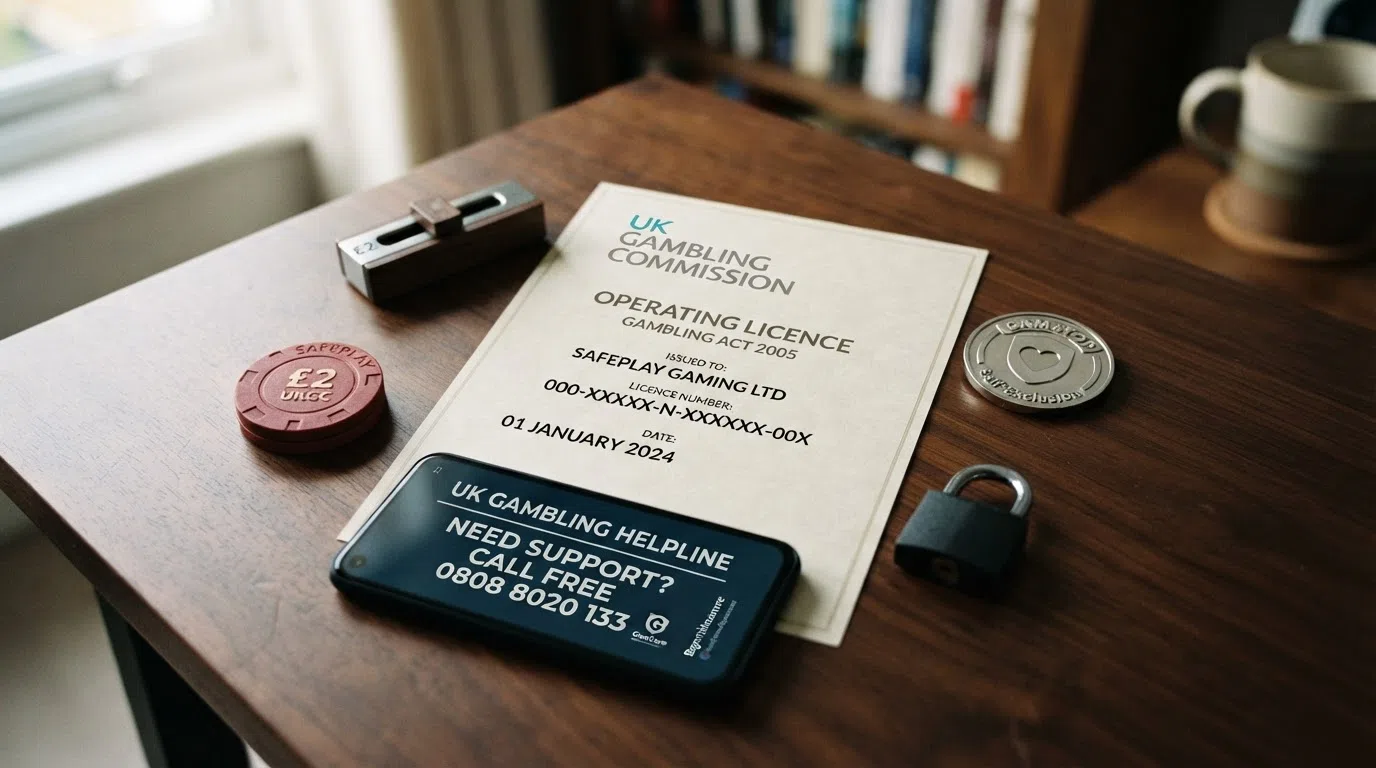
The safety calculus at a £2 deposit is not “how much could I lose”. The £2 is the loss, and the deposit amount is the budget. The safety calculus is “what protection do I have if something goes wrong” — a delayed withdrawal, a disputed bonus, an account closure, a self-exclusion question. The licensed casino has a UKGC complaints route, an ADR provider, segregated funds and a regulator that can revoke the licence. The unlicensed casino has none of those, and the deposit amount is the size of the risk the player is taking on the regulatory exposure, not the size of the loss.
UKGC Licensing: What the Badge Actually Guarantees
The UKGC logo at the bottom of a casino page is not a trust badge to be taken on faith. It is a legal commitment to a specific, enforceable set of player protections, and the public register is the place to verify the commitment in seconds. Search by licence account number or trading name; the register is the single source of truth, and every operator in the featured table above was cross-checked against it.
The concrete protections a UKGC licence guarantees are listed across the rest of this page, and they are worth re-stating once in one place. Mandatory ID verification before any deposit or any wager. Segregation of player funds from operating capital. Access to an approved Alternative Dispute Resolution provider. Mandatory Gamstop participation. Bonus wagering capped at 10×. Stake limits on online slots at £2/£5 by age band. Deposit-limit prompts before the first deposit. Financial vulnerability checks at £150 net deposit in 30 days. Game-design rules in force since 31 October 2021: auto-play banned, spin speed ≥2.5s, losses-disguised-as-wins banned, reverse withdrawals banned, on-screen display of session P&L required. The list is long because the framework is layered, and the layering is the point.
The three statutory licensing objectives in section 1 of the Gambling Act 2005 govern every UKGC decision: preventing gambling from being a source of crime or disorder, ensuring gambling is conducted in a fair and open way, and protecting children and other vulnerable persons from being harmed or exploited by gambling. The objectives are not marketing language; they are the legal test the Commission applies when it grants, reviews or revokes a licence, and a player who wants to know what the badge means can read them in the Act.
Gamstop-Registered vs Non-Gamstop: The Safety Divide
Every UKGC-licensed casino must participate in Gamstop. Gamstop is the mandatory national multi-operator online self-exclusion scheme, in force for all GB-licensed online operators since 31 March 2020. Registration is free, exclusion periods are six months, one year, five years, or five years with auto-renewal, and the exclusion cannot be cancelled early. The block covers every GB-licensed online operator; it does not cover retail bookmakers or casinos, it does not cover the National Lottery, and — critically — it does not cover unlicensed or offshore sites.
A site offering £2 deposits without Gamstop coverage is operating outside the British regulatory perimeter. The offshore licences most often displayed as a substitute (MGA, Curaçao, Gibraltar) are not substitutes at the point of consumption since the 2014 Act, and the UKGC’s disruption activity is the regulator’s response to sites that try to take GB customers without a GB licence. A deposit at a non-Gamstop site carries the full weight of that absence: no self-exclusion mechanism recognised in GB, no UKGC complaints route, no ADR provider bound by UK regulation, no British consumer-law protection, no fund-segregation guarantee, and no guarantee that the £2 will be returned.
The honest editorial position is the position the page should hold. The deposit amount is small. The regulatory exposure at an unlicensed site is total. A £2 depositor who chooses a non-Gamstop site is choosing the absence of the entire UK player-protection framework, and the small deposit is not a discount on that choice.
Player-Protection Tools at Minimum-Deposit Casinos
The UKGC-mandated player-protection toolkit is active at every licensed casino regardless of deposit size. Reality checks fire at 60-minute intervals during a slots session; the on-screen display of total losses, wins and time played is required throughout. The 2.5-second minimum spin speed governs the pace of play. Auto-play is banned. Losses disguised as wins are banned. Reverse withdrawals are banned. None of these tools is optional at a UKGC-licensed casino, and the operator is responsible for implementing them in the game client.
Operator-level tools sit alongside the regulatory requirements. Time-outs of 24 hours to six weeks are available at every licensed operator; session limits and stake limits are widely offered; the deposit-limit prompt before the first wager is the regulatory backstop for the limit-setting conversation. The decreasing of any customer-set limit is actioned immediately; the increasing of any limit is subject to a cooling-off period, and the Commission has set the regulatory floor for that pattern.
A £2 depositor who sets a £2 daily limit before the first wager has set a hard ceiling on loss accumulation that the operator is required to enforce. The limit is the most direct harm-reduction tool the page can name, and the regulator has now made the offer of it mandatory.
UK Low-Deposit Player Protections: The Regulatory Framework at a Glance
The table below lists every UKGC-mandated protection relevant to a low-deposit player, with the threshold or cap, the date it came into force and what it means for someone depositing £2. The framework is identical at £2 and at £2,000 — the table is the proof.
| Protection | Threshold or Cap | Effective Date | What It Means for a £2 Depositor |
|---|---|---|---|
| Age-banded slot stake cap | £2 (18–24) / £5 (25+) per game cycle | 9 April 2025 (£5) and 21 May 2025 (£2) | An 18-to-24 player at the cap gets exactly one game cycle for £2; a 25+ player can spread £2 across 20 spins at £0.10 |
| Bonus wagering cap | 10× turnover maximum | 19 December 2025 | Any bonus a £2 depositor claims requires at most 10× playthrough, down from multiples as high as 60× previously |
| Mixed-product promo offers | Banned | 19 December 2025 | Casino bonuses cannot be cleared with sports bets; the 10× cap applies on casino product alone |
| Credit card ban | All remote gambling deposits | 14 April 2020 | A £2 deposit cannot be funded by credit card, including credit-card-funded e-wallets |
| Deposit-limit prompt | Required before first deposit | 31 October 2025 | Every operator must offer a deposit limit at sign-up; a £2 daily limit is a real ceiling the player can set |
| Gross deposit limit (standardised) | Required with equal prominence | 30 September 2026 (extended) | A standard deposit-limit interface will be offered at every operator alongside any operator-specific limit |
| Financial vulnerability check | £150 net deposit in rolling 30 days | 28 February 2025 | A frequent low-deposit player hits this threshold; the operator runs a public-data check |
| Mandatory online self-exclusion | Gamstop, 6 months / 1 year / 5 years / 5 years auto-renewal | 31 March 2020 | A self-excluded player cannot deposit at any GB-licensed online operator; registration is free and irrevocable |
| Identity verification before first deposit | Name, address, date of birth | 7 May 2019 | The first deposit at a £2 casino requires the same ID check as a £2,000 deposit; no grace period |
| Spin speed minimum | 2.5 seconds per game cycle | 31 October 2021 | 20 spins of a £2 deposit take ~50 seconds; auto-play is banned |
| Auto-play ban | All online slots | 31 October 2021 | The player must initiate every spin manually; no automated spin sequences |
| Reverse-withdrawal ban | All withdrawals | 31 October 2021 | A withdrawal request is final; the player cannot cancel it to keep playing |
| Losses disguised as wins | Banned | 31 October 2021 | Slot UI cannot celebrate a spin that returned less than the stake |
| Session P&L display | Required during slots sessions | 31 October 2021 | Total losses, wins and time played are visible on-screen throughout |
Low Deposits, Lower Risk? Responsible Gambling at the £2 Threshold
A £2 deposit habit can be a practical safer-gambling tool. The psychology is straightforward: a self-imposed £2 ceiling reduces the speed of loss accumulation, extends the cooling-off window between deposit decisions, and makes chasing losses harder. Each reload is a deliberate act at £2, where the same act at £200 can be a tap. The UKGC now mandates that every operator prompt the player to set a deposit limit before the first deposit, and the limit is the most direct tool the player has.
Low deposits do not eliminate risk. The Gambling Survey for Great Britain Wave 4 (September 2025 to January 2026) found 47% of adults had gambled in the past four weeks, with 38% gambling online, based on a nationally representative sample of 5,210 adults. GamCare reported that 81.5% of contacts to the National Gambling Helpline in 2026 cited online gambling forms — a five-year high, up from 72.9% in 2021. The National Gambling Helpline made 996 referrals to treatment and peer-based support in January 2026, up 48% year-on-year from 674 in January 2025. The figures are not specific to £2 deposits; the figures are specific to the regulated online product that a £2 deposit is part of.
The help infrastructure is built for every deposit level, and the page should be willing to name it.
Deposit Limits and Low-Stakes Play as a Safer-Gambling Tool
Setting a £2 deposit limit is the most direct harm-reduction measure the page can recommend, and the regulator has now required the offer of it. From 31 October 2025 every operator must prompt the player to set a financial limit before the first deposit; from 30 September 2026 (extended from 30 June 2026) a standardised gross deposit limit must be offered with at least equal prominence to any operator-specific limit. Decreases in any limit are actioned immediately; increases are subject to a cooling-off period. The design is built to make limit-setting the default, and the limit itself does the work once it is in place.
The £2-per-session player reaches the £150 net-deposit vulnerability check threshold after 75 sessions in a 30-day rolling period — a frequency that is unusual but not unheard of for a low-stake regular. The check itself uses publicly available data (CCJs, bankruptcy orders, IVAs, DROs) rather than income documents, and it is a background check that does not interrupt play. A player who notices the check has been triggered has reached a level the regulator has decided warrants a closer look, and the response is a conversation rather than an enforcement action.
The distinction between a deposit limit (caps what goes in) and a loss limit (caps what stays lost) is a real one. UK regulation mandates the offer of the former; the latter is offered by some operators but is not a regulatory requirement. A £2 deposit limit is the cleanest available tool, and the page should be willing to say so.
UK Help Resources: Gamstop, GamCare and the National Gambling Helpline
The UK has the most developed gambling-harm infrastructure of any jurisdiction, and the services are free, confidential and available now. A £2-deposit player who decides they want help has the same access to the infrastructure as any other player, and the access is the same regardless of the size of the deposits that led to the decision.
The National Gambling Helpline, run by GamCare, is available free on 0808 8020 133, 24 hours a day, 365 days a year, by phone, live chat and WhatsApp. GamCare made 996 referrals to treatment and peer-based support in January 2026, up 48% from 674 in January 2025. Gamstop is the mandatory national online self-exclusion scheme, free to register, with exclusion periods of six months, one year, five years, or five years with auto-renewal — none cancellable early. GambleAware funds the National Gambling Support Network for treatment and prevention. NHS gambling clinics in England, Scotland and Wales are jointly commissioned by GambleAware and NHS England. Gamblers Anonymous runs peer-support meetings independent of the regulator and the industry.
The list is short on purpose. The help services are the help services, the numbers are the numbers, and a player who reads the page and dials the number has done the thing the page is built to support.
Self-Exclusion at £2 Deposit Casinos
Gamstop covers every UKGC-licensed casino that accepts a £2 deposit. Registration is free at gamstop.co.uk with name, date of birth and address, and the exclusion from all GB-licensed online operators is active within 24 hours. The exclusion is the strongest player-protection tool in the UK framework: it covers every licensed operator at once, it cannot be cancelled early, and the player does not have to be a high-stake player to use it. A £2-deposit player who registers with Gamstop stops funding accounts at every GB-licensed online casino in the country.
What Gamstop does not cover is the safety distinction at the top of this page. Retail bookmakers and casinos are outside Gamstop. The National Lottery is outside Gamstop. Unlicensed offshore sites are outside Gamstop, and a player who self-excludes through Gamstop and then funds an account at a non-Gamstop site is funding an account with no UKGC protection, no ADR and no fund segregation. The deposit amount is the same; the regulatory exposure is the absence.
Operator-level self-exclusion tools sit alongside Gamstop at the casino level. Time-outs of 24 hours to six weeks, reality checks, session limits and stake limits are all available at UKGC-licensed operators, and the operator-level exclusion is reversible at the operator’s discretion while Gamstop is not. The two systems are complementary, and a player who wants the strongest block should register with Gamstop first.
How We Chose and Ranked These £2 Deposit Casinos
Every operator on this page holds a UKGC licence verified against the public register, last updated 29 July 2026. The evaluation criteria applied to each operator are: UKGC licence status verified, minimum deposit amount, welcome bonus quality and terms, game-provider breadth, and brand track record and regulatory history. The criteria are stated in this paragraph, and the table at the top of the operator section is the criteria applied.
Three things were not ranking factors, and the page should name them. No operator paid for inclusion or ranking position. Affiliate commission rates played no role in ordering. Advertising relationships did not influence selection. The ranking reflects the criteria stated in the methodology, not commercial arrangements with the operator or its affiliate programme.
The scope is also worth stating. The ten operators in the featured set are the operators reviewed on this page. The UK licensed market contains additional operators not covered here — William Hill, Coral, Paddy Power, Betfred, Grosvenor, JackpotJoy, 32Red and others — and a reader who does not find their preferred operator on this page should consult the UKGC public register for the licensed alternatives. The featured set was chosen to serve the £2-deposit comparison angle, not to be an exhaustive list of the licensed market.
Why Trust This Review
The methodology is transparent, the licence data is primary-sourced from the UKGC public register, and the ranking criteria are stated explicitly. Every operator was cross-checked against the register, which is free, public and updated regularly. The factual basis for each operator entry (welcome bonus, minimum deposit, game providers) is sourced from operator sites and public listings at time of review; where a data point was not confirmed, the plan flagged it and the page marks the gap. The audit can re-run the same checks; the reader can do them by hand.
What the reader should double-check: bonus terms and minimum deposits change. Always read the offer page on the operator’s own site before depositing. The UKGC public register can be checked directly at the Commission’s website, and any operator on the table above should appear there with an active licence. The 10× wagering cap is the regulatory backstop on any bonus a GB-licensed operator advertises, and the regulator’s compliance work is the assurance that the backstop is enforced.
What a £2 Deposit Decides — and What It Does Not
A £2 deposit proves you can play for real money at a UKGC-licensed casino for the price of a coffee. The deposit unlocks the regulated product — the same RNG, the same RTP, the same player-protection framework as any other deposit size — and the regulator’s framework does not stratify by deposit amount. That is the case for the £2 entry point, and the case is real.
The deposit amount does not change the house edge. The RTP on any given spin is the same at £0.10 as at £5, the operator’s edge is fixed, and the long-run expected value is the long-run expected value. The deposit amount does not change the UKGC framework. The stake cap applies, the wagering cap applies, the ID check applies, the deposit-limit prompt applies, the Gamstop block applies — at £2 and at £2,000. The deposit amount does not change the withdrawal process. A small balance faces the same operator-set minimum as a large one, and the reverse-withdrawal ban means a withdrawal request is final.
The deposit amount does change three things. Bonus eligibility narrows sharply — most welcome offers need £5 to £10 or more to trigger, and the £2 depositor is claiming the smallest slice of the headline offer, if any. Session length shrinks to minutes — a £2 deposit at £0.10 minimum bet is 20 spins and roughly 50 seconds at the 2.5-second minimum spin speed. Operator choice drops from dozens to a handful — only Unibet and 888casino sit at £1 in the featured set, and the rest sit at £5 or £10 with the deposit floor above the page’s headline figure.
The actionable takeaway: a £2 depositor with a real-money budget is best served by the licensed operators at the lowest deposit floor, the wagering ceiling of 10× is the regulatory backstop on any bonus they claim, and the licence matters more than the deposit amount. The rest of the page is the evidence.
Your £2 Deposit Checklist
Five concrete steps to take before funding a £2 account at any UK online casino. Each takes under a minute, and each changes what the player is protected against.
Verify the UKGC licence on the public register. Search by licence account number or trading name at the Commission’s website. The footer logo on the casino page is not enough — an unlicensed site can copy the logo, and the public register is the live source. The featured operators on this page are all verified against the register, last updated 29 July 2026.
Check the operator’s own minimum deposit and bonus terms page. A review is a snapshot. The cashier page on the operator’s site is the live source, and the current terms may differ from the published headline offer.
Confirm the payment method processes £2. Debit cards do. PayPal availability is operator-specific and may carry a floor above £2. Pay-by-phone is built for the £2 deposit. The cashier page is the live source for the specific operator.
Register with Gamstop if self-exclusion is what is needed. Free, covers every GB-licensed online operator, cannot be cancelled early. A £2-deposit player who decides to self-exclude has the same access to the tool as any other player.
Set a deposit limit before the first deposit. The UKGC now requires every operator to prompt for this, and a £2 limit set before play is a harm-reduction decision that cannot be undone in the heat of a session. The limit is the cleanest tool the page can recommend.
Frequently asked questions
Can I really deposit just £2 at a UK online casino?
Yes, though the floor in the featured set sits at £1, not £2. Unibet and 888casino both take a £1 deposit, which is the lowest entry point in the regulated market. No operator in the featured ten publishes an exact £2 floor at time of review. The UKGC identity check still runs before the first deposit, and the same player protections apply regardless of size.
Does the UK Gambling Commission license casinos with £2 minimum deposits?
Yes. The Commission does not set a minimum deposit floor for licensed operators; it sets the regulatory framework, and the deposit minimum is an operator-set commercial decision. Unibet and 888casino hold active UKGC licences and take £1 deposits. Every operator on this page is verified against the public register, last updated 29 July 2026.
What is the maximum I can win from a £2 deposit bonus?
The 10× wagering cap (in force 19 December 2025) governs the playthrough, not the win. The maximum withdrawal from a bonus is set by the operator’s bonus terms and any maximum-win cap attached to a no-deposit element. Wagering-free offers (bet365, MrQ, PlayOJO) impose no playthrough at all, and the win is withdrawable subject to the operator’s standard withdrawal terms.
Does Gamstop cover casinos that accept a £2 minimum deposit?
Yes, for every UKGC-licensed operator. Gamstop has been mandatory for all GB-licensed online operators since 31 March 2020, and the exclusion periods (six months, one year, five years, or five years with auto-renewal) cannot be cancelled early. Gamstop does not cover unlicensed offshore sites, and a £2 deposit at a non-Gamstop site carries the absence of the entire UK protection framework.
Is there a legal maximum stake limit on online slots in the UK?
Yes. From 9 April 2025 the maximum stake on online slots is £5 per game cycle for players aged 25 and over; from 21 May 2025 it is £2 per game cycle for players aged 18 to 24. The cap applies to total stake within a single game cycle and cannot be defeated by splitting a spin. There is no statutory cap on other online products (sports betting, live casino, bingo).
Where can I get help if gambling becomes a problem in the UK?
The National Gambling Helpline, run by GamCare, is free on 0808 8020 133, 24/7, 365 days a year, by phone, live chat and WhatsApp. Gamstop is the national self-exclusion scheme, free to register at gamstop.co.uk. NHS gambling clinics operate in England, Scotland and Wales. Gamblers Anonymous runs peer-support meetings. The help is free, confidential and available now.
Limits – No Minimum Deposit Casinos UK
Content created by the «No Minimum Deposit Casinos UK» team