No ID Verification Casinos in the UK: The Legal Truth, the Offshore Reality and the Sites That Actually Verify You
 Available in GB
Every search result that promises a “no ID verification casino UK” leads to the same destination: a casino licensed somewhere else. The reason is not obscure. Since 7 May 2019, the UK Gambling Commission’s Licence Condition 17.1.1 has required remote operators to verify a customer’s name, address and date of birth before they can deposit or gamble — the pre-2019 grace period of 72 hours to send documents was removed outright. No operator can hold a Great Britain remote licence and skip that step. So when an affiliate page ranks a “no ID casino” for a UK reader, the brand underneath is licensed in Curaçao, Anjouan or Malta, and the absence of ID is not a feature the UK regulator permits. It is a feature the UK regulator forbids.

That structural fact is what this page sits on. The first half explains why no GB-licensed casino can ever appear in a “no ID” search result, and what the UK system actually does at sign-up. The second half walks through the offshore operators that do appear, the deferred-KYC model they run, the wagering terms they attach, and what an excluded player or a UK resident considering one needs to know before clicking through. Ten operators are ranked honestly: five licensed alternatives, five offshore brands that genuinely defer verification. The two groups are not interchangeable, and the page does not pretend they are.
Current as of 17 August 2026 and cross-checked against the UK Gambling Commission’s public register.
Why Every UK-Licensed Casino Must Check Your ID — and What “No Verification” Actually Means
“No ID verification” is a marketing label, not a regulatory category. Under LCCP 17.1.1, any operator serving British customers from a GB remote licence must complete customer identity, age and address verification before the first deposit clears. The pre-2019 model — register, deposit, send documents within 72 hours — was closed off in May 2019. Today the verification happens up front, which is why every brand on the licensed side of this page states the same thing in its terms: a passport or driving licence, a proof of address dated within three months, and a date of birth check are required before real-money play.
The offshore market runs on a different mechanic. The “no KYC” experience is actually deferred KYC: registration uses an email and a password, deposits in cryptocurrency clear without identifying the sender, and play begins immediately. Verification is triggered only when a withdrawal crosses a threshold — typically £4,000 to £8,000 in cumulative crypto activity, though some operators set it lower. Above that line, even the most permissive site will request documents. The label is shorthand for “up to a point”; it is not a promise of permanent anonymity.
The honest framing of the keyword, then, is two-tier. The first tier is the GB-licensed market, which the searcher is asking about but which cannot deliver on the request. The second is the offshore market, which delivers it — at the cost of every protection the UK regulator has built. Both tiers are on this page, named honestly.
The Wording Variants: No Photo ID, No ID Check, No Documents Required
Every phrasing the searcher types — “no photo ID”, “no ID check”, “no documents required”, “no KYC”, “no verification” — describes the same offshore model. None of them describes a GB-licensed site, because the LCCP rule applies regardless of the label. A site that asks for a driving licence scan and a utility bill is not a “no photo ID casino” by any reasonable reading; a site that asks for nothing at sign-up is, by definition, not licensed in Britain.
The market consensus is consistent on this. The same five or six offshore brands recur across every variant of the query: BC.Game, Stake, Rollbit, BetPanda, MyStake. They recur because they are the operators whose terms permit deferred verification, and that permission exists because they hold a Curaçao or Anjouan licence — not a GB one. If a brand appearing in those results claimed a UKGC licence, the Commission’s enforcement team would have already referred its domains for delisting.
Comparison of Licensed vs Offshore Responsible Gambling Protections
The offshore market operates without the mandatory safety frameworks required for GB-licensed sites. The table below outlines the primary protective measures that are missing from unlicensed brands, highlighting the regulatory gap between the two markets.
| Protection | GB-Licensed Casino | Offshore Casino |
|---|---|---|
| GAMSTOP Coverage | Mandatory | None |
| Statutory Stake Cap | Yes (£5/£2) | None |
| Financial Vulnerability Check | Mandatory | None |
| Complaints / ADR Access | Yes (IBAS/etc) | Operator’s discretion |
| Wagering Cap (10×) | Mandatory | None |
At a UKGC-licensed brand, the sign-up flow runs: email and password, then immediate prompts for full name, address and date of birth, then document upload — passport or driving licence for identity, recent utility bill or bank statement for address, sometimes a selfie or live photo for liveness. The deposit button activates only after that gate passes. The whole sequence takes a few minutes at a well-run site with automated checks; at others it can take 24 to 48 hours if a manual review is required. Either way, real-money play cannot start before verification completes.
At an offshore no-ID casino, the flow runs: email and password, optional username, deposit address or wallet connection, then straight into the lobby. At BC.Game, the registration is email-only and takes under a minute. At Rollbit, the same — no documents at registration, no documents on deposit, no documents on play. The first KYC request arrives at withdrawal, and only when a cumulative threshold is crossed. The difference is not a stylistic choice; it is the consequence of holding a licence in a jurisdiction that does not impose LCCP 17.1.1.
The Legal Reality: UK Gambling Law and the Offshore No-ID Market
The legal position is not contested. The Gambling Act 2005, extended to remote operators by the Gambling (Licensing and Advertising) Act 2014, makes a GB operating licence compulsory for any operator taking British customers, wherever the operator is based. Section 33 of the Act makes providing gambling without that licence a criminal offence, carrying up to 51 weeks’ imprisonment, an unlimited fine, or both. The UK Gambling Commission, the regulator established under the Act, publishes a public register of every licensed operator — 2,663 records as of 29 July 2026, searchable by business name, trading name, domain or account number. A casino not on that register is not licensed in Britain.
The keyword “no ID verification casino UK” therefore targets a market the regulator has decided not to license. That is the legal reality underneath the current industry landscape. It does not mean offshore casinos are illegal for UK residents to use — the section 33 offence applies to the operator, not the player, and no prosecution of an individual player is on record. It means the player is using a service the GB regulator does not oversee, with consequences the GB regulator cannot remedy.
What You Lose When You Leave the Licensed Market
The differences are concrete, not abstract. At a GB-licensed casino, the LCCP and the Remote Technical Standards enforce: pre-deposit identity verification (LCCP 17.1.1), age-banded stake caps on online slots of £5 for players 25 and over and £2 for players 18 to 24, a 10× cap on bonus wagering from 19 December 2025, a £150 net-deposit financial vulnerability check using publicly available data, a credit card ban across all remote gambling, a mandatory GAMSTOP connection, and the offer of deposit-limit prompts and reality checks. At an offshore casino, none of these apply. The operator’s own house rules apply instead, and the player has accepted them on registration.
The wagering gap is the one that hits first. A £100 bonus at 888 Casino requires £1,000 in turnover to release; the same £100 at an offshore brand typically requires £3,000 to £8,000 because the multiplier is 30× to 80×. The credit card ban does not extend offshore — an offshore casino may accept credit cards where a UKGC one cannot, which matters for a player who has self-excluded from credit-card gambling through their bank. GAMSTOP does not reach offshore sites, so a self-excluded player who signs up at one is using a service the exclusion was never designed to cover.
The protections are not theoretical. A player who disputes a withheld withdrawal at a UKGC site can escalate to the Commission’s complaints process and, if unresolved, to an ADR body — IBAS, for example. At an offshore casino, the operator’s own terms govern, and the player has accepted them. The licensed market is not frictionless; it is structured. The offshore market is frictionless at sign-up and unstructured at withdrawal.
The GB-Licensed Safe Harbour and the Offshore No-ID Alternative: 10 Casinos Compared for 2026
The list below mixes two groups that this page does not pretend are the same thing. The first five operators are licensed alternatives — they verify you up front because the law requires it, and they return that friction in the form of regulatory protection, GAMSTOP coverage and a statutory wagering cap. The second five are offshore brands that genuinely defer verification to a withdrawal threshold, with the trade-offs that follow from operating outside the GB system. Both groups are ranked on the criteria a searcher actually cares about: how much friction sits between sign-up and play, what the welcome offer is worth, and what the wagering terms demand.
The ranking within each group prioritises low KYC friction first, then bonus value, then game selection and payout speed. A GB-licensed casino is never ranked against an offshore one on KYC friction, because the comparison is not meaningful — the licensed casino has no threshold to compare. The two groups are presented as alternatives, not competitors.
| Casino | GB-licensed? | KYC threshold | Welcome bonus | Wagering on bonus |
|---|---|---|---|---|
| Bet365 | Yes | None | 500 free spins | 0× (wager-free) |
| Sky Vegas | Yes | None | 200 free spins | 0× (wager-free) |
| 888 Casino | Yes | None | 100% up to £100 | 10× on bonus |
| Betfred | Yes | None | 200 free spins | 0× (wager-free) |
| Gala Bingo | Yes | None | 100 free spins | Not specified |
| BC.Game | No | $2,000–$3,000 | 380% match | Varies by tier |
| BetPanda | No | Triggered | 100% up to 1 BTC | 40× on deposit |
| Rollbit | No | $2,000–$10,000 | Rakeback | 0× |
| MyStake | No | $1,000 | 170% up to £1,500 | Not specified |
| Stake | No | No KYC found | No welcome bonus | N/A |
The two columns that carry the most weight are the third and the fifth. The third column tells the reader where the document request will land; the fifth tells them what the bonus will cost in turnover. Wager-free spins on the licensed side (Bet365, Sky Vegas, Betfred) are worth the headline number, because every penny of winnings is cash. Spins with wagering attached lose a slice of their value to the playthrough.
Bet365 — The UKGC-Licensed Benchmark with 500 Wager-Free Spins
Bet365 sets the reference point for what a UKGC-licensed sign-up looks like. Verification is required before the first deposit — passport or driving licence, recent proof of address, a date of birth check — and the deposit button does not activate until the gate passes. The compliance friction is real. What the player receives for it: a UKGC-licensed account, full GAMSTOP coverage, ADR access, and a welcome package of up to 500 free spins on Book of Horus, Curse of the Bayou, Magic Forge and Wrath of the Deep, with no wagering requirements attached. The 30-day claim window is generous. The maximum cashout is not specified in the terms reviewed, which is itself a point in the offer’s favour — most wager-free spin packages name a cap, and this one does not.
For a UK player who wants the regulatory safety net and is happy to upload a driving licence, Bet365 is the benchmark. The licensed alternative is the point of the listing, not a fallback.
Sky Vegas — 200 Free Spins for a £10 Deposit, Zero Wagering
The lowest deposit threshold among the licensed group. Sky Vegas, part of the Flutter Entertainment group that also runs Paddy Power and Betfair, offers 200 free spins for a £10 deposit and a £10 slot stake. The spins are wager-free. The expiry is seven days, which is tight — a player who deposits on a Sunday and does not log in until the following weekend loses the spins. The deposit and stake requirement itself must be met within 30 days, which is more relaxed.
The verification flow is the same as every other UKGC-licensed brand: documents up front, deposit unlocked only after the gate passes. GAMSTOP-connected, ADR-eligible, full Commission oversight. The appeal is the entry price: ten pounds and a passport scan buys a regulated account and a real-money spin package with no playthrough.
888 Casino — The 10× Wagering Deal That Matches the UK Statutory Cap
The 888 welcome package is a 100% match up to £100, with 10× wagering on the bonus across selected slots. The 10× multiple is the exact figure the LCCP now caps all UK-licensed bonuses at from 19 December 2025 — 888 sits at the ceiling, not below it. The bonus validity is 90 days, the longest window in the licensed group, and the maximum cashout is capped at £100, which means a player who deposits £100 and clears the bonus can withdraw at most £200 total.
For a player who plans to deposit the full £100 and grind it through on a high-RTP slot, 10× is the best the licensed market now offers. For a player depositing less, the percentage match produces a smaller bonus and the cashout cap eats a higher proportion of the upside. The 888 setup rewards a deliberate, full-stake player more than a casual one.
Betfred — 200 Wager-Free Spins from a Familiar High-Street Name
Betfred is the high-street brand most UK readers already recognise, and the casino vertical carries the same regulatory standing. Verification is mandatory at sign-up; GAMSTOP is connected; ADR is available. The welcome offer is up to 200 free spins for a £10 debit card deposit and a £10 stake on selected slots. The spins are wager-free, with a seven-day expiry.
The trade-off is the payment method. Betfred’s terms require a debit card, which means no credit card (banned under LCCP 6.1.2 anyway) and no e-wallet for the qualifying deposit. That is a narrower on-ramp than Sky Vegas’s, but for a player who already pays with a debit card, the friction is identical to every other licensed brand.
Gala Bingo — 100 Free Spins from the Entain Group
Gala Bingo, part of the Entain group that runs Ladbrokes and Coral, sits in the licensed group as a bingo-first brand with a casino welcome offer on the side. The package is 100 free spins at £0.10 each — a total face value of £10 — for a £10 first deposit and a £10 slot spend. The seven-day expiry on the spins is standard for the group. The verification flow is the same as every other UKGC-licensed brand: documents up front, deposit only after the gate.
The £10 face value is the smallest of the licensed group, but the spins are wager-free, so the cashout potential per spin is uncapped. For a player who prefers bingo and wants a slot package on the side, Gala is the relevant brand in the licensed set.
BC.Game — The 4,000-Game Offshore Powerhouse with Deferred KYC
BC.Game is the largest game library in the featured set: more than 4,000 titles from Pragmatic Play, Play’n GO, Hacksaw Gaming, Evolution and others. Registration is email-only, with no documents requested and no identity check at sign-up or deposit. The first KYC request arrives at withdrawal, when cumulative withdrawals cross roughly $2,000 to $3,000, and unverified monthly volume is capped at about €10,000. Inside those bounds, the experience matches the marketing.
The welcome package is a 380% match spread across four deposits, with free spins included at each tier. The wagering structure varies by deposit; the standard package runs a BCD-based locked-bonus system that releases as the player wagers. The bonus validity is seven days from activation, and the maximum cashout from the offer is five times the bonus amount. The package looks large on the page; the seven-day window and the BCD release mechanic compress the value of each percentage point.
The licence is Curaçao eGaming. GAMSTOP does not apply. The provider mix is the broadest in the featured set, and the deferred-KYC mechanic is one of the most permissive among the offshore brands. For a player who understands the threshold and plays in crypto, BC.Game is the largest library on offer. It represents a substantial commitment to the offshore model, and users should be aware that once the trigger fires, verification is not optional.
BetPanda — 1 BTC Welcome Bonus, 40× Wagering and a 7-Day Clearance Window
BetPanda’s welcome is a 100% match up to 1 BTC, with 40× wagering on the deposit amount — not the bonus, which is the rarer and harsher of the two structures. The clearance window is seven days. Slots contribute 100% to the playthrough; live games contribute 20%; provably-fair games contribute 0%, which means the 225 provably-fair titles in the library do not count toward wagering. The standing offer on the account is a 10% weekly cashback on net losses, with no wagering attached, which is a meaningful offset to the harsh welcome terms.
The 40× on deposit structure means a player depositing the equivalent of £1,000 in BTC must turn over £40,000 in seven days to release the bonus. The same £1,000 at 888’s 10× on bonus requires £1,000 in turnover over 90 days — a 40× difference in volume and a 13× difference in time. The crypto denomination of the bonus is a feature for a player whose bankroll is in BTC, and a complication for a player thinking in pounds.
The licence is Curaçao eGaming. Verification is not requested at sign-up; it is triggered on withdrawal. GAMSTOP does not apply. For a player who plans to grind the bonus through on high-contribution slots within the seven-day window, the 1 BTC headline is real. However, clearing a 40× requirement on deposit is a significant undertaking that requires careful bankroll management.
Rollbit — No Welcome Bonus, Just Rakeback and the Highest KYC Ceiling
Rollbit does not run a traditional welcome bonus. Instead, it pays rakeback: 15% of the house edge returned in the first 24 hours, then 5% ongoing, with no wagering attached and full withdrawal rights. For a high-volume player, the rakeback outpaces any fixed welcome package over a quarter; for a casual player, it is a slower accumulation than a 200-spin sign-up offer.
The KYC structure is the most permissive in the set. No documents at registration, no documents on deposit, no documents on play. The trigger sits between $2,000 and $10,000 in cumulative withdrawals, on a risk-based scale. The licence is Curaçao. GAMSTOP does not apply. The game library includes Pragmatic Play, Hacksaw Gaming, Nolimit City and Evolution, with no Playtech or NetEnt — the library is strong on crypto-native content and live dealer, narrower on the legacy providers.
For a player who plays in volume and values a wager-free rebate over a one-time bonus, Rollbit’s structure is the rational pick. The rakeback approach avoids the complexity of wagering requirements entirely, offering a transparent return on each spin.
MyStake — 170% Match, 6,500+ Games, KYC Requested at $1,000
MyStake runs the highest percentage match in the set: 170% up to £1,500, plus 30 free spins. The game library is the largest in the featured set at 6,500+ titles, spanning the same provider mix as BC.Game plus a wider long tail. The verification trigger is the lowest in the offshore group: ID is requested at withdrawals above $1,000, which is roughly a third of BC.Game’s lower bound. For a player withdrawing under $1,000, the experience is the closest to the marketing description in the set.
The maximum cashout from the offer is $5,000, and the bonus validity is 30 days from activation. The wagering multiple was not confirmed in independent review, so the cost of clearing the bonus is harder to state precisely. The licence is Curaçao. GAMSTOP does not apply.
For a player who plans to stay under the $1,000 withdrawal line, MyStake is the closest the featured set gets to a true no-ID experience. For a player who wins enough to want the money out, the trigger fires earlier than at any other featured brand.
Stake — No Welcome Bonus, No KYC Trigger Found in Independent Review
Stake does not run a welcome bonus or free spins package. The reward model is recurring: a $75,000 weekly raffle and a $100,000 race, both running on opt-in tickets earned through play. The structure suits an active player who values ongoing promotion over a one-time sign-up offer. The game library includes Pragmatic Play, Hacksaw Gaming, Evolution, Push Gaming and Nolimit City.
The KYC position is the strongest in the set: no KYC was triggered in independent review of withdrawal tests, and registration is email-only. The licence is Curaçao. GAMSTOP does not apply. For a player who wants the cleanest no-ID experience in the featured set, with a recurring promotion model in place of a welcome bonus, Stake is the relevant brand. The absence of a welcome offer is the trade — a player looking for a sign-up package will not find one here.
Withdrawing Without ID: Payment Routes, Payout Speed and When the KYC Trigger Fires
“No-ID withdrawal” means “no documents up to the trigger amount” — every offshore casino in the featured set has a threshold, and every threshold is below the level at which a player would care about the money. The model is consistent across the group: crypto withdrawals clear fastest, fiat withdrawals reintroduce KYC at the banking layer, and the trigger fires before the player has had time to forget the casino asked for nothing at sign-up.
The threshold mechanic in practice: BC.Game triggers above $2,000–$3,000 cumulative withdrawals and caps unverified monthly volume at €10,000. Rollbit triggers above $2,000–$10,000 on a risk-based scale. MyStake requests ID at withdrawals above $1,000. BetPanda triggers on withdrawal, with no specific published figure. Stake did not trigger in independent review. The thresholds are denominated in the coin flowing through, which means a player’s “trigger” in pounds depends on what they deposited and when.
How No-ID Withdrawals Work — Speed, Methods and Unverified Caps
Crypto withdrawals are the speed play. Bitcoin confirmations take ten minutes to an hour depending on network congestion; Ethereum clears in minutes; USDT on TRC-20 settles faster still; Litecoin is the lowest-fee option for small withdrawals. A player withdrawing under the trigger at a crypto-native operator typically sees funds within the hour, sometimes within minutes. The trade-off is the on-ramp: a player buying BTC on Coinbase or Kraken has already passed full KYC at the exchange, so the casino’s “no ID” experience sits on top of an exchange-side identity check the player cannot avoid.
Fiat withdrawals reintroduce KYC at the banking layer. A bank transfer from an offshore casino to a UK bank account will pass the player’s bank’s transaction monitoring, which is a separate KYC environment from the casino’s. A card withdrawal may trigger the card issuer’s own checks. The casino’s threshold is not the only threshold in the path.
The unverified caps matter as much as the trigger amounts. BC.Game’s €10,000 monthly unverified cap is a hard ceiling: cross it and the account is paused regardless of whether the cumulative trigger has been hit. MyStake’s $5,000 max cashout from the bonus is a separate cap on bonus-derived winnings, which compounds with the withdrawal trigger if the winnings came from the welcome package. The player’s “no-ID budget” is the intersection of every cap, not just the trigger.
Pay by Mobile and Other Deposit Routes That Minimise ID Exposure
Pay by mobile — depositing via a phone bill or carrier credit — is a low-friction on-ramp that does not require a bank account at the deposit step. The deposit appears on the player’s mobile bill or is deducted from prepaid credit; the casino receives a payment confirmation tied to a phone number, not a bank identity. The friction is at the withdrawal step: a mobile deposit cannot be reversed to a mobile bill, so the player must add a bank account or crypto wallet to cash out. The mobile route buys anonymity on the way in, not on the way out.
The trade-off is cost. Pay-by-mobile deposits carry a fee of 10% to 15% in most cases — the carrier’s cut for handling the payment. For a player depositing £10 to test a site, the effective stake is £8.50 to £9.00. For a player planning to fund an account seriously, the fee structure makes mobile a complement to crypto rather than a replacement for it. Crypto is the true anonymity route, with lower fees and faster settlement, at the cost of the exchange-side KYC the player cannot avoid.
Among the featured set, BC.Game is crypto-first, with no fiat deposit routes in the standard flow. BetPanda accepts crypto. Rollbit is crypto-only. MyStake and Stake accept a mix of crypto and fiat, with MyStake offering more fiat options than the others. Pay-by-mobile is not a standard deposit route at any of the featured offshore brands.
Slots and Casino Games You Can Play Without Uploading Documents
Thousands of slots are playable without ID at offshore casinos — the friction is at withdrawal, not at the spin. A player who has signed up, deposited in crypto and is under the trigger can launch any game in the lobby without interruption. The provider mix at the featured brands is the same mix a UKGC-licensed casino offers: Pragmatic Play, Play’n GO, Hacksaw Gaming, Nolimit City, Evolution for live dealer, plus the BGaming and proprietary titles that appear more often offshore than on.
The game counts vary. BC.Game carries 4,000+ titles. MyStake lists 6,500+. BetPanda runs 225 provably-fair titles in addition to its standard library. Rollbit’s library is narrower, focused on crypto-native content. Stake runs Pragmatic Play, Hacksaw, Evolution, Push Gaming and Nolimit City across a deep catalogue. No featured operator requires a KYC check to launch a game, place a bet or collect a spin result. The gate is at the cashier.
Free-Play and Demo Mode: Play Without Registering at All
Demo mode is the only genuinely ID-free way to spin slots in the UK, and it works at every GB-licensed brand reviewed. A player visits the casino site, picks a slot and launches the demo — no registration, no deposit, no email. The slot runs on virtual credit; the RTP and volatility are the real game settings, so the player gets an honest preview. The catch is that demo play does not pay real money. It is a try-before-you-buy, not an end-run around the verification gate.
At offshore casinos, demo access depends on jurisdiction and provider. Some providers require a logged-in account for demo; others allow guest access. BC.Game allows demo play on most titles after registration but before deposit. The distinction matters less offshore because real-money play without ID is already available; the demo is a feature for learning a game’s volatility before committing crypto, not a way to avoid sign-up.
For a UK player who wants to test a slot’s feel without registering anywhere, a UKGC-licensed brand’s demo mode is the cleanest route. The offshore alternative saves the registration step but requires an email to start.
No-ID Bonuses: Free Spins, No-Deposit Offers and the Hidden Cost of Offshore Wagering
The welcome bonus looks bigger offshore. The 380% match at BC.Game, the 1 BTC headline at BetPanda, the 170% match at MyStake — each is a larger number than anything the licensed market offers. The wagering multiple is what makes the number worth less. The UK’s 10× statutory cap, in force from 19 December 2025, sits at the top of a 30× to 80× range that the offshore market considers normal. A 40× bonus on a £1,000 deposit requires £40,000 in turnover to release; a 10× bonus on the same deposit requires £1,000.
The wagering multiple is the single biggest cost factor in any bonus. The multiplier is applied to either the deposit, the bonus, or the deposit plus bonus — the three structures are not equivalent, and the deposit-only structure is the harshest. The 7-day clearance window at BetPanda is a second cost driver: the same £40,000 in turnover is significantly harder to produce in one week than in 90 days. The 90-day window at 888 Casino is part of why its 10× is a friendlier deal than BetPanda’s 40×, even though the percentage match is lower.
Free Spins at No-ID Casinos: What Each Operator Actually Delivers
The free-spin counts in the featured set range from 30 to 500, with the wagering question separating the deals into two groups. The wager-free group — Bet365 (up to 500 spins), Sky Vegas (200 spins), Betfred (up to 200 spins) — delivers the full face value of each spin as withdrawable cash. A 500-spin package at £0.10 each is worth £50 in real money; a 200-spin package at the same stake is worth £20. The wagering-attached group — 888 Casino (100 spins with 10×), BC.Game (tiered spins inside the welcome package), MyStake (30 spins inside the welcome) — delivers spins whose winnings are bonus balance, subject to playthrough and a cashout cap.
The cashout value of a wager-free spin is its face value times the game’s payout rate. A £0.10 spin on a 96% RTP slot returns £0.096 on average; a 500-spin package returns £48 of expected value, all of which can be withdrawn. The same calculation on a 10× wagering spin returns bonus balance that must be turned over ten times before withdrawal, with a cashout cap at 888 that limits the upside to £100 total from the welcome.
The difference is not a small one. A 200 wager-free spin package at Sky Vegas is worth more in real expected value than a 1 BTC headline bonus at BetPanda, because the latter’s 40× on deposit in seven days erases the headline for most players before the playthrough completes. The headline is not the offer; the wagering term is.
No-Deposit Bonuses at No-ID Casinos: Rare, Small and Worth Inspecting
True no-deposit bonuses — bonus funds or free spins credited without a deposit — are scarce in the no-ID space. Where they exist, the terms are tight: a £10 no-deposit bonus with 50× wagering and a £50 cashout cap is, in practice, a free trial of the casino’s game library, not a bankroll. The expected value of such an offer, after the wagering requirement and the cashout cap, is often below £5.
The UKGC 10× wagering cap applies to no-deposit bonuses at licensed sites. A £10 no-deposit bonus with 10× wagering requires £100 in turnover to release, with a cashout cap set by the operator. The economics are tighter than a deposit match at the same multiple, because the player has no skin in the game. The licensed market offers no-deposit bonuses rarely and conservatively for this reason. The offshore market offers them more often, with the higher multiples that bring the offer’s real value close to zero.
The pattern is consistent: a no-deposit bonus with a £50 cashout cap after 50× wagering is a free trial, not a bankroll. The player who treats it as the latter will run out of bonus balance before the wagering completes. The player who treats it as the former — a way to test the lobby before depositing — gets what was offered.
The Wagering Gap: Why a 40× Offshore Bonus Costs Far More Than a 10× UKGC One
The arithmetic is the point. A £100 bonus at 888 Casino’s 10× requires £1,000 in turnover to release, with a 90-day window. The same £100 bonus at a typical offshore 40× requires £4,000 in turnover, with a 7-day or 30-day window. The volume difference is 4×; the time difference is 3× to 12×. The combined effect is a 12× to 48× difference in the daily turnover required to clear the bonus. Most players cannot sustain that pace; the bonus balance is consumed by variance before the playthrough completes.
The deposit-only structure sharpens the difference. BetPanda’s 40× on deposit means a player depositing £1,000 in BTC equivalent must turn over £40,000 — not £4,000 — to release the bonus. A player depositing the maximum bonus-equivalent clears a £40,000 turnover requirement; a player depositing less clears proportionally less turnover, but the same 40× multiple. The structure punishes a high deposit more than a low one, in absolute terms, while costing the same in relative terms.
The exception that proves the rule is the wager-free spin. A 200 wager-free spin package at Sky Vegas, Betfred or Bet365 requires no turnover at all. Every penny won is cash. The 200 spins at 10× at 888 require 200 × £0.10 × 10 = £200 in turnover on the spin winnings, with a £100 cashout cap that limits the upside. The wager-free spin is the cleanest bonus structure in the market, and it is the structure the licensed market is increasingly required to offer.
Crypto and Bitcoin: The Engine Behind No-ID Casino Play
Without cryptocurrency, the no-ID casino model does not exist. The reason is structural: blockchain transactions carry wallet addresses, not identities. A Bitcoin transaction from wallet A to wallet B is publicly visible on the blockchain, but the wallets are pseudonymous — the addresses do not name the holders. The casino receives funds from a wallet it cannot link to a person without external information. That is the technical basis on which the deferred-KYC model is built.
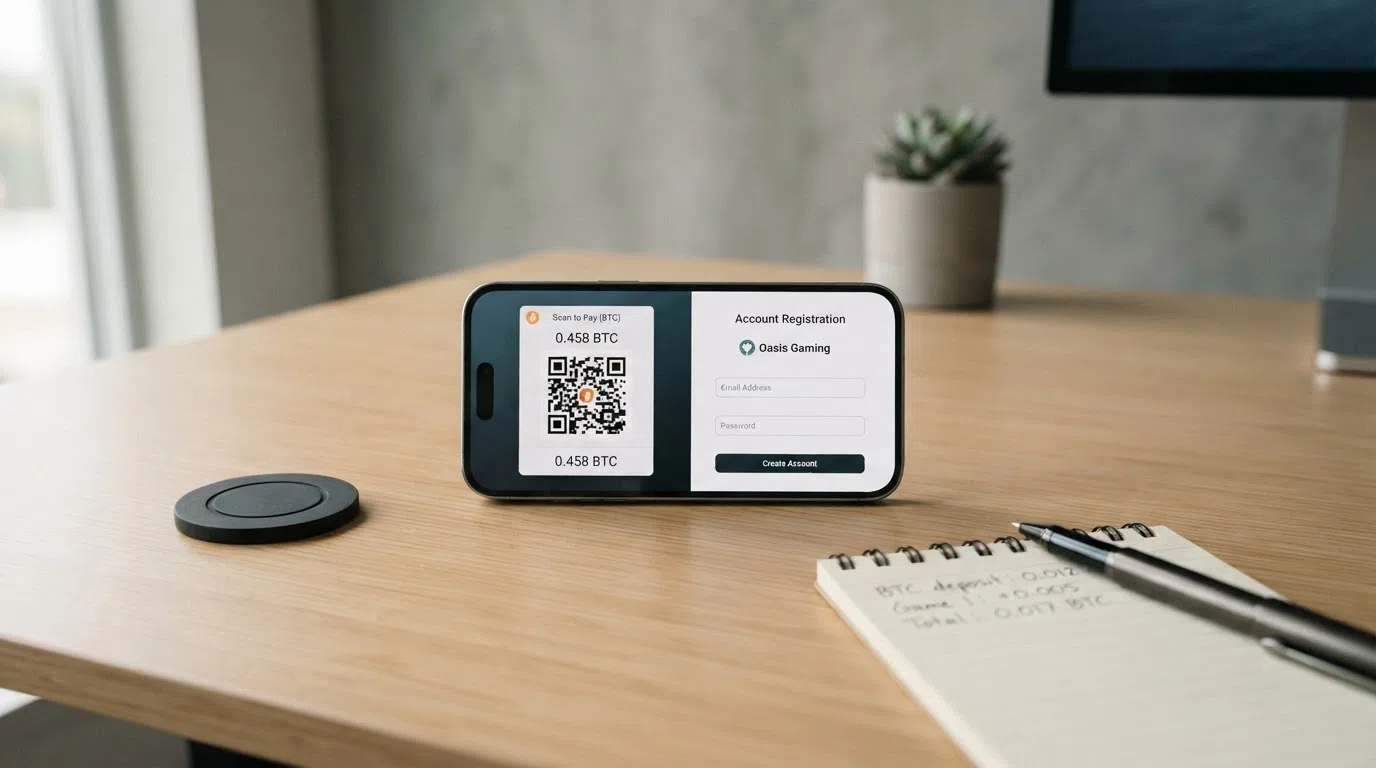
The on-ramp is the part the model cannot avoid. A player who buys Bitcoin on Coinbase, Kraken or Bitstamp has passed full KYC at the exchange — government ID, proof of address, sometimes a selfie. The coins arrive in the player’s wallet with a transaction history that traces back to the exchange. The casino does not see this history unless it asks, and the player’s wallet does not broadcast it. The exchange is the KYC layer; the blockchain is the anonymity layer; the casino is the application that sits on both.
The blockchain itself is not anonymous in the absolute sense. It is a public, permanent ledger. Every transaction is visible to anyone who runs a block explorer. The pseudonymous layer is the wallet, not the chain. A player who sends coins from a KYC-verified exchange to a casino wallet has, in principle, left a traceable path. The trace requires the casino or a third party to request information from the exchange; without that request, the path is dormant.
Bitcoin, Ethereum, USDT and Litecoin: Which Coins Open the No-ID Door
The four workhorse cryptocurrencies at the featured no-ID casinos are Bitcoin, Ethereum, USDT and Litecoin. Each carries a different trade-off. Bitcoin is the standard — the widest acceptance, the deepest liquidity, the slowest confirmation (ten minutes to an hour depending on network load). Ethereum confirms in minutes and supports a wider range of tokens, but the gas fees vary with network congestion and have run high during peak periods. USDT, the largest stablecoin by volume, is denominated in dollars — a player who deposits USDT is not exposed to exchange-rate risk during a gaming session, which removes one variable from bankroll management. Litecoin is the lowest-fee option, with confirmation times comparable to Bitcoin and a smaller network load.
The featured offshore set accepts BTC, ETH, USDT and LTC as standard. BetPanda’s welcome is denominated in BTC, which sets the bonus value against the pound at the time of deposit and again at the time of withdrawal — a player depositing 1 BTC at £30,000 and withdrawing the same 1 BTC at £35,000 has gained the spread, not the bonus. BC.Game is crypto-first, with no fiat on-ramp in the standard flow. Rollbit is crypto-only. MyStake and Stake accept a mix of crypto and fiat, with MyStake offering more fiat options.
For a player whose bankroll is in pounds, USDT removes the exchange-rate variable. For a player whose bankroll is already in crypto, BTC or ETH is the natural choice. For a player optimising for low fees, LTC. The casino does not care which coin arrives; the threshold trigger is denominated in the coin that flows through.
Provably Fair Games: When Cryptography Replaces the Regulator
Provably fair is a verification system, not a regulatory one. The mechanic: the casino commits to a server-side seed (a random number) before the player places a bet, publishing its hash. The player provides a client seed. The game’s outcome is derived from a combination of the two seeds. After the spin, the casino reveals the original server seed; the player can hash it and confirm it matches the pre-commit hash, proving the casino did not change the outcome after seeing the bet. The client seed ensures the player could not have predicted the outcome either.
The system substitutes for regulatory oversight of game fairness in a no-ID environment. A UKGC-licensed casino’s games are tested by approved testing houses — the Commission publishes a list — and the operator’s compliance is enforced through licence conditions. An offshore casino’s games are not tested to the same standard, unless the provider carries its own certification. Pragmatic Play and Evolution games carry their own Gaming Laboratories International or equivalent certifications regardless of the casino. Provably-fair games carry the cryptographic check instead.
The limitation is scope. Provably fair verifies the spin was not manipulated. It does not verify the operator is solvent, will pay a withdrawal when due, or will honour a bonus term. A player who trusts the spin is not trusting the operator; the player is trusting a different cryptographic layer. For a player who values the provably-fair category, BC.Game and BetPanda carry the largest selections in the featured set, with BetPanda listing 225 provably-fair titles. Stake carries a smaller provably-fair library, focused on its own originals.
Responsible Gambling When You Step Outside the Licensed System
The UK’s responsible gambling infrastructure is the most developed in the world, and none of it reaches an offshore casino. GAMSTOP, the national self-exclusion register, is mandatory on every GB online licence and covers every GB-licensed brand. The £150 net-deposit financial vulnerability check, mandatory from 28 February 2025, runs at every UKGC site. The deposit-limit prompt, mandatory from 31 October 2025, is offered at first deposit with at least equal prominence to the deposit button. Reality checks during play, time-out tools, and the link to GamCare’s National Gambling Helpline are required at every licensed site. None of these apply at an offshore casino. The player who signs up at an offshore brand has walked past every automated protection the UK system offers.
The prevalence figures put the infrastructure in context. The Adult Psychiatric Morbidity Survey 2023-24 found 0.4% of adults in England met the threshold for problem gambling (PGSI 8+) and 1.6% were at least at moderate risk (PGSI 3+). NHS gambling clinic referrals in England rose to 4,355 in 2024/25, up from 2,284 in 2023/24 — nearly doubling in a single year. GamCare reported that 81.5% of people contacting the National Gambling Helpline in 2026 cited online forms of gambling, the highest proportion in five years. The infrastructure exists because the demand is real and growing.
GAMSTOP Cannot Reach Offshore Casinos — What That Means for an Excluded Player
GAMSTOP’s scope is licence-bound. The register covers every operator holding a GB remote operating licence; it does not cover operators licensed in Curaçao, Anjouan or Malta. A self-excluded player who signs up at an offshore casino has used a service the exclusion was never designed to cover. The exclusion period — six months, one year, five years, or five years with auto-renewal — cannot be cancelled early, and the offshore registration does not reset it. The player is still excluded from every GB-licensed site; the offshore site simply sits outside the scope of the exclusion.
The point is not that offshore casinos are designed to circumvent GAMSTOP. The point is structural: an exclusion system built on the licensing regime can only cover the licensing regime. A self-excluded player who finds an offshore site has not beaten the system; the player has stepped outside it. The protection the UK built does not follow.
For a player considering an offshore casino while self-excluded, the practical advice is to recognise what the offshore option is and what it is not. It is a service the GAMSTOP exclusion cannot reach. It is not a reset of the exclusion, a reason to lift it early, or a substitute for the support the licensed market would have provided.
Where to Get Help: GamCare, the NHS and the National Gambling Helpline
The help available in the UK is free, confidential and available regardless of where the player has been gambling. The National Gambling Helpline, run by GamCare, is free and open 24 hours a day: 0808 8020 133. The line takes calls from anyone affected by their own or someone else’s gambling, with advisers trained in gambling-specific harm reduction. Online and text-based support is also available through GamCare’s website.
NHS gambling harm clinics operate in England, Scotland and Wales, providing free treatment for gambling disorder. Referrals to the English clinics rose to 4,355 in 2024/25, nearly double the 2,284 in the prior year — the service is expanding to meet demand. The National Gambling Support Network, funded by the statutory levy, treated 11,960 clients in Great Britain between April 2024 and March 2025, an 11% increase on the prior year. Gamblers Anonymous runs peer-support meetings across the country, both in person and online.
The self-test and treatment pathway is free at every stage. A player can self-screen through the NHS or GamCare, access brief intervention through the Helpline, and be referred into NHS treatment without cost. The infrastructure is built to catch the player who decides to step back, whether that step back comes from a licensed or an unlicensed site. The 81.5% figure — the share of Helpline callers citing online gambling — is a reminder that the demand is concentrated where the industry is concentrated, and that the help is built for the same concentration.
How We Selected and Ranked These Casinos
The evaluation basis is the UK Gambling Commission’s public register for the licensed group and independent review sources for the offshore group. The Commission’s public register — 2,663 records as of 29 July 2026 — is the definitive licence check; any operator claiming a GB licence was verified against it. The LCCP 17.1.1 pre-deposit verification rule is the test for any operator claiming a GB licence: if a brand claims the licence but does not verify up front, the claim is false and the brand was excluded. No featured operator in the licensed group fails that test.
For the offshore group, the primary sources were NoKYC Vault and independent industry review sites that publish KYC threshold tests, withdrawal experience reports and bonus term analyses. The threshold figures (BC.Game’s $2,000–$3,000, Rollbit’s $2,000–$10,000, MyStake’s $1,000) were taken from the operator-specific review pages and cross-checked where possible. The bonus terms (wagering multiples, validity windows, cashout caps) were taken from the operator’s own promotional pages, with the terms-of-service pages consulted for game contribution rates and maximum cashout clauses.
The primary ranking criterion within each group was KYC friction — the threshold at which verification is triggered, with no threshold ranking above a defined one. The secondary criteria, in order, were bonus value (wagering-adjusted, not headline), game selection (count and provider breadth), and withdrawal speed (crypto-native operators ranked higher than fiat-mixed). The licensed and offshore groups are ranked separately within their categories; the table presents both honestly, and the write-ups do not pretend one is the other.
The list is not exhaustive of the market. It is a representative sample of the brands appearing at the top of the search results for the keyword and its variants, drawn from the most-cited review sources. A brand not in the featured set is not necessarily a poor choice; it is a brand this page did not have the data to rank.
What UK Players Should Actually Do About No-ID Casino Play
The trade-off is real, and the decision belongs to the informed player. No GB-licensed casino can skip identity verification — the LCCP rule is not a guideline, and no operator in good standing on the UKGC register is going to ignore it. The offshore alternative delivers what the licensed market cannot, and the price of that delivery is every protection the licensed market extends: no GAMSTOP, no ADR, no Commission complaint route, no £150 vulnerability check, no 10× wagering cap, no statutory stake cap, no credit card ban. The player who steps outside the licensed system is not buying a faster sign-up; the player is buying a different set of risks.
The licensed market is the right home for most UK players. The verification at a well-run UKGC site is fast — a passport scan and a utility bill, automated where possible, manual only when a check fails. The GAMSTOP connection, the ADR access and the Commission oversight are not abstractions; they are the mechanisms that resolve a withheld withdrawal or a disputed bonus. The 10× wagering cap from 19 December 2025 means the worst bonus term a UKGC site can offer is £1,000 in turnover on a £100 bonus. The 80× offshore multiple is not a market quirk; it is the cost of doing business outside the system that has chosen to cap it.
The limited scenario where an offshore no-ID casino might be a considered choice is narrow. A player who understands the KYC trigger, deposits and withdraws only in crypto, plays under the threshold and has no self-exclusion history may find the offshore model faster and less intrusive than the licensed alternative. The same player must accept that any withdrawal above the trigger will require the documents the licensed market would have requested on day one — and that the protection the licensed market offers at that point is not available offshore. A player who crosses the trigger and refuses to upload documents loses the withdrawal queue. A player who crosses the trigger and uploads documents has arrived at the same place a UKGC site would have started.
The page’s own figures point in one direction. Every protection the licensed market offers is enforced by a regulator with statutory powers. Every gap the offshore market leaves is a gap the player pays for, either in higher wagering, lower recourse, or the absence of an automated barrier to overspending. The choice is real, the trade-off is honest, and the licensed system is the better fit for most UK players.
Frequently Asked Questions
Can a UK player get into legal trouble for gambling at a casino that does not check ID?
No. Section 33 of the Gambling Act 2005 applies to the operator that provides gambling without a GB licence, not to the player who uses the service. The penalty — up to 51 weeks’ imprisonment, an unlimited fine, or both — runs against the operator, and enforcement has run in that direction consistently. A UK resident playing at a Curaçao-licensed casino is not at risk of prosecution. The risk is civil and financial: no UKGC complaint route, no ADR access, no statutory protections.
What happens if I win a large amount at a no-ID casino — will they ask for documents then?
Yes. Every featured offshore brand operates a deferred-KYC model with a withdrawal threshold. BC.Game triggers above $2,000 to $3,000 in cumulative withdrawals, with a €10,000 monthly unverified cap. Rollbit’s risk-based trigger sits between $2,000 and $10,000. MyStake requests ID at withdrawals above $1,000. Above the threshold, the casino will request a passport or driving licence and a proof of address. Pending withdrawals are typically frozen until the upload clears. The “no ID” experience is a feature of small balances, not a guarantee at any level.
How does GamStop self-exclusion work if I am playing at a non-UKGC casino?
It does not. GAMSTOP’s scope is the GB licensing regime; every operator holding a GB online licence must connect to the register, and the exclusion covers those operators only. A Curaçao- or Anjouan-licensed casino is not on the register, not required to be, and does not honour a GAMSTOP exclusion. A self-excluded player who signs up at an offshore site is using a service the exclusion was never designed to cover. The exclusion period — six months, one year, five years, or five years with auto-renewal — still applies at every GB-licensed site; the offshore site simply sits outside the scope.
What is the maximum I can deposit or withdraw before a no-KYC casino asks for my ID?
It varies by operator. The general range across the featured offshore brands is $1,000 to $8,000 in cumulative withdrawal activity, with some operators using a flat trigger and others a risk-based scale. BC.Game triggers at $2,000 to $3,000 and caps unverified monthly volume at €10,000. Rollbit triggers between $2,000 and $10,000 on a risk-based scale. MyStake triggers at $1,000. The threshold is denominated in the cryptocurrency flowing through the account, so the pound equivalent depends on the coin and its exchange rate at the time.
What is the difference between a no-ID casino and a quick-verification casino in the UK?
A no-ID casino is licensed outside the UK and asks for nothing at sign-up, deferring verification to a withdrawal threshold. A quick-verification casino is licensed in the UK, verifies identity at sign-up as the LCCP requires, and optimises the verification flow for speed — automated document checks, eKYC providers, real-time database queries. The player experience at a well-run UKGC site is minutes, not days. The two models are not variations of the same product; one is licensed, the other is not.
Do any casinos let you claim a bonus without depositing or verifying your identity?
True no-deposit bonuses are scarce in the no-ID space, and where they exist the terms are tight: a £10 no-deposit bonus with 50× wagering and a £50 cashout cap is, in practice, a free trial of the game library, not a bankroll. The expected value after the wagering requirement and the cashout cap is often below £5. UKGC-licensed sites rarely offer no-deposit bonuses; when they do, the 10× wagering cap from 19 December 2025 applies. The offshore market offers no-deposit bonuses more often, with the higher multiples that bring the offer’s real value close to zero.
Can You Play for Real Money Without Ever Showing ID?
Yes — up to a point. At every featured offshore brand, a player can deposit, play slots and live dealer games, claim a welcome bonus and withdraw small amounts without ever uploading a document. BC.Game caps unverified monthly volume at roughly €10,000; Rollbit’s risk-based trigger sits between $2,000 and $10,000; MyStake requests ID at withdrawals above $1,000. Inside those bounds, the experience is exactly what the marketing describes: sign up with an email, play.
The trigger, when it fires, is decisive. The casino will email a document request, freeze pending withdrawals until the upload clears, and in some cases suspend the account entirely if the request is ignored. The player can keep playing in the meantime, but the withdrawal queue is locked. That is the deferred-KYC mechanic in practice: anonymity is a feature of small balances, not of the account. A player who treats “no ID” as permanent ends up surprised by the same document check any licensed site would have run on day one — only now it happens with funds they cannot move.
The threshold is measured differently depending on how the money moves. At crypto-native operators, the trigger is denominated in the coin flowing through — $2,000 in BTC at one site, $3,000 in ETH at another. At operators that accept fiat alongside crypto, the trigger is often a cumulative withdrawal amount in fiat equivalent. Either way, the rule is the same: cross the line and the casino will ask.
Licensed vs Offshore: Is It Legal for a UK Player to Use a No-ID Casino?
The operator commits the offence. A UK resident who logs in, deposits and plays at a Curaçao-licensed site is not at risk of prosecution under section 33 — the section is aimed at the provider, and enforcement has run in that direction consistently. What the resident does risk is the loss of every consumer protection the UK system extends: no recourse to the Commission if funds are withheld, no alternative dispute resolution body, no GAMSTOP coverage, no statutory stake cap, no £150 financial vulnerability check, no 10× wagering cap on bonuses.
The Commission’s enforcement model is disruption, not blocking. Between April 2024 and June 2025, it issued 3,140 disruption notices, referred 447,778 URLs to search engines for delisting, and saw 287,961 URLs removed, with an average 32% fall in engagement across 160 disrupted sites. The Commission does not currently hold statutory ISP or DNS blocking powers; that proposal has been discussed but not enacted. The practical effect is that offshore casinos targeting UK customers are slowed, not stopped — their search visibility erodes, but their domains remain reachable.
The player’s exposure is therefore not criminal. It is civil and financial: dispute a withdrawal at a Curaçao casino and the only recourse is the operator’s own complaints process or, in some cases, the Curaçao Gaming Control Board. Both routes are slower and less reliable than a UKGC complaint or an ADR ruling.
Which No-ID Casinos Carry the Best Slot Libraries?
Game count, provider breadth and provably-fair availability vary across the featured offshore operators. MyStake lists the largest library at 6,500+ titles, with the standard provider mix plus a wider long tail of smaller studios. BC.Game runs 4,000+ titles from the same core providers, with deeper coverage of crypto-native content. BetPanda’s library includes 225 provably-fair titles, the largest provably-fair selection in the featured set. Rollbit’s library is narrower, focused on Pragmatic Play, Hacksaw, Nolimit City and Evolution. Stake runs Pragmatic Play, Hacksaw, Evolution, Push Gaming and Nolimit City across a deep catalogue.
Provably fair is a category worth naming. A provably-fair game commits a server-side hash before each spin; the player provides a client seed; the outcome is derived from both. After the spin, the player can verify that the server seed matches the pre-commit hash, proving the casino did not change the outcome after seeing the bet. The mechanic substitutes for regulatory oversight of game fairness in a no-ID environment. Its limitation is scope: provably-fair verifies the spin was not manipulated, not that the operator is solvent, will pay withdrawals, or will honour a bonus term. It is a fairness check, not a trust check.
Live casino availability is consistent across the featured set. Evolution is present at every featured operator, with Pragmatic Play Live at most. The live lobby is the same product a UKGC-licensed casino offers, with the same game hosts and the same side bets. The difference is regulatory: a UKGC live casino runs under RTS standards for studio integrity and game integrity; an offshore live casino runs under its own jurisdiction’s rules.
Account – No Minimum Deposit Casinos UK
Content created by the «No Minimum Deposit Casinos UK» team