
Mobile casino pay with phone credit in the UK: the ten that work
 Available in GB
Data current as of 17 August 2026 and verified against the Gambling Commission’s public register of licence holders.
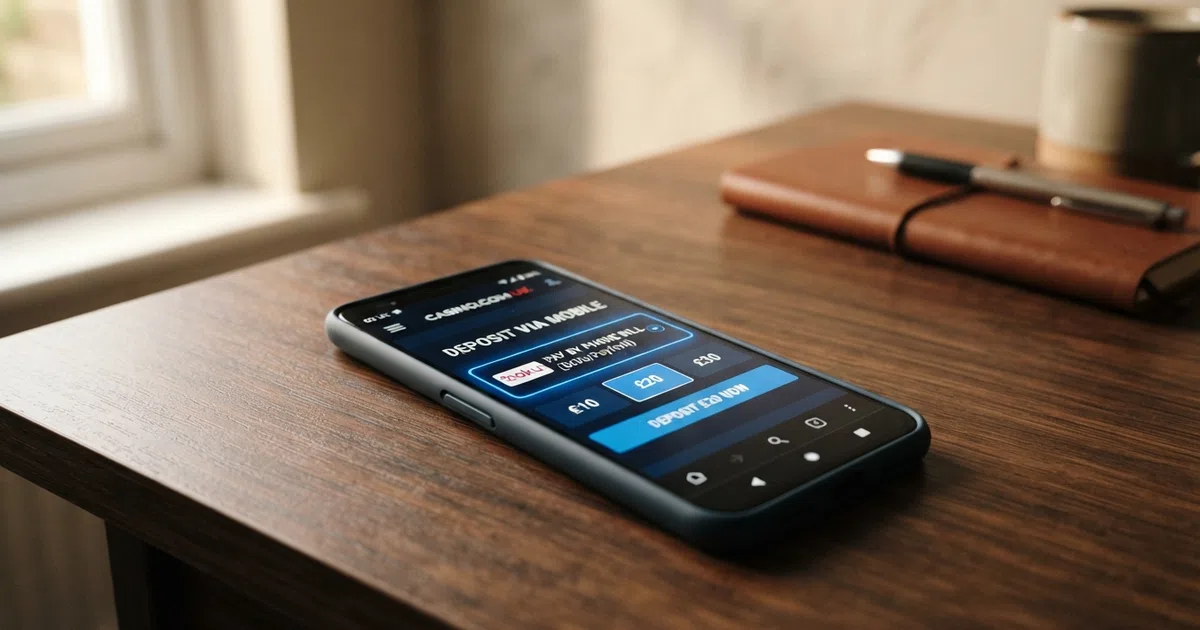
The pitch from the marketing pages is simple: tap, confirm, play. The reality is less generous, and it has been for years. Phone credit is a deposit-only rail with a hard ceiling, the welcome bonuses most pages list will not credit to a phone-bill account, and the operator has to verify who you are before a single pound leaves your handset. This page ranks the ten British-licensed casinos that handle phone credit cleanly, names the bonus exclusions that catch phone-bill depositors out, and shows the real cost of the offers that do clear.
Pay by phone credit: a deposit-only method with built-in limits
Phone credit at a UK casino is one thing, in two costumes. “Pay by phone bill” and “pay by phone credit” both describe the same charge-to-mobile rail, the one that drops a deposit on the phone account and credits the casino balance within seconds. The only difference is how the phone account itself is funded — contract, PAYG, or SIM-only bundle — and that distinction never reaches the cashier. What does reach the cashier is a hard cap on what the rail will move, and a one-way street that ends at the deposit screen.
What phone-credit payments are, in one sentence
Phone credit at a UK casino is carrier billing run by aggregators such as Fonix, Boku, Siru and Payforit, the same plumbing that lets you top up a parking app or buy a ringtone, redirected into a gambling account. The casino takes it because the deposit lands in seconds and needs no card or bank step, and the phone networks take it because the cap and the contract put a floor under the credit risk. The trade-off is that the rail only goes one way: you can put money in, you cannot take winnings out through the same pipe.
The deposit flow, from phone to balance in four steps
The deposit itself is four short steps. You choose a phone-bill option at the cashier, enter the amount and your mobile number, and the casino pings your handset with a one-tap confirmation. The charge lands on the phone account — next month’s bill for contract customers, taken from the PAYG balance for everyone else — and the casino balance updates almost immediately. There is no card number to key, no sort code to memorise, and no separate app to open; the only thing you need to hand is the phone. Because the operator has to verify your name, address and date of birth before any deposit, the four steps assume an account that has already cleared that hurdle. The hard ceiling on what those four steps can move is £40 per single transaction and £240 per calendar month under the Payment Services Regulations 2017, with the Phone-paid Services Authority layering a £40-a-day cap on top. None of those limits are negotiable: a casino licensed in Britain cannot offer higher phone-bill ceilings, and a player who wants to move more in a session has to use a different rail.
Pay by phone bill vs pay by phone credit: the distinction that matters
The two phrases route to the same charge-to-mobile method. “Pay by phone bill” names the rail by its destination — the mobile bill, contract or PAYG — and “pay by phone credit” names it by the resource being spent, the credit balance on the account. The charge lands on the phone account either way, and the casino cashier treats the two as the same option, often labelled “Pay by Mobile” with the aggregator’s mark beside it. The only place the distinction matters is the small print on a phone provider’s tariff: a contract customer on a monthly allowance will see the deposit as a line item on the next bill, while a PAYG customer watches the deposit nibble straight into the top-up balance. The slot machine does not care which one you are.
Withdrawals: phone credit is a one-way street
The same reason phone credit is convenient for deposits is the reason it is useless for withdrawals. UK mobile networks do not offer a standard merchant refund route that can credit winnings or routine refunds back to a phone bill — the rail was built to charge, not to refund, and reversing a charge-to-mobile transaction requires manual intervention that almost no casino has wired up. The result is that every withdrawal, from every casino on this list, leaves through a different door: a Visa or Mastercard debit card, an instant bank transfer via Open Banking, or in some cases an e-wallet such as PayPal or Skrill. Credit-card-funded e-wallets are also blocked under the credit card ban, so a wallet topped up from a credit card is not a back door either. The practical upshot is to register a debit card or a bank account before the first phone-bill deposit, even if the welcome offer insists on a different method for the qualifying transaction — that way the withdrawal route is already in place when the first win lands.
Minimum deposits: £10 and up at the casinos we reviewed
The headline minimum is £10: Sky Vegas, MrQ, 888casino, Duelz, JackpotJoy, Virgin Games and Betway all list £10 as the floor for their welcome offers. 32Red is the outlier on size, with a £30 deposit and stake to unlock 320 wager-free spins. The £5 figure that shows up in marketing for this space is not a deposit minimum — it is the statutory stake cap for adults aged 25 and over on online slots, and it applies to how much can be risked per game cycle, not to how much can be loaded into an account. A phone-bill player who quotes £5 is talking about a different number, on a different screen, enforced for a different reason. The actual deposit minimum at the casinos reviewed here is £10, and a few of the offers need £20 or £30 to qualify, so the cashier floor is the figure to set a budget against.
The best phone-credit casinos we reviewed, ranked
Ten British-licensed casinos, ordered by how well they fit a phone-bill depositor. The phones that fund the account sit on the same rail; what separates the ten is what the welcome offer actually delivers, whether the offer is reachable on a phone-bill deposit, and how many slots the wallet will fund once the bonus is in or out of the picture. Every operator below is verified active on the UKGC public register.
| Operator | GB licence status | Welcome offer | Free spins | Wagering |
|---|---|---|---|---|
| Sky Vegas | Active (UKGC, Flutter Entertainment brand) | 50 no-deposit spins + 200 spins on £10 deposit & spend | 250 | 0× |
| bet365 Games | Active (Hillside (UK Gaming) ENC, account 38721) | Up to 500 spins on £10 lifetime deposits | Up to 500 | 0× |
| MrQ | Active (UKGC) | 100 spins on Big Bass Splash on £10+ deposit | 100 | 0× |
| 888casino | Active (888 UK Limited, account 39028) | 100% up to £100 on £10+ first deposit (or 100 spins) | 100 (alt) | 10× (deposit match) / 0× (spins) |
| Duelz | Active (UKGC) | 100% up to £1,000 + 100 spins | 100 | — |
| JackpotJoy | Active (UKGC) | 30 spins on Double Bubble or up to £50 bingo tickets on £10 deposit & wager | 30 | 0× |
| Virgin Games | Active (UKGC) | Spins or bingo tickets on £10 deposit & wager | — | 0× |
| Betway | Active (UKGC) | 100% up to £50 on £10+ (debit card only) | 50 (alt) | 10× (deposit match) / 0× (spins) |
| 32Red | Active (UKGC) | 320 spins on £30 deposit & stake | 320 | 0× |
| Peachy Games | Active (UKGC) | — | — | — |
Phone-credit acceptance varies across the ten. Fonix-powered Pay-by-Mobile is confirmed at MrQ and Duelz, and Peachy Games is included for its phone-bill support. The other seven take card and bank transfer for the welcome offer, with phone-bill eligibility either not confirmed or excluded by the terms. That is the practical shape of the market: the rail is widely accepted as a deposit method, but rarely as a bonus-eligible one.
Peachy Games — built around Pay by Phone billing
Peachy Games earns its place in the ranking for one reason above all: it supports Pay by Phone billing as a deposit method, and the rest of the product is built around the mobile screen. The slot library runs to over 700 titles, with around 30 Megaways games and 11 jackpot slots in the mix. The brand is GB-licensed through the UKGC, and the operators who picked it onto a “pay by phone” list did so because the cashier does what the others do not always do. There is no published welcome offer on the snippets this page works from, which is itself a signal — a phone-bill player here is paying to play, not paying to chase a bonus.
For a player who wants phone credit as the default and is not chasing a matched deposit, Peachy is the cleanest fit in the set. The library is small by the standards of bet365 or Duelz, but the deposit rail is the headline feature and the licence is current. Worth a look for the rail alone; a bonus shopper will want a different door.
MrQ — Fonix billing with 100 wager-free spins
MrQ is the second of the three operators in the ranking with Fonix-powered phone billing confirmed at the cashier. The welcome offer is 100 free spins on Big Bass Splash, triggered by a first deposit of £10 or more, with each spin worth 10p and the whole bundle expiring 48 hours after it lands. The winnings carry no wagering, which is the part that matters: any return from the spins is paid as cash, not as bonus credit, and can be withdrawn as soon as the spin batch is finished. The 48-hour window is the catch — leave it a day and the spins are gone — but the trade is a clean one for a player who can sit down for an hour and finish the batch.
For a phone-bill player who wants a bonus they can actually clear, MrQ is the headline pick. Fonix is at the cashier, the offer is 0× wagering, and the qualifying deposit is at the £10 floor. The 48-hour expiry is the only friction in an otherwise frictionless offer.
Duelz — 100% match to £1,000 plus spins, Fonix deposits
Duelz takes the prize for the largest matched deposit in the ranking: 100% up to £1,000 plus 100 free spins, with Fonix phone billing confirmed as a deposit method and a £10 minimum. The wagering requirement and the validity window are not confirmed in the snippets this page is built on, so the offer is reported as published rather than as audited. The game library runs to over 2,000 titles, which is the deepest in the ranking and a real argument for players who care about the catalogue more than the bonus terms. The combination of the rail, the size of the match and the depth of the library is what puts Duelz this high; the missing terms are what stop it from going higher.
For a high-stake phone-bill player who wants a deep library and a big match, Duelz is the strongest fit. The terms on the offer should be read carefully before the qualifying deposit — a 100% match at this size can carry a longer clearing window than the small-spin offers, and the rail does not change the multiplier.
Sky Vegas — 50 no-deposit spins and 200 more
Sky Vegas is the only operator in the ranking that hands out a genuine deposit-free welcome. The 50 no-deposit spins land on registration, with no deposit, no spend, no wagering. A further 200 spins follow once £10 has been deposited and spent, again with 0× wagering and a 7-day expiry on the spin batches. The deposit and spend has to happen within 30 days of registration, which is the only clock on the offer. The Flutter Entertainment brand sits behind a current UKGC licence, and the slot library draws on NetEnt, Play’n GO, Pragmatic Play, Evolution, Red Tiger and Blueprint. For a phone-bill player, Sky Vegas is the cleanest no-deposit offer in the set, and the one that actually delivers “free” in the way the word suggests.
For a player who wants to test a casino without paying in first, Sky Vegas is the only one in the ranking that allows it. The 50 spins are the real headline; the 200 are the bonus on top. The deposit-free path is the one most phone-bill players will want to walk.
bet365 Games — up to 500 spins for £10 lifetime deposits
bet365 Games runs the largest spin bundle in the ranking: up to 500 free spins across 10 days, gated on £10 lifetime deposits (with 30 minutes needed to complete the claim)imum lifetime deposits with the operator. The per-spin value is 10p, the winnings carry no wagering, and the claim window is 30 days with 10 selections within 20 days once claim starts. The licence is current across the Hillside (UK Gaming) ENC accounts (38721, 55149, 55148), and the game library sits north of 2,500 titles across NetEnt, Play’n GO, Microgaming, Pragmatic Play and Evolution. Phone-credit eligibility is not confirmed in the small print this page works from, and a debit card is the recommended deposit method for the welcome bundle.
For a player who has not deposited with bet365 before, the offer is unmatched on spin count. For a phone-bill player specifically, the rail is not the path the offer is built around — a debit card will reach the bonus more reliably, and the 500 spins are the headline regardless of the deposit method.
888casino — 100% to £100 with 10× wagering
888casino is the one offer in the ranking that still carries a wagering multiplier. The headline is 100% up to £100 on a first deposit of £10 or more, with 10× wagering on selected slots within 90 days. The alternative path is 100 free spins at 10p on selected Pragmatic slots, with a £300 cap on spin winnings and 0× wagering on those winnings, gated on a £10 deposit and wager within 7 days. The licence is held by 888 UK Limited under account 39028, active since 1 November 2014, covering casino remote, bingo remote and general betting standard remote activities. The £100 match is small in absolute terms, but the 10× multiplier and 90-day window make it a low-friction offer to clear on a slots-only playthrough.
For a player who wants a small, clean cash match with a long clearing window, 888casino is the only choice in the ranking that still offers one. The 10× cap is the new statutory ceiling, and 888casino sits exactly at it. Phone-bill eligibility is not confirmed in the small print this page works from.
32Red — 320 wager-free spins
32Red runs the deepest spin offer in the ranking at 320 free spins, each worth 10p, triggered by a £30 deposit and stake on slots. The winnings are 0× wagering, the spins expire 30 days after claim, and the offer has to be opted into and played within 7 days of registration. The catch is in the qualifying transaction: the small print allows debit card or instant bank transfer only, and a phone-bill deposit would not qualify. The library is built on Microgaming and Evolution, which is a slimmer stable than Duelz or bet365 but a deeper jackpot pool than most.
For a player who can put £30 in by debit card and stay for 30 days, 32Red delivers the most spins per pound in the ranking. For a phone-bill player specifically, the rail will not reach the bonus — a debit card is the only way in, and the 320 spins are paid out to the card-funded account.
JackpotJoy — 30 spins on Double Bubble
JackpotJoy offers a £10 deposit and wager, then a choice: 30 free spins on Double Bubble, or up to £50 in free bingo tickets. The spin path carries 0× wagering, and the bingo path is a fixed ticket bundle. The slot library leans on Gamesys and Bally’s proprietary content alongside third-party studios, which gives the casino a distinct feel against the NetEnt-led line-up elsewhere in the ranking. Phone-bill eligibility is not confirmed in the small print this page works from, so the rail is reported as a deposit option rather than a bonus one.
For a player who wants to choose between a small spin bundle and a larger bingo credit, JackpotJoy is the cleanest pick. The Double Bubble spin is the headline; the bingo tickets are the alternative for the right reader. Either way, the wagering is zero and the deposit is at the floor.
Virgin Games — spins or bingo, no wagering
Virgin Games offers a £10 deposit and wager, with a choice between free spins and free bingo tickets. The exact spin count is not confirmed in the snippets this page works from, but the wagering is 0× on any path, and the qualifying window is 30 days to complete the requirements with a further 30 days to play the spins once they land. The brand sits behind a current UKGC licence. For a player who wants a clean choice between a slot bundle and a bingo bundle, Virgin Games is one of two in the ranking that offers the choice (JackpotJoy is the other), and the no-wagering promise is the same on both paths.
For a player who wants a no-wagering bonus and is happy with either product, Virgin Games is a strong fit. The unconfirmed spin count is the only thing the small print has not closed, and a player who needs to know the headline number should check the cashier before depositing.
Betway — debit-card-only welcome bonus
Betway runs a 100% match up to £50 on a first deposit of £10 or more, with 10× wagering and a 7-day validity window. The alternative is 50 free spins at 10p on a £20 deposit and stake, with 0× wagering on the spin winnings. The qualifying deposit is debit card only — the small print is explicit — and a phone-bill deposit would not unlock either path. The library leans on Microgaming, NetEnt and Evolution, and the licence is current with the UKGC. For a player who can deposit by debit card, the £50 match is the smallest cash offer in the ranking and the easiest to clear under the 10× cap.
For a phone-bill player, Betway is the clearest example of bonus exclusion in the set. The rail is open at the cashier; the welcome offer is not reachable through it. The match is best used by a card-funded player; a phone-bill player is better served elsewhere in the ranking.
Bonuses are the catch: phone credit usually earns none
The pattern across the ten is consistent and unhelpful for a phone-bill player: the welcome offer is reachable, then closed, depending on how the first deposit is made. “The reality of depositing with your phone bill in the UK is that you won’t be eligible for a bonus at most casinos” — that line from a UK bonus comparison site is the headline of the space, and the table above shows why. Sky Vegas is the only operator with a true deposit-free path; every other bonus in the ranking is gated on a qualifying deposit, and the qualifying deposit is rarely a phone-bill one.
What “no deposit” actually gets you here
In this set, “no deposit” means 50 free spins on Sky Vegas, with 0× wagering and no deposit, no spend, no card. That is the entire universe of deposit-free offers across the ten. Every other headline bonus is deposit-triggered: £10 here, £20 there, £30 at 32Red, and the spin count scales with how much the qualifying transaction is willing to move. A “no deposit” label on a phone-bill page, in this market, is a marketing decoration more often than a working offer. The Sky Vegas 50 is the exception that proves the rule, and the rule is that the rest of the welcome shelf asks for money in first.
The £5 no-deposit offer: not one of the ten carries it
A £5 no-deposit bonus is the kind of headline that gets shared in chat rooms, and not one of the operators in this ranking carries it. The closest deposit-free offer is Sky Vegas’s 50 no-deposit spins, and even those are spins rather than cash. The smallest cash match is Betway’s 100% up to £50, and that one is debit-card only with a phone-bill exclusion in the small print. The £5 figure that circulates in the space is a different number entirely — the statutory stake cap for adults aged 25 and over on online slots — and the player who quotes it is usually quoting a different rule on a different screen. A £5 no-deposit cash offer does not exist in the GB-licensed set this page ranks.
The bonus exclusion that hits most phone-bill deposits
The exclusion is the rule, not the exception. The majority of UK operators do not award welcome bonuses, deposit matches or free spins if the account has been funded using Pay by Phone, Boku or Fonix. Two operators in this ranking — Betway and 32Red — state the exclusion outright: Betway’s welcome is debit card only, and 32Red’s 320-spin welcome is debit card or instant bank transfer only. For the others, the small print is the place to look, and the workaround is the same on every site: a debit card for the qualifying transaction, then phone billing for the deposits that follow. A player who wants both the welcome and the rail will get both, but not in the same transaction.
Wagering is capped at 10× — and these offers sidestep it
| Offer type | Wagering | Validity window | Example operator |
|---|---|---|---|
| Deposit match (10× ceiling) | 10× | 90 days | 888casino |
| Deposit match (10× ceiling) | 10× | 7 days | Betway |
| Free spins (wager-free) | 0× | 7 days | Sky Vegas (deposit-triggered) |
| Free spins (wager-free) | 0× | 48 hours | MrQ |
| Free spins (wager-free) | 0× | 30 days | 32Red |
| Free spins (wager-free) | 0× | 7 days | 888casino (alternative) |
| Free spins (wager-free) | 0× | 7 days | Betway (alternative) |
The 10× cap on wagering has been in force since 19 December 2025 under the LCCP Social Responsibility Code 5.1.1, and it applies as a ceiling rather than a target. Mixed-product promotional offers are banned in the same package — an offer may not condition a bonus on the customer playing a different product type, which closes the old “deposit on slots, clear on blackjack” trick. Most of the welcome offers in this ranking are 0× wagering already, which sidesteps the cap rather than testing it. The two exceptions are 888casino’s £100 match and Betway’s £50 match, both at 10× and both reachable only by debit card.
Mobile-exclusive deals: MrQ’s verification spins
MrQ runs a separate mobile-tied bonus that does not appear on the welcome shelf: 10 free spins on Squealin’ Riches, granted for mobile verification, with each spin worth 20p and no maximum win. The verification spins sit outside the 100-spin Big Bass Splash welcome, and the 20p stake is double the welcome’s 10p. A phone-bill player who verifies on the handset is the target reader, and the absence of a max win is the line that makes the offer worth a second look. It is the only genuinely mobile-exclusive deal in the ranking, and the only one where the mobile is the qualifying action rather than the deposit method.
The slots that take phone-credit deposits — and their real RTPs
A phone-bill deposit funds a slot account the same way a debit card does, once the cashier has accepted the rail. The games are the same games, the random number generators are the same, and the return-to-player figures are published by the providers rather than the casino. What a phone-bill player can or cannot spin depends on which operators accept the rail, not on which slots the rail will fund. Across the ten, the three with confirmed phone billing — Peachy, MrQ, Duelz — run slot libraries from Pragmatic Play, Play’n GO, NetEnt, Microgaming and Evolution, which is the same studio shelf the rest of the ranking sits on. The slot list below is a cross-section of the titles that appear across the set, with the RTP figures the providers publish.
Which featured sites accept phone billing for slots
Peachy, MrQ and Duelz are the three operators in the ranking with phone billing confirmed at the cashier. Peachy runs over 700 slots with around 30 Megaways titles and 11 jackpot slots, MrQ runs over 1,000 games, and Duelz runs over 2,000. The other seven — Sky Vegas, bet365, 888casino, JackpotJoy, Virgin Games, Betway and 32Red — do not confirm phone-bill eligibility in the snippets this page works from, and at least two of them (Betway and 32Red) explicitly exclude the rail from their welcome offers. Fonix powers Pay-by-Mobile at MrQ and Duelz, which is the same aggregator that runs the rail across the rest of the British-licensed market. The slot list below is a cross-section of the libraries those three operators draw on, and the same titles appear on most of the other seven as well.
The titles you can spin — with real RTP figures
| Slot | RTP | Provider | Volatility |
|---|---|---|---|
| Starburst | 96.08% | NetEnt | Low |
| Book of Dead | 96.21% | Play’n GO | High |
| Big Bass Bonanza | 96.71% | Pragmatic Play | High |
| Gonzo’s Quest | 95.97% | NetEnt | Medium-high |
| Fire Joker | 96.00% | Play’n GO | Medium |
| Mega Moolah | 88.12% | Microgaming | Medium |
RTP is a long-run average, not a session guarantee, and a single visit will not see the figure returned. Big Bass Bonanza carries the highest published RTP in the set, and Mega Moolah carries the lowest — but Mega Moolah’s 88.12% funds the progressive jackpot that paid out a Guinness World Record £13,209,300 to a British player on 6 October 2015, which is the kind of long-run outcome the figure exists to support. Starburst and Fire Joker sit closer to the middle of the band, with the low-to-medium volatility that makes them cheaper sessions for a small bankroll. Book of Dead and Gonzo’s Quest are the medium-to-high volatility picks, where the long-run return is similar but the session-to-session variance is wider.
Mobile vs desktop slot play: the same titles, smaller screen
The phone-bill deposit funds the same slots on a phone that a card deposit funds on a desktop, and the games do not know which rail put the money in. The Gambling Commission’s Q1 2026 data shows an average slot session of 15 minutes across all GB-licensed operators, with 4.4% of sessions running longer than an hour — and the number of sessions over an hour is down 12% year-on-year. The 2.5-second minimum spin speed has been in force since October 2021, and auto-play is banned outright, so a phone-bill session on the bus looks the same as a card session at a desk: a spin every two and a half seconds at most, no autospin to hide behind, and the total staked and total won on the screen throughout. The £5 (25+) and £2 (18–24) stake caps apply per game cycle regardless of the device, and the rail that put the money in does not change the ceiling.
The studios behind the slot libraries
The slot libraries across the ten draw on a handful of studios that dominate the GB-licensed market. NetEnt (Starburst, Gonzo’s Quest) and Play’n GO (Book of Dead, Fire Joker) are the two most heavily represented, and Pragmatic Play and Microgaming (Big Bass Bonanza, Mega Moolah) carry the high-volatility and progressive end of the catalogue. Evolution sits behind the live-dealer product, and Red Tiger and Blueprint round out the rest of the slots shelf at most of the operators in the ranking. The Mega Moolah progressive, which paid out £13,209,300 on 6 October 2015, is the headline record for the Microgaming end of the shelf, and the same network still funds seven-figure payouts. The same titles appear on Peachy, MrQ and Duelz that appear on the rest of the ranking — the studio shelf is the studio shelf, and the rail does not change the reel.
Phone credit and UK gambling law: legal, licensed, and capped
The Gambling Commission is the sole statutory regulator for Great Britain, and every operator on this page is licensed by it. Phone billing — whether the aggregator is Boku, Fonix, Siru or Payforit — is a legitimate deposit method at a licensed site, with the same statutory backing as a debit card or a bank transfer, and the same duty on the operator to verify the customer before the first deposit. Northern Ireland sits outside the Commission’s remit under a separate, older law, and “UK-licensed” is shorthand rather than a precise description. For a phone-bill player, the question is not whether the rail is legal — it is, and the regulator confirms it — but whether the operator the rail is funding is the kind that holds a current GB licence.

One regulator watches every phone-credit payment
The Gambling Commission regulates every GB-licensed remote casino, and phone billing sits inside that perimeter. The Gambling Act 2005 is the primary statute, extended to remote operators by the Gambling (Licensing and Advertising) Act 2014, which made a GB licence compulsory for any operator taking GB players at the point of consumption. The LCCP (Licence Conditions and Codes of Practice) and the RTS (Remote Technical Standards) are the working instruments: the LCCP sets the conduct rules, the RTS sets the technical ones. Phone billing is a deposit method the Commission recognises, and the rail carries the same £40 per single transaction and £240 per calendar month ceiling under the Payment Services Regulations 2017 that any other charge-to-mobile service carries. Northern Ireland is a separate jurisdiction with a separate regulator; the rail works the same way at a licensed NI operator, but the licence itself is not the GB one.
Age verification comes before the first deposit
Since 7 May 2019, a remote licensee has to verify name, address and date of birth before any deposit or any gambling — whether the customer is using their own money or a free bet or bonus. The rule extends to free-to-play games on the licensee’s own site, which closes the “play for free until you want to cash out” loophole. The verification is identity, not inference: a credit-card check or a soft credit search is not enough on its own, and an e-mailed photograph of a driving licence is the typical route. A phone-bill player cannot stay anonymous at a licensed GB site, and the rail is no exception. The four-step deposit described above assumes the account has already cleared that hurdle, and any operator offering phone billing without verifying first is operating outside the licence conditions.
The stakes, wagering and card bans a licensed market enforces
- Stake cap (online slots, per game cycle): £5 for players aged 25 and over (in force 9 April 2025); £2 for players aged 18 to 24 (in force 21 May 2025). Source: SI 2025/215.
- Wagering cap (bonuses): 10× the bonus amount, in force since 19 December 2025. Mixed-product bonuses banned in the same package.
- Credit card ban: Credit cards banned for gambling since 14 April 2020, including credit-card-funded payments through any e-wallet.
- Auto-play ban: Auto-play banned on all remote slots since 31 October 2021. Spin speed minimum 2.5 seconds per game cycle.
- Reverse withdrawals: Banned permanently.
- Remote Gaming Duty: 40% on operators from 1 April 2026 (up from 21%). Players pay no tax on winnings.
- Statutory levy: 1.1% of GGY for remote operators, in force from 6 April 2025. Proceeds split 50% treatment, 30% prevention, 20% research. First-year intake: just under £120 million.
The stake cap and the wagering cap are the two ceilings a phone-bill player hits first, and both are set at the statutory level. The credit card ban matters for withdrawals more than deposits: a phone-bill player who wants to cash out cannot route the money through a credit-card-funded e-wallet, and the e-wallet itself has to be funded from a debit card or a bank account. The levy and the duty are operator-side, but they shape the offer shelf — a 40% duty on remote gaming GGY is a cost the operator prices into the bonus and the RTP, and the 1.1% levy is the line that funds the treatment services described later in this page.
How to check a licence — and why offshore sites are no substitute
The Gambling Commission’s public register is searchable by business name, trading name, domain name or account number, and the licence status, expiry and licensed activities are listed for every holder. A one-minute check before the first deposit confirms whether the operator is Active, Expired, Forfeited or Lapsed, and whether the licence covers the activity the player is signing up for. A GB licence is compulsory at the point of consumption: a Curaçao, Maltese or Gibraltar licence does not substitute, and a brand that holds only an offshore licence is operating illegally when it accepts GB players. The player penalty for depositing at an unlicensed site is not a fine or a prosecution — every sanction traced targets operators and intermediaries, not customers — but the player loses every British protection. There is no GAMSTOP coverage, no UKGC complaints route, no approved ADR (alternative dispute resolution), and no British consumer redress if funds are withheld. A licence check is the one-minute habit that closes the gap.
Responsible play: the caps are a protection, not a nuisance
The £40-per-day and £240-per-month caps on phone-bill deposits are usually described as a limit on the method. They are also a harm-reduction feature, and the rest of the responsible-gambling infrastructure in Great Britain is built to sit alongside them. GAMSTOP blocks every GB-licensed site for the self-exclusion period chosen, the National Gambling Helpline is free and 24/7, and the £150 net-deposit vulnerability check is the operator’s duty rather than the player’s. None of these replace personal limits, and none of them make the rail safe by themselves — but the rail and the infrastructure are the two halves of how a phone-bill player stays in control.
Spending caps: £40 a day and £240 a month, by design
The £40-per-day cap sits on top of the £40-per-transaction and £240-per-calendar-month caps from the Payment Services Regulations 2017, and the Phone-paid Services Authority is the regulator that enforces the daily layer. The natural ceiling a phone-bill player can move in any session is the smaller of those figures, and that ceiling is the reason the rail is described as “built-in limit” rather than “convenient” — the regulator built the cap in on purpose. A player who wants to stake more than the cap allows has to use a different rail, and the operator is required to offer a higher ceiling through a debit card or bank transfer on request. From 31 October 2025, the operator has to prompt the customer to set a financial limit before the first deposit, and from 30 September 2026 the gross deposit limit has to be offered on equal terms with any other limit. The phone-bill cap is the floor; the player-set limit is the layer above it.
The £150 net-deposit vulnerability check sits in the same family. From 28 February 2025, an operator has to run a financial vulnerability check at a net-deposit threshold of £150 in a rolling 30-day period, using publicly available data — bankruptcy orders, CCJs, IVAs, DROs, HCJs and administration orders. The check is the operator’s duty, not the customer’s, and a phone-bill player will reach the £150 net-deposit figure faster than most because the cap is a daily ceiling rather than a monthly one. The check is not a refusal; it is a flag that prompts a conversation.
Self-exclusion: GAMSTOP covers phone-credit accounts too
GAMSTOP is the national multi-operator self-exclusion scheme, and registration with it blocks the customer from every GB-licensed online gambling site for the chosen period. The available periods are six months, one year, five years, or five years with auto-renewal, and the choice cannot be cancelled early. Participation has been a mandatory condition of every GB-licensed online operating licence since 31 March 2020, so the exclusion is enforced at the cashier rather than requested by the customer. GAMSTOP is online-only and licence-bound: it cannot reach an unlicensed site, which is the second reason the licence check above matters. A phone-bill player who self-excludes is excluded from every phone-bill casino on this page, and the rail is closed at every one of them until the period ends.
Where to get help — and how often it’s needed
The National Gambling Helpline is the first stop. It is free, 24/7 and confidential, on 0808 8020 133, and it carries call, online chat and WhatsApp routes through GamCare. The demand signal is sharp: in January 2026 GamCare made 996 referrals to treatment and peer-based support services, up 48% from 674 in January 2025. Around 0.5% of the adult English population experience problem gambling, 3.8% are at elevated risk, and an estimated 7% of the British population are negatively affected by someone else’s gambling. The 2024 GambleAware survey found that 30% of adults with any level of gambling problems want treatment, support or advice, almost double the 17% figure from 2020. 81.5% of helpline contacts in 2026 disclosed online forms of gambling, which is the same channel a phone-bill player is sitting on. Around two million children may be living in households with adults experiencing problem gambling. The infrastructure is built for the people who need it; the rail does not exempt anyone from using it.
How we chose and ranked these ten casinos
- The UKGC public register. Every operator on this page was checked against the Gambling Commission’s public register of licence holders before it was ranked. The register is the single source of licence status, and an Expired, Forfeited or Lapsed entry disqualifies an operator from the ranking.
- The licence conditions. Each licence was checked for the activities it covers (casino remote, bingo remote, general betting standard remote) and for the date the licence has been active. The ten operators are all Active, all covering the activity the player signs up for, and all current to 2026.
- The phone-bill rail. The ranking gives weight to operators with phone-bill deposits confirmed at the cashier (Peachy, MrQ, Duelz), and to operators whose welcome offer is reachable on a phone-bill deposit (Sky Vegas, on the no-deposit path; the others, where the small print does not exclude the rail).
- The bonus shape. The ranking gives weight to offers with 0× wagering, with a deposit-free component, and with a long enough validity window to clear comfortably. The two 10× offers (888casino, Betway) sit where the small print puts them.
- The slot library. The ranking gives weight to operators with a deep, multi-studio slot library (Duelz at 2,000+, bet365 at 2,500+), and to the inclusion of high-RTP and high-volatility titles.
- The exclusions. Operators whose welcome offers are explicitly debit-card only (Betway, 32Red) are ranked with that fact stated, not buried.
- The sources. Every figure on this page is from the snippets and registers the research file carried, and no figure is inferred or invented.
- What was not weighted. No invented weights, no editorial scores, no paid placements. The ranking is the order the phone-bill case fits the operator, not the order of any commercial arrangement.
Play within the method’s caps — and skip the bonus chase
The case for phone credit at a UK casino is not the case the marketing pages make. The rail is a deposit-only method with a hard £40-a-day and £240-a-month ceiling, a one-way street that needs a debit card or a bank transfer at the other end, and a regulator (the Phone-paid Services Authority) that built the ceiling in on purpose. The welcome offers that dominate the bonus shelf are unreachable for most phone-bill depositors, and the ones that are reachable — Sky Vegas’s 50 no-deposit spins, the wager-free spin bundles at MrQ and 32Red — are the exceptions that prove the rule. The slots are the same slots a card deposit funds, the RTP is the same RTP, and the licence check is the same one-minute habit.
The right way to use the rail is the boring way. Verify the licence on the Gambling Commission’s public register before the first deposit. Set a personal deposit limit at the cashier on top of the rail’s built-in cap. Fund the welcome offer with a debit card if the small print asks for one, and use the phone-bill rail for the deposits that follow. Pick a wager-free spin bundle over a matched deposit wherever the choice is offered, because 0× wagering sidesteps the 10× ceiling and pays winnings as cash. Register a withdrawal route before the first deposit, so the rail’s one-way nature does not stall a payout. And register with GAMSTOP before the rail feels like the only thing between a player and a session, because the rail’s cap is a safety net, not a substitute for the wider infrastructure. The phone is the smallest, fastest, most limited way to fund a casino account in Britain, and the limit is the part the marketing pages do not put on the front.
Frequently asked questions
Do pay-by-phone casinos charge fees on deposits?
Most do not. The £40-a-day and £240-a-month caps come from the regulator and the phone networks, not from the casino, and the deposit rail typically lands the full amount on the casino balance. Where a fee exists, it is set by the operator and disclosed in the cashier before the deposit confirms.
What are the deposit limits when paying by phone at a UK casino?
Up to £40 per single transaction, up to £40 a day under the Phone-paid Services Authority’s cap, and up to £240 a calendar month under the Payment Services Regulations 2017. The smallest of those three is the ceiling for any given deposit, and the rail will not move more.
Is it safe and legal to pay by phone credit at UK online casinos?
Yes, at any operator licensed by the Gambling Commission. The Commission recognises phone billing as a legitimate deposit method, the operator has to verify the customer’s identity before the first deposit, and the rail sits inside the same statutory framework as a debit card or a bank transfer. The licence can be checked on the Commission’s public register in under a minute.
How does GAMSTOP affect pay-by-phone casino players?
GAMSTOP registration blocks the customer from every GB-licensed online casino, regardless of which deposit method the account uses. The exclusion covers phone-bill deposits as fully as card deposits, and the chosen period (six months, one year, five years, or five years with auto-renewal) cannot be cut short.
Are phone credit casino deposits eligible for welcome bonuses?
Mostly no. The majority of UK operators exclude phone-bill deposits from welcome bonuses, and the small print is the place to check. The cleanest exception is Sky Vegas, where 50 no-deposit spins land before any deposit at all.
Payments – No Minimum Deposit Casinos UK
Content created by the «No Minimum Deposit Casinos UK» team